USA Pan Half Sheet Baking Pan Review: A Different Approach

Affiliate disclosure: Some links on this page are affiliate links. If you buy through them we earn a small commission at no extra cost to you. Recommendations are research-driven; we don't claim personal use of every product reviewed. Product prices and availability are accurate as of the date published and are subject to change. Always check Amazon for current pricing before purchasing. Learn more.
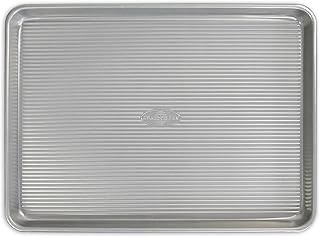
Aluminized steel with corrugated surface , promotes airflow under baked goods
See USA Pan Half Sheet Baking Pan on AmazonIf you’ve spent any time reading about sheet pans on this site or elsewhere, you’ve probably encountered the same shortlist: Nordic Ware gets recommended first, and everything else gets described as “a solid alternative.” The USA Pan Half Sheet Baking Pan is one of those alternatives, and it deserves a more specific treatment than that phrase usually gets. It’s not a Nordic Ware knockoff and it’s not trying to be. It’s a different approach to the same problem, with a trade-off that matters depending on what you’re actually baking.
This pan has been in rotation here for about two years alongside Nordic Ware half sheets. For a broader look at how it fits into the sheet pan category, the Bakeware section on this site covers the full range of options worth considering. But this review is about whether the USA Pan Half Sheet Baking Pan earns its place in a working kitchen.
What Is the USA Pan Half Sheet Baking Pan
USA Pan is a Pittsburgh-based manufacturer that’s been making commercial-grade bakeware since 1959. The half sheet pan (ASIN B004QOBBH8) is built from aluminized steel, which is carbon steel with a thin aluminum-silicon alloy coating applied before fabrication. That material choice matters. Aluminized steel conducts heat more evenly than plain carbon steel and resists the corrosion that plain steel develops quickly in a moist kitchen environment.
The pan measures 18 by 13 inches, the standard half sheet size. Construction is heavy gauge, and you’ll notice the weight immediately: this is not a flimsy pan. The rolled edges are reinforced, and the pan holds its shape under high heat in a way that cheaper sheet pans simply don’t.
The Corrugated Surface
The defining visual feature of this pan is its corrugated bottom. The surface runs in parallel ridges across the length of the pan rather than lying flat. USA Pan’s stated rationale is that these ridges promote airflow under whatever you’re baking, improving heat circulation and reducing the likelihood of steaming on the underside of baked goods.
This is a legitimate engineering claim, not marketing language. Air does circulate more freely under a cookie or a piece of chicken when it’s sitting on ridges rather than a flat surface. But the trade-off is just as real. That corrugated surface leaves faint parallel marks on the bottom of anything that bakes directly on it. Cookies, roasted vegetables, sheet cake. The marks are not deep, and they don’t affect flavor. But if you’re baking something where a perfectly flat, unblemished bottom matters to you, this pan will disappoint you slightly and consistently. (I realize that “I don’t like marks on my cookies” sounds like a trivial complaint, but if you make bar cookies or slab cakes that get cut and plated, the underside impression does show.)
The Nonstick Coating
This is where the USA Pan distinguishes itself most directly from Nordic Ware’s standard half sheet. Nordic Ware’s natural aluminum pans are uncoated. They bake beautifully and last decades, but you’re lining them with parchment for anything sticky, and you’re not running them through a dishwasher without accelerating oxidation.
The USA Pan uses a PTFE-based nonstick coating that is PFOA-free and applied at high temperature during manufacturing, rather than sprayed on afterward. That baking-in process is meaningful. The coating adheres more durably than consumer-grade nonstick coatings applied at lower temperatures, which is why USA Pan’s coating holds up better over time than what you’d find on an inexpensive sheet pan.
The nonstick surface is not the slickest you’ll encounter. It’s not a professional-grade silicone coating. But it’s effective for cookies, roasted vegetables, and sheet-pan proteins, and it releases most foods without the kind of sticking that sends you reaching for a metal spatula and hoping for the best.
Performance
I’ve used this pan for roasted vegetables, cookies, sheet-pan chicken thighs, and one extended run of focaccia testing. My notes across those uses:
Heat distribution is noticeably even. Aluminized steel performs closer to bare aluminum than plain steel does, and the corrugation likely helps here too. I’ve had corners and center brown at comparable rates, which is not true of every pan. My older Vollrath commercial steel half sheets run slightly hotter at the edges, which requires rotating.
Warping has not been an issue. I’ve pulled this pan from a 450°F oven and set it on a cool granite countertop. It has not warped. I’ve done this more times than I’d do with a lighter pan without thinking twice. The heavy gauge construction is doing real work here, not just adding weight for the sake of feeling substantial.
Release is reliable for everything I’ve baked directly on the surface. Cookies lift cleanly. Roasted chicken thighs left some fat residue but no tearing. Where I’ve had any hesitation, it’s been with very sugary glazed items that I should have put on parchment regardless of the pan.
Cleanup is easier than uncoated aluminum. Warm soapy water handles most of what the pan accumulates. I don’t put it in the dishwasher, not because it would damage the pan necessarily, but because I don’t put any quality bakeware in the dishwasher if I can avoid it. The coating shows no signs of degradation after two years of regular use at temperatures ranging from 325°F to 475°F.
One note on the focaccia: I wouldn’t bake focaccia directly on this surface. The corrugation leaves too distinct an impression on soft dough. I use parchment or oiled the pan and accepted that the bottom pattern would be there. For a completely flat focaccia bottom, an uncoated aluminum pan works better.
Check the USA Pan Half Sheet on Amazon
USA Pan vs Nordic Ware Half Sheet
The Nordic Ware natural aluminum half sheet is the standard against which any other sheet pan gets measured, and reasonably so. I’ve used Nordic Ware half sheets for over a decade. They’re the pans I reach for most often.
Here’s what the USA Pan does better. The nonstick coating is genuinely useful for people who want to skip parchment paper some of the time. If you roast vegetables four nights a week and want to simplify cleanup, the coating earns its place. The heavy aluminized steel also resists warping at higher temperatures than Nordic Ware’s thinner aluminum, which matters if you’re regularly cooking above 400°F.
Here’s what Nordic Ware does better. The uncoated natural aluminum surface is completely flat, which means an unblemished bottom on everything you bake. Nordic Ware’s pans respond very quickly to temperature changes, which is useful for delicate baking. And Nordic Ware costs less. The USA Pan is mid-range pricing, Nordic Ware’s standard half sheet sits lower, and that gap is noticeable. (Check current price on Amazon for both to confirm the spread, since it shifts.)
The corrugation is the deciding factor for most buyers. If that trade-off bothers you, buy the Nordic Ware. If you want a nonstick surface and can work with the surface marks, or if you’re primarily using the pan for roasting rather than baking presentation-sensitive items, the USA Pan is a strong choice.
It’s also worth mentioning: these aren’t mutually exclusive. I own both and reach for each depending on what I’m making. The USA Pan handles weeknight roasting. The Nordic Ware handles cookie exchanges and anything where presentation matters. If budget requires choosing one, read the next section.
If you find yourself interested in other Nordic Ware products while comparing, we have reviews of the Nordic Ware Pizza Pan and the Nordic Ware Muffin Tin that might be useful context for how that brand performs across different pan types.
See the USA Pan Half Sheet Baking Pan on Amazon
Who Should Buy the USA Pan Half Sheet Pan
Buy the USA Pan if:
- You want a nonstick coating on a sheet pan without paying premium pricing for a coated All-Clad or similar option
- You roast more than you bake, and sticky proteins and vegetables are your primary use case
- You’ve had cheaper sheet pans warp under high heat and want something that won’t
- You’re willing to use parchment when bottom appearance matters, and bare-pan for everything else
Pass on it if:
- Bottom marks on baked goods would bother you regularly
- You bake sheet cakes, slab bars, or decorated items where underside presentation matters
- You already own Nordic Ware half sheets that are performing well and you’re looking for a reason to add to the collection. You don’t have one.
This is a well-made, American-manufactured pan at mid-range pricing. It’s not the right pan for every kitchen, but for cooks who prioritize nonstick release and warp resistance over a perfectly flat surface, it competes seriously with anything else in its price range. The USA Pan Half Sheet Baking Pan is available on Amazon — check current pricing before you buy. For more bakeware options across categories, the full baking and cookware guides are worth browsing before buying.
Also worth reading if you’re in a Nordic Ware comparison mindset: our OXO Good Grips Cake Pan Review covers a similar trade-off between coated and uncoated surfaces at comparable pricing.
Frequently Asked Questions
Does the corrugated surface damage cookies or leave deep marks?
The marks are shallow and don’t affect texture or flavor. On most cookies you’d never notice unless you’re looking at the bottom specifically. On items like bar cookies that get cut and displayed, the faint ridges are visible. If bottom appearance matters, use parchment.
Is the USA Pan nonstick coating safe at high temperatures?
The coating is PTFE-based and PFOA-free, applied at high temperature during manufacturing. USA Pan rates it for oven use, and in practice it handles temperatures up to 450°F without issue. As with any PTFE coating, avoid preheating an empty pan at maximum temperature and don’t use metal utensils directly on the surface.
How does the USA Pan compare to Nordic Ware for roasting vegetables?
For roasting, the USA Pan’s nonstick coating gives it a practical edge. Vegetables release more cleanly, and cleanup is faster. Nordic Ware’s uncoated aluminum also roasts well, but you’ll want to use a little more oil or line it to prevent sticking with high-sugar vegetables like beets or carrots.
Can the USA Pan go in the dishwasher?
USA Pan states the pan is dishwasher safe, but repeated dishwasher cycles will shorten the life of the nonstick coating. Hand washing with warm soapy water takes less than two minutes and keeps the coating in better condition. My advice would be to treat it like any quality nonstick surface and wash it by hand.
Is the USA Pan worth buying if I already own Nordic Ware half sheets?
Probably not, unless you have a specific use case the Nordic Ware isn’t serving. If you want a nonstick surface for proteins and sticky roasting, it’s a reasonable addition. If your Nordic Ware pans are working well for what you cook, adding a USA Pan doesn’t fill a gap so much as create shelf crowding.
USA Pan Half Sheet Baking Pan: Pros & Cons
- Aluminized steel with corrugated surface , promotes airflow under baked goods
- PTFE/PFOA-free nonstick coating baked in at high temperature
- Corrugated surface leaves marks on the bottom of baked goods
Frequently Asked Questions
What is the corrugated bottom on the USA Pan half sheet for?
The corrugated ridges create airflow channels under whatever you're baking, which promotes more even heat circulation and reduces steaming on the underside of baked goods. The engineering tradeoff is that the ridges leave faint parallel marks on the bottom of cookies, sheet cakes, and anything baked directly on the surface.
How does the USA Pan half sheet compare to Nordic Ware?
Nordic Ware's natural aluminum half sheets are uncoated, warp-resistant, and widely regarded as the benchmark for the category. The USA Pan uses aluminized steel with a PTFE-based nonstick coating, which makes it more convenient for sticky foods and easier to clean without parchment. Nordic Ware has a slight edge for baking where the flat, unblemished bottom matters; the USA Pan is more forgiving for everyday use.
Is the USA Pan half sheet dishwasher safe?
USA Pan lists the pan as dishwasher safe, but hand-washing is recommended to preserve the nonstick coating and extend the pan's life. The high heat and harsh detergent in most dishwashers will degrade the coating faster than gentle hand-washing.
Does the nonstick coating on the USA Pan half sheet contain PTFE or PFOA?
The USA Pan uses a PTFE-based nonstick coating that is PFOA-free. It does contain PTFE, applied at high temperature during manufacturing for durability. Buyers seeking a fully PFAS-free surface should use the pan with parchment, or look at uncoated aluminum alternatives like Nordic Ware.
How does the USA Pan hold up at high oven temperatures?
The aluminized steel construction handles temperatures up to 450°F reliably without warping. The nonstick coating is rated for oven use at standard baking temperatures. After two years of regular use including temperatures up to 475°F, the coating shows no signs of degradation — the high-temperature application process during manufacturing contributes to that durability.
Where to Buy
USA Pan Half Sheet Baking PanSee USA Pan Half Sheet Baking Pan on Amazon