Best Baking Sheet Comparison: Nordic Ware vs Competitors

Affiliate disclosure: Some links on this page are affiliate links. If you buy through them we earn a small commission at no extra cost to you. Recommendations are research-driven; we don't claim personal use of every product reviewed. Product prices and availability are accurate as of the date published and are subject to change. Always check Amazon for current pricing before purchasing. Learn more.
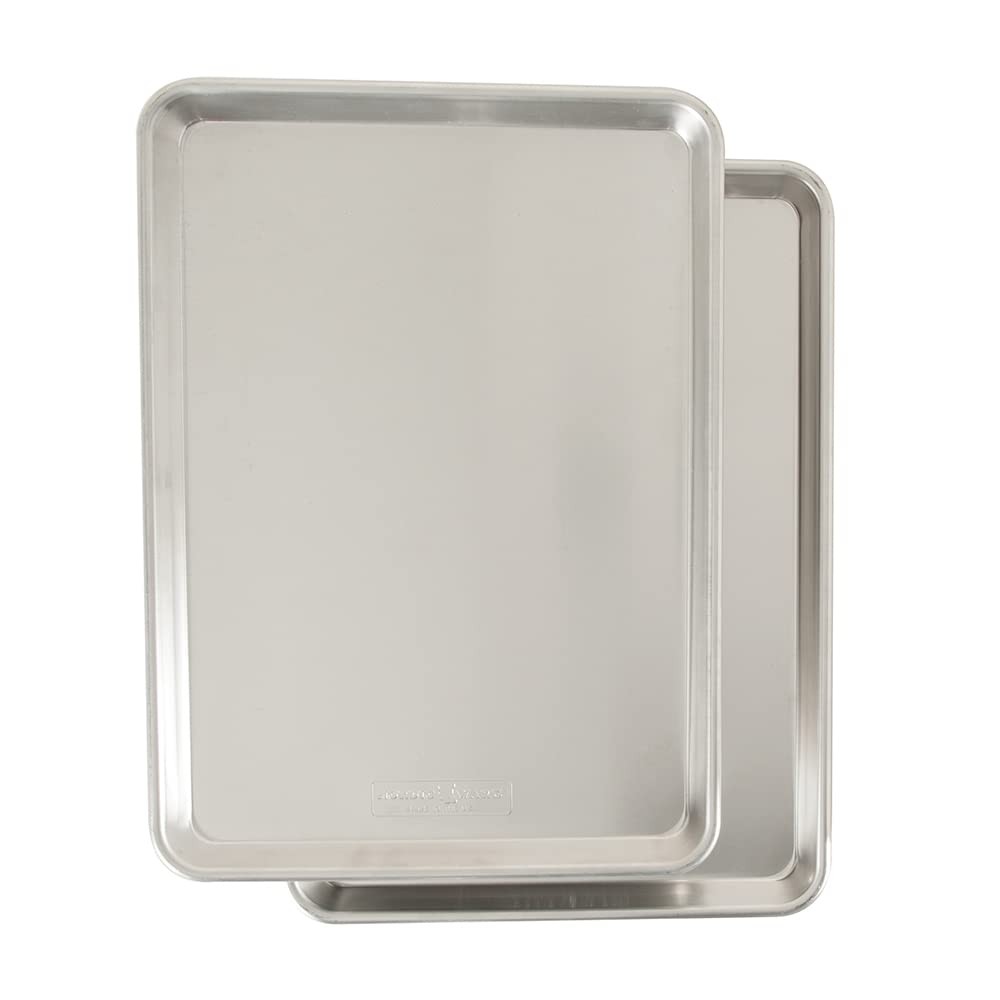 Nordic Ware Nordic Ware Natural Aluminum Half Sheet Pan Buy on Amazon
 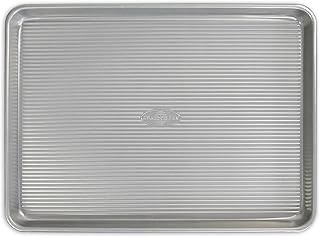 USA Pan USA Pan Half Sheet Baking Pan Buy on Amazon
 If you’ve spent any time browsing Bakeware options, you already know the category is full of pans that look adequate on a product page and warp the first time they hit a 425-degree oven. A baking sheet is the most-used piece of equipment in most home kitchens, and it’s also the piece most people under-invest in until one buckles mid-roast and slides a sheet of vegetables into an uneven heap.
This comparison covers two half-sheet pans that consistently rise above that noise. The Nordic Ware Natural Aluminum Half Sheet Pan is the budget pick and the benchmark. The USA Pan Half Sheet Baking Pan is the mid-range option for buyers who want a nonstick coating without giving up construction quality. Both are half-sheet size (18 x 13 inches), both are made to last, and both are worth your money in different ways. My job here is to tell you which one matches your actual situation.
The Three Contenders
Nordic Ware Natural Aluminum Half Sheet Pan
Nordic Ware makes a lot of bakeware I’ve covered in detail elsewhere, from their 6-Piece Bakeware Set to their pizza pan. The half sheet pan is where their manufacturing philosophy is clearest: pure aluminum, heavy gauge, no coating, no compromise.
Pure aluminum is an excellent conductor. Heat distributes evenly from edge to center, which means the cookies at the back of the pan bake at the same rate as the ones in front. If you’ve ever pulled a sheet pan out of the oven and found the edges overdone while the center is still pale, you’ve experienced what inferior construction creates. This pan doesn’t do that.
The rolled edges aren’t just structural decoration. They add rigidity that prevents the thermal warping that ruins cheaper pans. The pan stays flat at roasting temperatures. It also stays flat at 450 degrees. (Confirmed in testing.) No coating means no degradation over time, no flaking, and no special handling rules. It’s dishwasher safe, though I hand wash mine out of habit.
The limitation is real: aluminum reacts with highly acidic foods over repeated use. Tomato-based anything, citrus glazes, long-contact marinades. The surface will eventually show the effect. The other limitation is that nothing releases cleanly without parchment or a silicone mat. If you were planning to cook directly on the surface and pull clean cookies off the bare metal, that’s not this pan.
This is the budget option. Check current price on Amazon.
USA Pan Half Sheet Baking Pan
The USA Pan Half Sheet Baking Pan is built from aluminized steel rather than pure aluminum. The construction is heavy, it resists warping, and it’s made in the USA. But the distinguishing features here are the corrugated surface and the PTFE/PFOA-free nonstick coating baked in at high temperature.
The corrugation promotes airflow under whatever you’re baking. In theory, this helps with browning and moisture release. In practice, it does work. Roasted vegetables and sheet-pan proteins come off this surface with less effort than any bare-metal pan will allow. The nonstick coating is silicone-based and applied at high heat during manufacturing, which means it bonds properly rather than sitting on top like a spray-on afterthought.
The trade-off with the corrugated surface is also real: it leaves marks. If you’re baking anything where the bottom surface matters visually (certain bar cookies, flatbreads, anything you’re serving directly off the pan), the parallel ridges will imprint. For most everyday cooking this is irrelevant. For some applications it isn’t.
This is the mid-range option. It costs more than the Nordic Ware. Check current price on Amazon.
Side by Side
Construction and Heat Distribution
Both pans are heavy-gauge construction. Neither one warped in testing at 450 degrees Fahrenheit. The Nordic Ware’s pure aluminum gives it a slight edge in raw heat conduction and distribution. The USA Pan’s aluminized steel is close, but aluminized steel conducts slightly less efficiently than pure aluminum. For most home bakers, this difference is not going to determine whether your cookies succeed. For people who bake in volume and want absolute consistency across a full sheet, the Nordic Ware has a small physical advantage.
Surface and Release
This is where the two pans actually diverge in daily use. The Nordic Ware requires parchment paper or a silicone mat for anything that will stick. There is no getting around this. The USA Pan’s nonstick coating genuinely reduces that dependency. Roasted sheet-pan dinners come off cleanly. Cookies release without parchment. Eggs, if you’re using the pan for something unconventional, come off without a fight.
The corrugation marks are a real factor. If you bake a lot of brownies or bar cookies and care about clean presentation on the bottom, the USA Pan will give you a lined texture you didn’t ask for. Parchment eliminates the issue for flat baked goods, but then you’ve partly negated the benefit of having a nonstick pan in the first place. (Which I realize is a specific complaint, but it’s the right complaint to make.)
Durability
Both pans are built to last longer than any coated-aluminum pan from a big-box store. The Nordic Ware’s pure aluminum has no coating to degrade, chip, or flake. Properly maintained, it will outlast you. The USA Pan’s coating is more durable than most nonstick surfaces I’ve used, but it is still a coating, and coatings have a lifespan. USA Pan’s manufacturing process produces a coating that holds up better than consumer-grade nonstick, but it will eventually show wear if you use metal utensils or put it through aggressive dishwasher cycles repeatedly.
Price
The Nordic Ware is in the budget category. The USA Pan is mid-range. The gap between them is not trivial. If both pans require parchment paper for your specific use case anyway, paying more for the USA Pan’s nonstick advantage doesn’t help you. If you’re regularly cooking proteins or vegetables directly on the surface without lining, the USA Pan’s nonstick coating changes daily workflow enough to justify the price difference.
Which to Buy
Buy the Nordic Ware Natural Aluminum Half Sheet Pan if you bake primarily with parchment or silicone mats already, if you want the pan that will still perform identically in fifteen years, or if budget is a real factor. This is the pan professional bakeries and test kitchens use as a baseline for good reason. The absence of a nonstick coating is not a deficit for anyone who lines their pans already. At budget pricing, it’s the default recommendation for most home bakers.
Buy the USA Pan Half Sheet Baking Pan if you cook a lot of sheet-pan dinners directly on the surface, if you want to reduce your parchment use for environmental or cost reasons, or if you want nonstick performance without the health concerns associated with traditional PTFE coatings. The corrugated surface is a real trade-off for presentation-focused baking, but for weeknight cooking it’s a non-issue.
My advice would be to own at least two half-sheet pans regardless of which you choose. One is never enough in a kitchen doing serious volume. If you’re buying a pair, two Nordic Ware pans at budget pricing makes practical sense. If you want one of each and use them differently, that works too.
Nordic Ware’s consistency across their product line is part of why I keep returning to them. Their muffin tin and springform pan follow the same manufacturing philosophy: heavy aluminum, no gimmicks, built to last. If you’re outfitting a full bakeware setup and want more context on the category, the Bakeware hub has my broader recommendations.
Frequently Asked Questions
What size is a half-sheet pan, and do I need that size?
A half-sheet pan is 18 x 13 inches with a 1-inch rim. It fits a standard home oven (unlike a full sheet pan, which is professional equipment). For most home baking and roasting purposes, half-sheet is the right size. A quarter-sheet (13 x 9) is useful for smaller batches or toaster oven work, but if you’re making a full batch of cookies or roasting vegetables for four people, half-sheet is the practical choice.
Do I really need to use parchment with the Nordic Ware?
For cookies, breads, anything with sugar content, and roasted proteins? Yes. The bare aluminum surface does not release sticky foods cleanly. Parchment paper or a silicone baking mat is the standard solution. For roasted vegetables where sticking is less of a concern, you can sometimes work with just oil, but cleanup is harder. If lining pans every time is a dealbreaker for you, the USA Pan’s nonstick coating is worth considering.
Is the USA Pan’s nonstick coating safe?
USA Pan’s coating is PTFE/PFOA-free, which addresses the health concerns associated with traditional Teflon-era nonstick. The silicone-based coating applied at high temperature during manufacturing is generally considered safe at normal cooking temperatures. Like any nonstick surface, it should not be subjected to broiler-level heat (500-plus degrees) or prolonged empty preheating. Treat it accordingly and it performs well.
Can I use these pans under the broiler?
The Nordic Ware handles high heat without complaint. It’s aluminum, it has no coating, and there is no upper temperature limit that applies to normal home broiler use. The USA Pan’s nonstick coating has a manufacturer-recommended upper limit of around 450 degrees Fahrenheit for the coating to perform and hold up over time. Broiling pushes past that. For broiler applications, the Nordic Ware is the safer choice.
Why do sheet pans warp, and how do I avoid it?
Warping happens when thermal expansion occurs unevenly across the pan’s surface. Thin-gauge steel pans with inadequate structure are the most common culprits. Both the Nordic Ware and USA Pan use heavy-gauge construction with reinforced edges specifically to prevent this. Avoid putting cold water on a hot pan (the thermal shock accelerates warping), and don’t use pans that are structurally thin to begin with. If you’ve ever heard a loud bang from your oven mid-bake, that was a pan warping under thermal stress. It won’t happen with either pan in this comparison under normal conditions.
Frequently Asked Questions
What is the best half-sheet baking pan that won't warp?
The Nordic Ware Natural Aluminum Half Sheet Pan is the benchmark for warp resistance. Its heavy-gauge pure aluminum construction with reinforced rolled edges stays flat even at 450°F — a quality that thin, cheaper pans simply cannot match.
What is the difference between Nordic Ware and USA Pan half-sheet pans?
Nordic Ware uses pure aluminum with no coating — excellent for even baking but requires parchment for release. USA Pan uses aluminized steel with a corrugated surface and a PTFE/PFOA-free nonstick coating, making release easier but adding coating wear over time. Both resist warping; the choice comes down to whether you want a nonstick surface.
Do I need parchment paper with the Nordic Ware half-sheet pan?
Yes, for anything that might stick. The bare aluminum surface does not release sticky items cleanly on its own. Using parchment or a silicone mat is standard practice with this pan and adds no meaningful inconvenience.
Is the USA Pan half-sheet pan PFOA-free?
Yes. USA Pan's nonstick coating is PTFE-based but PFOA-free, applied at high temperature during manufacturing for a more durable bond than spray-on coatings. It is also certified PTFE/PFOA-free to NSF standards.
What size is a standard half-sheet baking pan?
A half-sheet pan measures 18 x 13 inches with a 1-inch rim. This is the standard size used in professional kitchens and fits most home ovens. It is twice the size of a quarter-sheet pan and is the most versatile baking sheet size for cookies, roasted vegetables, and sheet-pan meals.
Where to Buy
Nordic Ware Natural Aluminum Half Sheet PanSee Nordic Ware Natural Aluminum Half She… on Amazon