Best Cooking Utensils for Stainless Steel Cookware

Affiliate disclosure: Some links on this page are affiliate links. If you buy through them we earn a small commission at no extra cost to you. Recommendations are research-driven; we don't claim personal use of every product reviewed. Product prices and availability are accurate as of the date published and are subject to change. Always check Amazon for current pricing before purchasing. Learn more.
Quick Picks
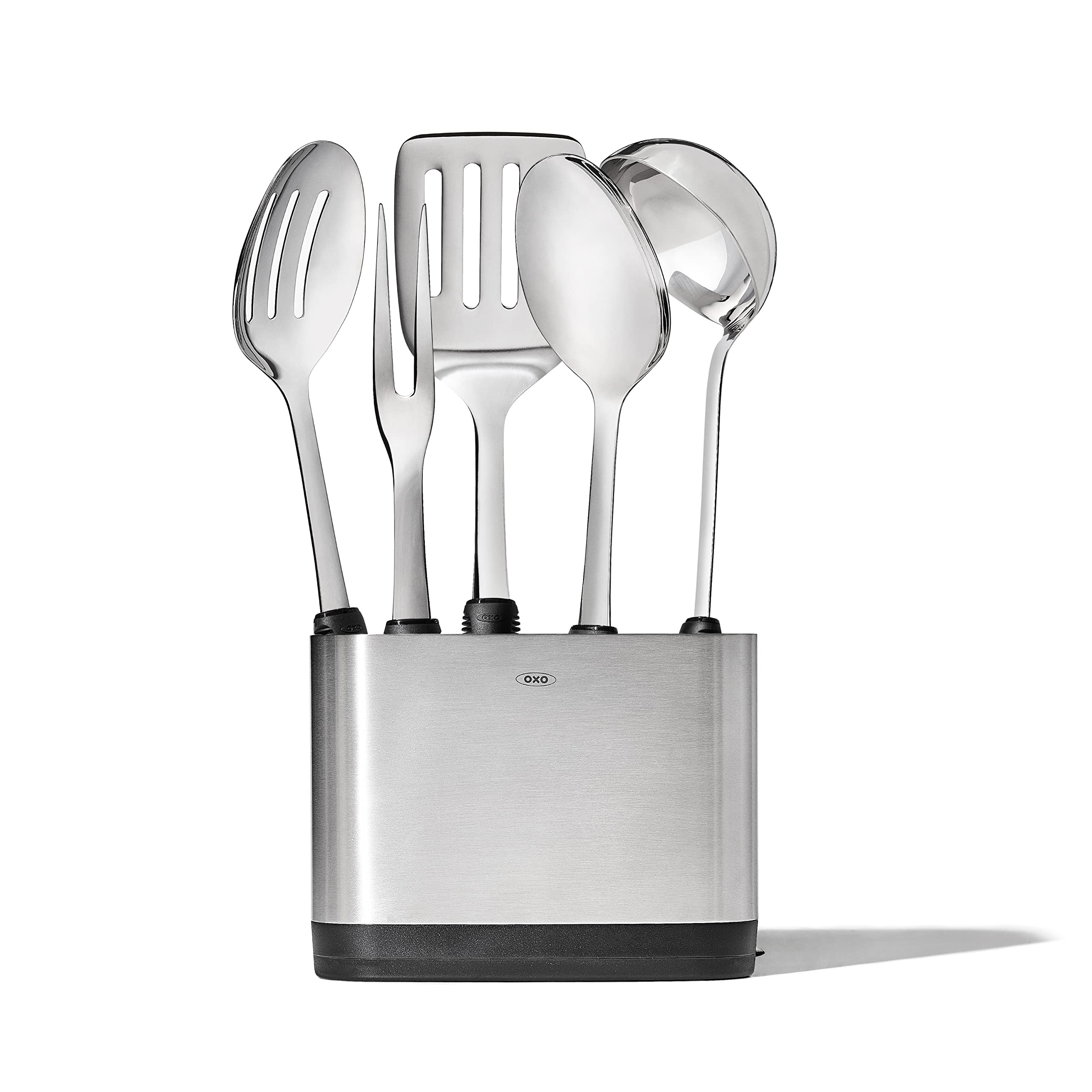
OXO Good Grips Stainless Steel Utensil Set (5-Piece)
Stainless steel heads won't scratch or melt , safe for high-heat cooking
Buy on Amazon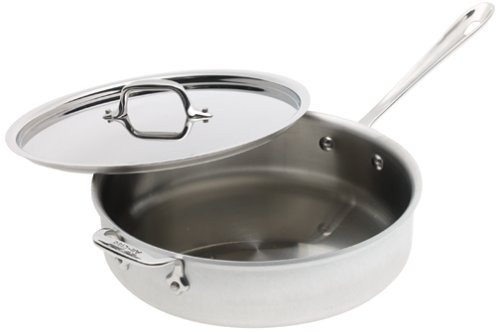
All-Clad D3 Stainless 12-Inch Fry Pan
Tri-ply construction bonds stainless and aluminum for perfectly even heating
Buy on Amazon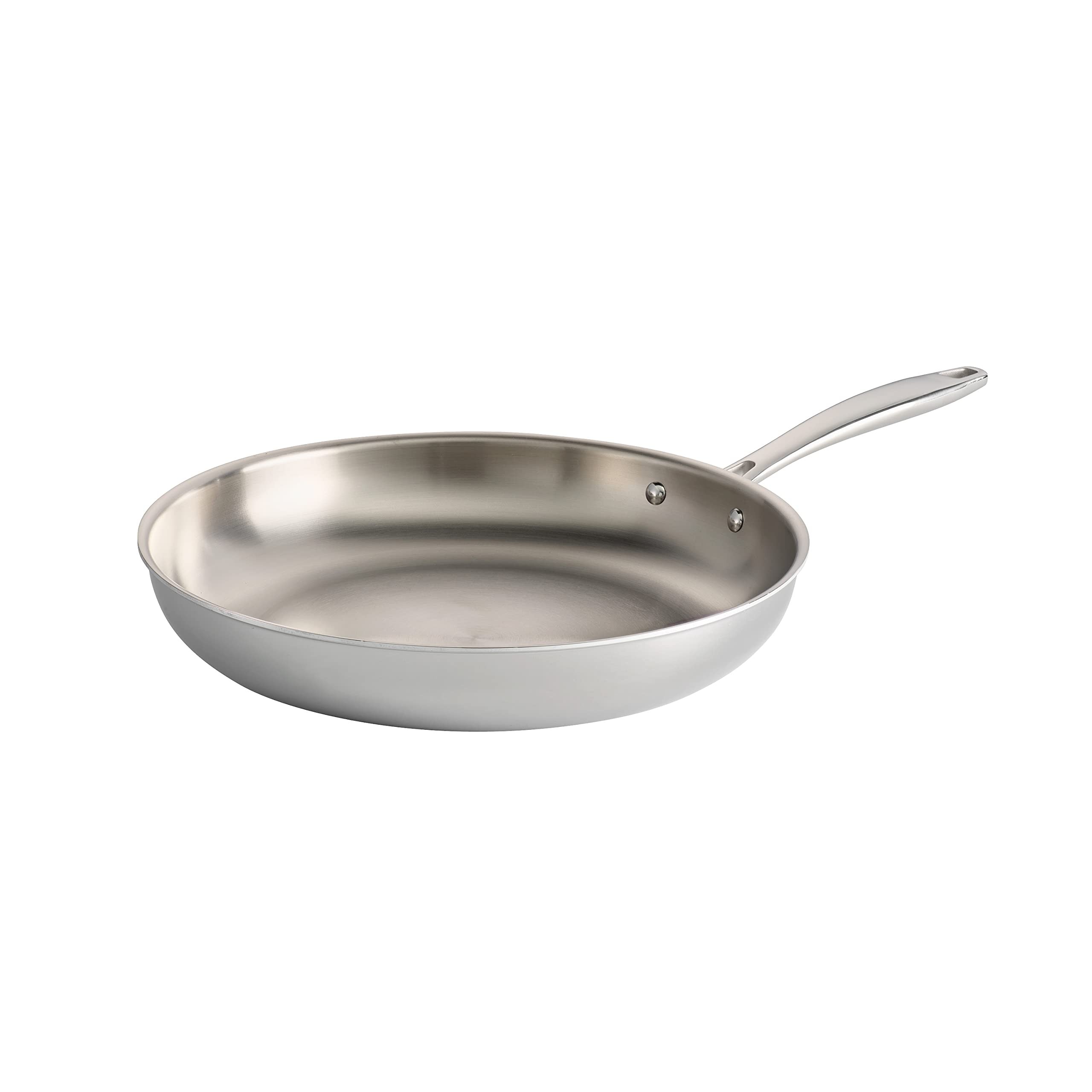
Tramontina 12-Inch Tri-Ply Clad Stainless Fry Pan
Genuine tri-ply construction , same bonding method as All-Clad at a fraction of the price
Buy on Amazon| Product | Price Range | Top Strength | Key Weakness | Buy |
|---|---|---|---|---|
| OXO Good Grips Stainless Steel Utensil Set (5-Piece) best overall | $$ | Stainless steel heads won't scratch or melt , safe for high-heat cooking | Handles can loosen over time with heavy use | Buy on Amazon |
| All-Clad D3 Stainless 12-Inch Fry Pan also consider | $$$ | Tri-ply construction bonds stainless and aluminum for perfectly even heating | Stainless surface requires technique to prevent sticking , not beginner-friendly | Buy on Amazon |
| Tramontina 12-Inch Tri-Ply Clad Stainless Fry Pan also consider | $$ | Genuine tri-ply construction , same bonding method as All-Clad at a fraction of the price | Slightly thinner gauge than All-Clad , marginally less heat retention | Buy on Amazon |
| All-Clad D3 Stainless 6-Quart Saute Pan also consider | $$$ | Straight walls prevent liquid from escaping during reduction | Very heavy pan , harder to maneuver than a skillet | Buy on Amazon |
| Demeyere Industry 11-Inch Skillet also consider | $$$ | 5-ply TriplInduc base optimized specifically for induction cooktops | One of the most expensive stainless skillets available | Buy on Amazon |
| Mauviel M'Heritage Copper Saucepan 1.9-Quart also consider | $$$ | Copper reacts to heat changes within seconds , unmatched for sauce work | Requires polishing to maintain the copper finish | Buy on Amazon |
Stainless steel cookware rewards good technique and good tools in equal measure. Buy the right pan and then stir it with a metal fork, and you’ve already started losing. The utensils matter, the pans matter, and the relationship between them matters more than most buying guides acknowledge. This roundup covers both sides of that equation: the cookware worth buying and the utensils that belong in it. If you’re building a stainless setup from scratch, or replacing pieces that have let you down, the Stainless & Clad hub is the broader reference point. This article gets specific.
A note on why I’ve grouped utensils and cookware together in one piece: because the worst advice I see repeated is that you should use wooden spoons or silicone spatulas in stainless steel to avoid scratching. Stainless steel is not nonstick. Surface scratches don’t compromise it. What you’re actually protecting when you choose utensils carefully is the cooking surface’s ability to release food properly, and for that, the construction of the pan matters far more than the material of your spoon.
Top Picks
OXO Good Grips Stainless Steel Utensil Set (5-Piece)
The OXO Good Grips Stainless Steel Utensil Set is mid-range pricing for what amounts to a complete functional kit. You get a spoon, a spatula, a ladle, a slotted spoon, and tongs. Those five tools cover roughly 90 percent of what happens in a stainless pan on a daily basis.
The stainless steel heads are the point. They won’t scratch the cooking surface in any meaningful way, they won’t melt if you leave them resting against a hot pan edge, and they’re rigid enough to actually scrape the fond from the bottom of a skillet without flexing uselessly. The soft-grip handles stay comfortable through extended use and don’t transfer heat.
Pros
- Stainless heads hold up to high-heat cooking without deforming
- Soft-grip handles reduce fatigue during longer cooking sessions
- Five-piece kit covers the most-used tools without redundancy
Cons
- Handles can loosen at the rivets with sustained heavy use
- Hand-wash recommended if you want the rivets to hold long-term
The caveat on dishwasher use is real. I’ve put similar riveted utensils through the dishwasher and regretted it at about the 18-month mark. Hand-washing takes thirty seconds.
All-Clad D3 Stainless 12-Inch Fry Pan
The All-Clad D3 Stainless 12-Inch Fry Pan is the benchmark against which most tri-ply skillets in this price category get measured, including by me. I cooked on an All-Clad D3 for eight years before adding other pans to the rotation, and the construction still holds up to scrutiny. Three bonded layers, stainless on the exterior and interior with an aluminum core running the full length of the pan, not just the base. That matters for even heating on gas especially, where a disc-bottom pan will show hot spots at the edges.
It’s one of the pricier options in this class, and the price is high relative to imported tri-ply alternatives. That gap is real. But it’s also made in the USA, backed by a lifetime warranty, and oven-safe to 600°F. Induction compatible.
The surface requires technique. If you put cold chicken breast in a dry cold pan and expect it to release cleanly, it won’t. Preheat the pan, add fat, wait for the fat to shimmer, then add food. That’s not a product flaw, that’s stainless steel.
Pros
- Full tri-ply construction, not just a disc base
- Oven-safe to 600°F, induction compatible
- Lifetime warranty, made in the USA
Cons
- Premium pricing relative to comparable imported construction
- Stainless surface is unforgiving of improper heat management
Tramontina 12-Inch Tri-Ply Clad Stainless Fry Pan
The Tramontina 12-Inch Tri-Ply Clad Stainless Fry Pan is the direct value comparison to the All-Clad D3 above. Same construction method, genuine full-clad tri-ply bonded throughout the pan, not a cladded base with thinner walls. Made in Brazil, oven-safe to 500°F, induction compatible. It costs roughly half the All-Clad unit.
The differences are real but marginal. The gauge is slightly thinner, which means marginally less heat retention when you’re cooking something that drops the pan temperature significantly, like a large batch of cold proteins. The handle ergonomics are functional without being refined. If you pick up both pans in a store, you’ll notice the difference in fit immediately. Whether that difference justifies the price gap is a question only your budget can answer.
For most home cooks, the Tramontina performs well enough that the All-Clad premium is hard to defend purely on cooking outcomes. Where the All-Clad earns its price is longevity, finish quality, and the warranty. (I’m not saying the Tramontina won’t last. I’m saying I’ve seen enough All-Clad pans outlive two kitchens to trust the long game.)
Pros
- Full tri-ply construction at mid-range pricing
- Induction compatible, oven-safe to 500°F
- Genuine value alternative for capable daily cooking
Cons
- Slightly thinner gauge than All-Clad, marginally less heat retention
- Handle feel is functional, not ergonomically refined
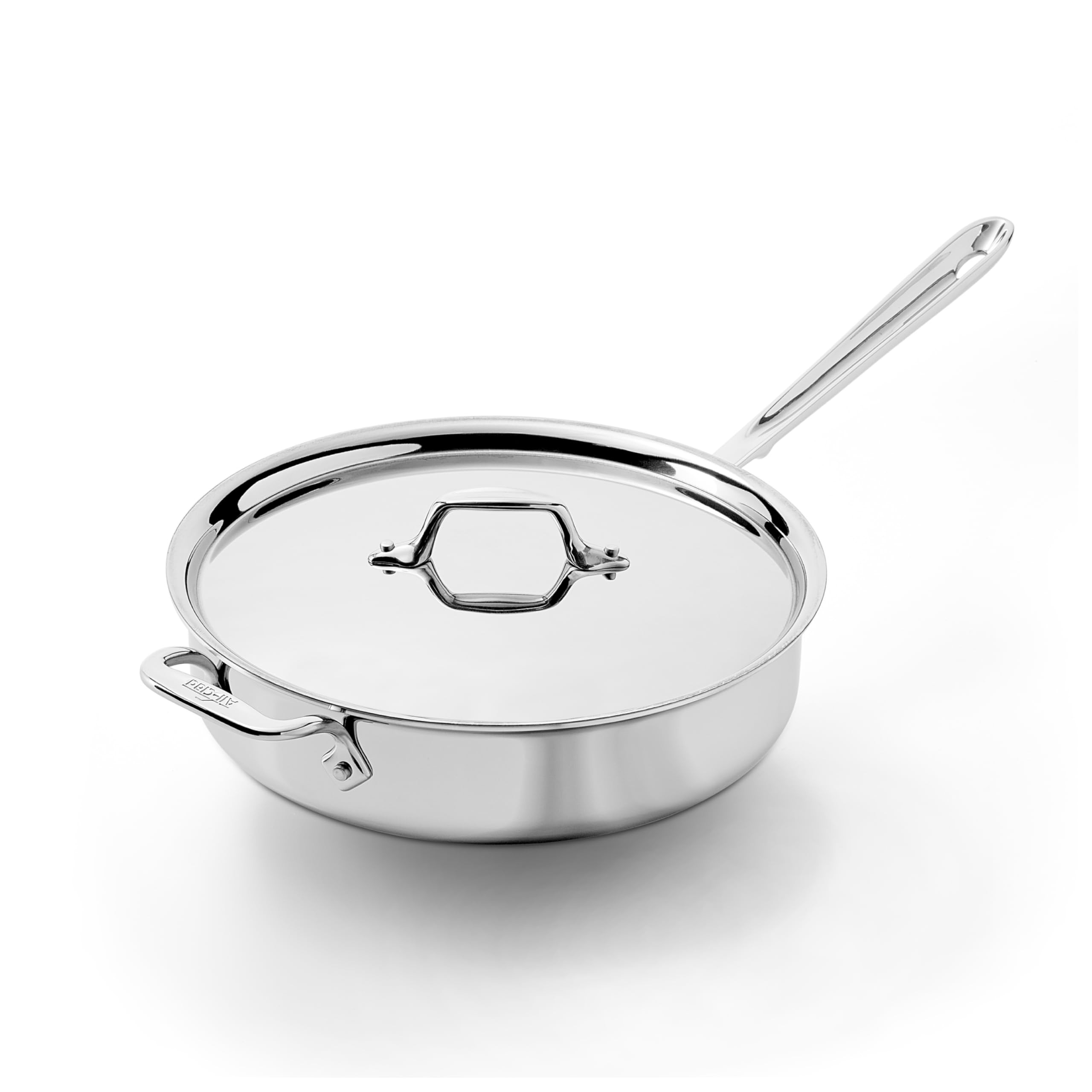
All-Clad D3 Stainless 6-Quart Saute Pan
The All-Clad D3 Stainless 6-Quart Saute Pan is the pan I reach for when a skillet isn’t enough and a Dutch oven is too much. The straight walls keep liquid in during reductions and sauces. The large flat base handles a whole batch of chicken thighs without crowding, which matters more than it sounds: crowding is how good browning becomes steaming. The included lid is heavy and well-fitting.
The comparison to a Dutch oven is worth making directly. A Dutch oven is deeper and more versatile for long braises and soups, but the saute pan’s wider base and lower walls give you better evaporation control for pan sauces. If you’re choosing between the two, the saute pan is the better dedicated stovetop tool. The Dutch oven wins if you need oven-to-table presentation or extreme capacity.
This is one of the priciest pieces in the All-Clad lineup. The weight is also significant. Lifting this pan one-handed while full is not something I’d recommend without a deliberate grip.
Pros
- Straight walls ideal for reductions and sauces
- Large cooking surface prevents crowding
- Heavy lid included, oven-safe to 600°F
Cons
- Substantial weight, especially when full
- Premium pricing, toward the high end even within All-Clad’s range
Demeyere Industry 11-Inch Skillet
The Demeyere Industry 11-Inch Skillet is built differently than the All-Clad. Demeyere’s TriplInduc base uses five layers rather than three, with specific optimization for induction efficiency. The result is faster response to temperature changes on induction, which is the one cooktop where the All-Clad’s advantage over budget pans shrinks. If you cook on induction, the Demeyere is the stronger argument. If you cook on gas, the All-Clad D3 is equally capable at lower cost.
For a more detailed look at how these two brands approach construction differently, the Demeyere vs All-Clad comparison covers the build philosophy at length. Short version: All-Clad prioritizes even heat distribution across the full cooking surface. Demeyere prioritizes base performance and long-term durability at the riveted handle joint, which is notably solid on this pan.
It’s one of the most expensive stainless skillets available. Heavier than All-Clad equivalents. Belgian-made, lifetime warranty.
Pros
- 5-ply base specifically optimized for induction
- Handle stays notably cool longer than most stainless alternatives
- Lifetime warranty, Belgian manufacture
Cons
- Among the most expensive stainless skillets in this size class
- Heavier than All-Clad equivalents
Mauviel M’Heritage Copper Saucepan 1.9-Quart
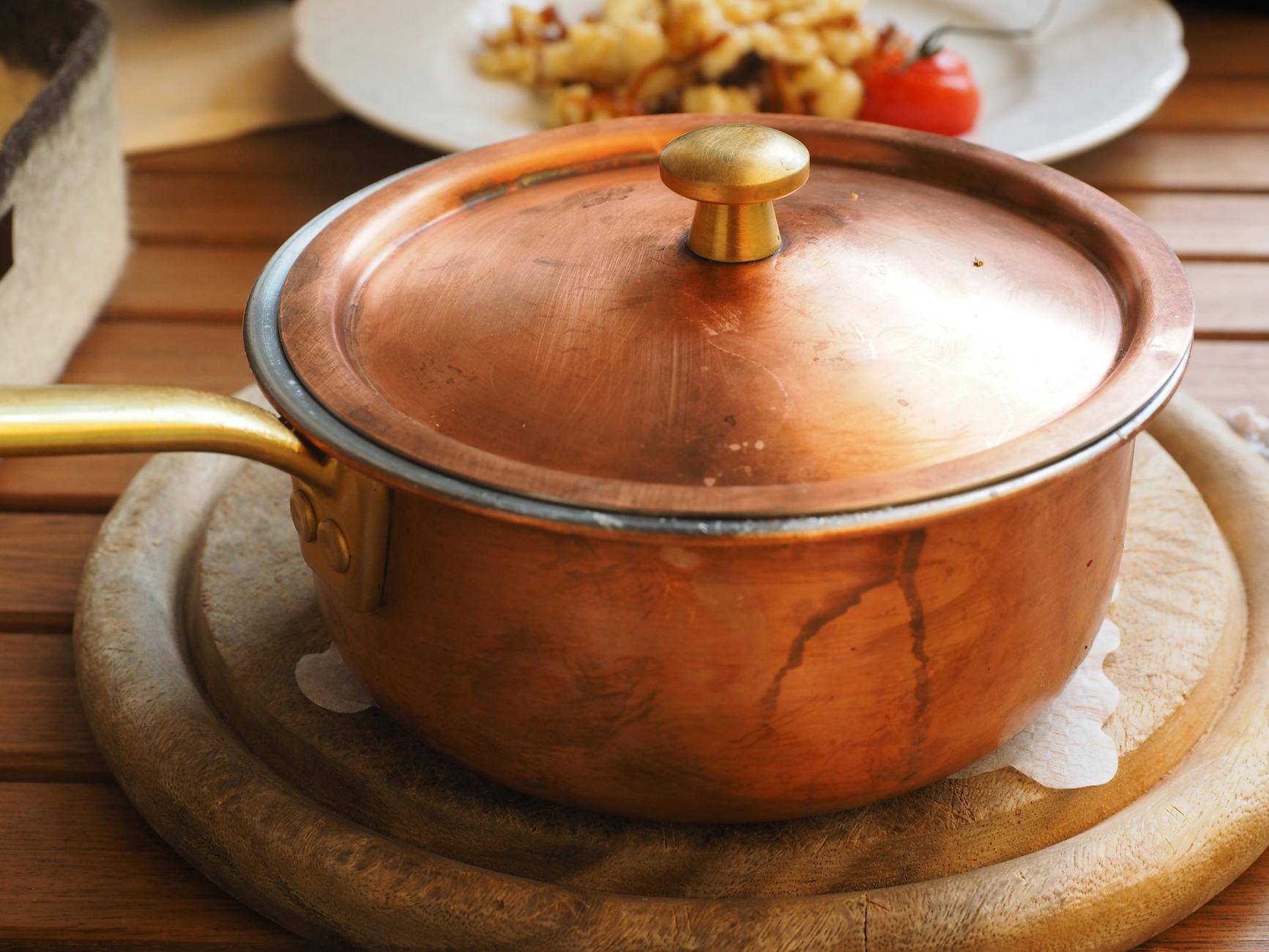
The Mauviel M’Heritage Copper Saucepan is not for everyday cooking. It’s for the moments where heat control is the difference between hollandaise and scrambled eggs, between caramel and carbon. Copper responds to heat changes within seconds. The stainless lining is non-reactive and easy to clean. This is why professional pastry kitchens use copper saucepans for work that punishes imprecision.
For that specific use, nothing in this roundup competes. For general cooking, it’s difficult to justify. The copper exterior requires polishing to maintain its appearance, and the price is at the very top of this category. If you’re making pan sauces and reductions in a stainless skillet, the Demeyere or All-Clad will serve you well. If you’re making chocolate work or candy, the Mauviel is the right tool and there’s no close second. You can also look at the Mauviel roasting pan if you’re already invested in the brand and want to extend the range.
Pros
- Copper provides unmatched speed and precision in heat response
- Stainless lining is non-reactive and easy to maintain
- The standard for professional pastry and sauce work
Cons
- Requires regular polishing to maintain the copper exterior
- Very expensive, difficult to justify outside of specialized precision cooking
Buying Guide
Utensils: What Actually Belongs in Stainless Steel
Stainless steel cooking surfaces can handle metal utensils without damage to the pan’s performance. The concern with metal tools in nonstick cookware is valid because nonstick coatings scratch. Stainless steel is not coated. Use stainless utensils freely.
That said, certain shapes work better than others. A thin, flexible stainless spatula is more useful in a stainless skillet than a thick rigid one, because you need to get under food that’s releasing from the surface. The OXO set’s spatula is the right profile for this.
Silicone utensils work in stainless but have a practical problem: they don’t conduct heat feedback the way metal does, and they’re often too flexible to scrape properly. Wooden spoons are fine but absorb flavors over time and aren’t suitable for high-heat searing. Metal is the practical answer for stainless cookware. If you’ve been avoiding it out of habit from nonstick, stop.
Construction: Tri-Ply vs. Multi-Ply
Tri-ply means three bonded layers: stainless, aluminum, stainless. Five-ply adds additional layers, usually more aluminum or sometimes copper. The practical difference for most home cooking is smaller than manufacturers suggest. What matters more is whether the cladding runs the full height of the pan or just the base. A disc-bottom pan is cheaper to produce but distributes heat less evenly up the walls, which shows in cooking results. Full-clad construction is the specification to look for.
For a broader overview of construction grades across price points, the stainless steel cookware sets guide covers what the 18/10 designation means and which construction types appear at which price bands.
Price Bands and Honest Expectations
Budget stainless cookware typically uses disc-bottom construction. Mid-range starts to include full tri-ply clad construction, which is where genuine performance begins. Premium adds better alloys, more precise manufacturing tolerances, optimized designs for specific cooktops, and warranties that mean something. The Tramontina sits at the upper end of mid-range. All-Clad and Demeyere are premium. Mauviel is premium with a specialized use case.
The right entry point depends on how often you cook and what you cook. If you’re in the kitchen four or five nights a week doing real cooking, mid-range full-clad is the floor worth spending to. If you’re cooking twice a week, start with the Tramontina and see whether the All-Clad gap ever becomes relevant to your results.
Check current pricing on Amazon before drawing conclusions, since price bands shift and sale pricing occasionally makes premium options competitive with mid-range retail.
Frequently Asked Questions
Can you use metal utensils in stainless steel cookware?
Yes. Stainless steel cooking surfaces are not coated, so metal utensils don’t cause the same damage they would in nonstick pans. Surface scratches may appear over time but don’t affect cooking performance or food safety. Stainless steel develops its own patina with use.
Why does food stick to my stainless steel pan?
The most common cause is not preheating the pan long enough before adding fat or food. Stainless steel has microscopic pores that expand and contract with temperature. Adding food before the pan reaches the right temperature allows proteins to bond with the metal. Preheat the pan, add fat, wait until the fat shimmers or a drop of water beads and skips across the surface, then add food. That sequence prevents the majority of sticking problems.
Is tri-ply stainless steel worth paying more for?
Compared to disc-bottom stainless, yes. Full tri-ply construction heats more evenly up the walls of the pan, which matters for sauteing and saucing. Compared to five-ply, the difference is less clear for most home cooking tasks. The jump from disc-bottom to full-clad construction is the significant one.
What’s the difference between a saute pan and a skillet for stainless cooking?
A skillet has flared sides, which makes it easier to toss food and gives better access for a spatula. A saute pan has straight sides, which contain liquid better during reductions and allow you to add larger volumes of stock or sauce without spillover. For searing and pan-frying, a skillet is the more practical shape. For braises, pan sauces, and cooking proteins in liquid, the saute pan is the better tool.
Do I need to season stainless steel cookware like cast iron?
No. Stainless steel doesn’t require or benefit from seasoning the way cast iron or carbon steel does. What it does require is proper heat management before each use, described above. Some cooks do a light rub of oil before first use, but this is cosmetic, not functional. If you’re interested in carbon steel as a complement to your stainless setup, the Mauviel carbon steel cookware piece covers the actual seasoning process for that material.
OXO Good Grips Stainless Steel Utensil Set (5-Piece)
- Stainless steel heads won't scratch or melt , safe for high-heat cooking
- Soft-grip handles stay cool and comfortable
- Handles can loosen over time with heavy use
All-Clad D3 Stainless 12-Inch Fry Pan
- Tri-ply construction bonds stainless and aluminum for perfectly even heating
- Oven-safe to 600°F; compatible with all cooktops including induction
- Stainless surface requires technique to prevent sticking , not beginner-friendly
Tramontina 12-Inch Tri-Ply Clad Stainless Fry Pan
- Genuine tri-ply construction , same bonding method as All-Clad at a fraction of the price
- Oven-safe to 500°F; induction compatible
- Slightly thinner gauge than All-Clad , marginally less heat retention
All-Clad D3 Stainless 6-Quart Saute Pan
- Straight walls prevent liquid from escaping during reduction
- Large cooking surface handles a whole batch of chicken thighs without crowding
- Very heavy pan , harder to maneuver than a skillet
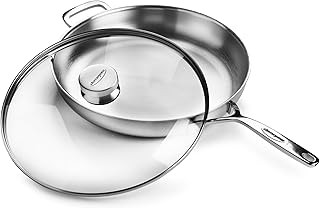
Demeyere Industry 11-Inch Skillet
- 5-ply TriplInduc base optimized specifically for induction cooktops
- Riveted handle stays cool longer than most stainless pans
- One of the most expensive stainless skillets available
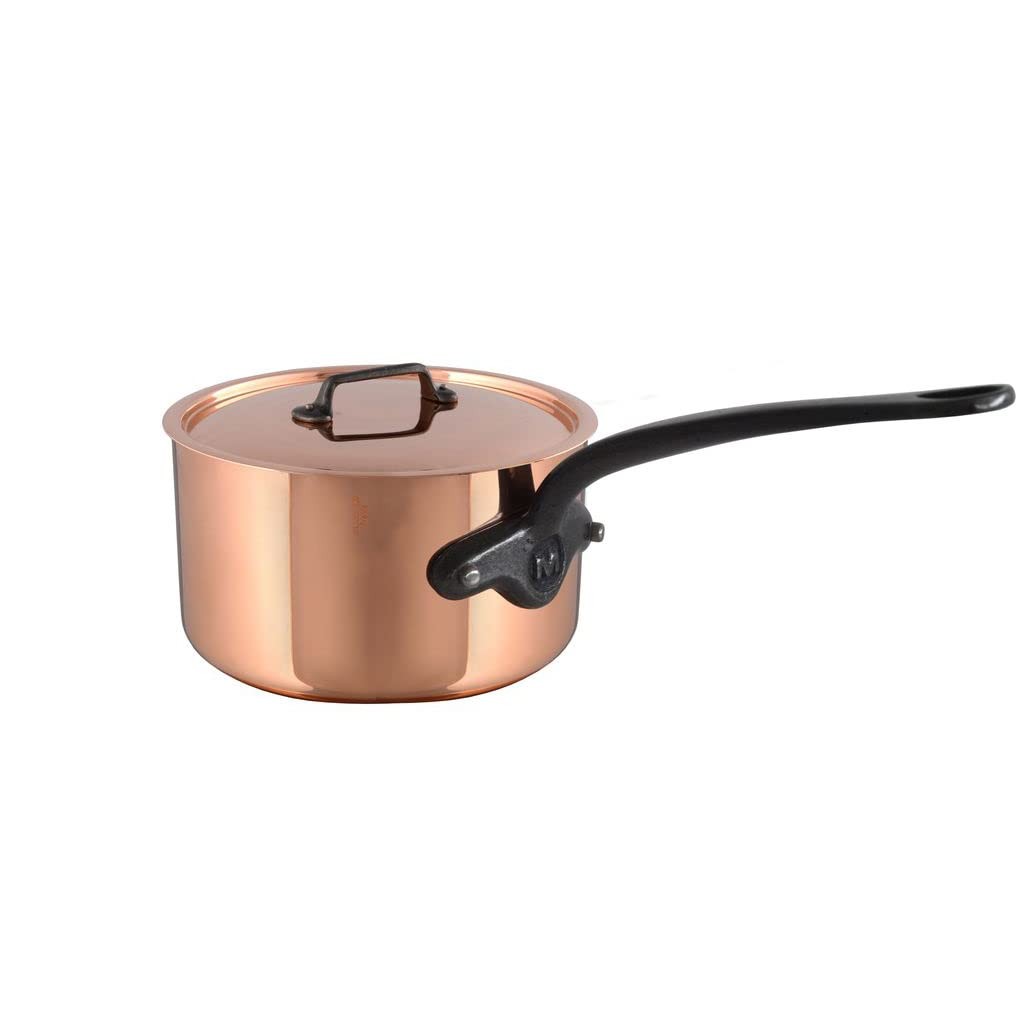
Mauviel M'Heritage Copper Saucepan 1.9-Quart
- Copper reacts to heat changes within seconds , unmatched for sauce work
- Stainless lining is non-reactive and easy to clean
- Requires polishing to maintain the copper finish
Frequently Asked Questions
Can I use nonstick utensils on stainless steel cookware?
Yes, but they are unnecessary. Stainless steel cookware is not a nonstick surface, so the main concern is not scratching a coating — it is heat tolerance and durability. Stainless steel utensils are the best match for stainless pans because they handle high heat, are dishwasher safe, and will not melt or warp.
Will metal utensils scratch stainless steel cookware?
Metal utensils can leave light surface scratches on stainless steel, but these are cosmetic and do not affect cooking performance or safety. Unlike nonstick coatings, stainless steel is not compromised by surface marks — the pan continues to perform identically.
What utensil material is safest for stainless steel pans at high heat?
Stainless steel utensils are the safest choice because they are fully heat-stable with no melting risk. Silicone-tipped utensils are also fine up to their rated temperature, typically 400–600°F depending on the product. Avoid plastic utensils, which can melt and deform in a hot stainless pan.
Are wooden spoons okay to use with stainless steel cookware?
Yes. Wood is heat-resistant, gentle on surfaces, and will not scratch or react with stainless steel. The limitation is that wood cannot go in the dishwasher and will crack or warp with repeated moisture exposure, so hand wash and dry wooden utensils immediately after use.
Do I need a different utensil set for induction-compatible stainless pans?
No. The cooktop type does not affect which utensils you use in the pan. Stainless steel utensils work equally well on gas, electric, and induction setups.
Where to Buy
OXO Good Grips Stainless Steel Utensil Set (5-Piece)See OXO Good Grips Stainless Steel Utensi… on Amazon