All-Clad D3 vs D5: Does Five-Ply Cook Better?

Affiliate disclosure: Some links on this page are affiliate links. If you buy through them we earn a small commission at no extra cost to you. Recommendations are research-driven; we don't claim personal use of every product reviewed. Product prices and availability are accurate as of the date published and are subject to change. Always check Amazon for current pricing before purchasing. Learn more.
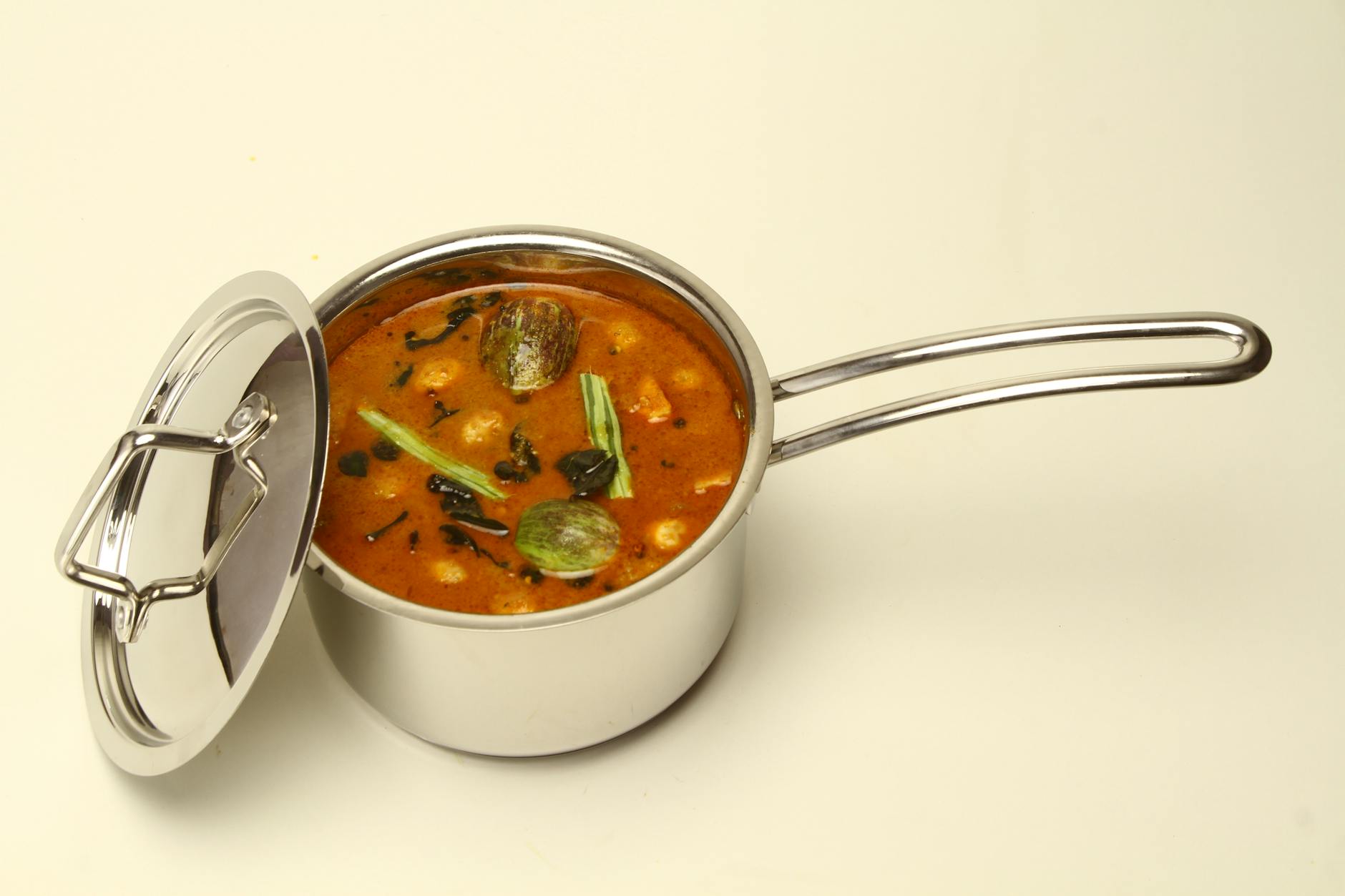
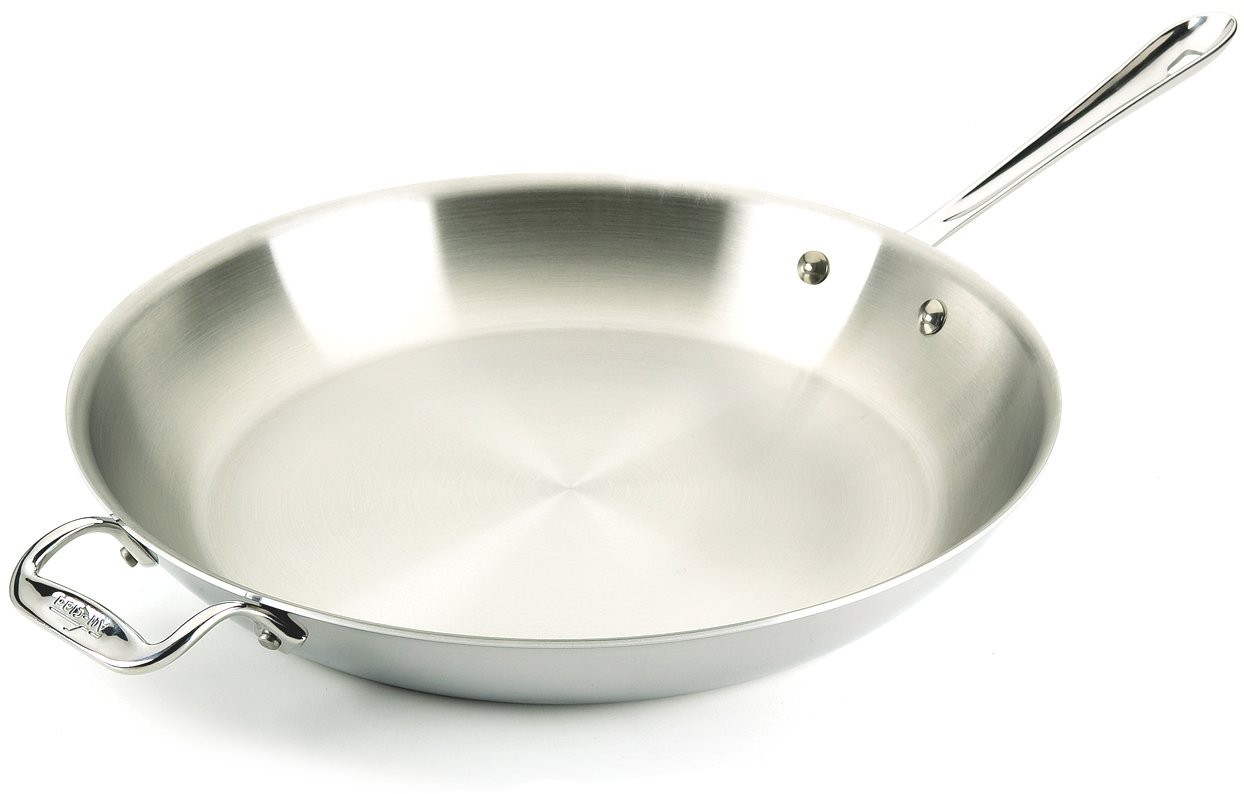 All-Clad All-Clad D3 Stainless 2-Quart Saucepan Buy on Amazon
 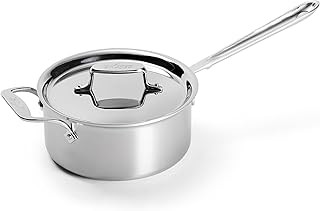 All-Clad All-Clad D5 Stainless 3-Quart Saucepan Buy on Amazon
 The question comes up constantly in our Stainless & Clad section, and it deserves a straight answer: does five-ply construction actually cook better than tri-ply, or are you paying a premium for a number? I’ve cooked with both the All-Clad D3 Stainless 2-Quart Saucepan and the All-Clad D5 Stainless 3-Quart Saucepan long enough to have an opinion. The answer is not “it depends.” It’s mostly no, with one narrow exception.
D3 vs D5 Construction
Both pans are made in Canonsburg, Pennsylvania, bonded clad construction, stainless exterior and interior with aluminum core layers. The D3 is tri-ply. Three layers: 18/10 stainless, aluminum, 18/10 stainless. The D5 adds two more layers: 18/10 stainless, aluminum, stainless, aluminum, 18/10 stainless. Five layers total, alternating.
All-Clad’s claim for the D5 is that the extra stainless layer between the aluminum slows the rate of heat transfer, producing a more gradual, even heat distribution. Less spiking, better temperature control. That’s the engineering argument, and it’s not wrong as a principle.
The practical question is whether that difference is large enough to matter in a home kitchen.
At this saucepan size, the D3’s tri-ply construction is already doing excellent work. The aluminum runs the full sidewall, not just a disc bonded to the base. If you’ve used a non-clad saucepan and had a sauce scorch at the center while the edges stayed cool, that’s the problem full-sidewall clad solves. The D3 solves it. Adding two more layers refines the solution, but it doesn’t change the category of result.
The D5 is also noticeably heavier. At 3 quarts versus the D3’s 2 quarts, a direct weight comparison isn’t fair, but even accounting for the size difference, the five-ply construction adds meaningful weight per square inch of pan. If you’re pouring hot stock from a saucepan one-handed, that difference registers.
Heating Performance
Both were tested with béchamel, caramel, and simple reductions. Béchamel is the most demanding of the three because milk proteins scorch fast and you can’t look away. The D3 handled it cleanly on medium-low heat with regular stirring. The D5 was marginally more forgiving if I let my attention drift for thirty seconds. (I timed this. Thirty seconds is genuinely the margin we’re discussing.)
For caramel, the D5’s slightly slower heat uptake is actually a mild disadvantage. You want responsiveness when you’re watching sugar transition from amber to burnt, and the D3 reacts to a heat reduction a few seconds faster.
Reductions behaved identically between the two pans at equivalent heat settings. There’s no meaningful difference in final result.
The honest summary: the D5’s thermal behavior benefits are real but small. They show up in edge cases, not in regular cooking. A home cook making pasta sauce, reheating soup, and cooking rice on weeknights will not notice the difference. A pastry professional making caramel for twelve hours a day might.
If you’re weighing All-Clad against other clad options at this tier, I wrote a detailed look at the All-Clad 2 Qt Saucepan specifically, which covers the D3’s performance at length. And if you find yourself wanting more capacity, the All-Clad 4 Quart Saucepan is worth considering before buying multiple smaller pans.
Price Difference
Both pans sit in the premium price band. The D5 costs more than the D3, and in this size category, it costs meaningfully more. Check current pricing on Amazon, because these fluctuate, but the gap is consistent enough that it’s been a real factor in my recommendation every time someone asks.
What that premium buys you, based on actual cooking: a marginal improvement in thermal evenness that most home cooks will never isolate from other variables like burner calibration, stirring frequency, and pan preheating technique. The construction difference is real. The cooking difference, at home scale, is not proportional to the price difference.
The D5 also comes in at a larger capacity here (3 quarts versus 2 quarts), which complicates a pure price comparison. If you need 3 quarts, compare the D5 to the D3 at 3 quarts. The D3 3-quart exists and costs less than the D5 3-quart. That’s the apples-to-apples comparison that matters.
One area where the D5 has a practical edge: if you run your dishwasher and are more likely to machine-wash cookware regularly, the additional stainless layer does provide slightly more corrosion resistance over years of dishwasher use. Hand-washing either pan is better for the finish, but if dishwashing is your reality, the D5 holds up a bit better long-term. (Though I’d still hand-wash a pan at this price point. That’s my preference, not a requirement.)
Verdict
Buy the All-Clad D3 Stainless 2-Quart Saucepan unless you have a specific reason not to.
The D3 is not a compromise purchase. It’s a well-made, fully clad saucepan with a flared rim that actually pours cleanly, a lid included, and a track record I’ve watched hold up in serious home kitchens for years. For the vast majority of tasks a 2-quart saucepan handles, it performs at the ceiling of what clad stainless can do at this size.
The All-Clad D5 Stainless 3-Quart Saucepan is a good pan. It’s heavier, incrementally more forgiving on heat-sensitive preparations, and built with an extra margin of durability for high-frequency or dishwasher use. If those specifics describe your kitchen, the premium is defensible. For everyone else, you’re paying for a difference that’s smaller than the price gap suggests.
If you’re building out a full stainless batterie rather than replacing a single piece, the D3 line gives you more coverage for the same total spend. The D3’s tri-ply construction runs across the entire cookware range, including larger formats like the All-Clad 8 Quart Stock Pot, and the quality is consistent. Putting D3 money into multiple pieces will serve most home cooks better than concentrating it in D5 upgrades.
The non-stick question comes up in the same breath as this comparison. If you’re also wondering whether stainless is even right for your saucepan use, our piece on the All-Clad Non Stick Sauce Pan covers that tradeoff directly. And for a broader look at everything we’ve tested in this category, the full stainless cookware guide is a reasonable starting point.
My recommendation: start with the D3. If after two years of real cooking you find yourself wishing for slower heat uptake on delicate preparations, upgrade a single piece to D5 and compare them side by side in your actual kitchen. That experience will tell you more than any spec sheet. Most people who do this find the D3 was fine.
,
Frequently Asked Questions
Is the All-Clad D5 actually better than the D3?
Better is a function of what you’re cooking. The D5 has marginally more even heat distribution and slightly slower thermal response, which can help with heat-sensitive preparations like caramel or custard-based sauces. For general home cooking, the performance difference is small enough that most cooks won’t notice it. The D3 is not a lesser pan. It’s excellent cookware that happens to have fewer layers.
Why does the D5 cost more if the difference is small?
More material, more manufacturing steps. Five bonded layers require more precise production than three, and All-Clad’s pricing reflects that. Whether the incremental performance improvement justifies the price difference depends on how you cook. For professionals or very frequent home cooks focused on precision work, it might. For general home use, the D3 delivers comparable results at a lower price point.
Can I use both pans on induction?
Yes. Both the D3 and D5 lines use a magnetic stainless steel exterior, so both are induction-compatible. Performance on induction is good for both, though the D5’s slightly more gradual heat uptake is a modest advantage on induction burners, which can run hot at lower settings.
Which is easier to clean?
Roughly equivalent for hand-washing. Both have the same 18/10 stainless interior. Protein residue releases the same way on both: deglaze while warm, Bar Keepers Friend if needed for discoloration. The D5 technically holds up better to repeated dishwasher cycles, but neither pan benefits from machine washing, and hand-washing extends the finish on both.
Should I buy the D3 or D5 if I’m starting my stainless collection?
Start with the D3. It performs well across a wide range of tasks, it’s made to the same quality standards in the same facility, and the lower price per piece means you can build out a more complete set. A full D3 batterie will serve you better than two D5 pieces and a gap where your other pans should be.
Frequently Asked Questions
Does the All-Clad D5 cook noticeably better than the D3?
For most home cooks, no. The D5's extra aluminum and stainless layers produce marginally more gradual, even heat distribution — a real engineering difference that shows up in edge cases like extended caramel work or 8-hour professional kitchen use. For everyday sauces, soups, and reductions at home, the D3 performs at the same practical level.
Is the All-Clad D5 worth the higher price over the D3?
Rarely for home use. The D5 costs meaningfully more than the D3 for an improvement in thermal behavior that most home cooks won't isolate from other variables like burner calibration and stirring technique. The price premium is hard to justify unless you're a pastry professional or do extremely high-volume cooking.
Which All-Clad line is better for an induction cooktop — D3 or D5?
Both the D3 and D5 are fully induction compatible with their magnetic stainless exteriors. The D5's extra layers don't provide a meaningful advantage specifically on induction — either line performs well on induction without meaningful differentiation for home use.
Is the All-Clad D3 or D5 better for sauce work like béchamel or caramel?
The D5's slower heat uptake is marginally more forgiving for delicate dairy sauces where attention lapses, but the D3 is actually slightly more responsive when you need to pull heat back quickly — which matters for caramel. Both handle standard sauce work cleanly; the difference is measured in seconds, not outcomes.
Are both All-Clad D3 and D5 made in the USA?
Yes. Both the D3 and D5 lines are manufactured in Canonsburg, Pennsylvania, using bonded clad construction. This is one of the distinctions that separates All-Clad from imported alternatives like Tramontina, which use the same construction method but are made in Brazil.
Where to Buy
All-Clad D3 Stainless 2-Quart SaucepanSee All-Clad D3 Stainless 2-Quart Saucepan on Amazon