Best Stand Mixer for Bread: Heavy-Duty Models Tested

Affiliate disclosure: Some links on this page are affiliate links. If you buy through them we earn a small commission at no extra cost to you. Recommendations are research-driven; we don't claim personal use of every product reviewed. Product prices and availability are accurate as of the date published and are subject to change. Always check Amazon for current pricing before purchasing. Learn more.

Quick Picks

KitchenAid Professional 600 6-Quart Stand Mixer
6-quart bowl handles double batches and heavy bread doughs with ease
Buy on Amazon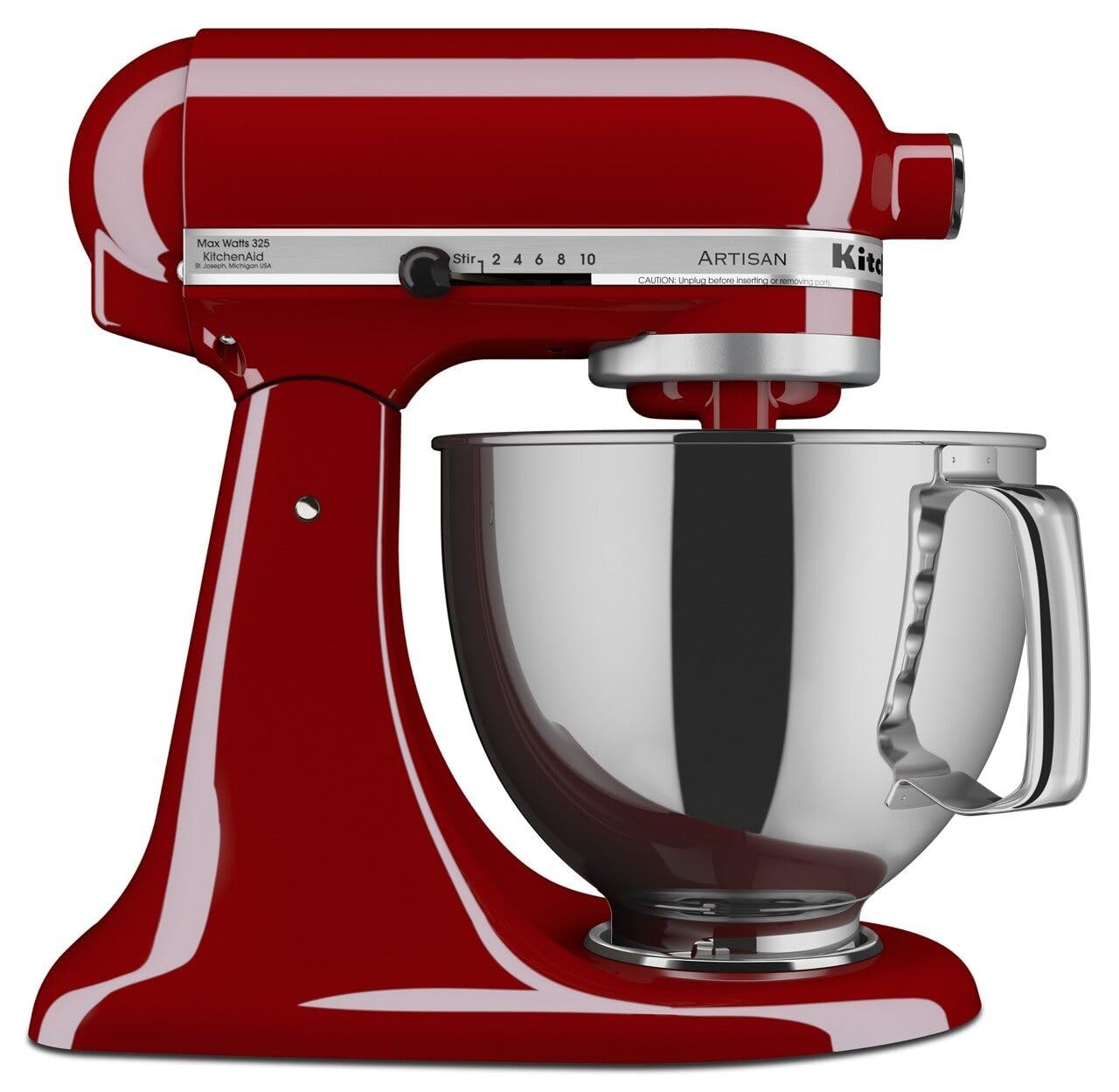
KitchenAid Artisan 5-Quart Stand Mixer (KSM150PS)
10 speeds handle everything from meringue to bread dough
Buy on Amazon
Ankarsrum Original Stand Mixer
7-quart bowl, 600W motor , handles the largest batches of any home mixer
Buy on Amazon| Product | Price Range | Top Strength | Key Weakness | Buy |
|---|---|---|---|---|
| KitchenAid Professional 600 6-Quart Stand Mixer best overall | $$$ | 6-quart bowl handles double batches and heavy bread doughs with ease | Significantly heavier than the Artisan , harder to store | Buy on Amazon |
| KitchenAid Artisan 5-Quart Stand Mixer (KSM150PS) also consider | $$$ | 10 speeds handle everything from meringue to bread dough | Expensive , over $400 at full retail | Buy on Amazon |
| Ankarsrum Original Stand Mixer also consider | $$$ | 7-quart bowl, 600W motor , handles the largest batches of any home mixer | Very different learning curve from KitchenAid , takes time to master | Buy on Amazon |
| Bosch Universal Plus 800W Stand Mixer also consider | $$ | 800W motor , more powerful than KitchenAid Artisan for sustained dough kneading | Attachment ecosystem much smaller than KitchenAid | Buy on Amazon |
| KitchenAid Dough Hook (Spiral) also consider | $ | Spiral design is more efficient at developing gluten than the old C-hook | Not effective below 2 cups of flour , too little dough for the hook to grab | Buy on Amazon |
Most stand mixer reviews treat bread dough as one task among many, somewhere between whipping cream and making cookie dough. That framing misses the point. Bread dough is the hardest thing a home mixer will ever do. It’s dense, it’s sustained, and it punishes an underpowered motor quickly. If bread is a regular part of your kitchen, the mixer you choose matters more than any other single appliance decision.
This roundup covers the mixers worth considering if dough is the primary job, with some honest notes on where the popular defaults fall short. For a broader look at the category, the Stand Mixers hub has more context on how these machines compare across all uses.
Top Picks at a Glance
Best overall for most home bakers. The KitchenAid Artisan 5-Quart Stand Mixer (KSM150PS) handles most bread recipes without complaint and backs it up with an attachment ecosystem no other home mixer matches. If you bake bread two or three times a week and make single loaves, this is the right machine.
Best for serious volume. The Ankarsrum Original Stand Mixer is the one to consider if dough is genuinely the main event in your kitchen. Different to operate, niche to find, and more expensive than you’d like, but its roller-and-scraper system develops gluten in a way KitchenAid’s hook simply doesn’t replicate.
Best value for heavy dough work. The Bosch Universal Plus 800W Stand Mixer runs an 800W motor and a 6.5-quart bowl at mid-range pricing, which puts it well below the KitchenAid Professional 600 for comparable capacity. The attachment ecosystem is thin, but if bread is the point, you won’t miss it.
KitchenAid Professional 600 6-Quart Stand Mixer
The KitchenAid Professional 600 6-Quart Stand Mixer is the machine people buy when they’ve outgrown the Artisan, or think they have. Six quarts handles double batches of bread dough without the motor bogging down. The bowl-lift design is more stable than the tilt-head under load, which matters when you’re running a stiff rye or a whole wheat dough for eight minutes straight.
The honest question is whether you actually need it. If you’re baking one standard loaf at a time, you don’t. The extra quart and the more powerful motor are real, but so is the weight. This mixer is heavy enough that if it’s coming off the counter between uses, you’ll feel it. (I have a dedicated spot for mine and still find the bowl-lift’s two-handed engagement mildly annoying on a Wednesday morning.)
For anyone regularly baking for a crowd, doubling recipes, or working with dense enriched doughs like brioche and pullman loaves, the Professional 600 earns its price. For occasional weekend bread bakers, the Artisan is the more practical machine at a lower price point.
Check current price on Amazon.
The Spiral Dough Hook Upgrade
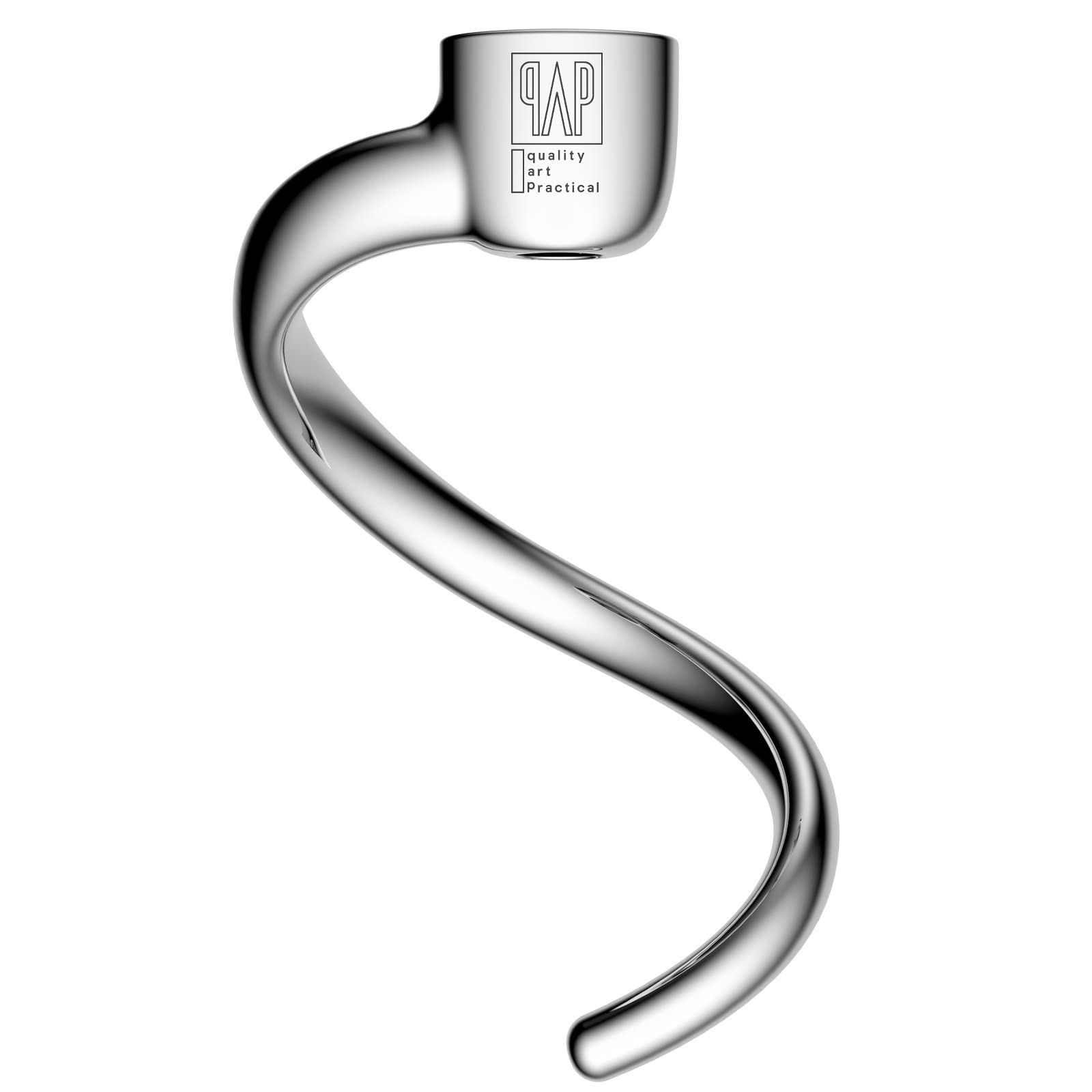
Whether you’re using the Professional 600 or the Artisan, the KitchenAid Dough Hook (Spiral) is worth understanding. KitchenAid shipped the old C-hook for years, and plenty of machines still come with it. The spiral design engages dough more efficiently because it pulls the mass inward and downward continuously rather than dragging it around the bowl in a single arc.
The practical difference is gluten development time. With the C-hook, you’re often compensating with longer run times or stopping to fold. The spiral hook does the work it’s supposed to do.
Two caveats worth knowing. Below about two cups of flour, there’s not enough dough mass for the hook to grab properly and you’ll mostly watch it spin. And at high speeds on a long run, over-development is a real possibility with stronger flours. Speed 2 for bread dough. That’s not a suggestion.
The spiral hook fits all KitchenAid 5- and 6-quart machines, both tilt-head and bowl-lift, and it’s stainless steel and dishwasher safe.
Ankarsrum Original Stand Mixer
The Ankarsrum Original Stand Mixer gets recommended by serious bread bakers with a conviction you don’t often hear about kitchen equipment. That enthusiasm is not misplaced, but it requires some context.
The Ankarsrum is Swedish-made, has a 7-year warranty (the longest in this category by a significant margin), runs a 600W motor, and uses a 7-quart bowl. None of that is why the bread bakers love it. They love it because of how it handles dough. The roller-and-scraper system works differently from a hook. The dough wraps around the roller and gets worked in a continuous, natural kneading motion rather than being dragged by a fixed attachment. The result is more consistent gluten development, particularly in high-hydration doughs where a hook tends to struggle.
If you’ve ever watched your KitchenAid hook climb the dough ball and start spinning above it rather than in it, that’s the problem the Ankarsrum solves.
The learning curve is real. The bowl is not attached the way you’d expect, the speed and timer controls work differently, and the first two or three uses feel counterintuitive if you’ve spent years with a KitchenAid. Give it proper time before judging it.
At premium pricing, roughly comparable to or slightly above the Professional 600 depending on timing, it’s not a casual purchase. But for someone whose kitchen centers on bread, it’s the better tool. Check current price on Amazon.
Bosch Universal Plus 800W Stand Mixer
The Bosch Universal Plus 800W Stand Mixer is the recommendation that gets passed around in bread-baking communities but rarely shows up in mainstream mixer roundups, probably because it doesn’t have the brand recognition of KitchenAid or the cult following of the Ankarsrum.
At mid-range pricing, it offers 800W, a 6.5-quart bowl, and a motor that sits below the bowl rather than above it, which lowers the center of gravity and makes the machine noticeably lighter to move than the KitchenAid Professional despite comparable capacity. For sustained dough kneading, 800W is meaningful. The Artisan runs at roughly half that wattage under load.
The attachment ecosystem is sparse. If you want to run pasta attachments, a meat grinder, or anything beyond basic baking tasks, the Bosch is not the machine for that. The bowl attachment mechanism is also less intuitive than KitchenAid’s, though it becomes second nature quickly enough.
For a baker who wants serious capacity and motor power at a price well below the KitchenAid Professional 600, this is the machine. It does one set of things very well and doesn’t pretend otherwise.
KitchenAid Artisan 5-Quart Stand Mixer (KSM150PS)
The KitchenAid Artisan 5-Quart Stand Mixer (KSM150PS) is the default recommendation for a reason. Planetary mixing action means the attachment moves through the full bowl on every rotation, which matters most when you’re making sure dough gets worked evenly rather than leaving a dry pocket against the bowl wall. Ten speeds give you enough range to go from a slow initial incorporation to a sustained knead without having to stop and adjust.
The attachment hub is what separates it from every other mixer in this roundup. Pasta maker, meat grinder, ice cream maker, grain mill. If the mixer is going to earn counter space in a kitchen that does more than bread, that ecosystem matters. For a comparison of KitchenAid accessories worth adding, the whisk attachment for KitchenAid guide covers the most useful additions for everyday baking.
The five-quart bowl is the limitation for bread. A standard two-loaf recipe pushes it, and a double batch of a denser dough will tax the motor. If your bread baking stays at one loaf at a time, this is a non-issue. If you’re regularly baking for more than four people, budget up to the Professional 600.
Premium pricing puts it among the pricier tilt-head options in its class. Whether that’s justified depends almost entirely on whether you’ll use the attachment ecosystem. If you won’t, the Bosch Universal Plus delivers more dough-specific performance for less money.
For anyone considering pushing KitchenAid capacity further, the KitchenAid 8-quart commercial stand mixer is worth knowing about, though it’s a different machine entirely and priced accordingly.
How to Choose a Stand Mixer for Bread
Capacity first. A five-quart bowl is workable for single loaves. Double batches and dense doughs ask for six quarts minimum. The Bosch Universal Plus and the KitchenAid Professional 600 both sit in that range at different price points.
Motor rating is imperfect but directional. Wattage ratings across brands are not measured consistently. The Bosch at 800W and the Ankarsrum at 600W are not directly comparable to KitchenAid’s ratings. What matters more is whether the motor bogs or heats up under a sustained eight-minute knead. If it does, you have the wrong machine.
Bowl design matters for dough specifically. Tilt-head machines are convenient for adding ingredients, but bowl-lift designs are more stable under heavy loads. For bread bakers doing regular, long kneads, the bowl-lift is worth the minor inconvenience of the two-handed engagement.
Attachment ecosystem is a genuine differentiator only if you’ll use it. The KitchenAid hub is unmatched. But if the mixer lives on your counter exclusively for bread, the Bosch Universal Plus gives you more motor and more bowl for less money, and the missing attachment slots won’t bother you.
For a full comparison of the KitchenAid lineup from the Artisan up through the commercial models, the Stand Mixers hub covers the range in detail.
,
Frequently Asked Questions
Can a KitchenAid Artisan handle bread dough regularly?
Yes, with caveats. The Artisan handles single-loaf recipes without issue and runs reasonably well on most standard bread doughs. The limits show with stiff doughs, double batches, and long kneading sessions. If you’re baking one loaf a week, it holds up fine. Daily baking with dense doughs will eventually stress the motor, and the five-quart bowl becomes a real constraint once you start scaling recipes.
Is the Ankarsrum actually better than KitchenAid for bread?
For bread specifically, yes, in the ways that matter to serious bakers. The roller-and-scraper system handles high-hydration doughs better than a hook, develops gluten more consistently, and the seven-quart bowl and seven-year warranty are both category-leading. The tradeoff is a genuine learning curve, limited availability, and premium pricing. For a general-purpose mixer or an occasional bread baker, KitchenAid is the more practical answer.
What’s the difference between the spiral and C-hook dough hook?
The C-hook drags dough around the bowl in a single arc. The spiral hook pulls dough inward and downward continuously, which means more consistent contact and more efficient gluten development. The upgrade is meaningful for bread bakers and fits all current KitchenAid 5- and 6-quart machines. If your machine came with the older C-hook, the spiral replacement is worth the cost.
How many quarts do I need for bread baking?
For single standard loaves (roughly 3 to 4 cups of flour), five quarts is adequate. For two-loaf batches, six quarts is the practical minimum. The Bosch Universal Plus at 6.5 quarts and the KitchenAid Professional 600 at 6 quarts both handle double batches without crowding the bowl. The Ankarsrum’s seven-quart bowl is the most generous option in this roundup.
Why is the Bosch Universal Plus recommended less often than KitchenAid?
Primarily brand familiarity and the attachment ecosystem. KitchenAid has the wider retail presence, the color options, and the accessories catalog. The Bosch is harder to find in stores and has a smaller following, which means fewer online resources and community recipes written around it. On raw performance for bread, the 800W motor and 6.5-quart bowl at mid-range pricing are a strong argument. It’s underrated in mainstream recommendations for reasons that have more to do with marketing than with the machine.
KitchenAid Professional 600 6-Quart Stand Mixer
- 6-quart bowl handles double batches and heavy bread doughs with ease
- Bowl-lift design more stable than tilt-head for stiff mixtures
- Significantly heavier than the Artisan , harder to store
KitchenAid Artisan 5-Quart Stand Mixer (KSM150PS)
- 10 speeds handle everything from meringue to bread dough
- Planetary mixing action reaches the entire bowl , no unmixed pockets
- Expensive , over $400 at full retail
Ankarsrum Original Stand Mixer
- 7-quart bowl, 600W motor , handles the largest batches of any home mixer
- Swedish-made with a 7-year warranty , longest in the category
- Very different learning curve from KitchenAid , takes time to master
Bosch Universal Plus 800W Stand Mixer
- 800W motor , more powerful than KitchenAid Artisan for sustained dough kneading
- 6.5-quart bowl at a lower price than KitchenAid Professional
- Attachment ecosystem much smaller than KitchenAid
KitchenAid Dough Hook (Spiral)
- Spiral design is more efficient at developing gluten than the old C-hook
- Fits all KitchenAid 5- and 6-quart tilt-head and bowl-lift mixers
- Not effective below 2 cups of flour , too little dough for the hook to grab
Frequently Asked Questions
What wattage stand mixer do I need for bread dough?
For occasional single loaves, a 325W motor (KitchenAid Artisan) handles most bread recipes. For regular baking, dense doughs, or double batches, step up to a 575W or higher motor — the KitchenAid Professional 600 (575W), Bosch Universal Plus (800W), or Ankarsrum (600W) handle sustained kneading without motor strain.
Is the KitchenAid Artisan strong enough for bread dough?
For most home bakers making one loaf at a time with standard bread recipes, yes. The Artisan struggles with very stiff doughs (like bagels) and large double batches, where the motor can overheat during extended kneading cycles. If bread is your primary use, the KitchenAid Professional 600 with its bowl-lift design is a more appropriate machine.
What is the advantage of a bowl-lift stand mixer for bread?
Bowl-lift mixers (like the KitchenAid Professional series) lock the bowl into a fixed position, providing a more stable platform for the motor to work against when kneading stiff dough. Tilt-head designs (like the Artisan) are more convenient for adding ingredients but flex slightly under heavy loads, which can stress the motor during long kneading sessions.
How long should I knead bread dough in a stand mixer?
Most bread recipes call for 8–12 minutes of kneading on low to medium-low speed (speed 2 on a KitchenAid). The dough is properly developed when it pulls cleanly away from the bowl sides and passes the windowpane test — a small piece stretched thin without tearing.
Is the Ankarsrum a better bread mixer than KitchenAid?
For dedicated bread bakers making large batches, many experts consider the Ankarsrum superior — its 7-quart capacity, 600W motor, and roller-and-hook kneading system are specifically engineered for dough. The trade-off is a significant learning curve and a much smaller attachment ecosystem compared to KitchenAid.
Where to Buy
KitchenAid Professional 600 6-Quart Stand MixerSee KitchenAid Professional 600 6-Quart S… on Amazon