Whisk Attachment for KitchenAid: A Buyer's Guide

Affiliate disclosure: Some links on this page are affiliate links. If you buy through them we earn a small commission at no extra cost to you. Recommendations are research-driven; we don't claim personal use of every product reviewed. Product prices and availability are accurate as of the date published and are subject to change. Always check Amazon for current pricing before purchasing. Learn more.

Quick Picks
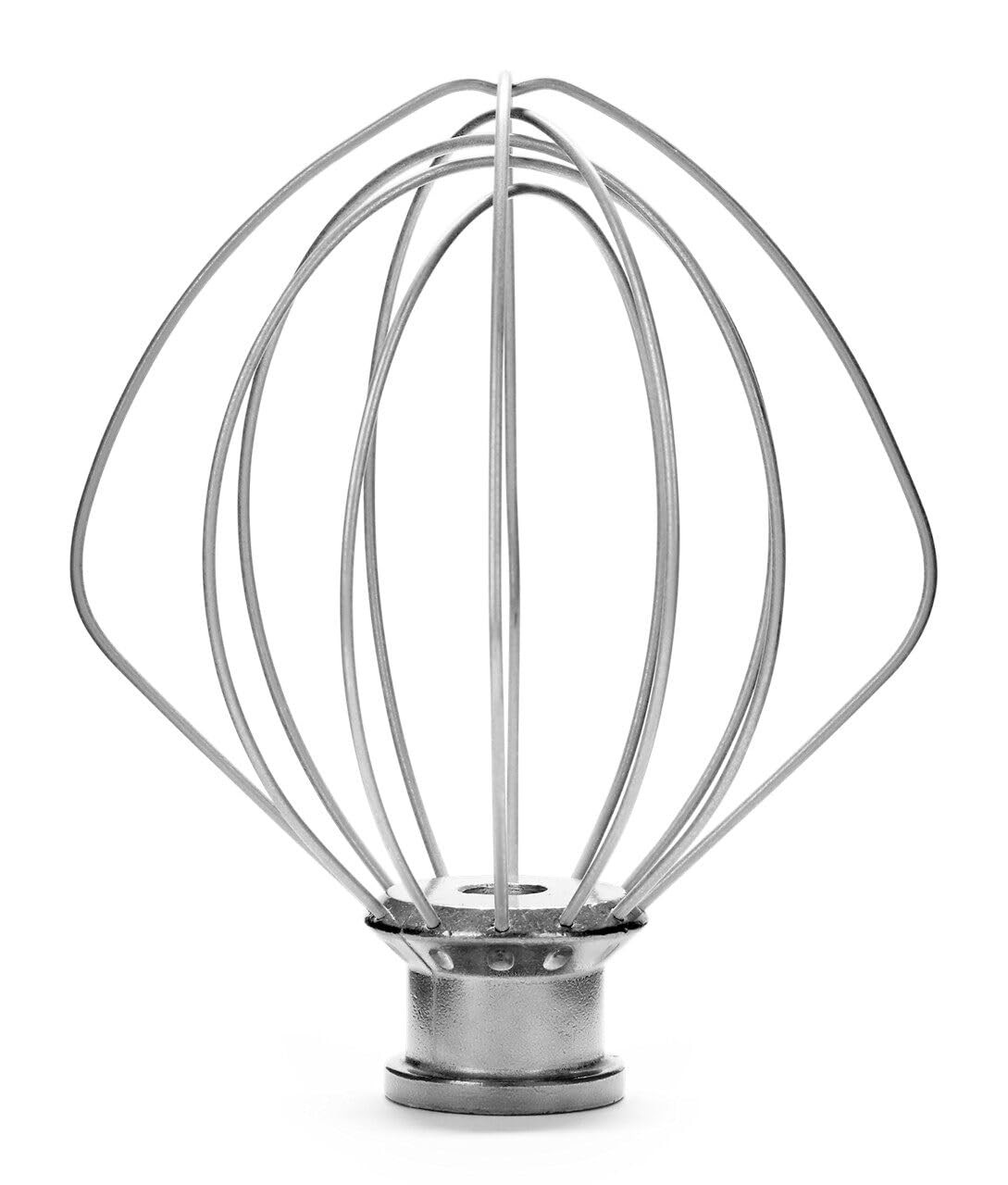
KitchenAid 5-Quart Wire Whip
Thin wires incorporate maximum air , ideal for meringue, whipped cream, and mousse
Buy on Amazon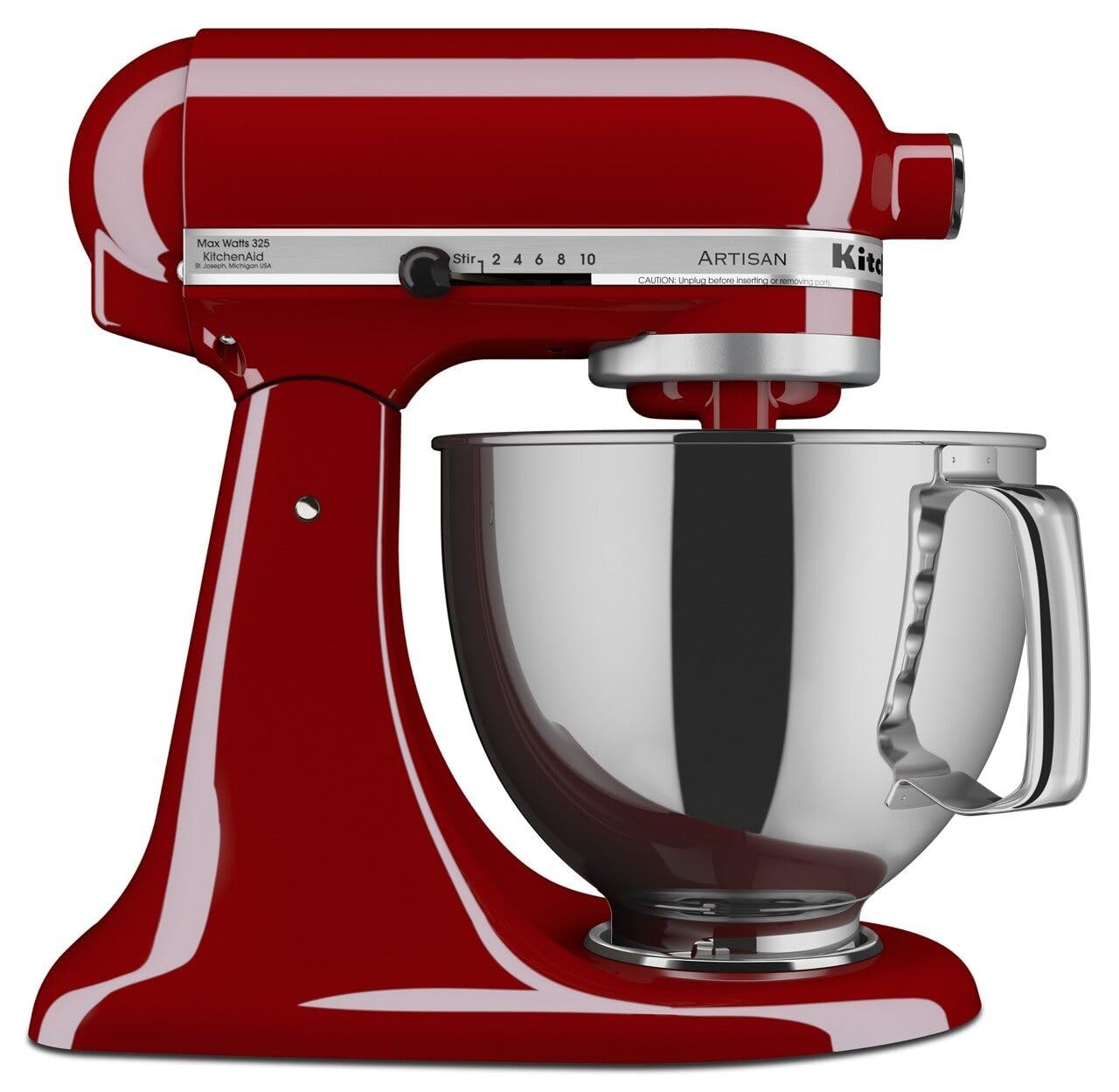
KitchenAid Artisan 5-Quart Stand Mixer (KSM150PS)
10 speeds handle everything from meringue to bread dough
Buy on Amazon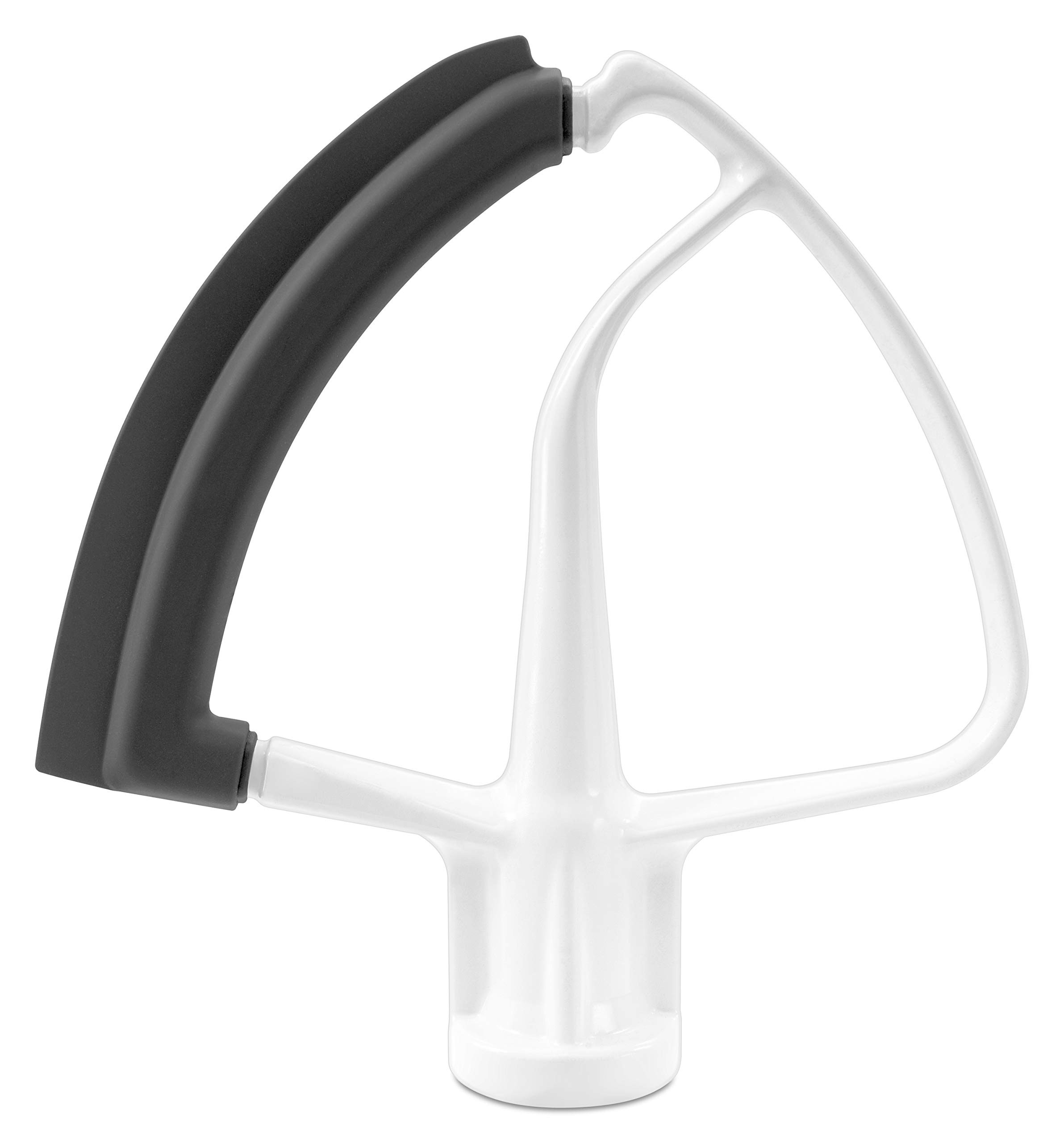
KitchenAid Flex Edge Beater
Flexible silicone edge scrapes the bowl sides automatically during mixing
Buy on Amazon| Product | Price Range | Top Strength | Key Weakness | Buy |
|---|---|---|---|---|
| KitchenAid 5-Quart Wire Whip best overall | $ | Thin wires incorporate maximum air , ideal for meringue, whipped cream, and mousse | Single-purpose , not useful for mixing dense doughs or batters | Buy on Amazon |
| KitchenAid Artisan 5-Quart Stand Mixer (KSM150PS) also consider | $$$ | 10 speeds handle everything from meringue to bread dough | Expensive , over $400 at full retail | Buy on Amazon |
| KitchenAid Flex Edge Beater also consider | $ | Flexible silicone edge scrapes the bowl sides automatically during mixing | Silicone edge can wear over time with heavy use | Buy on Amazon |
| KitchenAid Dough Hook (Spiral) also consider | $ | Spiral design is more efficient at developing gluten than the old C-hook | Not effective below 2 cups of flour , too little dough for the hook to grab | Buy on Amazon |
KitchenAid sells each stand mixer with three attachments in the box: a flat beater, a dough hook, and a wire whip. Most buyers use the flat beater for everything and wonder why their meringue is dense or their bread dough tears. The attachments aren’t interchangeable, and choosing the wrong one for a given task produces predictably bad results. This guide covers the four attachments worth owning, what each one actually does well, and where each one falls short.
If you’re still deciding on the mixer itself, the Stand Mixers hub has full coverage of the machine options. For the rest of this article, I’m assuming you already own a KitchenAid tilt-head or bowl-lift model and want to know which whisk attachment for KitchenAid makes sense for your cooking.
What to Look For
Fit First
KitchenAid attachments aren’t universally cross-compatible. The 5-quart tilt-head mixers (the Artisan series) take different bowls than the 6-quart or 7-quart bowl-lift models, and some third-party whips are shaped for one but not the other. Before buying any replacement or upgrade attachment, confirm the quart capacity and model series of your machine. KitchenAid’s own attachments list the compatible models on the packaging.
Material and Construction
The original wire whip that ships with most KitchenAid mixers is stainless steel with a chrome-plated collar. It will rust if it sits wet in a sink. The spiral dough hook on newer models is also stainless. The Flex Edge Beater uses a stainless core with a food-grade silicone edge, which adds utility but also a wear point. All four attachments covered here are dishwasher safe according to KitchenAid, though I put the Flex Edge Beater on the top rack only. (I’ve seen silicone edges curl from repeated high-heat drying cycles, which is a specific enough complaint to mention.)
Wire Count and Geometry
Wire whips vary. More wires mean more air incorporation per rotation, which is what you want for meringue and heavy cream. The standard KitchenAid whip uses ten wires in a balloon shape. Third-party options sometimes use fewer, and you feel it in stiff-peak meringue times. Buy the KitchenAid unit if egg whites matter to you.
Top Picks
KitchenAid 5-Quart Wire Whip
The KitchenAid 5-Quart Wire Whip is budget-priced and does one thing exceptionally well: it moves air into liquid. Ten stainless wires in a balloon configuration reach from the center of the bowl outward, and the planetary rotation means the whip traces the full interior without missing the edges.
For meringue, this is the tool. Beat egg whites to soft peaks at speed 6, then increase to speed 8 or 10 to finish. Swiss meringue goes from warm egg whites and sugar to stiff, glossy peaks in roughly four minutes at speed 10. (I timed this on a recent batch for a lemon tart, using three egg whites.) The same logic applies to heavy cream and mousse. The whip incorporates maximum air quickly, which is an asset for cream and a liability if you walk away and forget about it. At speed 8, heavy cream goes from pourable to over-whipped in under thirty seconds once you hit stiff peaks.
What the wire whip won’t do: anything dense. Cookie dough will bend the wires. Standard cake batter at high volume will strain the collar. This is a single-purpose tool and should be treated as one.
If you use a copper bowl for KitchenAid mixer for beating egg whites, this whip pairs well with it. The copper surface stabilizes egg whites through a mild chemical reaction, and the wire whip’s geometry does the mechanical work.
Best for. Meringue, whipped cream, mousse, angel food cake batter, light sponge batters, sabayon.
KitchenAid Artisan 5-Quart Stand Mixer (KSM150PS)
The KitchenAid Artisan 5-Quart Stand Mixer ships with all three standard attachments, so if you’re buying a mixer for the first time, the whip question is partially answered out of the box. It’s a premium-priced machine, one of the pricier options in the home stand mixer category, and the attachment ecosystem is the main reason to pay for it over cheaper alternatives.
The planetary mixing action is real and worth the description. The beater head rotates on its own axis while orbiting the bowl, which eliminates the unmixed pockets you’d get from a beater that only orbits. I ran cake batter in a competing Cuisinart SM-50 for a year before switching back to a KitchenAid, and the difference in batter consistency at the bowl edges was measurable. The KitchenAid leaves no dry patches.
The 5-quart bowl handles most home baking without complaint. Where it gets tight is large bread dough batches. Two standard sandwich loaves worth of dough, around 700 to 750 grams of flour, pushes the capacity. For bigger batches, the KitchenAid 8 quart commercial stand mixer handles the load without straining.
The hub attachment port above the motor head is a legitimate differentiator. The pasta maker, meat grinder, and grain mill attachments all fit the same port, which means the machine earns its counter space across multiple cooking tasks, not just baking.
Best for. The default recommendation for most home bakers who want one machine that handles meringue, bread dough, cookie dough, and will accept specialty attachments.
KitchenAid Flex Edge Beater
The KitchenAid Flex Edge Beater is the most practical upgrade most KitchenAid owners haven’t bought. It’s in the budget price range, and it eliminates a specific physical interruption that adds up over a baking session: stopping the mixer, removing the beater, scraping the bowl sides with a spatula, reattaching the beater, and resuming.
The Flex Edge Beater has a flexible silicone edge bonded to one side of a standard flat beater. As the beater orbits the bowl during planetary mixing, the silicone edge continuously drags against the bowl’s inner surface. Batter that would otherwise accumulate on the sides gets folded back into the mix automatically. For a standard two-layer butter cake, I stop to scrape once with the Flex Edge. With a standard flat beater, I stop four to six times.
The silicone edge is the only real maintenance concern. With heavy use, particularly with stiff batters or frequent high-heat dishwasher cycles, the edge can begin to separate from the metal beater arm. If you notice any curling or peeling, replace the attachment rather than continuing to use it. Food-grade silicone is safe, but a detaching edge becomes a contamination risk.
This is not a dough tool. Very stiff cookie dough or enriched bread dough will stress the silicone edge in ways the standard beater handles without issue.
Best for. Cake batters, mashed potatoes, cookie dough at medium stiffness, any recipe that requires frequent scraping.
KitchenAid Dough Hook (Spiral)
The KitchenAid Dough Hook ships with current KitchenAid models in a spiral configuration, which is an upgrade from the older C-hook. The distinction matters for bread bakers. The C-hook tended to push dough around the bowl rather than consistently folding and stretching it, which meant uneven gluten development and occasional dough climbing up the hook. The spiral design grips the dough and pulls it against the bowl bottom on each rotation, which is mechanically closer to what hand-kneading does.
If your KitchenAid is more than a decade old and still has the C-hook, the spiral replacement is a budget-priced upgrade that will change how your bread doughs perform. The improvement in gluten development is not subtle.
Practical limits. Below about two cups of flour, there isn’t enough mass for the hook to grab consistently. The dough slides away from the hook rather than being worked, and you end up with a shaggy, underdeveloped mix. Scale up or knead by hand for small batches. At the upper end, enriched doughs with a lot of fat, like brioche, can strain the motor on the 5-quart Artisan at high speeds. Keep it at speed 2 for the first few minutes until the flour is hydrated, then move to speed 4 for gluten development.
For anyone baking weekly bread, the dough hook outperforms hand-kneading not because it develops gluten faster but because it develops it more consistently. Arms tire, pressure changes, and the kneading rhythm drifts. The hook doesn’t.
Best for. Sandwich bread, pizza dough, focaccia, brioche (at low speed), any yeast dough requiring ten or more minutes of kneading.
How to Choose
Start with what you actually cook. If your mixer use is primarily cakes and cookies, the Flex Edge Beater is a more immediate upgrade than anything else on this list. If you bake bread weekly, the spiral dough hook belongs in your attachment rotation. If meringue or whipped cream is a regular task, keep the wire whip accessible.
Most home bakers end up using two of these regularly: the Flex Edge Beater for general mixing and the wire whip or dough hook depending on whether their baking leans toward pastry or bread. Buying all four isn’t excessive if you bake across categories, and all four together are still well under the cost of the machine itself.
For high-volume baking, all four attachments also fit the larger bowl-lift models. If you’re scaling up, the KitchenAid 8 qt commercial stand mixer uses the same attachment system, so anything you buy for a 5-quart tilt-head will transfer.
For a broader look at how these attachments compare across different KitchenAid machine configurations, the Stand Mixers hub covers the full lineup, including bowl-lift models and commercial-grade options.
Frequently Asked Questions
Can I use the wire whip for cookie dough or thick batter?
No. The wire whip is designed for liquid and semi-liquid ingredients where air incorporation is the goal. Stiff batters and doughs will bend or break the wires. Use the flat beater or Flex Edge Beater for anything denser than a light sponge batter.
What is the difference between the spiral dough hook and the old C-hook?
The C-hook, included with older KitchenAid models, tends to push dough around the bowl without consistently folding it. The spiral hook grips the dough and pulls it against the bowl bottom on each rotation, developing gluten more evenly. If you have a C-hook, the spiral replacement is worth buying.
Will attachments from my 5-quart mixer fit a 6-quart or 7-quart model?
No. KitchenAid bowl sizes use different attachment geometries. A 5-quart tilt-head attachment will not seat correctly in a 6-quart bowl-lift. Confirm your bowl capacity and model series before purchasing any attachment.
How often does the Flex Edge Beater’s silicone edge need to be replaced?
It depends entirely on use intensity and how you wash it. With regular home use and top-rack dishwasher cycles, the silicone edge typically holds for two to four years. If you notice any peeling or separation from the metal arm, replace the attachment.
Can I use KitchenAid attachments from other brands on my KitchenAid mixer?
Third-party attachments marketed as KitchenAid-compatible generally fit the attachment hub, but wire counts, geometry, and material quality vary significantly. For the whisk attachment specifically, the KitchenAid original uses ten wires in a tested balloon configuration. Third-party whips sometimes use fewer wires, which affects aeration performance on meringue and cream. Buy the KitchenAid unit unless you have a specific reason not to.
Frequently Asked Questions
What is the KitchenAid whisk attachment called?
KitchenAid calls it the wire whip. It is the balloon-style attachment with thin looped wires that ships with most tilt-head and bowl-lift KitchenAid stand mixers. It is specifically designed to incorporate air and is the correct attachment for whipped cream, meringue, mousse, and similar tasks.
Should I use the wire whip or the flat beater for meringue?
Always use the wire whip for meringue. The wire whip's thin wires move through the egg whites quickly and incorporate enough air to build stable foam. The flat beater cannot aerate effectively — it mixes but does not create the lift and structure meringue requires.
Which KitchenAid whisk attachment is best for whipped cream?
The standard wire whip that ships with your KitchenAid is the correct attachment for whipped cream. Start at low speed to begin incorporating air, then increase to medium-high as the cream thickens. Do not use the flat beater or dough hook — neither can whip cream to stable peaks.
Is the KitchenAid Flex Edge Beater a replacement for the wire whip?
No. The Flex Edge Beater is an upgraded flat beater with a silicone scraper edge that cleans the bowl sides during mixing — it is useful for cake batters and cookie doughs, but it cannot aerate like the wire whip. Use the wire whip for any task where air incorporation is the goal.
Do KitchenAid whisk attachments fit all KitchenAid mixers?
KitchenAid attachments are not universally cross-compatible. The 5-quart tilt-head (Artisan) bowl and attachment hub dimensions differ from the 6- and 7-quart bowl-lift models. Always confirm attachment compatibility with your specific mixer model before purchasing, especially for third-party products. KitchenAid's own wire whip is sold separately in versions for specific machine series.
Where to Buy
KitchenAid 5-Quart Wire WhipSee KitchenAid 5-Quart Wire Whip on Amazon