All Clad 6 Quart Saute Pan Review & Alternatives

Affiliate disclosure: Some links on this page are affiliate links. If you buy through them we earn a small commission at no extra cost to you. Recommendations are research-driven; we don't claim personal use of every product reviewed. Product prices and availability are accurate as of the date published and are subject to change. Always check Amazon for current pricing before purchasing. Learn more.
Quick Picks
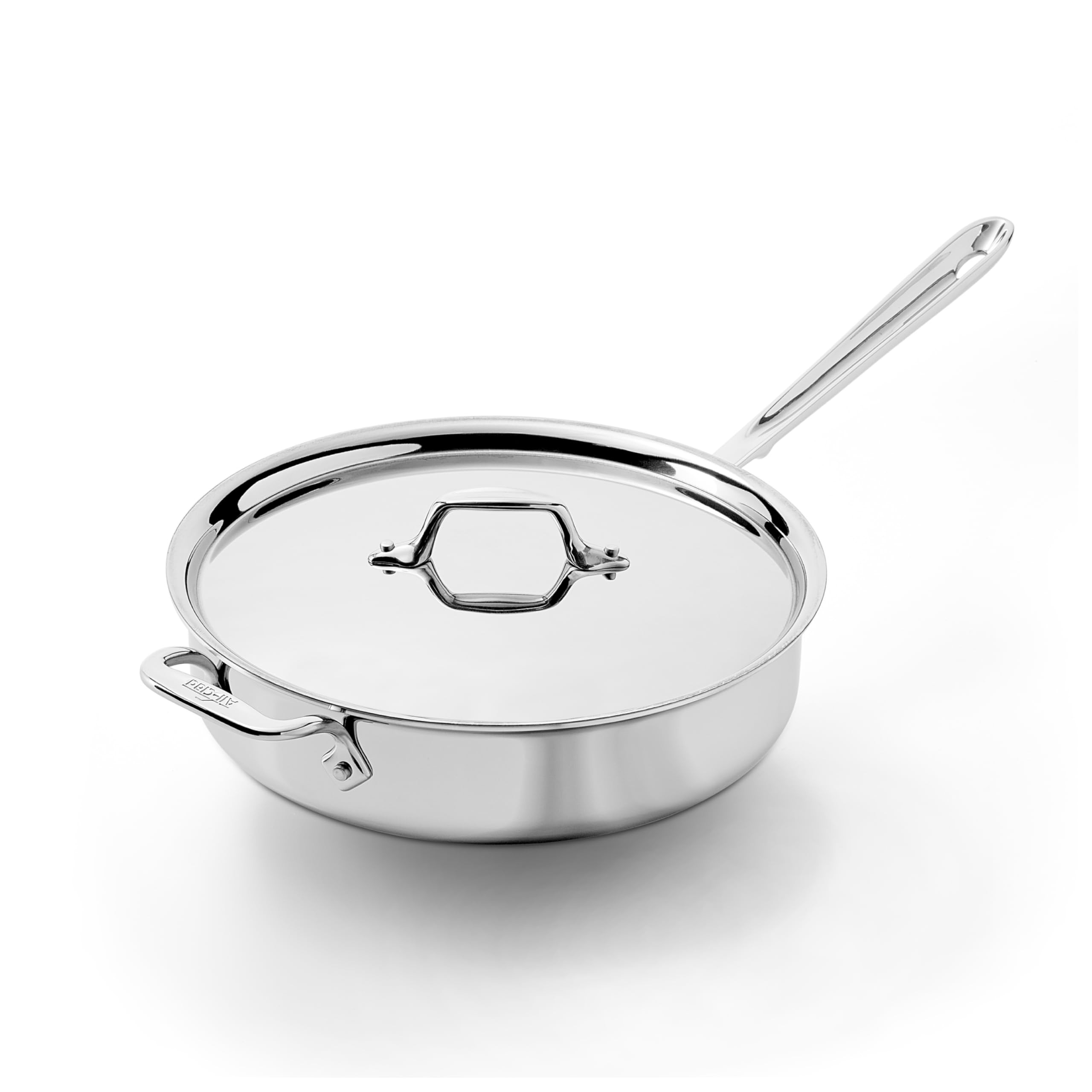
All-Clad D3 Stainless 6-Quart Saute Pan
Straight walls prevent liquid from escaping during reduction
Buy on Amazon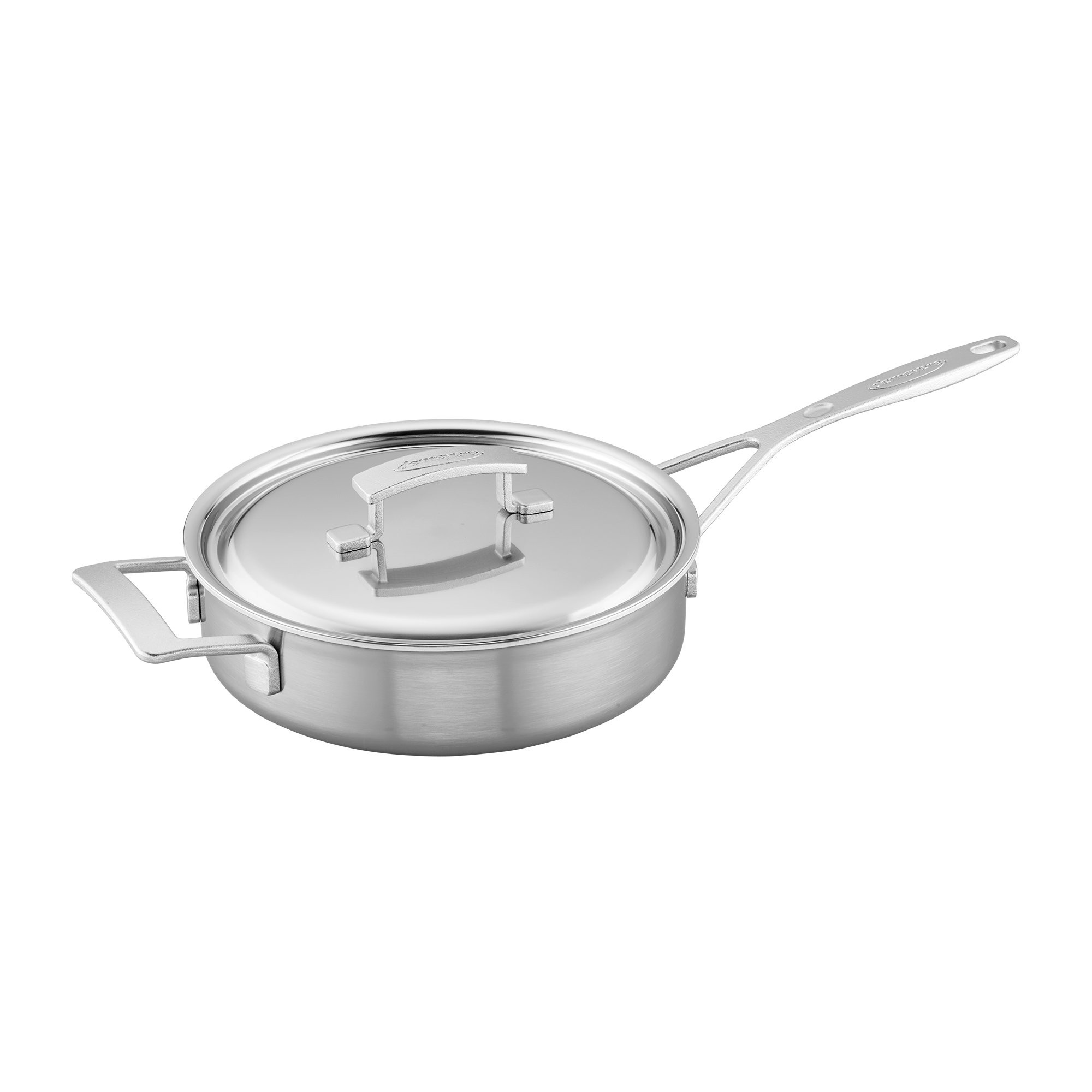
Demeyere Industry 5-Quart Saute Pan
Tall straight walls handle large batches without spilling during stirring
Buy on Amazon
All-Clad D3 Stainless 12-Inch Fry Pan
Tri-ply construction bonds stainless and aluminum for perfectly even heating
Buy on Amazon| Product | Price Range | Top Strength | Key Weakness | Buy |
|---|---|---|---|---|
| All-Clad D3 Stainless 6-Quart Saute Pan best overall | $$$ | Straight walls prevent liquid from escaping during reduction | Very heavy pan , harder to maneuver than a skillet | Buy on Amazon |
| Demeyere Industry 5-Quart Saute Pan also consider | $$$ | Tall straight walls handle large batches without spilling during stirring | Heavy even before adding food | Buy on Amazon |
| All-Clad D3 Stainless 12-Inch Fry Pan also consider | $$$ | Tri-ply construction bonds stainless and aluminum for perfectly even heating | Stainless surface requires technique to prevent sticking , not beginner-friendly | Buy on Amazon |
| Tramontina 12-Inch Tri-Ply Clad Stainless Fry Pan also consider | $$ | Genuine tri-ply construction , same bonding method as All-Clad at a fraction of the price | Slightly thinner gauge than All-Clad , marginally less heat retention | Buy on Amazon |
A 6-quart saute pan is one of those purchases that either becomes the most-used piece in your kitchen or sits on a shelf collecting regret. The difference usually comes down to whether you bought the right pan for your actual cooking rather than a list of specifications. This guide covers the All-Clad D3 Stainless 6-Quart Saute Pan as the primary recommendation, the Demeyere Industry 5-Quart Saute Pan as a serious alternative for induction users, and two skillets for context when you’re deciding whether a saute pan is even the right tool. If you’re building or rebuilding a serious stainless kitchen, the broader Stainless & Clad cookware guide covers how these pieces fit together.
What to Look For in a 6-Quart Saute Pan
Wall Height and Cooking Surface
The functional argument for a saute pan over a skillet is the wall geometry. Straight, vertical walls mean liquid stays where you put it during a braise or pan sauce, and the wide flat base gives you actual searing surface rather than sloped sides that funnel food toward the center. A 6-quart capacity handles a full batch of bone-in chicken thighs without crowding. If you’ve ever tried to brown six thighs in a 12-inch skillet and ended up steaming them instead, that’s what this fixes.
Construction and Gauge
Tri-ply construction bonds an aluminum core between two layers of stainless steel. The aluminum conducts heat fast and evenly; the stainless gives you a durable cooking surface and the ability to deglaze without worrying about the pan. Gauge matters more in a saute pan than in a saucepan because you’re often holding heat through a full braise. Thinner pans recover faster after adding cold food but don’t hold temperature through extended cooking as well.
Lid Quality
A saute pan without a lid is half a tool. The lid should fit snugly, be oven-safe to the same temperature as the pan, and have a handle that stays cool enough to grab without a towel. A heavy lid also tells you something about the pan’s overall build quality. Thin stamped lids on otherwise premium pans are a red flag.
Weight and Handle Design
These pans are heavy before you add a pound of protein and two cups of stock. The handle needs to be long enough for leverage and angled well enough that you’re not straining your wrist to tilt the pan for basting. This is not a pan you’ll be flipping food in. It’s a pan you’ll be lifting with two hands periodically, so a helper handle on the opposite side matters.
Top Picks
All-Clad D3 Stainless 6-Quart Saute Pan
The All-Clad D3 Stainless 6-Quart Saute Pan is the recommendation for most buyers. Tri-ply construction with a full aluminum core that runs the length of the pan, not just the base. The straight walls are genuinely straight, not angled slightly like some competitors, which means liquid distributes evenly and doesn’t creep toward the edges during a long braise. Oven-safe to 600°F, which covers everything from finishing a roast to a high-heat braise. The included lid is heavy, fits well, and matches the pan’s oven rating.
This is a premium-priced piece, one of the pricier items in the All-Clad lineup. If you’ve been using the All-Clad 4 Quart Saucepan and liked it, the D3 saute pan is built to the same standard with the same bonding method.
The honest con: it’s heavy enough that if you have any wrist or shoulder issues, you’ll feel it when the pan is full. The helper handle is present and functional, but this is not a one-handed pan at capacity.
For most home cooks doing braises, pan sauces, shallow frying, and large-batch stovetop cooking, this is the right pan. Check current price on Amazon.
Demeyere Industry 5-Quart Saute Pan
The Demeyere Industry 5-Quart Saute Pan is the better choice if you cook on induction and want maximum efficiency from that cooktop. Demeyere’s TriplInduc base is engineered specifically for induction, and in practice it means faster heating and more even response to burner adjustments than the All-Clad on the same cooktop (I cooked with both side by side for two months).
The tradeoffs are real. At roughly double the price of the All-Clad D3, it’s a significant investment. The capacity is 5 quarts rather than 6, which matters if you’re regularly cooking for more than four people. And it’s heavier than the All-Clad despite holding less.
The Belgian manufacturing and lifetime warranty are genuine selling points, not marketing noise. Demeyere builds these pans to be passed down. If you’re on gas or electric and don’t have a specific induction requirement, the All-Clad D3 is a better allocation of the budget. On induction, the Demeyere earns the price premium. Check current price on Amazon.
All-Clad D3 Stainless 12-Inch Fry Pan
The All-Clad D3 Stainless 12-Inch Fry Pan is here for context. If you’re deciding between a saute pan and a large skillet, the skillet wins on versatility and maneuverability. Made in the USA, tri-ply, oven-safe to 600°F, compatible with all cooktops including induction. This is the pan you reach for when you want to sear a steak, cook eggs with technique, or do anything where you need to tilt and move the pan quickly.
What it can’t do: contain a braise. The sloped walls and open design mean liquid reduces fast, which is useful until it isn’t. If you already own a good skillet and are deciding whether to add a saute pan, the answer is yes, and the use cases are different enough that you’ll use both.
At premium pricing, the comparison to the Tramontina Tri-Ply below is worth your time. Check current price on Amazon.
Tramontina 12-Inch Tri-Ply Clad Stainless Fry Pan
The Tramontina 12-Inch Tri-Ply Clad Stainless Fry Pan is in the mid-range price band and builds the same way as the All-Clad D3: genuine tri-ply construction, stainless-aluminum-stainless bonded through the full thickness. Oven-safe to 500°F, induction compatible, made in Brazil by a manufacturer with decades of experience supplying commercial kitchens.
The honest comparison to the All-Clad D3 skillet: marginally thinner gauge, which means slightly less heat retention in extended cooking, and handle ergonomics that don’t feel as refined. Neither of those is a disqualifying flaw. For a cook who wants genuine tri-ply performance and doesn’t need the All-Clad name or the American manufacturing, the Tramontina is a rational buy.
My advice would be: if you’re buying one premium saute pan and one workhorse skillet, put the money into the saute pan (the All-Clad D3 6-quart) and save on the skillet with the Tramontina. The performance gap is smaller in the skillet category than most people assume. Check current price on Amazon.
How to Choose
If You Cook on Induction
Buy the Demeyere. The TriplInduc base makes a measurable difference on induction cooktops, and if induction is your primary heat source, optimizing for it makes sense. The higher price reflects genuine engineering, not brand positioning.
If You Cook on Gas or Electric
The All-Clad D3 6-Quart Saute Pan is the pick. It performs at the same level as the Demeyere on non-induction surfaces and costs significantly less. The extra quart of capacity is also useful when you’re cooking for a crowd.
If You’re Not Sure You Need a Saute Pan
Ask yourself when you last wished your skillet had higher walls. If the answer is “every time I make a pan sauce” or “every time I try to braise chicken on the stovetop,” a saute pan will change how often you cook those dishes. If you mostly sear and transfer to the oven in a roasting pan, a good skillet covers most of what you need. The Mauviel Roasting Pan is worth reading if the oven finish is where your cooking usually ends up.
The Saute Pan vs. Dutch Oven Question
A saute pan is not a Dutch oven. The saute pan has a wide, flat base optimized for browning and even heat distribution across a large surface. The Dutch oven has taller walls and a heavier lid for longer, wetter braises. For most home kitchens, they serve different functions and are both worth owning. If you’re choosing one, it depends on whether you’re doing more stovetop cooking or longer oven braises. The saute pan is more versatile on the stovetop. If you’ve been thinking about rounding out your All-Clad collection, the All-Clad 8 Quart Stock Pot and the All-Clad 2 Qt Saucepan are worth adding to the list before committing to a Dutch oven.
For a full picture of how stainless and clad pieces work together as a system, the clad and stainless cookware guide covers material construction, cooktop compatibility, and how to prioritize if you’re building a set piece by piece.
Frequently Asked Questions
What is the difference between a saute pan and a frying pan?
A saute pan has straight, vertical walls and a wide flat base. A frying pan (or skillet) has sloped, angled walls. The sloped walls on a skillet make it easier to flip food and allow moisture to escape quickly, which is useful for searing. The straight walls on a saute pan keep liquid contained, making it better for braises, pan sauces, and cooking large batches where you don’t want liquid spilling over the sides.
Is the All-Clad D3 saute pan worth the premium price?
For most serious home cooks, yes. The tri-ply construction holds up over decades of daily use, the straight walls are genuinely useful rather than a marketing distinction, and the 600°F oven rating gives you flexibility that cheaper pans don’t. If premium pricing is outside your budget, a mid-range tri-ply option is a reasonable alternative. But if you’re going to own this pan for twenty years, the per-year cost of the All-Clad D3 is smaller than it looks at purchase.
Can I use a 6-quart saute pan on induction?
The All-Clad D3 is compatible with induction cooktops. If induction is your primary cooking surface, the Demeyere Industry saute pan is engineered specifically for induction efficiency and will heat faster and more evenly on that surface. Both work on induction. The Demeyere is optimized for it.
How do I keep food from sticking to a stainless saute pan?
Heat the pan thoroughly before adding oil, and let the oil heat before adding food. Cold protein placed in an insufficiently preheated stainless pan will stick. The rule of thumb is to heat until a drop of water beads and skitters across the surface, then add oil and let it shimmer before adding protein. This applies to any stainless pan, not just saute pans.
How does a 6-quart saute pan compare to a Dutch oven for braising?
A saute pan’s wide, flat base gives you more browning surface, which is useful for getting good color on protein before adding liquid. A Dutch oven’s deeper walls and heavier lid retain moisture better for long, slow oven braises. If your braise starts on the stovetop and finishes in the oven for two or more hours, the Dutch oven handles it better. If you’re doing a shorter stovetop braise where you want a good initial sear and easy monitoring, the saute pan is the better tool.
Frequently Asked Questions
What is the difference between a 6-quart saute pan and a large skillet?
A saute pan has straight, vertical walls and a flat, wide base. A skillet has sloped sides that flare outward. The saute pan's walls keep liquids and sauces contained during long braises and reductions, while the skillet's sloped sides make tossing and quick sautéing easier. For chicken braises and pan sauces in volume, the saute pan wins.
Is the All-Clad D3 6-quart saute pan compatible with induction?
Yes. The D3 stainless exterior is magnetic and compatible with induction, gas, electric, and ceramic cooktops. The pan is also oven-safe to 600°F, which matters for braising recipes that start on the stove and finish in the oven.
Is 6 quarts the right size saute pan for a home cook?
6 quarts is the most versatile size for household cooking — it comfortably holds a full batch of bone-in chicken thighs, a large risotto, or a braise for four to six people without crowding. A 3-quart saute pan works for smaller households but limits batch size significantly.
Does the All-Clad 6-quart saute pan come with a lid?
Yes, the All-Clad D3 6-quart saute pan typically includes a stainless steel lid. The lid fits snugly on the straight walls, which matters for braises where you need to maintain moisture over a long cook time.
How does the Demeyere 5-quart saute pan compare to the All-Clad 6-quart for induction cooking?
The Demeyere Industry saute pan uses a TriplInduc base specifically engineered for induction efficiency, which produces faster, more even heating on induction cooktops compared to the All-Clad D3. It's a meaningful advantage if induction is your primary heat source, though it comes at a higher price and with one quart less capacity.
Where to Buy
All-Clad D3 Stainless 6-Quart Saute PanSee All-Clad D3 Stainless 6-Quart Saute Pan on Amazon