18/10 Stainless Steel Cookware Set: What the Grade Really Means

Affiliate disclosure: Some links on this page are affiliate links. If you buy through them we earn a small commission at no extra cost to you. This never influences which products we recommend — we only suggest things we'd buy ourselves. Product prices and availability are accurate as of the date published and are subject to change. Always check Amazon for current pricing before purchasing. Learn more.

Quick Picks
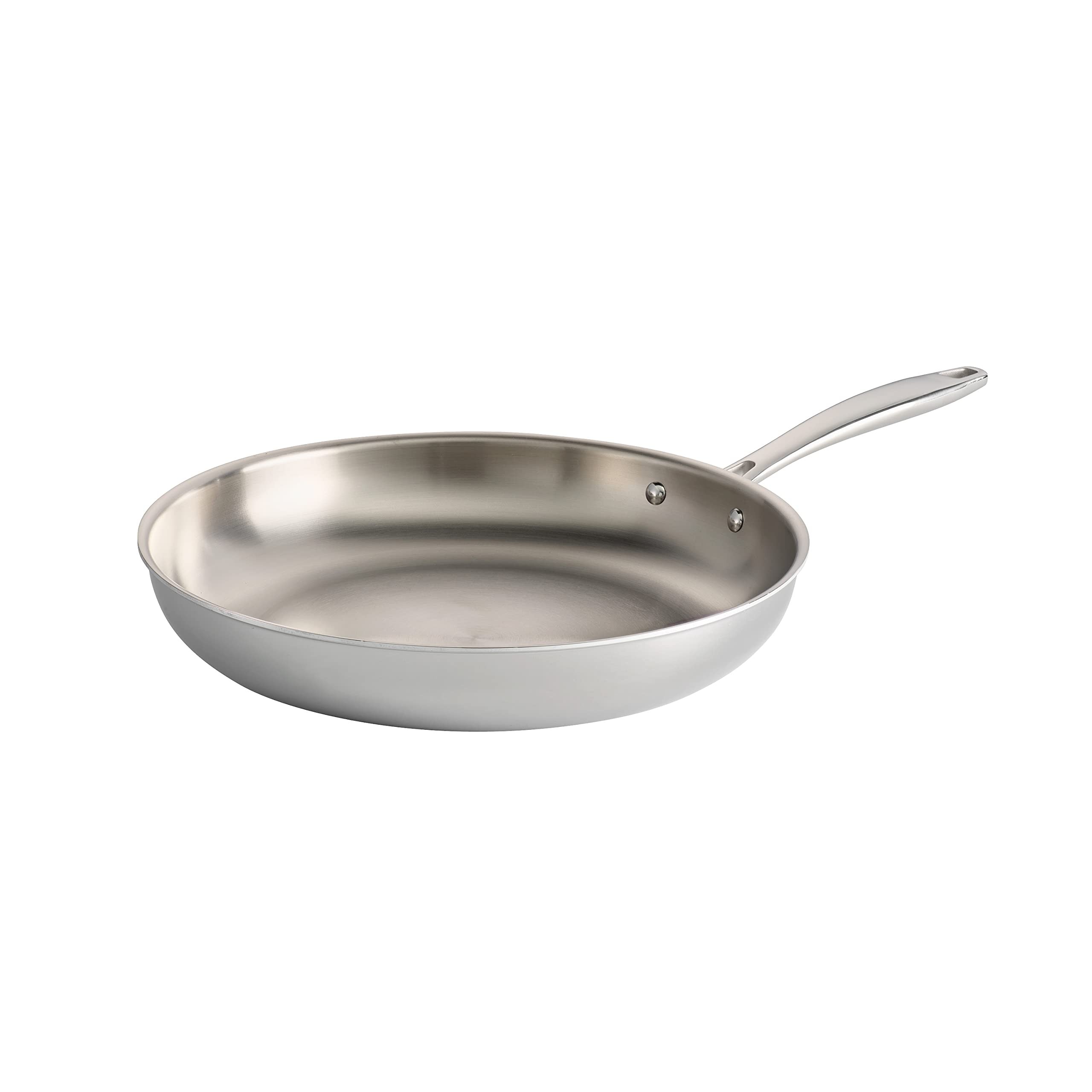
Tramontina 12-Inch Tri-Ply Clad Stainless Fry Pan
Genuine tri-ply construction , same bonding method as All-Clad at a fraction of the price
Buy on Amazon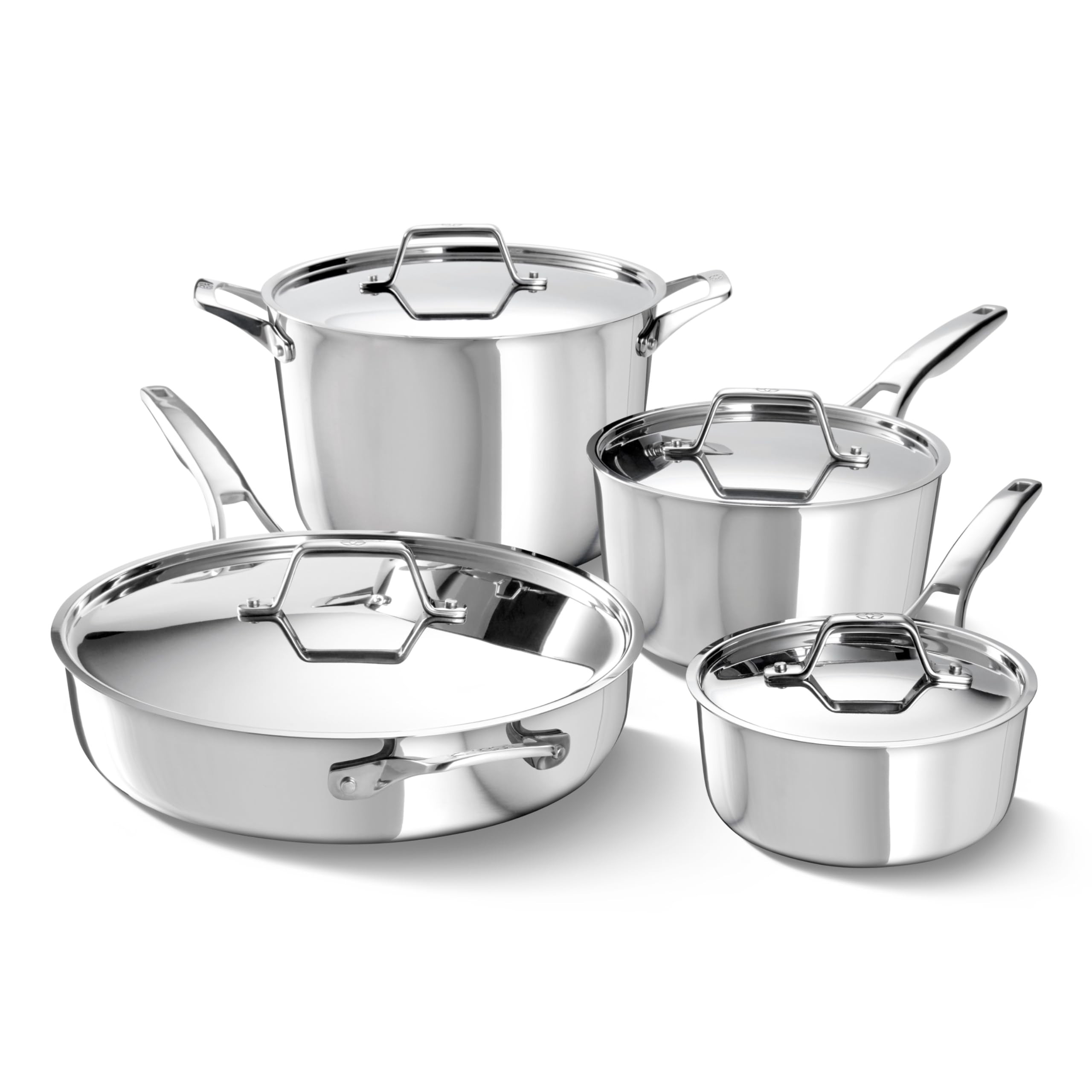
Calphalon Premier Stainless Steel Cookware Set 8-Piece
Multi-layer stainless construction heats evenly without hot spots
Buy on Amazon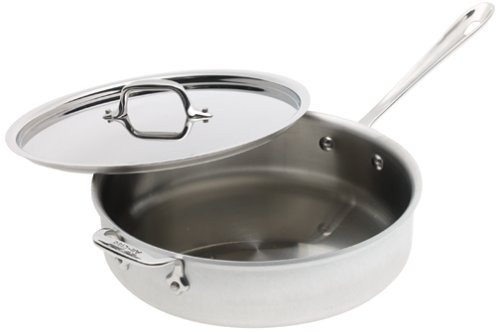
All-Clad D3 Stainless 12-Inch Fry Pan
Tri-ply construction bonds stainless and aluminum for perfectly even heating
Buy on Amazon| Product | Price Range | Top Strength | Key Weakness | Buy |
|---|---|---|---|---|
| Tramontina 12-Inch Tri-Ply Clad Stainless Fry Pan best overall | $$ | Genuine tri-ply construction , same bonding method as All-Clad at a fraction of the price | Slightly thinner gauge than All-Clad , marginally less heat retention | Buy on Amazon |
| Calphalon Premier Stainless Steel Cookware Set 8-Piece also consider | $$ | Multi-layer stainless construction heats evenly without hot spots | Multi-layer construction not as refined as true tri-ply clad | Buy on Amazon |
| All-Clad D3 Stainless 12-Inch Fry Pan also consider | $$$ | Tri-ply construction bonds stainless and aluminum for perfectly even heating | Stainless surface requires technique to prevent sticking , not beginner-friendly | Buy on Amazon |
| Demeyere Industry 11-Inch Skillet also consider | $$$ | 5-ply TriplInduc base optimized specifically for induction cooktops | One of the most expensive stainless skillets available | Buy on Amazon |
If you’ve been searching “18/10 stainless steel cookware set” and wondering why the results range from a $30 import to a full set that costs more than your first car payment, the short answer is that the grade label tells you almost nothing useful. 18/10 refers to chromium and nickel content in the steel surface. What it doesn’t tell you is how many layers that steel is bonded to, what’s in the core, how thick the gauge is, or whether the heat distribution is actually even. For a complete breakdown of how construction quality separates the good sets from the decorative ones, the Stainless & Clad section of this site covers the full picture. For now, let’s focus on four specific products worth knowing about and what actually distinguishes them.
What to Look For
Construction Method First
The 18/10 label is the floor, not the ceiling. What matters above it is how that stainless is bonded and what it’s bonded to. Disc-bottom cookware welds an aluminum disc to the base of a stainless pan, which concentrates heat distribution only at the bottom. Fully clad cookware bonds the aluminum layer through the entire body of the pan, sides included. If you’ve ever tried to reduce a sauce in a disc-bottom pan and watched it scorch at the center while the edges stayed cool, that’s the difference in practical terms.
True tri-ply construction (stainless, aluminum core, stainless) is the baseline for even cooking. Five-ply adds additional layers, typically more aluminum or magnetic stainless for induction compatibility, and claims better heat retention and distribution. Whether the upgrade is worth the cost increase depends on your cooktop and how seriously you’re cooking.
Gauge and Heat Retention
Thicker gauge means more material, more thermal mass, and slower temperature swings. A pan that holds heat through a cold chicken breast hitting the surface is more useful than one that drops temp immediately and takes a full minute to recover. The All-Clad D3 is the American benchmark here. The Tramontina tri-ply construction uses the same bonding method but runs slightly thinner, which shows up in side-by-side sear tests if you’re paying attention.
Induction Compatibility
18/10 stainless is not magnetic on its own. Induction cooktops require a magnetic base layer, typically 18/0 stainless or a magnetic stainless exterior. Most quality fully clad sets now include an induction-compatible exterior, but it’s worth confirming before purchasing, especially with older model sets.
Handle Design and Oven Rating
Handle ergonomics affect daily use more than most reviews admit. Welded handles eliminate the rivets where food collects, but riveted handles on quality cookware are typically more secure. Oven-safe ratings vary. The All-Clad D3 is rated to 600°F. The Calphalon Premier tops out at 450°F. If you regularly finish proteins in the oven or do high-temperature roasting, that gap matters.
Top Picks
Best Value Tri-Ply: Tramontina 12-Inch Tri-Ply Clad Stainless Fry Pan
The Tramontina tri-ply skillet is the product I point people toward when they ask whether they actually need to spend All-Clad prices. The construction method is the same: stainless-aluminum-stainless, fully clad, bonded through the sides. Made in Brazil, not the USA, which accounts for most of the price difference. Mid-range pricing for what is genuinely equivalent construction to pans costing roughly twice as much.
Where it gives ground to the All-Clad D3 is gauge. The Tramontina runs marginally thinner, which translates to slightly faster heat response (not necessarily better) and marginally less retention when you’re holding a sear. The handle is functional but not refined. If you hold an All-Clad D3 and a Tramontina back to back, the D3 feels more considered in the hand. Whether that’s worth the price difference is a question only your budget can answer.
Oven-safe to 500°F and induction compatible. For a single-skillet purchase or a household that wants serious tri-ply performance without the premium outlay, this is the practical choice.
Best Mid-Range Set: Calphalon Premier Stainless Steel Cookware Set 8-Piece
The Calphalon Premier set is the right recommendation for someone who’s been cooking on thin nonstick and wants to step up without the sticker shock of a full All-Clad set. Multi-layer stainless construction, tempered glass lids, dishwasher safe, oven-safe to 450°F. Mid-range pricing for an eight-piece set.
I’ll be precise about the construction: this is multi-layer, not true fully clad tri-ply. The distinction matters for evenness of heat distribution and for how the pan performs on high heat. The glass lids are a practical feature if you monitor sauces without lifting covers, though glass is less durable than stainless over time and chips if it takes a direct knock. For a household upgrading from entry-level cookware across the full batterie, this is a sensible investment. For a serious cook buying for the long term, I’d redirect toward the All-Clad or Demeyere options below.
American Benchmark: All-Clad D3 Stainless 12-Inch Fry Pan
I cooked with an All-Clad D3 for eight years before the Demeyere entered my kitchen, so I’m speaking from direct experience rather than spec sheets. The D3 is the American tri-ply benchmark. Made in Canonsburg, Pennsylvania, lifetime warranty, oven-safe to 600°F, induction compatible. Premium pricing, and compared to the Tramontina, it costs roughly twice as much for a single skillet.
What you’re paying for beyond the label is gauge, handle engineering, and twenty years of professional kitchen endorsement that reflects actual performance rather than marketing. The stainless cooking surface requires technique. If you’ve never cooked on uncoated stainless, the first few months involve eggs that stick and proteins that tear, until you learn to preheat the pan properly and wait for the protein to release on its own. That’s not a flaw in the pan. (I say this because a noticeable percentage of one-star reviews for the D3 are from people who expected it to behave like nonstick, which is a category error.)
For a more detailed comparison of how the D3 stacks up against Belgian alternatives, the Demeyere vs All-Clad breakdown on this site addresses the construction philosophy differences directly.
Best for Induction: Demeyere Industry 11-Inch Skillet
If your cooktop is induction, the Demeyere Industry skillet is the answer I’d give before anything else. The 5-ply TriplInduc base is engineered specifically for induction efficiency, not as an afterthought adaptation of a gas-optimized design. Belgian-made, lifetime warranty, riveted handle that runs notably cooler than most stainless pans. Premium pricing, and at the top of the stainless price range for a single skillet, one of the more expensive options you’ll find.
Two things to know before purchasing. First, the weight. The Demeyere Industry is heavier than an equivalent All-Clad D3, which is a real consideration if you’re moving a loaded pan frequently or have any wrist or shoulder limitations. Second, the price is not incidental. If you’re on a gas or electric range and not specifically optimizing for induction, the D3 or Tramontina tri-ply gets you most of the performance at meaningfully lower cost.
For cooks who use induction and want the pan they’ll own for fifteen years, the Demeyere is worth the price. For everyone else, it’s a premium answer to a question you might not be asking. If you’re curious how stainless compares to other high-end materials at this price level, the hammered stainless steel cookware guide is worth reading alongside this one, and the copper kitchen cookware overview covers the other direction of the premium market.
How to Choose
Match the Pan to Your Cooktop
Induction users should prioritize the Demeyere Industry or confirm induction compatibility explicitly on any set purchase. The Calphalon Premier and Tramontina tri-ply are both induction compatible, but induction performance at high output is where the Demeyere’s engineered base shows the clearest advantage.
Match the Purchase to Your Cooking Volume
If you cook seriously most nights, invest in fewer pieces at higher quality rather than a complete set at lower quality. A single All-Clad D3 skillet and a quality saucepan will outlast three sets of mid-market cookware. If you’re equipping a kitchen from scratch and need coverage across multiple pot sizes, the Calphalon Premier eight-piece gives you that range at a price that doesn’t require financing.
Don’t Upgrade Before You’re Ready
This is a peer-to-peer point, not a sales qualifier: uncoated stainless rewards technique. If you’re not comfortable with heat management on stainless, starting with the most expensive option on this list won’t accelerate the learning curve. The Tramontina tri-ply is excellent entry-point stainless at mid-range pricing. Cook on it for a year. If you want more, you’ll know what you want more of. If not, you haven’t overspent.
For additional context on the full stainless cookware category and how these picks fit the broader market, the Stainless & Clad hub covers material comparisons, maintenance guidance, and expanded reviews.
Frequently Asked Questions
Does 18/10 stainless mean the cookware will heat evenly?
No. 18/10 refers to the chromium and nickel ratio in the steel surface layer, which affects corrosion resistance and appearance. Even heating depends on the core construction: whether the pan is disc-bottom or fully clad, what the core material is, and how thick the gauge runs. Two pans can both be labeled 18/10 and perform completely differently on the cooktop.
Is fully clad tri-ply worth the price over disc-bottom cookware?
For serious cooking, yes. Disc-bottom distributes heat only at the base, which creates temperature gradients up the sides of the pan. Fully clad construction runs the aluminum core through the sides, so a sauce reducing against the wall of the pan heats as evenly as what’s sitting on the bottom. For boiling water or steaming vegetables, the difference is minimal. For searing, sauce reduction, or anything where pan-surface temperature uniformity matters, fully clad is a meaningful upgrade.
Can I use 18/10 stainless cookware on an induction cooktop?
Only if the exterior layer is magnetic stainless. Standard 18/10 stainless is not magnetic. Quality fully clad sets designed for induction include an 18/0 or magnetic stainless exterior layer. Check the product specifications before purchasing. The Demeyere Industry, Tramontina tri-ply, All-Clad D3, and Calphalon Premier sets covered here are all induction compatible, but not all 18/10 cookware is.
How do I prevent sticking on stainless steel?
Preheat the pan adequately before adding fat. A properly preheated stainless pan with oil at temperature will cook proteins without sticking, because the surface expands slightly and the protein releases naturally as it cooks rather than bonding to a cold surface. The most reliable test: add a drop of water to the pan. If it beads and rolls around, the pan is at temperature. If it immediately evaporates, it’s too hot. If it sits flat and steams, it’s not hot enough.
What’s the difference between 5-ply and tri-ply stainless cookware?
Tri-ply is three layers: stainless exterior, aluminum core, stainless interior. Five-ply adds two additional layers, typically more aluminum or a magnetic stainless base for induction optimization. Five-ply generally claims better heat retention and distribution, which is accurate at the margins. For most cooking on gas or electric ranges, the performance difference between quality tri-ply and five-ply is small relative to the price difference. For induction, five-ply construction engineered specifically for induction efficiency (as in the Demeyere Industry) provides a clearer real-world advantage. Check current prices on Amazon to assess whether the gap justifies the upgrade for your specific setup.
Frequently Asked Questions
Does 18/10 stainless steel mean the cookware won't rust?
The 10% nickel content in 18/10 stainless steel provides strong corrosion resistance, making rust very unlikely under normal kitchen use. However, prolonged exposure to salt water or harsh chlorine-based cleaners can still cause pitting or discoloration over time.
What is the difference between disc-bottom and fully clad 18/10 cookware?
Disc-bottom cookware bonds an aluminum disc only to the base, so heat stays concentrated there. Fully clad cookware bonds aluminum through the entire sidewall, distributing heat evenly up the sides — which matters most for sauces, custards, and anything that needs consistent wall-to-wall temperature.
Is 18/10 stainless cookware induction compatible?
Not automatically. Induction requires a magnetic stainless steel exterior layer. Many 18/10 clad sets include a magnetic stainless outer layer specifically for induction, but you should confirm this before purchasing — the 18/10 designation alone doesn't guarantee induction compatibility.
Is tri-ply or five-ply better in an 18/10 stainless set?
For most home cooks, tri-ply performs excellently and the improvement from five-ply is incremental rather than transformative. Five-ply adds thermal mass and slightly smoother heat distribution, which matters more in a professional kitchen running burners continuously than in a home kitchen.
Can I use an 18/10 stainless steel cookware set in the oven?
Yes, provided the handles are all-stainless rather than silicone or plastic-coated. Most quality 18/10 tri-ply sets are oven-safe to at least 500°F — check each piece's spec, as lids with plastic knobs or tempered glass may have lower temperature limits.
Where to Buy
Tramontina 12-Inch Tri-Ply Clad Stainless Fry PanSee Tramontina 12-Inch Tri-Ply Clad Stain… on Amazon