All-Clad 4 Quart Saucepan: Worth the Investment?

Affiliate disclosure: Some links on this page are affiliate links. If you buy through them we earn a small commission at no extra cost to you. Recommendations are research-driven; we don't claim personal use of every product reviewed. Product prices and availability are accurate as of the date published and are subject to change. Always check Amazon for current pricing before purchasing. Learn more.
Quick Picks
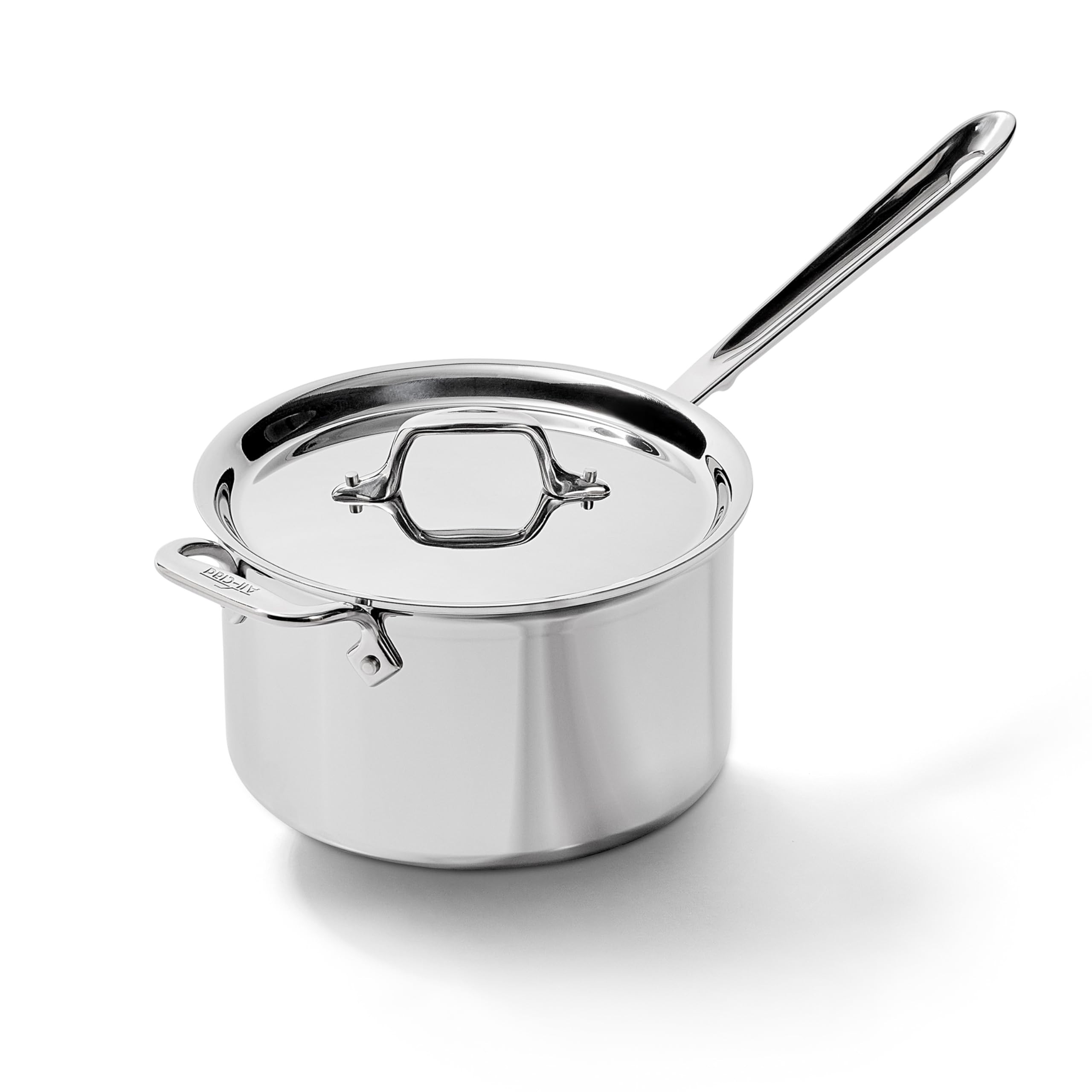
All-Clad D3 Stainless 4-Quart Saucepan
Handles soups, pasta water, and medium-batch sauces with room to spare
Buy on Amazon
All-Clad D5 Stainless 3-Quart Saucepan
Five-ply construction adds extra aluminum layers for more even heating
Buy on Amazon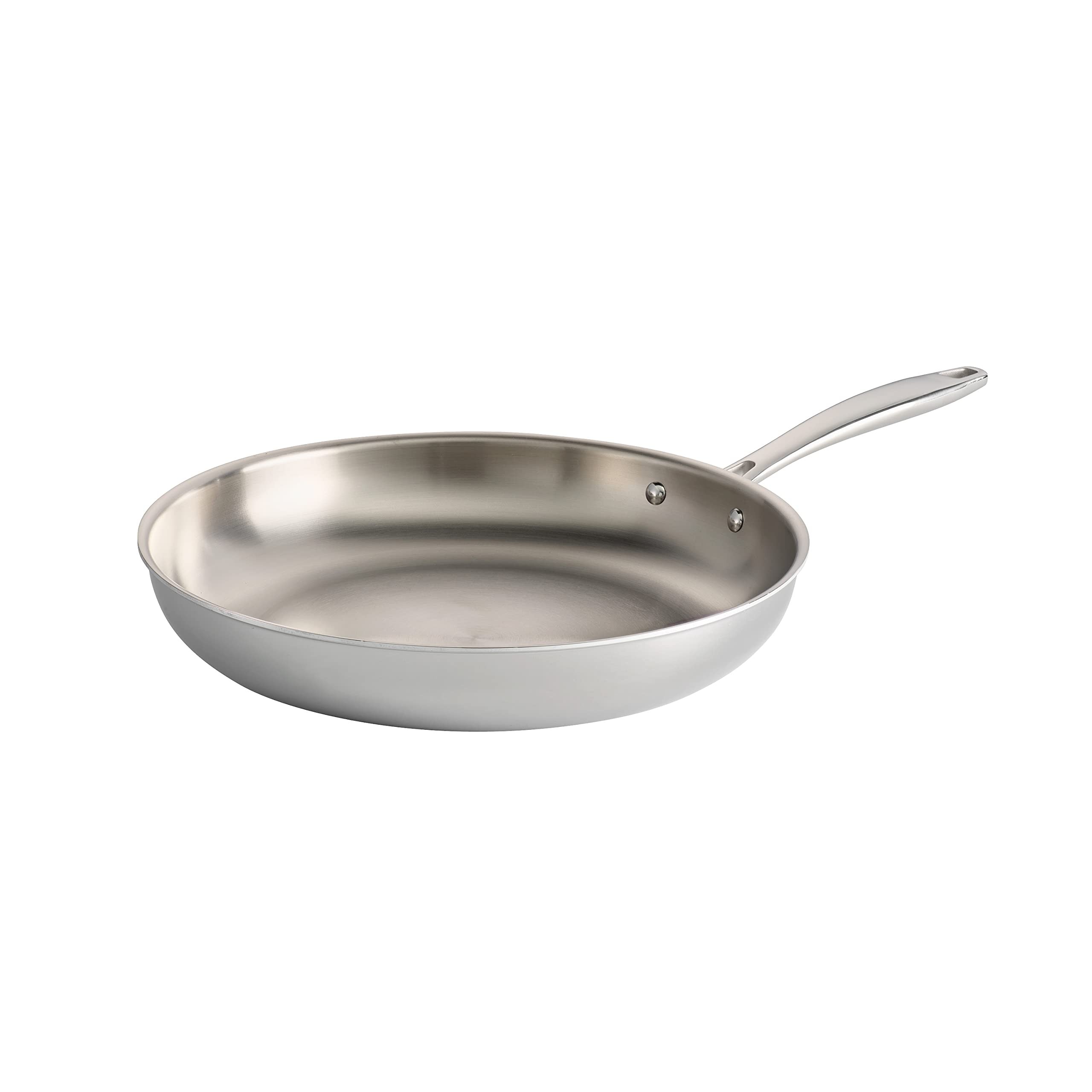
Tramontina 12-Inch Tri-Ply Clad Stainless Fry Pan
Genuine tri-ply construction , same bonding method as All-Clad at a fraction of the price
Buy on Amazon| Product | Price Range | Top Strength | Key Weakness | Buy |
|---|---|---|---|---|
| All-Clad D3 Stainless 4-Quart Saucepan best overall | $$$ | Handles soups, pasta water, and medium-batch sauces with room to spare | Heavy for a saucepan , awkward to hold one-handed when full | Buy on Amazon |
| All-Clad D5 Stainless 3-Quart Saucepan also consider | $$$ | Five-ply construction adds extra aluminum layers for more even heating | D5 costs more than D3 for incremental improvement most home cooks won't notice | Buy on Amazon |
| Tramontina 12-Inch Tri-Ply Clad Stainless Fry Pan also consider | $$ | Genuine tri-ply construction , same bonding method as All-Clad at a fraction of the price | Slightly thinner gauge than All-Clad , marginally less heat retention | Buy on Amazon |
| Demeyere Atlantis/Proline 11-Inch Fry Pan also consider | $$$ | Silvinox surface treatment prevents fingerprints and maintains satin finish | Most expensive pan in the Demeyere range , professional-grade pricing | Buy on Amazon |
The 4-quart saucepan is the pan I reach for more than any other. Pasta water for two, a full batch of tomato sauce, soups that need room to simmer without splattering the backsplash. It’s not glamorous, but if you buy one well, you won’t replace it. The All-Clad 4-quart category draws a lot of attention precisely because All-Clad has spent decades building a reputation in this size, and most of the questions I get from readers in the Stainless & Clad category come down to a version of the same thing. Which one, and is it actually worth the price?
I’ll give you a direct answer. But first, let me walk through what actually matters in a saucepan at this size, because the spec sheet language doesn’t always map to what you’ll experience at the stove.
What to Look For in a 4-Quart Saucepan
Construction: Tri-Ply Versus Five-Ply
The number of layers in clad cookware matters, but not as much as marketing suggests for a saucepan. Tri-ply construction bonds a layer of aluminum between two layers of stainless steel. The aluminum distributes heat, the stainless steel provides the cooking and exterior surfaces. Done well, this produces even, responsive heating with no hot spots.
Five-ply adds extra layers, typically aluminum and sometimes a magnetic steel core for induction. In theory, more thermal mass means more stable temperatures when you add cold ingredients. In practice, for a saucepan used at home for sauces, soups, and grains, the difference between tri-ply and five-ply is incremental. Professional kitchens running burners for eight hours straight will notice. Home cooks making a beurre blanc on a Tuesday evening probably won’t.
What matters more than layer count is the gauge of the aluminum core. A thick, well-bonded tri-ply piece will outperform a thin five-ply piece every time.
Handle Construction and Weight
A 4-quart saucepan full of soup weighs more than people expect. The handle design matters here more than aesthetics. Riveted stainless steel handles are standard on quality clad pans. What varies is the angle and length of the handle, which determines whether you can hold the pan one-handed at full capacity without your wrist rotating in a way that feels precarious.
If you’ve ever tried to drain pasta water one-handed from a heavy saucepan and questioned your choices, that’s the weight distribution problem. It’s worth paying attention to handle ergonomics before buying, especially if the pan will be used by multiple people in the household.
Oven Safety and Lid Compatibility
For a saucepan this size, oven-safe to at least 500°F is the practical threshold. Starting a braise on the stovetop and finishing in the oven is a technique that requires the pan, lid included, to handle the heat. Check whether the lid is rated to the same temperature as the pan body. Some lids are not.
,
Top Picks
All-Clad D3 Stainless 4-Quart Saucepan
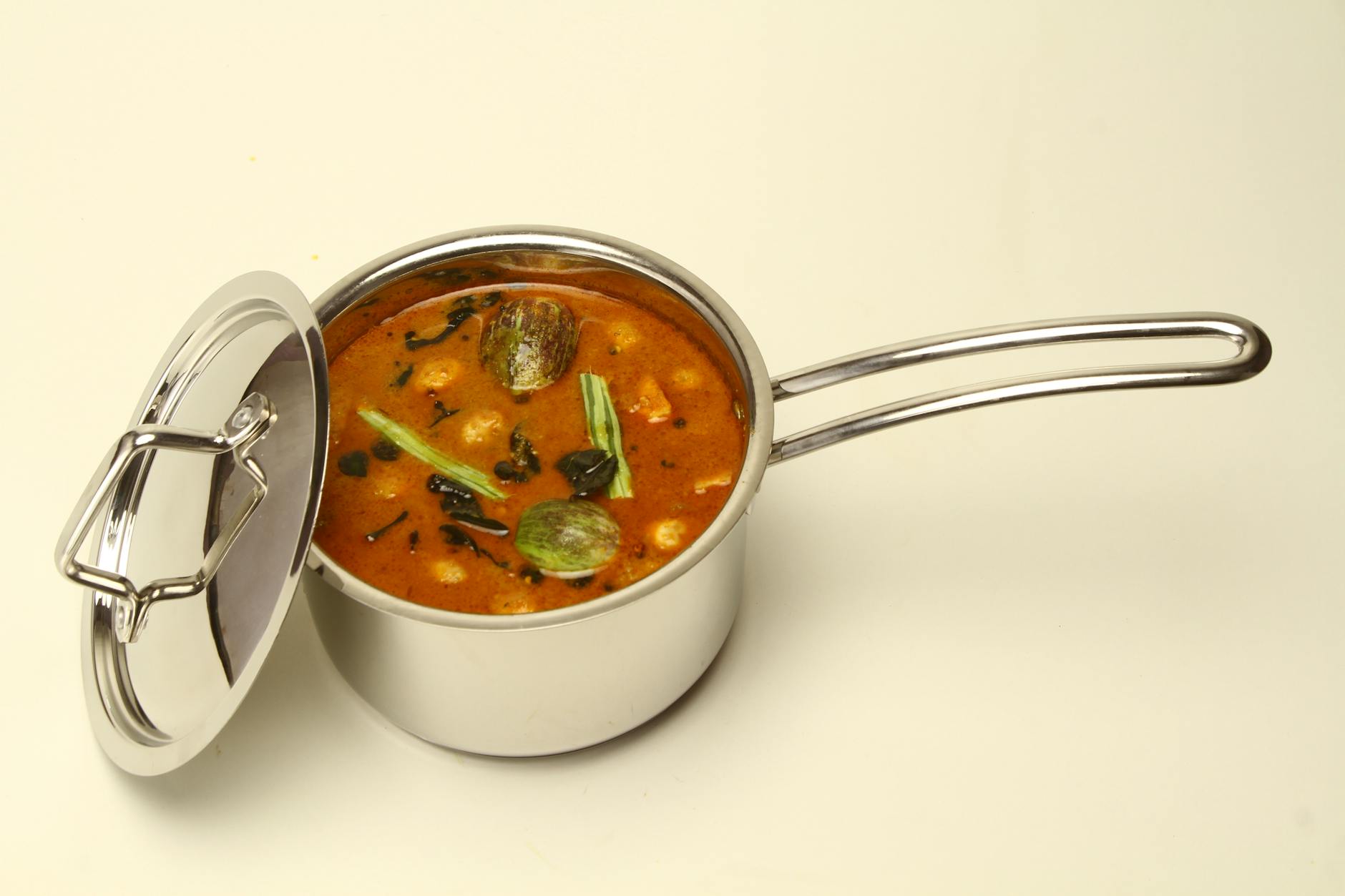
The All-Clad D3 Stainless 4-Quart Saucepan is the pan I’d recommend to most people reading this, without much hesitation. Tri-ply construction, oven-safe to 600°F, lid included, and a size that genuinely handles the jobs a 4-quart saucepan should handle.
The cooking performance is what you’d expect from well-made tri-ply stainless: even heat distribution, good temperature recovery when you add cold broth or cream to a hot pan, and a cooking surface that develops a proper fond without burning through. I’ve made mayonnaise, hollandaise, and double-batch tomato sauce in this pan and had no complaints about heat control.
The legitimate criticisms are two. First, it’s in the premium price band. Check the current price on Amazon before committing, because premium pricing in this category is real. Second, the weight when full is genuinely awkward one-handed. This is not a pan you’ll be pouring from with one hand unless your wrists are considerably stronger than mine. (I measured a full load at just over six pounds total. That number is relevant if you’re purchasing for someone who has any wrist or grip limitations.)
For comparison, I used an All-Clad 2 qt saucepan alongside this for years. The 4-quart version scales up consistently in both quality and weight.
All-Clad D5 Stainless 3-Quart Saucepan
The All-Clad D5 Stainless 3-Quart Saucepan costs more than the D3 equivalent. The question is whether it earns that premium.
Five-ply construction does add thermal mass. The D5 is slower to heat up and slower to cool down than the D3. For certain tasks, like holding a beurre blanc at a stable temperature over low heat, that stability is genuinely useful. The flared rim on the D5 is also a real design improvement for controlled pouring, which becomes apparent the first time you try to decant hot liquid into a blender without a spout of any kind.
But I need to be honest about who this pan is for. If you are cooking professionally, or if you are the kind of home cook who runs multiple burners for extended periods and needs the thermal consistency, the D5 delivers. For most home cooks making dinner four nights a week, the performance difference between D3 and D5 is not something you’ll encounter in practice. You’re paying a premium for incremental improvement that everyday cooking won’t expose.
The D5 is also notably heavier than the D3. If the D3’s weight already gave you pause, the D5 will not improve that situation.
My position: the D3 is the better purchase for the majority of home cooks. The D5 is the right purchase for a smaller group of people with specific needs.
For anyone evaluating this more carefully, the Demeyere vs All-Clad comparison I’ve written covers the multi-ply question in more depth.
Tramontina Tri-Ply Clad Stainless (12-Inch Fry Pan, as a Value Reference)
The Tramontina Tri-Ply Clad Stainless Fry Pan appears in this guide as a deliberate provocation to the All-Clad premium argument. Tramontina uses genuine tri-ply construction with the same bonding method. The manufacturing is done in Brazil, the quality control is good, and the price is mid-range compared to All-Clad’s premium positioning.
The differences are real but not dramatic. Tramontina’s gauge is slightly thinner, which means marginally less heat retention. The handle ergonomics are functional but lack the refined fit of the All-Clad handle. At a full boil, the difference in performance between Tramontina and All-Clad tri-ply is noticeable to someone paying close attention. At a simmer for a pasta sauce, it is not.
If budget is a direct constraint, Tramontina tri-ply is not a compromise purchase. It’s a different price-to-performance decision. The D3 is better. It’s also considerably more expensive.
Demeyere Atlantis/Proline 11-Inch Fry Pan
The Demeyere Atlantis Fry Pan operates at a different price level entirely. Seven-ply construction, Silvinox surface treatment that actually resists fingerprints and maintains the finish over years of use, and an InductoSeal base rated for 10,000 heating cycles. This is professional-grade construction at professional-grade pricing.
I include it here because some buyers are genuinely asking: what is the ceiling in stainless cookware? The Demeyere Atlantis line is the answer to that question. The thermal performance at high heat is measurably better than All-Clad. The Silvinox finish holds up to regular use in a way that standard stainless steel does not. The weight is significant, and one-handed tossing is not realistic, but that’s true of any serious seven-ply pan.
If you are building a set and want nothing to replace for twenty years, this is the pan. If you are deciding between D3 and D5 and wondering whether to spend more, skip the D5 and look at Demeyere if you want to go higher. The performance gap between D3 and D5 is narrow. The gap between D3 and Demeyere Atlantis is wider.
,
How to Choose
The practical split for this decision is straightforward.
Buy the D3 if you want excellent clad stainless performance, plan to use the pan daily or close to it, and don’t want to think about replacing it. It’s the strongest all-around recommendation in this category.
Buy the D5 if you cook at extended low heat regularly and the extra thermal stability will actually show up in your cooking. This is a narrower use case than most buyers realize.
Buy the Tramontina if budget is the real constraint and you want genuine tri-ply construction without the All-Clad premium. The performance is close enough that most cooks will be satisfied.
Buy the Demeyere Atlantis if you want the best stainless pan available and price is secondary. Don’t buy it as a step up from D3 unless you cook at a level where the difference will register.
One practical note: if you’re also buying at adjacent sizes, the All-Clad 8-quart stock pot and the 4-quart saucepan are a functional pair for most stovetop cooking needs. If you cook smaller batches and find yourself reaching for a smaller pan more often, the All-Clad 2 quart pot is worth adding before you go larger.
For a broader look at how clad stainless compares across the category, the Stainless & Clad hub covers the full range.
,
Frequently Asked Questions
Is the All-Clad D3 or D5 better for everyday home cooking?
The D3. For everyday cooking at home, the five-ply construction of the D5 produces incremental improvements that most cooks won’t encounter in normal use. The D3’s tri-ply construction handles heat distribution and temperature recovery well for sauces, soups, and grains. The D5 costs more and weighs more, and the performance difference matters most in professional or near-professional cooking contexts.
Can the All-Clad D3 4-quart saucepan go in the oven?
Yes. The D3 saucepan is oven-safe to 600°F with the stainless lid. This covers any practical home oven application, including broiling. Verify that you’re using the All-Clad stainless lid rather than a glass replacement, as glass lids are rated lower.
Is Tramontina actually comparable to All-Clad?
For most everyday cooking tasks, closer than the price difference suggests. Both use genuine tri-ply construction with bonded aluminum cores. All-Clad uses a heavier gauge and has more refined handle ergonomics. At a practical level, a home cook making sauces and soups on a regular basis will find Tramontina tri-ply performs well. At extended high heat or in tasks requiring precise temperature stability, the All-Clad advantage becomes more apparent.
How do I keep an All-Clad stainless saucepan from discoloring?
Blue or gold discoloration on stainless steel is heat tint, which appears when the pan is heated empty or at very high heat without food. It’s cosmetic and doesn’t affect cooking performance. Bar Keepers Friend, applied with a soft cloth in a circular motion, removes it reliably. Avoid the dishwasher for maintaining the finish long-term, though the D5 is technically dishwasher safe.
What size saucepan should I buy if I mostly cook for two people?
Four quarts handles most two-person cooking tasks with room for sauces that bubble and reduce, soups, and grains. If your cooking skews toward small-batch sauces and you rarely make soups or pasta water, a 2-quart All-Clad saucepan may be the more practical size. Owning both is not unreasonable if your cooking varies in batch size.
Frequently Asked Questions
Is the All-Clad D3 or D5 better at the 4-quart size?
The D3 tri-ply is the better buy for most home cooks. At 4 quarts, the D5's extra layers add thermal stability that shows up in professional kitchens running continuous high-heat cooking but is barely perceptible for home sauces and soups. The price gap between D3 and D5 is real; the performance gap at this size, at home, is marginal.
Is a 4-quart saucepan large enough for pasta?
A 4-quart saucepan holds enough water for one to two servings of pasta in a pinch, but for a full pound of pasta you want 6 quarts or more. Where the 4-quart excels is medium-batch sauces, soups for two to four people, and large single portions of grains.
Can the All-Clad 4-quart saucepan handle acidic foods like tomato sauce?
Yes. The 18/10 stainless cooking surface is non-reactive, meaning it won't leach metallic flavor into acidic foods like tomatoes, wine, or citrus. This is one of the practical advantages stainless has over reactive surfaces like unlined copper or carbon steel.
How heavy is the All-Clad D3 4-quart saucepan when full?
The pan itself weighs around 3 pounds empty; full of liquid it can exceed 10 pounds depending on what you're cooking. Most people manage it without issue on the stovetop, but lifting and tilting a full 4-quart one-handed — to pour stock, for instance — requires some wrist strength.
Does the All-Clad 4-quart saucepan come with a lid?
The All-Clad D3 4-quart saucepan typically ships with a stainless steel lid that's oven-safe to 600°F. Lids sold separately are also available if you need a replacement or a different fit — confirm what's included at checkout since bundling varies by retailer.
Where to Buy
All-Clad D3 Stainless 4-Quart SaucepanSee All-Clad D3 Stainless 4-Quart Saucepan on Amazon