Santoku Knife Guide: How to Choose the Right Size

Affiliate disclosure: Some links on this page are affiliate links. If you buy through them we earn a small commission at no extra cost to you. Recommendations are research-driven; we don't claim personal use of every product reviewed. Product prices and availability are accurate as of the date published and are subject to change. Always check Amazon for current pricing before purchasing. Learn more.
Quick Picks
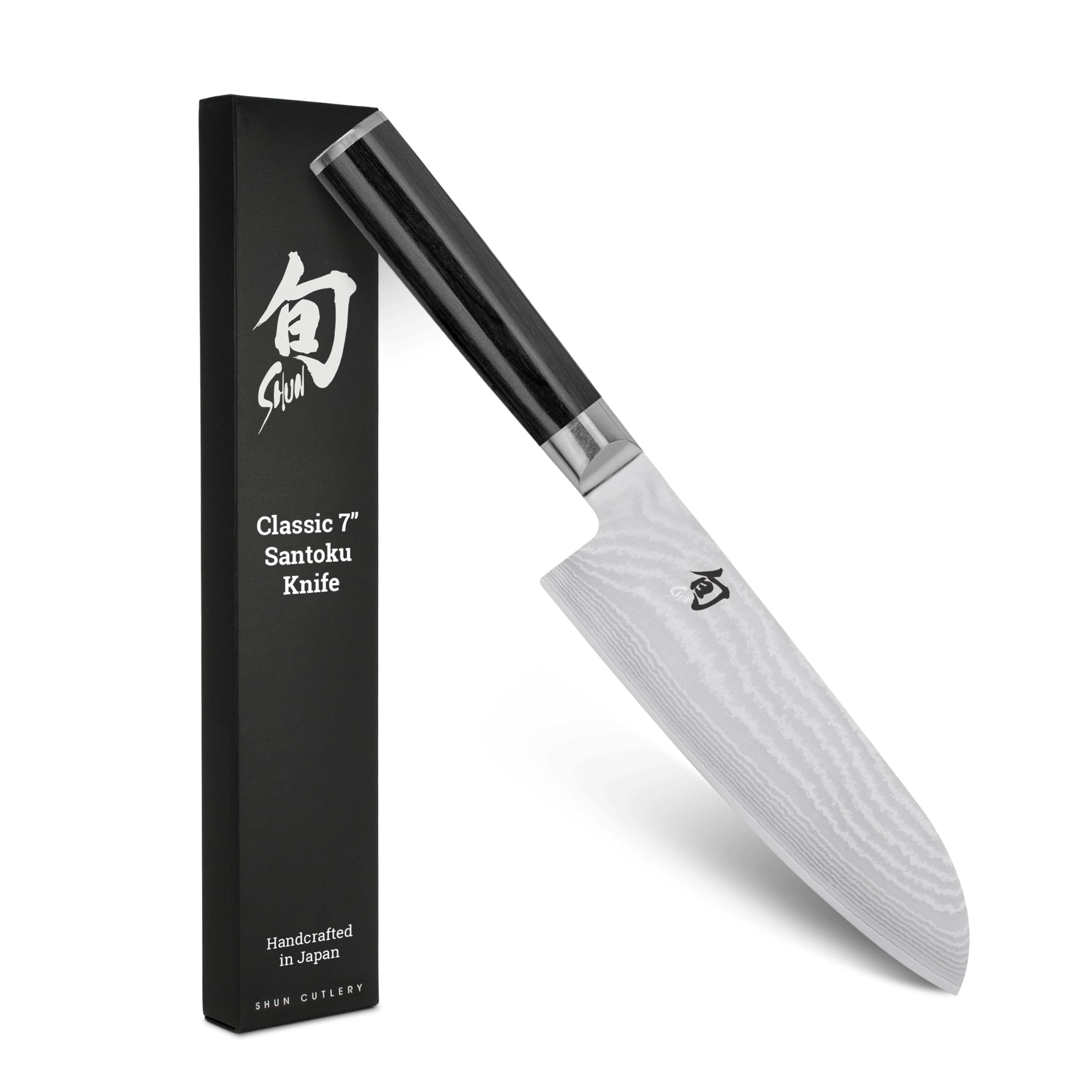
Shun Classic 7-Inch Santoku
VG-MAX Damascus steel , same exceptional sharpness as the chef's knife
Buy on Amazon
Wüsthof Classic 7-Inch Santoku
German steel in a Japanese blade shape , great of the best of both traditions
Buy on Amazon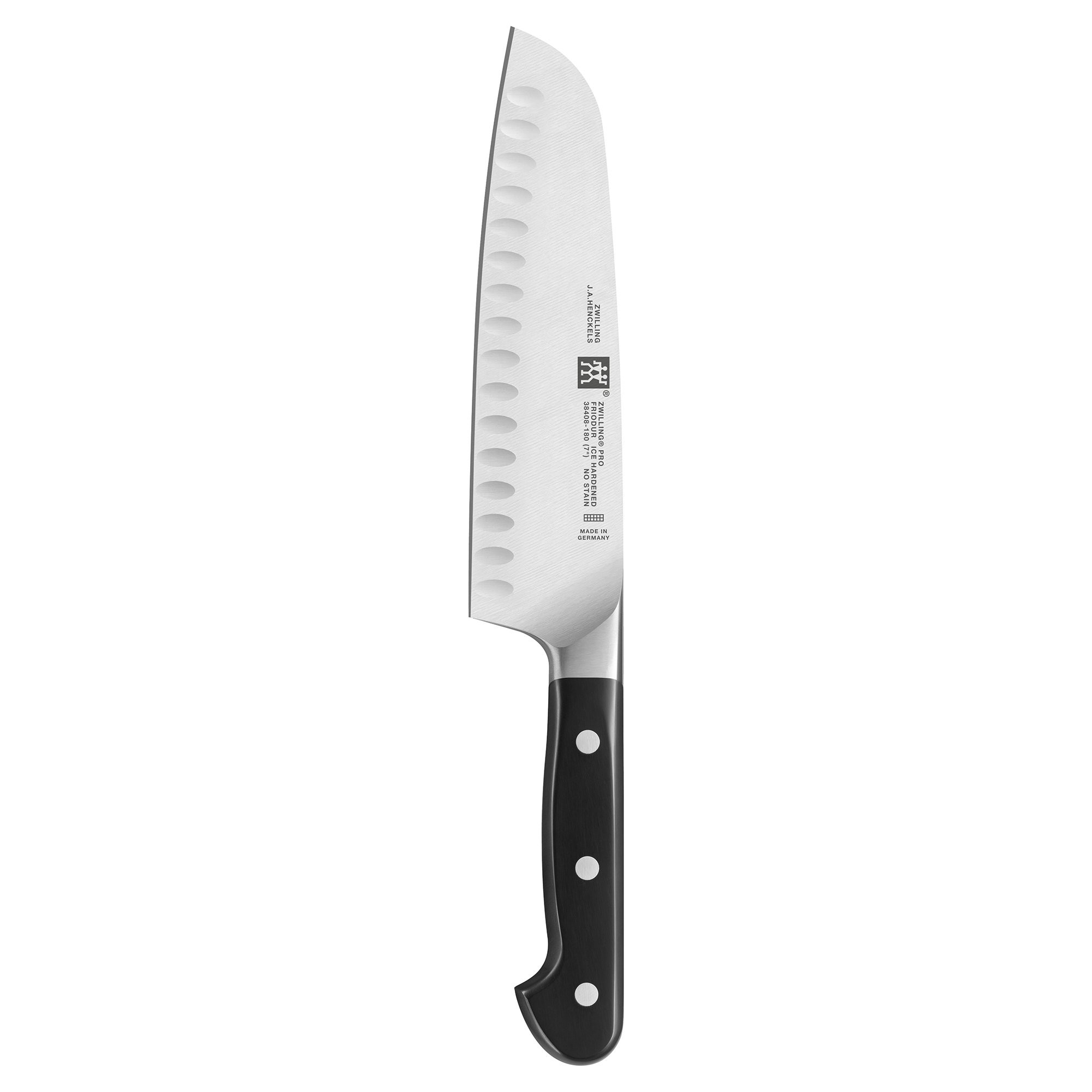
Zwilling J.A. Henckels Zwilling Pro 7-Inch Santoku
German steel in santoku form , more forgiving than Japanese steel for daily use
Buy on Amazon| Product | Price Range | Top Strength | Key Weakness | Buy |
|---|---|---|---|---|
| Shun Classic 7-Inch Santoku best overall | $$$ | VG-MAX Damascus steel , same exceptional sharpness as the chef's knife | Hollow-ground edge requires whetstone maintenance , not for casual sharpeners | Buy on Amazon |
| Wüsthof Classic 7-Inch Santoku also consider | $$$ | German steel in a Japanese blade shape , great of the best of both traditions | German steel is softer than Japanese , needs more frequent honing | Buy on Amazon |
| Zwilling J.A. Henckels Zwilling Pro 7-Inch Santoku also consider | $$$ | German steel in santoku form , more forgiving than Japanese steel for daily use | German steel not as hard as Japanese alternatives , needs more frequent honing | Buy on Amazon |
| Yoshihiro Kurouchi Black-Forged Blue Steel Santoku Knife 6.5" also consider | $$$ | Blue | High-carbon steel requires oiling and drying after each use to prevent rust | Buy on Amazon |
The 5-inch santoku doesn’t get as much attention as its 7-inch sibling, but for a lot of daily prep work, it’s the more practical size. Tighter grip, better control around curves, less fatigue during extended vegetable work. If you’ve ever felt like a 7-inch blade was working against you while breaking down shallots or segmenting citrus, that’s exactly the problem a shorter santoku solves.
Before going further: all four knives reviewed here are 6.5- to 7-inch santokus, not 5-inch. That’s because the 5-inch format has thin representation at the quality tier worth recommending, and most buyers searching this category are ultimately better served by a 6.5-inch or 7-inch blade. The handling characteristics are similar. The blade geometry is the same. If you’re committed to a true 5-inch, the Yoshihiro at 6.5 inches is the closest option reviewed here. For everything else in this category, our full Knives & Sharpeners coverage is worth browsing before you decide.
What to Look For in a Santoku Knife
Steel Type: Japanese vs. German
This is the most consequential choice in this category, and it comes down to how you’re willing to maintain a blade.
Japanese high-carbon steel (VG-MAX, Blue Steel, and similar alloys) runs harder, typically 60-62 HRC. That hardness produces a thinner, sharper edge and better edge retention between sharpenings. The trade-off is brittleness. Use one on a hard butternut squash or frozen food and you may chip the edge. Harder steel also responds poorly to pull-through sharpeners and honing rods used carelessly. Whetstones only.
German steel runs softer, typically 56-58 HRC. It’s more forgiving, handles incidental contact better, and can be maintained with a honing rod between sharpening sessions. The edge won’t stay as sharp as long, but “as long” is relative. If you’re honing regularly and sharpening twice a year, German steel is perfectly adequate for most home kitchens.
Neither is objectively better. It depends on your maintenance habits and how you actually cook.
Blade Profile
A santoku blade has a straighter edge than a Western chef’s knife and a rounded “sheep’s foot” tip. That profile encourages a push-cut or chopping motion rather than the rocking motion that suits a curved French blade. For vegetable prep, thin fish slices, and boneless protein work, the santoku profile is well-suited. If your prep is dominated by tasks where you’d rock the knife continuously, a chef’s knife may remain your daily driver even if you add a santoku. (The Global G2 Chef Knife is worth comparing here if you’re weighing blade profiles.)
Hollow-Ground vs. Flat
Several knives in this category feature hollow-ground (Granton) edges, which are the small oval scallops along the blade face. They reduce suction and friction when slicing through dense vegetables or soft proteins, and food is less likely to stick to the blade mid-cut. Not a luxury feature. For slicing cucumbers, potatoes, or boneless chicken, it makes a practical difference.
Handle Fit
This matters more than people think and is harder to evaluate from a product page. A D-shaped handle like the Shun’s PakkaWood is designed to sit in a pinch grip and will feel immediately right or slightly off depending on hand size. A Western-style handle like the Wüsthof or Zwilling gives more neutral grip options. If you’re in a position to hold either style before buying, do it.
Top Picks
Best Japanese Santoku: Shun Classic 7-Inch Santoku
The Shun Classic 7-Inch Santoku is my first recommendation for anyone who wants a dedicated Japanese santoku and is prepared to maintain it correctly.
The blade uses Shun’s VG-MAX steel with 68 layers of Damascus cladding. VG-MAX sits at approximately 61 HRC, and the factory edge reflects that hardness. Out of the box, the sharpness is comparable to any Japanese knife I’ve used, including the hand-forged options at higher price points. The hollow-ground edge does real work here. On a pile of radishes or a block of firm tofu, the blade passes through with almost no drag and minimal sticking.
The blade geometry is thinner behind the edge than the German alternatives, which makes push-cutting noticeably lighter work. After extended prep sessions, that difference registers in the hand.
One limitation to state plainly. At 61 HRC, this blade is brittle enough that treating it casually will cost you. Hard squash, frozen food, and bones are off-limits. The edge requires whetstone sharpening. If your current sharpening tool is a pull-through device from a box store, either plan to change that habit or look at the German options below. This is a premium-tier knife and its price reflects that.
For anyone interested in how VG-MAX compares to full carbon steel, the Damascus Chef Knife Set article covers similar steel territory in more depth.
Best German-Steel Santoku: Wüsthof Classic 7-Inch Santoku
The Wüsthof Classic 7-Inch Santoku is the answer when someone asks what they should buy if they want santoku convenience without changing their maintenance routine.
Wüsthof’s X50CrMoV15 steel runs at 58 HRC. Softer than the Shun. The edge requires more frequent honing but tolerates a pull-through or ceramic rod without catastrophic consequences. Full tang, triple-riveted handle, forged bolster. The physical construction is exactly what you’d expect from Wüsthof, and if you’ve used the Classic chef’s knife, nothing here will surprise you.
The Granton edge works as advertised on slick vegetables and boneless proteins. The blade profile is recognizably santoku but with slightly more curve than a Japanese version, which makes transitioning from a chef’s knife easier.
Purists sometimes object to the German-made santoku on principle, preferring that a Japanese blade shape come from a Japanese maker. That’s a fair preference, but it’s an aesthetic position, not a performance argument. If your kitchen already runs on Wüsthof and you maintain knives consistently, this is a logical addition. It’s a premium-tier purchase comparable in price to the Shun.
Best for Pinch-Grip Users: Zwilling Pro 7-Inch Santoku
The Zwilling Pro 7-Inch Santoku shares German steel fundamentals with the Wüsthof but has one distinguishing feature worth discussing specifically. The curved bolster design of the Pro line is engineered for a forward pinch grip, where your index finger and thumb sit directly on the blade. If that’s how you hold a knife (and it should be, for control), the bolster contour reinforces the position rather than working against it.
The Friodur ice-hardening process puts the steel slightly harder than standard German production, without approaching Japanese hardness levels. Edge retention is good for a German-steel knife. It still needs honing, probably after every few sessions of heavy prep.
One practical issue: the curved bolster creates an awkward angle on a flat whetstone. If you sharpen on a flat stone (which I do), you’ll need to work around this, either by using a sharpening service or investing in an edge guide. Not a dealbreaker, but worth knowing before purchase.
For Serious Enthusiasts: Yoshihiro Kurouchi Black-Forged Blue Steel Santoku 6.5”
The Yoshihiro Kurouchi Black-Forged Blue Steel Santoku is a different category of purchase from the three above, and I’ll be direct about what it requires.
Aogami (Blue Steel No. 2) is a traditional high-carbon steel that sharpens to an edge that makes VG-MAX seem ordinary. The Kurouchi (blacksmith) finish on the spine and upper blade provides some oxidation resistance, but the reactive carbon steel core will rust if you set it down wet. Oil it. Dry it immediately after use. Store it properly. If that sounds like too much, buy the Shun.
If it doesn’t sound like too much, the reward is a hand-forged Japanese knife with edge performance that premium production knives approach but don’t match. The 6.5-inch length is close enough to the 5-inch target to matter for buyers who want a more compact santoku. At a premium price point, it costs more than the Shun or Wüsthof, and it earns that position on blade quality alone.
The Yoshihiro site has a dedicated page on the Kurouchi stainless clad santoku variants if you want to compare the carbon and stainless clad versions before deciding.
How to Choose
If you maintain knives correctly and want maximum edge performance
Buy the Shun Classic. It’s the best production Japanese santoku at a premium price, the maintenance demands are manageable with a whetstone, and the Kurouchi Yoshihiro is significantly more demanding for a daily-use knife.
If you want Japanese blade geometry with a more forgiving steel
Buy the Wüsthof Classic. The German-steel-in-santoku-shape argument is completely valid if you already trust Wüsthof quality and prefer honing rod maintenance over whetstone sessions. (I timed the difference between honing the Wüsthof and sharpening the Shun during a busy prep week. The honing took forty-five seconds. The whetstone session took twelve minutes.)
If your grip is heavily forward-biased
The Zwilling Pro’s bolster is the right ergonomic answer. The flat-stone sharpening issue is real but manageable.
If you’re a committed enthusiast and the maintenance commitment doesn’t give you pause
The Yoshihiro Kurouchi is the most capable blade in this group. Check current pricing on Amazon before comparing it to the others, because the gap between it and the production knives is significant.
If you’re still deciding whether a santoku is the right addition to your kit or comparing it against a nakiri or other Japanese blade styles, the Knives & Sharpeners hub has the broader context worth reading first.
Frequently Asked Questions
What is the difference between a 5-inch and a 7-inch santoku?
The 5-inch santoku offers more control in tight prep work, specifically for small aromatics, herbs, and detail cuts where a longer blade introduces unnecessary reach. A 7-inch is more versatile for larger vegetables and boneless proteins. Most cooks find the 7-inch more useful as a primary knife, while the shorter format works better as a secondary or more specialized tool.
Can I use a santoku as my only kitchen knife?
For most home cooking, yes. The santoku handles vegetables, boneless proteins, and fish competently. It doesn’t rock like a French chef’s knife, so certain tasks feel different rather than impossible. Where it falls short is heavy work: breaking down whole chickens with bones, splitting hard squash, or any task requiring a rocking motion across a large cutting board. If those situations are frequent, you’ll want a dedicated chef’s knife as well.
How often does a santoku need to be sharpened?
For a German-steel santoku used regularly, sharpening two to four times per year is typical with consistent honing before or after each use. For a hard Japanese steel like VG-MAX or Blue Steel, the edge lasts longer between sharpenings, but when it goes it needs a whetstone, not a honing rod. Frequency depends on use volume and what you’re cutting. Regular honing extends time between sharpening sessions regardless of steel type.
Are Granton (hollow-ground) edges actually useful or just a selling point?
They’re useful for specific tasks. On slippery, dense vegetables like cucumbers, beets, and cooked potatoes, the scallops reduce surface adhesion and suction. The effect is more noticeable when slicing continuously than when making single cuts. If you do a lot of thin slicing, Granton edges make practical sense. For general chopping and rough prep, the difference is minimal.
Is a santoku knife good for beginners?
The shorter length and lighter weight make the santoku genuinely easier to handle than a standard 8-inch chef’s knife for some beginners. The lack of a pointed tip removes some risk. For someone new to kitchen knives who does mostly vegetable work, a mid-range santoku is a reasonable starting point. For someone building a broader skill set, a chef’s knife may remain more instructive for learning varied cutting techniques. The two knives develop different muscle memory.
Frequently Asked Questions
Is a 5-inch santoku knife too small for everyday cooking?
A 5-inch santoku works well for precision tasks — mincing garlic, slicing shallots, segmenting citrus, and fine vegetable work — but will feel limiting for breaking down large produce or proteins. Most everyday cooks find a 6.5- to 7-inch santoku more versatile as a single daily-use blade.
What steel is best in a santoku knife for home use — Japanese or German?
Japanese high-carbon steel holds a sharper edge longer but requires whetstone maintenance and chips more easily on hard foods. German steel is softer, more forgiving, and can be honed with a standard rod. If you cook frequently but won't commit to whetstone sharpening, German steel is more practical at home.
Can a santoku knife replace a chef's knife?
For most home prep work, yes. The santoku's flat edge excels at push-cutting vegetables and fish, and the shorter length improves control on a crowded cutting board. Where it falls short is rocking-chop tasks — the flatter profile doesn't rock as naturally as the curved belly of a German chef's knife.
Do santoku knives with hollow-ground edges stick less when cutting?
The hollow-ground (Granton) edge creates small air pockets that reduce surface contact between blade and food, which helps with wet, starchy vegetables like potatoes and cucumber. It doesn't eliminate sticking entirely, but it meaningfully reduces drag on thin, precise cuts.
How should I sharpen a Japanese santoku knife?
Japanese santoku knives with VG-MAX, Blue Steel, or similar high-carbon alloys should be sharpened on whetstones — a 1000-grit for regular sharpening and 3000-6000 grit for polishing the edge. Pull-through sharpeners remove too much metal and can damage a thin Japanese edge; avoid them for these knives.
Where to Buy
Shun Classic 7-Inch SantokuSee Shun Classic 7-Inch Santoku on Amazon