Baumalu Copper Cookware Buyer's Guide

Affiliate disclosure: Some links on this page are affiliate links. If you buy through them we earn a small commission at no extra cost to you. Recommendations are research-driven; we don't claim personal use of every product reviewed. Product prices and availability are accurate as of the date published and are subject to change. Always check Amazon for current pricing before purchasing. Learn more.
Quick Picks
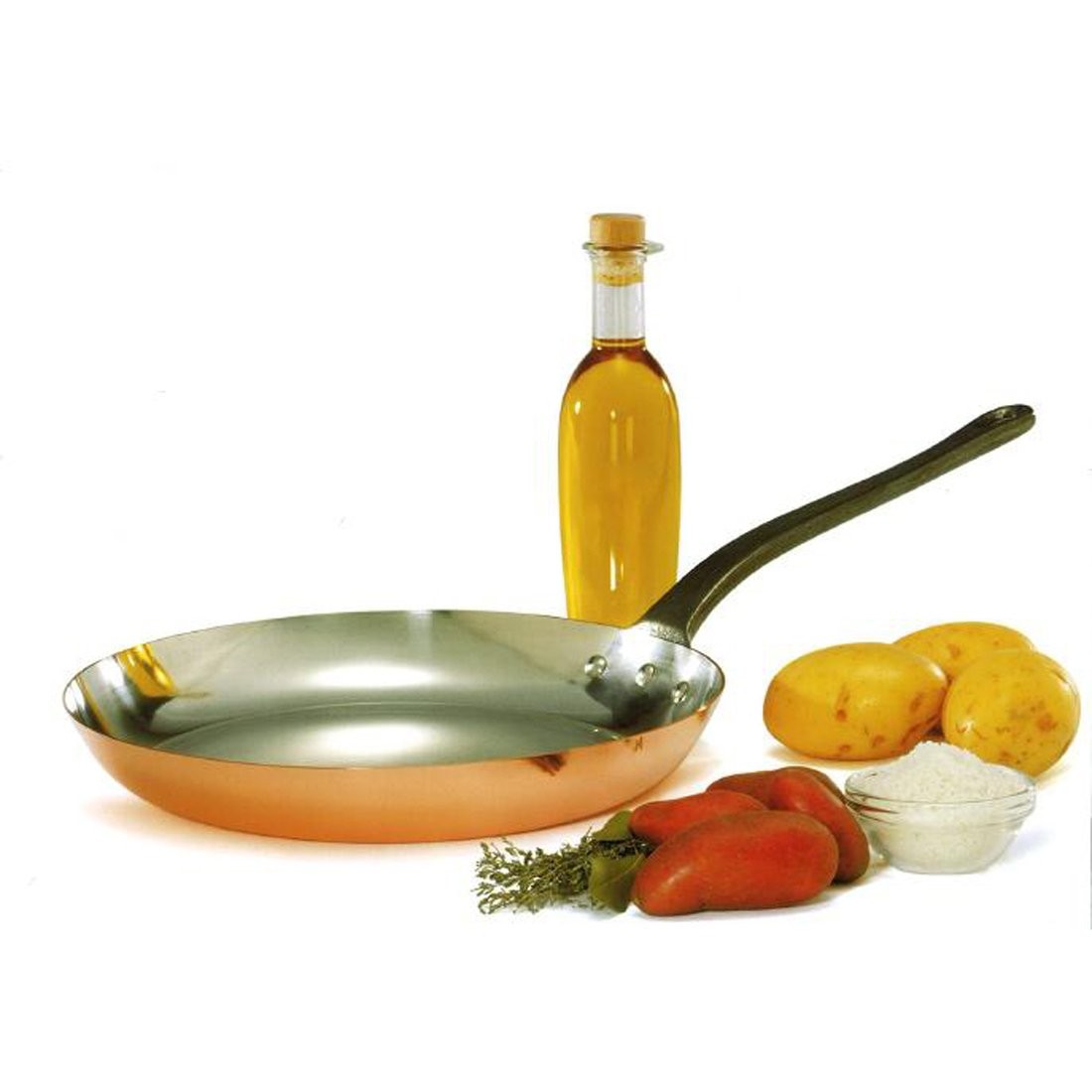
Baumalu Copper Frying Pan 9.5-Inch
French-made copper with tin lining , traditional construction at a lower price than Mauviel
Buy on Amazon
Mauviel M'Heritage Copper Skillet 9.5"
Copper body provides the fastest, most responsive heat adjustment of any material
Buy on Amazon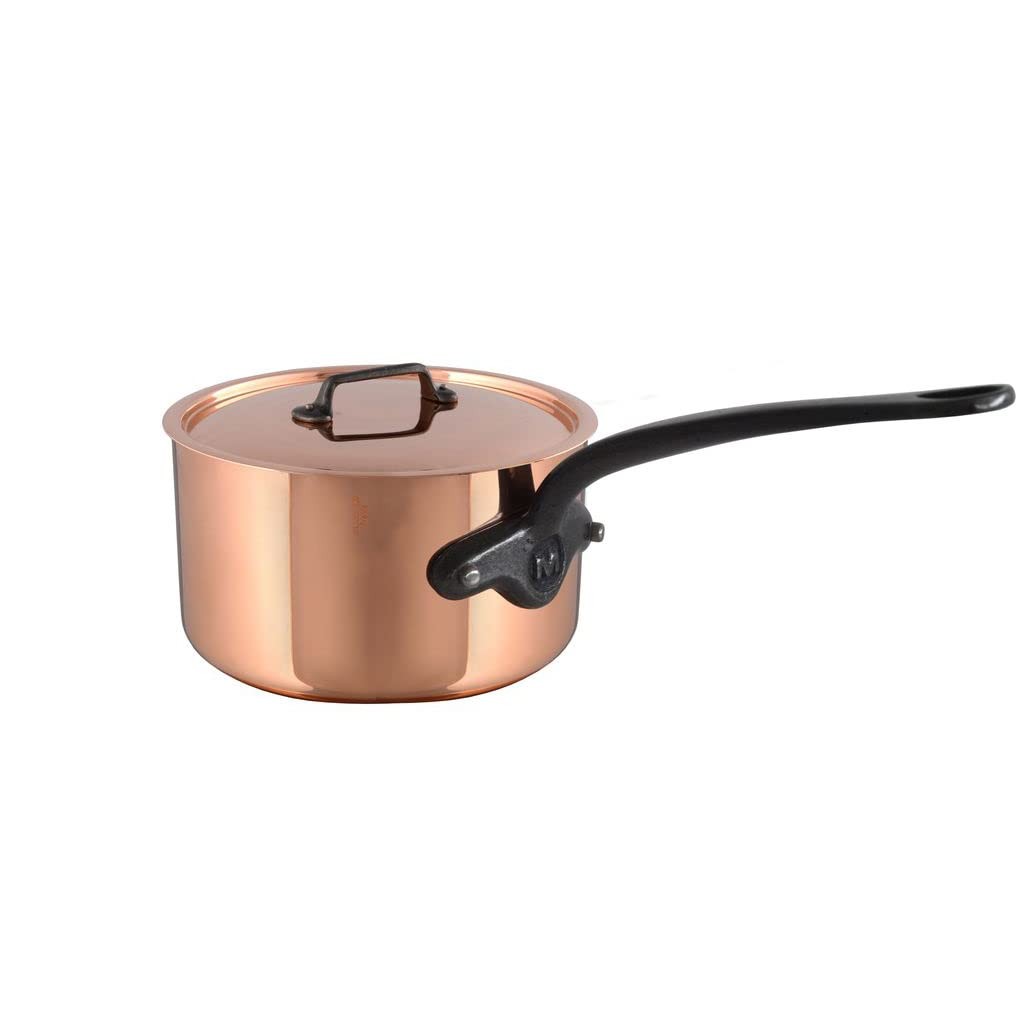
Mauviel M'Heritage Copper Saucepan 1.9-Quart
Copper reacts to heat changes within seconds , unmatched for sauce work
Buy on Amazon| Product | Price Range | Top Strength | Key Weakness | Buy |
|---|---|---|---|---|
| Baumalu Copper Frying Pan 9.5-Inch best overall | $$ | French-made copper with tin lining , traditional construction at a lower price than Mauviel | Tin lining requires careful maintenance , no metal utensils, no overheating empty | Buy on Amazon |
| Mauviel M'Heritage Copper Skillet 9.5" also consider | $$$ | Copper body provides the fastest, most responsive heat adjustment of any material | Most expensive cookware material , significant investment per piece | Buy on Amazon |
| Mauviel M'Heritage Copper Saucepan 1.9-Quart also consider | $$$ | Copper reacts to heat changes within seconds , unmatched for sauce work | Requires polishing to maintain the copper finish | Buy on Amazon |
| Made In 10-Inch Blue Carbon Steel Skillet also consider | $$ | Lighter than cast iron with similar heat retention and seasoning potential | Requires seasoning , more maintenance than stainless | Buy on Amazon |
Copper cookware is one of those categories where the gap between marketing and reality is wide enough to cost you real money. The heat responsiveness claims are accurate. The maintenance requirements are frequently understated. And the price range runs from genuinely accessible to “I need to think about this for a month.” If you’ve landed here researching Baumalu copper cookware specifically, you’re asking the right question: is there a way into real copper without committing to Mauviel prices? The answer is yes, with conditions attached.
This guide covers Baumalu’s entry-level copper skillet, the Mauviel M’Heritage line for buyers who want the full investment, and one alternative for cooks who like the idea of copper’s responsiveness but aren’t ready to commit to tin-lining maintenance. Before we get into specific picks, a note on material context: if your research keeps pulling you toward clad stainless options, our Stainless & Clad cookware guide covers that category thoroughly and is worth reading alongside this one.
What to Look For in Copper Cookware
Lining Material
This is the decision that shapes everything else. Copper is reactive with acidic foods, so every piece of copper cookware sold for cooking has an interior lining. The two you’ll encounter are tin and stainless steel.
Tin is traditional. It’s the lining used in French copper cookware for centuries, including Baumalu’s pieces. Tin is softer than stainless, which means no metal utensils, no overheating an empty pan, and the understanding that the lining will eventually wear and need professional re-tinning. That’s not a defect. It’s the nature of the material. Buyers who find this unacceptable should look at stainless-lined copper instead.
Stainless steel lining, used in Mauviel’s M’Heritage line, is non-reactive, dishwasher-tolerant (though I’d recommend against it for the copper exterior), and doesn’t wear the same way tin does. The trade-off is that stainless has slightly less thermal conductivity than tin, though in practical home cooking that difference is negligible.
Copper Thickness
Real copper cookware starts at about 1.5mm thickness. Baumalu runs at 1.5-2mm depending on the piece. Mauviel’s M’Heritage line runs at 2.5mm. The thicker the copper, the more even the heat distribution and the heavier the pan. For stovetop sauce work, thickness matters more than for a skillet you’re moving around frequently.
Handle Construction
Cast iron handles, as found on Baumalu pieces, stay cooler than stainless during stovetop cooking. Stainless handles, standard on Mauviel, conduct more heat and typically require a towel or mitt after a few minutes on a gas burner. Neither is wrong, but if you’ve ever grabbed a handle without thinking and regretted it, the cast iron option is worth noting.
Induction Compatibility
Copper is not induction-compatible. This is non-negotiable physics. If your cooktop is induction-only, copper cookware doesn’t work without an interface disk, and even then you lose the responsiveness that makes copper worth buying. Gas or electric coil only.
Top Picks
Baumalu Copper Frying Pan 9.5-Inch
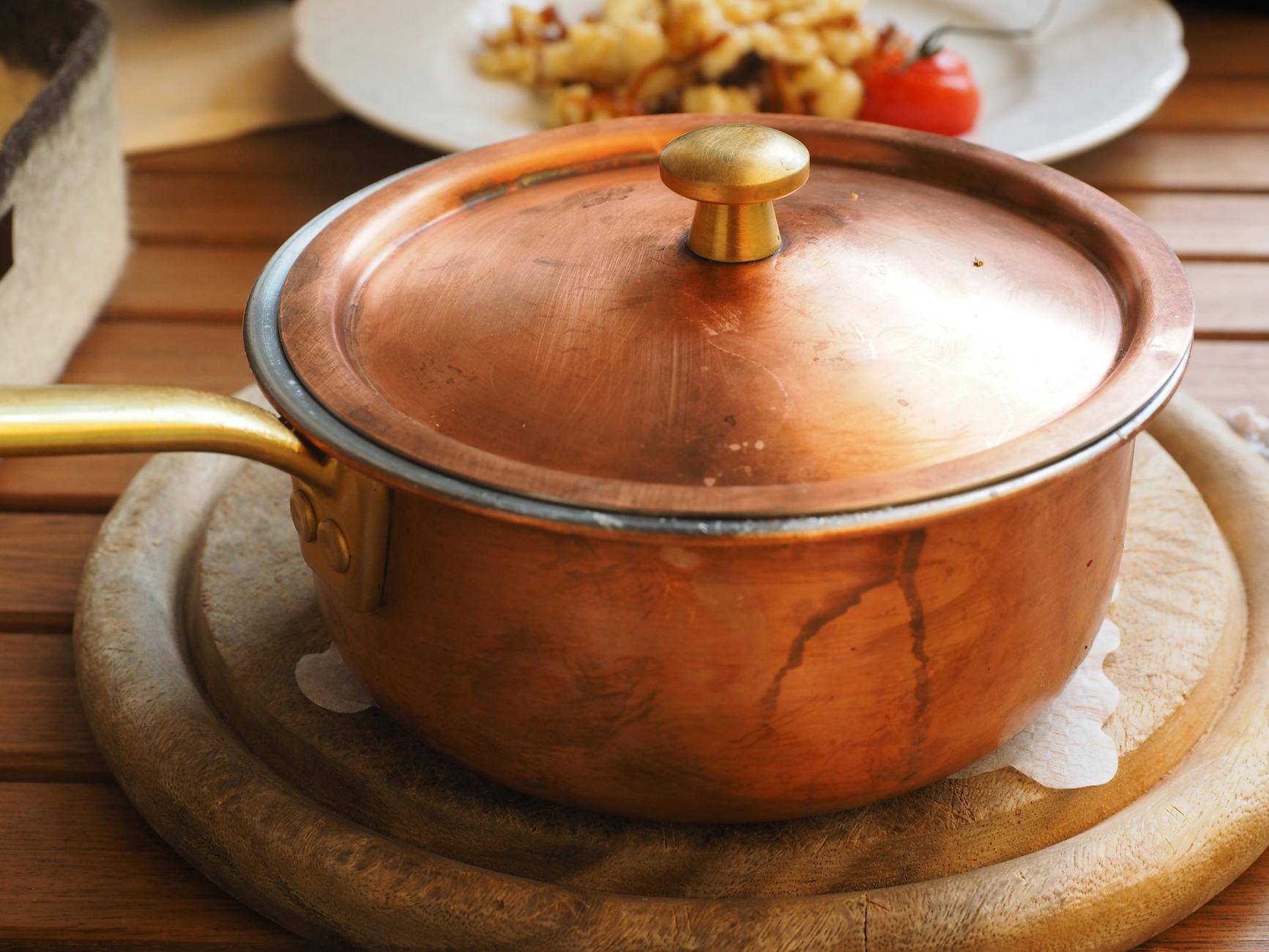
The Baumalu Copper Frying Pan 9.5-Inch is the honest answer to “how do I try real copper without spending what Mauviel costs.” It’s French-made, tin-lined, and priced in the mid range. That combination doesn’t exist in many places.
The heat responsiveness is real. Copper reacts to temperature changes faster than any other cookware material, and even at Baumalu’s thinner gauge you feel the difference immediately if you’ve been cooking on clad stainless. Reduce the heat and the pan responds within seconds, not the slow thermal lag you get from cast iron or even thick stainless. For eggs, fish, and anything where 30 seconds of overcooking matters, that responsiveness is the point.
The cast iron handle is a practical advantage. On a gas burner, the handle stays cool enough to touch with dry hands for a reasonable amount of time. (I timed this at around eight minutes on medium heat, which covers most stovetop tasks.) Mauviel’s stainless handles need a towel faster than that.
The tin lining requires respect. No metal spatulas. Don’t heat the pan empty. If you see gray patches developing, that’s normal wear. When the tin wears through to copper, find a re-tinning service. This maintenance rhythm is not complicated, but buyers who want a pan they can treat carelessly should look elsewhere.
One honest limitation: Baumalu is not widely distributed in the US. Finding replacement lids, matching saucepans, or sets is harder than with Mauviel. If you’re buying this as an entry to a copper batterie de cuisine, you may find yourself mixing brands.
Verdict: The accessible entry point to copper. Buy this if you want to understand what real copper cooking feels like before committing Mauviel money, or if mid-range pricing is where your budget lands and you’re willing to manage the tin lining.
Mauviel M’Heritage Copper Skillet 9.5”
The Mauviel M’Heritage Copper Skillet 9.5” is premium-priced and earns it. Handcrafted in Normandy, 2.5mm copper body, stainless steel interior. This is the pan that gets passed down.
The stainless lining changes the maintenance calculus entirely compared to Baumalu. No re-tinning, no prohibition on metal utensils, and the interior cleans like any quality stainless pan. The copper exterior will oxidize and needs periodic polishing if you care about appearance. If you don’t, it develops a darker patina that plenty of serious cooks consider acceptable.
At 2.5mm, the heat distribution is measurably more even than thinner copper. For high-acid preparations like tomato pan sauces, the stainless lining means no reactivity concerns. And the heat responsiveness at this thickness is the reason professional kitchens have used copper for two centuries.
The price is premium. Check current pricing on Amazon and compare it against the Baumalu. If the difference feels significant for a single 9.5-inch skillet, that’s a reasonable reaction. This is a deliberate purchase, not an impulse buy.
Verdict: For serious buyers who cook in copper regularly and want a piece that will outlast them, or for a gift with real meaning. Not the place to start if you’re not sure copper is for you.
Mauviel M’Heritage Copper Saucepan 1.9-Quart
If there’s one piece of copper cookware that earns its price in a home kitchen, it’s a saucepan. The Mauviel M’Heritage Copper Saucepan 1.9-Quart is the traditional tool of professional pastry kitchens for a reason: hollandaise, caramel, and chocolate work all demand precise, immediate heat control in a way that general cooking often doesn’t.
Caramel is the clearest example. The difference between 340°F and 360°F caramel is the difference between amber and burned, and copper registers your burner adjustment in seconds. A heavy-bottomed stainless saucepan holds heat and keeps climbing after you reduce the flame. This one doesn’t.
The stainless interior on the M’Heritage means no reactivity with acidic sauces. The 1.9-quart capacity is practical for most sauce and reduction work without being oversized.
The honest caveat: if you make hollandaise twice a year, the premium pricing is difficult to justify. This pan is for cooks who do this work regularly, or for kitchens where precision saucework is a genuine priority.
Verdict: The single best argument for copper in a home kitchen. If sauce and pastry work is your focus, this piece makes more sense than a copper skillet.
Made In 10-Inch Blue Carbon Steel Skillet
The Made In 10-Inch Blue Carbon Steel Skillet appears in a copper guide because some buyers researching copper cookware are actually looking for something different: a pan that’s lighter than cast iron, develops seasoning and non-stick properties with use, and handles high heat without hesitation.
Carbon steel doesn’t have copper’s thermal responsiveness. What it has is a 1200°F oven rating (the highest of any pan in this category), a weight that cast iron users will find immediately manageable, and the ability to develop genuine non-stick seasoning over time. It’s mid-range priced, roughly comparable to the Baumalu.
The maintenance requirement is different from copper but no less real. Carbon steel needs seasoning, reacts with acidic foods until well-seasoned, and shouldn’t go in the dishwasher. If you were put off by Baumalu’s tin-lining requirements, carbon steel doesn’t solve that problem.
But if you want a serious, responsive pan with character, and you find cast iron too heavy for daily use, this is the honest alternative. Our coverage of clad and stainless pan options covers the lower-maintenance end of the spectrum if that’s the direction you’re leaning.
Verdict: Not a copper substitute, but the right answer for cooks who want high-performance, high-heat capability at mid-range pricing without committing to copper’s maintenance requirements.
How to Choose
Start with your cooktop. If it’s induction, none of the copper options work. Stop here.
If you’re on gas or electric coil, the decision comes down to two questions. First: do you want to try copper, or do you already know you want copper? If you’re trying it, the Baumalu skillet is the right starting point. The mid-range price means you’re not committing Mauviel money to a material you haven’t cooked on. If you cook on it for six months and find you love it, you’ll buy Mauviel next. If you find the tin lining management more friction than it’s worth, you’re out a mid-range amount, not a premium one.
If you already know you want copper, and precision sauce work is the priority, buy the Mauviel saucepan before you buy a skillet. The 1.9-quart is where copper’s heat responsiveness produces results that are genuinely hard to replicate in another material. The skillet is excellent, but a skilled cook can manage skillet work on good clad stainless. Hollandaise and caramel are harder to argue about.
If you’re buying as a gift for someone who cooks seriously, the Mauviel M’Heritage skillet is the right call. It’s the piece that will be used, not displayed, and it will outlast the recipient’s current kitchen.
Carbon steel belongs in the conversation only if the draw is high-heat performance and low weight, not heat responsiveness. Know what you’re actually buying before you decide.
Frequently Asked Questions
Is Baumalu copper cookware the same quality as Mauviel?
Both are French-made with real copper bodies, but they’re not equivalent. Mauviel’s M’Heritage line uses 2.5mm copper and stainless steel lining. Baumalu uses thinner copper (typically 1.5-2mm) and tin lining. Baumalu is a legitimate entry into real copper cookware at a lower price, not a budget imitation. The difference shows most clearly in heat distribution evenness and lining durability over time.
What does re-tinning copper cookware actually involve?
When a tin-lined copper pan’s interior wears through to bare copper, you send it to a professional tinsmith who melts new tin and applies it to the interior surface. Several US-based services do this. It adds years of life to a pan that would otherwise be unusable. The cost and inconvenience are real, which is why stainless-lined copper (like Mauviel’s M’Heritage) exists. Tin lining isn’t a flaw, but buyers should go in knowing it’s a maintenance commitment.
Can I use copper cookware on an induction cooktop?
No. Copper is not magnetic and won’t work on induction. Interface disks exist that let you use non-induction cookware on induction cooktops, but they add thermal mass and eliminate most of copper’s heat-responsiveness advantage. If your cooktop is induction, copper is the wrong category. Look at clad stainless or carbon steel instead.
How do I clean the outside of a copper pan without ruining it?
A paste of salt and lemon juice or white vinegar removes oxidation and restores shine. Commercial copper polishes like Bar Keepers Friend (liquid form) also work. Don’t use steel wool or abrasive pads. The exterior will re-oxidize with use and heat, which is normal. How often you polish is a personal decision. Many serious cooks let their copper develop a darker patina and polish it occasionally rather than after every use.
Is copper cookware worth the price for a home cook?
For general everyday cooking, probably not. Clad stainless or a well-seasoned carbon steel pan handles most tasks without the maintenance overhead. Where copper earns its place in a home kitchen is in precision temperature-sensitive work: caramel, hollandaise, chocolate tempering, delicate egg preparations. If that’s a regular part of how you cook, a copper saucepan in the 1.5-2 quart range delivers results that other materials genuinely don’t match. One piece, used for the right tasks, justifies itself. A full copper set is a significant investment with diminishing returns unless you’re cooking at a professional level.
Frequently Asked Questions
Is Baumalu copper cookware good quality?
Baumalu is a legitimate French manufacturer making tin-lined copper cookware at prices lower than Mauviel. The construction is traditional and functional, but the tin lining requires careful maintenance — no metal utensils, no overheating empty, and eventual re-tinning when the lining wears.
What is the difference between Baumalu and Mauviel copper cookware?
Both are French-made copper, but Mauviel's M'Heritage line uses a stainless steel interior instead of tin, making it easier to maintain. Mauviel is also more expensive and built to tighter tolerances. Baumalu offers an entry point into real tin-lined copper at a lower price, with the maintenance trade-offs that entails.
Can I use metal utensils in Baumalu copper cookware?
No. Baumalu uses a tin lining, which is softer than stainless steel. Metal utensils will scratch and gouge the tin, accelerating wear and eventually exposing the reactive copper beneath. Use wood, silicone, or heat-resistant plastic utensils only.
How do I re-tin Baumalu copper cookware?
Re-tinning is a professional service — the old lining is stripped and a new layer of tin is applied by a tinsmith. In the US, several specialty shops offer this service. Expect to pay for shipping plus the re-tinning cost, which is typically worth it for a quality pan you've broken in.
Is Baumalu copper cookware induction compatible?
No. Copper is not magnetic and will not work on induction cooktops. Baumalu copper cookware is suitable for gas and electric coil ranges only.
Where to Buy
Baumalu Copper Frying Pan 9.5-InchSee Baumalu Copper Frying Pan 9.5-Inch on Amazon