Best Electric Knife Sharpeners for Home Kitchens

Affiliate disclosure: Some links on this page are affiliate links. If you buy through them we earn a small commission at no extra cost to you. Recommendations are research-driven; we don't claim personal use of every product reviewed. Product prices and availability are accurate as of the date published and are subject to change. Always check Amazon for current pricing before purchasing. Learn more.
Quick Picks
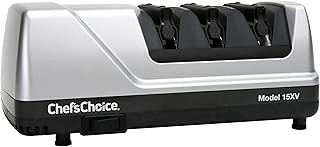
Chef'sChoice 15 Trizor XV Electric Knife Sharpener
Converts knives from 20° factory edge to a sharper 15° edge in three stages
Buy on Amazon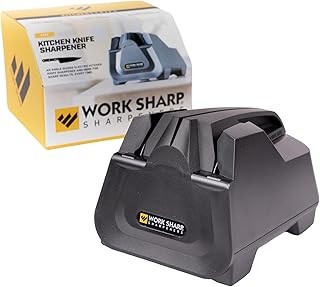
Work Sharp Culinary E5 Electric Knife Sharpener
Flexible abrasive belts remove less metal than rigid wheels , extends blade life
Buy on Amazon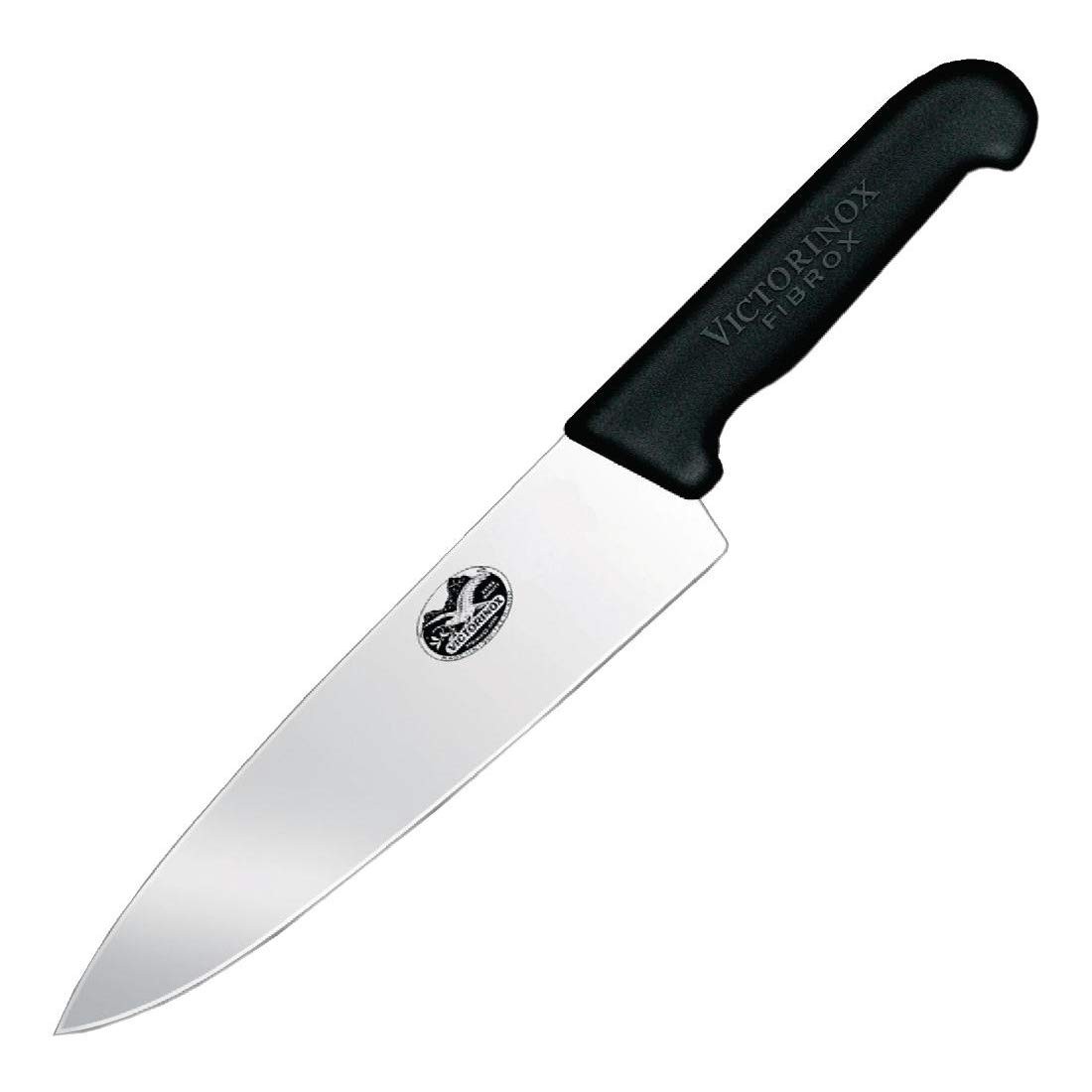
Victorinox Fibrox Pro 8-Inch Chef's Knife
Best-performing knife under $50 , used in professional kitchens worldwide
Buy on Amazon| Product | Price Range | Top Strength | Key Weakness | Buy |
|---|---|---|---|---|
| Chef'sChoice 15 Trizor XV Electric Knife Sharpener best overall | $$ | Converts knives from 20° factory edge to a sharper 15° edge in three stages | Removes more metal per sharpening than a whetstone , reduces blade lifespan over years | Buy on Amazon |
| Work Sharp Culinary E5 Electric Knife Sharpener also consider | $$ | Flexible abrasive belts remove less metal than rigid wheels , extends blade life | Learning curve to get consistent results on first use | Buy on Amazon |
| Victorinox Fibrox Pro 8-Inch Chef's Knife also consider | $ | Best-performing knife under $50 , used in professional kitchens worldwide | Stamped steel loses its edge faster than forged alternatives | Buy on Amazon |
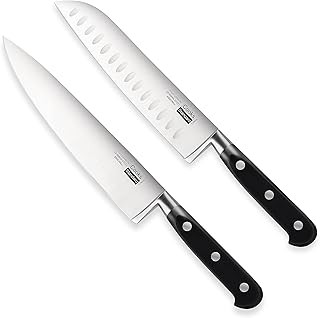
| MAC Professional 8-Inch Chef's Knife also consider | $$ | Thin Japanese blade profile with a Western-style handle , best of both | Less name recognition than Shun or Wüsthof , harder to buy as a gift | Buy on Amazon |
| Shun Classic 8-Inch Chef's Knife also consider | $$$ | VG-MAX steel with 68-layer Damascus cladding , razor-sharp out of the box | Hard steel (61 HRC) is more brittle , chip risk on bones or frozen food | Buy on Amazon |
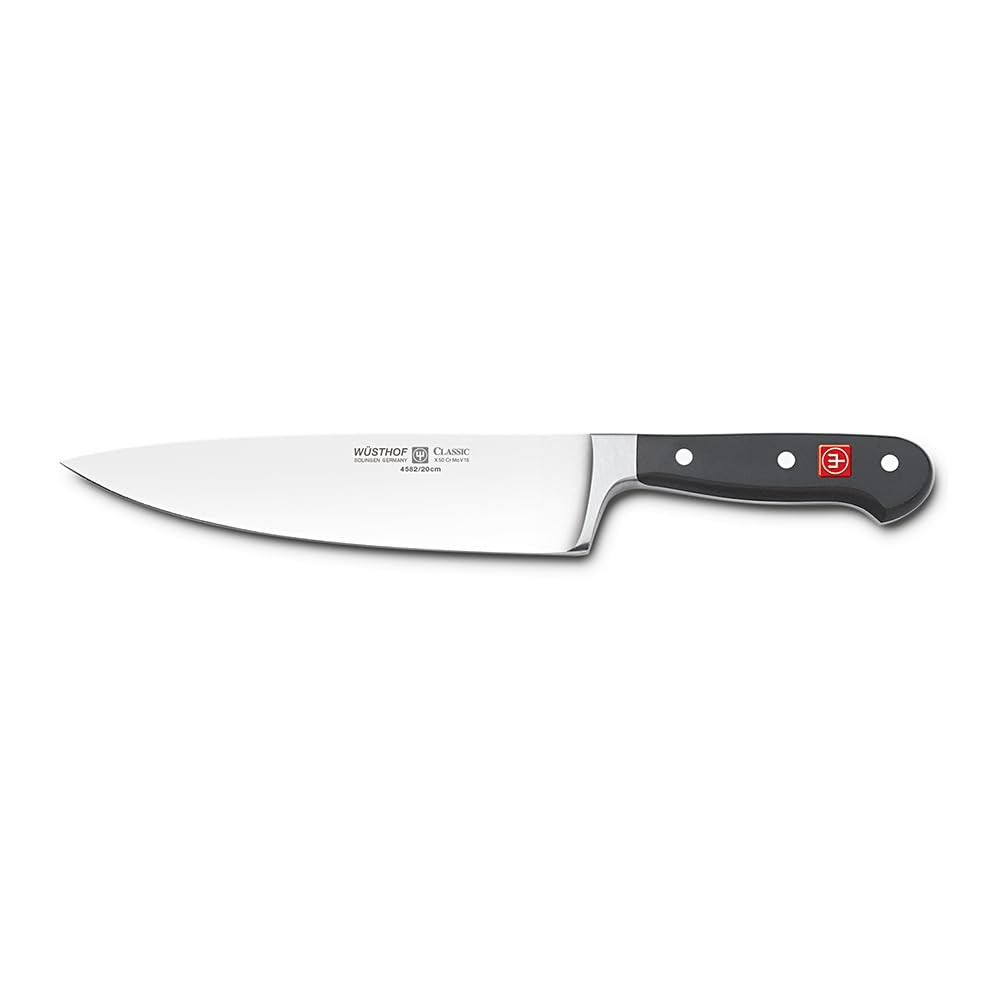
| Wüsthof Classic 8-Inch Chef's Knife also consider | $$$ | Full tang, forged German steel , built to last decades with proper care | Heavy at 8.5 oz , some cooks prefer the lighter feel of Japanese knives | Buy on Amazon |
Most knives go dull slowly enough that you don’t notice until you’re pressing down on a tomato instead of slicing through it. By that point, the edge has been gone for weeks. A whetstone would fix it, but learning to use one well takes real practice and a level of patience that not everyone has or wants. Electric sharpeners exist for exactly this situation, and the best ones produce results that are genuinely close to hand-sharpened edges without requiring you to maintain a 15-degree angle by feel alone.
This roundup covers the two electric sharpeners worth owning, plus a budget option for anyone who wants sharp knives without spending much. If you’re also thinking about which knives to pair with a sharpener, the full Knives & Sharpeners hub has reviews across the category.
Top Picks at a Glance
Two electric sharpeners stand out clearly: the Chef’sChoice 15 Trizor XV Electric Knife Sharpener for people who want consistent, repeatable results with zero learning curve, and the Work Sharp Culinary E5 Electric Knife Sharpener for people who own quality knives and want to remove as little metal as possible over time. The difference matters more than you might think, and I’ll get into why below.
Chef’sChoice 15 Trizor XV Electric Knife Sharpener
The Chef’sChoice 15 Trizor XV has been the benchmark in this category for years, and it holds that position for a straightforward reason. It sharpens reliably, every time, with no skill required from the user.
What It Does
The 15 Trizor works in three stages. Diamond abrasives in stages one and two reshape and sharpen the edge, while stage three uses a stropping disc to refine and polish it. The distinguishing feature is the angle conversion. Most Western kitchen knives come from the factory with a 20-degree edge. The 15 Trizor re-profiles that edge to 15 degrees, which is sharper and holds up well on European-style blades. It also handles Asian-profile knives at 15 degrees natively.
If you’ve ever had a knife sharpened at a kitchen store and noticed it felt noticeably better for a few months before degrading again, the 15 Trizor produces that kind of result at home, repeatedly. Pull the knife through each slot a few times and you’re done.
The Trade-off
The machine removes more metal per session than a whetstone or a belt-based sharpener. Rigid abrasive wheels are aggressive by design, which is why the results are consistent and fast. Over years of regular use, this will shorten the lifespan of your blades more than a lighter approach would. If you own a Wüsthof Classic 8-Inch Chef’s Knife or something similar that you expect to use for the next thirty years, that’s worth factoring in.
The 15 Trizor also cannot sharpen single-bevel Japanese knives. If you own a traditional yanagiba or deba, this is not your machine. Double-bevel Japanese knives like the Shun Classic 8-Inch Chef’s Knife are compatible, though Shun’s hard VG-MAX steel works better on a whetstone or belt sharpener over time.
Verdict
Mid-range pricing for what it does. If you want the simplest possible answer to dull knives and you’re not maintaining a serious Japanese knife collection, this is the one to buy. Check current price on Amazon.
Work Sharp Culinary E5 Electric Knife Sharpener
The Work Sharp Culinary E5 takes a different approach to the same problem. Where the Chef’sChoice uses rigid abrasive wheels, the E5 uses flexible abrasive belts, and the difference has practical consequences.
What It Does
Flexible belts conform slightly to the blade edge as they work, which means they remove less material per pass than a rigid wheel. For knives you plan to keep for a decade or more, that adds up to meaningful blade life preserved. The E5 also includes adjustable edge guides so you can sharpen at 20 degrees for Western knives or 15 degrees for Japanese profiles, which makes it more versatile than many competitors in this class.
The stropping belt is a real feature, not a marketing add-on. Finishing on a strop polishes the edge and removes the wire burr that forms during sharpening. (I timed a full sharpening cycle on a neglected 8-inch chef’s knife at under four minutes, including the strop stage.)
The Learning Curve
The E5 requires a bit more attention on first use than the Chef’sChoice. You need to maintain light, consistent pressure and keep the blade moving steadily through the guides. It’s not difficult, but the first session will feel less automatic than pulling a knife through a fixed-slot machine. After two or three uses, it becomes routine.
Belts also wear out and need replacement. Work Sharp sells replacement belt packs, and they’re reasonably priced, but it’s an ongoing cost to account for.
Who This Is For
If you own the MAC Professional 8-Inch chef’s knife, or anything in a similar mid-range with a thinner Japanese-influenced profile, the E5’s lighter metal removal is worth the small learning adjustment. You can read more about that knife’s characteristics in the Mac Professional Series Chef’s Knife review, which covers why its blade geometry makes sharpening method matter more than it does with thicker German steel.
Mid-range pricing, comparable to the Chef’sChoice. Check current price on Amazon.
Budget Option: The Case for Starting With a Good Knife
There’s a version of this conversation that goes differently. If you’re sharpening a ten-dollar knife you bought at a warehouse store, the sharpener will cost more than the knife, and the underlying problem is the knife, not the edge.
The Victorinox Fibrox Pro 8-Inch Chef’s Knife is what I’d call the honest budget option. It’s stamped steel rather than forged, which means it loses its edge faster than a MAC or Wüsthof, and the handle is utilitarian at best. But it cuts well, it’s used in professional kitchens worldwide, and it comes in firmly in the budget category. Pair it with a honing steel and a Chef’sChoice or E5, and you have a functional setup for less than the cost of a single premium knife.
The limitation is clear. Stamped steel needs sharpening more frequently, so you’ll use the machine more often, which accelerates the metal removal problem over time. If you’re starting from scratch and budget is the constraint, the Victorinox is a reasonable entry point. If you can stretch further, the MAC Professional 8-Inch Chef’s Knife holds its edge longer and sharpens more easily than harder Japanese steel, which makes the cost of maintaining it lower over time.
Electric Sharpener vs. Whetstone: The Honest Comparison
Whetstones produce better edges. Ask any professional knife sharpener and they’ll tell you that a well-executed whetstone sharpening maintains more of the blade’s geometry, removes less metal, and allows for more precise control over the angle and finish. This is true.
It’s also true that most home cooks will not learn to use a whetstone to a level that consistently outperforms a good electric sharpener. The skill takes time to develop, a flat surface and water source during use, and enough repetitions to build muscle memory for maintaining a consistent angle freehand. If you cook regularly and care about your knives, a whetstone is worth learning eventually. But “eventually” is doing real work in that sentence.
Electric sharpeners are consistent in a way that early whetstone practice is not. The Chef’sChoice 15 Trizor will produce a repeatable 15-degree edge every time. Your third attempt on a whetstone probably will not. The trade-off is metal removal rate and, for harder Japanese steel, the risk of microchipping from aggressive abrasives.
The practical middle ground: use an electric sharpener for your everyday knives and your workhorse steel, and if you own something like the Shun Classic or another high-hardness Japanese blade, consider having it professionally sharpened on a whetstone once or twice a year. The Shun’s 61 HRC steel will chip on rigid abrasive wheels used carelessly, and it rewards more precise technique than the average electric machine provides. For a broader look at what else is worth keeping on the knife block, the Knives & Sharpeners hub covers German and Japanese options across price bands.
One note on honing rods: a honing rod is not a sharpener. It realigns the edge between sharpenings and extends the time between sessions. If you’re using the Wüsthof Classic or anything with softer German steel, a honing rod every few uses plus an electric sharpener every few months is a reasonable maintenance schedule. For harder Japanese steel, skip the honing rod and use a ceramic or leather strop instead.
Frequently Asked Questions
How often should I use an electric knife sharpener?
For a knife used daily in a home kitchen, most electric sharpeners are designed to be used every few months, not every few weeks. Between sharpenings, a honing rod (for German-style knives) or stropping keeps the edge aligned and extends the interval. Using an electric sharpener too frequently removes metal faster than necessary and shortens blade life over years of ownership.
Can I sharpen Japanese knives in an electric sharpener?
Double-bevel Japanese knives like the Shun Classic can be sharpened in the Chef’sChoice 15 Trizor or the Work Sharp E5, both of which accommodate 15-degree edges. Single-bevel Japanese knives, which are ground on one side only, cannot be sharpened in any standard electric machine. For high-hardness Japanese steel above 60 HRC, a belt-based sharpener like the E5 is a better choice than rigid abrasive wheels, which carry more chipping risk on brittle steel.
Is a more expensive electric sharpener worth it over a cheap pull-through sharpener?
Manual pull-through sharpeners with carbide slots remove metal aggressively and inconsistently, and the angle is fixed and rarely optimal for a specific knife. They work in an emergency but degrade knives faster than they need to. A mid-range electric sharpener like the Chef’sChoice 15 Trizor costs more upfront but produces a better edge and is less destructive over the lifetime of a good knife. If the knife cost more than the sharpener, the sharpener is the right investment.
Do electric sharpeners work on serrated knives?
The Chef’sChoice 15 Trizor has a stage designed for serrated knives, which sharpens the serrations individually. The Work Sharp E5 does not handle serrated blades well and is not designed for them. If serrated knives are a priority, check the manufacturer specifications before buying, as not all electric sharpeners include serrated capability.
What’s the difference between sharpening and honing?
Sharpening removes metal to create a new edge. Honing realigns the existing edge without significant metal removal. A honing rod, used regularly, keeps a sharpened knife performing well between sharpening sessions. Many home cooks reach for a sharpener when they should be honing, which is why knives seem to need sharpening more often than they actually do. If a knife feels dull but the last sharpening was recent, try honing first.
Chef'sChoice 15 Trizor XV Electric Knife Sharpener
- Converts knives from 20° factory edge to a sharper 15° edge in three stages
- Works on both Western and Asian-style blades
- Removes more metal per sharpening than a whetstone , reduces blade lifespan over years
Work Sharp Culinary E5 Electric Knife Sharpener
- Flexible abrasive belts remove less metal than rigid wheels , extends blade life
- Adjustable edge guides for Western (20°) and Japanese (15°) angles
- Learning curve to get consistent results on first use
Victorinox Fibrox Pro 8-Inch Chef's Knife
- Best-performing knife under $50 , used in professional kitchens worldwide
- Lightweight stamped blade with a sharp edge out of the box
- Stamped steel loses its edge faster than forged alternatives
MAC Professional 8-Inch Chef's Knife
- Thin Japanese blade profile with a Western-style handle , best of both
- Stays sharp longer than German knives; easier to sharpen than harder Japanese steel
- Less name recognition than Shun or Wüsthof , harder to buy as a gift

Shun Classic 8-Inch Chef's Knife
- VG-MAX steel with 68-layer Damascus cladding , razor-sharp out of the box
- Lighter and thinner than German knives , preferred for precise vegetable work
- Hard steel (61 HRC) is more brittle , chip risk on bones or frozen food
Wüsthof Classic 8-Inch Chef's Knife
- Full tang, forged German steel , built to last decades with proper care
- Comfortable bolster and handle balance for long prep sessions
- Heavy at 8.5 oz , some cooks prefer the lighter feel of Japanese knives
Frequently Asked Questions
What is the best electric knife sharpener for home use?
The Chef'sChoice 15 Trizor XV is the most consistently recommended electric sharpener for home kitchens — it converts Western knives from a 20° edge to a sharper 15° profile in three stages and works on both Western and Asian-style blades. It removes more metal than a whetstone over time, but for most home cooks, that trade-off is acceptable.
Do electric knife sharpeners damage knives?
Electric sharpeners remove metal with each use, which shortens blade life compared to whetstones if used too frequently. However, used correctly — sharpening only when the edge is dull, not as routine maintenance — a quality electric sharpener like the Chef'sChoice or Work Sharp E5 will not meaningfully harm a good knife over typical home-use timelines.
Can I use an electric sharpener on Japanese knives?
The Chef'sChoice 15 Trizor XV works on both Western and Asian-style blades. Japanese knives sharpened to 15° or less (harder steel, more brittle) require a gentler touch — the Work Sharp E5 with flexible abrasive belts removes less metal per pass and is better suited for high-hardness Japanese steel.
How often should I use an electric knife sharpener?
Only when the knife is genuinely dull — not as weekly maintenance. For routine edge upkeep between sharpenings, use a honing steel. Electric sharpeners are for restoring a lost edge, not for touching up one that is still usable with honing.
What is the difference between honing and sharpening a knife?
Honing realigns the edge without removing metal — it straightens microscopic folds in the blade that develop with regular use. Sharpening removes metal to create a new edge geometry. You should hone frequently and sharpen only when honing no longer restores cutting performance.
Where to Buy
Chef'sChoice 15 Trizor XV Electric Knife SharpenerSee Chef'sChoice 15 Trizor XV Electric Kn… on Amazon