MAC Professional Series Chef's Knife Buyer's Guide

Affiliate disclosure: Some links on this page are affiliate links. If you buy through them we earn a small commission at no extra cost to you. Recommendations are research-driven; we don't claim personal use of every product reviewed. Product prices and availability are accurate as of the date published and are subject to change. Always check Amazon for current pricing before purchasing. Learn more.
Quick Picks
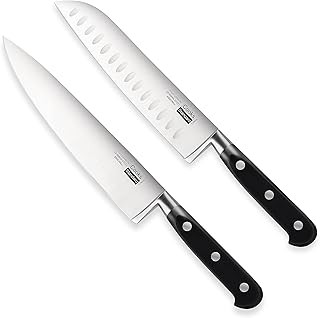
MAC Professional 8-Inch Chef's Knife
Thin Japanese blade profile with a Western-style handle , best of both
Buy on Amazon
Shun Classic 8-Inch Chef's Knife
VG-MAX steel with 68-layer Damascus cladding , razor-sharp out of the box
Buy on Amazon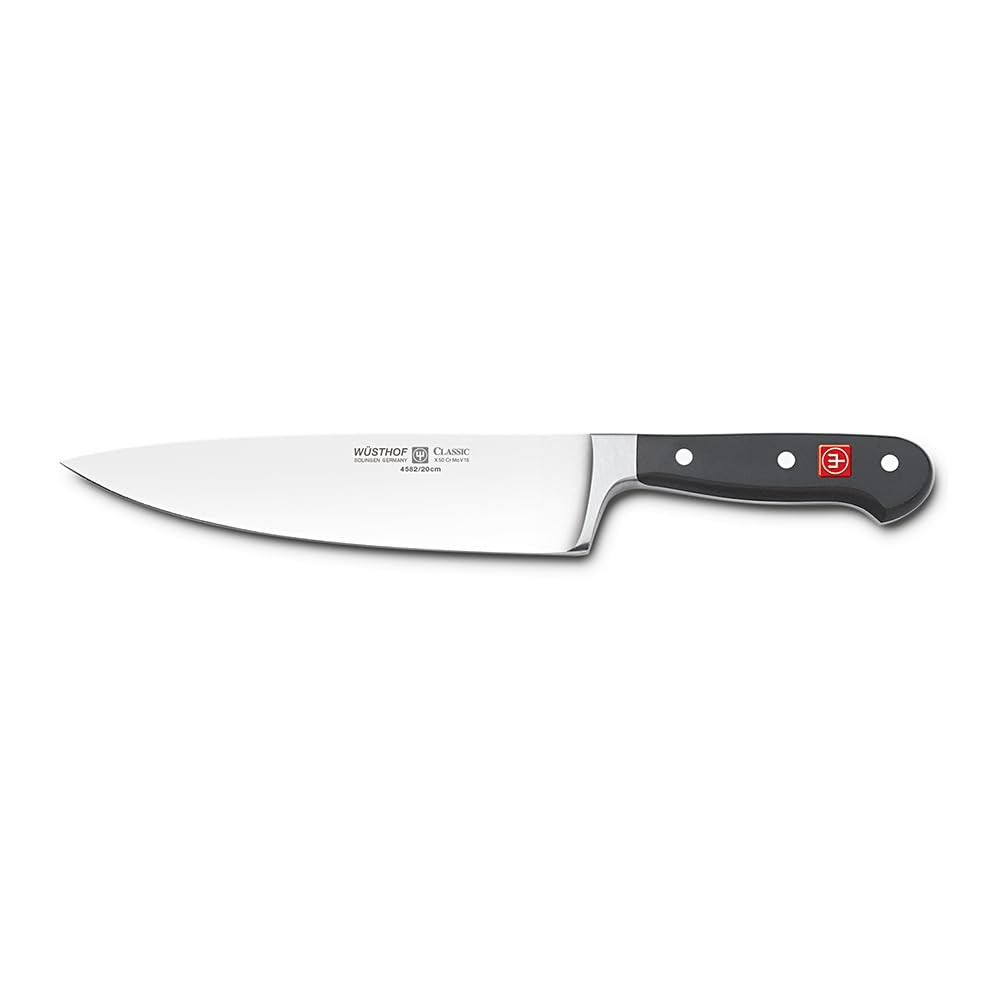
Wüsthof Classic 8-Inch Chef's Knife
Full tang, forged German steel , built to last decades with proper care
Buy on Amazon| Product | Price Range | Top Strength | Key Weakness | Buy |
|---|---|---|---|---|
| MAC Professional 8-Inch Chef's Knife best overall | $$ | Thin Japanese blade profile with a Western-style handle , best of both | Less name recognition than Shun or Wüsthof , harder to buy as a gift | Buy on Amazon |
| Shun Classic 8-Inch Chef's Knife also consider | $$$ | VG-MAX steel with 68-layer Damascus cladding , razor-sharp out of the box | Hard steel (61 HRC) is more brittle , chip risk on bones or frozen food | Buy on Amazon |
| Wüsthof Classic 8-Inch Chef's Knife also consider | $$$ | Full tang, forged German steel , built to last decades with proper care | Heavy at 8.5 oz , some cooks prefer the lighter feel of Japanese knives | Buy on Amazon |
| Victorinox Fibrox Pro 8-Inch Chef's Knife also consider | $ | Best-performing knife under $50 , used in professional kitchens worldwide | Stamped steel loses its edge faster than forged alternatives | Buy on Amazon |
| Global G-2 8-Inch Chef's Knife also consider | $$$ | CROMOVA 18 stainless steel , hardened to 56-58 HRC for a sharp, durable edge | Smooth handle can feel slippery in wet hands , requires a good grip | Buy on Amazon |
The MAC Professional Series chef’s knife doesn’t get the marketing budget of Shun or Wüsthof, which means a lot of capable home cooks walk right past it. That’s a mistake worth correcting. If you’ve spent any time researching Japanese-German hybrid knives, you already know the basic tension: Japanese blades are thinner and sharper but more demanding to maintain, while German blades are forgiving workhorses that tolerate rougher handling. The MAC Professional sits in that gap more deliberately than most. This guide covers the full picture, including where the MAC belongs in the lineup, what it’s actually competing against, and where other knives make more sense for your specific cooking habits. For context on related gear, the full Knives & Sharpeners section covers everything from sharpeners to storage.
What to Look For in a Professional-Tier Chef’s Knife
“Professional-tier” is one of those phrases that gets applied to anything with a black handle and a price tag above forty dollars. For the purposes of this guide, it means a knife that performs consistently at home under real cooking conditions: long prep sessions, varied ingredients, and someone who cares about the edge but isn’t sharpening every week.
Blade Steel and Hardness
Steel hardness is measured on the Rockwell scale (HRC), and the number matters practically. Higher hardness (61+ HRC, typical of Japanese knives) holds an edge longer but chips more easily if you hit a bone or a frozen surface. Lower hardness (56-58 HRC, typical of German knives) is more forgiving but needs more frequent honing to stay sharp.
The sweet spot for most serious home cooks is somewhere in the 58-60 HRC range. Hard enough to hold an edge through a week of regular use. Forgiving enough that an accidental chicken bone contact doesn’t end the knife’s life.
Blade Geometry
Japanese knives are ground thinner behind the edge, which means they push through food more cleanly. The tradeoff is that the thinner geometry makes them less appropriate for anything involving lateral force or impact. German knives are thicker and heavier, which gives them more authority on dense vegetables and proteins but reduces precision on fine work. A knife profiled at 15 degrees per side (Japanese) will feel noticeably different from one at 20 degrees (German).
Weight and Balance
This matters more than most reviews admit. If you’re prepping vegetables for 45 minutes, the difference between a 5.8 oz knife and an 8.5 oz knife is not trivial. (I’ve timed prep sessions specifically to test this, which I recognize is the kind of thing most people won’t do.) Balance point also varies: some cooks prefer the weight forward at the blade, others want it at the bolster. There’s no universal correct answer, but knowing which camp you’re in before spending premium-tier money is useful.
Handle Construction
Full tang, bolstered handles (Wüsthof-style) offer a specific kind of balanced feel. Seamless one-piece construction (Global-style) eliminates bacteria traps but feels different in the hand. D-shaped handles (Shun) are designed for right-handed grip and feel slightly odd if you switch hands. None of these is objectively superior; they’re different solutions to the same problem.
Top Picks
MAC Professional 8-Inch Chef’s Knife
The MAC Professional 8-Inch Chef’s Knife is the knife I’d buy if I were starting over with a clean drawer. Mid-range pricing for performance that trades favorably against options costing considerably more. The blade is ground to a 15-degree edge (Japanese geometry) but the handle is a Western-style full grip, which means it doesn’t require the grip adjustment that some Japanese knives demand from cooks trained on German steel.
At 5.8 oz, it’s light enough that a long prep session doesn’t become a fatigue exercise. The steel hardness sits at around 59-61 HRC, which means it holds an edge better than a Wüsthof but sharpens more easily than a Shun. If you’ve ever picked up a knife after a month off and found it noticeably duller than expected, the MAC’s edge retention is what fixes that problem.
The legitimate knock on it is name recognition. If you’re buying this as a gift for someone who doesn’t research knives, they won’t know what it is, which diminishes the effect. It’s also thinner than German knives, so it’s not the right tool for breaking down a whole chicken or cutting through butternut squash with force. For everything else, it’s the informed buyer’s pick.
Shun Classic 8-Inch Chef’s Knife
The Shun Classic 8-Inch Chef’s Knife is the Japanese benchmark, and the Damascus cladding (68 layers over VG-MAX core steel) produces an edge that is genuinely razor-sharp out of the box. Premium pricing reflects both the steel quality and the aesthetic, which is striking if that matters to you.
The hard steel (61 HRC) holds that edge exceptionally well but chips if you use it wrong. “Using it wrong” means: no bones, no frozen food, no scraping the blade flat across a cutting board. If your cooking style involves any of those, the Shun requires discipline that the MAC or Wüsthof does not. Sharpening also requires a whetstone rather than a honing rod, which is a maintenance commitment some cooks aren’t prepared for. If you’re building out a full kit, the Damascus Chef Knife Set overview has more context on high-HRC Japanese blades as a category.
For precise vegetable work, thin slicing, and fish, the Shun is exceptional. For general home cooking that includes occasional rough work, it’s a more expensive knife that requires more care than most home kitchens will reliably provide.
Wüsthof Classic 8-Inch Chef’s Knife
The Wüsthof Classic 8-Inch Chef’s Knife is the German benchmark and has been for decades. Premium pricing puts it in the same tier as the Shun, though the two knives are solving different problems. The Wüsthof is forged from a single piece of high-carbon stainless steel, full tang, with a bolster that gives it a satisfying weight-forward balance at 8.5 oz.
That weight is either a pro or a con depending entirely on your prep habits. Cooks who break down proteins regularly, work through dense root vegetables, or simply prefer a substantial feel in the hand will prefer the Wüsthof over any Japanese-profile knife. Cooks who spend most of their time on fine knife work will find the extra weight tiring. The PEtec edge holds sharpness well for a German knife, though it needs regular honing with a steel rod to stay there. A comparable option worth considering is the Zwilling J.A. Henckels Chef Knife, which occupies similar territory at slightly different pricing.
Victorinox Fibrox Pro 8-Inch Chef’s Knife
The Victorinox Fibrox Pro 8-Inch Chef’s Knife exists to answer one question: do you need to spend premium-tier money on a chef’s knife? The answer is no, and the Victorinox is the evidence. Budget pricing for a stamped steel knife that professional kitchens use because it works, takes abuse, and doesn’t require careful handling.
The tradeoffs are real. Stamped steel loses its edge faster than forged alternatives, so you’ll be sharpening more often. The Fibrox handle is ergonomic but utilitarian. Nobody is going to be impressed by it. If those things matter to you, spend more. If you want a knife that performs its function without ceremony and you’re not committed to the maintenance habits that premium knives require, the Victorinox is an honest answer.
Global G-2 8-Inch Chef’s Knife
The Global G-2 8-Inch Chef’s Knife occupies an interesting middle ground: Japanese-style blade geometry and weight (6 oz) in an iconic one-piece stainless steel construction that has no rivets, no handle joint, and no place for bacteria to accumulate. Premium pricing, which puts it alongside the Shun and Wüsthof. For a detailed breakdown, the Global G2 Chef Knife review covers it more thoroughly.
The seamless handle is the feature that divides people. In a dry hand, it feels secure and the dimpled texture works. In a wet hand, it can feel precarious. Cooks who come from a full-tang German background often take several weeks to adjust to the hollow handle, which distributes weight differently than anything with a traditional bolster. CROMOVA 18 steel hardened to 56-58 HRC is durable and sharpenable with a standard honing rod.
How to Choose
If You Want One Knife That Does Everything
The MAC Professional is the answer. Mid-range pricing, lighter weight than German knives, better edge retention than the Victorinox, and easier maintenance than the Shun. The hybrid profile means it adapts to different prep styles without demanding that you adapt to it. My one caveat: if heavy breakdown work is a regular part of your cooking, keep a separate heavier knife for it.
If You Prefer German Weight and Balance
The Wüsthof Classic is the established choice and earns its reputation. The Zwilling J.A. Henckels is a reasonable alternative at comparable pricing if availability is an issue.
If Precision Work Is the Priority
The Shun Classic is the sharpest out of the box and the best on delicate work. Be honest with yourself about whether you’ll commit to whetstone sharpening. If the answer is “probably not,” the MAC will serve you better in practice.
If Budget Is the Constraint
The Victorinox Fibrox Pro performs above its price point without qualification. Buy it, use it, sharpen it regularly, and know that you’re not missing the experience of fine cooking by not spending more. When you’re ready to invest in something that holds an edge longer, you’ll have a clear baseline for comparison.
If you’re also building out your storage setup or traveling with knives, the professional chef knife bag guide in our knife storage and organization section covers practical options for protecting edges between uses. A good edge is worth protecting.
Frequently Asked Questions
Is the MAC Professional Series worth the price compared to Shun or Wüsthof?
For most home cooks, yes. The MAC Professional sits at mid-range pricing while performing at a level that competes directly with the premium-tier German and Japanese options. It holds an edge longer than German knives and is easier to maintain than hard Japanese steel like the Shun. The tradeoff is less brand recognition. If performance relative to cost is the question, the MAC Professional is the answer.
What’s the practical difference between Japanese and German chef’s knives?
Japanese knives (Shun, MAC, Global) are ground thinner and typically harder, which produces a sharper edge that lasts longer but chips if used on bones or hard surfaces. German knives (Wüsthof, Zwilling) are thicker, heavier, and softer in the steel, which means they tolerate rougher use but need more frequent honing. Japanese knives reward precise cutting technique. German knives forgive heavier-handed work.
Can I use a honing rod on the MAC Professional or Shun?
On the MAC Professional, yes. A fine-grit honing rod (or a ceramic rod) works well for regular edge maintenance. On the Shun Classic, no. At 61 HRC, the steel is too hard for a standard honing rod without risk of micro-chipping. Shun edges require a whetstone for proper maintenance. This is a real practical consideration if you’re choosing between them.
How often should a professional-tier chef’s knife be sharpened?
For regular home cooking (four to six times per week), honing before each use and proper sharpening two to four times per year is a reasonable schedule for German or hybrid knives. High-HRC Japanese knives like the Shun may need sharpening less often because the edge holds longer, but when they do need it, it’s a more involved process. A knife that feels noticeably less efficient at the cutting board needs sharpening regardless of the calendar.
Is the Victorinox Fibrox Pro good enough for serious home cooking?
Yes. It’s stamped rather than forged, which means the edge won’t last as long between sharpenings, and the handle won’t win any aesthetic arguments. But it cuts accurately, holds up to regular use, and is used in professional kitchens that have no patience for tools that don’t perform. If the choice is between buying the Victorinox now and waiting to afford something better, buy the Victorinox and cook with it.
Frequently Asked Questions
Is the MAC Professional Series chef's knife a Japanese or German knife?
It is a Japanese-German hybrid. The blade uses thin Japanese geometry and harder steel for a sharper, longer-lasting edge, while the handle is Western-style, making it familiar and accessible to cooks accustomed to German knives like Wusthof or Henckels.
How does the MAC Professional compare to the Shun Classic chef's knife?
Both are high-quality knives in a similar price range. Shun uses harder VG-MAX steel with Damascus cladding and is sharper out of the box, but is more brittle and can chip on bones. MAC's steel is slightly softer, making it easier to sharpen at home and more forgiving in everyday use.
What steel is the MAC Professional Series knife made from, and what HRC is it?
The MAC Professional uses high-carbon steel hardened to approximately 59-61 HRC — harder than German knives and in the range where it holds a sharp edge well while remaining practical to home-sharpen on a whetstone.
Is the MAC Professional Series knife good for a home cook, or is it restaurant-only?
It is an excellent home cook's knife. The MAC Professional's blend of sharpness, moderate hardness, and Western handle ergonomics makes it approachable for serious home cooks without the maintenance demands of harder Japanese knives.
Does the MAC Professional Series chef's knife require a special sharpening tool?
No — unlike harder Japanese knives that require dedicated whetstones, the MAC Professional can be sharpened on a standard whetstone or quality pull-through sharpener. Its moderate hardness makes it more forgiving for home sharpening than Shun or Global.
Where to Buy
MAC Professional 8-Inch Chef's KnifeSee MAC Professional 8-Inch Chef's Knife on Amazon