Best Induction Cookware Nonstick: 6 Tested Pans

Affiliate disclosure: Some links on this page are affiliate links. If you buy through them we earn a small commission at no extra cost to you. Recommendations are research-driven; we don't claim personal use of every product reviewed. Product prices and availability are accurate as of the date published and are subject to change. Always check Amazon for current pricing before purchasing. Learn more.
Quick Picks
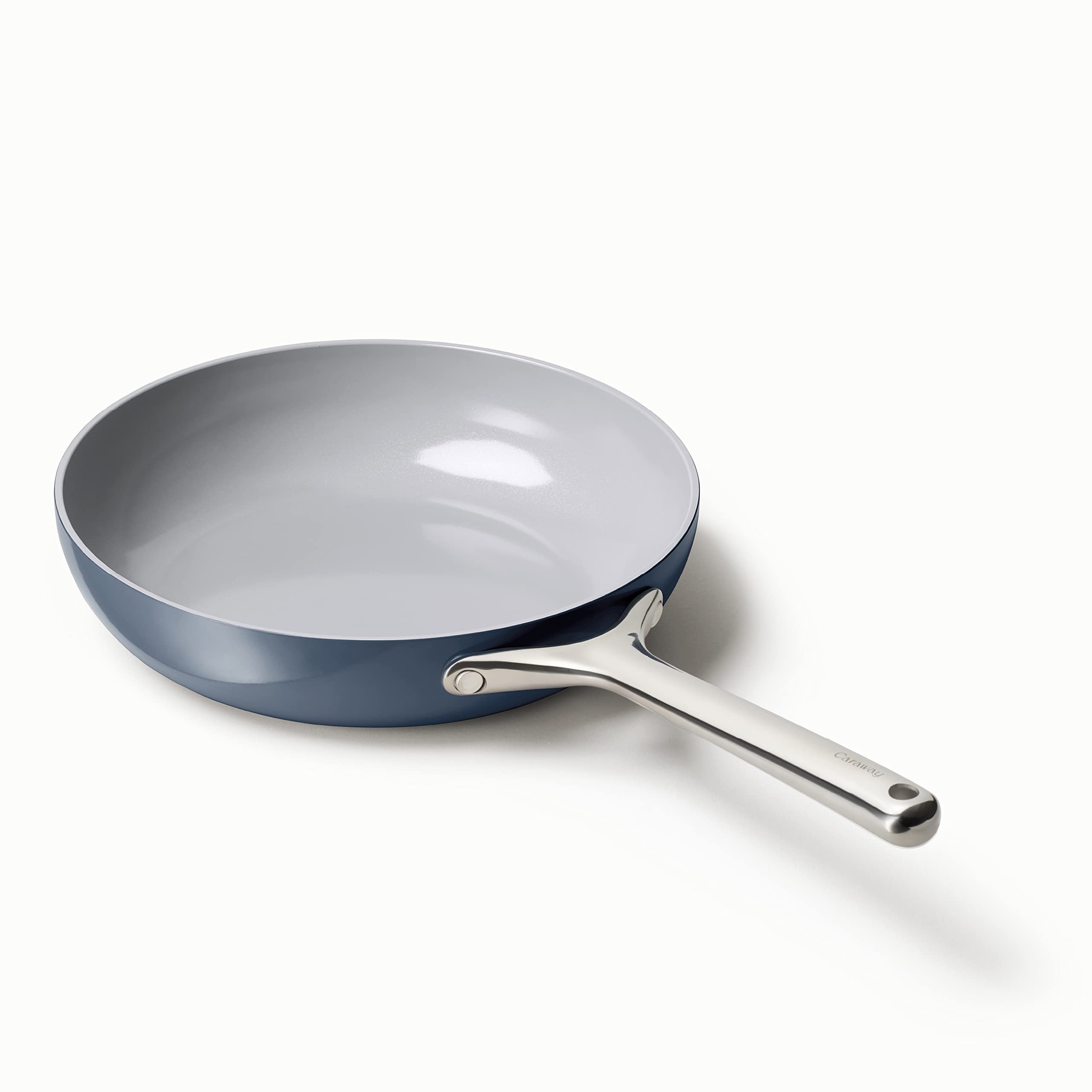
Caraway Ceramic Nonstick Frying Pan 10.5"
Ceramic-coated , PTFE and PFOA-free
Buy on Amazon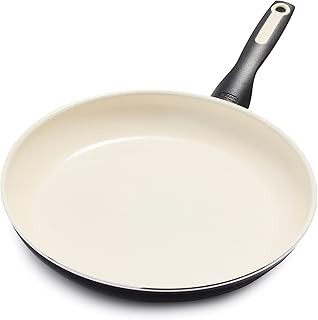
GreenPan GP5 Ceramic Nonstick 12" Skillet
Thermolon Minerals ceramic coating , PFAS-free and scratch-resistant
Buy on Amazon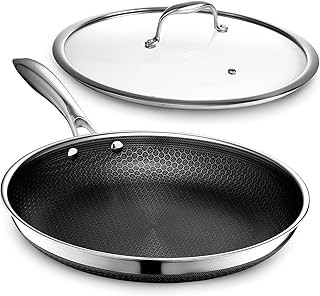
HexClad 12-Inch Hybrid Stainless/Nonstick Pan
Hybrid hexagonal surface combines stainless searing with nonstick release
Buy on Amazon| Product | Price Range | Top Strength | Key Weakness | Buy |
|---|---|---|---|---|
| Caraway Ceramic Nonstick Frying Pan 10.5" best overall | $$ | Ceramic-coated , PTFE and PFOA-free | Ceramic coating degrades faster than PTFE with high-heat or metal utensil use | Buy on Amazon |
| GreenPan GP5 Ceramic Nonstick 12" Skillet also consider | $$ | Thermolon Minerals ceramic coating , PFAS-free and scratch-resistant | Coating still degrades faster than PTFE with high-heat cooking | Buy on Amazon |
| HexClad 12-Inch Hybrid Stainless/Nonstick Pan also consider | $$$ | Hybrid hexagonal surface combines stainless searing with nonstick release | Very expensive for a nonstick-category pan | Buy on Amazon |
| Viking Culinary Hard Anodized Nonstick 10-Inch Fry Pan also consider | $$ | Hard anodized exterior is more durable than standard aluminum | PTFE coating will eventually degrade with use | Buy on Amazon |
| Joyce Chen 14-Inch Nonstick Wok with Flat Bottom also consider | $ | Flat bottom sits stably on induction and electric cooktops | Nonstick coating limits maximum heat , traditional wok cooking ideally requires higher temperatures | Buy on Amazon |
| Our Place Always Pan 2.0 also consider | $$ | Designed to replace 8 traditional pans , steamer basket and spatula included | Jack-of-all-trades means compromises , not ideal as a dedicated saute or sear pan | Buy on Amazon |
Induction cooktops punish bad cookware quickly. The pan either has a magnetic base or it doesn’t, and you’ll find out the hard way if you assumed wrong. Beyond compatibility, the same performance questions apply as with any skillet: does the nonstick coating actually release food cleanly, how long before it starts sticking, and is the price justified by how long it lasts? I’ve cooked on induction for three years in my current kitchen, working through a rotating cast of pans across price points, and this roundup covers the six that are worth your attention right now.
If you’re still orienting yourself on what separates ceramic from PTFE or why coating thickness matters, the broader Nonstick & Ceramic guide on this site is a good starting point before you commit to a specific pan.
Top Picks
Caraway Ceramic Nonstick Frying Pan 10.5”
The Caraway Ceramic Nonstick Frying Pan 10.5” is the piece you buy when you want to test Caraway’s approach without buying into the full set. Ceramic coating, no PTFE, no PFAS. The magnetic stainless steel base sits solidly on induction glass, and the 550°F oven-safe rating is higher than most ceramic pans at this size, which matters if you start something on the stovetop and finish it in the oven.
What I want to address directly: ceramic coatings are not as durable as PTFE at equivalent price points. If you cook at high heat regularly, or if you occasionally reach for a metal spatula out of habit (which I realize is a specific complaint, but also a common one), the ceramic surface will show wear faster than a comparable PTFE pan. Caraway’s coating holds up well under normal use with silicone or wood utensils and moderate heat, but it does not outperform PTFE on longevity. If you’re curious about the brand’s manufacturing and sourcing before committing, the Where Are Caraway Pans Made piece covers that in detail.
Pros. PTFE and PFOA-free ceramic coating. Induction compatible. Oven-safe to 550°F.
Cons. Ceramic degrades faster than PTFE with high-heat use or metal utensils. Mid-range pricing for a 10.5” pan.
Check current price on Amazon.
GreenPan GP5 Ceramic Nonstick 12” Skillet
The GreenPan GP5 Ceramic Nonstick 12” Skillet is the more affordable ceramic alternative to the Caraway, and in several practical respects it competes well. The Thermolon Minerals coating is PFAS-free and rated scratch-resistant. The hard-anodized exterior adds durability and improves heat distribution compared to plain aluminum. Oven-safe to 600°F, which beats the Caraway on that specification.
The trade-off relative to Caraway is mostly about aesthetics and brand positioning. GreenPan’s fit and finish is functional rather than considered. The handle works, but on longer cooking sessions, particularly over 20 minutes of active stirring, it becomes uncomfortable in a way the Caraway handle doesn’t. Both are mid-range pricing, but GreenPan comes in below Caraway at this size, which makes it the call if the coating chemistry matters more to you than the brand and the handle feel.
On coating durability: ceramic versus PTFE is the same trade-off here as with Caraway. The Viking (below) at similar pricing gives you a PTFE coating instead, which will hold up longer under hard use. The decision is whether you want PTFE-free more than you want longevity.
Pros. PFAS-free Thermolon Minerals coating. Hard-anodized exterior. 600°F oven rating. Induction compatible.
Cons. Ceramic durability limits still apply. Handle fatigue on longer sessions.
Check current price on Amazon.
HexClad 12-Inch Hybrid Stainless/Nonstick Pan
The HexClad 12-Inch Hybrid Stainless/Nonstick Pan is priced as a premium product, and I want to be direct about whether the hybrid claim earns that price.
The hexagonal surface pattern is the pitch: raised stainless peaks take the abrasion from metal utensils and high heat, while the PTFE sits in the valleys and handles the release. In practice, the sear you get is better than a standard nonstick pan and the release is better than bare stainless. But it does not replicate the sear of a dedicated stainless or carbon steel pan. If you’re coming from an All-Clad D3 (which I cooked on for eight years before switching my saute pan), the HexClad will not match it for crust development on proteins.
What HexClad actually delivers: one pan that handles eggs and pan sauces and seared chicken without switching surfaces, with a lifetime warranty and genuine metal-utensil tolerance. That is a real value proposition for a cook who wants to run a leaner kitchen. For a cook who already has dedicated stainless and dedicated nonstick, the HexClad sits awkwardly between them and costs considerably more than either. Worth knowing: HexClad makes other pieces in the same hybrid system, and the HexClad Baking Sheet follows the same design logic if you want consistent performance across your cookware.
It’s heavy for a nonstick-category pan. If you’re used to picking up a 12” skillet one-handed, adjust your expectations.
Pros. Metal utensil safe. Lifetime warranty. Hybrid sear-and-release surface works as claimed.
Cons. Premium pricing. Won’t match dedicated stainless for searing. Heavy.
Check current price on Amazon.
Viking Culinary Hard Anodized Nonstick 10-Inch Fry Pan
The Viking Culinary Hard Anodized Nonstick 10-Inch Fry Pan is the straightforward mid-range PTFE nonstick option in this roundup. Hard-anodized exterior, PTFE coating, induction compatible, oven-safe to 400°F. No lifestyle branding, no coating chemistry debate. It does what nonstick pans are supposed to do.
PTFE will eventually degrade with use. That’s not a Viking problem, that’s the material. But at mid-range pricing, a PTFE pan that lasts three to four years with proper care (no metal utensils, no overheating above 400°F, no dishwasher) is a reasonable exchange. Compared to the GreenPan GP5 at similar pricing, the Viking gives you better coating longevity in exchange for a PTFE-based coating rather than ceramic. If the PTFE-free argument matters to you, buy the GreenPan. If you want the coating that holds up longer, buy the Viking.
Viking’s brand recognition sits below Calphalon or All-Clad in this category, which I think creates an unfair discount in buyer perception. The build quality at this price is solid.
Pros. PTFE coating more durable than ceramic at this price. Hard-anodized exterior. Induction compatible.
Cons. 400°F oven limit is lower than the ceramic options. PTFE coating will eventually wear.
Check current price on Amazon.
Joyce Chen 14-Inch Nonstick Wok with Flat Bottom
The Joyce Chen 14-Inch Nonstick Wok with Flat Bottom exists to answer a specific problem: induction cooktops require flat-bottomed cookware. A traditional carbon steel wok with a round bottom will not work on induction glass at all, and even a round-bottomed pan with a wok ring is inefficient because the ring reduces contact with the induction surface.
The flat bottom on the Joyce Chen solves the contact problem. Hard-anodized nonstick surface, lightweight enough to toss vegetables one-handed (I timed a full stir-fry at under six minutes, which matters when you want the vegetables to have some snap). Budget pricing makes it a reasonable buy for a wok you’re going to treat as a high-use, moderate-lifespan piece.
The honest limitation: stir-fry technique in its traditional form requires very high heat, and nonstick coatings don’t want to live above 400-450°F. You can make good stir-fry on this pan by cooking in smaller batches and keeping your induction burner in the upper range of its settings, but you will not replicate the breath-of-the-wok effect you’d get from a carbon steel wok on a commercial burner or a high-BTU gas setup. If that bothers you, a seasoned carbon steel flat-bottom wok is the answer. If you want nonstick convenience and easy cleanup and you’re not chasing restaurant results, this pan delivers on that.
Pros. Flat bottom works on induction. Lightweight. Budget pricing. Nonstick makes cleanup straightforward.
Cons. Nonstick limits max heat for traditional stir-fry technique. Less durable than carbon steel long-term.
Check current price on Amazon.
Our Place Always Pan 2.0
The Our Place Always Pan 2.0 is designed for a specific type of kitchen: small space, minimal storage, one cook who doesn’t want to manage a full collection. Ceramic nonstick, PTFE-free, comes with a steamer basket, a spatula with a built-in rest, and a lid with a steam vent. The pour spout is genuinely useful and not something other pans bother with.
I want to be direct about the trade-offs here, because the “replaces 8 pans” claim deserves scrutiny. The Always Pan does a reasonable job as a sauté pan, a steamer, and a pan for one-pot weeknight cooking. It does not do a good job as a dedicated sear pan. The shallow-to-medium depth and ceramic coating mean you’re not browning proteins the way you would in a heavier stainless or cast iron piece. If you’re replacing a full collection with a single pan, you are accepting that trade-off consciously.
For someone in a small apartment or a cook who genuinely doesn’t want more than one or two pans, it’s a mid-range priced, well-thought-out piece. For a cook who already has a functioning collection and is considering adding it as a specialty pan, it doesn’t fill a gap that a good skillet and a saucepan don’t already cover. There are also some documented concerns about long-term coating performance worth reading before buying. The Caraway Cookware Bad Reviews piece, while specific to Caraway, covers the broader ceramic coating durability questions that apply to the Always Pan as well.
Pros. Multi-function design with useful included accessories. PTFE-free ceramic. Induction compatible. Thoughtful details.
Cons. Not a strong dedicated saute or sear pan. Ceramic coating lifespan concerns apply at this price.
Check current price on Amazon.
Buying Guide
Ceramic vs. PTFE on Induction
Both work on induction provided the base has a magnetic stainless steel layer. The coating chemistry question is separate from the induction compatibility question. Ceramic coatings (Caraway, GreenPan, Our Place) are PTFE-free and appeal to buyers concerned about fluoropolymers. PTFE coatings (Viking, HexClad’s valley layer) are more durable under hard use and higher heat. Ceramic coatings are not heat-resistant simply because their oven-safe rating is higher. The oven-safe rating reflects the pan’s construction, but the coating still degrades faster than PTFE under repeated high-heat stovetop use.
If longevity under real kitchen conditions is the priority, PTFE outperforms ceramic at equivalent price points. If PTFE-free is the non-negotiable, buy the GreenPan over the Caraway for better value, or the Caraway if the design and handle feel justify the difference to you.
What “Induction Compatible” Actually Requires
A pan works on induction if and only if a magnet sticks firmly to the base. Aluminum alone won’t work. Hard-anodized aluminum alone won’t work. The pan needs a bonded magnetic stainless layer on the bottom. Every pan in this roundup has one. If you’re buying outside this list, hold a magnet to the bottom of the pan before purchasing, or check that the packaging says induction compatible explicitly.
The Multi-Pan Question
If you’re building an induction-compatible collection rather than buying a single piece, the more useful framing for the full category is in the nonstick cookware for induction guide, which covers set composition and what to prioritize across multiple pieces. For a single-pan purchase, the GreenPan GP5 at mid-range pricing is the most straightforward recommendation in this roundup: good coating, good size, good oven rating, no significant design compromises.
Frequently Asked Questions
Does nonstick cookware actually work on induction cooktops?
Yes, provided the pan has a magnetic base. Induction works by generating heat in ferromagnetic material, so the pan needs a stainless steel or iron layer at the bottom. The nonstick coating on the interior cooking surface is irrelevant to induction compatibility. All six pans in this roundup are induction compatible.
How long does nonstick coating last on an induction cooktop?
With proper care (silicone or wooden utensils, hand washing, no preheating above medium-high), a PTFE-coated pan typically lasts three to five years of regular use. Ceramic coatings in the same conditions tend to lose their release quality earlier, often within two to three years depending on heat exposure. Induction doesn’t accelerate coating wear specifically, but because induction heats faster and more intensely than electric coil, it’s easier to overheat a pan accidentally if you’re not paying attention.
Is ceramic nonstick safer than PTFE on induction?
Ceramic coatings are PTFE-free, which addresses concerns about fluoropolymer chemicals. PTFE coatings from reputable manufacturers are PFOA-free as of current production standards, so the acute health risk from older PTFE formulations is less applicable to pans bought in the last several years. If PTFE-free matters to you as a firm preference, ceramic is the right category. If you want the coating that holds up longer, PTFE is the practical choice.
Can I use metal utensils on nonstick pans for induction?
On standard PTFE and ceramic nonstick, no. Metal utensils cut through the coating and accelerate wear. The HexClad is the exception in this roundup: the raised stainless hex pattern is designed to take metal utensil contact. On everything else here, stick to silicone, wood, or plastic.
What size nonstick pan works best for induction cooking?
A 10” to 12” skillet covers most single-task cooking. The 12” GreenPan GP5 handles four eggs, a chicken breast, or a full pan of vegetables without crowding. If storage space is constrained, a 10” is the more practical everyday size. The Joyce Chen 14” wok is the right call if stir-fry is a regular part of your cooking. The Our Place Always Pan sits at approximately 10.5” effective cooking diameter and handles moderate batch sizes adequately, though not generously.
Caraway Ceramic Nonstick Frying Pan 10.5"
- Ceramic-coated , PTFE and PFOA-free
- Magnetic stainless steel base works on induction
- Ceramic coating degrades faster than PTFE with high-heat or metal utensil use
GreenPan GP5 Ceramic Nonstick 12" Skillet
- Thermolon Minerals ceramic coating , PFAS-free and scratch-resistant
- Hard anodized exterior for durability and even heating
- Coating still degrades faster than PTFE with high-heat cooking
HexClad 12-Inch Hybrid Stainless/Nonstick Pan
- Hybrid hexagonal surface combines stainless searing with nonstick release
- Metal utensil safe , peaks of the hex pattern take the wear
- Very expensive for a nonstick-category pan
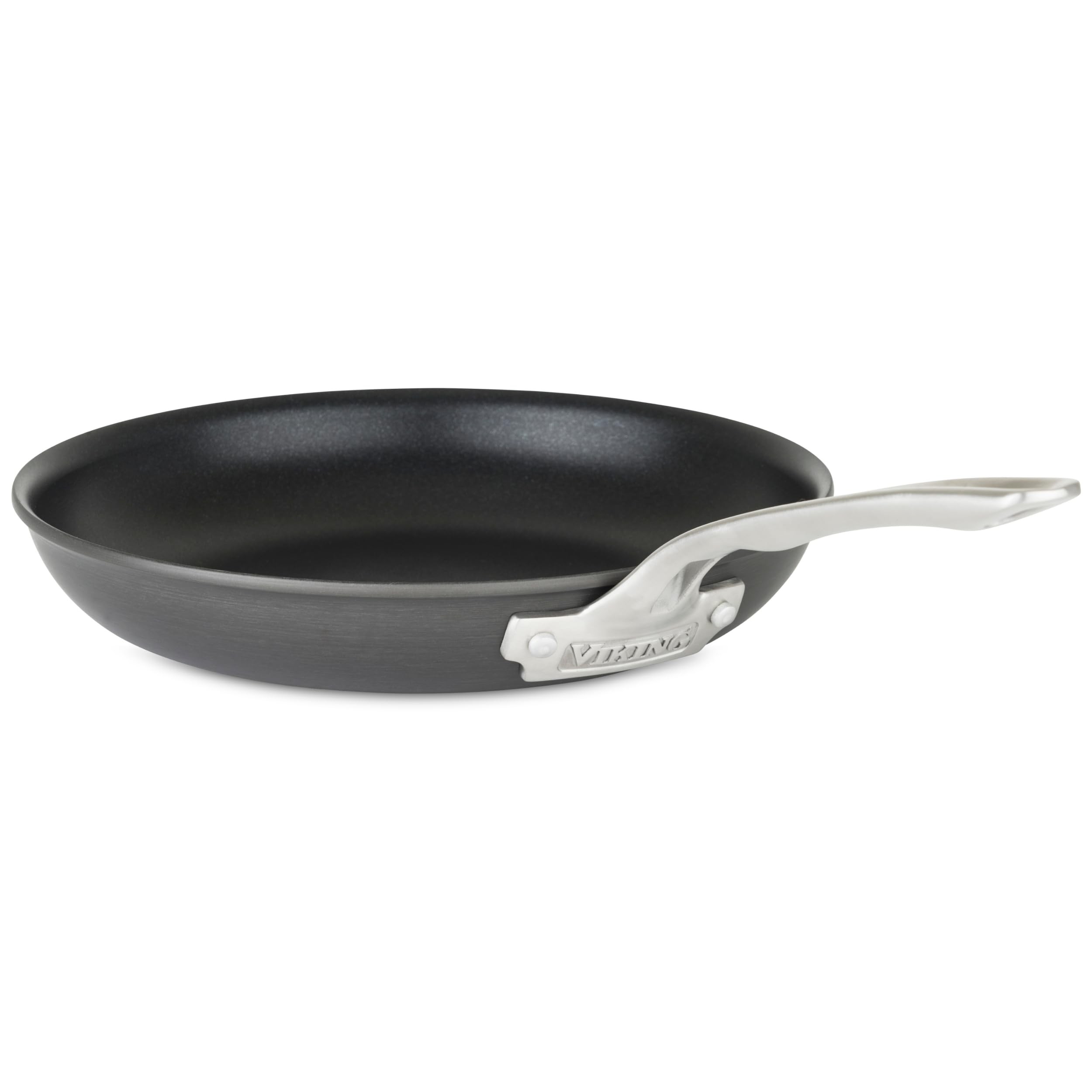
Viking Culinary Hard Anodized Nonstick 10-Inch Fry Pan
- Hard anodized exterior is more durable than standard aluminum
- PTFE nonstick , more durable than ceramic at the same price point
- PTFE coating will eventually degrade with use
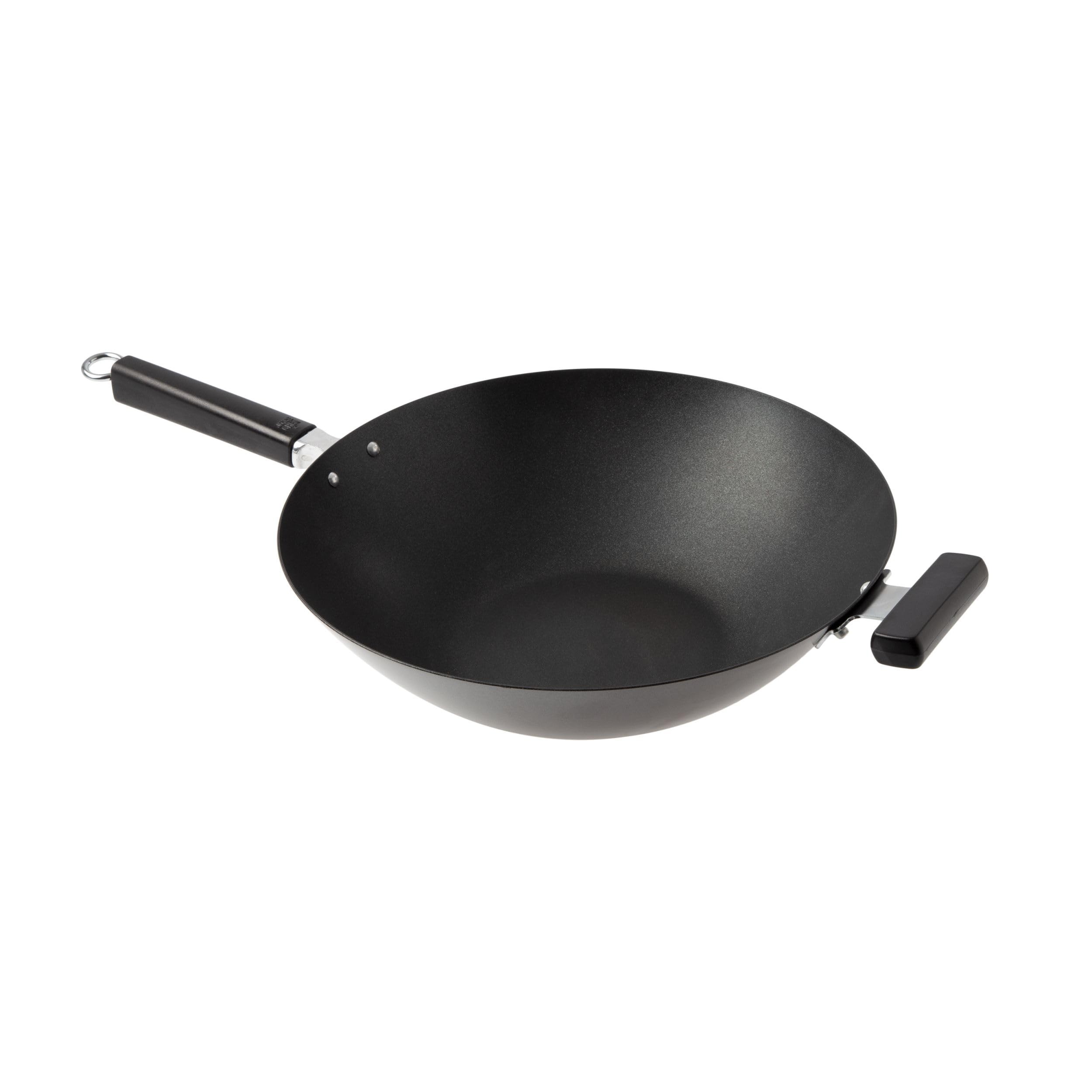
Joyce Chen 14-Inch Nonstick Wok with Flat Bottom
- Flat bottom sits stably on induction and electric cooktops
- Hard-anodized nonstick surface handles high-heat stir-frying
- Nonstick coating limits maximum heat , traditional wok cooking ideally requires higher temperatures
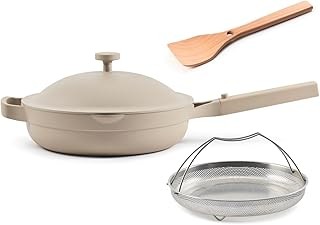
Our Place Always Pan 2.0
- Designed to replace 8 traditional pans , steamer basket and spatula included
- Ceramic nonstick coating, PTFE-free
- Jack-of-all-trades means compromises , not ideal as a dedicated saute or sear pan
Frequently Asked Questions
What makes cookware induction compatible?
Induction cooktops use magnetic fields to generate heat directly in the pan, so the cookware must contain a magnetic material — typically a stainless steel base or a ferromagnetic disk. Copper and aluminum alone are not induction compatible. Check the product description for 'induction compatible' or test with a magnet: if it sticks to the base, the pan will work.
Is ceramic nonstick or PTFE nonstick better for induction cooking?
PTFE nonstick (like Viking's hard-anodized line) is generally more durable at higher temperatures than ceramic nonstick and lasts longer with proper care. Ceramic nonstick (like Caraway) is PTFE-free and has a cleaner aesthetic, but degrades faster with high-heat cooking or metal utensil use. Both work on induction if the base is magnetic.
Can I use metal utensils on induction nonstick pans?
With most ceramic and PTFE nonstick surfaces, metal utensils will damage the coating and shorten its lifespan significantly. The HexClad hybrid is the exception — its hexagonal stainless steel pattern is designed to take metal utensil wear while the recessed nonstick valleys stay protected.
How long do nonstick coatings last on induction cookware?
With proper care — no metal utensils, no overheating an empty pan, hand washing — a quality PTFE nonstick coating can last 3–5 years. Ceramic coatings typically degrade faster, often showing reduced release within 1–2 years of regular use. High-heat cooking accelerates degradation for both.
Is the Caraway frying pan truly nonstick on induction?
Yes. Caraway's ceramic-coated frying pan has a magnetic stainless steel base that works on induction cooktops. The ceramic coating provides excellent nonstick release when new, but requires care to maintain — avoid high heat and metal utensils to extend its lifespan.
Where to Buy
Caraway Ceramic Nonstick Frying Pan 10.5"See Caraway Ceramic Nonstick Frying Pan 1… on Amazon