Best Rated Santoku Knives: What Actually Matters

Affiliate disclosure: Some links on this page are affiliate links. If you buy through them we earn a small commission at no extra cost to you. Recommendations are research-driven; we don't claim personal use of every product reviewed. Product prices and availability are accurate as of the date published and are subject to change. Always check Amazon for current pricing before purchasing. Learn more.
Quick Picks
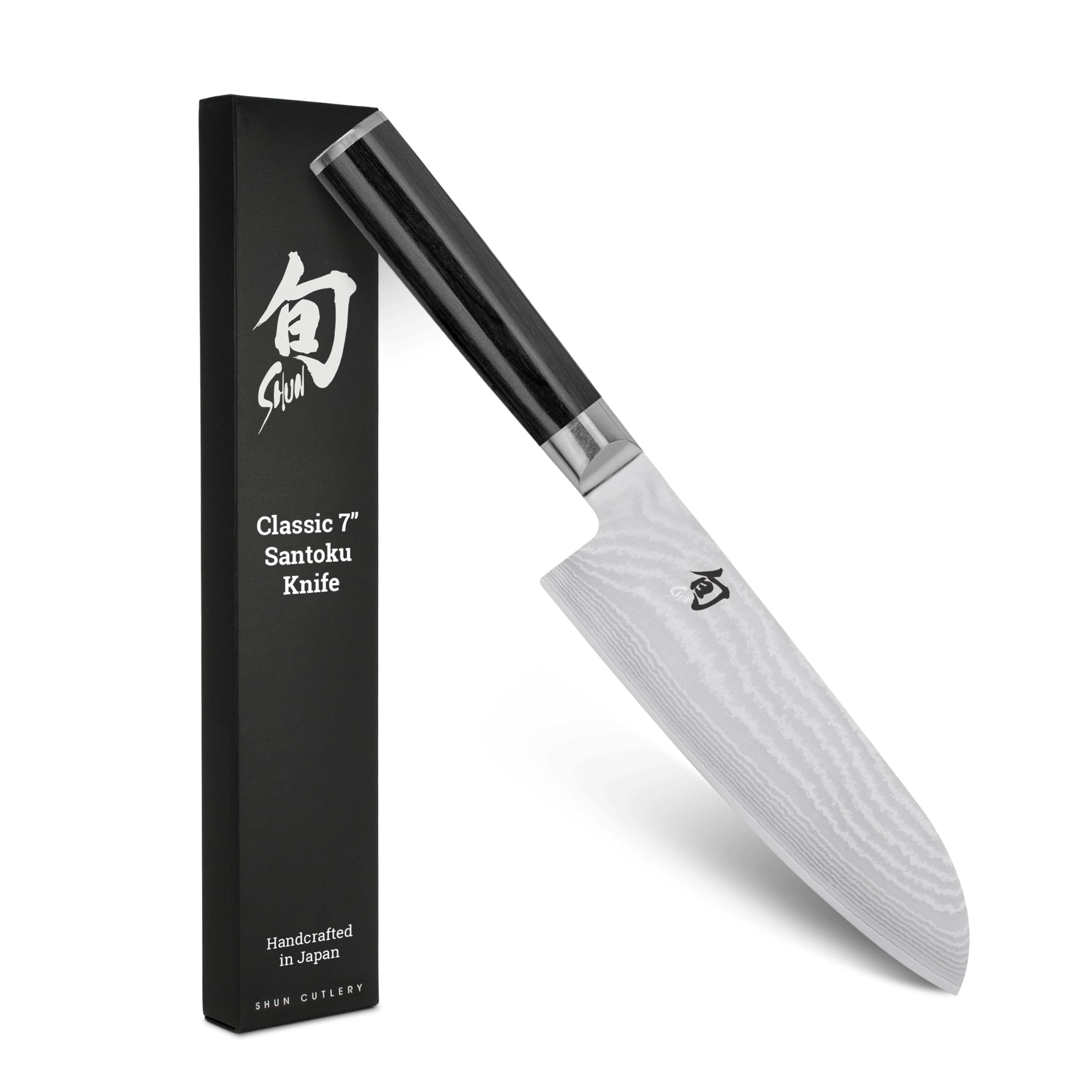
Shun Classic 7-Inch Santoku
VG-MAX Damascus steel , same exceptional sharpness as the chef's knife
Buy on Amazon
Wüsthof Classic 7-Inch Santoku
German steel in a Japanese blade shape , great of the best of both traditions
Buy on Amazon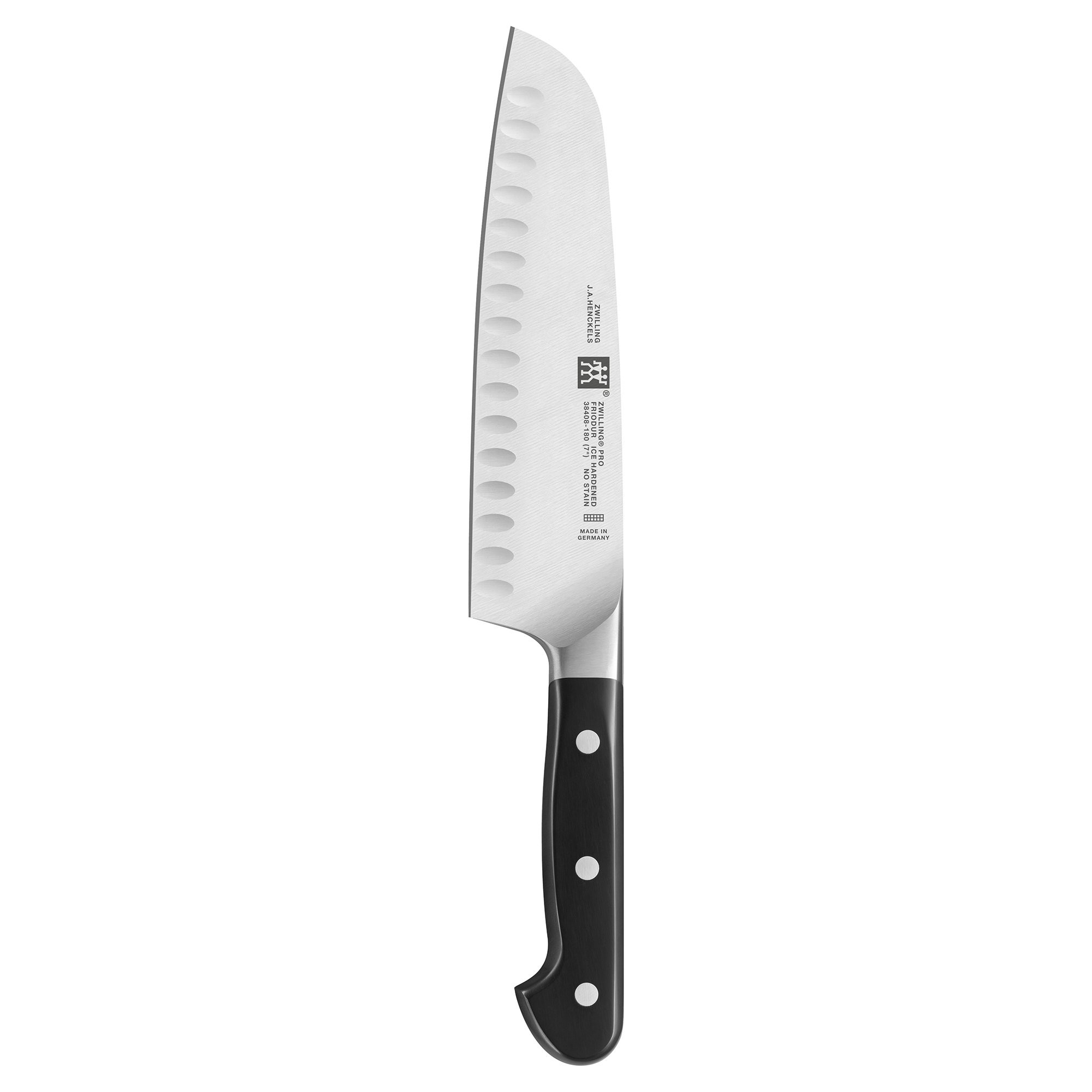
Zwilling J.A. Henckels Zwilling Pro 7-Inch Santoku
German steel in santoku form , more forgiving than Japanese steel for daily use
Buy on Amazon| Product | Price Range | Top Strength | Key Weakness | Buy |
|---|---|---|---|---|
| Shun Classic 7-Inch Santoku best overall | $$$ | VG-MAX Damascus steel , same exceptional sharpness as the chef's knife | Hollow-ground edge requires whetstone maintenance , not for casual sharpeners | Buy on Amazon |
| Wüsthof Classic 7-Inch Santoku also consider | $$$ | German steel in a Japanese blade shape , great of the best of both traditions | German steel is softer than Japanese , needs more frequent honing | Buy on Amazon |
| Zwilling J.A. Henckels Zwilling Pro 7-Inch Santoku also consider | $$$ | German steel in santoku form , more forgiving than Japanese steel for daily use | German steel not as hard as Japanese alternatives , needs more frequent honing | Buy on Amazon |
| Yoshihiro Kurouchi Black-Forged Blue Steel Santoku Knife 6.5" also consider | $$$ | Blue | High-carbon steel requires oiling and drying after each use to prevent rust | Buy on Amazon |
| Global G-2 8-Inch Chef's Knife also consider | $$$ | CROMOVA 18 stainless steel , hardened to 56-58 HRC for a sharp, durable edge | Smooth handle can feel slippery in wet hands , requires a good grip | Buy on Amazon |
| MAC Professional 8-Inch Chef's Knife also consider | $$ | Thin Japanese blade profile with a Western-style handle , best of both | Less name recognition than Shun or Wüsthof , harder to buy as a gift | Buy on Amazon |
The santoku is a knife that gets oversold. Every cutlery brand has one now, and the marketing language around them has become indistinguishable: “razor-sharp,” “balanced,” “versatile.” What that language rarely tells you is which steel you’re actually dealing with, what the edge geometry means for your specific cutting habits, and whether the handle will feel like a liability after forty minutes of prep work. I’ve spent a fair amount of time working through these options, and the differences are real and worth explaining clearly. You can browse the full range of knives and sharpeners in our Knives & Sharpeners section if you want more context before reading on.
This roundup covers six knives across two steel traditions and a few different use profiles. Not all six are equal, and I’ll say so.
Top Picks
Shun Classic 7-Inch Santoku
Best Japanese santoku overall
The Shun Classic 7-Inch Santoku is the knife I’d recommend first to someone who wants a dedicated Japanese santoku and is willing to take care of it properly. The VG-MAX steel core, clad in 68 layers of Damascus, hits 61 HRC. That hardness produces an edge that is noticeably sharper out of the box than anything in the German steel category and holds it longer between sharpenings. The hollow-ground blade reduces drag through dense vegetables in a way you feel immediately on the first pass through a butternut squash.
The trade-offs are real, though. At 61 HRC, the steel is brittle. Do not use this knife on frozen food, bones, or hard winter squash with any lateral pressure. It is not a workhorse knife; it’s a precision knife, and treating it otherwise will chip the edge. Maintenance requires a whetstone. If your current sharpening routine is a pull-through sharpener or a basic honing steel, this is not your knife.
Pros:
- VG-MAX Damascus steel sharpens to a finer edge than German alternatives
- Hollow-ground blade minimizes sticking and drag on vegetables
- Lighter profile reduces fatigue during long prep sessions
Cons:
- 61 HRC brittleness means no bones, no frozen food, no hard squash
- Requires whetstone maintenance; pull-through sharpeners will damage this edge
- Premium pricing, check current price on Amazon
,
Wüsthof Classic 7-Inch Santoku
Best santoku for cooks who want German durability in a Japanese shape
Wüsthof Classic 7-Inch Santoku
The Wüsthof Classic 7-Inch Santoku is what I’d put in front of someone who likes the idea of a santoku but wants a knife they can use without worrying about it. The X50CrMoV15 steel runs softer than the Shun, around 58 HRC, which means the edge won’t hold as long between sessions but also means it recovers quickly on a honing rod and is considerably harder to chip.
Compared to the Shun Classic santoku, the trade-off is simple. You give up some edge retention and the aesthetic of the Damascus cladding, and you get a knife that tolerates a broader range of tasks without complaint. The Granton edge (those oval hollows along the blade face) does a credible job of preventing food from sticking, and the full tang with the classic Wüsthof triple-riveted handle means the balance is familiar to anyone who’s cooked with Western knives for years.
The “purist” objection to this knife is that a German steel santoku misses the point of the santoku shape. I understand that argument and don’t find it very compelling for most home cooks.
Pros:
- German forging quality with a lighter, shorter profile than the standard chef’s knife
- Granton edge reduces sticking on sliced foods
- Softer steel means easy maintenance with a honing rod
Cons:
- Softer than Japanese steel; needs more frequent honing
- Premium pricing, check current price on Amazon
,
Zwilling Pro 7-Inch Santoku
Best for cooks who want the Zwilling system in santoku form
If you already cook with the Zwilling J.A. Henckels chef knife, the Zwilling Pro 7-Inch Santoku makes sense as a companion piece. The Friodur ice-hardened steel gives it better edge retention than standard German steel, and the curved bolster is distinctive in the Zwilling line, designed specifically to encourage a pinch grip without the abrupt shoulder you get on older bolster designs.
The meaningful complaint about this knife is practical. That curved bolster, which works so well in hand, makes sharpening on a flat whetstone genuinely awkward. The heel of the blade sits at an angle when you flatten the knife against the stone, which means you’re either skipping the heel entirely or compensating with a technique adjustment that most home cooks aren’t going to bother with. If you sharpen on a flat stone regularly, factor that in. If you use a rod or a guided system, it’s a non-issue.
My more detailed look at the Zwilling santoku line is in the Zwilling Henckels Santoku Knife review if you want the full breakdown.
Pros:
- Friodur ice-hardening improves edge retention over standard German steel
- Curved bolster pinch-grip design is genuinely comfortable
- Consistent Zwilling forging quality
Cons:
- Curved bolster makes flat-stone sharpening awkward at the heel
- German steel not as hard as Japanese alternatives; needs regular honing
- Premium pricing, check current price on Amazon
,
Yoshihiro Kurouchi Black-Forged Blue Steel Santoku 6.5”
Best for enthusiasts willing to commit to high-carbon maintenance
Yoshihiro Kurouchi Black-Forged Blue Steel Santoku 6.5”
I want to be direct about who this knife is for, because it gets marketed in ways that obscure the commitment it requires. The Yoshihiro Kurouchi Black-Forged Blue Steel Santoku 6.5” is hand-forged in Japan from Aogami (Blue Steel) high-carbon steel. The edge it takes is exceptional. The Kurouchi finish on the spine and flat provides some rust resistance and is visually striking in a way that no stainless knife can replicate.
But Aogami steel is reactive. If you wash this knife and set it on the counter while you finish cooking, you will have rust spots by the time you sit down to eat. It needs to be dried immediately and oiled periodically. It cannot go in the dishwasher. It cannot sit in water. It should not cut acidic foods and then sit unwashed. If none of that sounds like a burden, this is a genuinely excellent knife. If any of it sounds like you’ll skip the step half the time, choose the Shun instead.
Sharpening requires proper Japanese whetstones. The edge geometry and steel hardness are not compatible with Western-style honing rods or most guided systems.
Pros:
- Aogami Blue Steel takes an exceptionally fine edge
- Hand-forged in Japan with traditional Kurouchi finish
- For cooks who want a blade with actual character
Cons:
- High-carbon steel rusts without immediate drying and periodic oiling
- Not dishwasher safe, not low-maintenance by any definition
- Requires Japanese whetstones; not compatible with most guided sharpening systems
- Premium pricing, check current price on Amazon
,
Global G-2 8-Inch Chef’s Knife
Best for cooks who want maximum lightness in a stainless knife
Global G-2 8-Inch Chef’s Knife
The Global G-2 8-Inch Chef’s Knife is technically a chef’s knife, not a santoku, but it belongs in this comparison because it occupies the same buyer decision for a significant number of cooks: Japanese-inspired geometry, lighter than German alternatives, stainless steel, and a brand profile that sits between the Shun and the MAC in terms of recognition. (I include it here because if you’re weighing the Shun santoku, you should at least price the G-2.)
At 6 oz, the G-2 is among the lightest knives in this class. The CROMOVA 18 stainless steel runs 56-58 HRC, comparable to the Wüsthof range. The seamless one-piece construction means no rivets, no handle seam, no places for residue to accumulate. That’s a real advantage if hygiene in the kitchen matters to you.
The handle is polarizing. The dimpled stainless steel grip feels confident in a dry hand and becomes genuinely slippery in a wet one. If your prep work involves wet hands frequently, this is worth testing before committing. The hollow handle also feels strange to anyone who learned on full-tang construction. (I noticed this on first use and adjusted within a week, which I realize isn’t everyone’s experience.)
Pros:
- 6 oz is significantly lighter than German chef’s knives
- Seamless one-piece construction is hygienic and clean
- CROMOVA 18 steel holds a sharp edge reliably
Cons:
- Smooth handle can become slippery in wet hands
- Hollow handle feels unfamiliar to full-tang users
- Premium pricing, check current price on Amazon
,
MAC Professional 8-Inch Chef’s Knife
Best overall value in this roundup
MAC Professional 8-Inch Chef’s Knife
The MAC Professional 8-Inch Chef’s Knife is mid-range pricing in a category where most competitors are premium, and it outperforms several of them. The blade is thin by Japanese standards, the steel is harder than German alternatives (which means longer edge retention), and the Western-style handle means the learning curve is negligible for cooks who’ve used Wüsthof or Zwilling.
At 5.8 oz, it’s the lightest knife in this roundup. Over a ninety-minute prep session, that matters. The steel is easier to sharpen than the harder Shun and Yoshihiro options, which is a genuine advantage for cooks who sharpen occasionally rather than obsessively.
The only legitimate knocks against the MAC are name recognition and blade thickness. It won’t impress anyone at a gift-giving occasion who hasn’t already done the research. And the thinner blade means it’s not a good choice for breaking down chicken or any heavy processing. For slicing, dicing, and vegetable prep, it is excellent. My longer review of this knife is in the Mac Professional Series Chef’s Knife piece if you want the full picture.
Pros:
- Mid-range pricing with performance that competes with premium options
- Thin Japanese blade profile with an approachable Western handle
- Hardest to beat for value in this field
Cons:
- Low brand recognition makes it a poor gift choice
- Thinner blade not suited for heavy-duty tasks
,
Buying Guide
Steel Hardness and What It Actually Means
The practical difference between Japanese and German steel comes down to one trade-off. Harder steel (61-65 HRC, typical of Japanese knives) takes a finer edge and holds it longer. Softer steel (56-58 HRC, typical of German knives) is more forgiving under stress, easier to maintain with a honing rod, and recovers faster when the edge degrades.
If you’ve ever taken a knife to a butternut squash only to find the edge rolled slightly after the session, you were probably using softer steel without regular honing. A harder Japanese blade would have held, but dropped it on a hard floor and you might have chipped it instead. Neither is wrong for everyone. They’re different tools with different failure modes.
Blade Geometry
The santoku shape, shorter and flatter than a Western chef’s knife, suits a chopping motion better than a rocking motion. If your prep style involves the tip staying in contact with the board while you rock through herbs, a chef’s knife may actually serve you better. If you lift and push-cut, the santoku shape is more natural.
The 5-inch santoku format is also worth considering for smaller hands or tighter prep spaces. My coverage of that format lives in the 5 Inch Santoku Knife overview.
Handle and Weight
Western handles, full tang construction, and heavier blades favor cooks who learned on European knives. Japanese handles (octagonal or oval), lighter construction, and forward balance favor technique-conscious cooks who’ve spent time with Japanese cutlery. The Global G-2 and MAC sit in between, combining Japanese blade geometry with more accessible handle designs.
For a deeper look at maintenance tools and storage solutions for any of these knives, the full knife and sharpener selection has companion buying guides worth reading alongside this one.
Who Should Buy What
If you want one Japanese santoku and will care for it properly: the Shun Classic 7-Inch. If you want German durability in a shorter blade: Wüsthof Classic 7-Inch. If you’re buying into the Zwilling ecosystem: the Zwilling Pro. If you’re a serious collector prepared for high-carbon maintenance: the Yoshihiro Kurouchi. If weight is your primary concern: the Global G-2 or MAC Professional. If value is the priority and you’re buying for your own kitchen: MAC Professional, without hesitation.
,
Frequently Asked Questions
What is a santoku knife best used for?
The santoku excels at slicing, dicing, and chopping vegetables, boneless proteins, and fish. The shorter, flatter blade profile suits a push-cut or straight-down motion rather than the rocking technique of a Western chef’s knife. For most everyday prep work it handles everything a chef’s knife does, with slightly less leverage for heavy cuts.
Is a santoku knife better than a chef’s knife?
Neither is categorically better. A santoku is typically shorter (6-7 inches), lighter, and better suited to a chopping motion. A chef’s knife (typically 8-10 inches) offers more versatility for rocking cuts and more leverage for heavier work. Many cooks use both depending on the task.
What steel is best for a santoku knife?
Japanese high-carbon stainless steel (like VG-MAX or VG-10) is the standard for dedicated Japanese santoku knives, offering exceptional sharpness and edge retention at the cost of brittleness and more demanding maintenance. German stainless steel (X50CrMoV15) is more forgiving and easier to maintain but needs more frequent honing. High-carbon non-stainless steel (like Aogami Blue Steel) takes the finest edge of all but requires careful drying and oiling to prevent rust.
How do I maintain a santoku knife at home?
For Japanese steel knives (Shun, Yoshihiro), use a whetstone at 1000-3000 grit for sharpening and maintain the 15-16 degree edge angle. For German steel knives (Wüsthof, Zwilling), a honing rod used every few sessions is sufficient for maintenance, with annual professional sharpening or whetstone work as needed. All knives in this roundup should be washed by hand and dried immediately. None are dishwasher safe in practice, regardless of what the label says.
Is a santoku knife worth buying if I already have a chef’s knife?
If your chef’s knife is 8 inches or longer and you find yourself wanting something lighter for extended vegetable prep, the santoku earns its place on the block. If you primarily cook proteins and want one all-purpose blade, adding a santoku is a marginal improvement. The case for a santoku is strongest when most of your prep work is produce-heavy and you notice fatigue or reduced control after long sessions with a heavier knife.
Shun Classic 7-Inch Santoku
- VG-MAX Damascus steel , same exceptional sharpness as the chef's knife
- Hollow-ground blade reduces drag when cutting through vegetables
- Hollow-ground edge requires whetstone maintenance , not for casual sharpeners
Wüsthof Classic 7-Inch Santoku
- German steel in a Japanese blade shape , great of the best of both traditions
- Hollow edge (Granton) reduces friction and food sticking to the blade
- German steel is softer than Japanese , needs more frequent honing
Zwilling Pro 7-Inch Santoku
- German steel in santoku form , more forgiving than Japanese steel for daily use
- Curved bolster pinch-grip design unique to the Pro line
- German steel not as hard as Japanese alternatives , needs more frequent honing
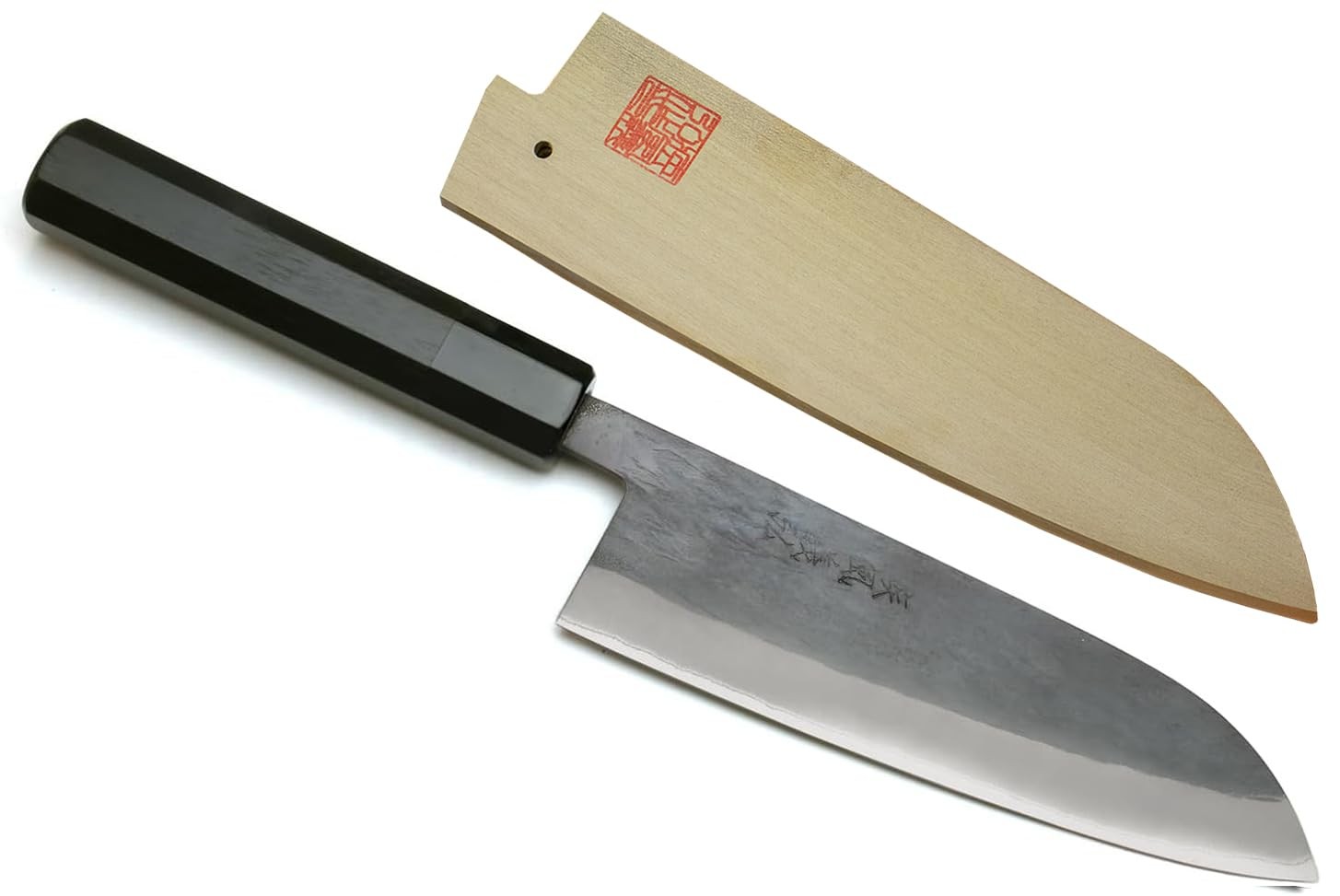
Yoshihiro Kurouchi Black-Forged Blue Steel Santoku Knife 6.5"
- Blue
- Kurouchi (blacksmith) finish provides rust resistance and a traditional aesthetic
- High-carbon steel requires oiling and drying after each use to prevent rust
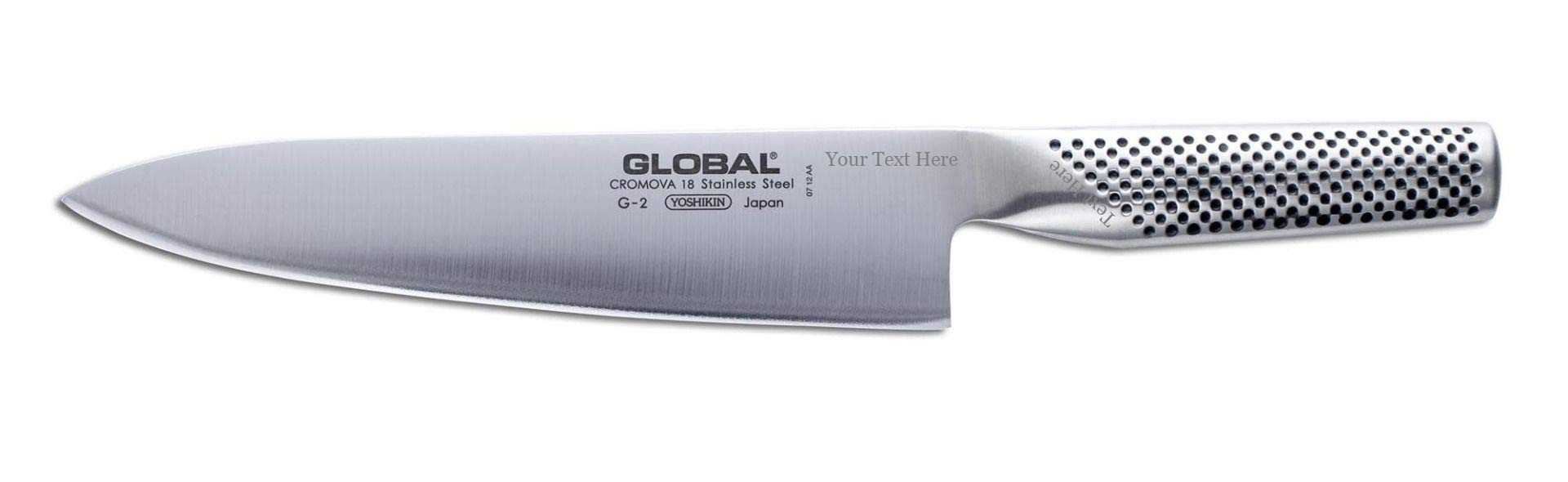
Global G-2 8-Inch Chef's Knife
- CROMOVA 18 stainless steel , hardened to 56-58 HRC for a sharp, durable edge
- Iconic seamless one-piece construction , no handle rivets to collect bacteria
- Smooth handle can feel slippery in wet hands , requires a good grip
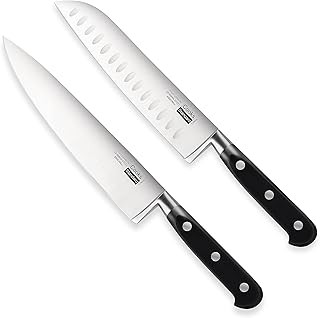
MAC Professional 8-Inch Chef's Knife
- Thin Japanese blade profile with a Western-style handle , best of both
- Stays sharp longer than German knives; easier to sharpen than harder Japanese steel
- Less name recognition than Shun or Wüsthof , harder to buy as a gift
Frequently Asked Questions
What is a santoku knife best used for?
The santoku is a Japanese all-purpose kitchen knife optimized for vegetables, fish, and boneless proteins. Its shorter, wider blade (typically 5–7 inches) and flat edge profile suit a rocking-less up-and-down chopping motion. It excels at thin, precise cuts and is lighter and easier to maneuver than a German chef's knife.
What is the difference between a santoku knife and a chef's knife?
A chef's knife has a longer, curved blade that suits a rocking cut, and German steel versions are heavier and more robust for a wider range of tasks including light bone work. A santoku is shorter, lighter, and flatter — better for precision vegetable work and thin slicing, but not designed for the rocking motion most Western cooks are trained to use.
Is the Shun Classic santoku worth the price?
For cooks who want a high-performing Japanese knife and will maintain it properly on a whetstone, the Shun Classic santoku's VG-MAX Damascus steel holds an exceptionally sharp edge. If you prefer a sharpen-and-forget approach or use a pull-through sharpener, a German steel santoku like the Wüsthof Classic is more practical.
What steel hardness (HRC) should I look for in a santoku knife?
Japanese santoku knives typically run 60–63 HRC — hard enough to hold a very fine edge but more brittle, requiring careful use on a cutting board and whetstone maintenance. German steel santoku knives run 56–58 HRC, are easier to sharpen, and more forgiving of lateral stress, but require more frequent honing.
Do hollow-ground (Granton) edges on santoku knives reduce sticking?
Yes. Hollow-ground scallops along the blade create small air pockets that reduce the surface area in contact with food, preventing slices from adhering to the blade during cutting. It is especially useful when slicing soft vegetables like cucumbers or potatoes.
Where to Buy
Shun Classic 7-Inch SantokuSee Shun Classic 7-Inch Santoku on Amazon