Mandoline Slicer Blades: What Actually Matters

Affiliate disclosure: Some links on this page are affiliate links. If you buy through them we earn a small commission at no extra cost to you. Recommendations are research-driven; we don't claim personal use of every product reviewed. Product prices and availability are accurate as of the date published and are subject to change. Always check Amazon for current pricing before purchasing. Learn more.
Quick Picks
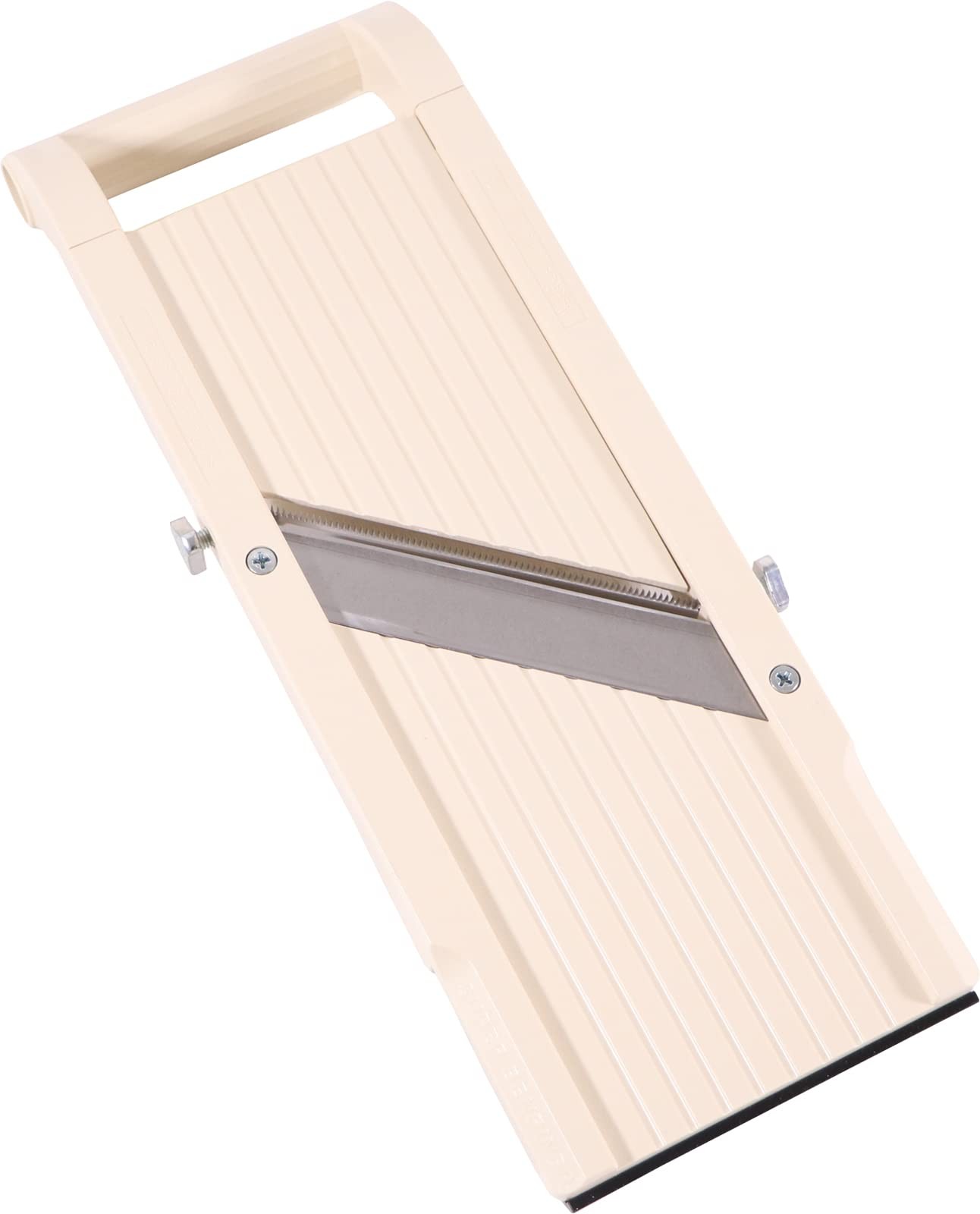
Benriner Super Benriner Mandoline Slicer
Japanese stainless steel blade , razor-sharp and adjustable from paper-thin to 5mm
Buy on Amazon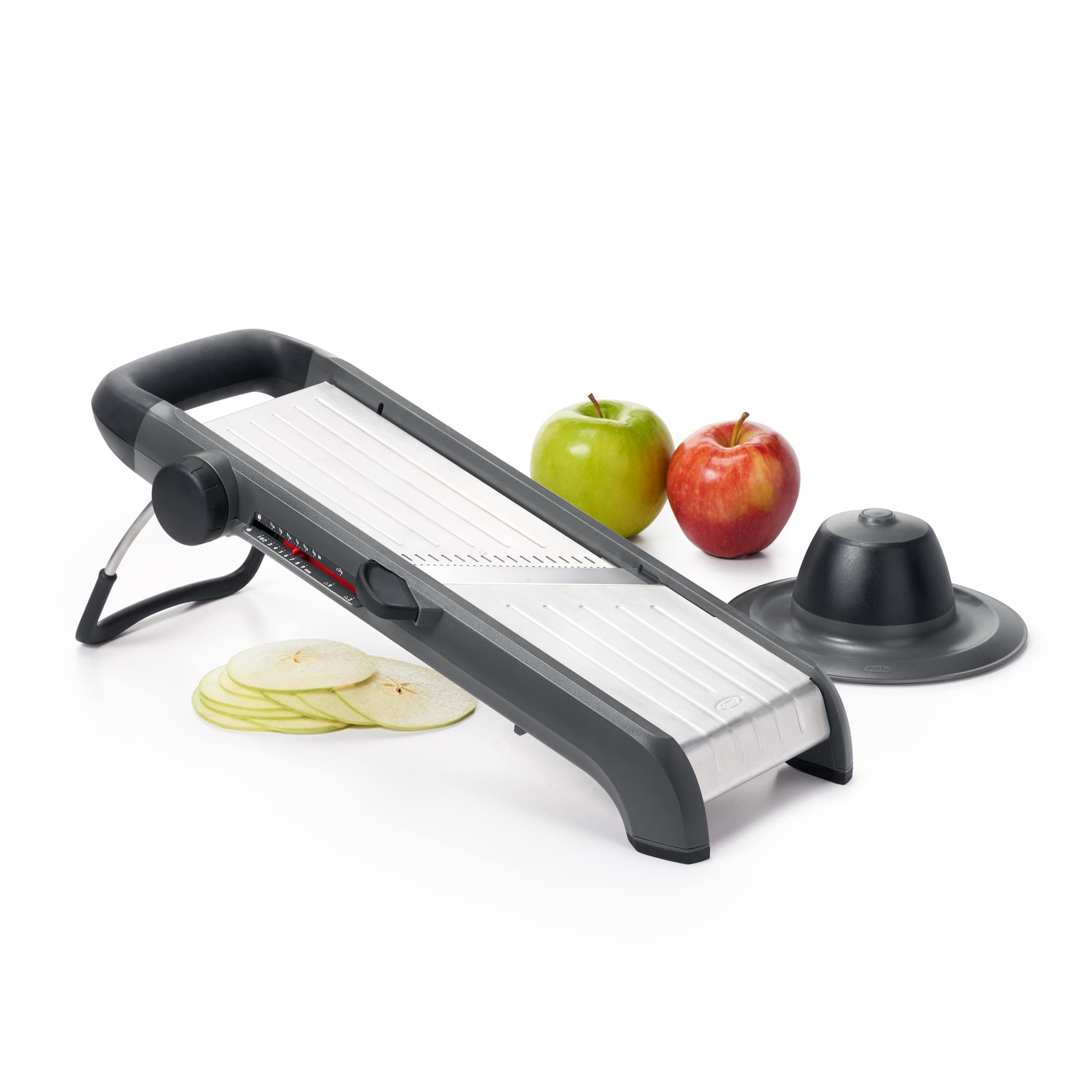
OXO Good Grips Chef's Mandoline Slicer 2.0
Integrated safety hand guard holds food securely during slicing
Buy on Amazon| Product | Price Range | Top Strength | Key Weakness | Buy |
|---|---|---|---|---|
| Benriner Super Benriner Mandoline Slicer best overall | $$ | Japanese stainless steel blade , razor-sharp and adjustable from paper-thin to 5mm | Extremely sharp , requires a cut-resistant glove; not forgiving of careless use | Buy on Amazon |
| OXO Good Grips Chef's Mandoline Slicer 2.0 also consider | $$ | Integrated safety hand guard holds food securely during slicing | Safety guard adds bulk , less precise than the Benriner for very thin cuts | Buy on Amazon |
A mandoline slicer is one of those tools that rewards you proportionally to how seriously you take it. Get the blade right and you’re producing paper-thin fennel for a salad or perfectly uniform potato gratins in a fraction of the time a knife would take. Get it wrong and you’re either fighting a dull edge that bruises more than it slices, or you’re in the emergency room. The blade is the entire point of the tool. Everything else is just a handle.
This guide covers what actually matters when you’re evaluating mandoline slicer blades, two specific products worth your money, and a direct answer on which one belongs in your kitchen. If you’re browsing other kitchen tools at the same time, the Small Appliances section has more in this category.
What to Look For
Blade Material and Edge Retention
The blade is doing one job: creating a clean, consistent cut with minimal pressure. Japanese stainless steel is the standard worth measuring against. It takes a finer edge than most European stainless steel alloys and holds that edge longer under regular use. The difference is noticeable within the first few uses and becomes even more apparent six months in, when a lesser blade has dulled to the point where you’re pressing down instead of slicing through.
Carbon steel blades cut beautifully but require maintenance most home cooks won’t actually do. Stainless steel with a high-quality finish is the practical choice.
Adjustability and Thickness Range
If the only thickness you ever needed was a single fixed cut, a knife would do the job. What makes a mandoline worth owning is the range. A blade that adjusts from 0.5mm to around 9mm covers virtually everything: paper-thin cucumber rounds, 3mm zucchini for a quick sauté, thicker potato slices for chips. Pay attention to how that adjustment works. A dial or lever that locks securely at the chosen setting matters more than the range itself. A blade set to 2mm that shifts to 3mm mid-use because the adjustment mechanism is loose is worse than a fixed blade at the right thickness.
Safety: A Straightforward Assessment
Consumer mandoline injuries are common enough that the hand guard situation deserves plain discussion, not a buried warning at the end of the review. A mandoline blade at working sharpness will cut through a fingertip before you realize what happened. The question isn’t whether to protect your hands but how. Two approaches exist: an integrated safety guard that holds the food for you, or a separate cut-resistant glove that keeps your fingers back from the blade. Both work. Neither is optional.
Construction and Stability
A mandoline that rocks or slides during use is a safety problem, not just an annoyance. Non-slip feet, folding legs, and a frame that doesn’t flex under pressure all reduce the micro-movements that cause uneven cuts and increase injury risk. Lighter tools are easier to store but more prone to shifting. Find the balance that fits how you actually work.
Top Picks
Super Benriner Mandoline Slicer
The Benriner has been the professional kitchen standard for mandoline slicing for a long time, and the reason is simple: the blade. Japanese stainless steel, adjustable from paper-thin to 5mm, and sharper out of the box than most mandolines achieve after years of use. If you’ve ever watched a prep cook produce 80 uniform slices of daikon in two minutes, this is almost certainly what they were using.
The Super Benriner is compact and light enough to store in a kitchen drawer, which matters in a real kitchen where counter space is finite. Setup takes about five seconds. Cleanup is straightforward. There’s nothing between the blade and the food except your hand and whatever is protecting it.
That last point requires direct attention. The Benriner does not include a meaningful safety guard on most configurations, and its sharpness is not forgiving. A cut-resistant glove is mandatory. Not a suggestion. Not something you’ll want to consider. If you order this mandoline, order a cut-resistant glove at the same time. A FORTEM or NoCry Level 5 cut-resistant glove runs in the budget range and removes essentially all the injury risk if worn consistently. (I want to be clear: I’m recommending this tool while also telling you it has sent people to the emergency room. Both things are true.)
The adjustment range tops out at 5mm, which covers most slicing tasks but excludes the thicker cuts some cooks want for certain preparations. For paper-thin work specifically, the Benriner produces results that the OXO simply cannot match.
Mid-range pricing for professional-level performance. Check current price on Amazon.
Best for: Experienced home cooks who will use a cut-resistant glove without being reminded every time.
OXO Good Grips Chef’s Mandoline Slicer 2.0
The OXO takes the opposite approach to safety: it builds the protection into the tool. The integrated hand guard holds the food securely and keeps fingers clear of the blade throughout the entire cut. If you’ve ever instinctively pushed a food item the last inch with your bare palm on any mandoline, this guard is designed specifically to stop that moment from happening.
The thickness dial adjusts from 0.5mm to 9mm with a satisfying click at each setting, and it stays where you set it. The non-slip feet and folding legs mean the slicer stays planted on the counter. More importantly, they provide the kind of stable base that makes consistent cuts possible when you’re moving quickly.
The OXO is not as precise as the Benriner at the thinnest settings. The hand guard adds some bulk and slightly reduces the control you have over the food’s position against the blade. For paper-thin fennel or translucent cucumber rounds, there’s a measurable difference in result. For 2mm to 4mm work, the difference is minimal and most people won’t notice it.
There are more components to wash than on a simpler mandoline, though none are difficult. The hand guard, the blade insert, and the frame all need attention after use. Budget two or three extra minutes.
Mid-range pricing, comparable to the Benriner. Check current price on Amazon.
Best for: Home cooks who want professional results with substantially lower injury risk.
How to Choose
The Safety Question Comes First
Be honest about how you work in your kitchen. If you cook while distracted, with children nearby, or while tired, the OXO’s integrated guard is the right answer. If you will consistently wear a cut-resistant glove every single time you use the mandoline, the Benriner gives you better performance at the thinnest settings.
There is no version of this where skipping hand protection is acceptable with either tool. The distinction is only about which protection method fits your habits.
What You’re Actually Cutting
If your mandoline use is primarily thin vegetable work: shaved Brussels sprouts, fennel salads, daikon for pickling, very thin potato gratins, the Benriner’s edge quality and precision produce noticeably better results. The difference between a truly thin cut and a merely thin cut matters in these preparations.
If you’re doing a broader range of tasks, including thicker cuts for au gratin, 6mm zucchini rounds for grilling, or thick apple slices for a tart, the OXO’s 9mm range gives you more options. The Benriner tops out at 5mm.
Cleaning and Storage Habits
The Benriner stores in a drawer. The OXO does not, practically speaking, store in a drawer. If your kitchen is short on cabinet space and you were planning to reach for this tool regularly rather than drag it out of storage, the Benriner’s footprint is a real advantage.
For more on tools that balance performance with practical storage, the Small Appliances guides cover this trade-off in other categories as well.
My Actual Recommendation
For most home cooks, the OXO is the right answer. The blade is good, the safety guard is genuinely useful rather than clunky, and the thickness range covers more situations. If the Benriner’s superior precision at thin settings is important to you specifically, buy the Benriner and buy the glove the same day.
Both are mid-range pricing. Neither requires you to spend premium money to get professional results.
Frequently Asked Questions
How often do mandoline slicer blades need to be replaced?
With regular home use, a quality stainless steel blade should stay sharp for two to three years before performance noticeably declines. The sign that replacement is due is that you’re applying more pressure than the food should require. For the Benriner, replacement blades are available separately. For the OXO, OXO sells replacement blade sets that fit the 2.0 model.
Can I sharpen a mandoline blade at home?
Most mandoline blades are not designed to be sharpened at home and the geometry makes it impractical without professional equipment. Replacement blades are inexpensive enough relative to the cost of the mandoline that replacement is the standard approach.
Is a mandoline slicer worth owning if I already have good knives?
For tasks that require uniform thickness across many slices, yes. A sharp knife produces good cuts but not perfectly consistent thickness across 40 slices of potato. If you make potato gratins, fennel salads, or pickled vegetables with any regularity, a mandoline pays for itself in time and consistency.
What’s the best way to clean a mandoline blade safely?
Hand wash only, and wash the blade first before anything else soaks in the sink and you forget where the blade is. A bottle brush or dedicated blade brush keeps your hands clear. Never put a mandoline blade in the dishwasher. The heat and detergent will dull the edge faster than months of use.
Do I need a cut-resistant glove even with a mandoline that has a safety guard?
With the OXO’s integrated hand guard used properly, a cut-resistant glove is not strictly required for most cutting tasks. As the food gets smaller and you’re working down to the last inch, the guard becomes less effective, and a glove becomes worth having. With the Benriner or any mandoline without an integrated guard, a cut-resistant glove is not optional.
Frequently Asked Questions
What blade material should I look for in a mandoline slicer?
Japanese stainless steel is the standard worth measuring against. It takes a finer edge than most European stainless alloys and holds that edge longer under regular use. Carbon steel cuts beautifully but requires maintenance most home cooks won't realistically perform.
Do I need a hand guard with a mandoline slicer?
Yes. A mandoline blade at working sharpness will cut a fingertip before you realize contact has been made. Either use the integrated safety guard that holds the food for you, or use a separate cut-resistant glove — but one of the two is non-negotiable.
What thickness range should a good mandoline slicer cover?
A range of approximately 0.5mm to 9mm covers virtually every practical slicing task: paper-thin cucumber rounds, 3mm zucchini, and thicker potato slices for chips or gratins. More important than range is how securely the adjustment mechanism locks at the chosen setting.
Is the Super Benriner better than OXO mandoline for home use?
The Super Benriner is sharper and more precise, making it the better choice for serious prep work and very thin cuts. The OXO Good Grips is better for less experienced users because the integrated safety hand guard reduces injury risk, though it adds bulk and limits precision at the thinnest settings.
How do I safely store mandoline slicer blades?
Store the mandoline in a blade guard or protective sleeve when not in use, and keep spare blades in a dedicated case or wrap them in a heavy cloth. Never store loose blades in a drawer where hands may reach in without full visual confirmation of the blade's position.
Where to Buy
Benriner Super Benriner Mandoline SlicerSee Super Benriner Mandoline Slicer on Amazon