Masutani VG1 Nakiri 165mm Buyer's Guide

Affiliate disclosure: Some links on this page are affiliate links. If you buy through them we earn a small commission at no extra cost to you. Recommendations are research-driven; we don't claim personal use of every product reviewed. Product prices and availability are accurate as of the date published and are subject to change. Always check Amazon for current pricing before purchasing. Learn more.
Quick Picks
Masutani VG1 Nakiri 165mm
VG-1 steel , harder and sharper than German steel, easier to maintain than SG2
Check availability at Masutani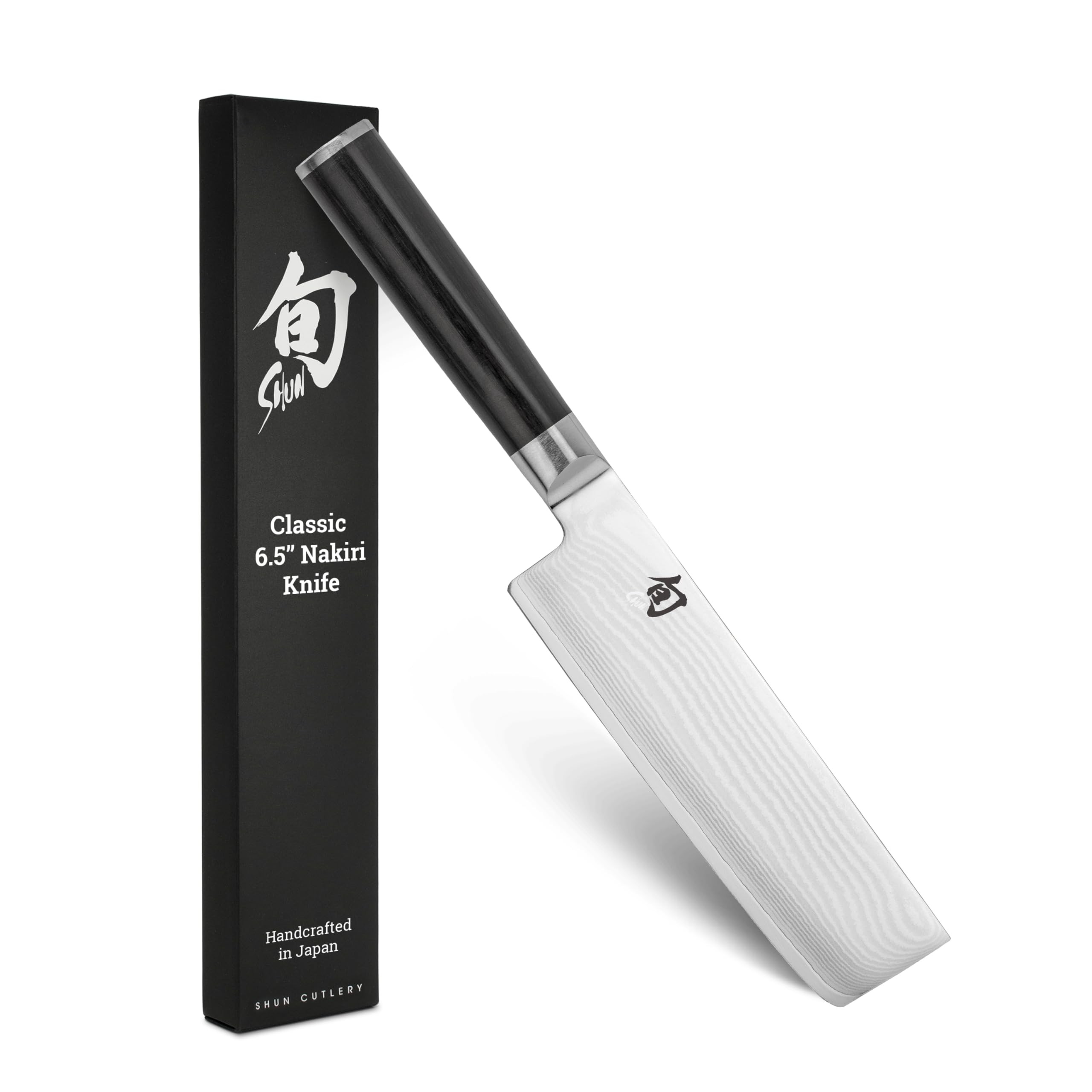
Shun Classic 6.5-Inch Nakiri
Straight cutting edge reaches the board fully on every cut , no rocking needed
Buy on Amazon
Shun Classic 8-Inch Chef's Knife
VG-MAX steel with 68-layer Damascus cladding , razor-sharp out of the box
Buy on Amazon| Product | Price Range | Top Strength | Key Weakness | Buy |
|---|---|---|---|---|
| Masutani VG1 Nakiri 165mm best overall | $$ | VG-1 steel , harder and sharper than German steel, easier to maintain than SG2 | Less name recognition than Shun or Wüsthof | Check Price |
| Shun Classic 6.5-Inch Nakiri also consider | $$$ | Straight cutting edge reaches the board fully on every cut , no rocking needed | Dedicated vegetable knife , less versatile than a chef's knife | Buy on Amazon |
| Shun Classic 8-Inch Chef's Knife also consider | $$$ | VG-MAX steel with 68-layer Damascus cladding , razor-sharp out of the box | Hard steel (61 HRC) is more brittle , chip risk on bones or frozen food | Buy on Amazon |
| Victorinox Fibrox Pro 8-Inch Chef's Knife also consider | $ | Best-performing knife under $50 , used in professional kitchens worldwide | Stamped steel loses its edge faster than forged alternatives | Buy on Amazon |
The nakiri is a specialized tool, and that specificity is either its selling point or its dealbreaker depending on how you cook. If you spend meaningful time breaking down vegetables , not just dicing an onion here and there, but working through a CSA box or prepping for a dinner party , a dedicated vegetable knife changes the experience in ways a chef’s knife can’t fully replicate. If you mostly cook proteins with vegetables as a supporting act, a nakiri is a luxury that will sit in a drawer.
This guide focuses on the Masutani VG1 Nakiri 165mm as the primary recommendation, with three other knives as context for where it fits. Two of those are nakiris, one is a chef’s knife at the budget end of the spectrum. The goal is to help you figure out whether you want a nakiri at all, and if you do, whether the Masutani is the right one.
You can find more on how all of this fits together in the Knives & Sharpeners section of the site, where we’ve covered everything from entry-level to hand-forged.
What to Look For in a Nakiri Knife
Blade Geometry Matters More Than Brand Name
A nakiri’s flat cutting edge is the whole point. Unlike a chef’s knife, which has a curved belly designed for rocking cuts, a nakiri makes full contact with the board on every stroke. If you’ve ever finished a rocking cut on a chef’s knife and found one piece of carrot still attached because the tip didn’t fully complete the cut, that’s the gap a nakiri fills. The straight edge is what allows clean, complete cuts through vegetables without any adjustment at the end.
Blade height is the other geometric consideration. Most nakiris run 45-50mm tall, which gives you knuckle clearance when working fast. A shorter blade here is not a virtue.
Steel Type and What It Means in Practice
For most home cooks, the practical question isn’t “which steel is theoretically best” but “what kind of maintenance am I actually going to do?” VG-1 and VG-MAX steels, which appear across this guide, sit in the range of 60-61 HRC. They’re harder than German steels like those used in Wüsthof, which means they hold an edge longer but require a whetstone rather than a pull-through sharpener to maintain properly. If your current sharpening routine is a honing steel before you cook and a trip to the kitchen store once a year, know that going in.
Higher-end steels like SG2 or blue steel hold edges longer but are less forgiving to sharpen at home. VG-1 is a reasonable middle position. (I’ve been sharpening my own knives on a 1000/6000 combination stone for about twelve years, which I realize is not everyone’s situation, but it matters for understanding which steel tier makes sense for you.)
Handle and Balance
A nakiri is a light knife used for repetitive vertical cuts. Balance toward the blade is fine. What you don’t want is a handle that creates fatigue over twenty minutes of continuous work. Octagonal Ho wood handles, D-shaped Pakkawood, and Western-style riveted handles all work differently. This is genuinely personal, and if you can hold the knife before buying, do it.
Top Picks
Masutani VG1 Nakiri 165mm
The Masutani VG1 Nakiri 165mm is the recommendation here, and the reason is simple: it’s mid-range pricing for a hand-finished knife made in Echizen, Japan, and the steel performs at a level that should cost more.
VG-1 steel at 60 HRC gives you a blade that sharpens to a very fine edge and holds it through a substantial amount of use. It’s not SG2, but it’s meaningfully sharper and more durable than the German stainless steels you’d find in a comparable Western vegetable knife. The hand finishing from Echizen shows in the geometry: the edge is consistent, the bevel is clean, and the fit between blade and handle doesn’t have the small gaps or rough transitions you sometimes find in factory-produced knives at this price.
The 165mm blade length is standard for nakiri work. It’s long enough to clear a full head of cabbage but short enough to maneuver around a smaller cutting board. The flat edge makes contact across its entire length, which is the whole purpose of this blade shape.
The honest drawback is name recognition. Shun and Wüsthof have retail presences and professional sharpening services that carry their knives. Masutani does not. If you ever send your knives out for sharpening rather than doing it yourself, confirm that the service you use handles VG-1 steel at Japanese geometry before buying. Most quality sharpeners can, but it’s worth asking.
For serious vegetable prep, this is the knife I’d buy at this price point. Check current pricing on Amazon.
Shun Classic 6.5-Inch Nakiri
The Shun Classic 6.5-Inch Nakiri is the other nakiri in this guide, and it’s the safer institutional buy. Shun has wide availability, a strong warranty, and a free sharpening service that matters if you’re not interested in maintaining a whetstone.
VG-MAX steel, which Shun developed in-house, is a slight improvement over standard VG-10 and performs similarly to VG-1 in practice. The double-bevel grind makes it accessible to home cooks who are used to Western knives. Single-bevel Japanese nakiris, which are the traditional format, require a different sharpening approach entirely. (If you want to understand that distinction in detail, the Nakiri vs Usuba comparison is worth reading before you buy anything.)
The straight cutting edge does what it’s supposed to: julienne cuts, chiffonade, thin vegetable slices all come out cleaner than they would from a chef’s knife. The blunt tip is worth acknowledging. This knife cannot pierce, score citrus rinds, or do the detail work you’d use a pointed blade for. It’s a vegetable knife, full stop.
At premium pricing, it costs noticeably more than the Masutani. The premium is largely for the brand, the warranty, and the accessibility of professional sharpening. If those things matter to your situation, the price difference is defensible. If they don’t, the Masutani is the better value.
Shun Classic 8-Inch Chef’s Knife
The Shun Classic 8-Inch Chef’s Knife is included here because the most common question about nakiris is whether you actually need one if you already have a good chef’s knife.
The Shun chef’s knife is, by most measures, an excellent knife. VG-MAX steel with 68-layer Damascus cladding, a D-shaped Pakkawood handle, and a geometry that’s lighter and thinner than German equivalents like the Wüsthof Classic. For precision vegetable work, it outperforms most Western chef’s knives. If you already own this knife and cook well with it, a nakiri is an addition, not an upgrade. The rocking cut you’re used to works fine for most vegetable prep.
Where the chef’s knife falls short, relative to a dedicated nakiri, is in full-contact cutting and extended vegetable prep sessions. For those who want to compare the Shun against other Japanese options in this category, our Global G2 chef knife review covers another perspective on the lightweight Japanese chef’s knife format.
Victorinox Fibrox Pro 8-Inch Chef’s Knife
The Victorinox Fibrox Pro 8-Inch Chef’s Knife is here because budget context is useful. At budget pricing, it’s used in professional kitchens. The stamped blade loses its edge faster than forged alternatives, and the handle is utilitarian without apology. But it’s sharp out of the box, it’s light, and it’s competent at everything a general chef’s knife should do.
If you’re trying to decide whether to spend mid-range or premium money on a nakiri, it helps to know that a knife at the bottom of the budget category performs respectably for general use. The argument for spending more isn’t that cheaper knives are unusable. It’s that steel quality, edge retention, and the experience of using a well-made knife justify the difference if you cook regularly.
How to Choose
The primary question is whether you need a nakiri at all. If vegetable prep is a small part of your cooking, a good chef’s knife handles it adequately. The Nakiri vs Santoku comparison goes into this in more detail, but the short version is that the nakiri’s advantage is specific: full-contact cuts, repetitive vertical slicing, and efficiency over long prep sessions.
If you do want a nakiri, the Masutani VG1 Nakiri 165mm is the pick at mid-range pricing. It’s hand-finished in Echizen, performs above its price, and the VG-1 steel is maintainable at home with a standard whetstone. The Shun Classic nakiri costs more for brand accessibility and warranty coverage, which are real advantages if you don’t sharpen your own knives.
If you’re exploring Japanese nakiri options more broadly, the Shiro Kamo Nakiri is another worth looking at in this category. For those curious about where the nakiri sits relative to more traditional Japanese vegetable knives, the Usuba vs Nakiri piece covers the historical context without burying you in metallurgy.
Steel choice matters, but so does the honesty about your sharpening setup. A VG-1 knife maintained on a quality whetstone will outperform a theoretically superior steel that goes unsharpened for two years. Buy the knife you’ll actually maintain, and your cooking will improve more reliably than if you buy the one with the most impressive spec sheet.
For additional context on the full range of options across knife types and price points, the Knives & Sharpeners section has everything organized by category.
Frequently Asked Questions
What makes a nakiri different from a chef’s knife for vegetable work?
A nakiri has a flat cutting edge that makes full contact with the cutting board on every stroke. A chef’s knife has a curved belly intended for rocking cuts, which means the blade rarely makes full contact across its entire length at once. For repetitive vegetable cuts, particularly thin slicing, julienne, or chiffonade, the nakiri’s geometry produces cleaner, more consistent results with less effort. The tradeoff is that a nakiri can’t rock, which limits it for techniques like mincing garlic where rocking is the efficient motion.
Is VG-1 steel worth choosing over VG-10 or German stainless?
VG-1 and VG-10 are similar steels with minor compositional differences. Both typically run around 60 HRC, hold a finer edge than German stainless (usually 56-58 HRC), and require a whetstone rather than a honing rod to sharpen properly. For practical purposes, both are good choices for home use. German stainless is more forgiving to sharpen with conventional tools and more resistant to chipping on hard materials, but it requires more frequent sharpening. If you cook primarily vegetables and maintain your own knives, VG-1 is the better performer.
Can I use a nakiri for anything other than vegetables?
Technically yes, but it’s not designed for it. The flat edge and relatively thin blade work poorly on proteins with bones, and the blunt tip means you can’t pierce or score the way you would with a pointed knife. Most cooks who own a nakiri keep a chef’s knife for general use and reach for the nakiri specifically for vegetable prep. Buying a nakiri as your only knife is not a practical approach.
How do I sharpen a Japanese nakiri at home?
A whetstone is the standard approach. A 1000-grit stone for edge repair and a 6000-grit stone for finishing will handle most Japanese knives in the VG-1 or VG-MAX range. The sharpening angle for Japanese knives is typically 15 degrees per side, compared to 20 degrees for most German knives. Pull-through sharpeners and coarse honing rods will damage the edge geometry over time. If you’re not set up to sharpen with a whetstone, look for a professional sharpening service that specifies experience with Japanese steel before buying a knife at this level.
Is the Masutani VG1 Nakiri worth buying over a Shun if I don’t recognize the brand?
Brand recognition is a legitimate consideration if you want easy warranty service or access to professional sharpening programs. Shun has both. What Masutani has is hand finishing from Echizen, a respected production region, at mid-range pricing for a quality that should cost more. If you sharpen your own knives and don’t rely on brand service infrastructure, the Masutani is the better value by a meaningful margin. If the Shun warranty and sharpening service have real value to your situation, the premium pricing on the Shun is defensible.
Frequently Asked Questions
What is VG-1 steel and how does it compare to German knife steel?
VG-1 is a Japanese stainless steel alloy that is harder than typical German stainless and takes a finer, sharper edge. It requires more care than softer German steel — no bones, no frozen food — but holds its edge longer between sharpenings for vegetable prep.
What makes a nakiri knife different from a chef's knife for vegetable work?
A nakiri has a flat cutting edge that makes full contact with the cutting board on every stroke. A chef's knife has a curved belly designed for rocking cuts, which can leave vegetables partially attached if the tip doesn't complete the motion. The nakiri eliminates that issue for dedicated vegetable prep.
Is the Masutani VG1 Nakiri a good first Japanese knife?
It is a solid choice if vegetable prep is a meaningful part of your cooking. If you're looking for one knife to handle everything — proteins, herbs, and vegetables — a santoku or chef's knife is more versatile. The nakiri is purpose-built, which is its strength and its limitation.
How do I sharpen a nakiri knife at home?
Use a whetstone rather than a pull-through sharpener. A double-bevel nakiri like the Masutani VG1 is sharpened on both sides at roughly 15 degrees per side. Maintain the angle consistently across the flat edge, working heel to tip. A honing rod can extend time between full sharpening sessions.
What blade height should I look for in a nakiri knife?
Most nakiris run 45-50mm tall. That height provides the knuckle clearance needed when working fast through large volumes of vegetables. A shorter blade is not an advantage and forces your knuckles closer to the board with every cut.
Where to Buy
Masutani VG1 Nakiri 165mmCheck availability at Masutani →