Mauviel Frying Pan Buyer's Guide: Worth the Price?

Affiliate disclosure: Some links on this page are affiliate links. If you buy through them we earn a small commission at no extra cost to you. Recommendations are research-driven; we don't claim personal use of every product reviewed. Product prices and availability are accurate as of the date published and are subject to change. Always check Amazon for current pricing before purchasing. Learn more.
Quick Picks

Mauviel M'Heritage Copper Skillet 9.5"
Copper body provides the fastest, most responsive heat adjustment of any material
Buy on Amazon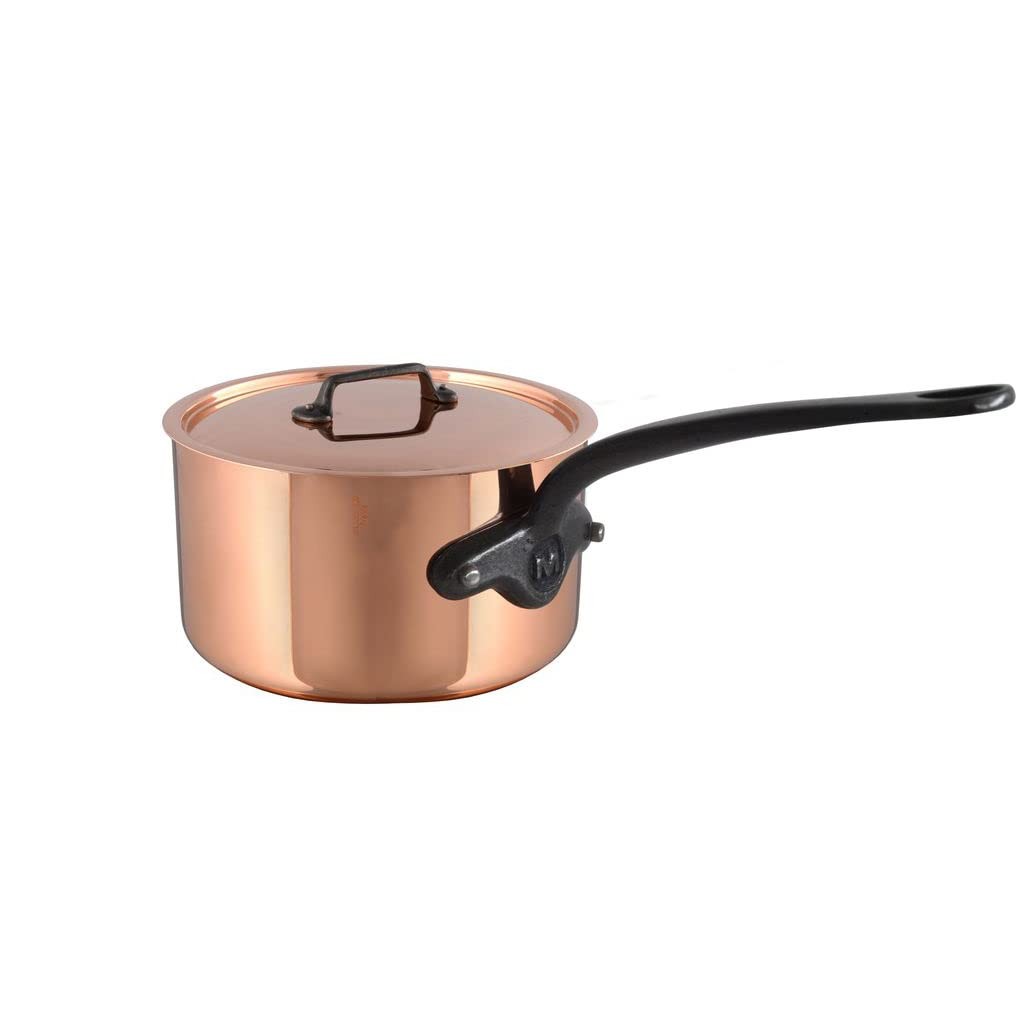
Mauviel M'Heritage Copper Saucepan 1.9-Quart
Copper reacts to heat changes within seconds , unmatched for sauce work
Buy on Amazon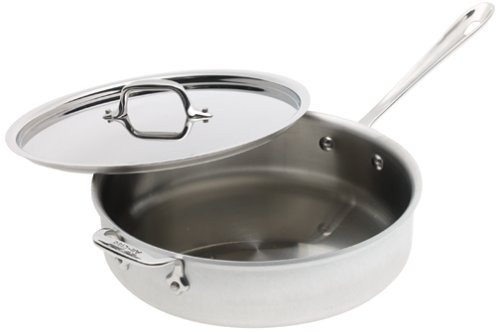
All-Clad D3 Stainless 12-Inch Fry Pan
Tri-ply construction bonds stainless and aluminum for perfectly even heating
Buy on Amazon| Product | Price Range | Top Strength | Key Weakness | Buy |
|---|---|---|---|---|
| Mauviel M'Heritage Copper Skillet 9.5" best overall | $$$ | Copper body provides the fastest, most responsive heat adjustment of any material | Most expensive cookware material , significant investment per piece | Buy on Amazon |
| Mauviel M'Heritage Copper Saucepan 1.9-Quart also consider | $$$ | Copper reacts to heat changes within seconds , unmatched for sauce work | Requires polishing to maintain the copper finish | Buy on Amazon |
| All-Clad D3 Stainless 12-Inch Fry Pan also consider | $$$ | Tri-ply construction bonds stainless and aluminum for perfectly even heating | Stainless surface requires technique to prevent sticking , not beginner-friendly | Buy on Amazon |
| Demeyere Industry 11-Inch Skillet also consider | $$$ | 5-ply TriplInduc base optimized specifically for induction cooktops | One of the most expensive stainless skillets available | Buy on Amazon |
Mauviel makes excellent cookware. That sentence is not in dispute. What’s less clear is whether you need it, which version makes sense for your kitchen, and whether the alternatives in this class are actually worse or just less famous. Thirty years of evaluating claims professionally has made me skeptical of prestige for its own sake, and cookware is not exempt. If you’re researching a Mauviel frying pan, you’re already in premium territory. The question is what you’re getting for that, and what else is worth considering alongside it. For a broader look at how these pieces fit into a full kitchen setup, my Stainless & Clad guide covers the category in depth.
What to Look For in a Premium Frying Pan
Material and Its Real-World Implications
Copper, tri-ply stainless, and 5-ply stainless are not interchangeable. They solve different problems.
Copper heats faster than any other cookware material and responds to temperature changes in seconds, not minutes. If you’ve ever tried to rescue a caramel that went from amber to burned while you were still reaching for the spoon, you understand why professional pastry kitchens stock copper. The tradeoff is cost, weight, and maintenance. Copper exteriors oxidize and require polishing to stay presentable. That’s cosmetic, not functional, but it’s real labor.
Tri-ply stainless, the construction All-Clad built its reputation on, bonds an aluminum core between two layers of stainless. You get even, consistent heat and a surface that handles high oven temperatures without fuss. It won’t respond the way copper does, but for the vast majority of searing, sauteing, and browning tasks, the difference is academic.
Five-ply stainless adds layers but the practical advantage shows up most on induction cooktops, where base construction affects how efficiently the pan couples with the magnetic field.
Handle Design and Weight
This matters more than most reviews acknowledge. A pan you can’t comfortably lift one-handed is a pan you’ll use less. The Demeyere handles run notably longer and stay cooler than most stainless competition. The All-Clad D3 handle is comfortable but transmits more heat when the pan is in a 500-degree oven for 20 minutes. (I’ve burned myself exactly once making that mistake, which is why I’m mentioning it.)
Interior Surface
Mauviel’s copper pieces use a stainless steel lining, which is the right call for a cooking surface. Older copper pans were lined with tin, which required re-tinning over time. Stainless lining is non-reactive, dishwasher-safe in practice if not always in official recommendations, and far more durable. The copper exterior does the thermal work. The stainless interior handles the food.
Top Picks
Mauviel M’Heritage Copper Skillet 9.5”
This is handcrafted in Villedieu-les-Poeles, Normandy, where Mauviel has been making cookware since 1830. The 9.5-inch skillet carries a thick copper body, a stainless steel interior, and a cast stainless handle. At premium pricing, it is one of the most expensive frying pans available to home cooks.
The thermal responsiveness is real. When you reduce heat on a copper pan, the pan actually reduces heat. With tri-ply stainless, you’re managing momentum. With copper, you’re in something closer to direct conversation with the burner. For dishes where control is everything (think hollandaise, gentle fish, or anything you’ve overcooked on a heavy clad pan), that responsiveness is not a marketing claim. It’s a physical property.
The stainless interior is straightforward to maintain. Bar Keepers Friend handles most staining. The copper exterior requires occasional polishing with a copper cleaner to maintain its appearance, though a naturally patinated copper pan is not a failed pan, just a used one. If pristine appearance matters to you or to the person you’re buying this for, factor in ten minutes every few weeks.
This skillet makes sense for serious home cooks who want a piece they’ll use for decades, and for gift buyers looking for something significant. If you’re buying your first stainless pan and aren’t sure you’ll cook with it twice a week, start somewhere else. The Mauviel will reward investment in technique. It won’t make up for a lack of it.
The Mauviel roasting pan sits in the same product family and is worth considering if you’re building out a copper collection rather than buying individual pieces.
Mauviel M’Heritage Copper Saucepan 1.9-Quart
I’m including this alongside the skillet because the saucepan is often the more defensible copper purchase for a home cook. Sauces, caramels, chocolate work, hollandaise, and stock reductions are precisely where copper’s thermal sensitivity earns its price. A skillet can be approximated. A copper saucepan for pastry work is harder to replicate.
The 1.9-quart size is practical for most sauce applications. The stainless lining means you’re not dealing with reactive surfaces when working with acidic ingredients, which is the other reason professional kitchens use this construction. Same premium price band as the skillet, same Normandy provenance, same maintenance requirements.
For occasional home use, this is genuinely difficult to justify on a cost-per-use basis. For someone who makes caramel regularly and has burned through two batches on an aluminum saucepan because the heat distribution was uneven, the value becomes clearer.
All-Clad D3 Stainless 12-Inch Fry Pan
The D3 has been the benchmark for American tri-ply stainless for decades. I cooked on an All-Clad D3 for eight years before adding copper pieces, and I still reach for it regularly for tasks where I want consistent browning across a large surface area.
The 12-inch size is the practical choice for most households. It fits a whole chicken breast flat, handles a pound of pasta’s worth of sauce reduction, and sears four portions of fish without crowding. The 600-degree oven-safe rating covers almost everything you’d want to do, including finishing thick proteins in the oven after a stovetop sear.
Construction is tri-ply bonded stainless-aluminum-stainless, made in Canonsburg, Pennsylvania. The lifetime warranty is real. All-Clad honors it. For context on what All-Clad’s full line looks like in smaller formats, the All-Clad 2 qt saucepan and All-Clad 4 quart saucepan reviews give you a sense of how the construction scales across their cookware.
The price is premium. Made In and Tramontina both produce tri-ply pans at lower prices, and both are worth considering if you’re building a set rather than buying individual pieces. The All-Clad edge is consistency: every pan, every time. The Tramontina edge is that you can buy two for the same money.
Stainless requires technique. If you’ve ever added protein to a cold stainless pan and watched it weld itself to the surface, that’s a preheat problem, not a pan problem. Bring the pan to temperature before adding fat, and the D3 performs well.
Demeyere Industry 11-Inch Skillet
Demeyere is Belgian and takes a different engineering approach than All-Clad. The Industry line uses a 5-ply TriplInduc base, which is specifically engineered for induction efficiency. If your cooktop is induction, this matters. The base couples with the magnetic field more effectively, which translates to faster heating and better temperature stability at lower settings.
The 11-inch skillet is heavier than the All-Clad D3. That weight is not a flaw, but it is real, and if you have any wrist or grip limitations, it’s worth picking this up in person before committing. The riveted handle stays cooler than most stainless handles tested. (I timed this with a probe thermometer after 10 minutes on medium-high.) On a gas burner it’s a modest difference. On induction, where heat is more contained under the pan, it’s more noticeable.
Priced at the high end of the premium category, it costs more than the All-Clad D3. The lifetime warranty is comparable. The build quality is legitimately excellent. For induction-specific kitchens, it earns the premium. For gas or electric, the All-Clad case becomes stronger.
How to Choose
If you cook on induction and want the best stainless skillet regardless of price, the Demeyere Industry is the straightforward answer. Its construction is purpose-built for that cooktop type.
If you want a reliable tri-ply stainless pan for a gas or electric range with a proven track record, the All-Clad D3 is the standard. Comparable alternatives at lower prices exist, but the D3 is the one you don’t have to think about.
If you make sauces, caramels, or chocolate work regularly and want the material that professional pastry kitchens use for a reason, the Mauviel copper saucepan is the right tool. The skillet is the right choice if you want copper for general saute work and are comfortable with the maintenance.
For gift-giving, the Mauviel pieces are the obvious choice. They’re beautiful, they’re made in France with genuine craft heritage, and they last long enough to pass down. That’s not an argument I find useful for myself, but for the right recipient it’s a fair one.
A note on building a set: a copper skillet and a stainless workhorse is not redundant. They do different things. If budget requires choosing one, the stainless skillet handles more situations more forgivingly. The copper skillet is the specialist. This applies to the full stainless and clad cookware category generally. Specialists earn their place once you have a generalist foundation.
Check current pricing on Amazon before deciding, since the spread between these options shifts more than you’d expect. The relative hierarchy (Demeyere and Mauviel copper at the top, All-Clad D3 below them, budget tri-ply below that) is stable, but the gaps close and widen.
Frequently Asked Questions
Is a Mauviel copper frying pan worth the price for a home cook?
For someone who cooks seriously and will use it regularly, yes. The thermal responsiveness of copper is a genuine material advantage, not marketing. For occasional use or for a first premium pan purchase, the All-Clad D3 is a better starting point. Copper rewards technique and rewards frequent use.
Does the copper exterior on Mauviel pans require a lot of maintenance?
The copper exterior oxidizes over time and requires occasional polishing to maintain its appearance. The interior is stainless steel and requires no special care. If you want the pan to stay bright copper-colored, plan for ten to fifteen minutes of polishing every few weeks. If you’re comfortable with a natural patina, the functional performance is unaffected.
How does the All-Clad D3 compare to Demeyere Industry for everyday cooking?
On gas or electric ranges, the D3 performs comparably and costs less. On induction, the Demeyere Industry has a meaningful advantage due to its TriplInduc base construction. Both carry lifetime warranties. The D3 is lighter, which some cooks prefer. The Demeyere handle stays cooler longer.
Can I use a Mauviel or All-Clad stainless pan on an induction cooktop?
The Mauviel M’Heritage copper pieces are not induction-compatible because copper is not magnetic. All-Clad D3 is induction-compatible. The Demeyere Industry is specifically optimized for induction. If induction is your primary cooktop, Demeyere is the better choice between the stainless options reviewed here.
What size frying pan should I buy for a household of two to four people?
The 12-inch All-Clad D3 covers most tasks for three to four people. The Mauviel 9.5-inch copper skillet is better suited for one to two portions or for precise sauce and egg work. If you’re cooking for four regularly, the 12-inch format is more practical as a primary pan, with a smaller copper piece as a secondary tool for detail work.
Frequently Asked Questions
What makes a Mauviel frying pan different from other premium frying pans?
Mauviel's primary frying pans are made from copper with a stainless steel interior. Copper conducts heat faster than any other cookware material and responds to temperature changes within seconds, which gives you a level of heat control that tri-ply stainless or aluminum cannot match.
Is a Mauviel copper frying pan better than All-Clad for searing?
For searing proteins where you want high, sustained heat, tri-ply stainless like All-Clad performs comparably and is easier to maintain. Copper's advantage shows up most in tasks requiring instant temperature adjustment, not in high-heat searing where heat retention is more important.
Can I use a Mauviel frying pan on an induction cooktop?
Standard Mauviel copper frying pans are not induction compatible. Copper is not magnetic, so it will not couple with an induction cooktop's magnetic field. If you cook on induction, look for Demeyere or All-Clad tri-ply stainless, both of which are fully induction compatible.
How heavy is a Mauviel copper frying pan?
Mauviel copper pans are substantially heavier than similarly sized stainless or aluminum pans due to the density of copper and the thick-gauge construction. A 10-inch copper skillet typically weighs 4-5 pounds empty. Factor that into your decision if wrist or arm strength is a consideration.
Does the Mauviel copper frying pan require special care?
The stainless steel interior requires no special maintenance beyond normal hand washing. The copper exterior oxidizes naturally and needs occasional polishing to maintain its appearance. Hand washing is recommended — dishwashers degrade the copper finish and can affect the riveted handle joints over time.
Where to Buy
Mauviel M'Heritage Copper Skillet 9.5"See Mauviel M'Heritage Copper Skillet 9.5" on Amazon