Nakiri vs Santoku: Which Japanese Knife You Actually Need

Affiliate disclosure: Some links on this page are affiliate links. If you buy through them we earn a small commission at no extra cost to you. Recommendations are research-driven; we don't claim personal use of every product reviewed. Product prices and availability are accurate as of the date published and are subject to change. Always check Amazon for current pricing before purchasing. Learn more.

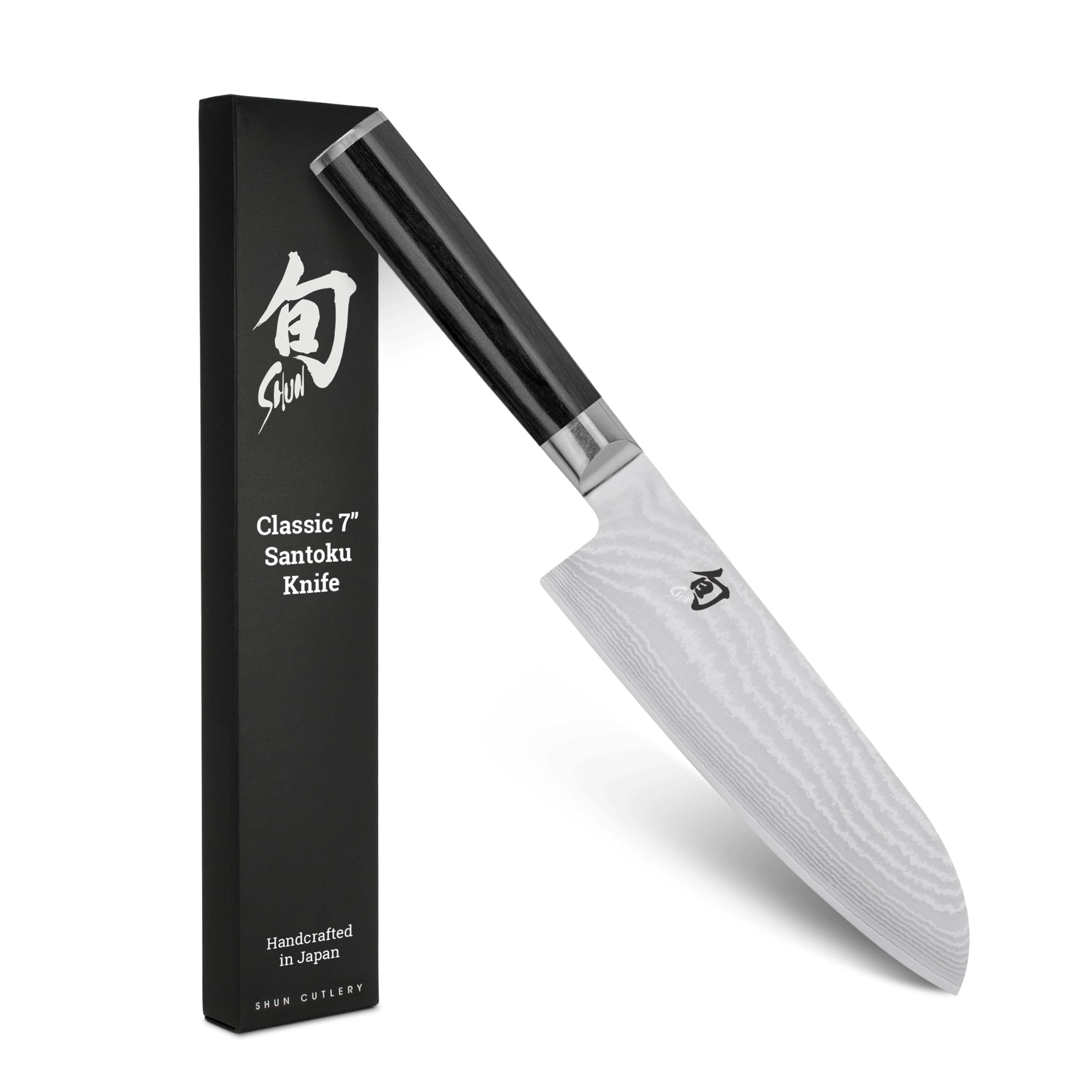 Shun Shun Classic 7-Inch Santoku Buy on Amazon
 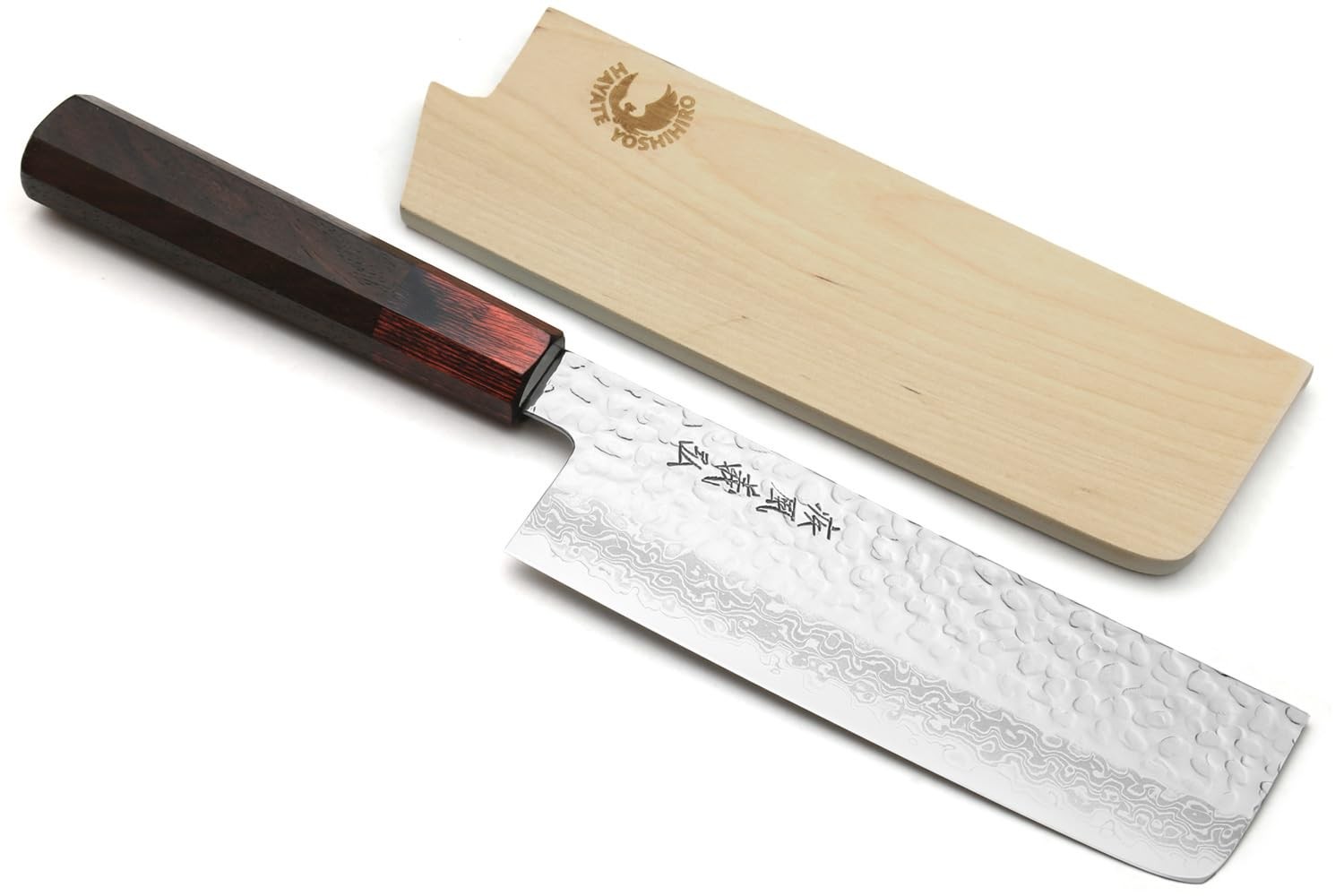 Yoshihiro Yoshihiro VG10 Hammered Damascus Nakiri 165mm Buy on Amazon
 If you’ve spent any time comparing Japanese knives, you’ve probably hit this exact wall: the nakiri and santoku look similar enough that you wonder if the distinction matters, but different enough that you feel like you’re missing something if you pick wrong. You’re not missing something obscure. The distinction is real and it matters, but it only matters in specific ways. This article sorts through which knife actually belongs in your kitchen, with a clear answer at the end.
Before getting into the specifics, if you’re building out a knife collection from scratch or replacing several pieces at once, the broader Knives & Sharpeners section covers everything from chef’s knives to sharpening tools worth owning.
At-a-Glance
The Shun Classic 7-Inch Santoku is a premium all-purpose Japanese knife. It handles vegetables, boneless proteins, and herbs with equal competence. The blade has a slight curve to the edge, which lets you rock-chop if that’s your technique. The hollow-ground sides reduce sticking. At 61 HRC, the VG-MAX Damascus steel holds a sharper edge than most Western knives, but it will tell you about it if you abuse it.
The Yoshihiro VG10 Hammered Damascus Nakiri 165mm is a purpose-built vegetable knife from Sakai, Japan. The blade is flat from heel to tip, the edge is straight, and the profile is rectangular. There is no tip for piercing. There is no curve for rocking. What it does instead is chop, slice, and push-cut vegetables with a precision and efficiency that a santoku, however well-made, cannot fully replicate. The VG-10 core is clad in hammered Damascus layers — the tsuchime finish both reduces drag and gives the blade a distinctive handcrafted look. The magnolia wood octagonal handle with buffalo horn bolster is a traditional fit that places well at the pinch grip.
Why Choose the Shun Classic 7-Inch Santoku
The santoku format emerged as a Japanese answer to Western-style cooking patterns. The name translates roughly to “three virtues,” referring to meat, fish, and vegetables. Whether or not you find that framing useful, the practical implication is that a santoku is designed to do more than one thing.
Steel and Edge
The Shun Classic runs VG-MAX steel, which is Shun’s proprietary alloy, clad in 68 layers of Damascus. It hits 61 HRC on the Rockwell scale. For context, a Wüsthof Classic santoku runs around 58 HRC. That three-point difference translates to a finer edge geometry and longer edge retention, but it also means the steel is more brittle. Hard squash, frozen protein, anything with bones: those are not tasks for this knife. (I keep a German knife in the block specifically for those moments, and I’d suggest you do the same.)
The hollow-ground blade reduces drag when cutting through denser vegetables like sweet potatoes or beets. It’s not magic, but it’s noticeable. Food releases more cleanly from the side of the blade, which speeds up prep when you’re working through a pile of anything.
Versatility
The slight curvature on the Shun’s edge allows for both push-cutting and a short rocking motion. If you prep proteins alongside vegetables, that flexibility matters. A nakiri simply cannot handle boneless chicken thighs with any efficiency. The Shun can, and it does it well enough that you’d use this as your main prep knife without constantly reaching for something else.
For cooks who own two or three knives total, versatility is not a nice-to-have. A single knife that handles 90% of what you do is more practical than a specialized tool that handles 50% better but forces you to switch constantly. If that description fits your kitchen, the Shun is the right answer.
Weight and Balance
At roughly 5 ounces, the Shun is noticeably lighter than a comparable Western chef’s knife. If you’ve ever finished a long prep session with your forearm feeling it, that’s what the lighter profile addresses. The handle is D-shaped PakkaWood, which provides grip without bulk. Right-handed by default, though Shun makes a left-handed version.
If the weight and balance profile appeals to you, check current pricing for the Shun Classic 7-Inch Santoku on Amazon — it fluctuates, and this is the kind of knife worth buying when it’s available at a good price.
Maintenance Reality
Premium Japanese steel at 61 HRC requires a whetstone. Not a pull-through sharpener, not a honing steel in the conventional sense, and definitely not an electric sharpener. If you already maintain your knives on a whetstone, this is not a new burden. If you don’t, the Shun will eventually get dull and you’ll either learn or pay someone to fix it. Professional sharpening services that handle high-hardness Japanese steel exist in most cities, but it adds a step. Know what you’re signing up for.
If you’re interested in how the Shun’s handling compares to other Japanese knives in the chef’s knife category, the Global G2 review covers a similar performance tier with a different steel philosophy and a very different handle design.
Check the Shun Classic 7-Inch Santoku on Amazon
Why Choose the Yoshihiro VG10 Nakiri
A nakiri does one thing. It does that one thing better than any other knife format. If you cook primarily vegetables, the case for the Yoshihiro VG10 Nakiri is not complicated.
What the Nakiri Shape Actually Does
The flat edge and straight profile of the nakiri are not aesthetic choices. They are functional ones. A flat blade makes full contact with the cutting board along its entire length on every stroke. There are no heel gaps, no rocking required to complete a cut. Every slice goes all the way through.
For vegetables specifically, this means cleaner cuts with less tearing. Herbs come out cleaner. Scallions don’t compress and shred. Dense root vegetables like parsnips and carrots separate more predictably because the blade isn’t angling through them. If you’ve ever tried to julienne a daikon on a rocking-profile knife and ended up with uneven strips, that’s what this fixes.
The nakiri also sits at 165mm, which is close to the Shun’s 7 inches. The blade height is generous, which gives you a useful knuckle clearance and a natural scooping surface for moving cut vegetables from board to pan.
VG-10 Steel with Hammered Damascus Cladding
The Yoshihiro uses a VG-10 core — a high-carbon stainless steel with cobalt that holds an excellent edge and resists corrosion well. At approximately 60 HRC, it’s harder than German steel and sharpens to a finer geometry than typical mid-range stainless. The hammered Damascus (tsuchime) cladding on the blade’s upper portion isn’t only visual: the small air pockets created by the texture reduce food adhesion, which matters when you’re push-cutting through sticky vegetables like sweet potato or winter squash.
For a nakiri, where you’re primarily push-cutting through vegetables and not abrading bone or connective tissue, VG-10 is a sensible steel choice. You get sharpness that matters for clean vegetable cuts with corrosion resistance that doesn’t demand the obsessive drying ritual that carbon steels require.
Traditional Craftsmanship from Sakai
The Yoshihiro VG10 Hammered Nakiri is made in Sakai, Japan — one of the country’s foremost knifemaking cities, responsible for an estimated 90% of professional Japanese kitchen knives. The magnolia wood octagonal handle with buffalo horn bolster is the classic wa-handle format: lighter than a Western handle, and positioned to give you a more direct feel at the pinch grip. The edge comes ground to approximately 16 degrees double bevel, which is the standard for Japanese nakiri work.
One practical note on sharpening: VG-10 is widely known and well-handled by most professional sharpening services familiar with Japanese steel. If you sharpen yourself on a whetstone, this is a straightforward stone to maintain. If you rely on a local service, this is an easier call than some more exotic steels.
If you want to understand exactly where the nakiri format fits relative to its closest Japanese cousin, the usuba vs nakiri comparison covers the double-bevel versus single-bevel distinction in detail.
Check the Yoshihiro VG10 Hammered Damascus Nakiri 165mm on Amazon
What It Cannot Do
A nakiri has no tip and no curved edge. You cannot pierce with it, mince garlic efficiently with a rocking technique, or break down a chicken. If you cook proteins regularly, you need another knife in addition to the nakiri. It is genuinely a specialist tool, and the specialist needs to fit your actual cooking.
Verdict
The Shun Classic 7-Inch Santoku is the better knife for most cooks. It handles more tasks, holds a premium edge, and serves as a single-knife solution if that’s what your kitchen requires. It earns its premium price point if you maintain it properly and cook across protein and vegetable categories regularly.
The Yoshihiro VG10 Nakiri is the better knife for cooks who do high-volume vegetable prep and already have a general-purpose knife handling protein. If your weeknight cooking skews heavily vegetable-forward — whether that’s stir-fries, roasted vegetables, salads, or plant-based cooking in general — the nakiri outperforms the santoku at the specific tasks that dominate your prep. Both knives sit at a premium price point, so the decision comes down to specialization: one knife that does everything adequately, or one knife that does vegetable work exceptionally.
My advice is this: if you’re choosing one knife and you cook everything, take the Shun Classic 7-Inch Santoku. If you’re adding a second knife to a collection that already handles meat and fish, and your prep is mostly vegetables, the Yoshihiro VG10 Hammered Damascus Nakiri 165mm is the more useful purchase and your cooking will improve in the specific moments that matter.
For a wider look at what belongs on your cutting board setup, browse the full knife and sharpener recommendations on the site.
Frequently Asked Questions
Can a santoku replace a nakiri for vegetable prep?
A santoku handles vegetables competently, but the curved edge means it doesn’t make full contact with the board on every stroke. For rough chopping, the difference is minor. For precise cuts, julienne work, or high-volume prep where technique adds up over time, the nakiri’s flat profile produces cleaner results consistently.
Is the Shun Classic santoku worth the premium price?
If you maintain knives on a whetstone and cook across meat, fish, and vegetables regularly, yes. The VG-MAX steel holds a finer edge than German alternatives and the hollow-ground blade genuinely reduces drag. If you use a pull-through sharpener and cook casually, the premium is harder to justify. Check current price on Amazon and compare against what you’re replacing.
How hard is it to maintain VG-10 steel on the Yoshihiro VG10 Nakiri?
VG-10 is one of the most widely used Japanese knife steels and is well-supported by both home whetstone sharpeners and professional sharpening services. At approximately 60 HRC, it sharpens readily and holds a good working edge through regular vegetable prep. Use a whetstone at around 15 to 16 degrees per side. Avoid pull-through sharpeners on either knife.
Do I need both a santoku and a nakiri?
For many cooks, no. If your cooking is split roughly evenly between proteins and vegetables, the santoku covers both adequately. If you cook heavily plant-forward meals most nights, adding the Yoshihiro VG10 Nakiri as a second knife alongside a basic chef’s knife makes practical sense. Both knives in this comparison are premium products, so the decision is about specialization rather than budget.
Is the Yoshihiro VG10 Nakiri a good choice if I’ve only used German knives before?
Yes, with one adjustment. German knives at 56-58 HRC are more forgiving of lateral stress and harder foods. The Yoshihiro at VG-10 hardness wants to cut vegetables with a clean push stroke, not pry or twist. The octagonal wa-handle also sits differently than a German bolster handle — most cooks adapt in a few sessions. If you keep it on its intended tasks, it will outperform anything German at vegetable work.
Frequently Asked Questions
What is the main difference between a nakiri and a santoku knife?
A santoku has a slight curve to its edge designed for versatile use on vegetables, proteins, and herbs using a rocking or push-cut technique. A nakiri has a completely flat edge built exclusively for vegetable prep, making full contact with the cutting board on every stroke and eliminating the gap that a curved blade can leave at the heel or tip.
Is a santoku a good all-purpose knife for someone who mainly cooks vegetables?
A santoku handles vegetables well and adds the flexibility to work with boneless proteins and herbs in the same knife. If vegetables make up the majority of your prep, a nakiri will be more efficient — but if you want one knife for everything, the santoku is the more practical choice.
Is the Shun Classic santoku too fragile for everyday kitchen use?
The Shun Classic's VG-MAX steel at 61 HRC is harder than most Western knives, which means a finer edge but increased brittleness. Avoid using it on bones, frozen food, or hard squash. For boneless proteins, vegetables, and herbs used in normal home cooking, it handles daily use well.
Which knife is easier to sharpen, the nakiri or the santoku?
Both the Shun Classic santoku and Yoshihiro VG10 nakiri are double-bevel knives, so the sharpening process is the same for both. A whetstone is recommended over a pull-through sharpener for either knife. The flat edge of the nakiri can actually be slightly easier to maintain a consistent angle on.
What cutting technique works best with a nakiri knife?
The nakiri is designed for push cuts and chop cuts, where the blade moves straight down and slightly forward through the vegetable with full edge contact across the board. It does not rock well due to the flat profile. If rocking is your dominant technique, a santoku or chef's knife will feel more natural.
Where to Buy
Shun Classic 7-Inch SantokuSee Shun Classic 7-Inch Santoku on Amazon