Nakiri vs Usuba: Which Japanese Vegetable Knife for You

Affiliate disclosure: Some links on this page are affiliate links. If you buy through them we earn a small commission at no extra cost to you. Recommendations are research-driven; we don't claim personal use of every product reviewed. Product prices and availability are accurate as of the date published and are subject to change. Always check Amazon for current pricing before purchasing. Learn more.
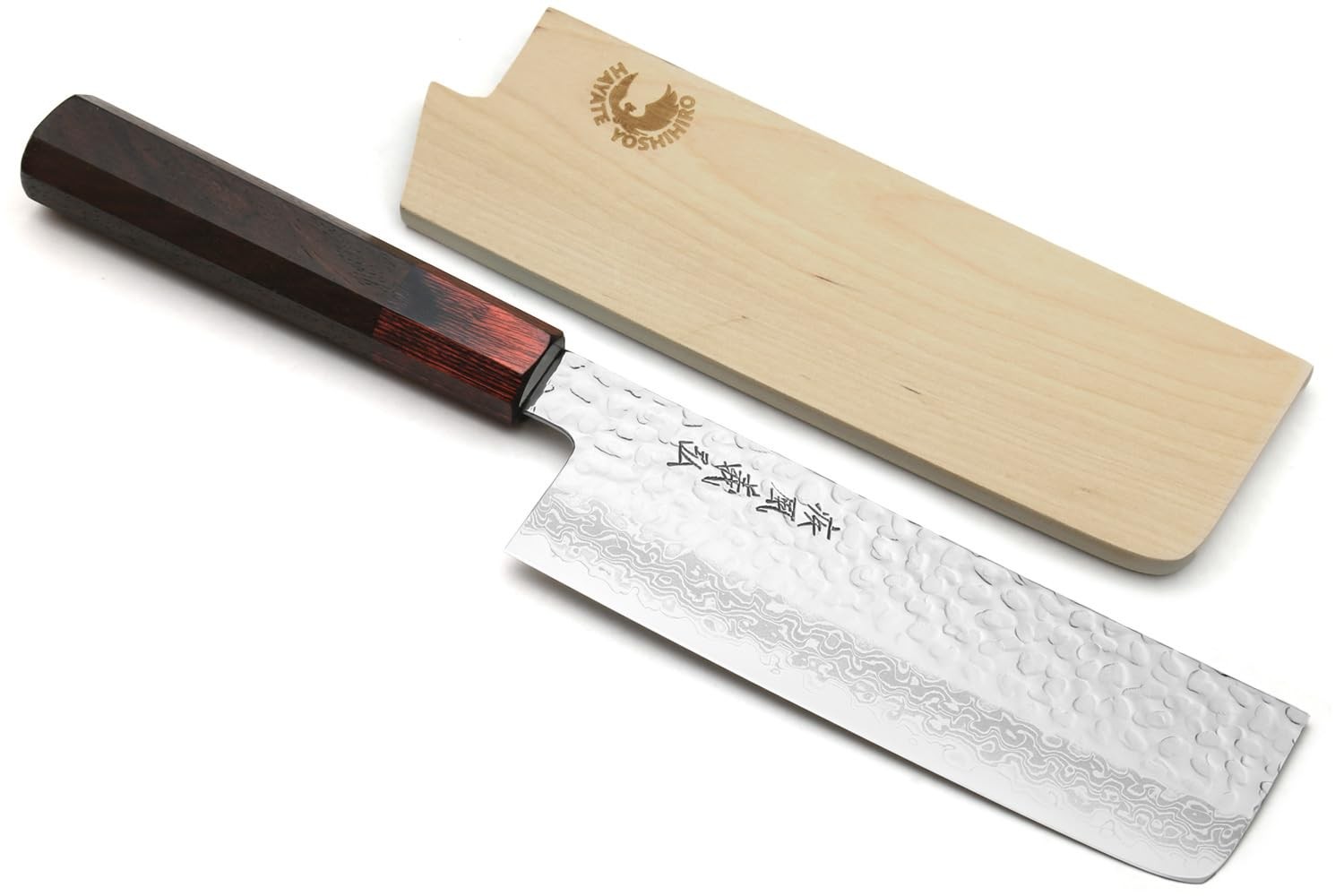 Yoshihiro Yoshihiro VG10 Hammered Damascus Nakiri 165mm Buy on Amazon
 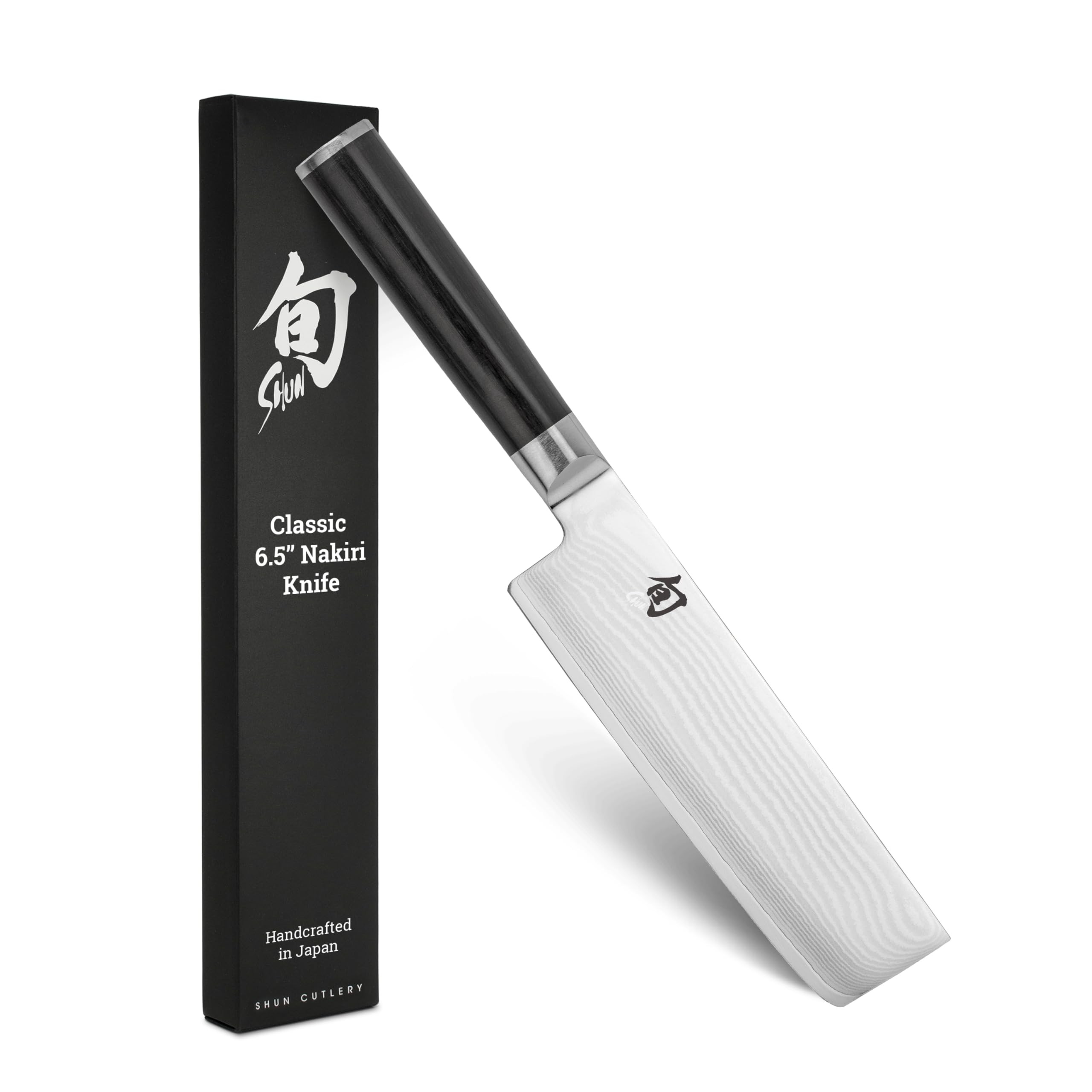 Shun Shun Classic 6.5-Inch Nakiri Buy on Amazon
 The nakiri and the usuba are both Japanese knives built around a single purpose: vegetables. No tip for piercing, no curve for rocking, no pretense of being anything other than what they are. If you’ve spent years reaching for a chef’s knife on vegetable prep and feeling like you were working around the tool rather than with it, that’s exactly the gap these knives fill. The question isn’t whether one of them is worth owning. The question is which one belongs in your kitchen.
For most people reading this, the answer is the nakiri. I’ll explain why, and I’ll also explain when it isn’t.
Before we get into the specifics, if you’re building out a knife collection rather than replacing a single tool, the Knives & Sharpeners hub is worth a look for the broader picture. What follows is focused specifically on the nakiri vs usuba decision.
At a Glance
Both knives share the same general silhouette: rectangular blade, flat cutting edge, blunt tip. The differences are in the grind, the steel, and who the knife is made for.
The Yoshihiro VG10 Hammered Damascus Nakiri 165mm is double-beveled, meaning it’s sharpened on both sides of the blade. This makes it behave like any Western knife you’ve already used, just with a shape optimized for vegetables. Slice down through a carrot, the knife exits cleanly on both sides. No steering, no drift.
The usuba is single-beveled, sharpened on one side only, with a hollow or flat back on the other. This is the professional Japanese kitchen standard for vegetable prep. It allows for extremely thin cuts and specialized techniques like katsuramuki (rotary peeling of daikon or cucumber into paper-thin sheets) that a double-bevel blade physically cannot replicate. It also requires a level of sharpening skill that most home cooks, and many professional cooks trained outside Japan, simply don’t have.
Here’s what that means practically. If you send a single-bevel knife out for sharpening at a standard service, there’s a good chance it comes back worse than it went in. The geometry is unforgiving.
The two products I’m comparing here are the Yoshihiro VG10 Hammered Damascus Nakiri 165mm and the Shun Classic 6.5-Inch Nakiri. Both are double-beveled nakiris, not usubas. I’ll come back to who should actually be looking at an usuba, and under what circumstances, after covering these two knives.
Why Choose a Nakiri
What the Shape Actually Does
A chef’s knife has a curved belly. That curve is what makes rocking cuts work, and it’s also what makes full vegetable prep slightly inefficient. When you’re breaking down a full head of cabbage or doing a serious julienne of three bell peppers, you’re compensating for that curve on every stroke.
The nakiri’s straight edge contacts the board completely on every cut. There’s no heel lifting, no pivot point, no gap in the middle where pressure drops off. Slice down through a leek and the whole blade is working. This sounds like a minor mechanical point until you’ve done it for twenty minutes, at which point it’s not minor at all. (I timed the difference once on a batch of matchstick carrots. The nakiri was faster by a margin I found embarrassing, given how long I’d been using a chef’s knife for this.)
If you’re curious how the nakiri compares to another Japanese vegetable-forward option, I’ve covered nakiri vs santoku separately, which is worth reading if you’re still deciding between categories.
Yoshihiro VG10 Hammered Damascus Nakiri 165mm
The Yoshihiro VG10 Hammered Damascus Nakiri 165mm is made in Sakai, Japan — one of the country’s foremost knifemaking cities, responsible for an estimated 90% of professional Japanese kitchen knives. The VG-10 core steel hits approximately 60 HRC, giving it a finer edge than German stainless while remaining more forgiving than the SG2 or ZDP-189 powdered steels that show up in the most expensive Japanese knives.
The hammered Damascus (tsuchime) cladding is functional, not just visual. The small dimples created by the hammered texture reduce surface contact between blade and food, which means less sticking when push-cutting dense or sticky vegetables like sweet potato, beet, and winter squash. The magnolia wood octagonal handle with buffalo horn bolster is the classic wa-handle format: lighter than a Western bolster handle, positioned for a direct pinch grip, and balanced further toward the blade for a natural push-cut motion.
The edge comes ground to approximately 16 degrees double bevel — standard for Japanese nakiri work and maintainable on most whetstones at home. VG-10 is widely recognized by professional sharpening services that handle Japanese steel, so if you outsource sharpening, you won’t run into the unfamiliarity issues that can affect some less common steels.
Check the Yoshihiro VG10 Hammered Damascus Nakiri 165mm on Amazon
The 165mm length hits a useful sweet spot. Long enough to break down large vegetables without multiple strokes, short enough for precise work without the knife feeling unwieldy.
Shun Classic 6.5-Inch Nakiri
The Shun Classic 6.5-Inch Nakiri is the more recognized name in this category, and it earns that recognition. Shun’s Classic line uses VG-MAX steel, which is Shun’s proprietary improvement on VG-10. It’s hard, takes a sharp edge, and holds it through reasonable daily use.
The straight cutting edge is the feature that matters most here, and Shun executes it correctly. The edge reaches the board fully on every cut. For julienne work, chiffonade, or any task where uniformity across a large volume of produce matters, the geometry works exactly as intended.
The PakkaWood handle is comfortable and moisture-resistant. The D-shaped profile fits right-handed users well and feels neutral enough that lefties don’t typically find it problematic, though I’d verify that if you’re left-handed before purchasing.
Both the Yoshihiro and the Shun sit in the premium price band. What you’re partly paying for with the Shun is the brand infrastructure, their warranty service, and the availability of professional sharpening at Shun-authorized locations. If professional sharpening service and brand support matter to you, the Shun is a sound choice. If you maintain your own knives and prefer the traditional wa-handle and hammered Damascus aesthetic, the Yoshihiro is the more distinctive tool for comparable money.
Check current Amazon pricing for the Shun Classic 6.5-Inch Nakiri — this line occasionally goes on sale, which can shift the comparison.
For context, the Shun Classic nakiri is roughly comparable in category to the Shiro Kamo Nakiri I’ve reviewed separately, which offers a different steel choice at a similar price point.
Why Choose an Usuba
The usuba is a professional knife in the strict sense. Not “professional” as a compliment, but as a description of who it’s designed for and what skills it assumes.
The single-bevel grind is what enables the most refined vegetable cuts in Japanese cuisine. Katsuramuki, the rotary-peeling technique that produces a continuous sheet of vegetable, requires a single-bevel blade. So does the level of precision seen in kaiseki vegetable preparation. A nakiri, even a very good one, cannot physically do what a usuba does at the highest level.
But here’s what the usuba also requires. You need to be able to sharpen a single-bevel knife correctly, which means understanding the geometry of the back (ura) and the bevel, maintaining the hollow on the back if there is one, and spending more time at the stone than most home cooks consider reasonable. You need to use the knife on an appropriate cutting board (harder boards will damage the edge quickly). And you need to practice the techniques it’s designed for, because the single-bevel geometry that enables those techniques also makes general-purpose vegetable prep feel slightly awkward compared to a nakiri.
If you’ve looked at knives like the Yoshihiro Kurouchi Black-Forged Blue Steel Santoku and found the maintenance requirements appealing rather than daunting, you may be exactly the kind of cook who would get something out of an usuba. For everyone else, the nakiri does the vegetable work without the learning curve.
For most home cooks who’ve concluded they want the specialist approach but without the single-bevel complexity, the Yoshihiro VG10 Hammered Damascus Nakiri 165mm covers the vegetable prep gap with premium construction and without the carbon steel maintenance demands.
If you want more detail on the specific trade-offs between these two categories, I’ve written about usuba vs nakiri in more depth elsewhere on the site.
Verdict
For home cooks, the nakiri wins. Not because the usuba is inferior as a knife, but because it’s a specialist tool that rewards a specific investment of time and skill that most people are not in a position to make. Buying an usuba without the sharpening knowledge to support it is like buying a single-bevel chisel and wondering why your woodwork isn’t better.
Between the two nakiris reviewed here, my recommendation is the Yoshihiro VG10 Hammered Damascus Nakiri 165mm for most buyers. The VG-10 steel delivers premium edge performance from one of Japan’s foremost knifemaking cities, the hammered Damascus finish provides both visual character and practical food release, and the traditional octagonal handle puts serious Japanese craft in your hand at a price comparable to the Shun.
The Shun Classic 6.5-Inch Nakiri makes sense if you want the brand support structure, plan to use a Shun-authorized professional sharpening service, or simply prefer the Shun reputation and warranty. The knife is excellent. The trade-off is that you get a D-shaped Western-style handle and Shun’s VG-MAX rather than the traditional wa-handle and VG-10 Damascus of the Yoshihiro — different expressions of the same premium tier.
What neither knife will do is replace a chef’s knife entirely. The nakiri is a vegetable knife. If you do significant protein work, you’ll still want a chef’s knife or gyuto alongside it. The Global G2 remains one of the better options in that category if you’re working in the same price range and want Japanese-influenced geometry with Western versatility. I’ve covered the Global G2 chef knife in detail if that’s a gap in your current kit.
For current pricing on either nakiri, check Amazon directly. Pricing in this category moves, and the gap between these two knives is the number I’d be looking at before deciding. The Shun Classic 6.5-Inch Nakiri in particular is worth checking at the moment, since premium Japanese knives in this segment move more than mid-range options do.
For anyone building out a broader knife and tool setup, the Knives & Sharpeners section covers the full range of what we’ve tested and reviewed.
Frequently Asked Questions
Is a nakiri better than a chef’s knife for vegetables?
For dedicated vegetable prep, yes. The straight cutting edge makes full board contact on every stroke, which is more efficient than the rocking motion a curved chef’s knife requires. For a mixed workload that includes proteins and other tasks, a chef’s knife is more versatile. The nakiri is a specialist, not a replacement.
Can a beginner use a nakiri effectively?
The double-bevel nakiri is one of the more intuitive Japanese knives for a beginner. The technique is simple: slice straight down. There’s no rocking motion to learn, no curve to compensate for. The main adjustment is learning to keep a sharp edge, which applies to any quality knife.
What’s the real difference between an usuba and a nakiri in daily use?
In a home kitchen, the practical difference is mostly in sharpening requirements. The usuba’s single-bevel edge demands more technical sharpening skill to maintain. The nakiri’s double-bevel edge can be maintained with the same approach used on any Western knife. The usuba enables certain high-precision professional techniques the nakiri cannot replicate, but those techniques rarely come up in home cooking.
How do I sharpen a VG-10 nakiri?
Use a whetstone. A 1000-grit stone for regular maintenance, a 3000 to 6000-grit for finishing. Hold the blade at approximately 15 to 16 degrees per side. VG-10 responds well to whetstones and is forgiving to sharpen compared to harder steels like SG2. Pull-through sharpeners damage the edge geometry and should be avoided on any quality Japanese knife.
Is the Shun nakiri worth considering over the Yoshihiro VG10?
Both are premium nakiris with different strengths. The Yoshihiro VG10 Hammered Damascus offers traditional Sakai craftsmanship, a wa-handle, and hammered Damascus food release in a VG-10 package. The Shun brings brand recognition, a Western-style handle, and an established professional sharpening network. If you prefer a traditional Japanese knife feel and are comfortable maintaining it yourself, the Yoshihiro is the more distinctive purchase. If you value the Shun service infrastructure and gift-worthy branding, the Shun justifies its place.
Frequently Asked Questions
What is the key difference between a nakiri and an usuba knife?
A nakiri is double-beveled, sharpened on both sides like a standard Western knife, which makes it intuitive to use and sharpen. An usuba is single-beveled, sharpened on one side only, and designed for professional Japanese kitchen technique including katsuramuki rotary peeling. Most home cooks are better served by a nakiri.
Who should actually buy an usuba knife?
An usuba is appropriate for cooks trained in Japanese knife technique who already sharpen single-bevel blades correctly. Sending a single-bevel knife to a standard sharpening service typically makes it worse. If you need to ask whether you should buy an usuba, the nakiri is the right answer.
Is the Yoshihiro VG10 Nakiri better than the Shun Classic Nakiri?
Both are double-bevel nakiri knives at the premium price tier. The Yoshihiro uses VG-10 steel with hammered Damascus cladding and a traditional octagonal wa-handle, made in Sakai, Japan. The Shun Classic uses VG-MAX steel with 68-layer Damascus cladding and a D-shaped PakkaWood handle. Performance for most users is comparable; the Yoshihiro's hammered finish reduces food adhesion slightly, while the Shun offers wider professional sharpening support and stronger brand recognition.
Can a nakiri replace a chef's knife?
No. A nakiri has no tip for piercing and no curve for rocking cuts, making it unsuitable for proteins, herbs requiring tip-down mincing, or general-purpose tasks. It replaces your chef's knife only for vegetable prep. Most cooks who own a nakiri also keep a chef's knife or santoku for everything else.
How do I care for a VG-10 nakiri knife?
Hand wash and dry immediately after use — do not put it in a dishwasher. Store on a magnetic strip or in a knife block, never loose in a drawer. Sharpen on a whetstone at approximately 15 to 16 degrees per side. VG-10 holds its edge well but chips on hard impacts, so use it only on vegetables and soft proteins.
Where to Buy
Yoshihiro VG10 Hammered Damascus Nakiri 165mmSee Yoshihiro VG10 Hammered Damascus Naki… on Amazon