Stand Mixer Dough Hook Attachment: Serious Baker's Guide

Affiliate disclosure: Some links on this page are affiliate links. If you buy through them we earn a small commission at no extra cost to you. Recommendations are research-driven; we don't claim personal use of every product reviewed. Product prices and availability are accurate as of the date published and are subject to change. Always check Amazon for current pricing before purchasing. Learn more.
Quick Picks
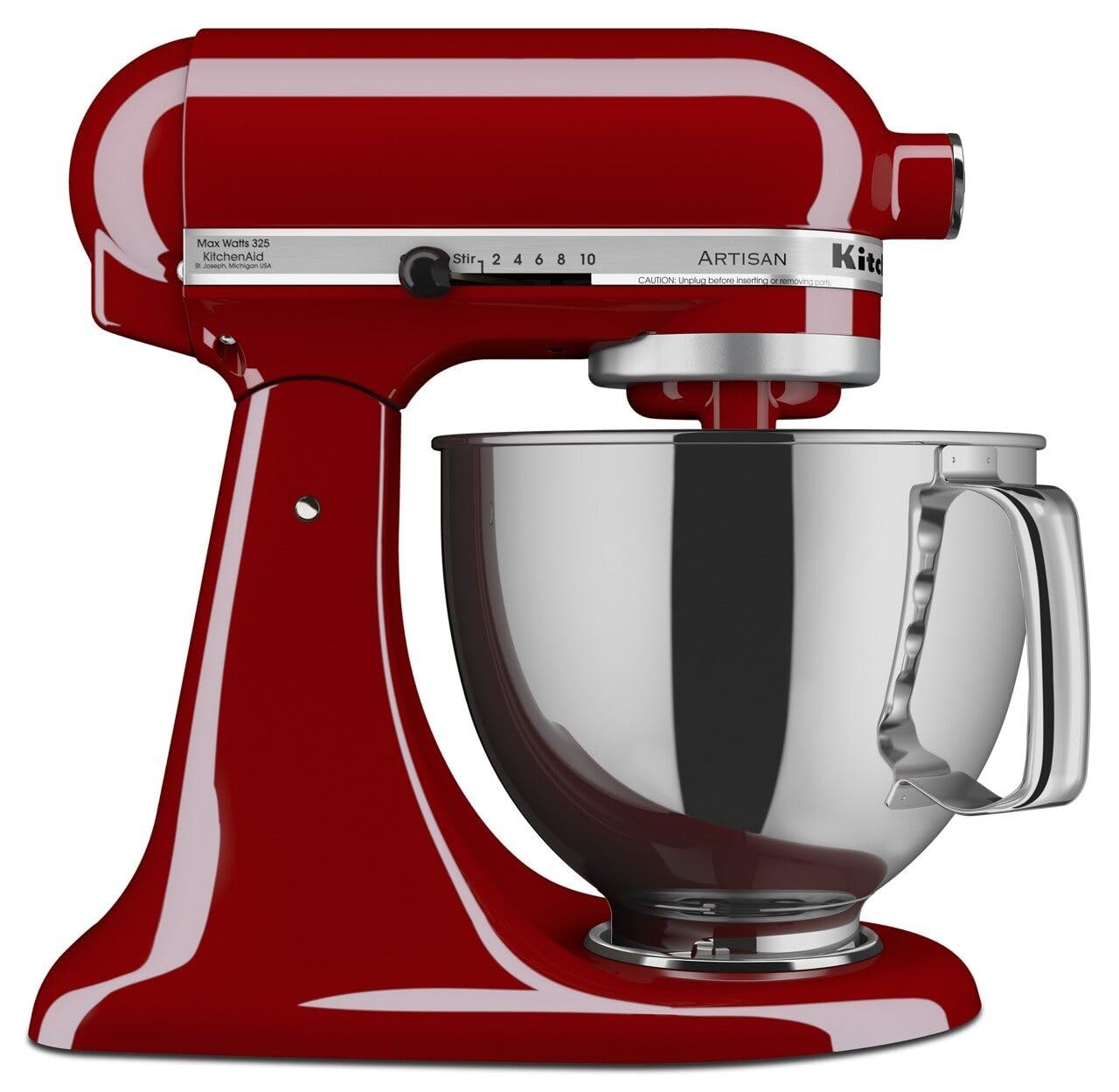
KitchenAid Artisan 5-Quart Stand Mixer (KSM150PS)
10 speeds handle everything from meringue to bread dough
Buy on Amazon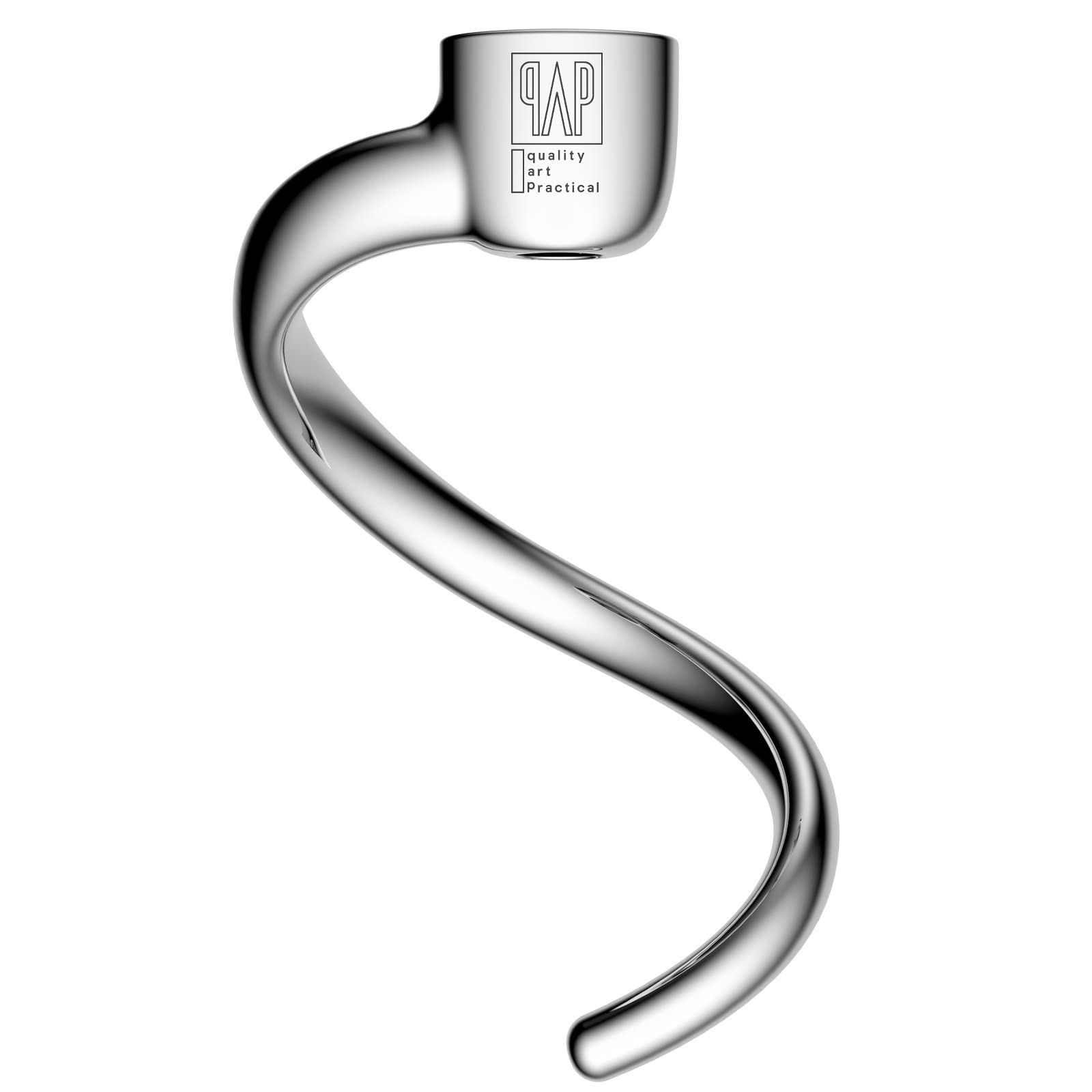
KitchenAid Dough Hook (Spiral)
Spiral design is more efficient at developing gluten than the old C-hook
Buy on Amazon
KitchenAid Professional 600 6-Quart Stand Mixer
6-quart bowl handles double batches and heavy bread doughs with ease
Buy on Amazon| Product | Price Range | Top Strength | Key Weakness | Buy |
|---|---|---|---|---|
| KitchenAid Artisan 5-Quart Stand Mixer (KSM150PS) best overall | $$$ | 10 speeds handle everything from meringue to bread dough | Expensive , over $400 at full retail | Buy on Amazon |
| KitchenAid Dough Hook (Spiral) also consider | $ | Spiral design is more efficient at developing gluten than the old C-hook | Not effective below 2 cups of flour , too little dough for the hook to grab | Buy on Amazon |
| KitchenAid Professional 600 6-Quart Stand Mixer also consider | $$$ | 6-quart bowl handles double batches and heavy bread doughs with ease | Significantly heavier than the Artisan , harder to store | Buy on Amazon |
| Bosch Universal Plus 800W Stand Mixer also consider | $$ | 800W motor , more powerful than KitchenAid Artisan for sustained dough kneading | Attachment ecosystem much smaller than KitchenAid | Buy on Amazon |
| Ankarsrum Original Stand Mixer also consider | $$$ | 7-quart bowl, 600W motor , handles the largest batches of any home mixer | Very different learning curve from KitchenAid , takes time to master | Buy on Amazon |
The dough hook is where stand mixers either justify themselves or expose their limitations. Every mixer on the market will whip cream and beat eggs. What separates a serious machine from a countertop ornament is what happens when you put 800 grams of high-hydration bread dough in the bowl and run it for twelve minutes. That’s where motors strain, bowls walk across the counter, and hooks that looked fine in marketing photos turn out to be glorified stirring rods.
This guide covers stand mixer dough hook attachments and the mixers they belong to, for people who actually bake bread, pizza dough, brioche, and bagels with some regularity. If you want broader context on what to look for in a machine before committing, the Stand Mixers hub is a good place to start. If you already own a KitchenAid and just need the right hook, I’ll get to that directly.
What to Look For in a Dough Hook Setup
Hook Geometry: Spiral vs. C-Hook
The shape of the hook matters more than most product pages let on. The old C-hook design (standard on many KitchenAid machines through the early 2000s) pushes dough rather than working it. It gets the job done, but it’s inefficient at gluten development and tends to let dough ride up the hook rather than staying in contact with the bowl.
The spiral hook design pulls dough down and folds it repeatedly. It’s the geometry used in commercial bakery equipment, and it actually develops gluten rather than just agitating the dough. If you’ve been using a C-hook and wondering why your bread dough still feels underworked after ten minutes, the hook shape is probably part of the answer.
Motor Power and Duty Cycle
Bread dough is the hardest thing a stand mixer motor does. Stiff doughs, especially enriched ones like brioche or bagels, create sustained resistance that cheaper motors handle by overheating and tripping their thermal cutoffs. If your mixer has ever stopped mid-kneading and needed to rest, that’s what happened.
800 watts of continuous power is a reasonable floor for serious bread baking. The KitchenAid Artisan’s motor is rated lower than that, which is not a disqualification, but it does mean you’ll want to respect the manufacturer’s guidance on max dough loads.
Bowl Capacity and Geometry
Most recipes for a standard loaf call for somewhere between 3 and 4 cups of flour. Double that for two loaves, and you’re pushing the limits of a 5-quart bowl. The other factor is bowl shape: a dough hook needs enough dough mass to grip. Run too little flour through a full-size hook and it just spins without catching. Most KitchenAid spiral hooks need at least 2 cups of flour to work effectively.
The Attachment Ecosystem Question
If you’re buying a mixer primarily for bread, you may not care that one brand has a pasta attachment and another doesn’t. But if you’re buying a mixer that will do everything, the attachment port matters. This is where KitchenAid’s advantage over the competition is real and documented, not just brand loyalty.
Top Picks
KitchenAid Artisan 5-Quart Stand Mixer (KSM150PS)
The default recommendation for most home bakers, and it earns that position. Ten speeds, planetary mixing action that reaches the entire bowl without dead spots, and an attachment hub that connects to pasta makers, meat grinders, ice cream makers, and a long list of other accessories. I’ve used the Artisan for eight years and replaced it with the Professional 600 only because my batch sizes grew, not because the Artisan failed at anything.
The limitation worth taking seriously: the 5-quart bowl is genuinely constraining if you regularly make double batches of bread. If a two-loaf bake is your normal, you’ll hit the bowl’s capacity before you hit the motor’s. And at premium pricing, it’s a real investment. Check current price on Amazon.
The planetary mixing system is the reason the Artisan works well across a wide range of tasks. For bread specifically, pair it with the spiral dough hook upgrade and it performs noticeably better than the C-hook most machines shipped with historically.
KitchenAid Dough Hook (Spiral)
If you own a KitchenAid 5- or 6-quart tilt-head or bowl-lift mixer and you’re still using the original C-hook, this is the most cost-effective upgrade you can make to your bread baking. At budget pricing, it’s not a significant decision.
The spiral design develops gluten more efficiently, and in back-to-back tests kneading the same dough recipe, the spiral hook produces a smoother, more cohesive dough in less time (I timed this across four batches before I was satisfied I wasn’t imagining the difference). It’s stainless steel, dishwasher safe, and fits the full range of compatible KitchenAid bowl sizes without adapters.
Two cautions. Don’t use it with less than 2 cups of flour, because there isn’t enough dough mass for the hook to grip and you’ll just watch it spin. And don’t run it at high speed for extended periods if you’re working a high-gluten bread flour: over-developed gluten makes dense bread, and the spiral hook is efficient enough that you can get there faster than you’d expect.
KitchenAid Professional 600 6-Quart Stand Mixer
The upgrade case over the Artisan is real, but narrower than the price difference suggests. The 6-quart bowl matters if you regularly make double batches of bread dough or work with recipes designed for large-format production. The bowl-lift design is more stable under load than the tilt-head, which becomes relevant when you’re running stiff enriched doughs for ten minutes straight. The motor is more powerful and better suited to sustained heavy use.
Who doesn’t need it: anyone making one loaf at a time, standard hydration doughs, a couple of times a week. The Artisan handles that without complaint. The Professional 600 is for people who know they’ve been pushing the Artisan to its limits. If you’re considering going further up the capacity range, the KitchenAid 8 Quart Commercial Stand Mixer is worth looking at for high-volume production, though that’s a different category of machine entirely.
One practical note: the Professional 600 is significantly heavier than the Artisan. If your storage situation involves lifting the mixer in and out of a cabinet, factor that in. Bowl-lift engagement also requires two hands, which is a minor inconvenience that adds up if you’re moving quickly.
Premium pricing, check current price on Amazon.
Bosch Universal Plus 800W Stand Mixer
The value pick for serious bread bakers who don’t need the KitchenAid attachment ecosystem. The Bosch runs an 800W motor, which delivers more continuous power than the KitchenAid Artisan at mid-range pricing, and the 6.5-quart bowl handles large batches without the step up to KitchenAid Professional pricing. For its capacity, it’s also lighter than comparable KitchenAid machines, which matters if you move your mixer regularly.
The trade-off is real: the Bosch attachment ecosystem is a fraction of KitchenAid’s, and the bowl attachment mechanism takes some getting used to. If pasta and meat grinding attachments are part of your plan, this isn’t the machine. If bread is the primary job and budget relative to capacity is the priority, the Bosch makes a strong case.
Ankarsrum Original Stand Mixer
The Ankarsrum is the serious bread baker’s alternative to KitchenAid, and it has a devoted following that is, in my experience, justified. The 7-quart bowl is the largest in the home category, the 600W motor handles it without strain due to the unique roller-and-scraper system, and the 7-year warranty is the best in the category by a significant margin. Swedish-made, which I mention not as a lifestyle point but because the build quality reflects it.
The roller-and-scraper mechanism is genuinely better for bread dough than any hook design. It mimics stretch-and-fold technique rather than the compression approach of a hook, and experienced bread bakers will notice the difference in dough texture. It took me about three baking sessions to feel comfortable with it, which is longer than it sounds but not actually that long.
Premium pricing, less widely available than KitchenAid, and the learning curve is real. For someone who bakes bread three times a week and doesn’t need the KitchenAid attachment hub, it’s worth the adjustment period.
How to Choose
If you bake bread occasionally and want a machine that does everything, the KitchenAid Artisan with the spiral dough hook upgrade is the right answer for most people. The attachment ecosystem is a genuine advantage, and the machine handles standard bread recipes without hitting its limits.
If you already own a KitchenAid 5- or 6-quart and are unhappy with your dough results, check which hook you’re using before assuming the motor is the problem. The spiral dough hook upgrade alone may fix it.
If you bake two or more loaves per session regularly, or work with enriched doughs that put sustained load on the motor, move up to the KitchenAid Professional 600. The capacity and motor difference are real.
If bread is your primary use case and KitchenAid’s attachment ecosystem doesn’t interest you, the Bosch Universal Plus gives you more motor and more bowl capacity at a lower price point than the KitchenAid Professional. It’s not a compromise pick. It’s a different set of priorities.
If you’re a committed bread baker who makes large batches frequently and wants the best dough-handling performance available in a home machine, the Ankarsrum is the answer. Budget for the learning curve and the price. For more information on how the various KitchenAid machines stack up against each other before you commit to a brand, the full stand mixer buying guide covers those comparisons in detail.
One thing worth knowing if you’re building out a KitchenAid setup: the bowl material affects more than you might expect. If you ever look at specialty bowl options, the copper bowl for KitchenAid mixer article is useful context, though it’s more relevant for egg whites than bread dough.
Frequently Asked Questions
Does the dough hook actually replace hand kneading?
For most bread recipes, yes, and in many cases it’s more consistent. A spiral hook running at the correct speed applies steady, even pressure to dough that most people can’t replicate by hand for the full 8 to 12 minutes a recipe typically requires. Where hand kneading sometimes wins is in tactile feedback: an experienced baker can feel when dough is ready in a way that a timer can’t replicate. For home baking at normal volumes, the hook is the practical choice.
How do I know if I’m overworking my dough?
Overworked dough feels tight and springs back immediately when you press it, rather than relaxing slowly. It’s more common with bread flour than all-purpose because of the higher gluten content, and more likely to happen with a spiral hook than a C-hook because the spiral is more efficient. Watch your dough, not just your timer, especially in the last two minutes of kneading.
Can I use a KitchenAid dough hook for pasta dough?
Pasta dough is stiffer than most bread doughs and puts significant torque on the hook attachment. The dough hook can mix pasta dough, but it’s hard work for the motor. KitchenAid’s pasta roller and cutter attachments, which connect through the power hub, use a different mechanism and are the more practical approach. If pasta is a regular use case, the hub attachments are worth the investment.
What’s the difference between a tilt-head and a bowl-lift mixer for bread dough?
The tilt-head design (KitchenAid Artisan) releases the head upward to add ingredients, which is convenient for most tasks. Under very stiff dough loads, there’s slightly more flex at the head hinge than with the bowl-lift design. Bowl-lift machines (KitchenAid Professional 600) lock the bowl into an upright position, which provides more stability during sustained heavy kneading. For standard home bread recipes, the difference is minor. For commercial-weight doughs or very long kneading times, bowl-lift is the more solid setup.
Why won’t my dough hook pick up the dough? It just spins.
Almost always a flour quantity issue. Dough hooks need a minimum mass of dough to grip, and with most standard-size hooks that means at least 2 cups of flour. Below that threshold, the hook rotates through the dough without catching it. The fix is either scaling up your recipe or, for small batches, mixing by hand. Some bakers use the flat beater attachment for small-batch mixing and switch to the hook once the dough has come together enough to have some mass.
Frequently Asked Questions
Why does my stand mixer stop in the middle of kneading bread dough?
This is the thermal cutoff tripping, which happens when the motor overheats from sustained resistance beyond its capacity. It is most common with stiff doughs like bagels or whole-wheat bread on lower-powered mixers. Let the motor cool for 20–30 minutes before resuming. If it happens regularly, the dough load may consistently exceed your mixer's rated capacity.
What wattage stand mixer do I need for regular bread baking?
A sustained output of around 500W or higher is a reliable floor for regular bread baking. Peak wattage figures quoted in marketing can be misleading — what matters is how the motor performs under continuous load for six to twelve minutes of kneading. The Bosch Universal Plus at 800W and the Ankarsrum at 600W are among the most capable home mixers for this purpose.
Is the KitchenAid spiral dough hook compatible with all KitchenAid models?
The KitchenAid spiral dough hook fits all 5-quart and 6-quart tilt-head and bowl-lift KitchenAid models. It is a direct upgrade over the original C-hook and connects via the same attachment point. Confirm your bowl size before ordering, as the spiral hook is sized to match the bowl capacity.
What types of dough are hardest on a stand mixer motor?
Stiff, enriched doughs like brioche, bagels, and dense whole-wheat bread create the most sustained resistance. High-hydration doughs like ciabatta or sourdough are easier on the motor despite being sticky. The combination of low hydration and high fat — as in brioche — is the most demanding scenario for home mixer motors.
How does the Ankarsrum mixer handle dough differently from a KitchenAid?
The Ankarsrum uses a rotating bowl with a roller and scraper rather than a fixed bowl with a descending hook. The roller works the dough against the bowl wall, which is how commercial planetary dough mixers operate. This method is especially effective for large batches and high-hydration doughs, though it requires a different technique and a learning curve compared to conventional hook-style mixers.
Where to Buy
KitchenAid Artisan 5-Quart Stand Mixer (KSM150PS)See KitchenAid Artisan 5-Quart Stand Mixe… on Amazon