Whip Attachment for Stand Mixer: Which One to Use

Affiliate disclosure: Some links on this page are affiliate links. If you buy through them we earn a small commission at no extra cost to you. Recommendations are research-driven; we don't claim personal use of every product reviewed. Product prices and availability are accurate as of the date published and are subject to change. Always check Amazon for current pricing before purchasing. Learn more.

Quick Picks
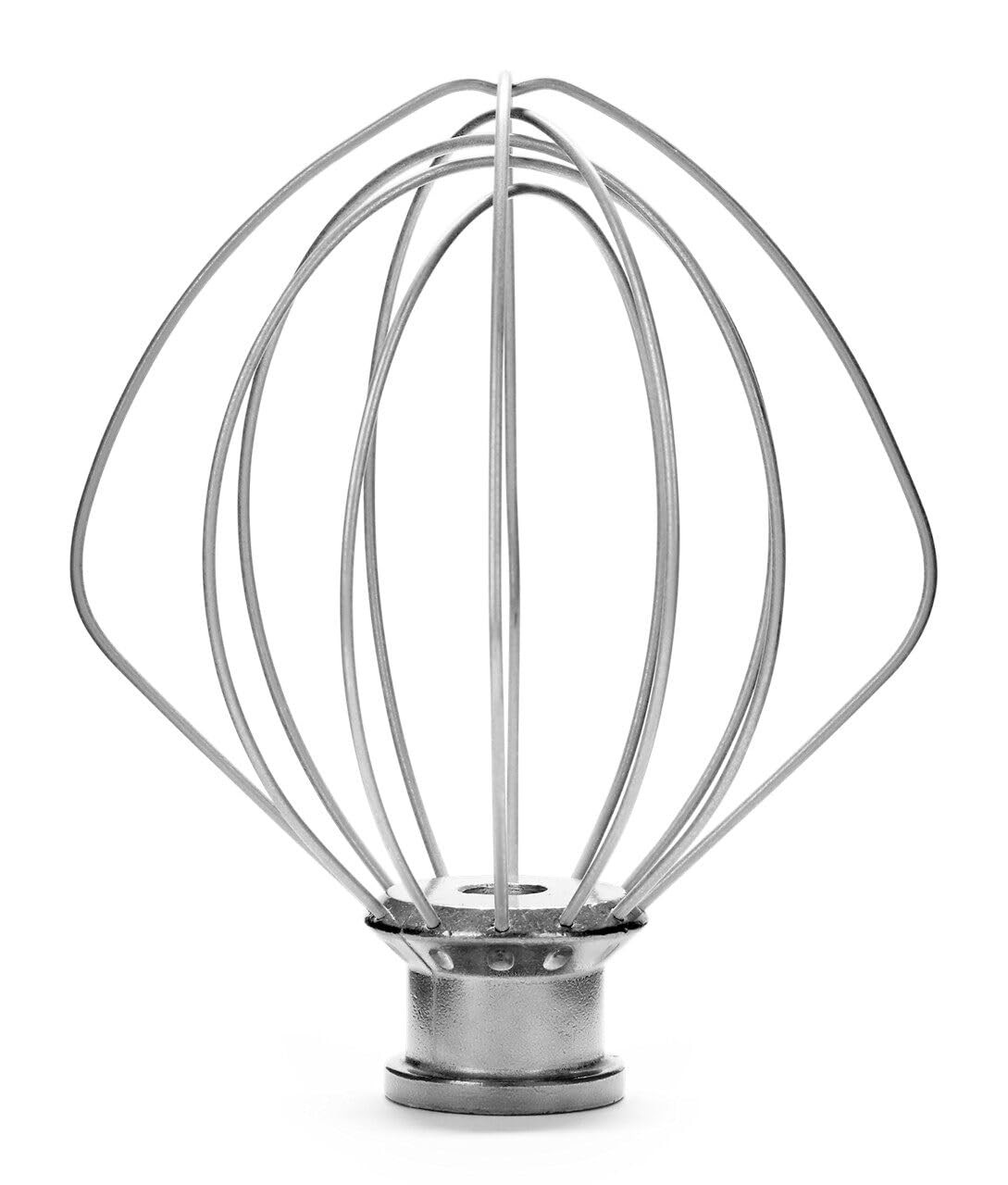
KitchenAid 5-Quart Wire Whip
Thin wires incorporate maximum air , ideal for meringue, whipped cream, and mousse
Buy on Amazon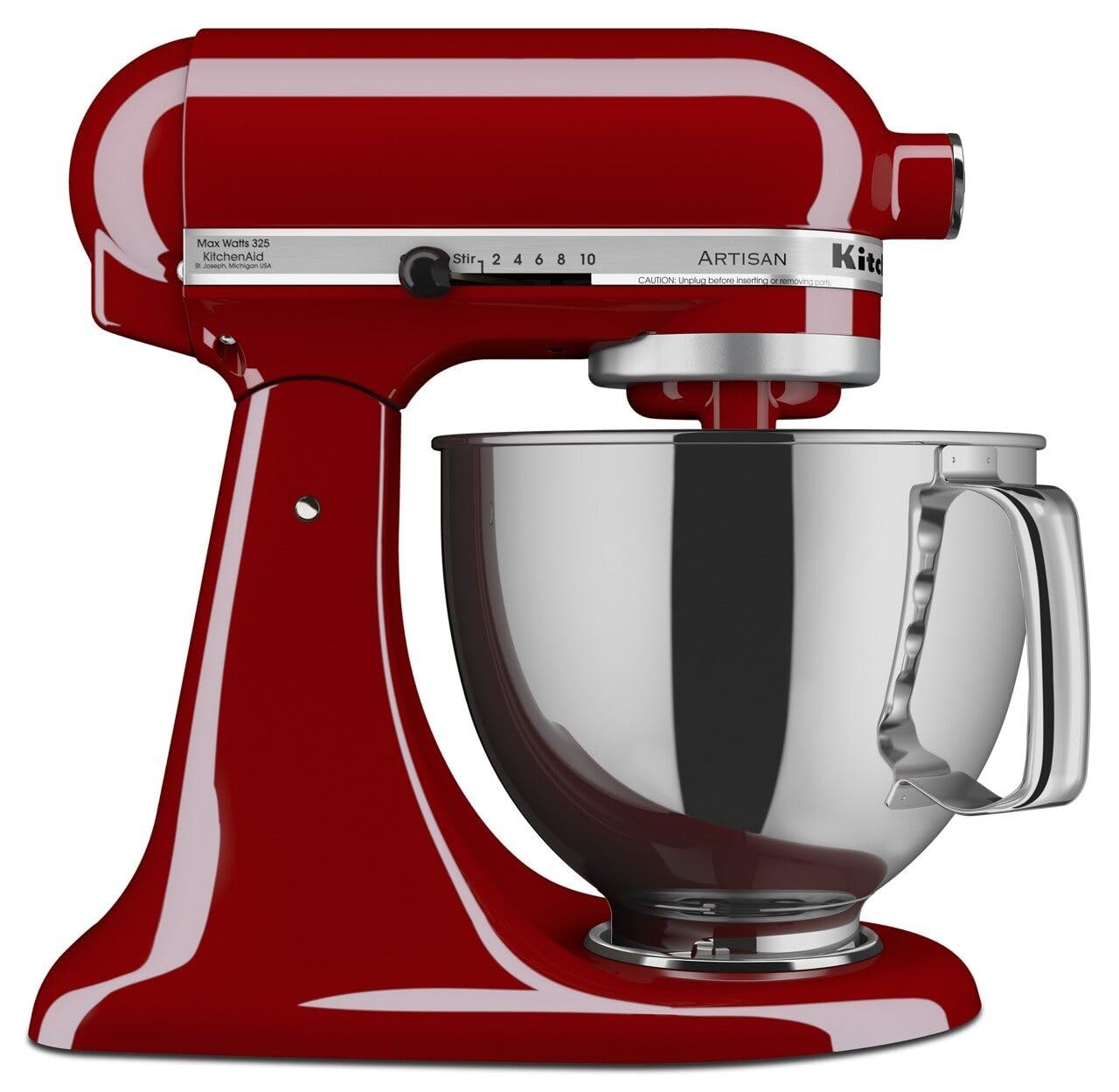
KitchenAid Artisan 5-Quart Stand Mixer (KSM150PS)
10 speeds handle everything from meringue to bread dough
Buy on Amazon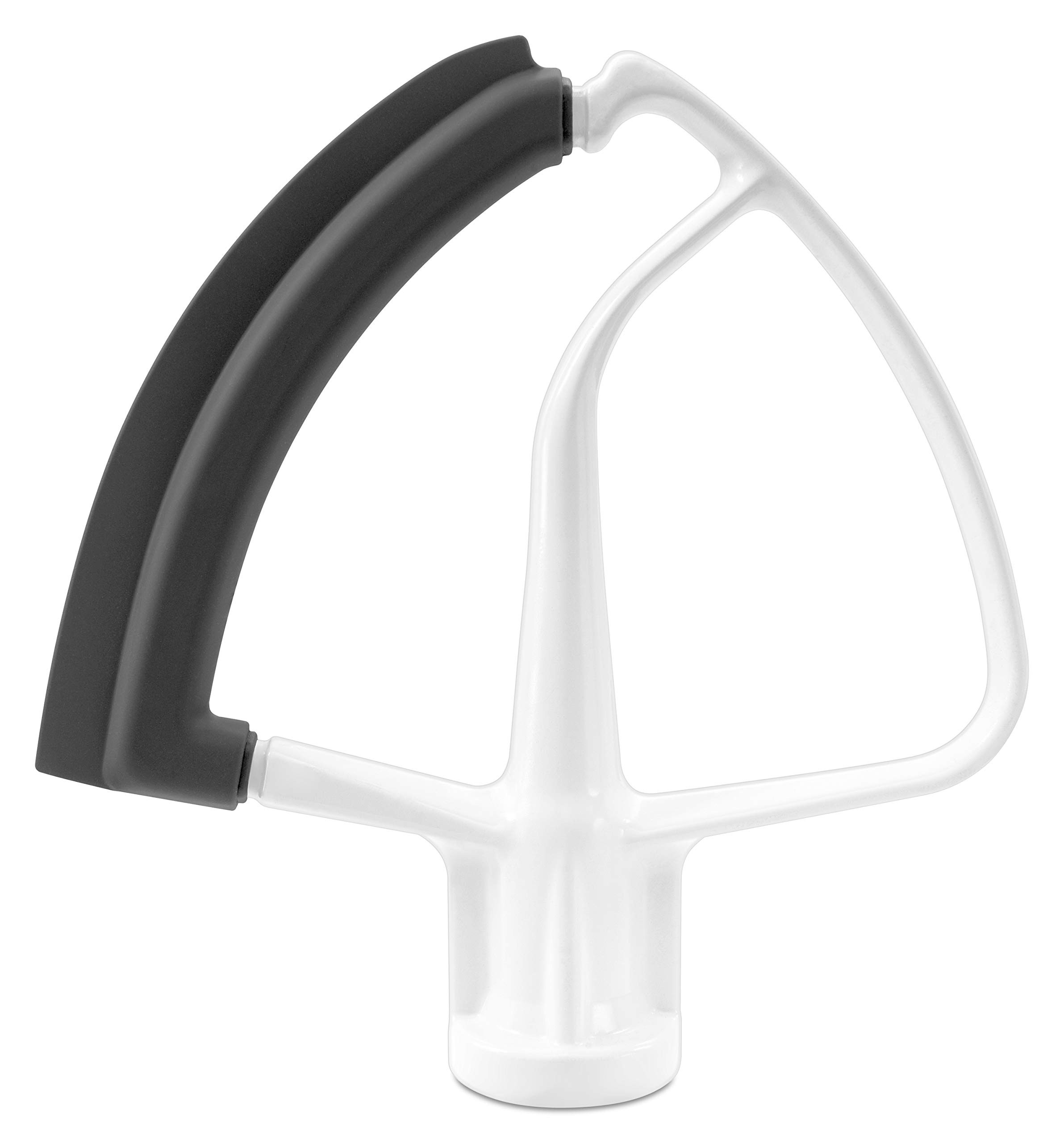
KitchenAid Flex Edge Beater
Flexible silicone edge scrapes the bowl sides automatically during mixing
Buy on Amazon| Product | Price Range | Top Strength | Key Weakness | Buy |
|---|---|---|---|---|
| KitchenAid 5-Quart Wire Whip best overall | $ | Thin wires incorporate maximum air , ideal for meringue, whipped cream, and mousse | Single-purpose , not useful for mixing dense doughs or batters | Buy on Amazon |
| KitchenAid Artisan 5-Quart Stand Mixer (KSM150PS) also consider | $$$ | 10 speeds handle everything from meringue to bread dough | Expensive , over $400 at full retail | Buy on Amazon |
| KitchenAid Flex Edge Beater also consider | $ | Flexible silicone edge scrapes the bowl sides automatically during mixing | Silicone edge can wear over time with heavy use | Buy on Amazon |
| KitchenAid Dough Hook (Spiral) also consider | $ | Spiral design is more efficient at developing gluten than the old C-hook | Not effective below 2 cups of flour , too little dough for the hook to grab | Buy on Amazon |
The whip attachment for a stand mixer is probably the most misunderstood piece of equipment in the average home baker’s drawer. People buy a KitchenAid, use the flat beater for everything, and wonder why their whipped cream is dense or their meringue won’t hold a peak. The answer, most of the time, is that they reached for the wrong attachment.
This guide covers the core KitchenAid attachment lineup, with a direct recommendation on which one to reach for first. If you’re still deciding on the mixer itself, the Stand Mixers hub has full coverage of what’s available across price points. If you already own a KitchenAid and just need to know which attachment does what, you’re in the right place.
What to Look For
Before getting into specific products, it helps to understand what each attachment is actually designed to do. KitchenAid ships most mixers with three: a flat beater, a dough hook, and a wire whip. Each works best in a specific range of tasks, and using the wrong one for the job produces noticeably worse results.
Aeration vs. Incorporation
The wire whip’s job is to incorporate air. Its thin, looped wires move through soft ingredients fast enough to trap air bubbles, which is what turns liquid cream into whipped cream and egg whites into meringue. The more wires, the more air per pass. A flat beater doesn’t do this. It mixes, creams, and beats, but it’s too dense and too slow at air incorporation to produce stable foam.
If you’ve ever tried whipping cream in a bowl-lift KitchenAid with the beater and ended up with something that looked more like butter than topping, that’s the attachment mismatch at work.
Fit and Compatibility
KitchenAid attachments are not universally cross-compatible. The tilt-head models (like the Artisan 5-quart) and the bowl-lift models take slightly different attachment sizes in some cases. Bowl size also matters. The spiral dough hook, for example, won’t work effectively with very small quantities of dough because there’s not enough mass for the hook to grip. Check compatibility against your specific model before purchasing a replacement or upgrade.
Material and Durability
Every attachment covered here is stainless steel, which is the right call. Avoid the older aluminum-coated attachments if you encounter them on the secondary market. The coating can wear. Stainless doesn’t.
Top Picks
KitchenAid 5-Quart Wire Whip
The KitchenAid 5-Quart Wire Whip is the attachment most home cooks underuse. It’s priced in the budget category, stainless, dishwasher safe, and it does one thing extremely well: it puts air into things. Meringue, whipped cream, mousse, chiffon batters, zabaglione. If the recipe calls for soft peaks, stiff peaks, or a ribbon stage, this is what you use.
The thin wire construction matters here. More surface area per pass means faster air incorporation at lower speeds, which gives you more control over the final texture. Start at speed 6 for whipped cream, take it to 8 or 10 for meringue, and stop before it looks done. (The whip continues working the mixture even as the mixer winds down, which catches a lot of people off guard.) Over-whipping cream into butter is quick on high speed, so pay attention the first few times.
What the wire whip won’t do is mix thick things. Do not use it for cookie dough, cake batter from scratch, or anything with more body than a light chiffon. It will deform. The wires are not designed for that kind of resistance.
This is also the replacement pick if your original factory whip has worn. Replacement whips from KitchenAid hold up well and cost less than you’d expect for an OEM part.
KitchenAid Artisan 5-Quart Stand Mixer (KSM150PS)
If someone asks me where to start with KitchenAid and they don’t own one yet, I point them to the KitchenAid Artisan 5-Quart Stand Mixer (KSM150PS). It’s the default recommendation for most home bakers, not because it’s the cheapest option (it’s premium-priced, and you’ll want to check current pricing on Amazon before assuming anything), but because of what it ships with and what it connects to.
The planetary mixing action is the structural reason this mixer performs consistently. The beater rotates on its own axis while simultaneously traveling around the bowl, which means it touches every part of the bowl’s interior without you touching the bowl. No unmixed pockets. No scraped sides every two minutes. Ten speeds, with enough torque at the low end to handle bread dough and enough precision at the high end for meringue.
The attachment hub on the front is the real differentiator against cheaper mixers. That port accepts pasta rollers, meat grinders, ice cream bowls, vegetable spiralizers, and grain mills, among others. If you’ve ever looked at a dedicated pasta machine taking up counter space and thought there had to be a more space-efficient option, there is one, and it plugs into this mixer.
The 5-quart bowl is worth flagging. It’s adequate for two standard loaves of bread dough, but if you routinely bake in larger batches, you’ll feel the constraint. KitchenAid makes a KitchenAid 8-quart commercial stand mixer for exactly that situation, though the price point is a significant step up.
KitchenAid Flex Edge Beater
The KitchenAid Flex Edge Beater is the attachment most buyers don’t know about when they purchase their mixer, and it’s genuinely one of the more useful upgrades in the budget price tier.
The standard flat beater mixes fine, but it doesn’t reach the bowl sides, which means cookie dough and cake batter build up on the perimeter while the center gets overworked. You stop, scrape, restart. Stop, scrape, restart. The Flex Edge Beater has a flexible silicone edge that sweeps the bowl sides continuously during mixing. (I timed this once. Making a batch of chocolate chip cookie dough with the standard beater required four manual scraping stops. The Flex Edge Beater needed none.) That’s not a trivial difference when you’re mid-process with sticky dough and coated spatulas.
It handles cookie dough, cake batters, mashed potatoes, and most other medium-consistency mixing tasks. Do not use it for stiff doughs. The silicone edge is not designed for the resistance that a firm bread dough or a stiff pasta dough creates, and it will wear faster under that load. For stiff work, use the standard beater or the dough hook.
The silicone edge will eventually show wear with regular use. That’s expected. Budget for a replacement every few years if you bake frequently.
KitchenAid Spiral Dough Hook
The KitchenAid Dough Hook (Spiral) replaced the older C-hook design, and the upgrade is real. The spiral shape maintains contact with the dough through a longer arc of motion, which develops gluten more efficiently and with less friction heat than the C-hook produced. For yeast breads, pizza dough, and enriched doughs like brioche, this is the right tool.
Where the dough hook outperforms hand-kneading is consistency under load. Eight minutes at speed 2 on the spiral hook produces more even gluten development than most hand-kneading, particularly for beginners who aren’t sure when dough is “done.” The mixer doesn’t get tired and doesn’t vary its pressure.
Two things to watch. First, the hook needs mass to work. Less than about 2 cups of flour in the bowl and the dough will ride up the hook instead of turning under it. Scale up or knead by hand for small quantities. Second, high speed for too long will over-develop gluten. For most yeast doughs, speed 2 is the correct setting. Don’t let the 10-speed range tempt you upward.
Fits all 5- and 6-quart KitchenAid tilt-head and bowl-lift models. Stainless, dishwasher safe.
How to Choose
The question isn’t really which attachment is best overall. It’s which attachment you’re missing.
If you own the Artisan or a similar KitchenAid tilt-head mixer and you’re only using the flat beater, start with the wire whip. It opens up a category of techniques (meringue, mousse, stabilized whipped cream) that the beater physically cannot handle. It’s priced in the budget tier and available directly from KitchenAid.
If you bake bread more than once a week and you’re still using the C-hook that shipped with an older machine, the spiral dough hook upgrade is worth the cost. The gluten development difference is measurable, and the older C-hook has a tendency to climb dough at higher speeds.
If you make cookies, cakes, and quick breads and your biggest frustration is stopping to scrape the bowl, the Flex Edge Beater is a more practical daily-use upgrade than most people realize.
If you’re using an older or heavily used KitchenAid where the original wire whip has bent tines or reduced spring, a replacement wire whip will restore the performance you’re expecting and is one of the more economical fixes in the mixer world.
For those who make large quantities of anything, it’s worth considering whether the 5-quart bowl is actually your constraint. If it is, the bowl is a more important upgrade than any attachment. The Stand Mixers hub has a full comparison of KitchenAid bowl sizes and the commercial line, if that’s the direction you’re evaluating.
One note on copper: if you whip egg whites frequently and care about stability, the copper bowl for KitchenAid mixer is worth researching. Copper ions from the bowl surface stabilize egg white foam and allow for longer holding times. It’s not a necessity, but it’s not marketing either.
Frequently Asked Questions
What is the difference between a whip attachment and a beater attachment?
The wire whip uses thin, looped wires to move quickly through soft ingredients and incorporate air. Use it for meringue, whipped cream, mousse, and light chiffon batters. The flat beater is denser and designed for mixing, creaming, and beating thicker ingredients like cookie dough, cake batter from scratch, and mashed potatoes. The beater will not produce stable foam. The whip will deform under the resistance of thick doughs.
Can I use the wire whip for cookie dough or cake batter?
No. The wire whip is designed for soft, light ingredients and will deform if used with anything that offers real resistance. Cookie dough and standard cake batters should be mixed with the flat beater or the Flex Edge Beater. Using the whip on thick doughs risks bending the tines and reduces the attachment’s ability to incorporate air into lighter preparations.
Is the KitchenAid wire whip dishwasher safe?
Yes. The stainless steel wire whip is dishwasher safe. Place it on the top rack and avoid harsh abrasive detergents, which can dull the finish over time though won’t affect performance. Hand washing works fine too and extends the life of any metal attachment.
How do I know if my KitchenAid attachment fits my mixer model?
KitchenAid attachments are generally compatible across the 5-quart tilt-head line, which covers most Artisan and Classic models. The 6-quart bowl-lift models use slightly different sizing for some attachments, and the bowl hub diameter on commercial models differs from consumer tilt-head models. Check the model number on the bottom of your mixer and verify compatibility on the product listing before purchasing. When in doubt, contact KitchenAid support directly with your model number.
How long should it take to whip cream using the wire whip?
At speed 8 to 10, heavy cream reaches soft peaks in roughly 60 to 90 seconds and stiff peaks in 2 to 3 minutes depending on the cream’s fat content and temperature. Cold cream from the refrigerator whips faster and holds better than room-temperature cream. Watch the bowl rather than the clock, and stop the mixer slightly before the cream looks fully whipped. The attachment continues working the mixture as the bowl slows, and over-whipped cream turns grainy and then buttery quickly at high speed.
Frequently Asked Questions
What is the difference between a whip attachment and a beater attachment for a stand mixer?
The wire whip (also called a balloon whip) is designed to incorporate air — it is the right attachment for whipped cream, meringue, and mousse. The flat beater is designed for mixing and creaming — it handles cookie doughs, cake batters, and similar tasks. Using the flat beater for whipped cream produces a dense, poorly aerated result because the beater does not move fast enough or with enough surface area to trap air bubbles efficiently.
When should I use the wire whip on my KitchenAid?
Use the wire whip any time your goal is incorporating air into a soft or liquid ingredient: whipping heavy cream to stiff peaks, beating egg whites for meringue, making mousse, or whipping ganache to a lighter texture. Do not use it for mixing doughs or thick batters — it is not built for resistance and can deform under heavy loads.
Is the KitchenAid wire whip dishwasher safe?
Yes, KitchenAid lists the wire whip as dishwasher safe. In practice, hand washing and air drying extends the life of the chrome-plated collar and prevents any spotting on the stainless wires. If you use the dishwasher, the top rack and a shorter drying cycle are better than the high-heat lower rack setting.
What attachments come standard with a KitchenAid stand mixer?
Most KitchenAid tilt-head and bowl-lift models ship with three attachments: a flat beater, a dough hook (spiral design on newer models), and a wire whip. The Flex Edge Beater with the silicone scraper edge is typically sold separately and is a useful upgrade for mixing tasks that require frequent bowl scraping.
Can I use third-party whip attachments with a KitchenAid stand mixer?
Many third-party attachments are made to fit KitchenAid hubs, but fit and finish vary significantly. KitchenAid's own wire whip is reasonably priced and guaranteed to fit your specific machine correctly. If you choose a third-party whip, confirm it lists your exact model number as compatible — attachment geometry differs between tilt-head and bowl-lift models and between quart sizes.
Where to Buy
KitchenAid 5-Quart Wire WhipSee KitchenAid 5-Quart Wire Whip on Amazon