Where Are Caraway Pans Made? Manufacturing Facts

Affiliate disclosure: Some links on this page are affiliate links. If you buy through them we earn a small commission at no extra cost to you. Recommendations are research-driven; we don't claim personal use of every product reviewed. Product prices and availability are accurate as of the date published and are subject to change. Always check Amazon for current pricing before purchasing. Learn more.
Quick Picks
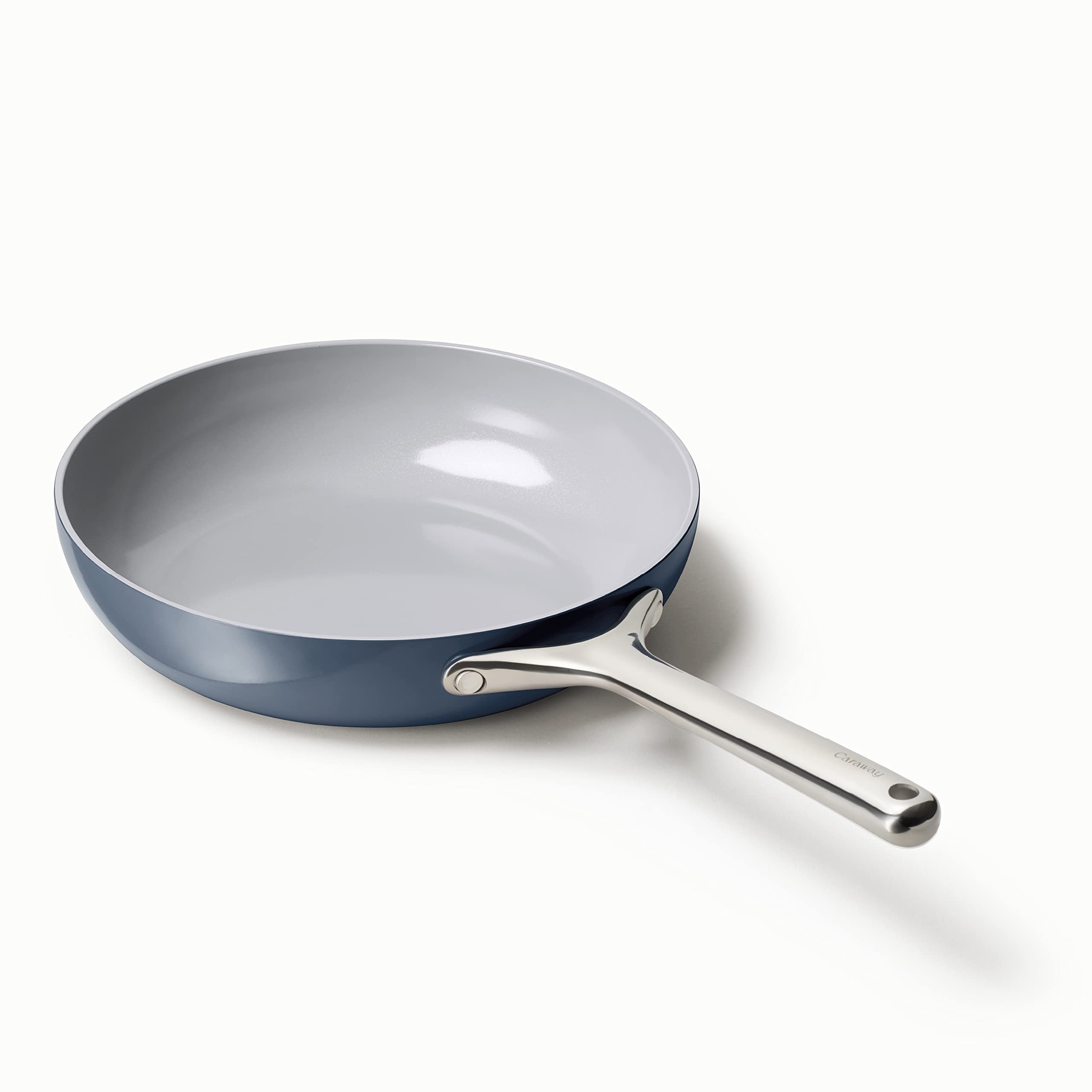
Caraway Ceramic Nonstick Frying Pan 10.5"
Ceramic-coated , PTFE and PFOA-free
Buy on Amazon
Caraway 4.5-Quart Saute Pan
Ceramic-coated , free of PTFE, PFOA, and other synthetic coatings
Buy on Amazon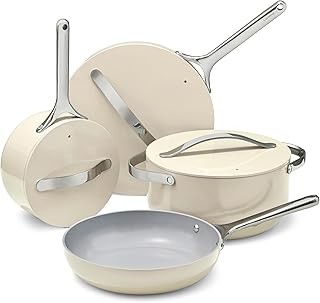
Caraway Home Cookware Set (7-Piece)
Complete set covers most cooking needs , sauce, saute, fry, and Dutch oven
Buy on Amazon| Product | Price Range | Top Strength | Key Weakness | Buy |
|---|---|---|---|---|
| Caraway Ceramic Nonstick Frying Pan 10.5" best overall | $$ | Ceramic-coated , PTFE and PFOA-free | Ceramic coating degrades faster than PTFE with high-heat or metal utensil use | Buy on Amazon |
| Caraway 4.5-Quart Saute Pan also consider | $$ | Ceramic-coated , free of PTFE, PFOA, and other synthetic coatings | Ceramic coating degrades faster than PTFE if overheated or scratched with metal utensils | Buy on Amazon |
| Caraway Home Cookware Set (7-Piece) also consider | $$ | Complete set covers most cooking needs , sauce, saute, fry, and Dutch oven | Ceramic coating lifespan is typically 1-3 years with regular use | Buy on Amazon |
| GreenPan GP5 Ceramic Nonstick 12" Skillet also consider | $$ | Thermolon Minerals ceramic coating , PFAS-free and scratch-resistant | Coating still degrades faster than PTFE with high-heat cooking | Buy on Amazon |
Caraway pans are manufactured in China. That’s the honest answer to the question, and it’s the one the brand doesn’t go out of its way to advertise. The ceramic coating process happens overseas, which is standard for this price category, including most of GreenPan’s lineup. Where a pan is made matters less than how the coating is applied and what it’s made of. Caraway uses a sol-gel ceramic coating that is free of PTFE, PFOA, and the broader class of PFAS compounds. That’s the actual differentiator, and it’s worth understanding before you spend money on any piece in this lineup.
If you’re still building out your cookware knowledge, the Nonstick & Ceramic hub on this site covers the full category, including how ceramic coatings compare to traditional PTFE at a baseline level. The short version: ceramic nonstick releases food well when new, heats evenly when the base construction is solid, and degrades faster than PTFE if you push temperatures or reach for metal utensils. Caraway pans are good. They’re not indestructible.
What to Look For in a Ceramic Nonstick Pan
Coating Composition
The marketing phrase “ceramic nonstick” covers a wide range of actual products. What you want is a PFAS-free sol-gel coating that’s been applied consistently, without thin spots that fail early. Caraway and GreenPan are both credible here. Cheaper ceramic pans from brands with no coating transparency are a different story.
Base Construction and Heat Source Compatibility
A ceramic coating on a thin pan body is a bad investment regardless of how clean the chemistry is. Look for a magnetic stainless steel base if you cook on induction. Both Caraway and GreenPan use this construction. Aluminum cores distribute heat, stainless exteriors handle the induction magnet. It works.
Oven Safety
Ceramic coatings generally handle oven temperatures better than PTFE, which starts to degrade around 500°F. The Caraway Ceramic Nonstick Frying Pan 10.5” is rated to 550°F. The GreenPan GP5 Ceramic Nonstick 12” Skillet pushes to 600°F. Neither number matters much for stovetop cooking, but if you finish dishes in the oven regularly, this is worth checking on any pan you’re considering.
Realistic Coating Lifespan
Ceramic coatings last one to three years with regular home cooking use. That’s not a pessimistic estimate. That’s the category. If you buy a Caraway pan expecting it to perform like a carbon steel skillet in year five, you will be disappointed. Buy it knowing what it is.
Top Picks
Caraway Ceramic Nonstick Frying Pan 10.5”
The Caraway Ceramic Nonstick Frying Pan 10.5” is the right entry point if you want to test Caraway before committing to a full set. Mid-range pricing, induction-compatible base, oven-safe to 550°F. The coating is smooth and releases eggs cleanly when the pan is new. That will stay true for 12 to 18 months of regular use if you treat it correctly, meaning medium heat, silicone or wood utensils, and handwashing.
The comparison that matters here is against PTFE. A standard PTFE nonstick pan at comparable pricing, like the T-fal E93808 or the Tramontina 10-inch Professional, will typically outlast the Caraway coating by two to three years under the same conditions. If coating longevity is your priority, PTFE still wins. What Caraway offers is the PFAS-free chemistry and better oven headroom. That trade-off is real and worth naming directly.
The 10.5-inch size works well for two to three portions. It’s not a large-format pan. If you cook for four or more people regularly, the 12-inch GreenPan option is more practical.
Caraway 4.5-Quart Saute Pan
The Caraway 4.5-Quart Saute Pan is the most versatile piece in the Caraway lineup. High, straight sides give you enough volume for braising, saucing pasta, or building a pan sauce without the contents climbing the walls. The ceramic coating handles the same care requirements as the frying pan, and the magnetic stainless base works on all cooktops including induction.
Caraway includes a canvas lid holder and a pan rack with this piece, which is a practical detail. If you’ve ever rearranged a cabinet three times trying to get a saute pan lid to stay put, you know exactly why this matters. (I won’t pretend that storage solutions affect cooking performance, but they do affect whether a pan gets used or pushed to the back.)
The honest durability note: a saute pan sees a wider range of cooking tasks than a dedicated frying pan, which means the coating faces more stress. Sauce reduction at medium-high, braising liquid at a low simmer, deglazing with wine. If any of those steps happen at higher-than-recommended heat, ceramic degrades faster. Caraway’s ceramic holds up better than bargain-brand alternatives, but it’s not rated for the kind of punishment an All-Clad D3 stainless will absorb without complaint.
Mid-range pricing puts this above a comparable PTFE saute pan and well below tri-ply stainless at the same capacity. Check current price on Amazon before comparing.
Caraway Home Cookware Set (7-Piece)
The Caraway Home Cookware Set (7-Piece) includes a 1.75-quart sauce pan, 3-quart sauce pan, 4.5-quart saute pan, and 6.5-quart Dutch oven, plus the magnetic pan rack and canvas lid holder. It covers most cooking bases for a household that cooks regularly but isn’t running a restaurant.
The set pricing is mid-range but sits at the high end of that band, which requires an honest look at the math. Ceramic coatings last one to three years with regular use. If you buy this set and cook four to five nights a week, you should expect to be thinking about replacement in two to three years. That’s not a reason not to buy it. It is a reason not to buy it under the assumption that you’re making a once-in-a-decade purchase.
The aesthetic coherence and storage system are genuine practical benefits. Multiple colorways are available. If you want a kitchen that doesn’t look like a grab-bag of whatever was on sale at different points over the last decade, Caraway delivers that cleanly. (Which I realize sounds superficial, but a kitchen you like working in is a kitchen you use, and your cooking will improve as a result.)
The competing purchase at this price band is a mid-tier stainless set, something like the Cuisinart Multiclad Pro 12-piece or a partial All-Clad D3 set. Those will last longer. They require more cooking technique and more attention to preheating. Caraway is a different tool for a different user.
GreenPan GP5 Ceramic Nonstick 12” Skillet
The GreenPan GP5 Ceramic Nonstick 12” Skillet is the comparison Caraway buyers should look at before committing. GreenPan’s Thermolon Minerals coating is PFAS-free, scratch-resistant relative to other ceramic options, and rated to 600°F. The hard-anodized exterior is more durable than Caraway’s aluminum body in terms of handling oven and cooktop stress. Pricing is mid-range, and in direct comparison to a Caraway 10.5-inch frying pan, you’re getting a larger cooking surface at a price that often runs lower.
The handle is the legitimate complaint. On cooking sessions longer than 20 to 25 minutes, the GreenPan GP5 handle gets uncomfortable in ways the Caraway handle doesn’t. That’s a real-use issue, not a spec-sheet one.
If you cook primarily on induction and want the largest practical surface area in a single ceramic nonstick skillet, the GreenPan GP5 is the better purchase. If you want a cohesive set with storage included and you’re less focused on surface area, Caraway wins the comparison.
How to Choose
Buy a single Caraway frying pan first if you’ve never cooked on ceramic nonstick. The 10.5-inch size handles eggs, fish, and sauteed vegetables. If the coating holds up the way you want after six months of regular use, buy the saute pan or the full set. If the release performance degrades faster than you expected, you’ve learned that for the price of one pan instead of a full set.
Buy the full Caraway Home Cookware Set (7-Piece) if you’re outfitting a kitchen from scratch, you want induction compatibility across all pieces, and the PFAS-free chemistry matters to you enough to accept the coating replacement cycle. It’s not a lifetime investment. Buy it as a three-year purchase and budget accordingly.
Buy the GreenPan GP5 if surface area is your priority and you’d rather spend less on a single larger pan than build toward a matching set.
If you’re weighing ceramic nonstick against induction-ready stainless, the Viking Induction Cookware review covers what that transition actually involves in day-to-day cooking.
The broader ceramic and nonstick cookware category has additional comparisons if you’re still sorting out which coating type fits your actual cooking habits.
Frequently Asked Questions
Where are Caraway pans made?
Caraway pans are manufactured in China. The ceramic coating is a sol-gel formula that is PTFE-free, PFOA-free, and PFAS-free. Country of manufacture is standard for the category, including comparable products from GreenPan. The coating chemistry and application quality are what differentiate Caraway from cheaper ceramic options, not the manufacturing location.
How long does a Caraway pan’s ceramic coating last?
With regular home use, Caraway’s ceramic coating typically performs well for one to three years. High-heat cooking, metal utensils, and dishwasher cycles all shorten that window. If you stick to medium heat, use silicone or wood utensils, and handwash, you’ll be at the longer end of that range. This is a category-wide limitation, not specific to Caraway.
Is Caraway worth buying over a standard PTFE nonstick pan?
That depends on why you’re switching. If PFAS-free chemistry is the priority, Caraway delivers that. If coating longevity is the priority, standard PTFE nonstick pans like the Tramontina Professional line will typically outlast Caraway’s ceramic coating under identical conditions. Caraway is also more expensive than most PTFE options at the same size. The trade-off is real, and the answer depends on what you’re optimizing for.
Can Caraway pans be used on induction cooktops?
Yes. All Caraway pans use a magnetic stainless steel base that works on induction, gas, electric, and ceramic cooktops. This is one of the practical advantages of the line over ceramic nonstick options that use a standard aluminum base without the magnetic layer.
How does the Caraway saute pan compare to the GreenPan GP5 skillet?
They’re different shapes solving different problems. The Caraway 4.5-Quart Saute Pan has high, straight sides suited to braising and sauce work. The GreenPan GP5 12” Skillet is a larger flat cooking surface suited to searing and high-volume sautes. If you want one pan that handles the widest range of tasks, the Caraway saute pan is more versatile. If you want the largest flat ceramic nonstick surface available at mid-range pricing, GreenPan is the better choice.
Frequently Asked Questions
Where are Caraway pans manufactured?
Caraway pans are manufactured in China, where the aluminum bodies are formed and the ceramic coating is applied. This is standard for the price category — most ceramic nonstick brands at this price point, including much of the GreenPan lineup, use the same manufacturing geography.
Are Caraway pans safe to use?
Yes. Caraway uses a sol-gel ceramic coating that is free of PTFE, PFOA, lead, cadmium, and the broader class of PFAS compounds. The coating is safe for normal cooking temperatures. As with all ceramic nonstick, you should avoid sustained high heat above 450°F, which degrades the coating faster regardless of brand.
How long do Caraway ceramic pans last?
With proper care — low to medium heat, silicone or wooden utensils, hand washing — Caraway pans typically maintain good nonstick performance for one to three years of regular use. Ceramic coatings degrade faster than PTFE under heat stress and scratching, so how long yours lasts depends heavily on how you treat it.
Do Caraway pans work on induction cooktops?
Yes. Caraway pans have a magnetic stainless steel base layer that makes them compatible with induction cooktops, as well as gas, electric, and ceramic cooktops. The aluminum core handles heat distribution, and the stainless exterior engages the induction magnet.
How does Caraway compare to GreenPan for ceramic nonstick?
Both use PFAS-free ceramic coatings, work on all cooktop types including induction, and require similar care to preserve their coating. GreenPan uses its proprietary Thermolon coating, which is formulated to be more scratch-resistant than some competing ceramics. Caraway's main differentiators are design aesthetics and the included storage system; GreenPan's GP5 skillet is often more affordable for comparable performance.
Where to Buy
Caraway Ceramic Nonstick Frying Pan 10.5"See Caraway Ceramic Nonstick Frying Pan 1… on Amazon