Copper Kitchen Cookware: A Buyer's Guide

Affiliate disclosure: Some links on this page are affiliate links. If you buy through them we earn a small commission at no extra cost to you. Recommendations are research-driven; we don't claim personal use of every product reviewed. Product prices and availability are accurate as of the date published and are subject to change. Always check Amazon for current pricing before purchasing. Learn more.

Quick Picks

Mauviel M'Heritage Copper Skillet 9.5"
Copper body provides the fastest, most responsive heat adjustment of any material
Buy on Amazon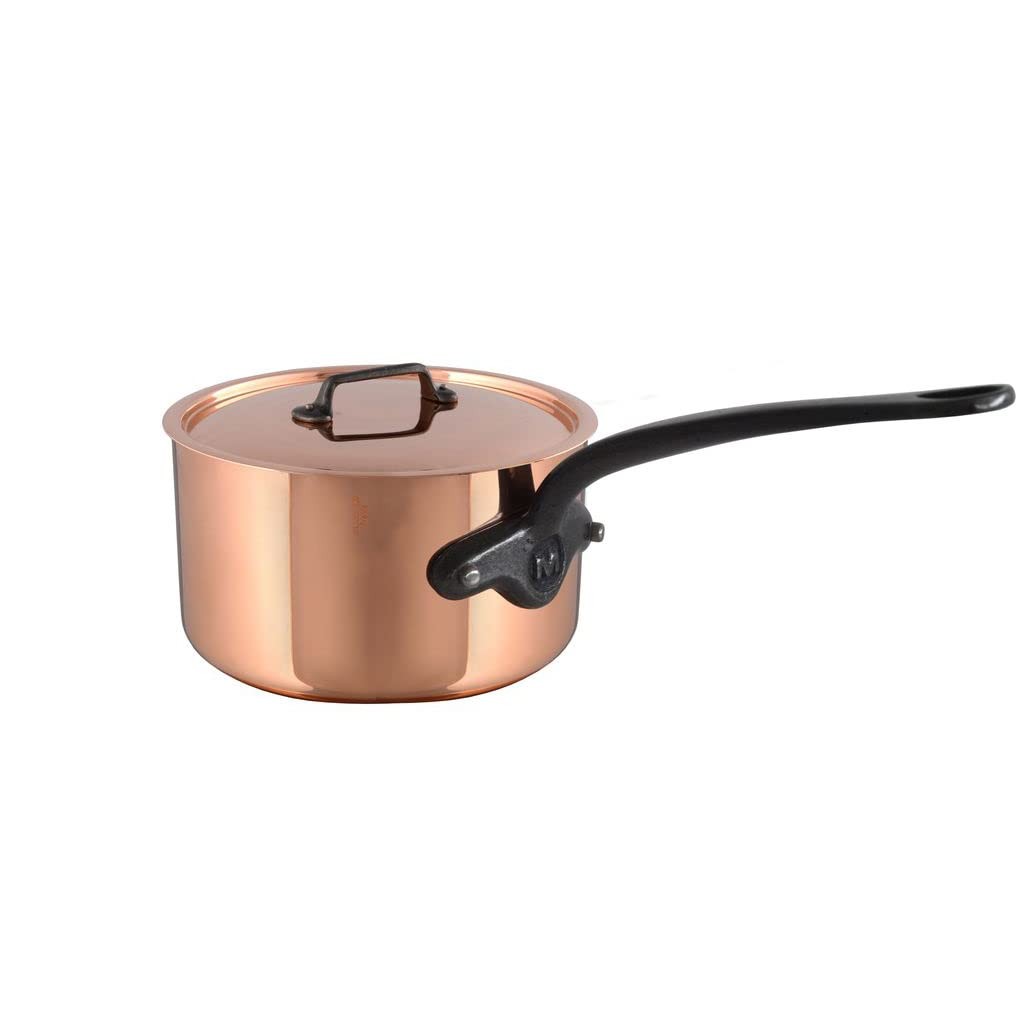
Mauviel M'Heritage Copper Saucepan 1.9-Quart
Copper reacts to heat changes within seconds , unmatched for sauce work
Buy on Amazon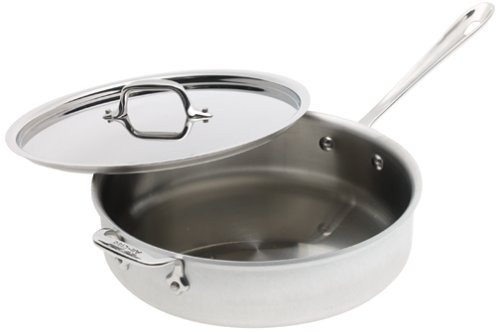
All-Clad D3 Stainless 12-Inch Fry Pan
Tri-ply construction bonds stainless and aluminum for perfectly even heating
Buy on Amazon| Product | Price Range | Top Strength | Key Weakness | Buy |
|---|---|---|---|---|
| Mauviel M'Heritage Copper Skillet 9.5" best overall | $$$ | Copper body provides the fastest, most responsive heat adjustment of any material | Most expensive cookware material , significant investment per piece | Buy on Amazon |
| Mauviel M'Heritage Copper Saucepan 1.9-Quart also consider | $$$ | Copper reacts to heat changes within seconds , unmatched for sauce work | Requires polishing to maintain the copper finish | Buy on Amazon |
| All-Clad D3 Stainless 12-Inch Fry Pan also consider | $$$ | Tri-ply construction bonds stainless and aluminum for perfectly even heating | Stainless surface requires technique to prevent sticking , not beginner-friendly | Buy on Amazon |
| Tramontina 12-Inch Tri-Ply Clad Stainless Fry Pan also consider | $$ | Genuine tri-ply construction , same bonding method as All-Clad at a fraction of the price | Slightly thinner gauge than All-Clad , marginally less heat retention | Buy on Amazon |
Copper cookware sits in an unusual position in the home kitchen: universally admired, rarely understood, and frequently bought for the wrong reasons. Some people want the look. Some want the professional credibility. A few actually want what copper does, which is respond to heat changes faster than any other material you can cook on. If you’re in that last group, this guide is for you.
Before getting into specific products, it’s worth being clear about where copper fits in the broader landscape. If you’re building out a full batterie of stainless clad pans, the Stainless & Clad hub is a better starting point. Copper is not a replacement for a solid tri-ply collection. It’s a specialized tool, and the cases where it outperforms everything else are specific.
What to Look For in Copper Kitchen Cookware
Interior Lining
This is the most consequential spec decision in copper cookware. Traditional copper is lined with tin, which is soft, has a low melting point, and requires re-tinning over time. Modern copper cookware from serious manufacturers uses stainless steel lining instead. Stainless is non-reactive, dishwasher-safe (the copper exterior is not, but the interior is), and requires no special maintenance. If you’re buying copper for daily use, stainless-lined is the practical choice.
Gauge (Thickness)
Copper cookware is typically sold in 1.5mm, 2mm, or 2.5mm gauges. The difference in performance is real. Thinner copper heats faster but shows hot spots more easily. Professional-grade copper starts at 2mm. Mauviel’s M’Heritage line runs 2.5mm on most pieces, which accounts for both the weight and the price.
Handle Material and Attachment
Cast iron handles are traditional and oven-safe but get hot on the stovetop. Stainless steel handles stay cooler and are more practical for most home cooks. Both are fine. What matters is how the handle attaches: riveted handles are more durable than welded ones over time, and on pieces you expect to use for decades, that distinction matters.
Induction Compatibility
Standard copper does not work on induction cooktops. If your cooktop is induction, copper is not your material unless the manufacturer has added a ferromagnetic base layer. Most traditional copper lines, including Mauviel’s M’Heritage series, are not induction compatible. Check your cooktop before you buy.
Top Picks
Mauviel M’Heritage Copper Skillet 9.5”
This is the benchmark. Handcrafted in Normandy and running 2.5mm of copper with a stainless steel lining, the M’Heritage skillet does what copper cookware is supposed to do: responds to heat in seconds. If you reduce flame while finishing a sauce or searing a piece of fish, this pan reflects that change almost immediately. My All-Clad D3 takes measurably longer to correct. (I timed this. The difference is not subtle.)
The stainless interior is practical and non-reactive. Eggs, acidic sauces, tomato-based anything: none of it will react with the pan. The exterior is another matter. Copper oxidizes. If you want it to stay bright, you polish it. If you don’t care about appearance, you don’t. The cooking performance is identical either way, which I realize is a specific complaint to have to address, but it’s the question I hear most often.
Pricing is premium, and not modestly so. This is one of the most expensive skillets in its size class. If you’re buying one piece of copper to understand what the material actually does, this is it. If you’re buying for a gift, it will not be forgotten.
Mauviel M’Heritage Copper Saucepan 1.9-Quart
If there’s a single piece of copper cookware with a clearly defensible use case, it’s a small saucepan. Hollandaise, caramel, chocolate tempering, beurre blanc: all of these require heat adjustments that happen in seconds, not minutes. A stainless or aluminum saucepan holds heat after you pull back the flame. This one doesn’t.
Professional pastry kitchens use copper saucepans precisely because that thermal responsiveness is not optional for sugar work. Caramel, specifically, goes from correct to burned in a narrow window. The faster your pan responds to heat reduction, the more control you have in that window.
The 1.9-quart capacity is appropriate for sauce-scale work. This is not a pot for pasta water. Stainless lining throughout means you’re not worried about acidity from citrus or wine. Same polishing requirement on the exterior as the skillet. Same premium price tier.
For occasional home cooks, this is a hard sell at this price point. For anyone who makes hollandaise or caramel more than once a month, it pays for itself in consistency.
All-Clad D3 Stainless 12-Inch Fry Pan
The All-Clad D3 is not copper cookware. It belongs in this comparison because it’s the most common alternative buyers are choosing between when they’re considering a premium skillet, and the comparison is instructive. I cooked with the D3 for eight years before adding copper to the rotation, and it remains one of the better pans I own.
Tri-ply construction (stainless, aluminum core, stainless) gives it even heat distribution with no hot spots across a 12-inch surface. Oven-safe to 600°F, induction compatible, made in the USA, lifetime warranty. The handle geometry is well-thought-out for a pan this size.
Where it differs from copper: it holds heat. That’s an advantage for searing, where thermal mass keeps the surface temperature from dropping when cold protein hits it. It’s a disadvantage for any technique requiring fast correction. Different tools, honestly, rather than one being superior to the other.
Pricing is premium, though still below the Mauviel pieces for most configurations. The D3 is a reasonable candidate for anyone considering an all-purpose daily pan who isn’t specifically cooking sauces that require constant temperature management.
Tramontina 12-Inch Tri-Ply Clad Stainless Fry Pan
The Tramontina tri-ply is the honest value answer to the All-Clad D3, and I don’t say that dismissively. Same construction method, same bonding process, same induction compatibility. Oven-safe to 500°F rather than 600°F, which is a real difference only if you’re finishing in a very hot oven. Made in Brazil, not the USA. Handle ergonomics are competent but not as refined as the D3.
Pricing is mid-range, roughly half the All-Clad in most configurations. If you want tri-ply performance without the D3’s price, this is the logical pick. Professional cooks who’ve tested both frequently land on this one for kitchen use where aesthetics don’t factor in.
For more on the category these two occupy, the stainless and clad cookware guide covers the full competitive field in that price range.
How to Choose
Start with your cooktop
Induction cooktops eliminate copper from consideration unless you want to use a copper pan on a separate gas burner. Confirm compatibility before anything else.
Identify the actual use case
Copper wins for sauces, caramels, and any technique requiring near-instant heat adjustment. It does not win for searing, high-heat roasting, or applications where thermal mass is an advantage. If your primary need is an everyday skillet for varied cooking, tri-ply stainless is more versatile.
Consider a single copper saucepan before a full set
Copper cookware sets are expensive and contain pieces where the copper advantage is less meaningful. A single saucepan in the 1.5-2 quart range gives you the full copper experience where it matters most, without committing to an all-copper batterie. This is my advice: buy one piece, cook with it for six months, then decide if you want more.
Weigh maintenance honestly
The exterior polishing question is real. Some people enjoy it. Most people don’t do it after the first year and end up with a patinated pan that performs identically but looks lived-in. If the appearance matters to you, factor polishing into the ownership plan. If you want something related but with lower maintenance expectations, the hammered stainless steel cookware category offers some of the aesthetic without the upkeep requirement.
Price per piece versus price per set
At premium pricing, copper cookware is bought piece by piece for most home cooks. Compare the Mauviel saucepan at its current price to what you’d spend on a comparable copper piece from a less established manufacturer. Check the gauge, check the lining type, and check the handle attachment method before assuming a lower price means equivalent construction. For a different brand comparison in the entry-level copper space, the Baumalu copper cookware review covers a more accessible price tier with an honest assessment of the trade-offs.
Check current pricing on Amazon for all products in this guide, as prices shift more than I’d prefer.
Frequently Asked Questions
Is copper cookware safe to cook with?
Yes, with one qualification. Copper is safe when the cooking surface is lined, either with stainless steel or tin. Bare copper reacts with acidic foods and can leach into food at levels that matter. All four products in this guide have lined interiors. Unlined copper is appropriate only for sugar work (candy bowls, egg-white bowls) where specific chemistry is the point.
Does copper cookware work on induction cooktops?
Standard copper does not work on induction. Copper is not ferromagnetic, so it won’t trigger an induction burner. The Mauviel M’Heritage line, specifically, is not induction compatible. If you have an induction cooktop, the All-Clad D3 and Tramontina tri-ply are both compatible and are the appropriate picks here.
How do you clean and maintain copper cookware?
The stainless steel interior cleans like any stainless pan: hot water, dish soap, a non-abrasive scrubber. Do not put the pan in the dishwasher. The copper exterior is where maintenance comes in. To restore shine, commercial copper polish (Barkeepers Friend works) or a lemon-and-salt paste removes oxidation. How often you do this is entirely a personal choice. Patinated copper is not damaged copper.
How does copper compare to stainless clad cookware for everyday use?
Copper wins on thermal responsiveness. Tri-ply stainless clad wins on versatility, durability, induction compatibility, and lower maintenance. For most everyday cooking, a quality tri-ply pan handles the range better. Copper earns its place in sauce work, pastry applications, and anywhere you need to change temperature quickly and accurately.
What size copper pan should a home cook buy first?
A saucepan in the 1.5 to 2 quart range is the most defensible first copper purchase. The thermal responsiveness argument is strongest for sauce work, which happens in small volumes. A skillet is useful, but you’ll notice the advantage less in a skillet than in a saucepan where you’re monitoring a reduction or a caramel. Start small, use it for the right techniques, and you’ll understand quickly whether the material is worth expanding into.
Frequently Asked Questions
What is copper cookware actually best at?
Copper excels at tasks that require fast, precise heat adjustments: making sauces, tempering chocolate, cooking delicate fish, and reducing liquids. Its thermal conductivity is higher than stainless steel or cast iron, so it responds to burner changes almost instantly.
Can I use copper cookware on an induction cooktop?
Standard copper cookware is not induction-compatible because copper is not magnetic. Some manufacturers add a ferromagnetic base layer for induction use — verify compatibility with the specific product before purchasing if you have an induction range.
Does copper cookware leach metal into food?
Properly lined copper cookware (stainless steel or tin interior) does not leach copper into food. The lining acts as a complete barrier between the copper and your food. Avoid cooking in unlined or damaged copper, particularly with acidic ingredients like tomatoes or citrus.
How much does quality copper kitchen cookware cost?
Entry-level copper pieces start around $100–$150 for a small saucepan; professional-grade pieces from Mauviel or de Buyer typically run $200–$400 per pan. Full copper sets can exceed $1,000. Tri-ply stainless delivers similar everyday performance at significantly lower cost.
How do you keep copper cookware looking its best?
Hand-wash copper after each use, dry immediately, and polish the exterior periodically with a copper cleaner to remove oxidation and tarnish. Avoid abrasive scrubbers on the interior lining, and never run copper cookware through a dishwasher.
Where to Buy
Mauviel M'Heritage Copper Skillet 9.5"See Mauviel M'Heritage Copper Skillet 9.5" on Amazon