Dough Hook for KitchenAid: Which Attachment Fits Your Mixer

Affiliate disclosure: Some links on this page are affiliate links. If you buy through them we earn a small commission at no extra cost to you. Recommendations are research-driven; we don't claim personal use of every product reviewed. Product prices and availability are accurate as of the date published and are subject to change. Always check Amazon for current pricing before purchasing. Learn more.

Quick Picks
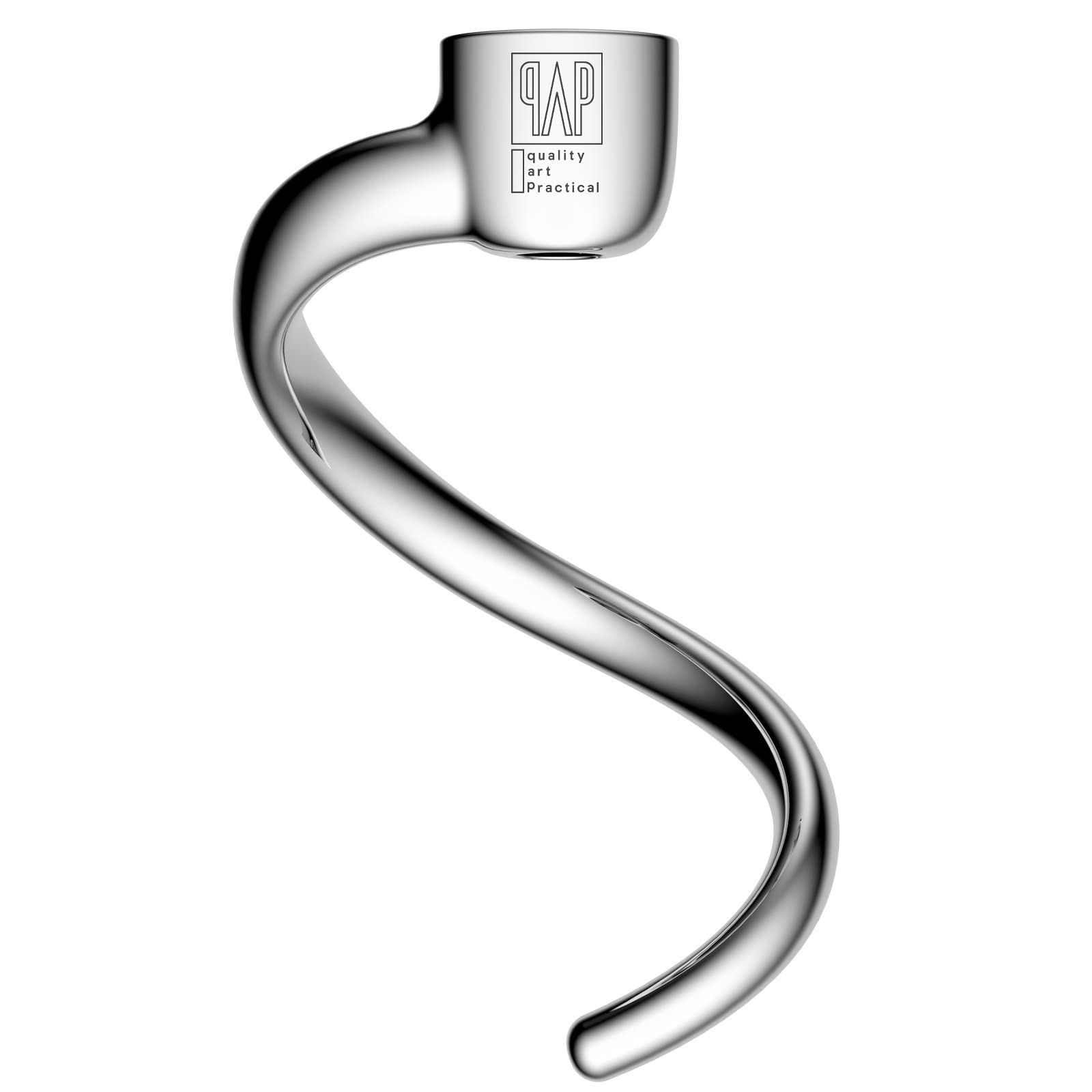
KitchenAid Dough Hook (Spiral)
Spiral design is more efficient at developing gluten than the old C-hook
Buy on Amazon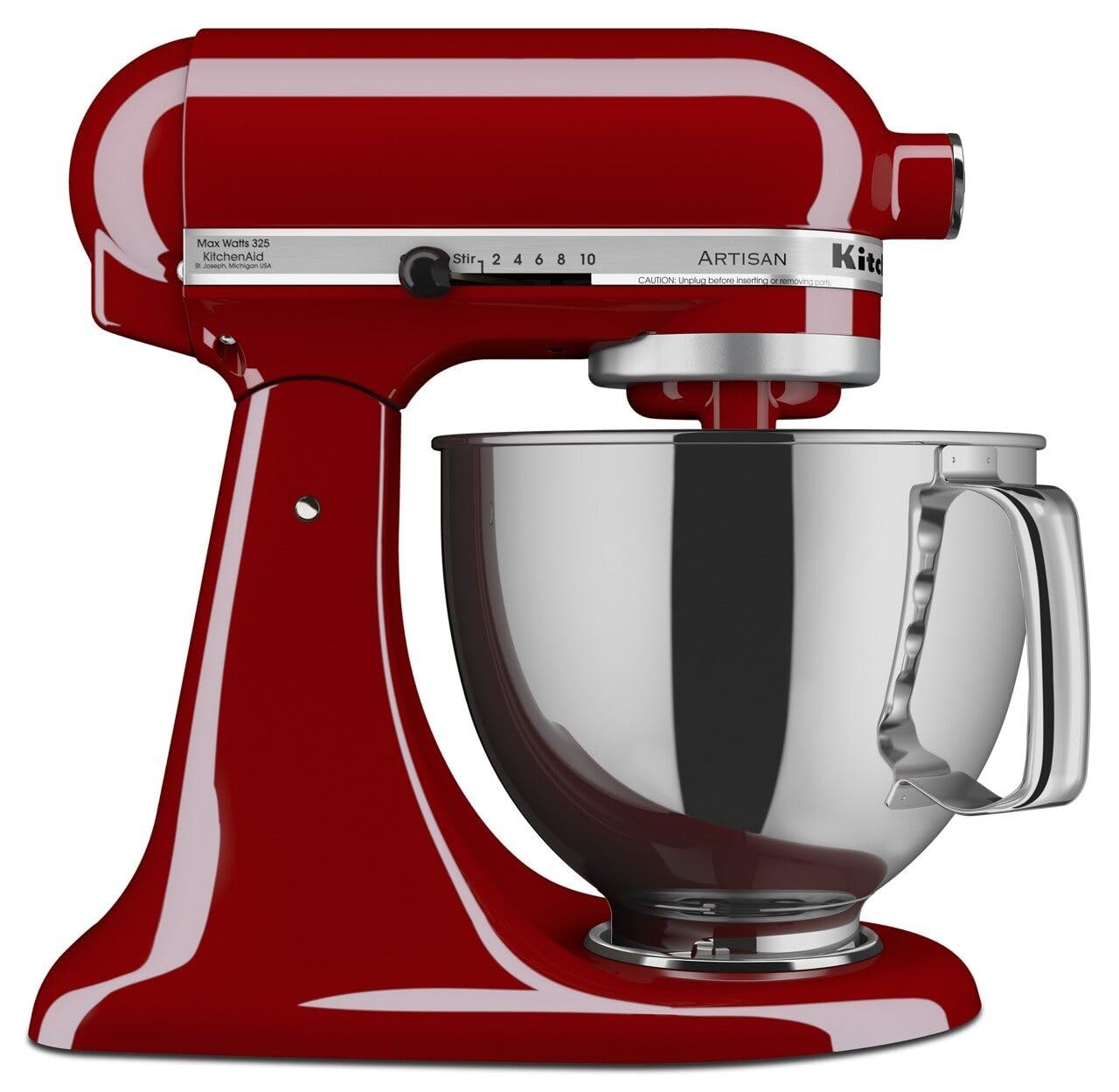
KitchenAid Artisan 5-Quart Stand Mixer (KSM150PS)
10 speeds handle everything from meringue to bread dough
Buy on Amazon
KitchenAid Professional 600 6-Quart Stand Mixer
6-quart bowl handles double batches and heavy bread doughs with ease
Buy on Amazon| Product | Price Range | Top Strength | Key Weakness | Buy |
|---|---|---|---|---|
| KitchenAid Dough Hook (Spiral) best overall | $ | Spiral design is more efficient at developing gluten than the old C-hook | Not effective below 2 cups of flour , too little dough for the hook to grab | Buy on Amazon |
| KitchenAid Artisan 5-Quart Stand Mixer (KSM150PS) also consider | $$$ | 10 speeds handle everything from meringue to bread dough | Expensive , over $400 at full retail | Buy on Amazon |
| KitchenAid Professional 600 6-Quart Stand Mixer also consider | $$$ | 6-quart bowl handles double batches and heavy bread doughs with ease | Significantly heavier than the Artisan , harder to store | Buy on Amazon |
| KitchenAid 5-Quart Wire Whip also consider | $ | Thin wires incorporate maximum air , ideal for meringue, whipped cream, and mousse | Single-purpose , not useful for mixing dense doughs or batters | Buy on Amazon |
| Bosch Universal Plus 800W Stand Mixer also consider | $$ | 800W motor , more powerful than KitchenAid Artisan for sustained dough kneading | Attachment ecosystem much smaller than KitchenAid | Buy on Amazon |
If you bake bread with any regularity, you’ve probably already wrestled with the question of which dough hook fits your KitchenAid, or whether your current mixer is actually up to the job. The answer matters more than it might seem. A mismatched attachment, or a motor that struggles under a stiff bagel dough, produces bread that’s either poorly developed or frustrating to make. This guide covers the KitchenAid spiral dough hook, the two main KitchenAid stand mixer options worth considering, a comparison attachment, and one strong challenger from Bosch. No padding, no rank-order filler. Just what to buy and why.
For a broader look at how these products sit within the stand mixer category, the Stand Mixers hub is a good starting point before you commit to anything.
What to Look For
Spiral vs. C-Hook
If you own an older KitchenAid and you’re still using the original C-hook that came with it, that’s the first thing worth addressing. The C-hook drags dough around the bowl in a way that’s adequate for soft, enriched doughs but genuinely poor at developing gluten in lean, high-hydration doughs. The spiral design works differently. It holds the dough more consistently against the bowl wall and works it with more contact per rotation. Gluten development is faster and more even.
The practical difference shows up clearly in a standard sandwich loaf. With a C-hook, you’re often running the mixer for 12 to 15 minutes and still finishing by hand. With a spiral hook, 8 to 10 minutes on speed 2 usually gets you to windowpane. (I timed this, twice, with the same recipe.) The upgrade is worth the cost, which puts it in the budget category.
One real limitation. The spiral hook doesn’t engage properly with small dough quantities. Below about two cups of flour, the hook just spins past without grabbing. For single small loaves or dinner roll batches, hand kneading is still the better option.
Motor Power and Capacity
A stand mixer’s motor rating matters most at the extremes. Soft batters and cake mixes put almost no stress on any motor in this category. Stiff bread doughs, especially whole wheat or rye at lower hydration, absolutely do. The KitchenAid Artisan’s motor will handle most home bread baking, but if you’re doing back-to-back batches or regularly making dense doughs, you’ll notice it working harder than it should have to.
The Bosch Universal Plus runs an 800W motor, which outperforms the Artisan on sustained heavy loads. Bosch’s bowl-center drive design also distributes force differently, which reduces strain during long kneading sessions.
Bowl Size and Design
Five quarts handles one standard loaf comfortably, sometimes two. Double batches of heavier dough push the 5-quart bowl to its limits. The 6-quart models give you real margin. The other variable is bowl-lift versus tilt-head. Tilt-head is more intuitive for adding ingredients mid-mix. Bowl-lift is mechanically more stable when the motor is under load, which matters for stiff doughs. Neither is objectively better for casual use. For serious bread baking, the bowl-lift has an edge.
Attachment Compatibility
KitchenAid’s hub attachment system is a genuine differentiator. Pasta rollers, meat grinders, ice cream bowls, food grinder attachments. If you’re already thinking about that ecosystem, KitchenAid is the platform. If you want a mixer strictly for bread and nothing else, the Bosch competes seriously on value.
Top Picks
KitchenAid Spiral Dough Hook
The KitchenAid Dough Hook (Spiral) fits all KitchenAid 5- and 6-quart tilt-head and bowl-lift mixers. Stainless steel, dishwasher safe, and in the budget price range. If you’re buying this to replace a C-hook, the improvement in gluten development is real and noticeable within the first use.
The over-development risk is worth mentioning plainly. Running this hook at speed 4 or higher for extended time will tighten the gluten past where you want it. Speed 2, a timer, and the windowpane test are better guides than a recipe’s stated kneading time.
This is the first thing to buy if you’re working with an existing KitchenAid. The mixer is secondary.
KitchenAid Artisan 5-Quart Stand Mixer (KSM150PS)
The KitchenAid Artisan 5-Quart Stand Mixer (KSM150PS) is the default recommendation for most home bakers, and that reputation is mostly earned. Planetary mixing action means the attachment traces a path around the full bowl rather than spinning in one spot. No unmixed pockets, no flour left at the wall. Ten speeds cover everything from whipped cream at speed 8 to bread dough at speed 2.
It sits at the premium end of the price range. Worth it if you’ll use the attachment hub. If you’re buying a KitchenAid to make bread and pasta and grind meat, the attachment ecosystem justifies the price. If you’re buying it to make bread only, the Bosch at mid-range pricing is a harder case to dismiss.
The 5-quart bowl is the real limitation for high-volume baking. One standard loaf fits easily. A double batch of whole wheat sandwich bread will have you watching the bowl nervously. If you regularly bake for a crowd or do batch freezer cooking, size up.
KitchenAid Professional 600 6-Quart Stand Mixer
The KitchenAid Professional 600 6-Quart Stand Mixer is the right answer for a specific situation. If you’re making double batches of bread dough regularly, or working with very stiff doughs, the extra quart matters and the more powerful motor handles sustained loads better than the Artisan.
The bowl-lift design is more stable under load than tilt-head, which is the correct tradeoff for heavy dough work. The cost is a significantly heavier machine that doesn’t store as easily. One practical note: engaging the bowl-lift with both hands while holding a bowl scraper or dough in the other becomes a minor coordination challenge. It’s a two-handed operation every time.
This is not a machine for someone whose heaviest weekly use is a batch of cookie dough and some whipped cream. That person is paying for capacity they won’t need. If your baking is serious and frequent, the Professional 600 is the better long-term tool.
For bakers whose needs extend further, the KitchenAid 8 Quart Commercial Stand Mixer handles production-scale volumes that neither the Artisan nor the Professional 600 can approach.
KitchenAid 5-Quart Wire Whip
The KitchenAid 5-Quart Wire Whip belongs in this article because the dough hook question almost always comes attached to a broader question about which attachments you actually need. The wire whip is the correct tool for egg whites, whipped cream, and mousse, where maximum air incorporation is the goal. The flat beater handles cake batters, cookie doughs, and most everything in between. The dough hook handles bread.
These three attachments cover the full range of home baking. If you’re missing the whip, it’s a budget-category addition that ships as a replacement for KitchenAid mixers where the original has worn. For a deeper look at whisk attachment options and how they compare across configurations, the whisk attachment for KitchenAid guide covers the relevant variables.
The one caution with the wire whip is speed management. Cream and egg whites over-whip quickly at high speeds. Speed 6 to 8 and attention to texture will serve better than running it on 10 and walking away.
Bosch Universal Plus 800W Stand Mixer
The Bosch Universal Plus 800W Stand Mixer is the honest alternative for bakers who prioritize bread over everything else. At mid-range pricing for its capacity, it undercuts the KitchenAid Professional 600 significantly while matching or exceeding it on motor power for dough work. The 6.5-quart bowl is the largest in this comparison, and the machine weighs less than the KitchenAid Professional despite the larger bowl.
The tradeoff is the attachment ecosystem, which is thin compared to KitchenAid’s. If pasta attachments, ice cream bowls, or a meat grinder are part of your plan, KitchenAid is the platform. If your mixer is for bread and the occasional cake batter, the Bosch is a better value and a more capable bread machine.
The bowl attachment mechanism takes more learning than KitchenAid’s. It’s not complicated, but it requires a specific motion that doesn’t feel intuitive the first few times (which I realize sounds like faint criticism, but it genuinely slows you down until it becomes habit).
How to Choose
Start with the hook, not the mixer. If you have a KitchenAid and a C-hook, buy the spiral attachment before spending anything else. It will improve your bread more reliably than a mixer upgrade will.
If you’re buying a new mixer and bread is the primary use, the Bosch Universal Plus delivers more power and capacity per dollar than either KitchenAid option. The KitchenAid Artisan is the right choice if the attachment hub is genuinely part of your plan, not just a hypothetical nice-to-have. The Professional 600 makes sense for frequent high-volume bakers who need the larger bowl and more stable bowl-lift design.
For anyone thinking about the upper end of the KitchenAid line, it’s worth knowing where the Professional 600 sits relative to commercial options. The KitchenAid Commercial Stand Mixer 8 Quart is a useful reference point if your baking volume has started to push past what home-grade machines handle comfortably.
A copper bowl for KitchenAid is worth considering separately if you’re doing serious egg white work, since copper’s interaction with albumin produces more stable meringue than stainless. It won’t change how your dough hook performs, but it’s relevant to the broader attachment conversation.
Check current pricing on Amazon before making a final decision. Price bands shift seasonally, and the gap between the Artisan and the Professional 600 sometimes narrows enough to change the calculus.
Frequently Asked Questions
What is the difference between a spiral dough hook and a C-hook for KitchenAid?
The C-hook lifts and folds dough as it rotates around the bowl, which works for soft and enriched doughs but struggles to develop gluten efficiently in stiffer, leaner bread doughs. The spiral hook maintains more consistent contact with the dough mass against the bowl wall, producing faster and more even gluten development. Most bakers using the spiral hook will reach the same dough development stage in noticeably less time than with a C-hook.
Will the KitchenAid spiral dough hook fit my older tilt-head mixer?
The spiral dough hook is designed to fit all KitchenAid 5- and 6-quart tilt-head and bowl-lift models, including older Artisan units. Check your mixer’s model number against KitchenAid’s compatibility list before purchasing, since a small number of older or less common models use a different bowl collar size. The product listing on Amazon includes model compatibility details.
Should I buy the KitchenAid Artisan or the Professional 600 for bread baking?
If you bake one or two standard loaves at a time on a typical week, the Artisan handles the work without issue. If you regularly make double batches, work with very stiff doughs like whole wheat or rye, or bake frequently enough that sustained motor load is a concern, the Professional 600’s larger bowl and more powerful motor are worth the price difference. Buying the Professional 600 for occasional baking is paying for capacity you won’t use.
Can I use the dough hook for anything other than bread dough?
The dough hook works well for any thick, cohesive mixture that benefits from kneading rather than just mixing. Pizza dough, pasta dough, and pretzel dough are all appropriate uses. It’s less effective for batters, which need the flat beater, or for anything requiring air incorporation, which needs the wire whip. Running the dough hook with a batter-consistency mixture at high speed will just splash the bowl.
Is the Bosch Universal Plus compatible with KitchenAid attachments?
No. Bosch and KitchenAid use entirely different attachment systems. Bosch has its own attachment lineup, but it’s considerably smaller than KitchenAid’s. If attachment versatility matters to your decision, KitchenAid is the platform. If you’re buying strictly for bread baking, the Bosch’s motor and bowl size make it a strong value at mid-range pricing without needing to access a broader accessory ecosystem.
Frequently Asked Questions
What KitchenAid dough hook fits my specific mixer model?
The KitchenAid spiral dough hook fits all 5-quart and 6-quart tilt-head and bowl-lift KitchenAid stand mixers. If your mixer is a 4.5-quart or smaller, you need the hook sized for that bowl — check your model number against KitchenAid's compatibility chart before ordering.
Is the KitchenAid spiral dough hook better than the old C-hook it replaced?
Yes, meaningfully so. The spiral hook contacts the dough more consistently and develops gluten faster because it engages from multiple points rather than dragging the dough in one direction. If your mixer came with a C-hook, the spiral is a worthwhile upgrade for anyone who bakes bread regularly.
Should I use a KitchenAid Artisan or the Professional 600 for bread baking?
The Artisan handles most home bread baking capably, but the Professional 600's 6-quart bowl and bowl-lift design make it more stable under heavy loads. If you regularly make stiff doughs — bagels, whole wheat, or double batches — the Professional is the better long-term investment.
How do I know if my dough hook is working correctly and the dough is developing properly?
After 8 to 10 minutes on speed 2, the dough should pull away cleanly from the bowl sides, feel smooth rather than sticky, and pass the windowpane test — a small piece stretched thin enough to see light through without tearing. If the dough is still tearing, keep going; if the hook is spinning without engaging, you likely have too little dough in the bowl.
Can I use a Bosch dough hook on a KitchenAid mixer, or do they require separate machines?
KitchenAid and Bosch attachments are not interchangeable — each brand uses a proprietary hub connection. If you want the higher-powered kneading the Bosch Universal Plus offers, you need to buy the Bosch machine. However, the KitchenAid spiral hook paired with the Professional 600 is competitive for most home bread baking without needing a second machine.
Where to Buy
KitchenAid Dough Hook (Spiral)See KitchenAid Dough Hook (Spiral) on Amazon