Large Immersion Blender Buying Guide

Affiliate disclosure: Some links on this page are affiliate links. If you buy through them we earn a small commission at no extra cost to you. Recommendations are research-driven; we don't claim personal use of every product reviewed. Product prices and availability are accurate as of the date published and are subject to change. Always check Amazon for current pricing before purchasing. Learn more.
Quick Picks
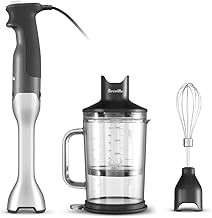
Breville Control Grip Immersion Blender
Bell-shaped guard prevents splashing , practical for soups and sauces
Buy on Amazon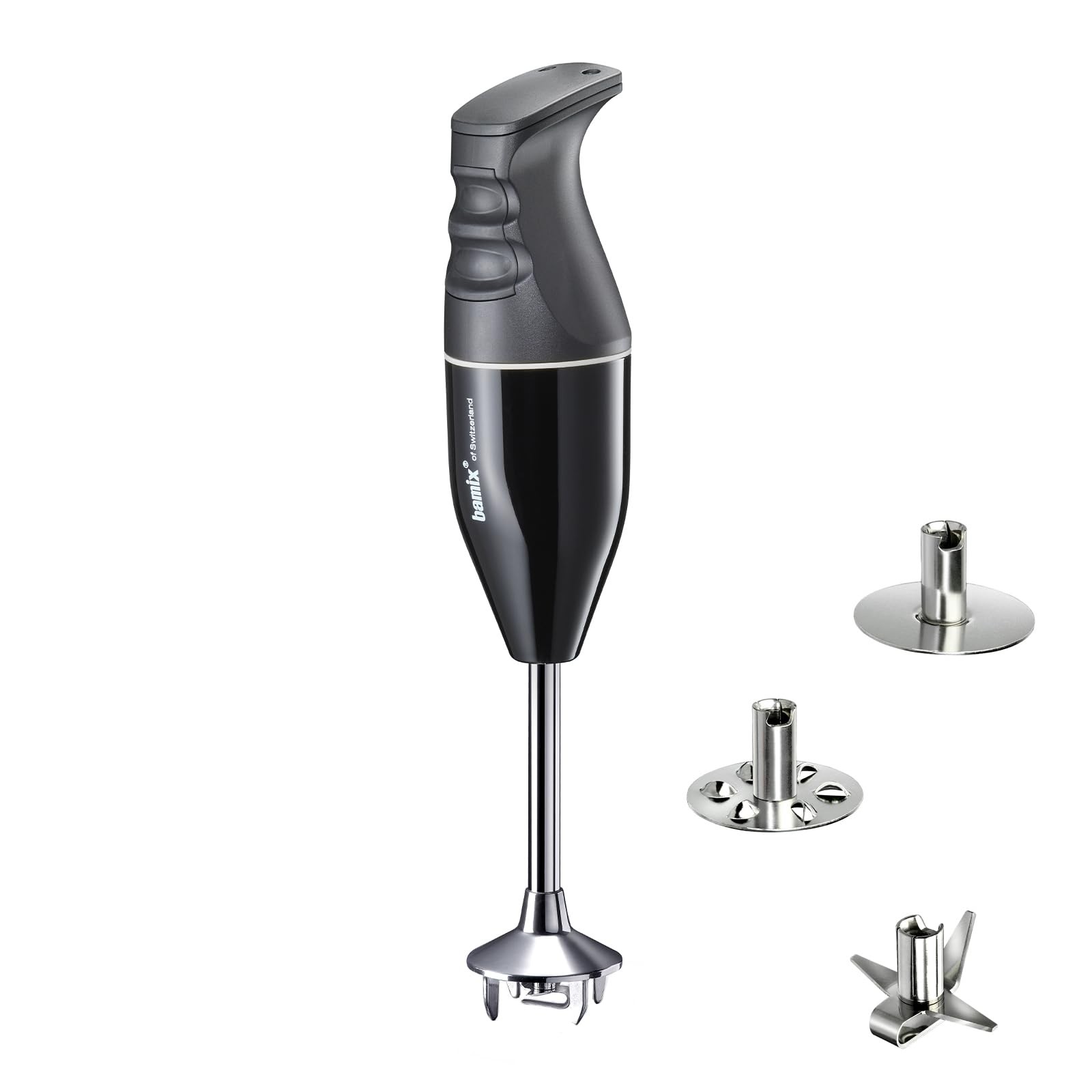
Bamix SwissLine Immersion Blender
Swiss-made motor runs at 12,000 RPM , significantly faster than most immersion blenders
Buy on Amazon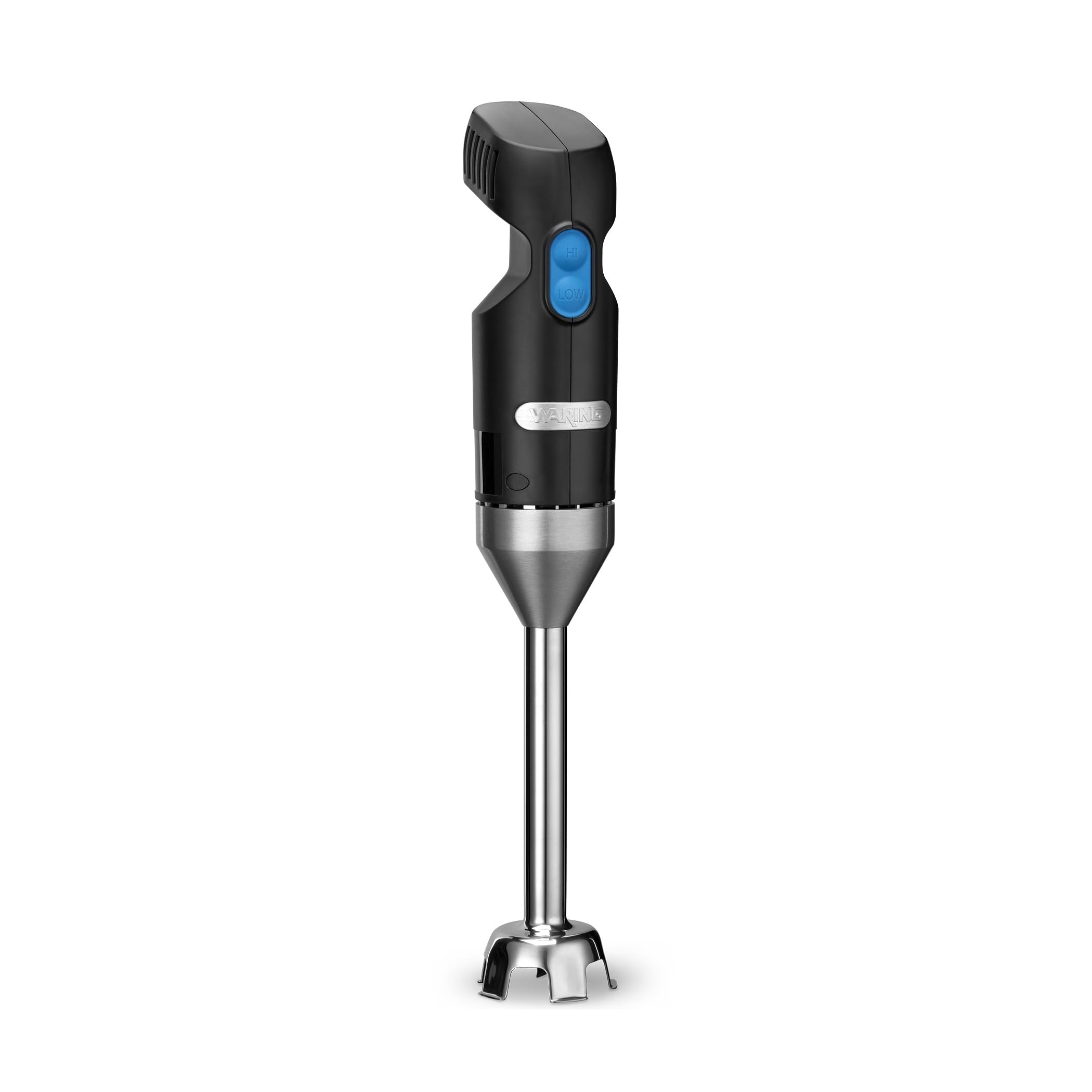
Waring Commercial WSB33X Immersion Blender
Commercial-grade motor designed for continuous use in restaurant environments
Buy on Amazon| Product | Price Range | Top Strength | Key Weakness | Buy |
|---|---|---|---|---|
| Breville Control Grip Immersion Blender best overall | $$ | Bell-shaped guard prevents splashing , practical for soups and sauces | More expensive than basic immersion blenders | Buy on Amazon |
| Bamix SwissLine Immersion Blender also consider | $$$ | Swiss-made motor runs at 12,000 RPM , significantly faster than most immersion blenders | Very expensive for an immersion blender | Buy on Amazon |
| Waring Commercial WSB33X Immersion Blender also consider | $$$ | Commercial-grade motor designed for continuous use in restaurant environments | Heavy and large , designed for commercial use, not home kitchen ergonomics | Buy on Amazon |
Most immersion blenders are sized for making a smoothie or blending a cup of soup. A large immersion blender is built for something different. Bigger pots, longer sessions, tougher jobs like emulsifying a gallon of aioli or puréeing a stock pot of butternut squash for a dinner party. If you’ve ever held a lightweight consumer blender against the side of a heavy pot for three minutes and felt your forearm start to protest, you already understand what separates a real workhorse from a kitchen novelty.
This is one of those small appliance categories where cheap looks fine on paper until you use it. I’ve covered a lot of ground in the Small Appliances category, and immersion blenders produce more buyer regret than almost anything else because the failure mode is invisible at purchase: underpowered motors, shafts that stain or warp, controls that vibrate loose. The three blenders I’m recommending here are not the cheapest options. They’re the ones I’d actually buy.
What to Look For
Motor Power and RPM
Consumer immersion blenders typically run between 200 and 400 watts. That’s adequate for soft foods and thin liquids, but it’s not what you want for a large-format job where the blender has to work continuously for two or three minutes against resistance.
The number that matters more than wattage is RPM. A motor spinning at 12,000 RPM processes food differently than one at 8,000, even at similar wattage. For large-volume work, prioritize RPM where the manufacturer actually publishes it.
Shaft Length and Material
A standard immersion blender shaft runs about seven to eight inches. For a large stockpot, that’s often not enough. Look for shafts in the ten to twelve inch range if you’re regularly working with tall pots. Material matters too. Stainless steel is the standard for anything you’re putting into hot liquid. Plastic shafts can technically handle heat, but they pick up staining and odor from strongly flavored foods, and they don’t clean as thoroughly.
Ergonomics Over Long Sessions
Grip design and weight are easy to dismiss until you’re holding the blender for four minutes straight. The difference between 1.6 lbs and 2.8 lbs is not trivial when the weight is all cantilevered out in front of you. The bell guard shape at the base of the shaft also matters for splash control, particularly with hot liquids in a full pot.
Detachable Shaft
This is non-negotiable in my view, though I appreciate that some buyers are less particular about cleaning. A fixed shaft means the entire motor housing has to stay dry while you wash the working end. A detachable shaft goes in the dishwasher or the sink. For a large blender that’s going into hot, fatty stocks and purées, the detachable design is the only practical option.
Top Picks
Breville Control Grip Immersion Blender
The Breville Control Grip is the mid-range recommendation here, and it earns that position by solving the most annoying problem with immersion blenders: splash. The bell-shaped guard at the base of the shaft creates a seal against the bottom of your pot, which means hot soup stays in the pot rather than on your stovetop and your shirt. If you’ve dealt with the splatter problem before, you know what this is worth.
Fifteen speed settings plus a turbo boost function gives you actual control over texture. I don’t use all fifteen positions, but having distinct slow, medium, and fast settings with reliable differences between them is more useful than a single-speed blender with a pulse button.
The detachable shaft is dishwasher safe. The motor housing wipes down easily. These are basic requirements that cheaper units often fail.
Two honest complaints. It’s heavier than the Bamix (see below), and over a long blending session, that shows. Second, it’s priced in the mid-range, which means it costs noticeably more than a basic KitchenAid immersion blender. The KitchenAid is fine for light work. If you’re comparing ergonomics and build quality, the Breville is better and the price difference is justified. If you’re blending once a week for twenty seconds, it probably isn’t.
Check current price on Amazon.
Best for: Home cooks who want a high-quality everyday blender with splash protection and real speed control.
Bamix SwissLine Immersion Blender
The Bamix SwissLine is the professional recommendation, and the differentiator is the motor. Swiss-made, running at 12,000 RPM, it is significantly faster than the Breville and most other consumer blenders. The practical effect is that it handles things the other blenders struggle with: whipping cream directly in a container, emulsifying a large batch of vinaigrette, puréeing hot liquid in a pot with a fine, consistent texture rather than a chunky approximation.
At 1.6 lbs, it is also the most comfortable immersion blender for sustained use. This sounds minor until you’re four minutes into a large pot of soup and your wrist isn’t complaining. (I timed a butternut squash purée recently with both the Bamix and the Breville, and the Bamix finished cleaner and faster, though I appreciate that’s a specific comparison under specific conditions.)
The tradeoffs are real. It’s priced in the premium category, significantly more than the Breville. The base model doesn’t include a food processor attachment or whisk, so if attachment versatility matters to you, look at the full Bamix set rather than the SwissLine alone. The shaft length is standard, so for very large, tall stockpots you may need to angle the blender or work in batches.
For context: I wrote separately about the Robot Coupe immersion blender, which is the other name that comes up in professional kitchen conversations. Robot Coupe is heavier and built for pure commercial volume. The Bamix is the professional-grade choice that still feels like something a home cook can actually use comfortably.
Check current price on Amazon.
Best for: Serious home cooks or anyone who blends frequently, at volume, and wants a motor that will outlast the kitchen around it.
Waring Commercial WSB33X Immersion Blender
The Waring WSB33X is the unambiguous answer to the question: what does a restaurant kitchen use? It’s NSF certified, built for continuous commercial use, and designed as if ergonomics were a secondary consideration, because in a professional kitchen they largely are. The motor doesn’t flinch at hot liquids, thick purées, or extended run times.
The stainless steel shaft is the right material for anything going into hot food. The commercial-grade motor is in a different category from consumer blenders on longevity and raw power.
The downsides are not subtle. This blender is heavy and large. It was not designed with a home cook’s wrist or cabinet space in mind. It is priced at the premium end, roughly comparable to the Bamix SwissLine, which makes the comparison direct and important: the Bamix gives you more power-per-pound-of-weight, better ergonomics, and a motor that matches or exceeds the Waring for home cooking tasks. The Waring wins on raw commercial durability and NSF certification, which matters if you’re running a small catering operation or a cottage food business but matters much less if you’re cooking for your household.
I’d recommend the Waring for buyers who specifically need commercial-grade certification or who are blending genuinely industrial volumes regularly. For everyone else, the Bamix accomplishes the same quality of result without making your hand tired.
Check current price on Amazon.
Best for: Small catering operations, commercial home kitchens, or anyone who needs NSF certification and can tolerate the size and weight.
How to Choose
Start with the volume and frequency of your actual use. If you blend soups a few times a week in a standard six-quart pot, the Breville Control Grip is the right answer at mid-range pricing. It handles daily use, cleans easily, and the bell guard prevents the splashing problem that ruins countertops and towels.
If you’re running a larger kitchen, cooking in eight-quart or larger pots regularly, or you want a blender you’ll still be using in fifteen years, the Bamix SwissLine is the purchase to make. The price premium over the Breville is real, but the Swiss motor is the kind of build quality that makes the math work over time.
The Waring Commercial is a specific answer to a specific situation. If you looked at the Bamix specs and thought “I need something rated for commercial continuous use,” the Waring is that product. For everyone else, it’s more machine than the situation requires.
One practical note on attachments: if you think you want a whisk, chopper bowl, or food processor capability alongside your immersion blender, sort that out before you buy. The Bamix accessory ecosystem is well-developed but not cheap. The Breville includes a whisk attachment and chopper in some kit versions. Decide whether you’re buying a dedicated blender or a multi-tool, because that choice shifts the comparison.
For more context on how immersion blenders fit alongside other prep tools in a working kitchen, the broader small appliances section covers related equipment worth considering.
Frequently Asked Questions
What makes a large immersion blender different from a standard one?
Shaft length, motor power, and build quality. A large immersion blender typically has a longer shaft (ten inches or more) for working in tall pots, a more powerful motor rated for sustained use rather than brief pulses, and heavier construction throughout. The practical difference is that large blenders handle full stockpots without bogging down or requiring you to tilt the pot.
Can I use an immersion blender for hot liquids?
Yes, but with conditions. All three blenders reviewed here are designed to handle hot liquids. The technique matters more than the equipment: don’t fill the pot to the brim, keep the shaft submerged before you switch the motor on, and work at a controlled speed. The Breville’s bell guard is particularly useful for splash control in hot liquid situations.
Is the Bamix SwissLine worth the premium price?
For frequent, high-volume use, yes. The 12,000 RPM motor and 1.6 lb weight are a combination you don’t get from other brands at any price. If you blend large quantities several times a week and care about long-term durability, the price difference over the Breville amortizes reasonably over the lifespan of the motor. If you blend occasionally, it’s more than you need.
How do immersion blenders compare to countertop blenders for large batches?
For hot liquids, an immersion blender is generally safer and more practical because you blend directly in the pot. Countertop blenders require transferring hot liquid, which creates both a burn risk and a mess. For cold, large-volume batches, a good countertop blender like a Vitamix may produce a smoother result, but the immersion blender wins on convenience and volume capacity.
What shaft length do I need for a large stockpot?
For a standard eight-quart stockpot, a ten-inch shaft is workable. For a twelve-quart or larger pot, you’ll want twelve inches or more. Measure your tallest pot from the inside bottom to the top of the liquid line before you buy. The Waring Commercial WSB33X has a longer shaft than either the Breville or the Bamix, which is one genuine advantage for very large pots.
Frequently Asked Questions
What makes an immersion blender 'large' compared to a standard model?
Large immersion blenders are distinguished by a more powerful motor (typically 400 watts or above, with commercial models reaching 500 watts or more), a longer shaft (10 to 12 inches versus the standard 7 to 8 inches), and more durable shaft materials designed for sustained use with hot liquids in large pots. They are built for extended sessions and high-volume work rather than quick single-serving tasks.
How long can I run a large immersion blender continuously?
Run time varies by model and motor rating. Consumer models like the Breville Control Grip are typically rated for short to medium sessions of 1 to 3 minutes with breaks in between. Commercial models like the Waring are designed for continuous use. If you regularly need to blend large batches for 4 or more minutes without stopping, a commercial-rated model is the appropriate choice.
Can a large immersion blender replace a countertop blender?
For soups, sauces, purees, and soft foods in a pot, yes — a large immersion blender is often more convenient than transferring hot liquid to a countertop blender. For tasks requiring very high RPM (like smoothies with ice, nut butters, or fibrous ingredients), a high-powered countertop blender is still the better tool. Most serious cooks own both and use each for different tasks.
What shaft length do I need for large stockpots?
For a tall 12-quart stockpot, look for a shaft of at least 10 inches. Standard 7 to 8-inch shafts will not reach the bottom of a tall pot when it is more than half full, which means you are tilting the pot or working from an awkward angle. The Waring commercial model and select professional-grade blenders offer longer shaft options suited to tall vessels.
Is the Bamix worth the high price compared to other large immersion blenders?
For users who need to blend, whip, and emulsify across a wide range of tasks, the Bamix justifies its price through its 12,000 RPM Swiss-made motor and exceptional build durability. It is not the right choice if you primarily need a blender for soups and purees — a less expensive model will do that job well. If you use an immersion blender daily for varied preparations, the Bamix's performance and longevity make it a reasonable long-term investment.
Where to Buy
Breville Control Grip Immersion BlenderSee Breville Control Grip Immersion Blender on Amazon