Knife Sharpener for Shun Knives: A Buyer's Guide

Affiliate disclosure: Some links on this page are affiliate links. If you buy through them we earn a small commission at no extra cost to you. Recommendations are research-driven; we don't claim personal use of every product reviewed. Product prices and availability are accurate as of the date published and are subject to change. Always check Amazon for current pricing before purchasing. Learn more.

Quick Picks

Shun Classic 8-Inch Chef's Knife
VG-MAX steel with 68-layer Damascus cladding , razor-sharp out of the box
Buy on Amazon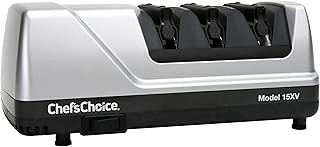
Chef'sChoice 15 Trizor XV Electric Knife Sharpener
Converts knives from 20° factory edge to a sharper 15° edge in three stages
Buy on Amazon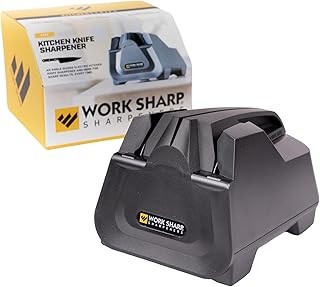
Work Sharp Culinary E5 Electric Knife Sharpener
Flexible abrasive belts remove less metal than rigid wheels , extends blade life
Buy on Amazon| Product | Price Range | Top Strength | Key Weakness | Buy |
|---|---|---|---|---|
| Shun Classic 8-Inch Chef's Knife best overall | $$$ | VG-MAX steel with 68-layer Damascus cladding , razor-sharp out of the box | Hard steel (61 HRC) is more brittle , chip risk on bones or frozen food | Buy on Amazon |
| Chef'sChoice 15 Trizor XV Electric Knife Sharpener also consider | $$ | Converts knives from 20° factory edge to a sharper 15° edge in three stages | Removes more metal per sharpening than a whetstone , reduces blade lifespan over years | Buy on Amazon |
| Work Sharp Culinary E5 Electric Knife Sharpener also consider | $$ | Flexible abrasive belts remove less metal than rigid wheels , extends blade life | Learning curve to get consistent results on first use | Buy on Amazon |
| Wüsthof Knife Honing Steel 10-Inch also consider | $$ | Regular honing maintains edge alignment between sharpenings | Not suitable for harder Japanese steel above 60 HRC , use a ceramic rod instead | Buy on Amazon |
Shun knives are precision instruments, and they will punish you for treating them like anything else. The steel is harder than most Western knives, the edge angle is shallower, and the geometry is engineered for slicing rather than rocking. All of which means that a basic pull-through sharpener from a kitchen drawer, or even a standard honing rod, will do more damage than good. If you’ve spent premium money on a Shun Classic 8-Inch Chef’s Knife, you owe it some matching respect when it comes time to sharpen it.
This guide covers what actually works for sharpening Shun knives, with honest assessments of the tools I’d use and the ones I’d skip. If you’re looking for broader context on the category, my Knives & Sharpeners hub is a good starting point. But if your question is specifically “what sharpener should I buy for my Shun,” keep reading.
What to Look For
Edge Angle
The single biggest mistake people make with Japanese knives is using a sharpener calibrated for Western geometry. Wüsthof and Zwilling knives are typically ground to a 20-degree edge angle. Shun knives are sharpened to 16 degrees on each side, sometimes narrower. Run a Shun through a 20-degree sharpening slot and you’re not restoring the edge, you’re creating a new one at the wrong angle, grinding away good steel in the process.
Any sharpener you buy for a Shun should either be adjustable to 15-16 degrees, or specifically designed for Japanese-style blades.
Steel Hardness
The Shun Classic 8-Inch Chef’s Knife uses VG-MAX steel with a Rockwell hardness rating of around 61 HRC. For comparison, a typical Wüsthof Classic runs in the 58 HRC range. That extra hardness is what gives Shun blades their extraordinary edge retention, but it also makes the steel more brittle. Abrasive tools that work perfectly well on softer German steel can chip or stress harder Japanese steel if they’re too aggressive.
This is why I have a problem with most conventional pull-through sharpeners. The angle isn’t right, the abrasive is designed for softer steel, and there’s no feedback mechanism. You can’t feel what you’re doing.
Honing vs. Sharpening
These are not the same thing, and conflating them is the most common source of edge damage I see. A honing steel realigns the edge of a blade that has folded slightly from use. Sharpening removes metal to create a new edge. On a German knife at 58 HRC, a weekly run on a honing rod keeps the edge functional for months between sharpenings. On a Shun at 61 HRC, the steel is too hard to respond well to a ridged honing steel. If you’re maintaining a Shun, you want a ceramic honing rod for regular upkeep and an actual sharpener for when the edge is genuinely dull.
The Wüsthof 10-Inch Honing Steel is an excellent piece of equipment for the German knives in your drawer. For the Shun, put it back in the block.
Top Picks
Chef’sChoice 15 Trizor XV: The Reliable Electric Option
The Chef’sChoice 15 Trizor XV Electric Knife Sharpener has been the default recommendation in serious cooking circles for over a decade, and it earned that position. The machine works in three stages: grinding, honing, and stropping. More importantly for Shun owners, it sharpens to a 15-degree edge rather than the 20-degree angle found in older electric sharpeners. That’s close enough to Shun’s factory geometry that you’re not fighting the blade.
The notable selling point here is consistency. If you have zero whetstone technique and no interest in developing any, the Trizor XV produces a reliably sharp, correctly angled edge every time. The learning curve is minimal. You pull the knife through the guides, the machine does the geometry, and the blade comes out sharp.
The legitimate concern is metal removal. The Trizor XV uses diamond abrasive wheels, which are effective but not gentle. Over years of regular use, you will lose meaningful blade stock. This matters more for a premium Japanese blade than for an entry-level utility knife. If your Shun knives are heirlooms, or if you’re the type to buy once and use indefinitely, that cumulative loss is worth factoring in.
Also worth being clear about: the Trizor XV converts your knife to a 15-degree edge if it wasn’t already there. Shun’s factory edge is 16 degrees per side. The conversion is essentially harmless for a double-bevel blade, but if you own a single-bevel Japanese knife, this machine isn’t for you.
Pricing is mid-range. Check the current price on Amazon before buying, as it fluctuates, but it’s positioned as a serious home kitchen tool, not a budget purchase.
Work Sharp Culinary E5: Better for Long-Term Blade Life
The Work Sharp Culinary E5 Electric Knife Sharpener takes a different approach. Instead of rigid abrasive wheels, it uses flexible abrasive belts. The practical difference is meaningful: flexible belts conform slightly to the edge geometry and remove less metal per pass than rigid wheels. For someone who owns quality knives and intends to own them for decades, that reduced metal removal matters.
The E5 also includes adjustable edge guides for both Western (20-degree) and Japanese (15-degree) angles, plus a stropping belt for final polishing. The stropping step is not cosmetic. It removes the wire edge left by abrasive work and brings the blade to its functional sharpest. Most electric sharpeners skip this or do it poorly.
The honest trade-off versus the Trizor XV is consistency on first use. The Chef’sChoice machine is more forgiving because the guides are more rigid and the process is more automated. The E5 requires you to maintain consistent pressure and angle through each pass. (I timed myself on the first few sessions with the E5. It took about four uses before I was getting results I was happy with.) Once you’re past that initial calibration, the results are excellent and the reduced metal removal starts to compound in your favor.
The belts do wear out and need periodic replacement. That’s an ongoing cost the Trizor XV doesn’t have. Also mid-range pricing, comparable to the Chef’sChoice unit. Check current pricing on Amazon.
For Shun knife owners specifically, I’d lean toward the E5 over the Trizor XV if you’re willing to put in the early practice. The blade preservation advantage is real and meaningful over a long ownership horizon.
The Wüsthof Honing Steel: Right Tool, Wrong Knife
I’m including the Wüsthof 10-Inch Honing Steel because it belongs in most serious home kitchens, with a clear caveat. If you also own German knives, which most of us do alongside the Shun, the Wüsthof honing steel is a well-balanced, well-made tool that will keep those softer blades in better shape between sharpenings. The ridged steel surface is exactly what a 58 HRC blade needs for weekly maintenance. It’s mid-range priced and built to last.
Do not use it on your Shun. The ridged steel surface is too aggressive for 61 HRC Japanese blades. For Japanese knives, a smooth ceramic rod is the appropriate maintenance tool. The distinction is simple: ridged steel for Western knives, smooth ceramic for Japanese. Keep both if your knife collection spans both styles.
How to Choose
Start with the question of how much you want to be involved in the process.
If you want to feed the knife in and get it back sharp with minimal technique required, buy the Chef’sChoice 15 Trizor XV. It does what it promises, consistently, with a shallow learning curve. You’ll lose slightly more metal over time than with a belt sharpener, but for most home cooks who sharpen a few times a year, the practical difference in blade longevity over a five-year window is small.
If you’re willing to develop a little technique and you want to preserve the most metal possible from a knife you intend to use for decades, buy the Work Sharp Culinary E5. The belt design is genuinely better for high-value Japanese blades. Budget for replacement belts.
If you’re building a kitchen that handles both German and Japanese knives, think about the full maintenance stack. The Wüsthof honing steel for your Zwilling J.A. Henckels Chef Knife or whatever Western blades you own, a ceramic rod for your Shun, and one of the two electric sharpeners above for actual edge restoration. Some home cooks also keep Shun steak knives in the rotation, and the same angle and hardness considerations apply there. My coverage of Shun steak knives addresses the maintenance question in that context.
If you’ve landed here while also evaluating knives rather than just sharpeners, it’s worth spending time in the broader knife and sharpener guides before committing. A knife at the premium end of the market should be matched to a sharpener that can actually maintain it, and that decision is easier to make before the first edge is gone.
One thing the product listings above don’t mention: sharpening frequency matters as much as the tool. A Shun that gets stropped regularly on a leather or ceramic surface, or run through a finishing belt, needs full sharpening less often. Reducing how frequently you make aggressive contact with the abrasive is the single best way to preserve blade life, regardless of which machine you own.
Frequently Asked Questions
Can I use a regular honing steel on my Shun knife?
A standard ridged honing steel, like the Wüsthof 10-Inch Honing Steel, is not recommended for Shun or other Japanese knives above 60 HRC. The ridges are too aggressive for harder steel and can cause microchipping along the edge. For maintaining a Shun between sharpenings, use a smooth ceramic rod, which realigns the edge without the same risk of damage.
Will an electric sharpener work on Shun knives?
Yes, with conditions. The sharpener must be calibrated for a 15 to 16-degree edge angle, which is what Shun uses. A sharpener defaulting to 20 degrees will gradually regrind your blade at the wrong angle. Both the Chef’sChoice 15 Trizor XV and the Work Sharp Culinary E5 handle the correct angle. Standard pull-through sharpeners with fixed 20-degree slots are not suitable.
How often should I sharpen a Shun knife?
For a home cook using a Shun chef’s knife regularly, full sharpening once or twice a year is typically sufficient if you’re maintaining the edge with a ceramic rod in between. Shun’s VG-MAX steel holds an edge well precisely because it’s hard. Sharpening more frequently than necessary removes metal without improving performance. If the knife is slipping on tomato skin or tearing rather than slicing herbs, it needs sharpening. Otherwise, it probably just needs a few light passes on a ceramic rod.
Is the Chef’sChoice Trizor XV safe for the MAC Professional Series or other Japanese knives?
For double-bevel Japanese knives, yes. The 15-degree angle setting is appropriate for most Japanese kitchen knives, including the Mac Professional Series Chef’s Knife. The caveat applies to single-bevel blades, which are sharpened on one side only. Those require a whetstone or specialist sharpening service. The Trizor XV is not designed for single-bevel geometry and will damage such an edge.
What’s the difference between the Chef’sChoice Trizor XV and the Work Sharp E5 for Shun knives?
Both sharpen at the correct angle for Japanese knives. The primary difference is in how they remove metal. The Trizor XV uses rigid diamond abrasive wheels and removes more metal per sharpening session, producing consistent results with almost no technique required. The Work Sharp E5 uses flexible abrasive belts, removes less metal per session, and includes a stropping stage that produces a finer final edge. The E5 requires more attention on the first few uses to get consistent results. For a premium Japanese knife you plan to own long-term, the E5’s reduced metal removal is a real advantage. For a cook who wants reliable results with no learning curve, the Trizor XV is the more practical choice.
Frequently Asked Questions
What angle should I use to sharpen Shun knives?
Shun knives are factory-sharpened to 16 degrees per side. Any sharpener you use should be adjustable to 15 to 16 degrees or specifically designed for Japanese-style blades. Using a sharpener set to 20 degrees — the standard for German knives — will grind away good steel at the wrong angle and create a bevel that does not match the original geometry.
Can I use a honing rod on Shun knives?
Not a standard ridged honing steel. Shun's VG-MAX steel is hard (around 61 HRC), and a ridged steel rod is too abrasive for it and risks chipping the edge. Use a smooth ceramic rod for maintenance between sharpenings, which realigns the edge without removing significant metal. Never use a grooved or diamond-coated rod on a Shun.
Is the Chef'sChoice 15 Trizor XV a good sharpener for Shun knives?
It is functional but comes with trade-offs. The Trizor XV converts knives to a 15-degree edge in three stages, which is appropriate for Shun's geometry. The downside is that electric sharpeners remove more metal per pass than whetstones. Over years of regular use, you will shorten the blade noticeably faster than you would with a whetstone. It is the right choice for convenience over longevity.
What is the best way to sharpen Shun knives at home?
A quality whetstone used at 15 to 16 degrees is the best long-term method. It removes the least metal per sharpening, preserves blade life, and produces a finer edge than most electric sharpeners. The learning curve is real, but Shun's own sharpening guide and online instruction are adequate for a motivated home cook. If you want a power option that removes less metal than fixed-wheel electric sharpeners, the Work Sharp E5 with its flexible abrasive belt system is a strong alternative.
Does Shun offer a sharpening service for their knives?
Yes. Shun offers a complimentary sharpening service for the life of the knife. You ship the blade to their facility in Tualatin, Oregon, and they sharpen it at the correct factory angle and return it. You pay only shipping. This is worth using once a year or when the knife needs significant edge restoration, supplemented by ceramic rod maintenance in between.
Where to Buy
Shun Classic 8-Inch Chef's KnifeSee Shun Classic 8-Inch Chef's Knife on Amazon