Mauviel Copper Pots Buyer Guide: Heat Control

Affiliate disclosure: Some links on this page are affiliate links. If you buy through them we earn a small commission at no extra cost to you. Recommendations are research-driven; we don't claim personal use of every product reviewed. Product prices and availability are accurate as of the date published and are subject to change. Always check Amazon for current pricing before purchasing. Learn more.
Quick Picks

Mauviel M'Heritage Copper Skillet 9.5"
Copper body provides the fastest, most responsive heat adjustment of any material
Buy on Amazon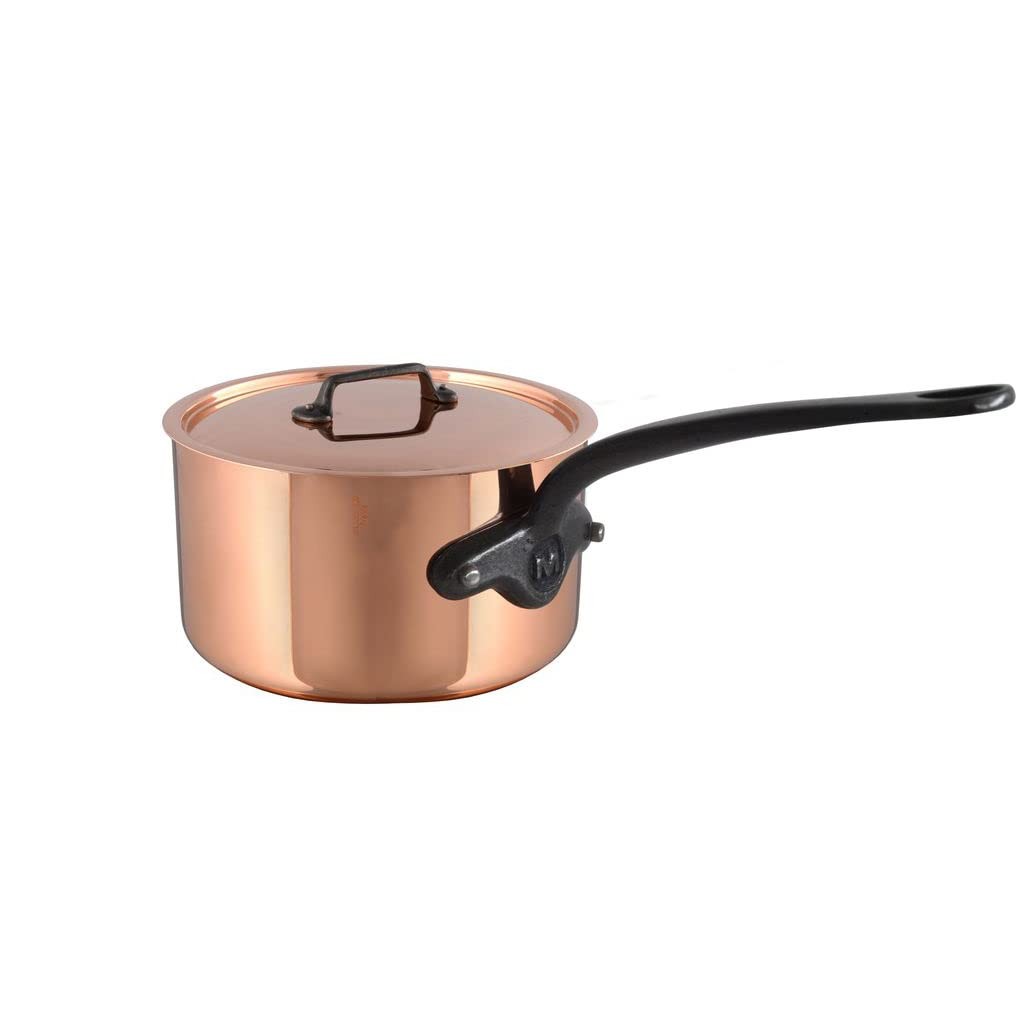
Mauviel M'Heritage Copper Saucepan 1.9-Quart
Copper reacts to heat changes within seconds , unmatched for sauce work
Buy on Amazon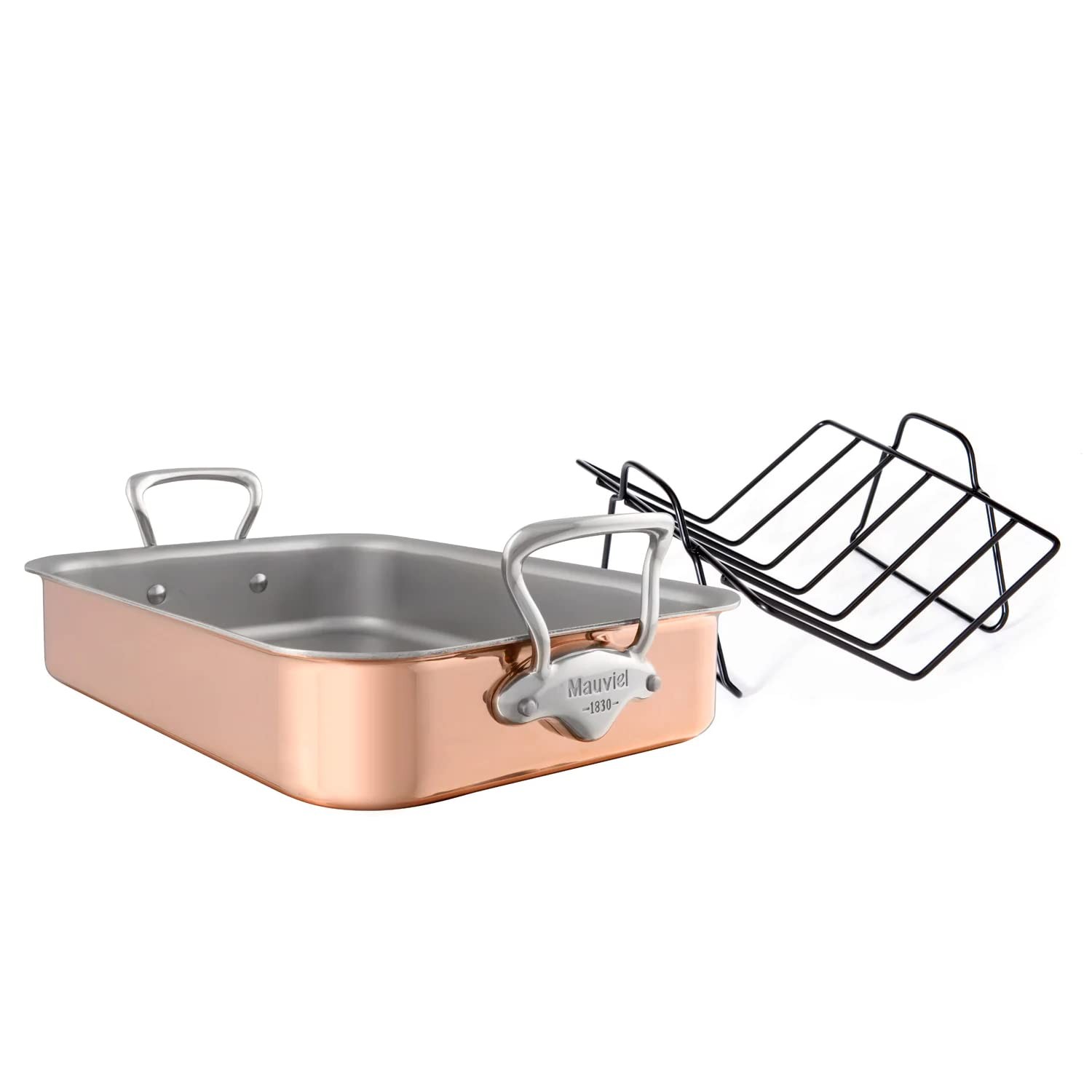
Mauviel M'Heritage Copper Roasting Pan
Copper ensures even heat across the entire base , no hot spots under the roast
Buy on Amazon| Product | Price Range | Top Strength | Key Weakness | Buy |
|---|---|---|---|---|
| Mauviel M'Heritage Copper Skillet 9.5" best overall | $$$ | Copper body provides the fastest, most responsive heat adjustment of any material | Most expensive cookware material , significant investment per piece | Buy on Amazon |
| Mauviel M'Heritage Copper Saucepan 1.9-Quart also consider | $$$ | Copper reacts to heat changes within seconds , unmatched for sauce work | Requires polishing to maintain the copper finish | Buy on Amazon |
| Mauviel M'Heritage Copper Roasting Pan also consider | $$$ | Copper ensures even heat across the entire base , no hot spots under the roast | Extraordinarily expensive , over $500 for a roasting pan | Buy on Amazon |
| All-Clad D3 Stainless 12-Inch Fry Pan also consider | $$$ | Tri-ply construction bonds stainless and aluminum for perfectly even heating | Stainless surface requires technique to prevent sticking , not beginner-friendly | Buy on Amazon |
| Demeyere Atlantis/Proline 11-Inch Fry Pan also consider | $$$ | Silvinox surface treatment prevents fingerprints and maintains satin finish | Most expensive pan in the Demeyere range , professional-grade pricing | Buy on Amazon |
Copper cookware sits at the top of the material hierarchy for one reason: heat response. Not heat retention, not even heat distribution in the way tri-ply stainless delivers it, but the almost instantaneous reaction to a change in flame or burner setting that no other material matches. If you’ve ever scorched a caramel because your stainless pan kept cooking after you pulled it off the heat, you already understand the problem copper solves.
Mauviel has been making copper cookware in Normandy, France since 1830. That’s not marketing copy designed to justify the price. It’s relevant because the company’s manufacturing process, wall thickness standards, and handle casting reflect nearly two centuries of refinement. What you’re buying when you buy Mauviel is not novelty. It’s a specific set of performance properties and an object that, maintained properly, outlasts the person who bought it.
This guide covers the Mauviel pieces worth considering, how they compare to premium stainless alternatives like the All-Clad D3 Stainless 12-Inch Fry Pan and Demeyere Atlantis/Proline 11-Inch Fry Pan, and how to decide whether copper is actually the right call for your cooking. If you’re still building out your stainless core before adding copper, our Stainless & Clad hub is the better starting point.
What to Look For in Copper Cookware
Wall Thickness
Mauviel’s M’Heritage line uses 2.5mm copper walls. That’s the number that matters. Thinner copper (1.5mm or less, common in decorative pieces) doesn’t give you the thermal mass to cook evenly. It’s also the first thing to deform over years of use. The 2.5mm M’Heritage pieces feel heavy in a way that signals substance, not waste.
Interior Lining
Mauviel offers both tin-lined and stainless steel-lined options. For most home cooks in 2024, stainless is the correct answer. Tin is traditional, performs beautifully, and reacts to heat even faster than stainless, but it re-tins at around 450°F and eventually wears through. Stainless lining is non-reactive, nearly indestructible, and easy to clean. Unless you have a specific reason to choose tin (certain classical techniques, or you’re already comfortable with the maintenance), buy the stainless-lined versions.
Handle Construction
The M’Heritage line uses cast iron handles on many pieces, with brass handles on others depending on the configuration. Cast iron handles stay cooler on the stovetop longer than steel alternatives. They’re also riveted, not welded, which matters for longevity. Welded handles eventually fail under repeated thermal stress. Riveted handles don’t.
What Copper Doesn’t Do
Copper is not induction-compatible in its standard form. Mauviel does make induction-capable copper lines (the M’6 series uses a stainless induction base), but the classic M’Heritage pieces require gas, electric coil, or ceramic cooktops. If induction is your primary heat source, this is a real constraint, not a minor footnote.
Copper also oxidizes. The exterior will develop a patina over time, and if you want to maintain the bright finish, you’re polishing it regularly. The interior stainless lining requires no special care, but the outside is a maintenance commitment.
Top Picks
Mauviel M’Heritage Copper Skillet 9.5-Inch
The Mauviel M’Heritage Copper Skillet 9.5” is the piece I’d recommend to anyone buying their first Mauviel. It’s large enough to be useful across a wide range of cooking tasks, the 9.5-inch diameter works on most residential burners without wasted copper overhanging the flame, and the stainless interior handles everything from eggs to fish without reactive metal concerns.
The heat response is the point. You turn down the flame, the pan responds within seconds. Compared to an All-Clad D3 Stainless 12-Inch Fry Pan, which I cooked with for eight years before adding copper to my rotation, the Mauviel skillet reacts to temperature changes at roughly twice the speed. The All-Clad is an excellent pan with a lifetime warranty and better heat retention for tasks like searing, but copper wins decisively on responsiveness.
At premium pricing, this is an investment. Check current pricing on Amazon before making the call. But if you are buying one copper piece for a serious home kitchen, this skillet is it.
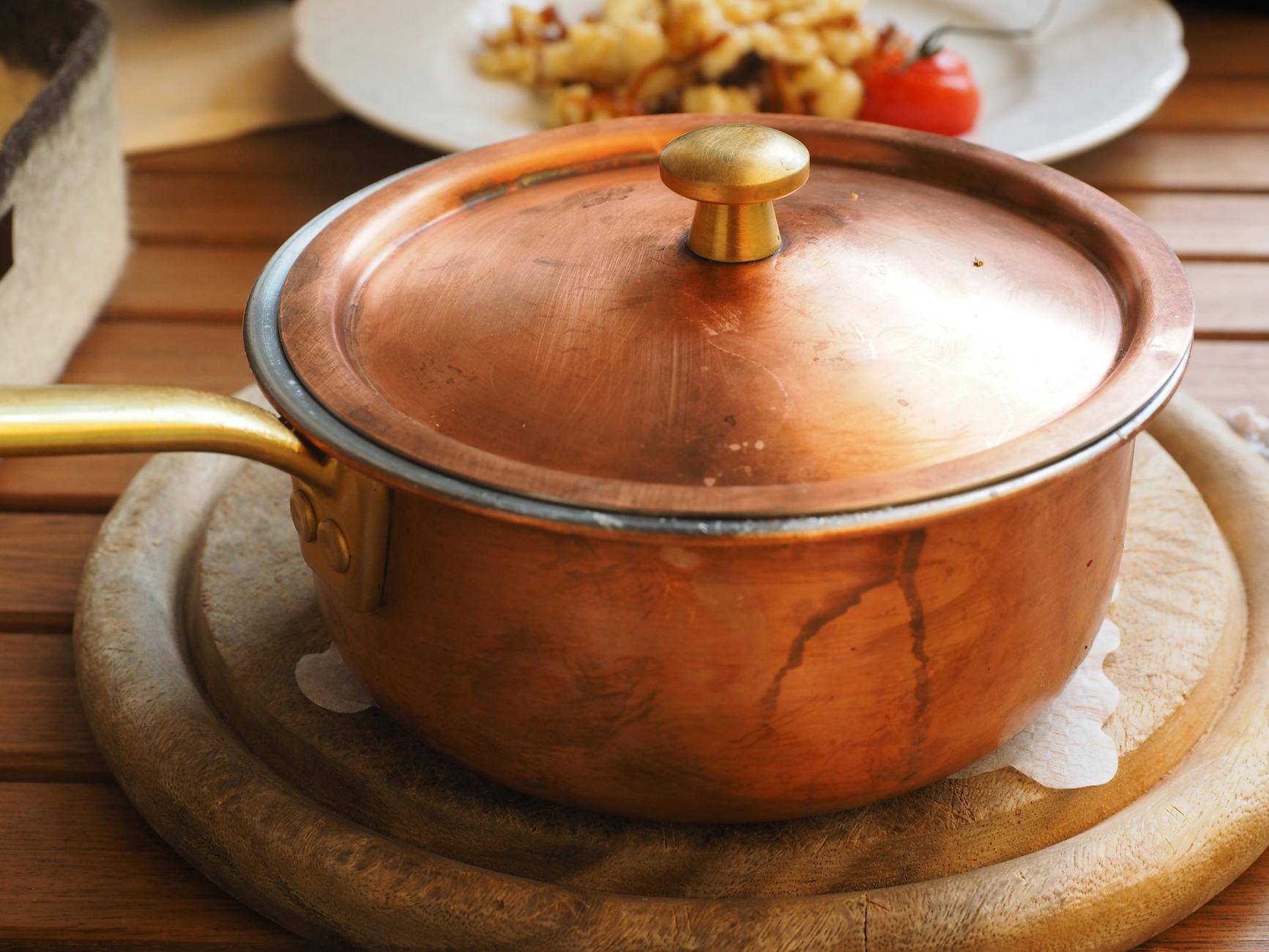
Mauviel M’Heritage Copper Saucepan 1.9-Quart
Professional pastry kitchens use copper saucepans for one category of work. Caramel, hollandaise, chocolate tempering, and any other task that requires pulling a sauce off heat and having it stop cooking immediately. The margin between perfect caramel and burnt sugar is measured in seconds, not minutes.
The Mauviel M’Heritage Copper Saucepan 1.9-Quart is built for exactly this. The 1.9-quart capacity is appropriate for sauce work rather than stock or braising. The stainless lining is non-reactive with acidic ingredients like wine reductions or citrus-based sauces. And the copper walls respond to your burner adjustments fast enough to give you real control over temperature-sensitive processes.
If you’re the cook who’s ruined a hollandaise by overcooking it on a clad stainless pan, this fixes the problem. If you make caramel a few times a year at most, the premium price is hard to justify. For something more budget-conscious that handles similar tasks, the All Clad 2 Qt Saucepan is a capable alternative at a lower price point, even if it doesn’t match copper’s responsiveness.
Mauviel M’Heritage Copper Roasting Pan
I’ll be honest about what the Mauviel M’Heritage Copper Roasting Pan is and isn’t. It’s an extraordinarily beautiful piece of kitchen equipment, crafted in France, with even heat distribution across a large base and a stainless interior that handles the acidic pan drippings you’ll deglaze for gravy. It is also priced at a level that makes it a heritage purchase or a significant gift, not a practical weeknight decision.
The argument for it is craft and longevity. A roasting pan at this price point, used a dozen times a year for holiday and special-occasion cooking, and maintained properly, lasts generations. The copper distributes heat more evenly than a single-ply stainless roasting pan, which translates to better fond development across the entire base. The presentation on a table or sideboard is, frankly, spectacular.
The argument against it is the price relative to alternatives like a Demeyere or All-Clad roasting pan. If you need a roasting pan and the goal is function over heritage, there are capable options at a fraction of the cost. Buy this one if you’re investing in a piece you’ll keep for thirty years. (I realize that might sound like a rationalization for an expensive purchase, but some purchases are actually like that.)
All-Clad D3 Stainless 12-Inch Fry Pan
The All-Clad D3 Stainless 12-Inch Fry Pan is the American tri-ply benchmark, and it belongs in this guide as the honest alternative for anyone considering Mauviel but not certain copper is right for their cooking.
Made in the USA, oven-safe to 600°F, compatible with every cooktop including induction, and backed by a lifetime warranty. The tri-ply construction bonds stainless to aluminum to stainless for even heating without hotspots. It requires technique to use well on stainless because the surface sticks if the pan isn’t properly preheated, but that’s true of every stainless pan, and it’s a learnable skill.
At premium pricing, it costs significantly less than the comparable Mauviel skillet. If your cooking is primarily high-heat searing, roasting, and deglazing rather than temperature-sensitive sauce work, the D3 is the more practical choice. I’ve used one for eight years. It performs consistently and requires minimal maintenance beyond standard cleaning.
Demeyere Atlantis/Proline 11-Inch Fry Pan
The Demeyere Atlantis/Proline 11-Inch Fry Pan is the pinnacle of the Demeyere lineup. Seven-ply construction, InductoSeal base rated for 10,000 heating cycles, and the Silvinox surface treatment that prevents fingerprints and maintains the satin finish over years of use. It is also the heaviest pan in this category, and tossing it one-handed is not a realistic expectation.
If you want the best stainless available regardless of price, this is it. It’s priced in the same premium tier as the Mauviel pieces but offers a different set of trade-offs. More durable surface treatment, induction compatibility, and multi-ply construction against copper’s superior heat response. For high-volume stovetop cooking where induction compatibility matters, the Atlantis is the better fit. For temperature-sensitive work, copper wins.
How to Choose
Start with what you cook most often. Copper earns its price in sauce work, pastry applications, and any task that requires fast heat adjustment. If your cooking is mostly searing, stir-frying, and oven finishing, tri-ply stainless from All-Clad or Demeyere serves you better and handles more cooktops.
If you’re building a mixed battery rather than choosing a single material, the logical approach is a stainless tri-ply skillet as your workhorse and a copper saucepan for precision work. The 1.9-quart Mauviel saucepan paired with an All-Clad D3 skillet covers most serious home kitchens without the full copper premium across every piece.
For the All Clad 4 Quart Saucepan or larger stock pot needs, stainless makes more sense than copper on a price-per-performance basis anyway. Copper’s responsiveness advantage matters most in smaller, sauce-scale vessels where you’re making adjustments frequently. A large stockpot sits at a simmer for hours. The material’s heat response is irrelevant at that scale.
Budget honestly. The M’Heritage pieces are priced in the premium category, and none of them represent an impulse purchase. If copper doesn’t fit the budget right now but you want to build toward it, a strong stainless foundation from our Stainless & Clad cookware guides gets you most of the way there at lower cost.
Frequently Asked Questions
Is Mauviel copper cookware worth the price?
For specific applications, yes. Sauce work requiring fast heat adjustment, caramel and pastry applications, and buyers investing in heirloom-quality equipment that lasts decades all justify the price. For general everyday cooking, high-quality tri-ply stainless from All-Clad or Demeyere performs comparably at lower cost.
Does Mauviel copper work on induction cooktops?
Standard M’Heritage copper pieces do not work on induction. Copper is not magnetic. Mauviel makes an induction-compatible copper line (the M’6 series) with a stainless induction base, but if induction compatibility is required, verify the specific model before purchasing.
How do I clean and maintain the copper exterior?
The stainless steel interior cleans like any stainless pan. The copper exterior is a separate matter. Copper oxidizes and will develop a brownish patina over time. If you want to maintain the bright copper finish, polish it periodically with a copper cleaner like Bar Keepers Friend or a dedicated copper polish. The patina doesn’t affect performance, only appearance, so maintenance frequency is personal preference.
What’s the difference between tin-lined and stainless-lined Mauviel copper?
Tin-lined pans react to heat slightly faster, have a naturally non-stick quality, and are the traditional choice for classical French cooking. Tin re-tins at around 450°F and wears down over years of use, requiring eventual re-tinning. Stainless-lined pans are non-reactive, more durable, and easier to maintain. For most home cooks, stainless lining is the practical choice.
How does Mauviel compare to other copper cookware brands?
Mauviel is the most widely available premium copper brand in the US market and benchmarks well against European alternatives like De Buyer’s copper line. The 2.5mm wall thickness in the M’Heritage range is competitive with other professional-grade copper. Some specialty European brands produce heavier-gauge copper, but they’re harder to source and priced even higher. For most buyers looking at copper seriously for the first time, Mauviel M’Heritage is the appropriate starting point.
Frequently Asked Questions
Why is copper considered the best material for cookware heat control?
Copper conducts heat faster than any other material used in consumer cookware and responds to temperature changes within seconds. When you reduce the flame under a copper pan, the cooking surface adjusts almost immediately — unlike stainless or cast iron, which continue cooking for minutes after heat is removed.
What is the stainless steel lining inside Mauviel copper pots for?
Copper is reactive with acidic foods like tomatoes, wine, and citrus, which can leach copper into the food at unsafe levels. The stainless steel interior prevents any contact between food and copper, making the pot non-reactive and easy to clean without affecting the copper's heat performance.
Are Mauviel copper pots worth the investment for a home cook?
For cooks who regularly make sauces, caramel, or custard that require precise temperature management, copper is a genuine performance advantage. For general cooking, premium tri-ply stainless from All-Clad or Demeyere delivers comparable results at a lower cost.
How long do Mauviel copper pots last?
Mauviel copper cookware is built to outlast its owner with proper care. The 2.5mm copper walls are thick enough to resist denting and warping, and the stainless interior does not degrade with use. Polishing the exterior periodically maintains appearance but is not required for function.
Can I use Mauviel copper pots in the oven?
Yes, but the cast iron handles on most Mauviel copper pieces make them oven-safe to high temperatures. Some models have stainless or bronze handles. Check the product specifications for your specific model, and note that the handle material, not the copper body, typically sets the oven temperature limit.
Where to Buy
Mauviel M'Heritage Copper Skillet 9.5"See Mauviel M'Heritage Copper Skillet 9.5" on Amazon