Mauviel Carbon Steel Cookware: What You Should Know

Affiliate disclosure: Some links on this page are affiliate links. If you buy through them we earn a small commission at no extra cost to you. Recommendations are research-driven; we don't claim personal use of every product reviewed. Product prices and availability are accurate as of the date published and are subject to change. Always check Amazon for current pricing before purchasing. Learn more.
Quick Picks

Mauviel M'Heritage Copper Skillet 9.5"
Copper body provides the fastest, most responsive heat adjustment of any material
Buy on Amazon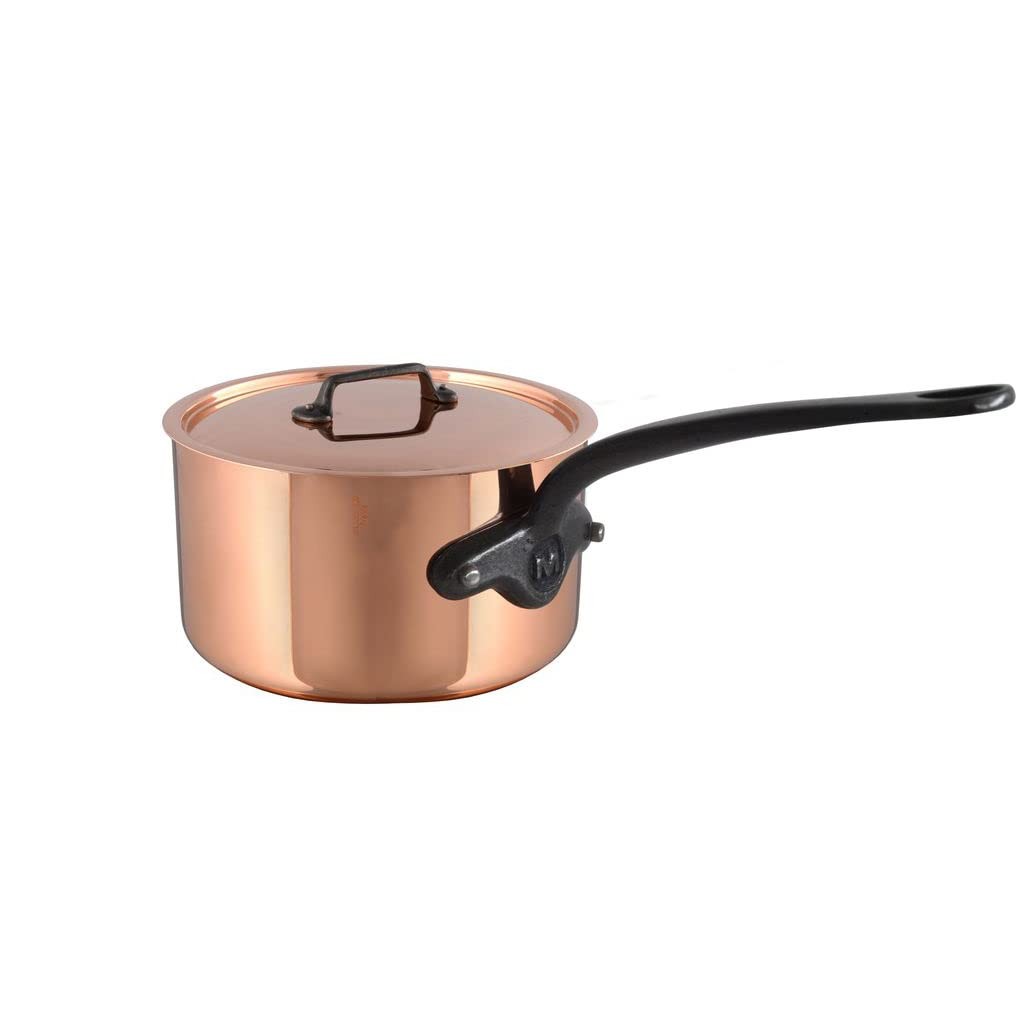
Mauviel M'Heritage Copper Saucepan 1.9-Quart
Copper reacts to heat changes within seconds , unmatched for sauce work
Buy on Amazon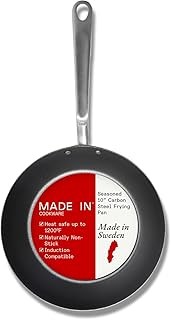
Made In 10-Inch Blue Carbon Steel Skillet
Lighter than cast iron with similar heat retention and seasoning potential
Buy on Amazon| Product | Price Range | Top Strength | Key Weakness | Buy |
|---|---|---|---|---|
| Mauviel M'Heritage Copper Skillet 9.5" best overall | $$$ | Copper body provides the fastest, most responsive heat adjustment of any material | Most expensive cookware material , significant investment per piece | Buy on Amazon |
| Mauviel M'Heritage Copper Saucepan 1.9-Quart also consider | $$$ | Copper reacts to heat changes within seconds , unmatched for sauce work | Requires polishing to maintain the copper finish | Buy on Amazon |
| Made In 10-Inch Blue Carbon Steel Skillet also consider | $$ | Lighter than cast iron with similar heat retention and seasoning potential | Requires seasoning , more maintenance than stainless | Buy on Amazon |
| Tramontina 12-Inch Tri-Ply Clad Stainless Fry Pan also consider | $$ | Genuine tri-ply construction , same bonding method as All-Clad at a fraction of the price | Slightly thinner gauge than All-Clad , marginally less heat retention | Buy on Amazon |
| All-Clad D3 Stainless 12-Inch Fry Pan also consider | $$$ | Tri-ply construction bonds stainless and aluminum for perfectly even heating | Stainless surface requires technique to prevent sticking , not beginner-friendly | Buy on Amazon |
If you searched “Mauviel carbon steel cookware” expecting a lineup of carbon steel pans from Mauviel, this article is going to redirect you slightly. Mauviel’s reputation rests almost entirely on copper, and their carbon steel offerings are limited enough that building a buying decision around that category alone would leave you with a short list and probably the wrong pan. What follows instead is an honest look at where Mauviel copper fits, what it’s genuinely best for, and how it compares against carbon steel and tri-ply stainless alternatives that belong in the same conversation. If you’re interested in the broader world of stainless and clad cookware, the Stainless & Clad guide covers that territory in full.
The five pans covered here span copper, carbon steel, and tri-ply stainless. They are not all interchangeable. The right answer depends on what you’re actually cooking, not which material has the most compelling marketing copy.
What to Look For
Heat Responsiveness vs. Heat Retention
These two properties pull in opposite directions, and most buyers don’t fully reckon with that until they’ve owned pans in both categories.
Copper responds to heat changes within seconds. Turn the burner down and the pan temperature drops almost immediately. That’s not a metaphor. It is the defining physical property of copper, and it matters most for sauces, caramel, chocolate, and anything where a ten-second delay between “lower the heat” and “the pan actually cools” means the difference between a finished hollandaise and scrambled egg butter.
Carbon steel and cast iron work the opposite way. They hold heat once they’ve built it up. That makes them better for searing, where you want sustained, consistent contact heat even when cold protein hits the surface and tries to drop the pan temperature.
Tri-ply stainless sits between those poles: better than cast iron for responsiveness, not in the same category as copper, but far easier to maintain and generally the most practical daily-use material.
Material and Maintenance Honesty
Copper requires polishing to keep the exterior looking like copper. The interior of both Mauviel pieces covered here is stainless steel, which is non-reactive and cleans normally. The maintenance question is about the outside, not the cooking surface. If you buy copper and leave it unpolished, it will develop a patina. Some people find that acceptable. Others don’t. Neither position is wrong, but you should decide before spending premium money.
Carbon steel requires seasoning. Not once, but continuously, especially early in the pan’s life. It is reactive with acidic foods until the seasoning layer is well established. If you’ve read about copper hammered cookware or similar hand-finished pieces, you already know that some pans require a degree of ongoing relationship that stainless does not.
Stainless requires technique to prevent sticking, not maintenance in the seasoning sense. Preheat properly, use enough fat, and it performs well. Skip those steps and food will stick predictably.
Construction Quality Markers
For tri-ply stainless: look for full-clad construction (bonded layers running the full length of the pan, including the walls) rather than disc-bottom construction (aluminum disc bonded only to the base). Full clad heats the sides evenly. Disc-bottom pans have a heat cutoff at the base of the walls.
For copper: wall thickness matters. Mauviel’s M’Heritage line uses 2.5mm copper, which is the professional standard. Thinner copper cookware exists at lower price points and doesn’t perform the same way.
Top Picks
Best for Precision Heat Work: Mauviel M’Heritage Copper Skillet 9.5”
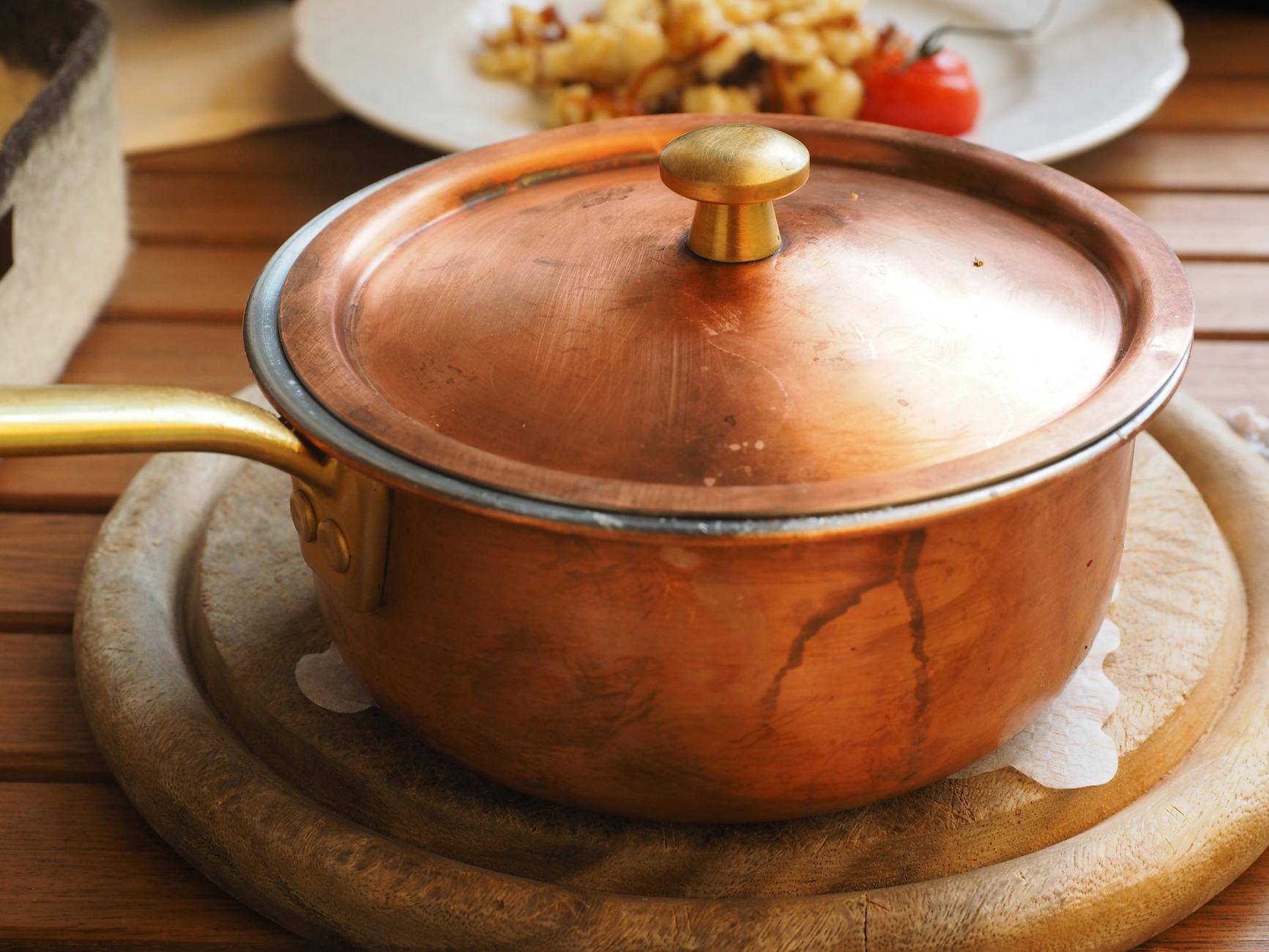
The Mauviel M’Heritage Copper Skillet 9.5” is handcrafted in Normandy, France, and it shows in the weight distribution, the riveted cast iron handle, and the consistency of the copper wall thickness. At 9.5 inches it’s not a large skillet, but copper at this weight class is not primarily a searing pan. It’s a precision pan.
The stainless steel interior is non-reactive, which matters for acidic preparations. The copper exterior is where the heat control lives. This is premium pricing, which means you are paying for material quality and craft, not marketing.
The honest caveat: this is a serious investment per piece. It makes sense as a deliberate purchase for a specific purpose, or as a gift for someone who will actually use it. It does not make sense as an impulse buy or a decorative object. If you’re researching copper more broadly, the copper kitchen cookware coverage on this site goes into the category in more depth.
Best for Sauce and Pastry Work: Mauviel M’Heritage Copper Saucepan 1.9-Quart
The Mauviel M’Heritage Copper Saucepan 1.9-Quart is the piece professional pastry kitchens reach for when making caramel or tempering chocolate. The 1.9-quart capacity is appropriate for single batches of sauce. The copper construction means you can drop the temperature almost instantly once a caramel hits the right color, which is exactly the moment where most home cooks lose the batch.
Same stainless interior, same maintenance requirements on the exterior. Same premium price band as the skillet. If you’re only going to buy one copper piece, this is the one I’d recommend, because the saucepan application plays directly to copper’s core advantage in a way that a skillet doesn’t as purely. (I realize “buy one copper piece” assumes a level of deliberate kitchen planning that not everyone approaches this way, but it’s my honest advice.)
Best Middle-Ground Pan: Made In 10-Inch Blue Carbon Steel Skillet
The Made In 10-Inch Blue Carbon Steel Skillet is mid-range pricing and occupies a specific niche: the cook who finds cast iron too heavy but wants similar seasoning behavior and heat retention. Carbon steel is meaningfully lighter than cast iron at equivalent diameters. The Made In skillet is oven-safe to 1200°F, which is the highest rating of any pan in this comparison and frankly higher than any home oven will require.
The blue carbon steel surface seasons the same way cast iron does. It develops non-stick properties over time. It’s reactive with acidic foods early on, and if you deglaze with wine before the seasoning is established, you’ll strip it.
If you’ve cooked on cast iron for years and want the same character in a lighter pan, this is the straightforward pick. If you’ve never seasoned a pan and want low-maintenance cookware, look at the tri-ply options below.
Best Value Tri-Ply: Tramontina 12-Inch Tri-Ply Clad Stainless Fry Pan
The Tramontina 12-Inch Tri-Ply Clad Stainless Fry Pan is mid-range pricing and uses genuine tri-ply construction, which is the same bonding method as All-Clad. Made in Brazil, induction compatible, oven-safe to 500°F. Professional cooks have recommended it on value grounds for years, not because it’s identical to the American benchmarks, but because the construction fundamentals are sound.
The gauge is marginally thinner than All-Clad D3, and you will notice that in heat retention over a long braise. The handle ergonomics are functional but not refined. For most weeknight cooking, those differences don’t matter.
The American Benchmark: All-Clad D3 Stainless 12-Inch Fry Pan
The All-Clad D3 Stainless 12-Inch Fry Pan is premium pricing and the pan I cooked on for eight years before building out my current kitchen. Tri-ply construction, full clad, made in Pennsylvania, lifetime warranty. Oven-safe to 600°F and compatible with every cooktop including induction.
If you’ve looked at the Demeyere vs All-Clad comparison on this site, you have a sense of where D3 sits in the landscape of serious stainless cookware. It’s not the most sophisticated tri-ply available. But it’s the benchmark against which other American full-clad pans are measured, and the lifetime warranty is meaningful if you plan to own the pan for twenty years.
The Tramontina costs roughly half the All-Clad. Whether the D3’s thicker gauge and made-in-USA construction are worth that difference is a real question, not a rhetorical one.
How to Choose
If you are building a kitchen from scratch and want practical guidance: start with a 10-inch or 12-inch tri-ply stainless skillet and one carbon steel pan. The stainless handles acidic preparations without complaint. The carbon steel handles high-heat searing and develops character with use. That combination covers most of what a serious home cook needs at the skillet level.
Add copper if you cook sauces, custards, or confections regularly, and if the premium price for a saucepan is a considered investment rather than a stretch. The Mauviel copper saucepan is not an upgrade from stainless for general use. It’s a specialist tool for a specific category of cooking.
If you’re choosing between the Tramontina and All-Clad, check current pricing on Amazon for both. The value calculation changes depending on current pricing, and the gap isn’t always what it was when you last checked.
For anyone building out a full stainless kit rather than individual pieces, the stainless cookware sets section covers complete set options including 18/10 construction, which is relevant if you’re also thinking about stainless steel cookware set 18/10 options alongside individual pieces.
The short version: buy the copper pieces deliberately, for specific purposes. Buy a tri-ply skillet as your workhorse. Add carbon steel if cast iron’s weight has been a practical obstacle.
Frequently Asked Questions
Does Mauviel make carbon steel cookware?
Mauviel does produce some carbon steel pieces, but the brand’s identity and professional reputation are built on copper. If you found Mauviel while searching for carbon steel specifically, you’re more likely looking for their copper line. The carbon steel pans from Made In, De Buyer, and similar manufacturers have stronger track records in that specific category and broader availability.
Is copper cookware actually worth the price?
For sauce and confectionery work, yes. Copper’s heat responsiveness is measurably faster than any alternative material. For general sautéing and everyday cooking, the premium price is harder to justify because the advantage is less decisive. Buy copper for what it does that stainless cannot, not as a general upgrade.
How do I maintain the copper exterior on Mauviel pans?
The cooking surface (stainless steel interior) requires no special care beyond normal washing. The copper exterior will develop a patina over time if left unpolished. Commercial copper polish like Bar Keepers Friend or dedicated copper cleaners restore the bright finish. Some owners leave the patina intentionally. It does not affect cooking performance.
Can I use carbon steel on an induction cooktop?
Yes. Carbon steel is magnetic and fully induction compatible. The Made In blue carbon steel skillet works on induction, gas, electric, and in the oven. Seasoning care is the same regardless of the heat source.
What’s the practical difference between the Tramontina and All-Clad D3?
Both use genuine tri-ply construction with an aluminum core bonded between stainless steel layers. The All-Clad D3 is built to a slightly thicker gauge, which produces marginally better heat retention and a more substantial feel in the hand. The Tramontina costs roughly half the All-Clad at most price points. For most home cooks cooking most things most of the time, the Tramontina performs the same function. The All-Clad’s advantage shows up in high-volume or extended cooking where that extra mass matters, and in the lifetime warranty that backs it.
Frequently Asked Questions
Does Mauviel make carbon steel cookware?
Mauviel's catalog is built primarily around copper. Their carbon steel offerings are limited, and most buyers searching for Mauviel carbon steel are better served comparing Mauviel copper against carbon steel and tri-ply stainless alternatives from other manufacturers.
How does copper cookware compare to carbon steel for everyday cooking?
Copper responds to heat changes within seconds, making it exceptional for precise sauce work and temperature-sensitive tasks. Carbon steel retains heat well and builds a natural nonstick seasoning over time, making it better suited for high-heat searing and a wider range of daily cooking.
Is Mauviel copper worth the price compared to tri-ply stainless?
For sauce work, caramel, custard, and other tasks requiring instant heat adjustment, copper's performance is genuinely superior. For searing proteins, browning, and general cooking, a well-built tri-ply stainless pan like the All-Clad D3 or Tramontina delivers comparable results at a fraction of the cost.
Does Mauviel copper work on induction cooktops?
Standard Mauviel copper is not induction compatible because copper is not magnetic. Some newer Mauviel pieces include a stainless base for induction use, but the majority of their copper lineup requires gas or electric coil cooktops.
How do I maintain Mauviel copper cookware?
The stainless steel interior is easy to clean with standard methods. The exterior copper oxidizes over time and needs occasional polishing with a copper cleaner to restore its finish. This is cosmetic maintenance, not functional — a tarnished copper pan cooks identically to a polished one.
Where to Buy
Mauviel M'Heritage Copper Skillet 9.5"See Mauviel M'Heritage Copper Skillet 9.5" on Amazon