Wüsthof Classic 8 Inch Chef Knife Review

Affiliate disclosure: Some links on this page are affiliate links. If you buy through them we earn a small commission at no extra cost to you. Recommendations are research-driven; we don't claim personal use of every product reviewed. Product prices and availability are accurate as of the date published and are subject to change. Always check Amazon for current pricing before purchasing. Learn more.
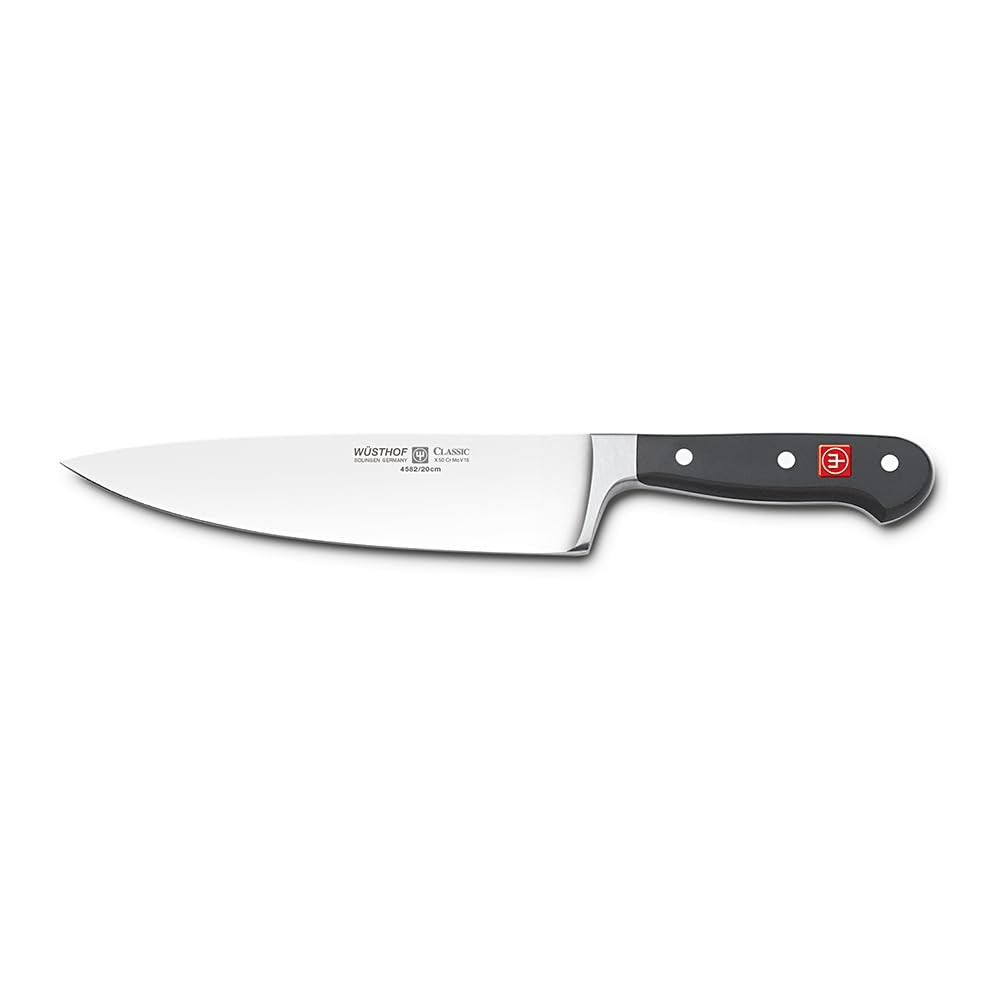
Full tang, forged German steel , built to last decades with proper care
See Wüsthof Classic 8-Inch Chef's Knife on AmazonThe Wüsthof Classic 8-Inch Chef’s Knife has been in continuous production for decades. That’s not a marketing claim. It’s a fact that tells you something useful: this knife has been bought, used, abused, and passed down long enough that the design has had every opportunity to be corrected, and it hasn’t changed much. Make of that what you will.
I’ve used mine for about six years. Before that I cooked with a Victorinox Fibrox Pro for longer than I’ll admit in writing. The Wüsthof replaced it, and the comparison is instructive. If you’re building out your knife drawer for the first time or upgrading from a decade-old stamped blade, our Knives & Sharpeners section has full context on how this knife fits against the broader field. This review is specifically about whether the premium price is justified and who the Wüsthof Classic is actually built for.
The Knife
At 8.5 ounces, this is not a light knife. The full tang runs the length of the handle, the bolster sits between the blade and the handle scales, and the triple-riveted handle is made from a synthetic material that has held up without warping or cracking through years of hand-washing and occasional abuse. The weight is deliberate. Wüsthof builds these to use the mass of the knife to help with cutting, so you’re not muscling through a butternut squash. You’re letting the knife fall through it with some guidance.
The blade is forged, not stamped. If you’ve ever owned a stamped blade that slowly developed a slight warp and started rocking unevenly on your cutting board, that’s what the forging addresses. The steel is formed from a single piece and the grain structure is aligned, which matters over years of use.
Balance point sits right at the bolster, which is where most German-style chef knives aim. Some cooks find this rear-heavy compared to Japanese knives with balance closer to the blade. (I measured mine on a bench scale. The bolster and handle together account for most of the weight, which is either reassuring or annoying depending on your grip style.)
The 8-inch length is the practical standard for most home kitchens. Long enough to break down a half chicken or work through a large onion efficiently, short enough to maneuver without needing a 24-inch cutting board.
Steel and Edge
Wüsthof uses X50CrMoV15 steel on the Classic line. It’s a German stainless steel with a Rockwell hardness of 58 HRC, which is softer than most Japanese steels and harder than cheap stamped blades. The HRC number matters in practice because it determines how the edge behaves over time.
At 58 HRC, the blade takes a beating without chipping. If you’re the kind of cook who hits a bone or a frozen edge occasionally and doesn’t want to send a knife out for a chip repair, this matters. The tradeoff is that a softer steel needs to be honed more regularly to maintain the edge between sharpenings. Every few uses with a honing rod is not optional. Ignore that and you’ll have a dull knife within a few months regardless of how good the factory edge was.
The PEtec edge (Wüsthof’s precision edge technology, laser-tested to a consistent 14-degree angle per side) gives the Classic a sharper out-of-box edge than older German knives typically shipped with. Historically, Wüsthof ground their edges at around 20 degrees. The 14-degree angle is noticeably sharper and moves the Classic closer to Japanese blade geometry while keeping the robust spine and belly of a German profile.
This is the knife’s meaningful design improvement over the last decade and it’s real. I sliced paper with mine straight out of the box. That doesn’t happen with every knife in this price band.
Check the Wüsthof Classic 8-Inch Chef’s Knife on Amazon
Wüsthof Classic vs Shun
The most direct comparison I get asked about is against Shun’s Classic line. Both are premium-priced chef knives. Both have serious followings. They are not interchangeable, and choosing between them should come down to honest self-assessment about how you actually cook.
Shun uses VG-MAX steel hardened to around 61 HRC. That extra hardness means Shun’s edges are thinner and hold longer between sharpenings, but they chip on hard materials and require a whetstone to maintain correctly. A honing rod will damage the edge. If you’re not already comfortable with whetstone technique, buying a Shun means learning it, or paying someone else regularly. (For a sense of Shun’s build quality in a related category, I’ve spent time with their Shun Premier Steak Knives, which show the same blade geometry philosophy throughout their line.)
The Wüsthof Classic hones on a standard steel rod, which most home cooks already own and know how to use. Maintenance is less exacting.
Blade geometry is also different. Shun grinds to a more acute 16-degree total angle (8 per side), the Classic at 28 degrees total (14 per side). In use, this means Shun feels more like a scalpel on delicate work. Fine fish cuts, paper-thin vegetable slices. The Wüsthof’s thicker spine and wider belly make it a better rocker for rough work: garlic, herbs, breaking down larger vegetables.
Both are premium pricing. Shun tends to run slightly higher. The right answer depends on your cutting style and your willingness to maintain a more demanding edge.
Wüsthof Classic vs Victorinox Fibrox Pro
This comparison is worth taking seriously because it’s the upgrade question most home cooks actually face. The Victorinox Fibrox Pro 8-inch is budget pricing and stamped from softer steel. It’s also one of the best knives I’ve used at any price relative to what it costs.
The Victorinox is lighter, closer to 6 ounces, and the handle is designed around extended use comfort for cooks who are standing and cutting for hours. Many professional line cooks use it specifically because it’s cheap enough to replace, light enough for long service, and holds an adequate edge.
What the Wüsthof gives you that the Victorinox doesn’t: the forged construction that prevents warping over years, a noticeably sharper out-of-box edge, better balance under sustained pressure on harder ingredients, and a handle that feels more substantial on wide grip cuts.
What you pay for those advantages is real. The Wüsthof is premium pricing. The Victorinox is budget. If budget matters and you’re cooking regularly but not daily, the Victorinox is a defensible choice and I’ll say so plainly. If you’re cooking serious meals five or six nights a week and the knife is in your hand for thirty minutes at a stretch, the Wüsthof is worth the price difference.
There’s also a middle option: the Mac Professional Series Chef’s Knife sits between the two on price and splits the difference on blade geometry, using harder Japanese steel in a more Western-style profile. It’s worth comparing if neither the Victorinox nor the Wüsthof feels like the right fit.
If you want a narrower blade for specific tasks, the Zwilling J.A. Henckels Chef Knife is another forged German option worth considering alongside the Wüsthof Classic before you commit.
Verdict
The Wüsthof Classic 8-Inch Chef’s Knife is as close as a chef’s knife gets to a settled question. Not because it’s perfect, but because after thirty-plus years on the market, its known tradeoffs are knowable: it’s heavy for some cooks, it needs regular honing, and it costs what it costs.
Buy it if you cook five or more nights a week, prefer a German-style rocking motion, already hone a knife regularly (or are willing to start), and want a blade that will outlast you with basic care.
Skip it if you prefer lighter knives, do a lot of delicate Japanese-style push cuts, or aren’t prepared to hone consistently. A dull Wüsthof is just an expensive paperweight.
Skip it also if budget is your primary constraint. The Victorinox Fibrox Pro does 80 percent of the same work for a fraction of the price. Honest advice means saying that.
One last note: if you’re also thinking through other blade shapes for specific tasks, our knife and sharpener guides cover both santoku formats and smaller utility knives in the same level of detail. The 5 Inch Santoku Knife guide in particular is useful for cooks who find an 8-inch chef knife too much blade for daily vegetable prep.
Check current price for the Wüsthof Classic 8-Inch Chef’s Knife on Amazon before buying. Premium knives move in and out of promotion windows, and given the long ownership horizon, it’s worth watching for a few weeks if timing is flexible.
Frequently Asked Questions
Is the Wüsthof Classic worth it compared to cheaper knives?
For cooks who use a chef’s knife daily, yes. The forged construction, sharper PEtec edge, and long-term durability separate it from stamped budget knives over years of use. For occasional cooks, the Victorinox Fibrox Pro at budget pricing is a more practical choice.
How often does the Wüsthof Classic need to be sharpened?
Honing should happen every few uses on a standard honing rod. Full sharpening on a whetstone or with a pull-through sharpener is typically needed once or twice a year with regular home use. Skipping honing is the fastest way to end up with a knife that performs poorly despite being expensive.
Is the Wüsthof Classic too heavy?
At 8.5 ounces, it’s heavier than Japanese alternatives and lighter stamped knives. Cooks who grew up with German-style knives or who prefer a rocking motion generally find the weight an asset. Cooks transitioning from Japanese knives often find it feels back-heavy. There’s no objective answer, only what matches your hand and cutting style.
What’s the difference between the Wüsthof Classic and Wüsthof Ikon?
The Ikon uses the same blade steel and edge geometry but features a contoured handle with a half bolster instead of the Classic’s full bolster. The half bolster allows full-blade sharpening to the heel, which matters over years of repeated sharpening. The Ikon is priced higher. Both are legitimate choices at premium pricing.
Can I put the Wüsthof Classic in the dishwasher?
Wüsthof technically permits it, but repeated dishwasher cycles will dull the edge faster and can cause handle degradation over time. Hand wash and dry immediately. Given what this knife costs and how long it should last, that’s a reasonable habit to build.
Wüsthof Classic 8-Inch Chef's Knife: Pros & Cons
- Full tang, forged German steel , built to last decades with proper care
- Comfortable bolster and handle balance for long prep sessions
- Heavy at 8.5 oz , some cooks prefer the lighter feel of Japanese knives
Frequently Asked Questions
Is the Wüsthof Classic 8-inch chef knife worth the price?
For most home cooks who want a durable, low-maintenance workhorse, yes. The forged German steel, full tang construction, and PEtec edge make it a lifetime knife if properly cared for — a meaningful step up from stamped blades at a lower price point.
How does the Wüsthof Classic compare to Japanese knives like Shun?
The Wüsthof Classic is heavier, harder-wearing, and easier to maintain — you can hone it with a standard steel rod. Shun's harder steel holds an edge longer but chips on hard foods and requires whetstone sharpening. Choose Wüsthof for everyday durability, Shun for precision cutting.
What steel is used in the Wüsthof Classic, and what does it mean for sharpening?
Wüsthof uses X50CrMoV15 German stainless steel hardened to 58 HRC. This means the edge is forgiving and won't chip easily, but it needs regular honing with a steel rod every few uses to stay sharp between full sharpenings.
Is the Wüsthof Classic 8-inch too heavy for everyday use?
At 8.5 oz it is heavier than Japanese-style knives, but the weight is intentional — it lets the knife fall through dense vegetables without forcing. Cooks who prefer lighter, more nimble blades may find it tiring during long prep sessions.
What angle is the Wüsthof Classic edge ground to?
The Classic is ground at 14 degrees per side (28 degrees total) using Wüsthof's PEtec laser precision process. This is sharper than older German knives but slightly less acute than most Japanese blades, giving a good balance of sharpness and edge durability.
Where to Buy
Wüsthof Classic 8-Inch Chef's KnifeSee Wüsthof Classic 8-Inch Chef's Knife on Amazon