Wusthof Santoku Knife Buyer's Guide: Is It Right for You?

Affiliate disclosure: Some links on this page are affiliate links. If you buy through them we earn a small commission at no extra cost to you. This never influences which products we recommend — we only suggest things we'd buy ourselves. Product prices and availability are accurate as of the date published and are subject to change. Always check Amazon for current pricing before purchasing. Learn more.
Quick Picks

Wüsthof Classic 7-Inch Santoku
German steel in a Japanese blade shape , great of the best of both traditions
Buy on Amazon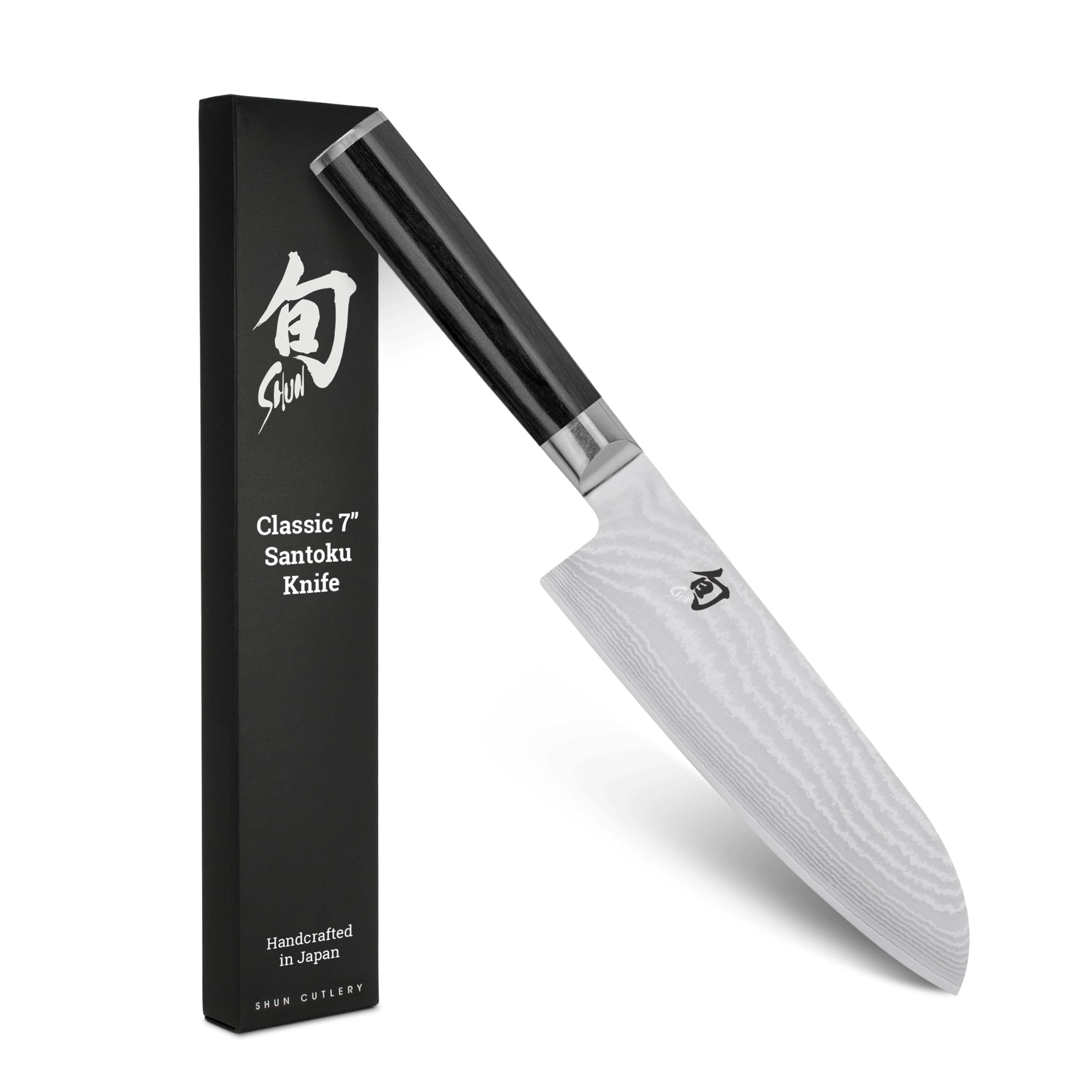
Shun Classic 7-Inch Santoku
VG-MAX Damascus steel , same exceptional sharpness as the chef's knife
Buy on Amazon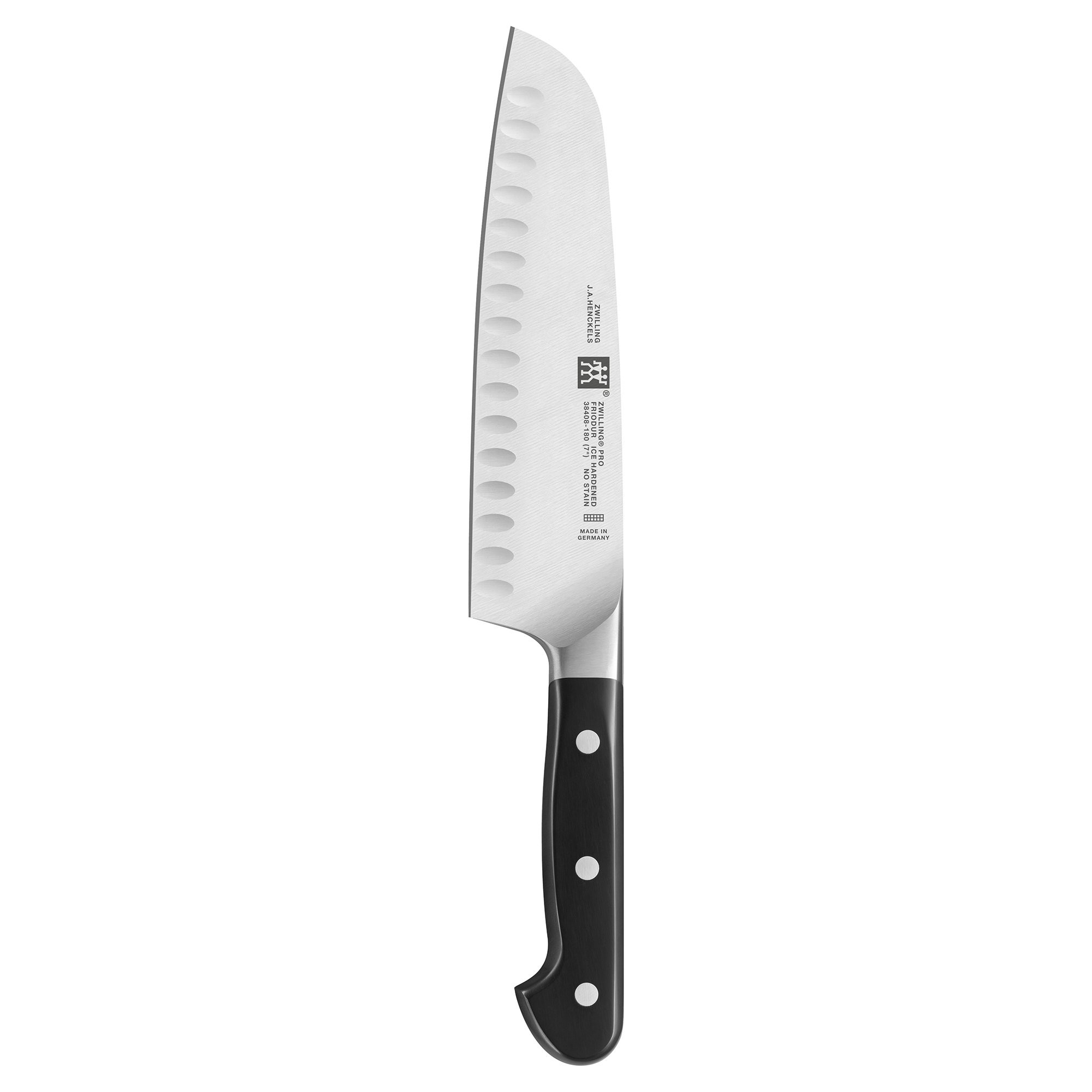
Zwilling J.A. Henckels Zwilling Pro 7-Inch Santoku
German steel in santoku form , more forgiving than Japanese steel for daily use
Buy on Amazon| Product | Price Range | Top Strength | Key Weakness | Buy |
|---|---|---|---|---|
| Wüsthof Classic 7-Inch Santoku best overall | $$$ | German steel in a Japanese blade shape , great of the best of both traditions | German steel is softer than Japanese , needs more frequent honing | Buy on Amazon |
| Shun Classic 7-Inch Santoku also consider | $$$ | VG-MAX Damascus steel , same exceptional sharpness as the chef's knife | Hollow-ground edge requires whetstone maintenance , not for casual sharpeners | Buy on Amazon |
| Zwilling J.A. Henckels Zwilling Pro 7-Inch Santoku also consider | $$$ | German steel in santoku form , more forgiving than Japanese steel for daily use | German steel not as hard as Japanese alternatives , needs more frequent honing | Buy on Amazon |
| Yoshihiro Kurouchi Black-Forged Blue Steel Santoku 6.5" also consider | $$$ | Blue | High-carbon steel requires oiling and drying after each use to prevent rust | Buy on Amazon |
The santoku knife sits in an interesting middle ground. It’s not the default Western chef’s knife most home cooks learned on, and it’s not a specialist tool you’d pull out once a month. It’s a daily-use blade with a flatter profile, a shorter length, and a forward-weighted balance that makes repetitive vegetable prep feel less like work. Whether it belongs in your kitchen depends less on fashion and more on how you actually cut. If you rock-chop with a lot of wrist motion, a chef’s knife stays your tool. If you push-cut and prefer keeping the blade closer to the board, a santoku earns its drawer space.
The question this article is actually answering is which santoku to buy, and specifically whether the Wüsthof version deserves the attention it gets. The short answer is yes, with caveats depending on your relationship with knife maintenance. I’ve covered the broader landscape of knives and sharpeners in the Knives & Sharpeners hub if you want context beyond santokus, but here I’m staying focused on four blades at the premium tier that represent meaningfully different philosophies.
What to Look For in a Santoku Knife
Steel Hardness and What It Costs You
The most consequential decision in a santoku purchase is steel type, because it determines not just performance but your maintenance obligations. German steel runs around 58 HRC. Japanese steel like Shun’s VG-MAX sits closer to 61 HRC. Harder steel holds an edge longer and can be ground thinner, which produces a more precise cut. It also chips more readily if you use the knife on hard squash, frozen food, or anything with a bone in it.
If you’ve ever grabbed a knife from a drawer, run it across a honing rod for thirty seconds, and gone back to work, that’s the German steel workflow. If you’re willing to spend twenty minutes on a whetstone every few months and treat the knife with appropriate respect, Japanese steel rewards that investment with a finer edge.
Blade Profile and How You Use Your Cutting Board
Santoku blades have a flatter belly than a chef’s knife, which means less rocking and more up-and-down push cutting. That suits the shape of most vegetable prep: slicing cucumbers, breaking down onions, cutting fish fillets. The 6.5 to 7 inch length handles nearly any ingredient that isn’t a full-sized watermelon.
Hollow-ground edges (also called Granton or scalloped) create small air pockets along the blade face that reduce drag and prevent thin food slices from sticking to the steel. Most premium santokus include this feature. It’s genuinely useful for cucumber ribbons and raw fish, and it’s mostly irrelevant if you’re dicing onions.
Handle Fit and Daily Use
A knife you reach for every day needs a handle that fits your hand. That sounds obvious, but it’s the thing most buyers skip evaluating. Pinch grip is the default for skilled cooks. Index finger and thumb on the blade, not the handle. The bolster shape affects how that pinch sits. The Zwilling Pro line has a curved bolster specifically designed for this grip, which is a meaningful design choice rather than an aesthetic one.
The Top Santoku Picks
Wüsthof Classic 7-Inch Santoku
The Wüsthof Classic 7-Inch Santoku is where most of this article’s search traffic starts, and it deserves a direct answer. This is a German-made knife with a santoku profile, full tang, and the hollow-ground Granton edge. It’s forged from the same X50CrMoV15 steel as the Wüsthof Classic chef’s knife, which I cooked with for six years before picking up the santoku. That steel is tough, relatively forgiving, and takes a honing rod well. The knife comes from the factory at a 14-degree edge angle per side, which is sharper than their older standard and closer to Japanese geometry.
The trade-off is what German steel always costs you: more frequent honing. Once a week if you’re cooking seriously. The blade won’t hold its edge as long as the Shun, but it won’t chip on a hard butternut squash either, which is a trade I’m willing to make on a Tuesday night when I haven’t thought about what I’m cutting before I cut it.
For buyers who want santoku convenience without changing their maintenance habits, this is the pick. It’s at the premium tier in pricing. Check current pricing on Amazon, because it moves.
Shun Classic 7-Inch Santoku
The Shun Classic 7-Inch Santoku is the answer to a different question. If edge retention and cutting precision are your primary criteria and you’ll commit to whetstone maintenance, this is the better blade. VG-MAX steel at 61 HRC holds a sharper edge longer and allows for a thinner grind. The Damascus cladding is functional as well as decorative; it reduces sticking and adds some corrosion resistance to the core.
The hollow-ground edge on this knife is noticeably effective on fish and thin vegetable slices. It is also noticeably more brittle than the Wüsthof. I would not hand this knife to someone who cuts through chicken thighs without checking for bones first. (I would not hand them any of these knives for that, but the Shun in particular will punish the moment.)
If you’ve read anything about the Shun brand, you may already own their steak knives or be considering the Shun Steak Knives for the table. The quality level is consistent across the line, which is a useful data point. The maintenance commitment is also consistent.
This knife is premium-priced, in the same range as the Wüsthof. The steel makes the cost defensible if you’ll use the knife properly.
Zwilling Pro 7-Inch Santoku
The Zwilling Pro 7-Inch Santoku sits in a specific niche: German steel with thoughtful ergonomic engineering. The Friodur ice-hardening process gives this blade slightly better edge retention than standard German steel, though it’s still softer than Japanese alternatives. The curved bolster is the defining feature of the Pro line. It guides the hand naturally into a pinch grip, which matters if you’re spending two hours on vegetable prep for a large dinner.
The downside of that curved bolster is practical: it makes flat-stone sharpening awkward. The heel of the blade doesn’t sit flat, so you either skip sharpening that section or work around it. I’ve written about the broader Zwilling Henckels product line in the Zwilling Henckels Santoku Knife review if you want more detail on how the Pro compares to other offerings in their range. The short version is that the Pro line represents Zwilling’s premium tier, and the engineering choices are deliberate and defensible.
For buyers who want a German steel santoku and cook with a pinch grip, this competes directly with the Wüsthof Classic. The bolster design is the differentiating factor.
Yoshihiro Kurouchi Black-Forged Blue Steel Santoku 6.5”
The Yoshihiro Kurouchi Black-Forged Blue Steel Santoku is not the right answer for most people reading this article, and I want to be clear about that before explaining why it exists on this list. Blue Steel No. 2 (Aogami) is a high-carbon steel that achieves extraordinary sharpness and edge retention, harder and more capable than VG-MAX, but it rusts. Not eventually. Actively. Leave it wet for ten minutes and you’ll find surface oxidation. Every use requires hand-washing, thorough drying, and a light coat of camellia oil. If that sounds like a negotiation, buy the Wüsthof.
If that sounds like reasonable care for a handcrafted tool, this knife is in a different category of performance than the other three. The kurouchi finish provides some rust resistance on the blade face while leaving the edge reactive. Hand-forged in Japan, without the factory precision of the German brands but with a character those blades don’t have.
This is a knife for someone who already owns a MAC Professional Series chef’s knife and treats it well, or has an equivalent relationship with high-carbon steel. If that’s new territory, start elsewhere and work up to it. Check current pricing on Amazon; availability fluctuates.
How to Choose
The actual decision is simpler than the options make it seem. Most buyers land in one of two situations.
If you want a santoku you can maintain the same way you maintain the rest of your German-steel kitchen knives, buy the Wüsthof Classic 7-Inch Santoku. It does the job without asking you to change your habits. If the Zwilling Pro’s bolster design sounds more suited to how you hold a knife, that’s a reasonable alternative in the same steel category. I reviewed the Zwilling J.A. Henckels Chef Knife separately and the brand’s construction quality is consistent.
If you sharpen on whetstones and are deliberately buying into Japanese steel, the Shun Classic is the premium-tier choice. The Yoshihiro is for buyers who know what they’re signing up for.
One practical note on length: the 5-inch santoku category is worth considering if your prep work is detail-oriented rather than volume-oriented. I looked at that category in this 5 inch santoku knife review. For most general cooking, the 7-inch is the right default.
You can find everything adjacent to this purchase in the Knives & Sharpeners section, including sharpening tools that actually match the steel you’re buying.
Frequently Asked Questions
Is the Wüsthof Classic santoku better than a Wüsthof chef’s knife?
It depends on how you cut. The santoku has a flatter blade profile and shorter length that suits push-cutting and vegetable-focused prep. The chef’s knife handles a wider range of tasks, including rock-chopping and work on larger cuts of meat. Many cooks own both and reach for the santoku on most days and the chef’s knife when the ingredient demands it. Neither is universally better.
Do I need to sharpen a Wüsthof santoku differently than a chef’s knife?
No. The Wüsthof Classic santoku uses the same X50CrMoV15 steel as their chef’s knife and responds to the same maintenance routine. A honing rod before each use, and a pull-through sharpener or whetstone every few months depending on use frequency. The 14-degree edge angle is sharper than older Wüsthof standards, so use a rod designed for that geometry if you’re buying new equipment.
Can I put any of these santoku knives in the dishwasher?
No. All four knives covered here should be hand-washed and dried immediately. Dishwasher heat and detergent degrade handles, damage edges, and cause corrosion. This is non-negotiable for the Yoshihiro, which will rust visibly from dishwasher exposure. For the German steel knives it’s still inadvisable even if they’ll technically survive a cycle.
How often does a santoku need to be honed versus sharpened?
Honing (realigning the edge without removing metal) should happen every few uses for German steel knives and more carefully for Japanese steel. Sharpening (removing metal to reset the edge) is needed less often. For a Wüsthof or Zwilling used daily, sharpening two to three times a year is a reasonable baseline. For a Shun or Yoshihiro, frequency depends on use, but the process requires a whetstone rather than a pull-through sharpener, which can damage the thinner edge geometry.
What’s the practical difference between the Wüsthof Classic and the Wüsthof Ikon santoku?
The Classic uses a traditional triple-riveted POM handle. The Ikon uses a contoured synthetic handle with a different bolster design intended for better ergonomics. The steel and blade performance are comparable between the two lines. The Ikon commands a higher price within the Wüsthof range. If the handle shape feels better in your hand, the premium is defensible. If you’re buying based on blade performance alone, the Classic delivers equivalent results.
Frequently Asked Questions
What makes the Wüsthof santoku knife different from a chef's knife?
The Wüsthof santoku has a flatter blade profile and a shorter, more forward-weighted design optimized for push-cutting and chopping vegetables. A chef's knife has more belly for rocking cuts. If you tend to push the blade forward rather than rock it, a santoku suits your style better.
Does the Wüsthof Classic Santoku have a hollow edge, and does it help?
Yes, the Wüsthof Classic Santoku features a Granton (hollow) edge with small scallops along the blade. These reduce friction and help prevent food from sticking to the blade during slicing, which is especially useful for thin-sliced vegetables and proteins.
Is the Wüsthof santoku harder to maintain than a Japanese santoku?
No — it's actually easier. Wüsthof uses German X50CrMoV15 steel at 58 HRC, which hones easily on a standard steel rod. Japanese santokus like Shun use harder steel that requires whetstone sharpening and chips more readily on hard foods.
What length santoku does Wüsthof make, and which should I choose?
Wüsthof offers the Classic Santoku primarily in a 7-inch length, which is the most versatile size for home kitchen prep. It's long enough for most vegetables and proteins but more maneuverable than an 8-inch chef's knife.
How does the Wüsthof santoku compare to the Zwilling Pro Santoku?
Both use German steel and require similar maintenance, but the Zwilling Pro features a unique curved bolster designed to encourage a pinch grip. The Wüsthof Classic has a more traditional design. Both are durable everyday knives — the choice comes down to handle preference and grip style.
Where to Buy
Wüsthof Classic 7-Inch SantokuSee Wüsthof Classic 7-Inch Santoku on Amazon