Wood Mandoline Slicer Buyer's Guide

Affiliate disclosure: Some links on this page are affiliate links. If you buy through them we earn a small commission at no extra cost to you. Recommendations are research-driven; we don't claim personal use of every product reviewed. Product prices and availability are accurate as of the date published and are subject to change. Always check Amazon for current pricing before purchasing. Learn more.
Quick Picks
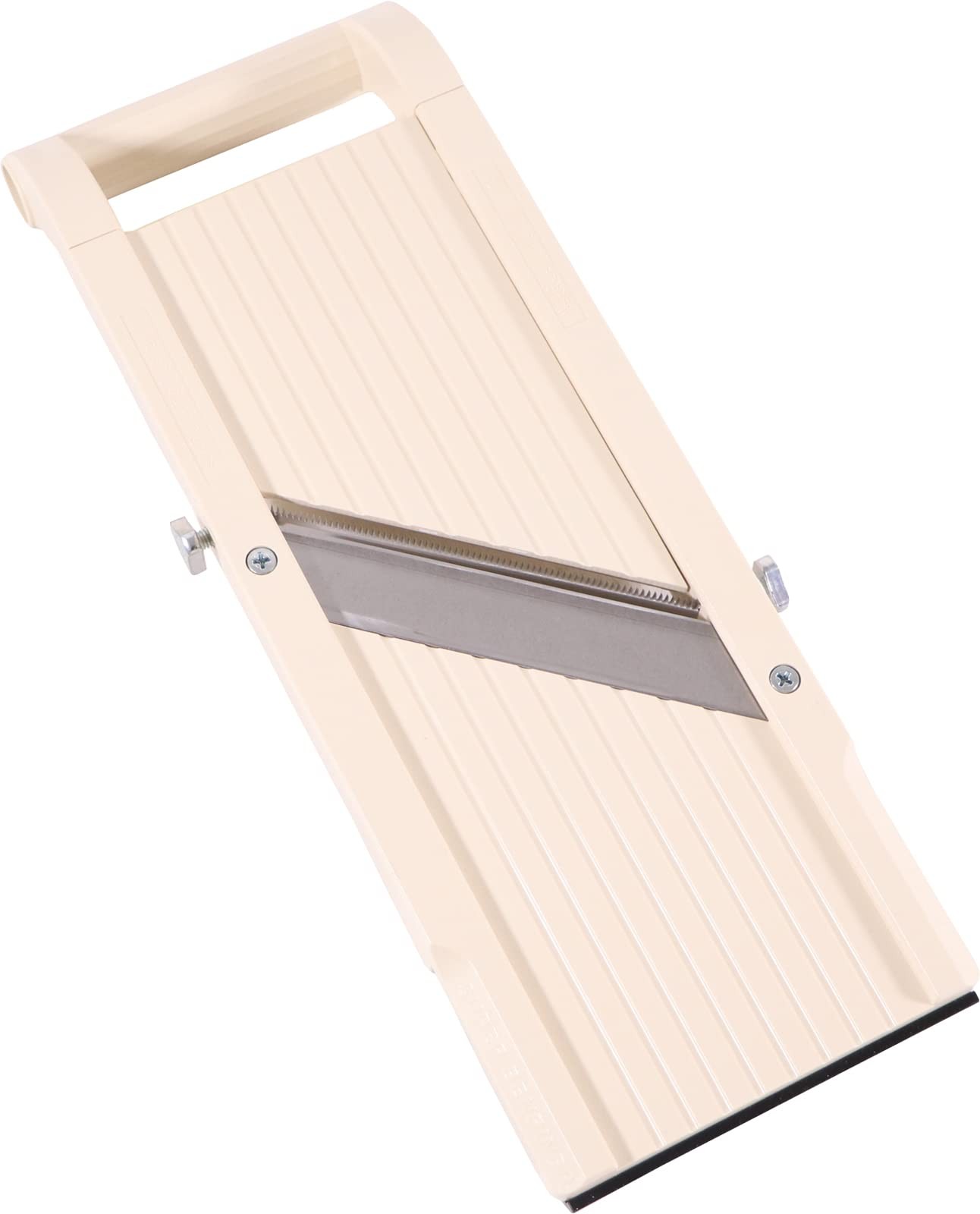
Benriner Super Benriner Mandoline Slicer
Japanese stainless steel blade , razor-sharp and adjustable from paper-thin to 5mm
Buy on Amazon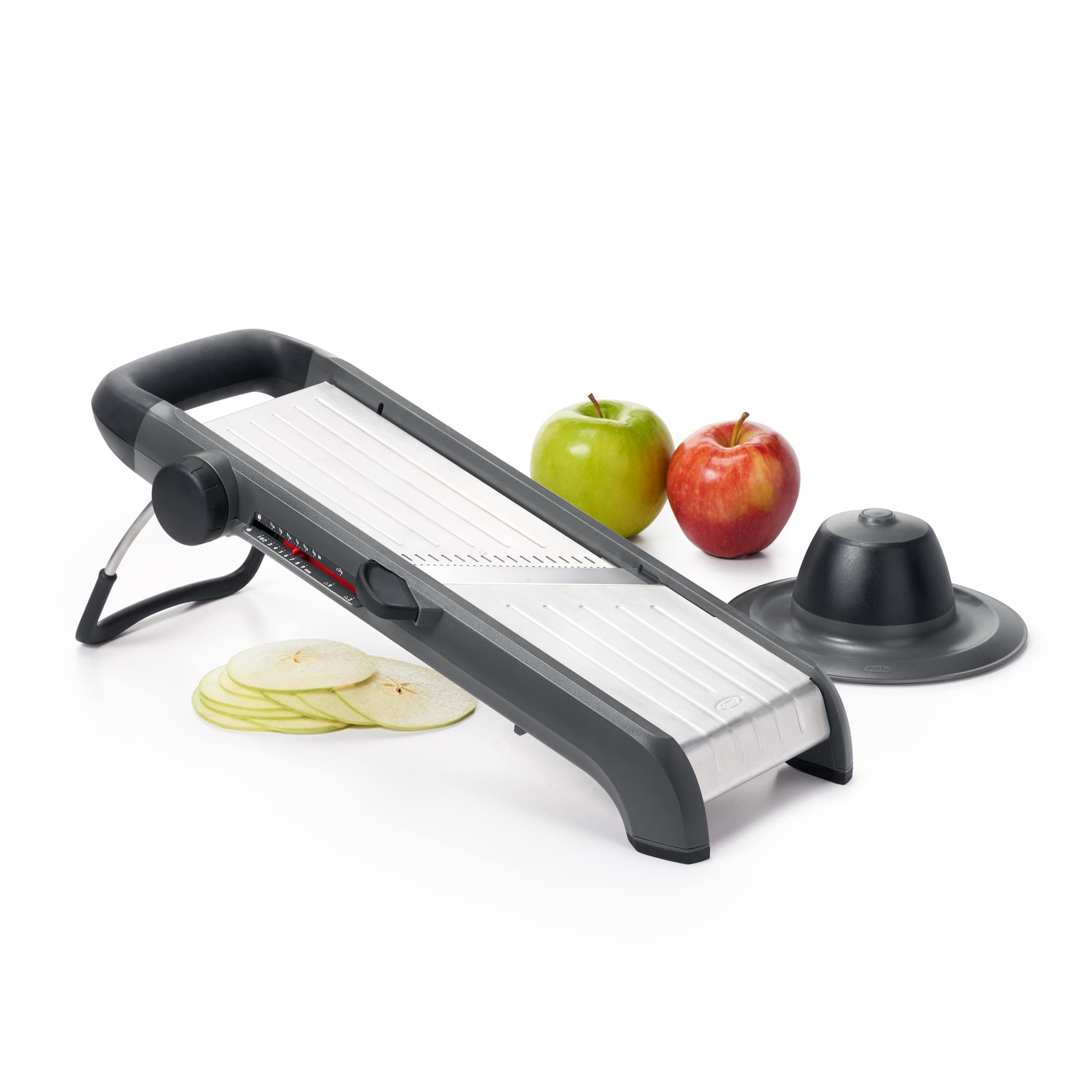
OXO Good Grips Chef's Mandoline Slicer 2.0
Integrated safety hand guard holds food securely during slicing
Buy on Amazon| Product | Price Range | Top Strength | Key Weakness | Buy |
|---|---|---|---|---|
| Benriner Super Benriner Mandoline Slicer best overall | $$ | Japanese stainless steel blade , razor-sharp and adjustable from paper-thin to 5mm | Extremely sharp , requires a cut-resistant glove; not forgiving of careless use | Buy on Amazon |
| OXO Good Grips Chef's Mandoline Slicer 2.0 also consider | $$ | Integrated safety hand guard holds food securely during slicing | Safety guard adds bulk , less precise than the Benriner for very thin cuts | Buy on Amazon |
A mandoline slicer is one of those tools that divides cooks into two camps: the ones who use it weekly and can’t imagine breaking down a fennel bulb any other way, and the ones who cut themselves once, put it in the back of a cabinet, and never touched it again. The difference usually comes down to which mandoline they bought and whether anyone told them how to handle it.
Wood mandoline slicers occupy a specific corner of this category. The “wood” in the name typically refers to a wooden frame or housing that replaces the plastic body found on most consumer models. The aesthetic is part of it, yes, but the frame material also affects grip, stability, and how the tool feels in a real working kitchen. If you’re browsing the Small Appliances category looking for a slicer that will actually stay in regular rotation, this guide covers what separates a good mandoline from a regrettable one, with two direct recommendations and a clear opinion on which one belongs in your kitchen.
What to Look For
Blade Quality and Adjustability
Everything else is secondary to the blade. A mandoline with a mediocre blade requires force, and force on a razor-edged slicer is how people get hurt. Japanese stainless steel, the standard on professional-grade models, holds an edge longer than European stainless and requires less pressure to produce a clean cut. For practical purposes, look for blades adjustable from paper-thin (under 1mm) up to at least 5mm. Anything less flexible and you’re buying a single-purpose tool.
Safety Features
This is the part of most mandoline reviews that gets softened into vagueness, so I’ll be direct. Mandoline slicers cause more kitchen injuries than almost any other tool, including chef’s knives, because the blade is stationary and the food moves toward it. The safety architecture of the mandoline you buy matters considerably.
Consumer models typically include a hand guard, a plastic piece with teeth or prongs that grip the food and keep your fingers away from the blade. Professional models often skip the guard in favor of precision, assuming the user will wear cut-resistant gloves. Neither approach is inherently wrong, but you need to know which type you’re buying and prepare accordingly.
Frame Stability
A mandoline that slides around a cutting board is a problem. Non-slip feet, folding legs that create a stable angle, or a wooden frame with enough weight to stay put during use are all acceptable solutions. What’s not acceptable is a mandoline that requires you to hold it in place with your non-slicing hand while also managing the food.
Cleaning
More parts means more cleaning time. For many cooks this is a deciding factor. A simple flat mandoline with one blade wipes down in thirty seconds. A multi-attachment mandoline with a julienne insert, a waffle blade, and a hinged safety guard takes longer and has more surfaces where food can hide.
Top Picks
Super Benriner Mandoline Slicer: The Professional Standard
The Super Benriner Mandoline Slicer is the mandoline you’ll find in professional kitchens, culinary schools, and the drawers of home cooks who have moved past the beginner stage and want a tool that performs like the real thing. It’s Japanese-made, with a stainless steel blade that is genuinely razor-sharp from the moment you unbox it.
Thickness adjusts from paper-thin up to 5mm via a simple dial on the underside of the frame. The adjustment mechanism is precise. If you’ve used mandolines where “paper-thin” actually means 2mm because the calibration is loose, the Benriner will surprise you. Cucumber rounds so thin they’re translucent, beet slices that cook in two minutes, fennel shaved fine enough that it softens just from the acid in a vinaigrette. The blade makes this possible in a way that consumer-grade models don’t.
The tradeoff is unambiguous. The Benriner does not forgive careless use. There is no integrated hand guard on most configurations, which means the same precision that makes it excellent also makes it genuinely dangerous without proper protection. A cut-resistant glove is not optional here. It’s part of the tool. Buy one before the Benriner arrives, put it next to the mandoline, and use it every time. (I keep mine clipped to the drawer pull directly above where the Benriner lives, because putting it in the same drawer as the mandoline meant I’d sometimes pull out just the mandoline by habit.)
At mid-range pricing, the Benriner is not the cheapest mandoline on the market and not the most expensive. For what it does, it’s priced fairly. Check current price on Amazon for up-to-date figures.
For anyone who wants to go deeper on the Benriner specifically, the Super Benriner Mandoline Slicer review covers performance testing in more detail, including blade longevity over extended use.
Best for: Experienced home cooks comfortable with sharp tools who want professional-level slicing precision.
Not ideal for: Anyone unwilling to commit to using a cut-resistant glove on every single use. This is not a casual disclaimer.
OXO Good Grips Chef’s Mandoline Slicer 2.0: The Safe Daily Driver
The OXO Good Grips Chef’s Mandoline Slicer 2.0 is the mandoline I would recommend to most home cooks without hesitation. It does nearly everything the Benriner does in daily use, and it does it with significantly less injury risk.
The integrated safety hand guard is the difference. It’s a well-designed piece: the food-gripping prongs hold even slippery items like peeled potatoes and halved tomatoes, and it positions your hand far enough from the blade that a momentary lapse in attention doesn’t end with a trip to urgent care. If you’ve ever reached the last half-inch of an onion and had to decide between skipping the rest or risking your fingertips, the OXO’s hand guard solves that problem cleanly.
Thickness adjustment runs from 0.5mm to 9mm via an intuitive dial. That’s a wider range than the Benriner, though I’d note the very finest settings on the OXO don’t quite match the Benriner for precision at the thin end. For most home cooking purposes, 0.5mm is thin enough. The difference becomes relevant if you’re doing something like paper-thin radish carpaccio or shaved Parmesan, where the Benriner’s blade geometry produces a cleaner result.
The non-slip feet and folding legs work well. The mandoline stays put on a cutting board, which matters more than it sounds. The frame feels stable at any angle, and the folding leg system is more reliable than the rubber-foot-only approach on some competitors.
The legitimate downside is the cleaning. More parts than the Benriner, more surfaces to clear after use. The hand guard in particular traps bits of food between the prongs if you’re slicing something with high water content, like cucumber or zucchini. Not a dealbreaker, but plan an extra minute of cleaning after use.
The OXO sits in the mid-range price band, roughly comparable to the Benriner. Check current price on Amazon. If anything, the added safety engineering makes it good value relative to what you’re getting.
Best for: Home cooks who want a high-performing mandoline in regular rotation without the elevated injury risk of a professional model.
Not ideal for: Paper-thin precision cuts where the hand guard’s slight imprecision matters.
How to Choose
If your honest answer to “will I always wear a cut-resistant glove” is anything other than “yes, every time,” buy the OXO. The Benriner is a better blade and a faster cleanup, but none of that is relevant if it ends up in the back of the cabinet after one incident. The OXO’s hand guard removes that variable.
If you have the experience and the discipline to handle a professional-grade blade safely, the Benriner is the better tool. The precision at the thin end is meaningfully different, and the simplicity of the design (fewer parts, faster cleanup) makes it easier to keep in regular rotation.
On price, both sit in the mid-range band for mandolines, which is where I’d spend anyway. Budget mandolines under this tier tend to have blade calibration problems and frame flex that make them less predictable. Spending less does not, in this category, produce a proportionally acceptable result. Premium mandolines exist in this category but the step up from mid-range to premium pricing produces diminishing returns for home use.
One practical consideration that doesn’t get mentioned enough. The type of cutting board you use matters. A mandoline on a thin flexible cutting mat is a stability problem regardless of which model you buy. Use a heavy wooden or thick polypropylene board. It’s the same principle as buying a good knife and then using a glass cutting board. The tool is only as functional as what supports it.
For anyone building out a more complete kitchen prep setup, mandoline slicers pair well with a good immersion blender for sauce and soup work. The Large Immersion Blender review covers options in that category if you’re in the process of outfitting a kitchen from scratch.
Beyond the mandoline itself, replacement and specialty blades are worth knowing about before you need them. The Mandoline Slicer Blades guide covers compatibility, what the different blade types actually do, and which ones are worth buying versus which exist mostly to fill out a spec sheet.
Browsing our full kitchen small appliances section will give you a sense of how mandolines fit alongside other prep tools if you’re building a more systematic kitchen setup.
Frequently Asked Questions
Is a wood mandoline slicer better than a plastic one?
Wood frames tend to be heavier and more stable, which reduces movement during slicing. For practical purposes, frame material matters less than blade quality and stability on the cutting surface. A wood-framed mandoline with a mediocre blade is worse than a well-made plastic-frame model with a sharp one. Prioritize blade quality first, then frame stability.
Do I really need a cut-resistant glove?
For the Benriner, yes. For the OXO with its hand guard, the glove is still good practice but the integrated guard provides significant protection on its own. Mandoline injuries typically happen at the end of a vegetable when there’s little left to grip and the instinct is to push through. The OXO guard addresses this directly. The Benriner does not.
How do I keep my mandoline blade sharp?
Most home cooks won’t sharpen a mandoline blade themselves, and that’s reasonable. The blades on quality mandolines like the Benriner hold an edge well under normal home use. When performance drops off, replacement blades are available and usually less expensive than a full new mandoline. Avoid running the mandoline over extremely hard items like frozen food or large seeds, which will dull or chip the blade faster than normal use.
Can a mandoline replace a food processor for slicing tasks?
For uniform thin slicing, yes, a mandoline is better than most food processor slicing discs. Food processors are faster for volume and preferable for anything that requires multiple operations (slice and then chop, for instance). If you’re making a gratin dauphinois or a cucumber salad where consistent thickness matters, the mandoline produces better results.
What’s the difference between the standard Benriner and the Super Benriner?
The Super Benriner has a wider slicing bed (about 4.5 inches) compared to the standard model (about 2.75 inches), which accommodates larger vegetables like zucchini, large beets, or halved cabbage without having to quarter them first. The blade quality is the same. For most home kitchens, the Super Benriner is the more practical choice.
Frequently Asked Questions
What is a wood mandoline slicer and how is it different from a plastic mandoline?
A wood mandoline slicer uses a wooden frame or housing instead of the plastic body found on most consumer models. The wooden frame typically adds weight and grip stability, which reduces sliding during use. The blade quality and adjustability matter far more than the frame material for actual slicing performance, but the wood construction also contributes to a more durable, aesthetically durable tool that holds up better over years of use.
Is the Super Benriner mandoline safe for home use?
Yes, but it requires respect. The Super Benriner ships razor-sharp and does not include a hand guard, which is standard for professional-grade mandolines. You should use a cut-resistant glove with it every time — not sometimes, every time. The blade does not care how experienced you are. With proper protection and technique, it is one of the best mandolines available for precise, consistent slicing.
What thickness range should a mandoline slicer cover?
A useful mandoline should adjust from paper-thin (under 1mm) for chips and gratins to at least 5mm for thicker cuts of fennel, cucumber, or potato. The Super Benriner adjusts from paper-thin to 5mm; the OXO Good Grips adjusts from 0.5mm to 9mm via a dial, which gives you a wider range for thicker cuts.
Do I need a hand guard for a mandoline slicer?
Yes, or a cut-resistant glove — one or the other is non-negotiable. Mandoline slicers cause more kitchen injuries than almost any other tool because the blade is stationary and the food moves toward it. Consumer models like the OXO include an integrated hand guard; professional models like the Benriner assume you will use a glove. Neither approach is safer by default, but one must be in use every time you slice.
Is the OXO Good Grips mandoline a good alternative to the Benriner?
Yes, for cooks who want a safer, more approachable setup. The OXO's integrated hand guard keeps your fingers away from the blade without requiring a separate glove, the dial thickness control is intuitive, and the non-slip feet keep it stable on the cutting board. It is slightly less precise at very thin cuts than the Benriner but covers the needs of most home cooks with less anxiety.
Where to Buy
Benriner Super Benriner Mandoline SlicerSee Super Benriner Mandoline Slicer on Amazon