18/10 Stainless Steel Cookware Sets: What the Numbers Really Mean

Affiliate disclosure: Some links on this page are affiliate links. If you buy through them we earn a small commission at no extra cost to you. Recommendations are research-driven; we don't claim personal use of every product reviewed. Product prices and availability are accurate as of the date published and are subject to change. Always check Amazon for current pricing before purchasing. Learn more.
Quick Picks
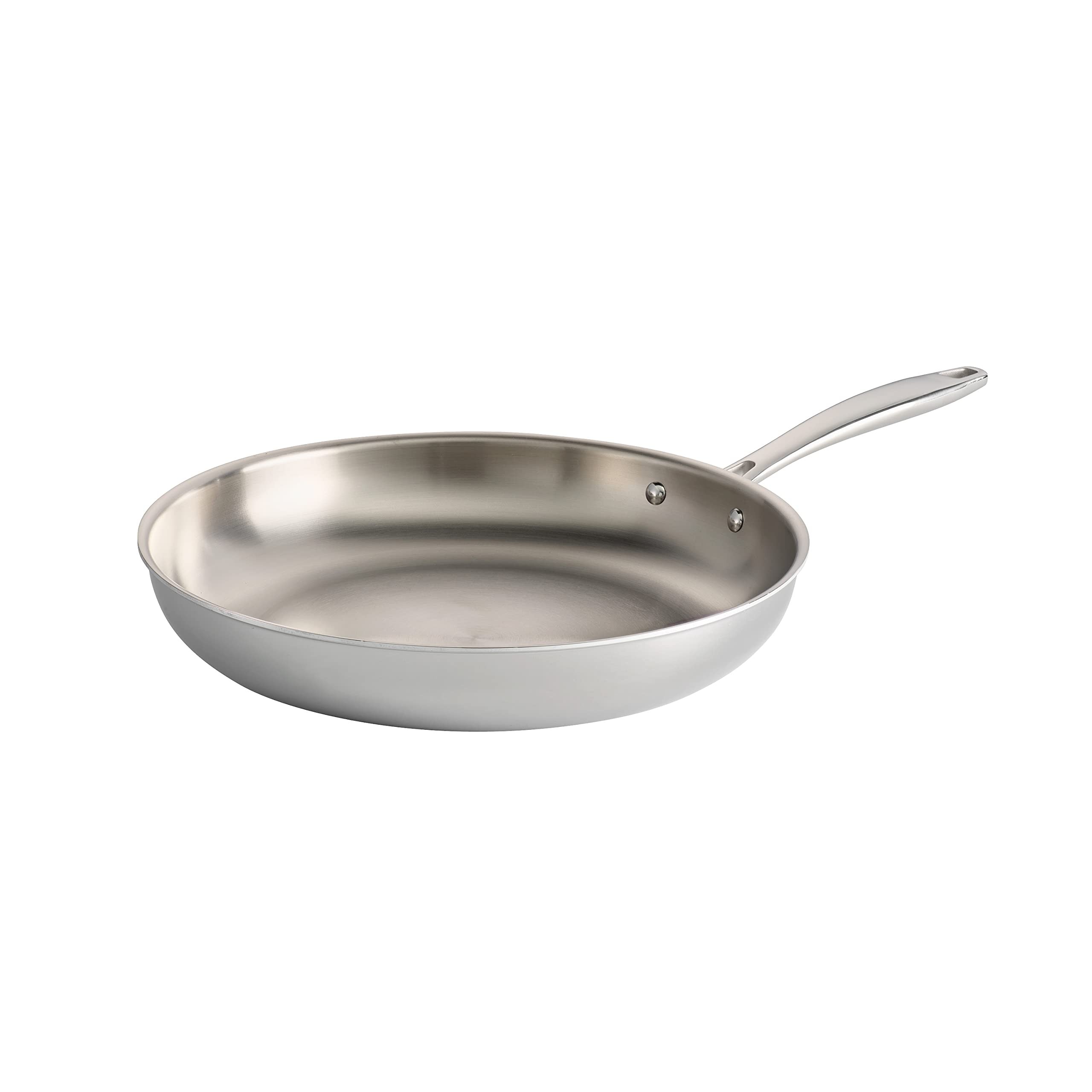
Tramontina 12-Inch Tri-Ply Clad Stainless Fry Pan
Genuine tri-ply construction , same bonding method as All-Clad at a fraction of the price
Buy on Amazon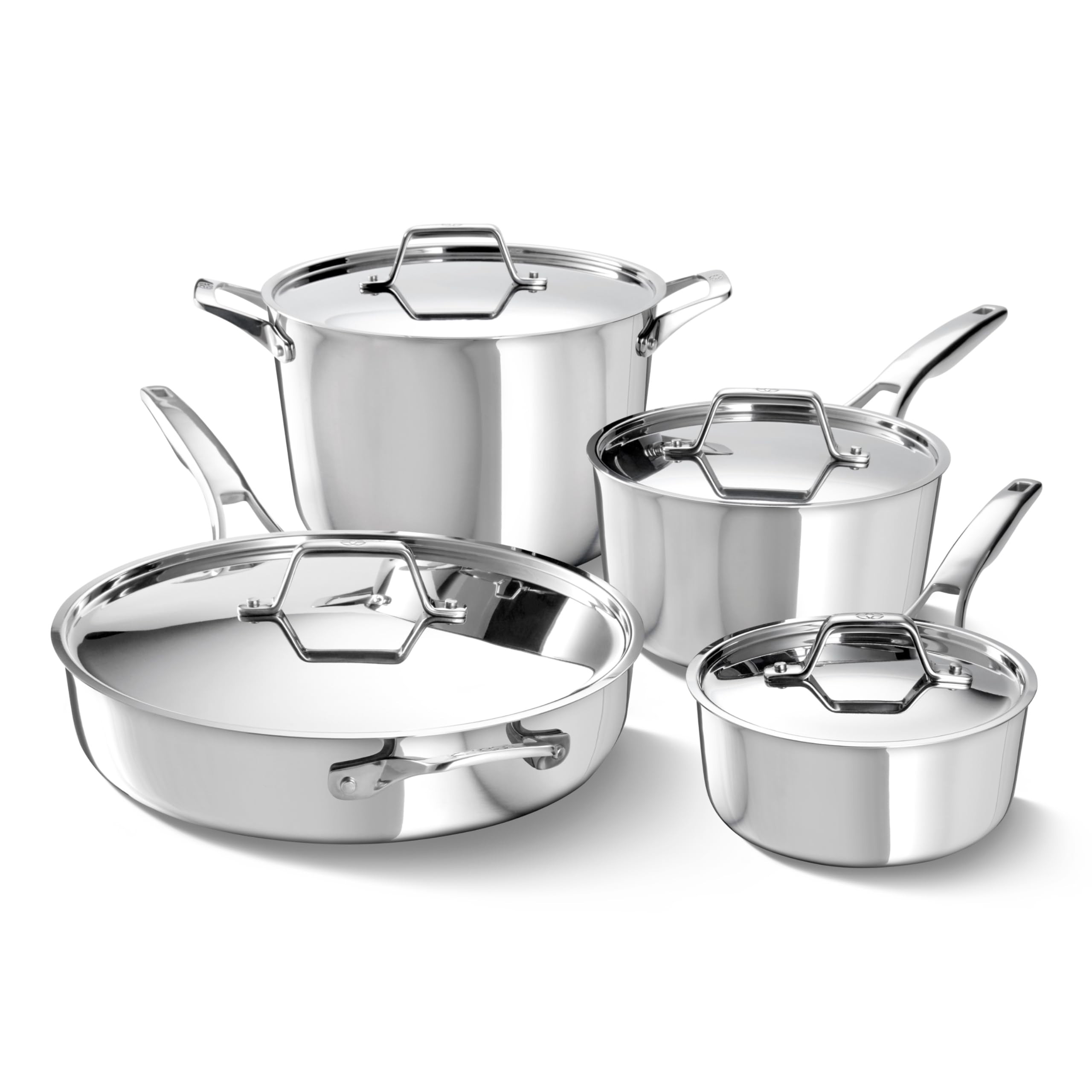
Calphalon Premier Stainless Steel Cookware Set 8-Piece
Multi-layer stainless construction heats evenly without hot spots
Buy on Amazon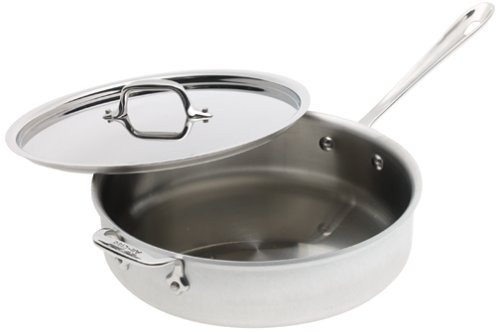
All-Clad D3 Stainless 12-Inch Fry Pan
Tri-ply construction bonds stainless and aluminum for perfectly even heating
Buy on Amazon| Product | Price Range | Top Strength | Key Weakness | Buy |
|---|---|---|---|---|
| Tramontina 12-Inch Tri-Ply Clad Stainless Fry Pan best overall | $$ | Genuine tri-ply construction , same bonding method as All-Clad at a fraction of the price | Slightly thinner gauge than All-Clad , marginally less heat retention | Buy on Amazon |
| Calphalon Premier Stainless Steel Cookware Set 8-Piece also consider | $$ | Multi-layer stainless construction heats evenly without hot spots | Multi-layer construction not as refined as true tri-ply clad | Buy on Amazon |
| All-Clad D3 Stainless 12-Inch Fry Pan also consider | $$$ | Tri-ply construction bonds stainless and aluminum for perfectly even heating | Stainless surface requires technique to prevent sticking , not beginner-friendly | Buy on Amazon |
| Demeyere Industry 11-Inch Skillet also consider | $$$ | 5-ply TriplInduc base optimized specifically for induction cooktops | One of the most expensive stainless skillets available | Buy on Amazon |
| All-Clad D3 Stainless 6-Quart Saute Pan also consider | $$$ | Straight walls prevent liquid from escaping during reduction | Very heavy pan , harder to maneuver than a skillet | Buy on Amazon |
The number “18/10” gets thrown around on cookware packaging the way “artisan” gets thrown around on bread. It sounds meaningful. It refers to something real. And it gets applied to products ranging from genuinely excellent to barely functional. What it actually means is the chromium-to-nickel ratio in the steel: 18% chromium for corrosion resistance, 10% nickel for shine and added durability. That’s the floor for quality stainless, not a guarantee of what’s above it.
What matters more is what’s bonded to that stainless. A single layer of 18/10 steel conducts heat poorly and unevenly. The pans worth owning layer it over aluminum or copper cores to fix that problem. The grade of steel tells you something about the surface. The construction tells you whether the pan actually works.
If you’re building a stainless steel kitchen from scratch, or replacing a collection of warped nonstick that’s been disappointing you for years, you’ll find more context in our Stainless & Clad hub, which covers construction types, care basics, and what the marketing language actually means. This guide is narrower: specific pans, direct comparisons, and a clear recommendation.
What to Look For
Construction First
Tri-ply is the standard worth comparing against: two layers of stainless sandwiching an aluminum core, bonded through the entire body of the pan, not just the base. If you’ve ever grabbed a pan by the side wall and felt it flex slightly, or noticed food burning at the center while barely cooking at the edges, you’ve experienced what happens without full-clad construction. The aluminum layer distributes heat laterally. Without it running up the walls, you’re cooking in a steel bowl with a warm bottom.
Some sets advertise “multi-layer” construction without specifying where those layers run. Read carefully. “Multi-layer base” usually means the sides are a single layer of steel. That’s a meaningful distinction for sauteing and reducing sauces, where heat climbing the walls matters.
Five-ply construction adds more layers, typically a second aluminum layer or a magnetic steel layer for induction performance. Whether that’s worth the additional cost depends on how you cook and what heat source you’re using.
Gauge and Weight
Thicker gauge aluminum means more heat retention. A pan that holds temperature when you add a cold piece of fish is more useful than one that drops 50 degrees and steams the food instead of searing it. The tradeoff is weight. A professional line-cook lifts a heavy pan a hundred times in a shift and has the forearm strength to match. If you’re cooking four nights a week in a home kitchen, there’s a real ergonomic consideration. (Some pans in this kitchen eventually stopped seeing use because they were simply too heavy on a Tuesday evening.)
Induction Compatibility
Induction cooktops require magnetic material at the base. Most quality stainless steel pans are induction-compatible, but confirm it explicitly. Some pans handle induction adequately. Demeyere designs specifically for it, which is a different thing.
Oven Safety and Handle Design
Fully clad stainless pans are typically oven-safe to 500-600°F. That matters for techniques that start on the stovetop and finish in the oven: seared chicken thighs, frittatas, pan sauces that need ten minutes of gentle heat. Riveted handles stay on. Welded handles can eventually fail. The ergonomics of the handle matter more than most buyers consider in the store.
Top Picks
Best Value: Tramontina 12-Inch Tri-Ply Clad Stainless Fry Pan
The Tramontina 12-Inch Tri-Ply Clad Stainless Fry Pan is the clearest value argument in this category. The construction method is the same as All-Clad’s D3: fully bonded tri-ply, stainless over aluminum over stainless, running through the walls. Made in Brazil, not Pennsylvania, which is part of why it lands in the mid-range price band rather than premium.
The aluminum core is marginally thinner than the D3, which means slightly less heat retention. In practice, that difference is real but small. For everyday cooking, including high-heat searing and pan sauces, it performs well. The handle is functional but less refined in shape than All-Clad’s. That’s the honest tradeoff. If the All-Clad D3 is the benchmark and you’ve been cooking long enough to know whether the benchmark is worth the premium to you, the Tramontina is where I’d start the conversation.
Oven-safe to 500°F. Induction compatible. Professional cooks who’ve used both tend to land in the same place: same construction principle, different price tier.
Best Set for Upgrading from Nonstick: Calphalon Premier Stainless Steel Cookware Set 8-Piece
The Calphalon Premier Stainless Steel Cookware Set 8-Piece is the right answer for a specific buyer: someone who has been cooking on thin nonstick, knows it’s time to upgrade, and isn’t ready to spend premium pricing on a full All-Clad set. Calphalon’s multi-layer stainless construction heats evenly enough for everyday cooking, and the tempered glass lids are a practical feature if you’re used to checking on things without lifting.
The construction isn’t true tri-ply clad in the same sense as All-Clad or Tramontina. It heats well but with less precision than a fully bonded pan at high heat. The glass lids are useful and also the weakest component; they’ll chip or crack if you’re not careful. Dishwasher-safe is accurate, though I’d handwash stainless if I wanted it to look decent after five years.
Oven-safe to 450°F. For someone moving out of the nonstick phase of their cooking life, this set covers the necessary bases without requiring a significant leap of either faith or budget.
The American Benchmark: All-Clad D3 Stainless 12-Inch Fry Pan
The All-Clad D3 Stainless 12-Inch Fry Pan is what everything else in this category measures itself against, which is either a recommendation or a starting point depending on how you read it. I cooked on one for eight years. The tri-ply construction is excellent: consistent heat across the entire surface, no hot spots at the center, predictable behavior from pan to pan and year to year. Made in Canonsburg, Pennsylvania. Lifetime warranty. Oven-safe to 600°F.
The stainless surface requires technique. If you add protein before the pan is properly preheated and the surface has released its microscopic moisture, things stick. That’s not a flaw in the pan; it’s a property of stainless steel that requires a brief learning curve. Buyers who return All-Clad pans complaining about sticking usually added cold meat to an insufficiently preheated pan. The pan is doing exactly what it should.
At premium pricing, it costs roughly twice the Tramontina for marginally better heat retention and a more refined handle. Whether that’s worth it is a real question, and the honest answer is: sometimes yes, depending on how often you cook and how much the ergonomics matter to you over a decade of use.
Best for Induction: Demeyere Industry 11-Inch Skillet
The Demeyere Industry 11-Inch Skillet is engineered differently from the All-Clad D3 in ways that matter if you’re cooking on induction. Demeyere’s TriplInduc base uses five layers optimized specifically for induction efficiency, and the result is faster, more even heat on induction cooktops than any pan in this category. Made in Belgium. Riveted handle stays cooler longer than the D3’s during high-heat cooking, which is an ergonomic advantage if you’re doing extended sautes.
It’s one of the most expensive stainless skillets available, and it’s heavier than the All-Clad equivalent. If you cook on gas or electric, the induction optimization isn’t doing much for you and the premium is harder to justify. If you’re on induction, the difference is real. I’ve written more about the construction philosophy differences in the Demeyere vs All-Clad comparison, which covers where each brand makes different engineering choices rather than just different pricing decisions.
Best for Braises and Pan Sauces: All-Clad D3 Stainless 6-Quart Saute Pan
The All-Clad D3 Stainless 6-Quart Saute Pan is the pan I reach for when I’m cooking a full batch of chicken thighs, reducing a wine sauce, or doing anything that requires straight walls and a large surface area simultaneously. The straight sides prevent liquid from escaping during reduction in a way that a skillet’s sloped walls don’t. Six quarts handles volume that would crowd a skillet.
It’s heavy, and heavier with a full braise in it. One-handed maneuvering is not this pan’s purpose. Oven-safe to 600°F. The lid is included and it’s stainless, which is more durable than glass and doesn’t compromise oven temperature ratings. At premium pricing, it’s one of the more expensive pieces in the All-Clad lineup, and for buyers deciding between this and a Dutch oven, the honest answer is that a saute pan does fewer things but does them better: the flat bottom and straight walls are specifically useful for stovetop reductions and searing in a way a curved Dutch oven isn’t.
How to Choose
If you’re buying a single pan to test stainless steel before committing to a set, buy the Tramontina 12-inch and cook on it for three months. The construction is sound, the price is mid-range, and you’ll learn whether stainless steel suits your cooking style without significant financial exposure. If it does, you have a decision to make about where to invest further.
If you’re buying a full set and upgrading from nonstick, the Calphalon Premier 8-piece covers the practical bases for everyday cooking. It’s not the most precise stainless in the category, but it’s a meaningful step up from thin nonstick and the set composition is reasonable.
If you’re on induction and cook seriously, the Demeyere Industry line is worth the premium pricing. The All-Clad D3 is excellent on gas and electric. On induction, Demeyere’s engineering has a real advantage.
For specialty pieces, the All-Clad D3 6-quart saute pan is the most useful single addition to a partial stainless collection. If you already have a decent skillet, a saute pan extends your repertoire more than a second skillet would.
One category this guide doesn’t cover is decorative or alternative finishes. If hammered stainless interests you for aesthetic reasons, the hammered stainless steel cookware section covers the construction and performance differences. For buyers considering a move toward copper entirely, our copper kitchen cookware overview is the more relevant starting point. More buying guides and side-by-side comparisons live on our Stainless & Clad hub page.
Frequently Asked Questions
What does 18/10 stainless steel mean, and does it matter?
18/10 refers to the steel alloy composition: 18% chromium and 10% nickel. The chromium resists corrosion and staining. The nickel adds durability and the polished appearance associated with quality cookware. It’s the standard grade for quality stainless and is worth confirming on any pan you buy. What it doesn’t tell you is anything about the construction beneath the surface, which is the more important variable for cooking performance.
Is tri-ply better than multi-layer stainless?
Tri-ply clad specifically means three bonded layers running through the entire pan body: typically stainless, aluminum, stainless. Multi-layer is a broader term that may describe the same construction or may describe a heavier base with single-layer walls. Full-clad construction is better for cooking techniques that use the pan walls, including sauteing and reducing. For buyers comparing options, confirm whether the layering runs fully through the pan or only through the base.
Do stainless steel pans work on induction?
Most quality stainless steel pans are induction compatible because stainless is magnetic. Check the product specifications to confirm, particularly on older or lower-grade pans. Demeyere designs its construction specifically for induction performance, which is meaningfully different from a pan that merely works on induction. If induction cooking is your primary method, that distinction is worth considering before purchase.
Why does food stick to my stainless steel pan?
Stainless steel is not nonstick. Food sticks when protein is added before the pan surface reaches the right temperature, or when the surface hasn’t had time to release its moisture layer. The reliable method: preheat the pan over medium to medium-high heat, add oil and wait for it to shimmer, then add food. Cold protein added to an insufficiently heated pan bonds to the steel before it can release. This is learned behavior, not a defect in the pan.
How do I compare the All-Clad D3 to the Tramontina tri-ply on construction quality?
Both use full tri-ply clad construction bonded through the entire pan body, which is the relevant comparison point. All-Clad’s aluminum core is slightly thicker, which means marginally better heat retention. All-Clad is made in the USA and carries a lifetime warranty. Tramontina is made in Brazil at a significantly lower price point within the mid-range band. For most home cooks cooking four to five nights per week, the practical performance difference is small. The All-Clad D3 is a better pan; how much better, relative to the price difference, is the honest question.
Frequently Asked Questions
What does 18/10 stainless steel actually mean in cookware?
18/10 refers to the chromium-to-nickel ratio in the steel alloy: 18% chromium for corrosion resistance and 10% nickel for durability and shine. It describes the surface quality of the steel, not the construction method. A pan can be 18/10 stainless and still perform poorly if it lacks a proper conductive core.
Is 18/10 stainless steel the most important factor when choosing a cookware set?
No. The grade of stainless tells you about surface durability and corrosion resistance, but construction is what determines cooking performance. Whether the pan is fully clad tri-ply versus disk-bottom, and the gauge of the aluminum core, have far more impact on how evenly the pan heats and how well it sears.
What is the difference between 'multi-layer base' and 'full clad' cookware?
Multi-layer base means the extra conductive layers are limited to the bottom of the pan. Full clad means those layers run from base to rim through the entire body. For sauces and dishes where heat climbing the sidewalls matters, full clad is meaningfully better. Multi-layer base pans can scorch sauces along the walls above the disk.
Why do stainless steel pans sometimes warp after regular use?
Warping typically results from rapid temperature changes, such as running cold water over a very hot pan, or from thin-gauge construction that cannot withstand sustained high heat. Thicker aluminum cores and heavier-gauge pans are significantly more resistant to warping. Letting pans cool before washing dramatically reduces the risk.
Is a Tramontina tri-ply pan as good as All-Clad for everyday cooking?
In practical home cooking terms, very close. Both use genuine full-clad tri-ply construction. All-Clad uses a slightly thicker gauge aluminum core, which provides marginally better heat retention during high-heat searing. For most everyday cooking, the Tramontina's performance is excellent and the price difference is substantial.
Where to Buy
Tramontina 12-Inch Tri-Ply Clad Stainless Fry PanSee Tramontina 12-Inch Tri-Ply Clad Stain… on Amazon