Breville Espresso Machine Portafilter Guide

Affiliate disclosure: Some links on this page are affiliate links. If you buy through them we earn a small commission at no extra cost to you. Recommendations are research-driven; we don't claim personal use of every product reviewed. Product prices and availability are accurate as of the date published and are subject to change. Always check Amazon for current pricing before purchasing. Learn more.
Quick Picks
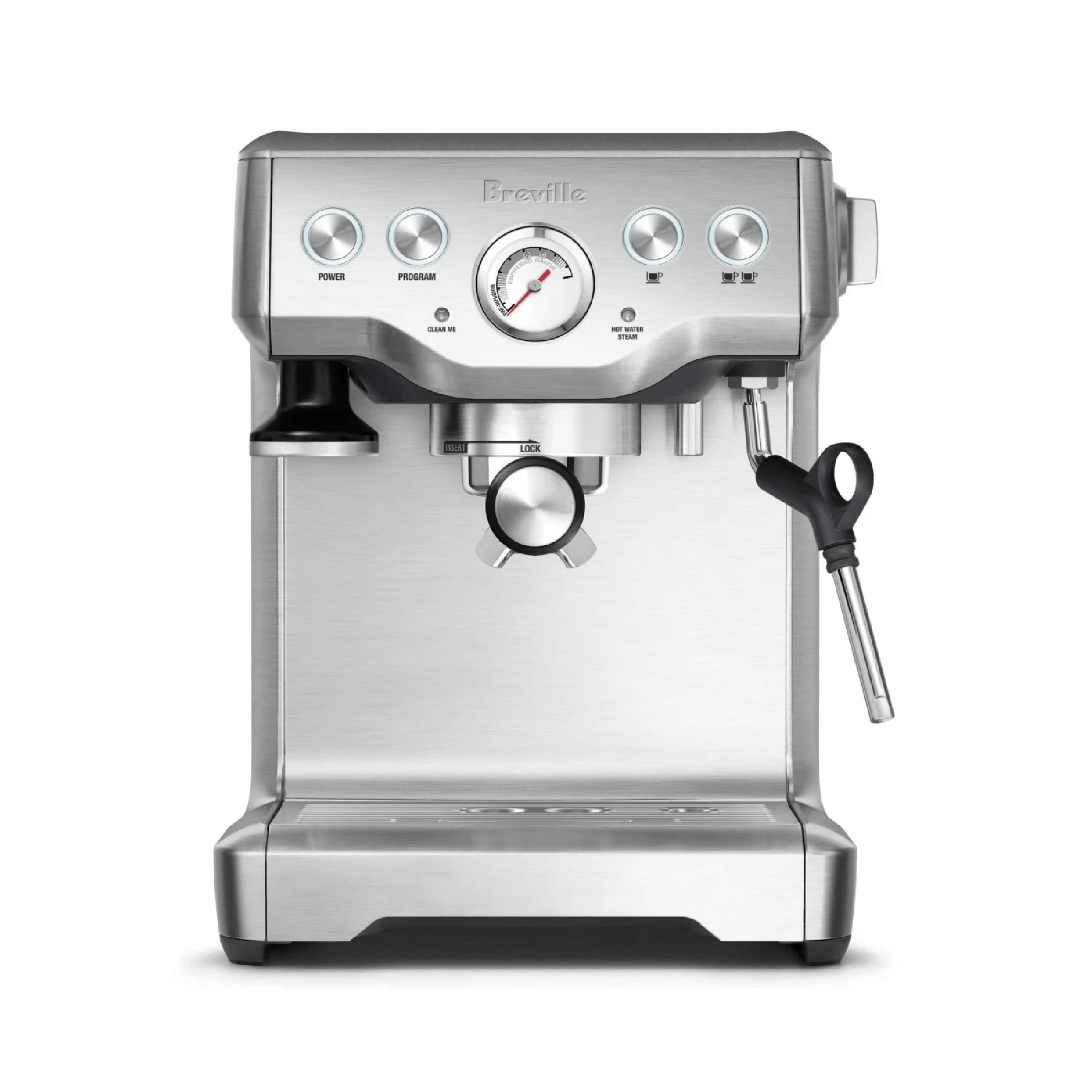
Breville Infuser Espresso Machine (BES840)
Pre-infusion wets the coffee puck before full pressure , more even extraction
Buy on Amazon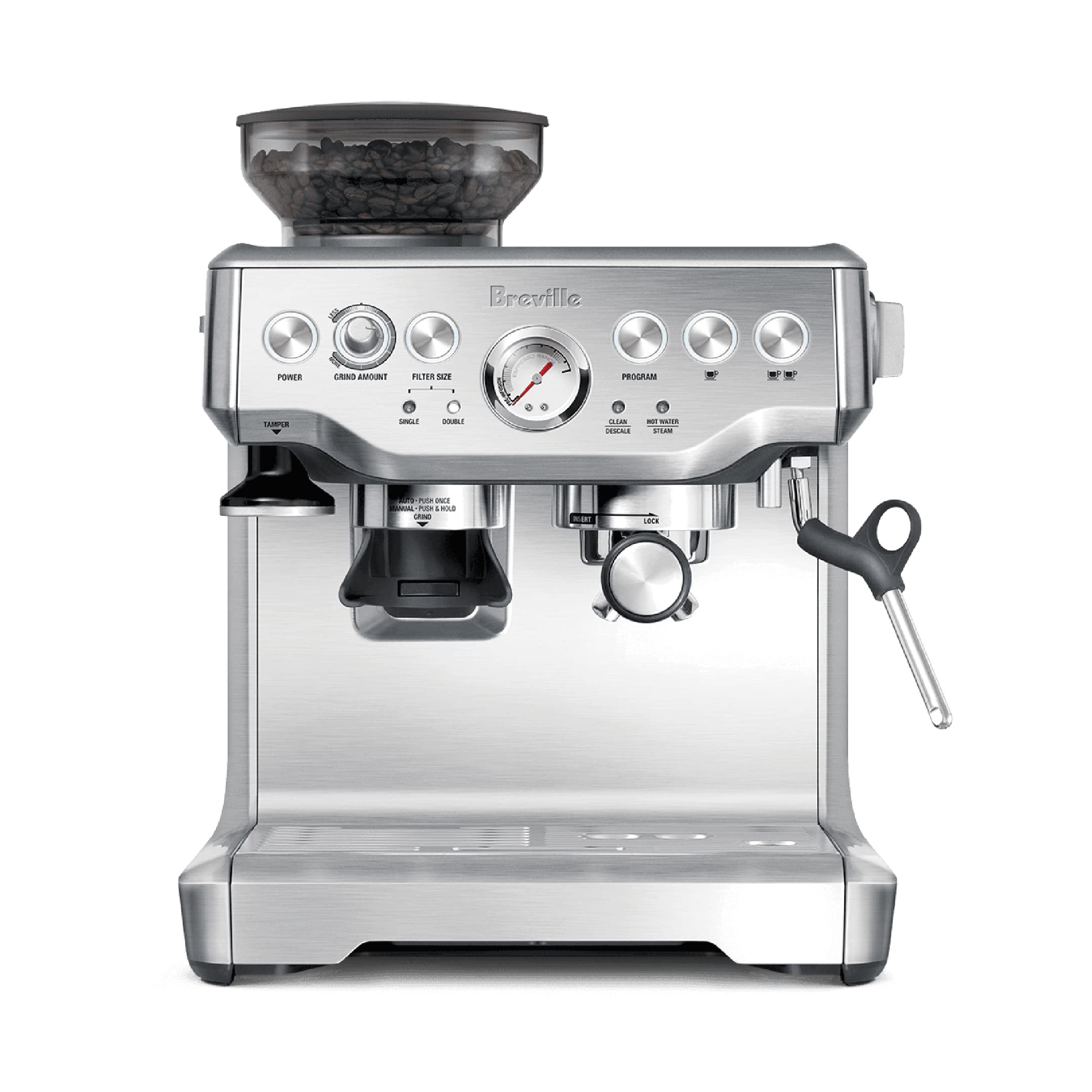
Breville Barista Express Espresso Machine (BES870)
Built-in conical burr grinder , grind fresh directly into the portafilter
Buy on Amazon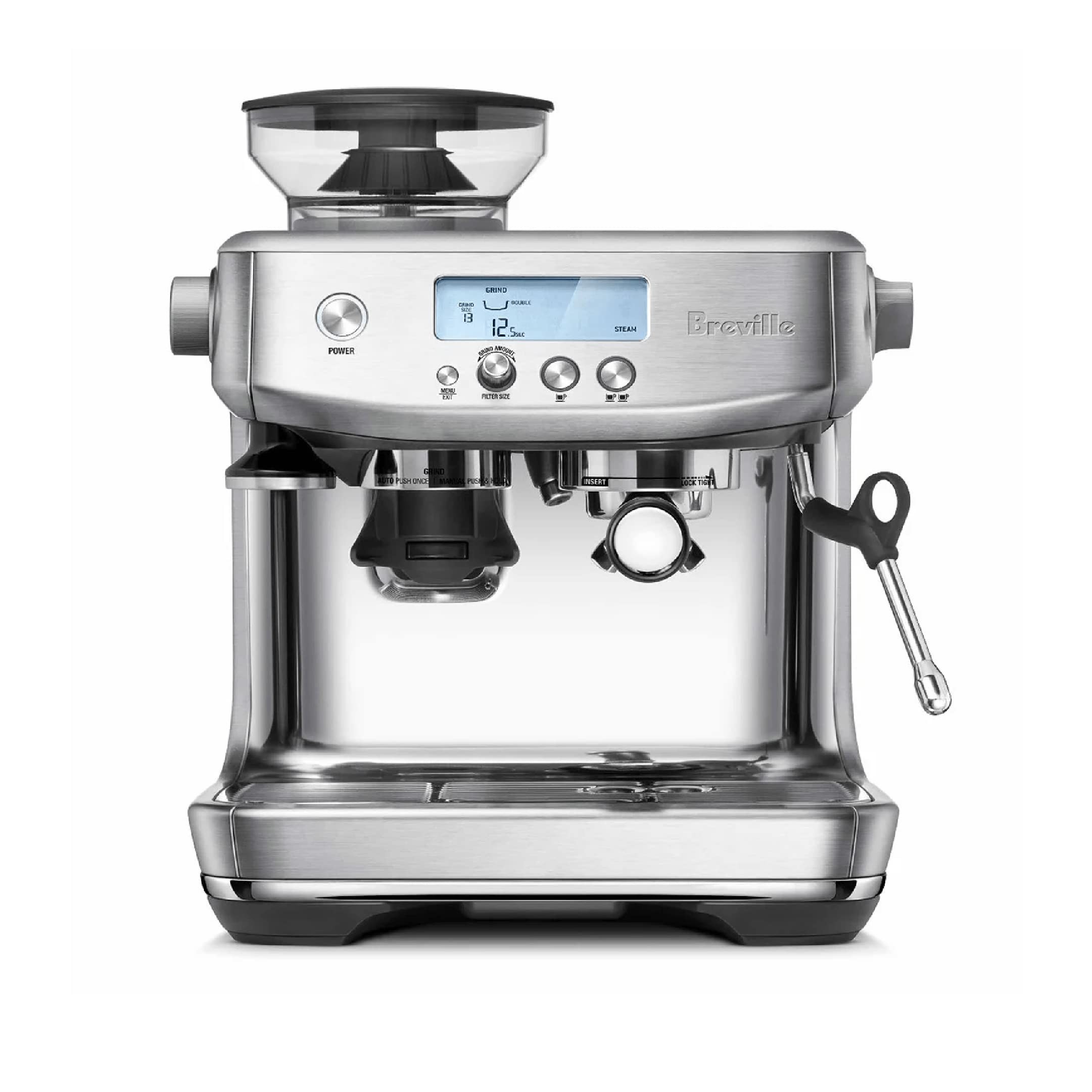
Breville Barista Pro Espresso Machine (BES878)
Integrated ThermoJet heating system reaches brew temperature in 3 seconds
Buy on Amazon| Product | Price Range | Top Strength | Key Weakness | Buy |
|---|---|---|---|---|
| Breville Infuser Espresso Machine (BES840) best overall | $$ | Pre-infusion wets the coffee puck before full pressure , more even extraction | Requires separate grinder for best results , adds cost | Buy on Amazon |
| Breville Barista Express Espresso Machine (BES870) also consider | $$$ | Built-in conical burr grinder , grind fresh directly into the portafilter | Built-in grinder limits flexibility vs a dedicated grinder , harder to upgrade one component | Buy on Amazon |
| Breville Barista Pro Espresso Machine (BES878) also consider | $$$ | Integrated ThermoJet heating system reaches brew temperature in 3 seconds | Expensive , premium over Barista Express for the ThermoJet heating | Buy on Amazon |
The portafilter is where espresso actually happens. Grind goes in, pressure goes through it, extraction comes out. So when people ask me which Breville espresso machine to buy, I usually start there: what kind of control do you want over that process, and how much countertop space are you willing to spend to get it?
I’ve been pulling shots at home long enough to have opinions I’m not shy about sharing. These three machines cover the realistic range for a serious home cook who isn’t opening a coffee shop but also isn’t settling for a capsule machine. All three are in the broader category of small appliances I write about here, and all three use a 54mm portafilter, which matters if you start collecting baskets or accessories.
What to Look For in a Breville Espresso Machine Portafilter Setup
Portafilter Size and Basket Compatibility
Breville’s 54mm portafilter runs across the Infuser, Barista Express, and Barista Pro. That consistency is actually useful. Aftermarket baskets, bottomless portafilters, and VST-style precision baskets are all available in 54mm. The portafilter itself ships as a pressurized basket by default on some configurations, but you’ll want to move to a single-wall (non-pressurized) basket once your grind is dialed in. That switch alone changes extraction quality more than most people expect.
PID Temperature Control
Espresso extraction is sensitive to temperature in ways that home machines used to ignore entirely. A PID controller holds water at a precise brew temperature rather than cycling in a wide band. All three machines covered here include PID. The practical difference: you’re not gambling on whether the boiler is at the right temperature when you pull your shot. If you’ve ever had espresso that tasted sour on one pull and bitter on the next from the same grind, temperature variance was probably the culprit.
Pre-Infusion
Pre-infusion wets the coffee puck at low pressure before ramping to full pump pressure. It matters more with lighter roasts and more finely ground coffee, where an immediate blast of 9+ bar pressure can channel unevenly through the puck. The Infuser (BES840) handles this particularly well and it’s one of the reasons I’d recommend it over cheaper machines that skip it entirely.
Grinder Integration
This is the real decision point. A separate grinder gives you more flexibility and, typically, better grind quality at equivalent price points. A built-in grinder means one machine, one footprint, and fresh-ground coffee without buying a second appliance. Neither answer is wrong. The Barista Express and Barista Pro both include a conical burr grinder. The Infuser does not.
Top Picks
Breville Infuser Espresso Machine (BES840): The Entry Point Worth Taking Seriously
The Breville Infuser Espresso Machine is mid-range priced and the right starting point if you already own a decent burr grinder or plan to buy one separately. Pre-infusion is standard, PID temperature control is included, and the semi-automatic operation gives you more control than any capsule machine without requiring barista-level technique to get a drinkable shot.
The steaming wand produces less pressure than the higher-end Breville machines, which is a real limitation if milk drinks are a priority. You can still make a workable microfoam, but it takes more patience. For straight espresso and Americanos, the wand limitation is largely irrelevant.
The separate grinder requirement is the honest cost caveat here. A capable burr grinder at this level adds meaningful cost to the total setup. If you’re budgeting the complete system, factor that in before comparing the Infuser’s price to the Barista Express and concluding it’s the cheaper option. Sometimes it isn’t.
I’ve written a more detailed breakdown in my Breville The Infuser Espresso Machine review if you want the longer version of that analysis.
Breville Barista Express Espresso Machine (BES870): The Practical Recommendation for Most People
The Breville Barista Express Espresso Machine is where I’d send most buyers. It’s premium priced, includes a built-in conical burr grinder with dose control, runs PID temperature control, and ships with a 15-bar Italian pump. Grind fresh, dose directly into the portafilter, tamp, pull. The workflow is logical and the machine doesn’t fight you.
The built-in grinder trade-off is worth naming directly. You cannot upgrade the grinder independently without replacing the whole machine. For most home users, the grinder that ships with the Barista Express is good enough for years of daily use. If you eventually want to move to a high-end standalone grinder, you’d be pairing it with a machine that has a grinder you’re no longer using. That day may never come, or it may come in three years. Only you know which.
Countertop footprint is significant. Measure before you buy. (I’m not being dramatic. This machine is notably wide and deep, and if you’re working with limited counter space in an older kitchen layout, the dimensions matter more than any feature comparison.)
The Barista Express competes directly with machines like the De’Longhi La Specialista lineup, and I cover that comparison in more depth in the Breville Espresso Machine Vs Delonghi piece.
Breville Barista Pro Espresso Machine (BES878): For the Impatient and the Specific
The Breville Barista Pro Espresso Machine is also premium priced, but a meaningful step above the Barista Express. The headline feature is the ThermoJet heating system, which reaches brew temperature in approximately 3 seconds. On the Barista Express, you’re waiting closer to 30 seconds after the machine is on before you pull your first shot. If that gap matters in your actual morning routine, the Barista Pro addresses it directly.
The Barista Pro also offers 30 grind settings, more than the Barista Express, and the grinder performs noticeably better at finer settings. For light roast espresso especially, that range matters.
The LCD interface is a genuine trade-off. The Barista Express uses a simple dial system. The Barista Pro uses an LCD display with more settings and more modes, and it requires actual time to learn. Whether that’s a feature or a friction point depends entirely on whether you want that control. I’d say: if you’re the kind of person who adjusted the PID offset on your Barista Express within the first week, you’ll appreciate the Barista Pro’s controls. If you want to set it once and leave it, the LCD is mostly overhead.
The premium over the Barista Express is worth it for the faster heat-up time alone if you’re pulling multiple shots across a session, or if you’re coming back to the machine throughout the day. For a single-shot morning routine where you leave the machine on while you shower, it’s a smaller consideration.
If you’re weighing a refurbished unit at a lower price point, the Refurbished Breville Espresso Machine article covers what to check before buying.
How to Choose
If You Already Own a Good Grinder
The Infuser (BES840) is the answer. Don’t pay for a built-in grinder you don’t need. Pair it with whatever you already own, dial in your grind size independently, and use the Infuser’s pre-infusion and PID control to improve extraction quality over what you were pulling before.
If You’re Starting from Zero
The Barista Express (BES870) is the most practical complete setup for most buyers. One purchase, one machine to learn, fresh-ground espresso from day one. The grinder limitations are real but unlikely to matter until you’ve been pulling shots daily for a year or more and want to experiment beyond the built-in range.
If Workflow Speed is a Real Priority
The Barista Pro (BES878) is the upgrade that actually delivers something different, not just incremental. The 3-second heat-up is a real-world improvement, not a spec sheet number. If you have the countertop space and the budget for the premium tier, and you pull multiple shots per day, it earns its price.
The Portafilter Itself
Across all three machines, plan to eventually invest in a bottomless (naked) portafilter. Watching the extraction from underneath tells you immediately whether your distribution and tamping are even. It’s diagnostic in a way the stock spouted portafilter isn’t. Aftermarket 54mm bottomless portafilters are available from several vendors and cost well under what the machines themselves run.
For anyone building out a more complete small appliances setup in the kitchen, there’s a broader overview on the small appliances hub that covers the category.
Frequently Asked Questions
What size portafilter does Breville use?
Breville uses a 54mm portafilter across the Infuser, Barista Express, and Barista Pro. This is a smaller diameter than the 58mm commercial standard. Aftermarket accessories, baskets, and bottomless portafilters are widely available in 54mm, though the selection is narrower than it is for 58mm.
Do I need a separate grinder with a Breville espresso machine?
The Infuser (BES840) does not include a grinder and requires one. The Barista Express (BES870) and Barista Pro (BES878) both include built-in conical burr grinders. For the latter two, a separate grinder is not necessary, though coffee enthusiasts who want to upgrade the grinder independently will eventually find the built-in unit limiting.
Is the Breville portafilter pressurized or non-pressurized?
Breville ships most machines with both a pressurized (dual-wall) basket and a non-pressurized (single-wall) basket included. The pressurized basket is more forgiving with coarser grinds. The single-wall basket gives you a truer read on your extraction and is the one to use once your grind is dialed in. Starting with the single-wall basket is fine if you have a good burr grinder.
What is the difference between the Barista Express and the Barista Pro?
The primary difference is the heating system. The Barista Express uses a thermocoil system with roughly a 30-second warm-up. The Barista Pro uses ThermoJet technology that reaches brew temperature in approximately 3 seconds. The Barista Pro also has 30 grind settings versus the Barista Express’s 16, and uses an LCD interface rather than a dial. Both include built-in grinders, PID temperature control, and 15-bar pumps.
Can I use third-party baskets with a Breville portafilter?
Yes. The 54mm diameter is widely supported by aftermarket basket manufacturers. VST precision baskets, IMS baskets, and various competition-grade options are all available. These tend to have tighter tolerances than the stock baskets and can improve extraction consistency, particularly with high-quality, freshly roasted coffee at fine grind settings. The stock baskets that ship with Breville machines are reasonable starting points but not the ceiling.
Frequently Asked Questions
What size portafilter does Breville use across its espresso machines?
Breville uses a 54mm portafilter on the Infuser, Barista Express, and Barista Pro. That consistent size means aftermarket baskets, bottomless portafilters, and precision baskets are all interchangeable across machines.
Should I use the pressurized or non-pressurized basket that comes with my Breville?
Start with the pressurized basket while you're dialing in your grind, then switch to a single-wall non-pressurized basket once your grind is consistent. The non-pressurized basket gives you better extraction feedback and improved shot quality once you know what you're doing.
Does the Breville Infuser have a built-in grinder?
No. The Infuser (BES840) requires a separate grinder, which is the main tradeoff versus the Barista Express and Barista Pro. A standalone grinder typically offers better grind quality at equivalent price points, but it adds cost and counter space.
What is pre-infusion and does it matter for espresso quality?
Pre-infusion wets the coffee puck at low pressure before ramping to full extraction pressure. It reduces channeling, especially with lighter roasts and finer grinds, resulting in more even extraction and better-tasting shots.
Do all three Breville machines have PID temperature control?
Yes. The Infuser, Barista Express, and Barista Pro all include PID temperature control, which holds brew water at a precise temperature rather than cycling in a wide range. This consistency is a meaningful factor in shot-to-shot repeatability.
Where to Buy
Breville Infuser Espresso Machine (BES840)See Breville Infuser Espresso Machine (BE… on Amazon