Breville Espresso Machine vs DeLonghi: Express vs Pro

Affiliate disclosure: Some links on this page are affiliate links. If you buy through them we earn a small commission at no extra cost to you. Recommendations are research-driven; we don't claim personal use of every product reviewed. Product prices and availability are accurate as of the date published and are subject to change. Always check Amazon for current pricing before purchasing. Learn more.
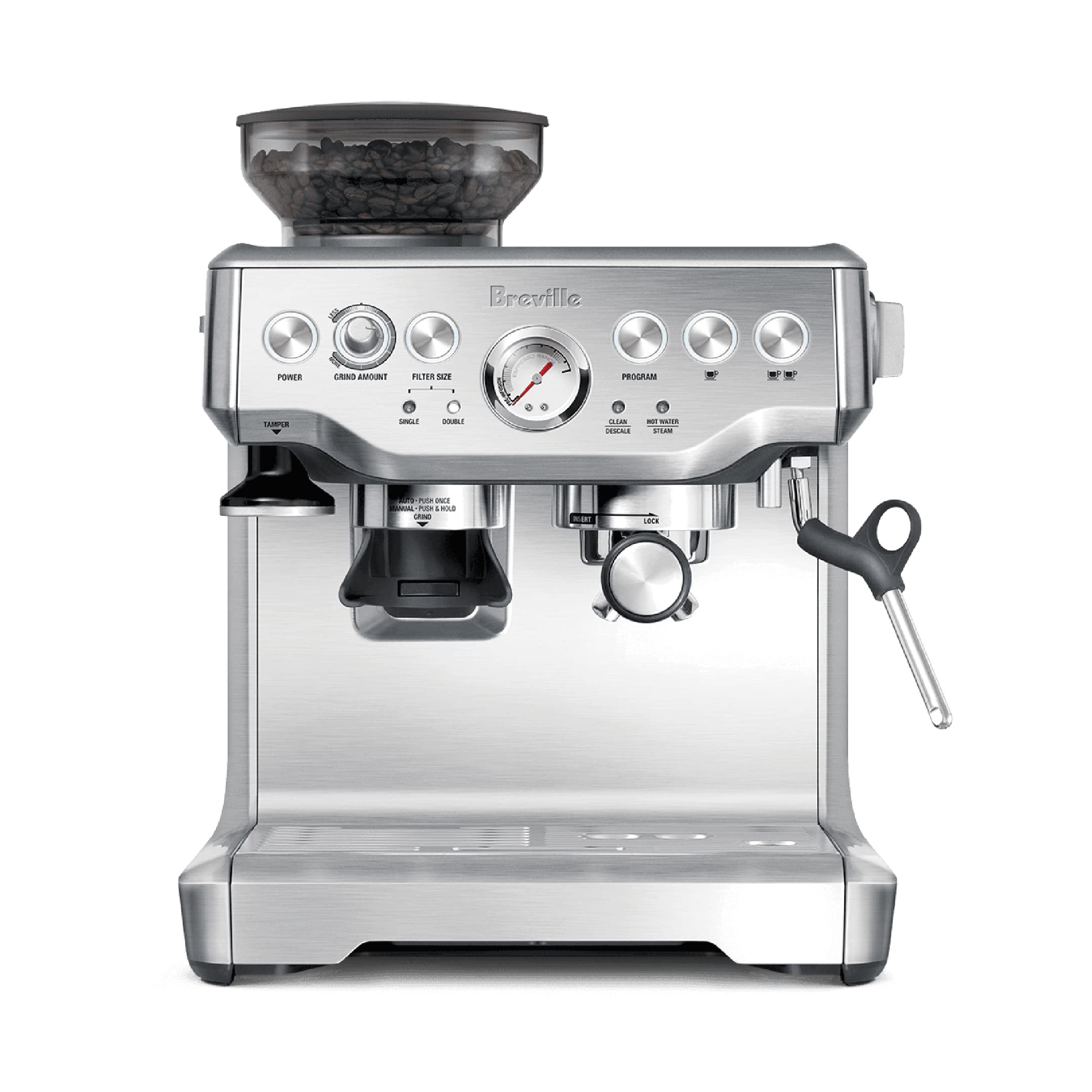 Breville Breville Barista Express Espresso Machine (BES870) Buy on Amazon
 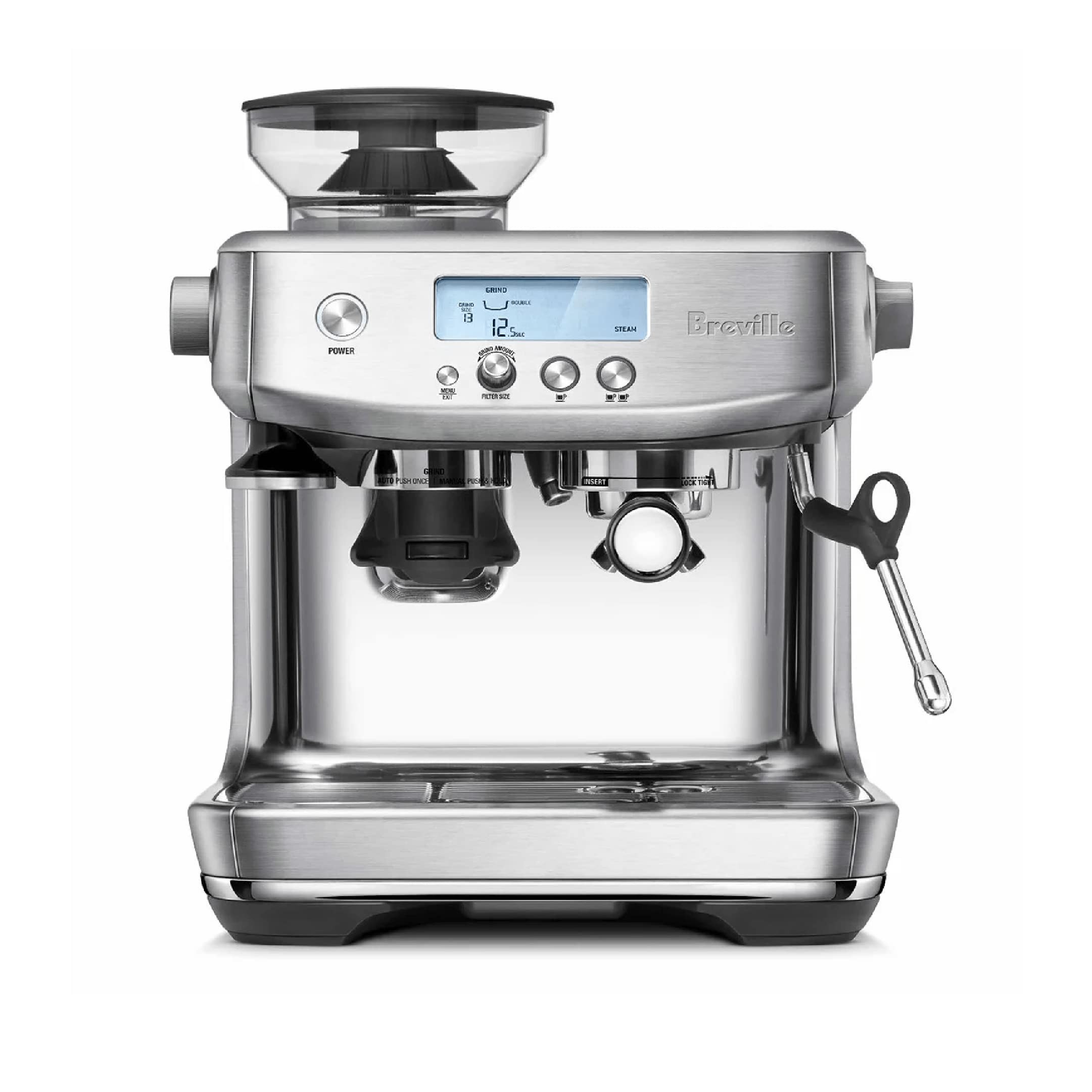 Breville Breville Barista Pro Espresso Machine (BES878) Buy on Amazon
 Both the Breville Barista Express Espresso Machine (BES870) and the Breville Barista Pro Espresso Machine (BES878) are all-in-one home espresso machines with built-in grinders, 15-bar pumps, and enough controls to produce genuinely good espresso at home. They share a chassis and a philosophy. The question is whether the upgrades in the Pro model are worth the premium pricing, or whether the Express does everything most home brewers need at a lower cost. After spending time with both machines, I have a clear answer.
One note before the comparison: this article is specifically about Breville versus Breville. If you arrived here expecting a broader matchup against DeLonghi’s line, the short version is that Breville’s integrated-grinder approach produces more consistent results at home than DeLonghi’s comparable bean-to-cup models, where the grind path is more enclosed and harder to dial in. The machines covered here compete against each other more meaningfully than either competes against DeLonghi’s mid-range units. You can browse our full Small Appliances coverage if you want context on how these fit against the wider market. For deeper coverage of coffee craft — grinders, beans, and extraction variables — The Coffee Dispatch covers espresso-adjacent equipment in detail.
At-a-Glance
The Barista Express (BES870) is the established version: a conical burr grinder feeds directly into the portafilter, PID temperature control keeps extraction consistent, and the interface is dial-based and relatively intuitive. It takes longer to reach brew temperature than the Pro.
The Barista Pro (BES878) replaces the thermocoil heating system with Breville’s ThermoJet, which reaches brew temperature in approximately three seconds. It adds 30 grind settings versus the Express’s stepped grind adjustment, and swaps the dial interface for an LCD display. It costs meaningfully more. Roughly 20 to 25 percent more, depending on current pricing. Check current pricing on Amazon for both before drawing conclusions, since the gap fluctuates.
Both machines have a large countertop footprint. Both require a learning curve. Neither is a push-button automatic. If you want a machine that does the work for you, neither of these is what you want.
What They Share
Both machines use a 15-bar Italian pump, which is standard in this category and not a differentiator. Both have a conical burr grinder built in, which eliminates the need for a separate grinder and saves meaningful counter space compared to running a standalone unit like a Baratza Sette or Eureka Mignon alongside a separate machine. Both use PID temperature control. Both steam milk through a manual steam wand that requires some practice.
The built-in grinder is the defining feature of both machines and the reason most buyers choose them over a standalone espresso machine. Fresh grinding directly into the portafilter makes a real difference to shot quality. If you’ve been using pre-ground espresso and wondering why your shots taste flat, that’s largely what you’re fixing.
Why Choose the Barista Express (BES870)
The Barista Express is the right choice if you want the full integrated-grinder espresso experience at the lower price point and you’re not planning to pull multiple shots in rapid succession.
The dial interface deserves more credit than it typically gets. Pressure gauge, grind amount, shot volume: all readable and adjustable without navigating menu screens. For someone new to dialing in espresso, tactile feedback matters. You turn a dial and something visibly changes. On the Pro’s LCD, adjustments are made through a menu sequence that takes longer to learn. (I timed the startup sequence on both machines over a week of use. The Express is faster to operate day-to-day once you know your settings.)
The PID temperature control is not a lesser version of what the Pro offers. Both machines maintain consistent brew temperature once they’ve reached it. The difference is how long you wait. The Express uses a thermocoil system that takes roughly 30 to 40 seconds to preheat after the machine warms up. For someone pulling one or two shots in the morning, that’s a minor inconvenience, not a deal-breaker.
The grind settings on the Express are stepped rather than the Pro’s 30-setting range. In practice, I found this less limiting than I expected. Most home brewers will land on two or three settings across all their beans. You’re not re-dialing from scratch every morning.
The trade-off worth understanding: the built-in grinder, on both machines, locks you into Breville’s burr set. If your espresso interests deepen over time and you want to upgrade to a Niche Zero or a Eureka Specialita, you can’t simply swap the grinder component. You’d be running a separate machine alongside, which defeats the integrated-unit logic. If you think there’s a real chance you’ll go deeper into espresso in the next few years, that’s worth weighing. If you want reliable, consistent home espresso without the gear escalation, the Express delivers that cleanly.
At premium pricing that’s still noticeably lower than the Pro, it’s the stronger value proposition for most home use cases. If you’re also considering purchasing refurbished, our coverage of refurbished Breville espresso machines covers what to look for and where the risk points are.
Why Choose the Barista Pro (BES878)
The Barista Pro makes sense in two specific situations: you’re pulling multiple shots in sequence, or you’re particular enough about workflow that a 30-second warmup genuinely disrupts your morning.
The ThermoJet heating system is the real upgrade here. Three seconds to brew temperature is not a marketing number I’d dismiss. When you’re making two flat whites back to back, or when you’ve forgotten to flip the machine on before grinding, the speed difference between these two machines is real. If your kitchen runs a higher volume, the Pro earns its premium.
The 30 grind settings are a genuine improvement over the Express’s stepped system. More granular adjustment means more control when you’re working with a new bag of beans, or when you’re experimenting with extraction variables. If you’re the kind of person who adjusts grind size between an Ethiopian natural and a washed Colombian, the Pro gives you finer resolution to work with. If you set your grinder once a month and leave it, this advantage mostly disappears.
The LCD interface is the one area where I’d push back on the upgrade logic. It adds features, but it also adds friction. The menu structure on the BES878 takes time to learn, and the controls are less immediately legible than the Express’s analog dials. Whether that trade-off is acceptable depends entirely on how much you enjoy fiddling with settings versus just making coffee. I found myself missing the dial layout more often than I expected, though I appreciate that’s not everyone’s priority.
At premium pricing that puts it among the pricier options in its class, the Barista Pro asks you to pay for speed and grind resolution. Both are real benefits. Neither is transformative for a single-shot-per-morning household.
Verdict
The Barista Express is the better choice for most buyers.
The ThermoJet heating in the Barista Pro is a genuine engineering improvement, and if you’re running a higher-volume home setup or pulling multiple consecutive shots regularly, it justifies the premium. For everyone else, the Express produces equivalent espresso quality, costs less, and is easier to operate day-to-day.
The comparison between these two machines isn’t really about espresso quality. Properly dialed in, both machines produce excellent shots. The comparison is about workflow: how quickly the machine is ready, how finely you want to adjust, and how much you want to spend for incremental convenience. Framed that way, the Express wins on value unless your specific use case maps directly to what the Pro improves.
One point that applies to both machines: neither competes well against a dedicated espresso machine paired with a standalone grinder at the same combined price. If you’re comparing the Barista Pro against a used Rancilio Silvia with a Baratza Encore, or against the Gaggia Classic Pro, the integrated-unit convenience is what you’re paying for. The grinder flexibility you give up is real. Both Breville machines represent a reasonable trade-off, not a free lunch.
For buyers considering other kitchen equipment in the same investment range, our Small Appliances hub covers the broader category, and our Vitamix 750 Heritage review addresses a similar buy-once philosophy for blending.
Check current pricing on Amazon for the Breville Barista Express (BES870) and the Breville Barista Pro (BES878) before deciding. The gap between them shifts, and if pricing has narrowed significantly, the calculus on the Pro changes.
Frequently Asked Questions
Is the Breville Barista Pro worth the extra cost over the Barista Express?
For most single-shot-per-morning households, no. The ThermoJet heating system and expanded grind settings are real improvements, but they matter most when you’re pulling multiple shots in sequence or dialing in frequently between different beans. If that’s your situation, the Pro earns its premium. Otherwise, the Express produces equivalent shot quality at lower cost.
Can I use pre-ground coffee in either machine?
Both machines include a bypass doser that accepts pre-ground coffee without running through the built-in grinder. It works, but it partially defeats the point of buying an integrated machine. The built-in grinder is the reason to choose either of these over a simpler pump machine.
How does either machine compare to DeLonghi espresso machines at a similar price?
DeLonghi’s bean-to-cup machines at comparable pricing tend toward more automation and less manual control. If you want push-button espresso, DeLonghi’s super-automatic line is worth considering. If you want hands-on control over grind, dose, and extraction, the Breville machines give you more to work with.
How much counter space do these machines require?
Both have a substantial footprint. The BES870 and BES878 are comparable in size: roughly 12 inches wide, 13 inches deep, and 16 inches tall. Plan for that space to be dedicated. These are not machines you move in and out of a cabinet regularly.
Do these machines require a specific water filter or water type?
Both machines include a water filter for the reservoir and perform better without heavily mineralized water. Hard water scaling is the most common long-term maintenance issue with both units. Breville sells replacement filters directly, and the machines will prompt you when replacement is due. If you’re in an area with particularly hard tap water, filtered or bottled water extends the period between descaling.
Frequently Asked Questions
Is the Breville Barista Pro worth the extra cost over the Barista Express?
It depends on how you use it. The Pro's ThermoJet heats up in 3 seconds versus the Express's slower thermocoil, and its 30 grind settings give finer adjustment. If you pull multiple shots in rapid succession or value fast startup, the premium is justified. For occasional home use, the Express performs nearly as well at a lower price.
How does Breville compare to DeLonghi for home espresso?
Breville's integrated-grinder approach on the Barista Express and Pro produces more consistent results than DeLonghi's comparable bean-to-cup models, where the enclosed grind path makes dialing in harder. For serious home espresso, Breville machines at equivalent price points give you more hands-on control.
Do the Breville Barista Express and Pro use the same portafilter?
Yes, both use a 54mm portafilter with a 15-bar Italian pump. This means accessories and aftermarket baskets are compatible across both machines.
Which machine is easier to learn as a beginner — the Express or the Pro?
Many beginners find the Express easier day-to-day because its dial interface provides tactile, visible feedback when you adjust settings. The Pro's LCD menu requires navigating screens, which has a slightly steeper learning curve even though it offers more precision.
Can I make milk-based drinks like lattes on either machine?
Yes. Both the Barista Express and Barista Pro include a manual steam wand for steaming and frothing milk. There is a learning curve to producing well-textured microfoam, but both machines are fully capable of lattes, cappuccinos, and flat whites.
Where to Buy
Breville Barista Express Espresso Machine (BES870)See Breville Barista Express Espresso Mac… on Amazon