Cuisinart Small Food Processor Buying Guide

Affiliate disclosure: Some links on this page are affiliate links. If you buy through them we earn a small commission at no extra cost to you. Recommendations are research-driven; we don't claim personal use of every product reviewed. Product prices and availability are accurate as of the date published and are subject to change. Always check Amazon for current pricing before purchasing. Learn more.

Quick Picks
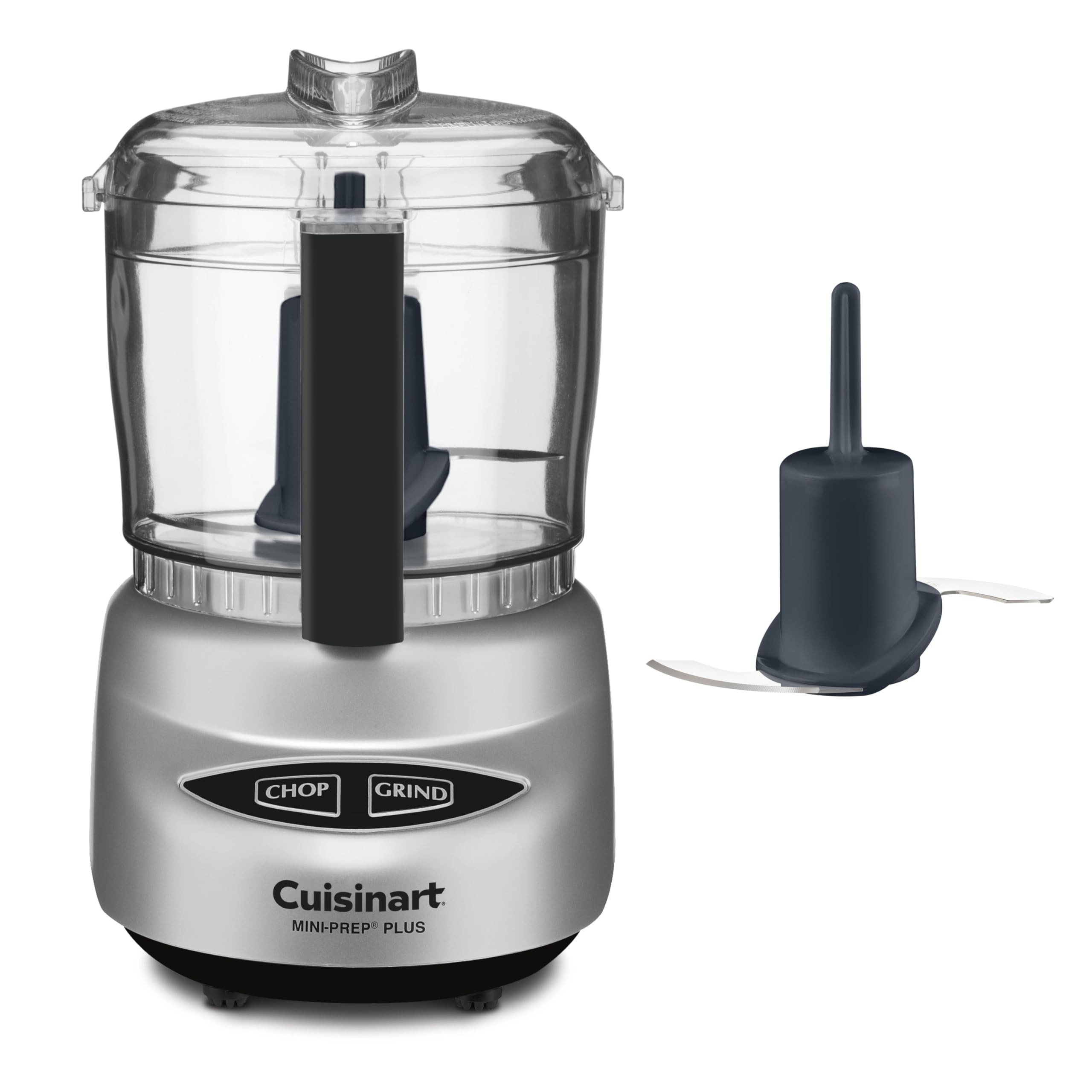
Cuisinart Mini-Prep Plus 3-Cup Food Processor
Compact enough to live on the counter permanently
Buy on Amazon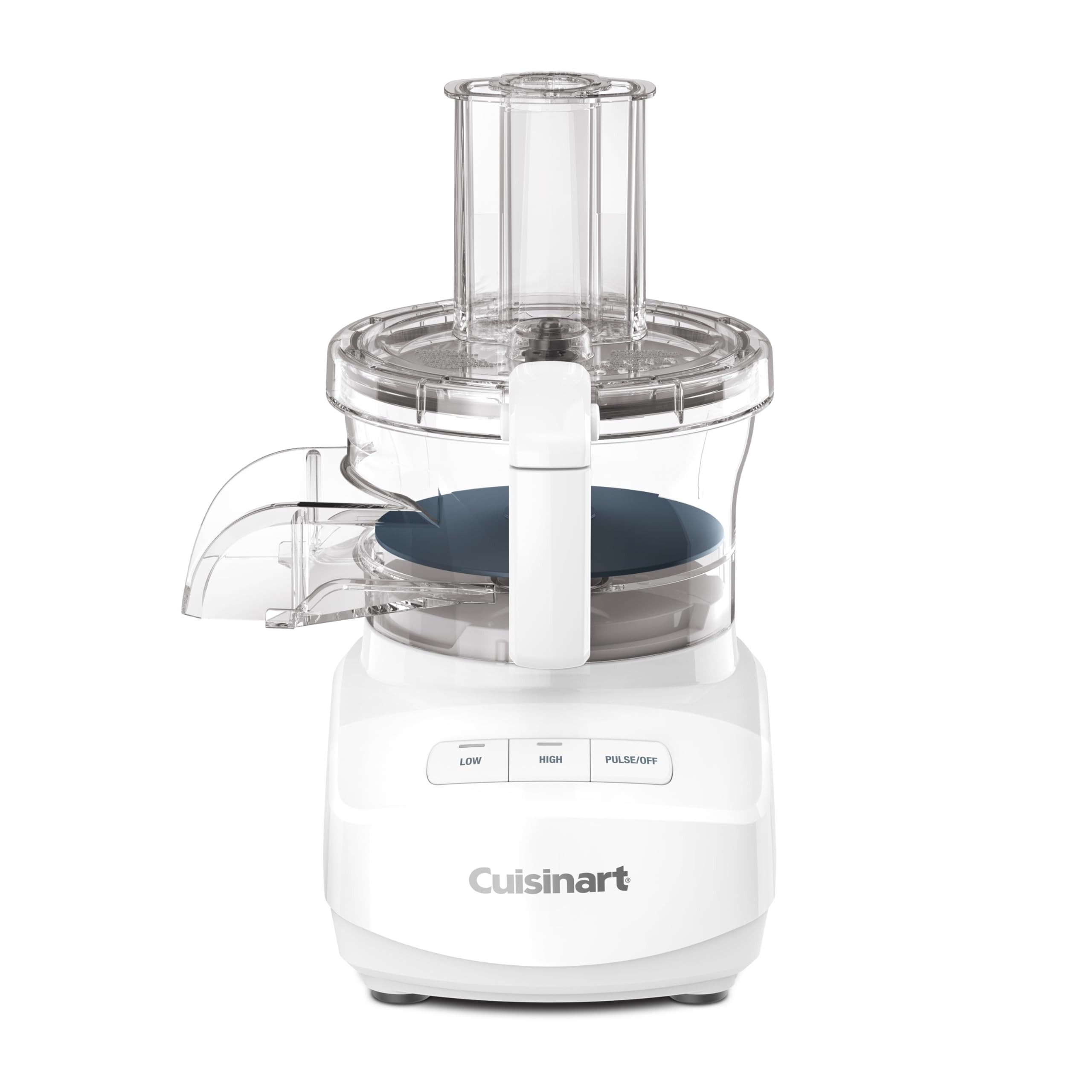
Cuisinart 9-Cup Food Processor (DFP-14BCWN)
More compact than the 14-cup , better for smaller kitchens and households
Buy on AmazonCuisinart 14-Cup Food Processor (CFP-14SVWGY)
14-cup capacity handles family-sized batches of dough, slicing, and shredding
Buy on Amazon| Product | Price Range | Top Strength | Key Weakness | Buy |
|---|---|---|---|---|
| Cuisinart Mini-Prep Plus 3-Cup Food Processor best overall | $ | Compact enough to live on the counter permanently | Only useful for small tasks , cannot slice or shred | Buy on Amazon |
| Cuisinart 9-Cup Food Processor (DFP-14BCWN) also consider | $$ | More compact than the 14-cup , better for smaller kitchens and households | 9-cup capacity too small for large batches of pie dough or bread dough | Buy on Amazon |
| Cuisinart 14-Cup Food Processor (CFP-14SVWGY) also consider | $$ | 14-cup capacity handles family-sized batches of dough, slicing, and shredding | Plastic bowl can stain with heavy use | Buy on Amazon |
| Breville Sous Chef 16-Cup Food Processor also consider | $$$ | 16-cup bowl with a 2.5-cup mini bowl for small tasks | Expensive , over $350 at full retail | Buy on Amazon |
If your kitchen counter is already committed, every appliance earns its square footage or it doesn’t stay. A food processor that sits in a cabinet because it’s too heavy to drag out is not, functionally, a food processor you own. That’s the framing I’d apply to every product in this category, and it’s why “small” matters as much as “capable” when you’re evaluating a Cuisinart small food processor for a real kitchen with real constraints.
This guide covers four options, from a genuinely compact mini unit to a full-size 14-cup workhorse and the premium Breville alternative that competes at the top of the category. All four have their place. Not all four have a place in your kitchen. That’s what I’m here to sort out.
Browse the rest of our Small Appliances coverage if you’re outfitting a kitchen from scratch or replacing several units at once.
What to Look For in a Small Food Processor
Bowl Capacity and What It Actually Means
Manufacturer bowl sizes are measured to the absolute maximum fill line, which you will never use. A 9-cup bowl is realistically a 6-to-7-cup working bowl. A 3-cup mini is a 2-cup working bowl. Keep that in mind before deciding a 9-cup is “plenty” for a double batch of pie dough. It isn’t.
For a one- or two-person household doing regular cooking, 9 cups is a reasonable ceiling. For a family cooking in volume, or for anyone who makes bread dough, pastry dough, or large batches of hummus regularly, 14 cups is where you stop compromising.
Motor Power and Task Range
The Cuisinart line runs its standard models on motors in the 600-to-720W range. That covers chopping, slicing, shredding, and standard dough. It does not cover nut butters, extended heavy processing, or anything that requires sustained torque. If you’ve ever burned out a food processor motor trying to make almond butter, that’s exactly the scenario these motors aren’t rated for.
The Breville Sous Chef’s 1200W motor is in a different category. It handles what the Cuisinart motors politely decline.
Footprint vs. Storage
There’s a meaningful difference between “compact enough to store in a cabinet” and “compact enough to leave on the counter.” The mini 3-cup unit clears the counter-permanent threshold easily. The 9-cup model is borderline depending on your counter depth. The 14-cup and Breville 16-cup are cabinet appliances for most kitchens, which means you need to honestly assess how often you’ll pull them out and whether that friction will kill your usage.
Blade and Disc Quality
All Cuisinart models use the same basic S-blade for chopping and mincing. Where they diverge is on slicing and shredding discs. The 9-cup produces slightly thicker slices than the 14-cup. The Breville’s variable slicing disc adjusts from 0.3mm to 8mm, which is the kind of precision that matters if you’re slicing fennel for a gratin or cucumber for a composed salad. For everything else, a fixed disc is fine.
Top Picks
Cuisinart Mini-Prep Plus 3-Cup Food Processor
The Cuisinart Mini-Prep Plus 3-Cup Food Processor is the appliance I’d recommend buying alongside a full-size processor, not instead of one. That’s an important distinction.
What it does well: garlic, fresh herbs, small quantities of nuts, salad dressings, pesto, spice blends. Tasks where dragging out a full-size machine is genuinely disproportionate to the amount of food involved. If you’ve ever run two cloves of garlic through a 14-cup bowl and watched them bounce around the bottom for thirty seconds without actually getting minced, you know what I mean.
It sits on the counter permanently without demanding attention. The footprint is small enough that it doesn’t negotiate with your other appliances for space.
The limitations are real. It cannot slice or shred. The bowl stains with regular herb processing, which is purely cosmetic but annoying. And there are tasks where even a small batch exceeds its capacity, at which point you’re processing in two rounds, which defeats the efficiency argument.
Budget pricing. If you have a full-size processor and limited counter space, this earns its spot. If you’re choosing between this and a full-size unit and you do real cooking, this is not a replacement.
Cuisinart 9-Cup Food Processor (DFP-14BCWN)
The Cuisinart 9-Cup Food Processor (DFP-14BCWN) occupies a specific and defensible position: it’s better suited to smaller households than the 14-cup, and it costs less. The motor and blade quality are consistent with the rest of the Cuisinart line. For one or two people cooking regularly, the 9-cup working capacity covers most tasks without the bulk of the larger model.
Where it runs into trouble is batch cooking. Large quantities of pie dough, bread dough, or anything requiring more than about 6 cups of actual working volume will either overflow the bowl or require multiple runs. The slicing disc produces slightly thicker cuts than the 14-cup, which won’t matter for most home cooking but will bother you if precision slicing is something you do regularly.
Mid-range pricing, and it costs less than the 14-cup model, which makes it a reasonable choice if you’re buying new and your household size and counter situation both point toward the smaller footprint.
Cuisinart 14-Cup Food Processor (CFP-14SVWGY)
The Cuisinart 14-Cup Food Processor (CFP-14SVWGY) is the workhorse of this category and the one I’d recommend to most people who cook for a family or batch cook with any regularity.
It handles dough, slicing, shredding, and chopping without complaint. The included blade set covers the tasks that actually come up in a functional kitchen. The motor is reliable for standard processing, and the design is straightforward enough that you’re not consulting the manual after every use (which I cannot say about every food processor on the market).
The plastic bowl stains with heavy use, particularly with tomato-based processing. This is a cosmetic issue, but it’s worth knowing. And the motor is not rated for extended heavy loads, so nut butter production is not its assignment.
Mid-range pricing. Compared to the Breville Sous Chef, it costs roughly half as much with a meaningfully smaller motor and no variable slicing disc. If your processing needs are standard, that price differential is hard to argue with. If you regularly do precision slicing or anything that pushes motor limits, read the next section.
Breville Sous Chef 16-Cup Food Processor
The Breville Sous Chef 16-Cup Food Processor is the answer to a different question than the Cuisinart units. It’s for cooks who have pushed a standard food processor to its limits and know exactly where those limits are.
The 1200W motor handles nut butters, extended processing, and anything requiring sustained torque. The variable slicing disc, adjustable from 0.3mm to 8mm, is the feature that separates this machine from everything else in the category. If you’ve ever wanted mandoline-thin slices from a food processor, this is the unit that delivers them consistently. (Testing with potatoes for a gratin confirmed it — the difference between 1mm and 3mm slices is not subtle when you’re evaluating even cooking.)
The 2.5-cup mini bowl included in the unit covers small tasks without switching appliances, which is a genuinely practical feature for a premium processor.
It’s a large machine. Premium pricing, and it costs roughly twice the Cuisinart 14-cup at current retail. More parts mean more cleaning. Check the current price on Amazon before budgeting.
For serious cooks who want a single processor that covers the full range of tasks, this is the one. For everyone else, the Cuisinart 14-cup does the job at half the cost.
How to Choose
Start with honesty about two things: your counter space and your cooking volume.
If you have no counter real estate and you cook for one or two people, the 9-cup Cuisinart is the practical choice. It covers standard cooking tasks, costs less than the 14-cup, and takes up less space. The tradeoff is batch capacity and slightly coarser slicing.
If you have a kitchen with space constraints but cook for a family or batch cook regularly, the 14-cup is worth the footprint. The working capacity difference between 9 and 14 cups is significant when you’re making a double batch of anything. This is also where I’d check our coverage of large immersion blenders if you haven’t already, since a food processor and an immersion blender often divide tasks between them rather than compete directly.
If you already have a full-size processor and just want something that handles small daily tasks without turning the full machine on, the 3-cup mini is worth its modest price. It’s not a compromise purchase at that price level.
If you’re a serious cook who processes nut butters, wants precision slicing, or wants a machine that won’t flinch at extended heavy loads, the Breville Sous Chef is the honest recommendation. The price premium is real, but so is what you’re getting. For context on Breville’s general quality positioning across categories, the comparison between Breville espresso machines and DeLonghi shows how the brand operates at the premium end of the market.
If budget is the primary constraint, the 3-cup mini or the 9-cup Cuisinart give you usable food processor capability without the mid-range price. Neither will do everything, but both will do what they’re rated for reliably.
For additional coverage of small appliances that work alongside a food processor in a compact kitchen, the Small Appliances section has detailed reviews on blenders, immersion tools, and other counter-space decisions.
Frequently Asked Questions
Can I use a Cuisinart small food processor instead of a full-size one?
For daily cooking in a one- or two-person household, the 9-cup Cuisinart handles most standard tasks including chopping, slicing, shredding, and dough. If you regularly batch cook or make large quantities of pastry dough, a 9-cup bowl will be limiting. The 3-cup mini is not a replacement for a full-size processor under any circumstances. It handles small tasks well and that’s the boundary of its usefulness.
What’s the actual capacity difference between the 9-cup and 14-cup Cuisinart?
On paper, five cups. In practice, more. Because you rarely fill a food processor to its maximum rated capacity without overflow or uneven processing, the working difference between the two models is closer to six or seven cups versus nine or ten cups. For a double batch of pie dough, that gap is the difference between fitting in one pass and not.
Is the Breville Sous Chef worth the price premium over the Cuisinart 14-cup?
For most home cooks, no. The Cuisinart 14-cup handles standard food processor tasks reliably at roughly half the price. The Breville earns its premium if you want precision variable slicing, consistently need to process nut butters or heavy loads, or want the included mini bowl for small tasks. If those specific features are not things you actively use, you’re paying for capability you won’t access.
How do I keep a food processor bowl from staining?
Process acidic or deeply colored ingredients, including tomatoes, beets, and turmeric-heavy spices, promptly after use and rinse immediately rather than letting residue sit. This applies to all plastic food processor bowls, not just Cuisinart. No plastic bowl at this price level is fully stain-resistant. The staining is cosmetic and doesn’t affect performance.
Can the Cuisinart Mini-Prep Plus handle tasks like hummus or salsa?
In small quantities, yes. A single batch of hummus sized for one or two servings processes fine in the 3-cup bowl. A standard recipe sized for four to six servings will exceed the working capacity and require multiple passes. Salsa works well in small quantities, though the bowl will stain from tomato and pepper processing. The mini unit is fastest when used for tasks that genuinely produce a cup or two of output rather than treating it as a scaled-down full processor.
Frequently Asked Questions
What is the smallest Cuisinart food processor available?
The Cuisinart Mini-Prep Plus is the smallest widely available model, with a 3-cup bowl. Its actual working capacity is closer to 2 cups, making it ideal for garlic, herbs, small sauce quantities, and nuts — but it cannot slice or shred.
Is a mini food processor worth buying if I already have a full-size one?
Yes, if you find yourself pulling out the full-size processor for very small tasks. A mini food processor is quick to set up, easy to clean, and takes up minimal counter space, making it practical for daily small-scale tasks that would make a 9- or 14-cup model feel cumbersome.
Can a small Cuisinart food processor replace a blender?
Not fully. Mini and compact food processors chop, mince, and puree, but they do not handle liquid-heavy blending tasks like smoothies or soups as well as a dedicated blender. They are complementary tools rather than direct replacements.
How loud are small Cuisinart food processors?
All food processors produce significant noise during operation due to their high-speed motors. Compact models are not necessarily quieter than larger ones. If noise is a concern, look for models marketed with noise-dampening features, though this is not a standard Cuisinart differentiator.
What should I look for when buying a small food processor for a tiny kitchen?
Prioritize footprint (width and height with bowl attached), weight for lifting in and out of storage, ease of disassembly for cleaning, and whether the capacity matches your most common tasks. A 3-cup mini that lives on the counter will get more use than a 9-cup that lives in a cabinet.
Where to Buy
Cuisinart Mini-Prep Plus 3-Cup Food ProcessorSee Cuisinart Mini-Prep Plus 3-Cup Food P… on Amazon