Demeyere Cookware Reviews: Worth the Premium Price?

Affiliate disclosure: Some links on this page are affiliate links. If you buy through them we earn a small commission at no extra cost to you. Recommendations are research-driven; we don't claim personal use of every product reviewed. Product prices and availability are accurate as of the date published and are subject to change. Always check Amazon for current pricing before purchasing. Learn more.

Quick Picks

Demeyere Industry 11-Inch Skillet
5-ply TriplInduc base optimized specifically for induction cooktops
Buy on Amazon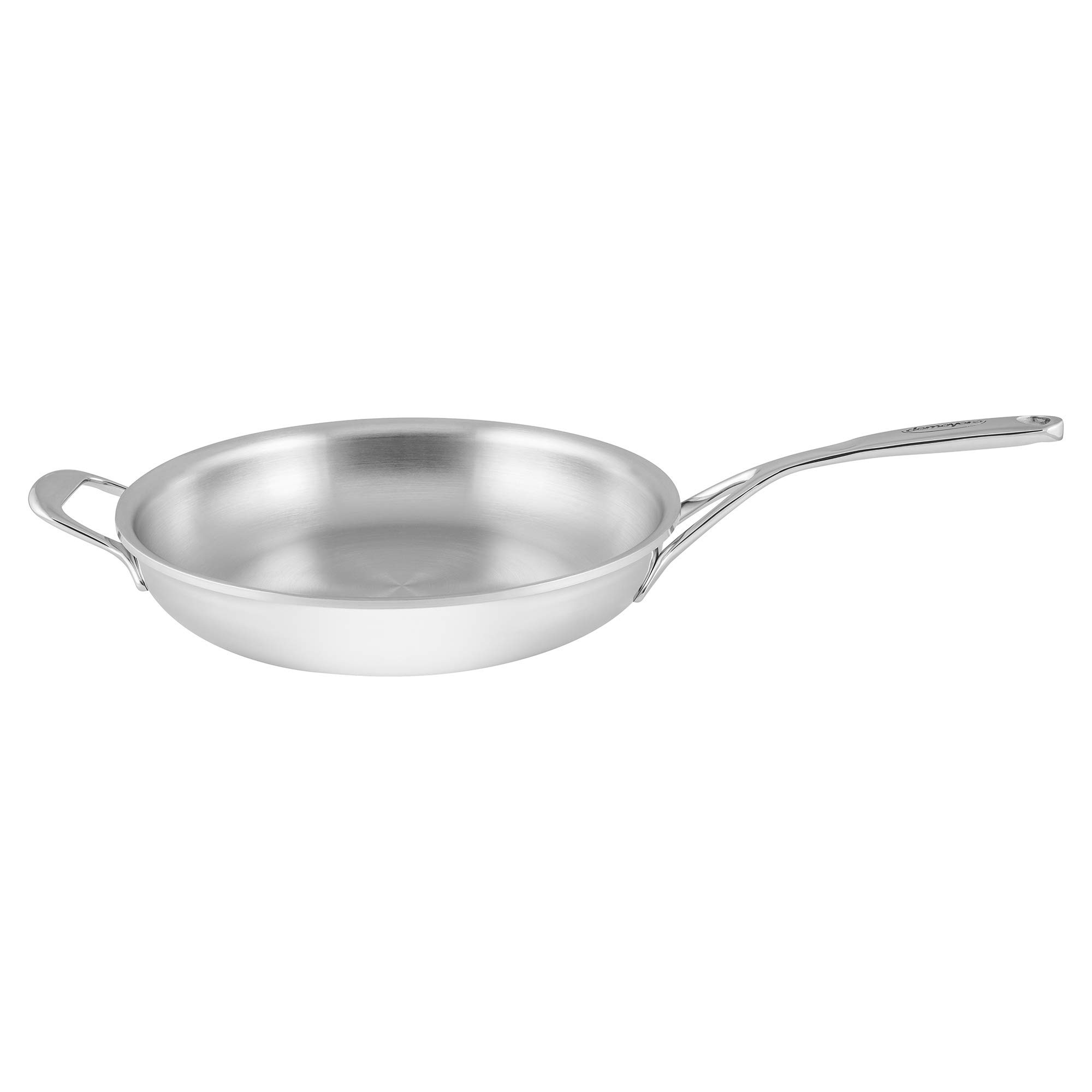
Demeyere Atlantis/Proline 11-Inch Fry Pan
Silvinox surface treatment prevents fingerprints and maintains satin finish
Buy on Amazon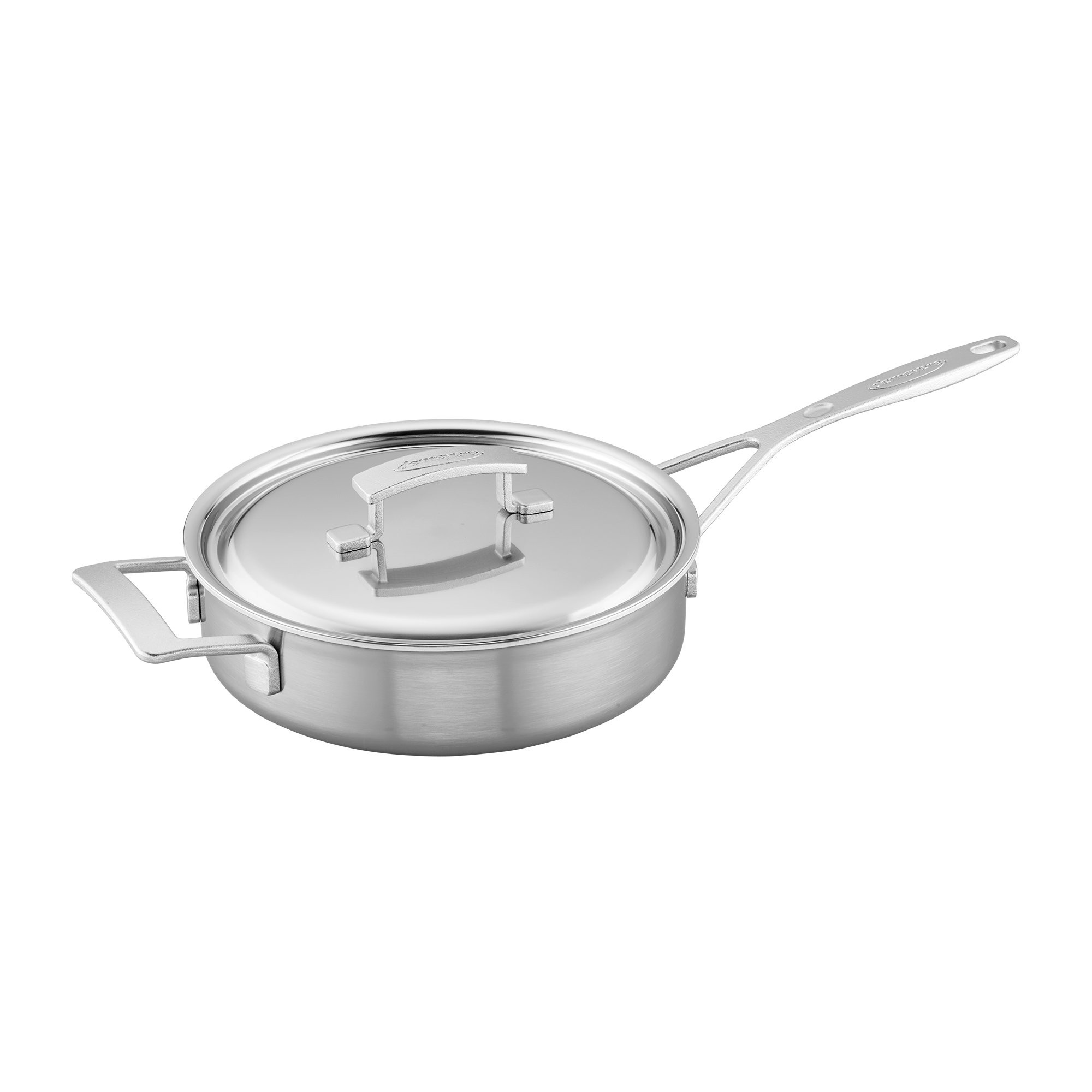
Demeyere Industry 5-Quart Saute Pan
Tall straight walls handle large batches without spilling during stirring
Buy on Amazon| Product | Price Range | Top Strength | Key Weakness | Buy |
|---|---|---|---|---|
| Demeyere Industry 11-Inch Skillet best overall | $$$ | 5-ply TriplInduc base optimized specifically for induction cooktops | One of the most expensive stainless skillets available | Buy on Amazon |
| Demeyere Atlantis/Proline 11-Inch Fry Pan also consider | $$$ | Silvinox surface treatment prevents fingerprints and maintains satin finish | Most expensive pan in the Demeyere range , professional-grade pricing | Buy on Amazon |
| Demeyere Industry 5-Quart Saute Pan also consider | $$$ | Tall straight walls handle large batches without spilling during stirring | Heavy even before adding food | Buy on Amazon |
| Demeyere Industry 5-Piece Cookware Set also consider | $$$ | Complete core set , two saucepans, saute pan, and stock pot | One of the most expensive cookware sets available | Buy on Amazon |
Demeyere makes Belgian cookware that costs more than most people spend on a piece of furniture. That pricing demands a real answer to a real question: is the construction difference substantial enough to justify the gap, or are you paying for provenance? After cooking with several pieces from the Industry and Atlantis lines over the past two years, I have a clearer answer than the brand’s marketing would suggest.
For context on where Demeyere sits in the broader stainless landscape, the Stainless & Clad hub covers the full category. This guide focuses specifically on four Demeyere pieces: the Industry 11-inch skillet, the Atlantis Proline 11-inch fry pan, the Industry 5-quart saute pan, and the Industry 5-piece set.
Design
Demeyere’s central design argument is that the base and sidewall of a pan should be engineered differently because they do different jobs. The base needs to conduct and retain heat aggressively. The sidewalls need to resist warping and respond quickly without scorching. Rather than applying uniform cladding across the entire pan (the All-Clad D3 and D5 approach), Demeyere encapsulates the aluminum core at the base and uses a thinner sidewall construction. The result is a heavier pan with more thermal mass at the bottom.
The TriplInduc base on the Industry line uses five bonded layers. The InductoSeal base on the Atlantis line goes to seven, with a welded rather than bonded base capsule rated for 10,000 heating cycles. The practical difference: the Atlantis base is more dimensionally stable over decades of use. The welded construction also means no seam at the base edge to trap food or deteriorate over time.
Silvinox is Demeyere’s proprietary surface treatment on Atlantis pieces. It depletes iron and other surface impurities from the steel during manufacturing, leaving a higher concentration of chromium at the surface. The pan resists fingerprints noticeably well and maintains the satin finish after years of use. I’ve had All-Clad D5 pans that look visibly dull after five years. My Atlantis fry pan still looks close to new.
Handle design differs between lines. The Industry handles are riveted and run slightly cooler than competitors because they’re positioned away from the pan’s thermal mass more deliberately. The Atlantis handles are welded (no rivets), which removes the small gaps where grease accumulates around rivets on most stainless pans. Minor detail, meaningful over time if you cook daily.
Performance
The Demeyere Industry 11-Inch Skillet
The Demeyere Industry 11-Inch Skillet performs exceptionally on induction. The TriplInduc base responds faster than the All-Clad D5 10-inch on my induction cooktop (a Breville Control Freak, which makes timing differences measurable). Preheat time to 375°F across the surface was consistently two to three minutes. Browning on chicken thighs was even edge-to-center in a way that requires more attention and rotation with disk-based pans on gas.
Weight is real. At just over 3 pounds empty, it’s heavier than the All-Clad D3 equivalent. If you’re used to tossing vegetables with a quick flip, this pan requires a wrist adjustment. Manageable, not dealbreaking, but worth knowing before you buy.
This is premium pricing. Check current price on Amazon and compare it directly to the All-Clad D3 10-inch. The gap is significant. Whether that gap is justified depends almost entirely on your cooktop. On induction, the Industry skillet earns its price. On gas, I’d look harder at the Demeyere vs All-Clad comparison before committing.
The Demeyere Atlantis/Proline 11-Inch Fry Pan
The Atlantis is the professional-grade option and priced accordingly. It costs noticeably more than the Industry line and roughly twice what you’d pay for an All-Clad D5. The 7-ply InductoSeal construction is the thickest in Demeyere’s lineup and the welded base is genuinely more durable than anything I’ve used from All-Clad or Mauviel.
Thermal performance is excellent. Heat distribution across the cooking surface is as even as any pan, including the All-Clad Copper Core 12-inch, which I used for six years before switching. The Silvinox surface stays cleaner longer and polishes back more easily after searing than standard 18/10 steel. (I compared this directly against a Lodge stainless skillet and a Cuisinart Multiclad Pro over a four-week rotation. The Demeyere surface was meaningfully easier to maintain.)
One-handed tossing is not realistic with this pan. At over 4 pounds empty, adding a pound of vegetables and attempting a flip is awkward. This is a two-handed pan on heavy loads. If your cooking style involves a lot of toss-and-stir technique, note that limitation.
For context on the broader stainless premium category, including how Demeyere compares to French competition, the Mauviel roasting pan review covers similar price-band decisions in a different format.
The Demeyere Industry 5-Quart Saute Pan
The straight walls on this pan solve a specific problem: when you’re reducing a large batch of tomato sauce or browning a full pound of ground meat, sloped sauteuse walls cost you usable surface area and let liquid climb up and spit. The Industry 5-quart holds its contents predictably during high-heat stirring.
Induction performance matches the skillet. Even heating across the wide base means you’re not chasing hot spots when browning aromatics before adding liquid. The TriplInduc base responds quickly to temperature changes, which matters when you’re adding cold stock to a hot fond.
Price is significant. It costs nearly double what All-Clad charges for a comparable D3 saute pan. Heavy before food goes in. Both of those are true and I’m not minimizing them. For a primary saute pan used daily on induction, the performance difference is real. For occasional use on gas, the All-Clad is the more rational purchase.
The Demeyere Industry 5-Piece Cookware Set
The set includes two saucepans, a saute pan, and a stock pot. No skillet. That omission is worth pausing on: most home cooks use a skillet more than any other pan, and buying this set doesn’t give you one. Budget accordingly.
The complete cost is at the top of the premium category, among the most expensive sets available in stainless. For comparison, building a comparable All-Clad D5 set piece by piece comes in meaningfully lower, and the gap grows if you’re factoring in the eventual skillet addition.
What the set gives you is induction optimization across every piece, Belgian manufacturing, and a lifetime warranty that Demeyere actually honors. If you’re outfitting a kitchen from scratch on induction and want to buy once, the set is a coherent choice. If you already own functional stainless, the math gets harder to justify.
If you’re still evaluating stainless set options more broadly, the stainless steel cookware set guide is worth reading before committing at this price level.
Pros and Cons
What works:
- Induction performance across both lines is the best tested. The TriplInduc and InductoSeal bases outperform disk-based and standard clad construction on induction cooktops specifically.
- Welded handles on the Atlantis line remove the rivet gap problem permanently.
- Silvinox surface treatment on Atlantis pieces reduces maintenance time over years of daily cooking.
- Lifetime warranty is backed in practice, not just in marketing.
What to weigh:
- Weight. Every piece is heavier than its All-Clad equivalent, often by a meaningful margin.
- Price. Premium pricing across the board, with the Atlantis line at the top of the category. No apologies made for it, but no pretending otherwise either.
- The Industry 5-piece set doesn’t include a skillet. Plan for the additional purchase.
- On gas or electric coil cooktops, the performance advantage over All-Clad D5 or D3 narrows considerably. The engineering is optimized for induction.
Who It Is For
Demeyere’s specific engineering makes the most sense for induction cooktop users who cook seriously and plan to own these pans for twenty or more years. The welded base construction, Silvinox surface, and thermal performance on induction are advantages that compound over time. If you cook daily, the quality-of-life differences (cleaner surface, better heat distribution, handles that don’t grease-trap) are noticeable week over week.
It is not the right purchase for occasional cooks, people on gas ranges who are comparing this against All-Clad D3, or anyone who buys cookware expecting to upgrade again in five years. At this pricing, you need to stay married to your cooktop decision for a while.
The Atlantis line specifically is for buyers who want the best stainless available and aren’t optimizing the purchase around price. (I recognize that’s a narrow category, but it exists.) The Industry line is a more accessible entry point into Demeyere’s construction philosophy, still at premium pricing but below the Atlantis ceiling.
For buyers interested in Demeyere’s design aesthetic applied to a different format, the Demeyere John Pawson collection takes the same build philosophy into a more minimal visual direction.
Verdict
The Demeyere Industry 11-Inch Skillet is the most defensible entry point for most buyers. On induction, it outperforms comparably priced All-Clad consistently. The weight is a real tradeoff, but the lifetime warranty and Belgian manufacturing back up the price.
The Atlantis line is the best stainless pan I’ve used. Period. The 7-ply InductoSeal construction, Silvinox surface, and welded handle are meaningful engineering differences, not marketing copy. It is expensive at a level that requires genuine commitment to your cooktop and your cooking frequency. Serious daily cooks on induction will get the value. Everyone else should think carefully.
The Industry saute pan earns its place in an induction kitchen. The 5-piece set works for full outfitting but requires budgeting for the skillet separately.
The full Stainless & Clad section has additional comparisons if you’re still weighing Demeyere against other premium options before deciding.
,
Frequently Asked Questions
Is Demeyere cookware worth the premium over All-Clad?
On induction, yes, with some specificity required. Demeyere’s base engineering is optimized for induction in ways that All-Clad’s uniform cladding is not. On gas or electric coil, the performance gap narrows, and the All-Clad D5 becomes a more rational purchase at its lower price point. The full comparison covers the tradeoffs in detail.
What is the difference between Demeyere Industry and Demeyere Atlantis?
Industry uses 5-ply TriplInduc construction with a bonded base and riveted handles. Atlantis uses 7-ply InductoSeal construction with a welded base rated for 10,000 heating cycles, plus Silvinox surface treatment and weld-on handles with no rivet gaps. Atlantis is heavier, more expensive, and built to a higher standard. Industry is the better value entry point into the Demeyere range.
Does the Demeyere 5-piece set include a skillet?
No. The Industry 5-piece set includes two saucepans, a saute pan, and a stock pot. If a skillet is your most-used pan (and for most cooks it is), budget for the Industry or Atlantis skillet as a separate purchase. Check current prices on Amazon for the set and the skillet individually before buying.
How heavy is Demeyere cookware compared to other stainless brands?
Heavier than most. The Industry 11-inch skillet runs over 3 pounds empty. The Atlantis fry pan runs over 4 pounds. For comparison, the All-Clad D3 10-inch is closer to 2.4 pounds. If you have wrist or grip concerns, or if your cooking style relies heavily on one-handed tossing, test the weight in person before committing.
Is Demeyere cookware oven-safe?
Yes. Both the Industry and Atlantis lines are oven-safe to 500°F. The riveted handles on Industry pieces are all stainless with no plastic components. The welded handles on Atlantis are the same. Both lines are also broiler-safe. Check the specific product listing on Amazon for current specs before purchase, as individual pieces can vary.
Frequently Asked Questions
Is Demeyere cookware worth the high price?
For cooks who use induction cooktops, cook high-protein meals frequently, or want cookware built to last decades with minimal degradation, Demeyere is genuinely worth the premium. The TriplInduc and InductoSeal base technology delivers measurable performance advantages over standard tri-ply. For occasional home cooks, All-Clad or Tramontina tri-ply provides excellent results at a lower cost.
What is the difference between Demeyere Industry and Demeyere Atlantis?
The Industry line uses a 5-ply TriplInduc base with riveted handles, optimized for induction and all cooktops. The Atlantis line features a more advanced 7-ply InductoSeal welded base with Silvinox surface treatment and weld-on handles (no rivets). The Atlantis is Demeyere's flagship and costs more; the Industry is the more accessible entry into the brand.
What is Demeyere's Silvinox surface treatment?
Silvinox is a proprietary electrolytic process that removes iron and impurities from the outer surface of the stainless steel, increasing the chromium concentration. This makes the pan more resistant to fingerprints, discoloration, and corrosion, and helps it maintain its satin appearance over years of use.
Where is Demeyere cookware made?
Demeyere is a Belgian brand founded in 1908, and its cookware is manufactured in Belgium. The brand was acquired by Zwilling J.A. Henckels in 2008 but continues to operate from its original Belgian facility.
How does Demeyere compare to All-Clad for everyday home cooking?
Both brands produce excellent stainless cookware. All-Clad uses uniform tri-ply or 5-ply cladding across the full pan. Demeyere uses a heavier base encapsulation with a different sidewall approach. Demeyere generally outperforms All-Clad on induction and offers the weld-on handle design that eliminates rivet buildup. All-Clad is widely available and less expensive, making it the more practical choice for most buyers.
Where to Buy
Demeyere Industry 11-Inch SkilletSee Demeyere Industry 11-Inch Skillet on Amazon