Demeyere Saute Pan Buyer Guide: Worth the Cost?

Affiliate disclosure: Some links on this page are affiliate links. If you buy through them we earn a small commission at no extra cost to you. Recommendations are research-driven; we don't claim personal use of every product reviewed. Product prices and availability are accurate as of the date published and are subject to change. Always check Amazon for current pricing before purchasing. Learn more.

Quick Picks
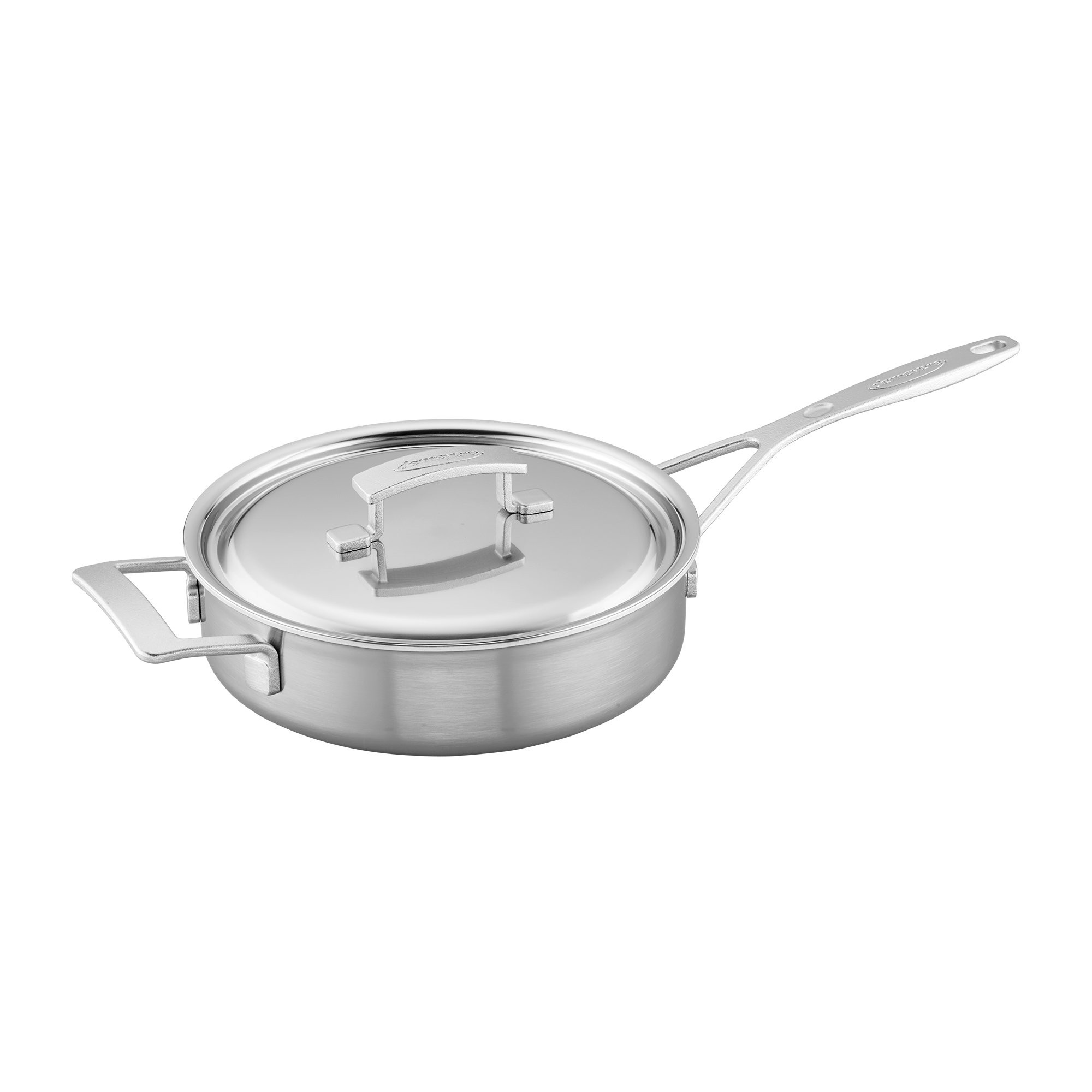
Demeyere Industry 5-Quart Saute Pan
Tall straight walls handle large batches without spilling during stirring
Buy on Amazon
Demeyere Industry 11-Inch Skillet
5-ply TriplInduc base optimized specifically for induction cooktops
Buy on Amazon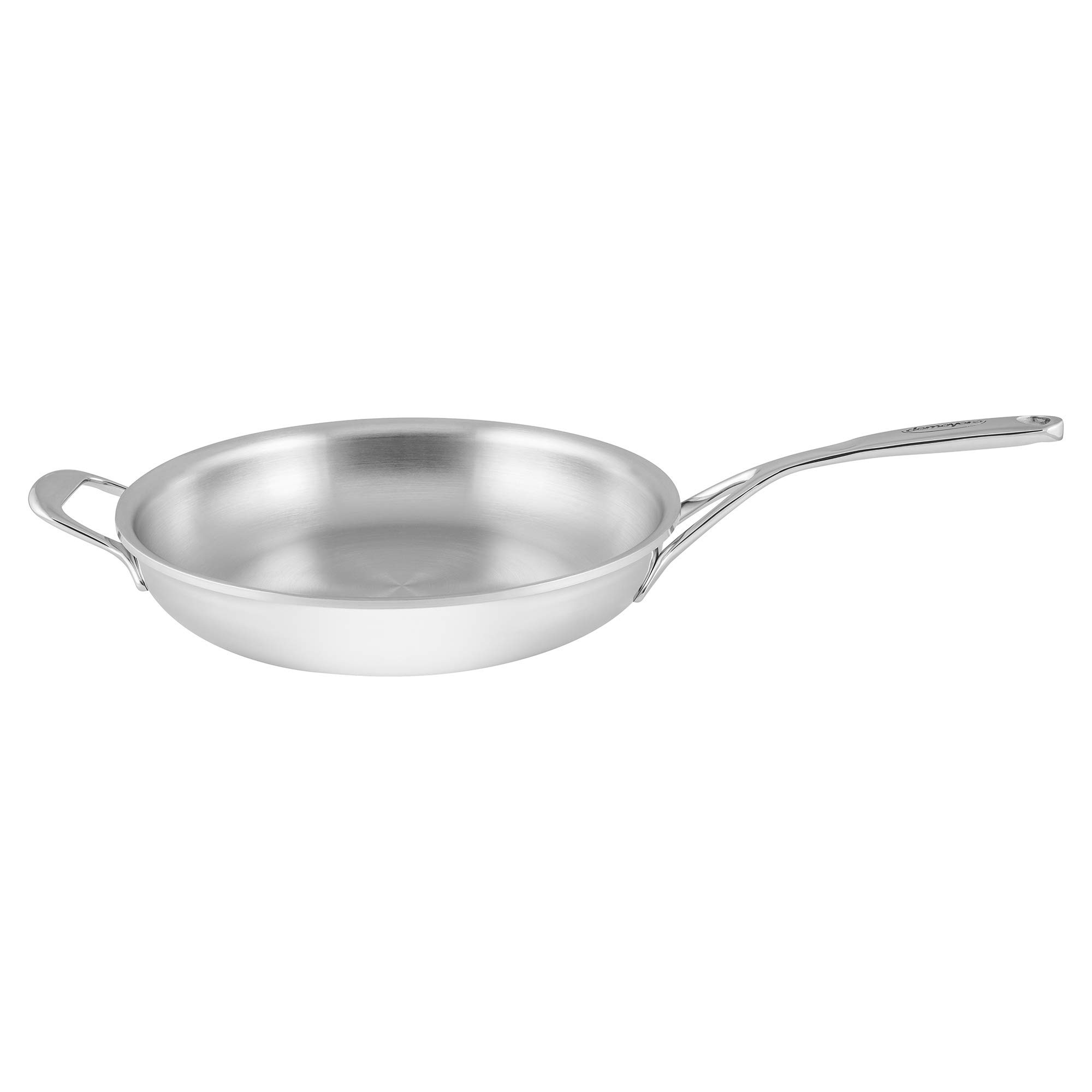
Demeyere Atlantis/Proline 11-Inch Fry Pan
Silvinox surface treatment prevents fingerprints and maintains satin finish
Buy on Amazon| Product | Price Range | Top Strength | Key Weakness | Buy |
|---|---|---|---|---|
| Demeyere Industry 5-Quart Saute Pan best overall | $$$ | Tall straight walls handle large batches without spilling during stirring | Heavy even before adding food | Buy on Amazon |
| Demeyere Industry 11-Inch Skillet also consider | $$$ | 5-ply TriplInduc base optimized specifically for induction cooktops | One of the most expensive stainless skillets available | Buy on Amazon |
| Demeyere Atlantis/Proline 11-Inch Fry Pan also consider | $$$ | Silvinox surface treatment prevents fingerprints and maintains satin finish | Most expensive pan in the Demeyere range , professional-grade pricing | Buy on Amazon |
| All-Clad D3 Stainless 6-Quart Saute Pan also consider | $$$ | Straight walls prevent liquid from escaping during reduction | Very heavy pan , harder to maneuver than a skillet | Buy on Amazon |
| Tramontina 12-Inch Tri-Ply Clad Stainless Fry Pan also consider | $$ | Genuine tri-ply construction , same bonding method as All-Clad at a fraction of the price | Slightly thinner gauge than All-Clad , marginally less heat retention | Buy on Amazon |
Demeyere makes some of the most technically serious stainless cookware available in the United States, and the pricing reflects that without apology. If you’ve landed here because you’re weighing a Demeyere saute pan against something from All-Clad or wondering whether the Belgian engineering justifies the cost, this is a direct answer to that question. Not a feature list dressed up as advice. For broader context on how Demeyere fits into the stainless category overall, the Stainless & Clad hub is a useful starting point.
What to Look For in a Demeyere Saute Pan
Construction Method Matters More Than Ply Count
Demeyere’s Industry and Atlantis lines use different base constructions, and that difference is real, not marketing copy. The Industry line uses TriplInduc, a five-layer base bonded specifically to increase magnetic response on induction cooktops. The Atlantis line uses InductoSeal, a seven-layer base that Demeyere rates for 10,000 heating cycles. If you cook on gas or electric coil, both work fine. If you cook on induction, the performance gap between Demeyere and standard tri-ply widens noticeably.
The other construction detail worth knowing: Demeyere welds its handles rather than riveting them on most pieces in the Industry and Atlantis lines. No rivets means no crevices where fond and fat accumulate. If you’ve ever scrubbed around a rivet with a sponge and still felt something there, you know why this matters.
Weight Is an Honest Trade-Off
Every Demeyere pan is heavier than its All-Clad equivalent. The seven-ply Atlantis is heavier still. That weight translates to heat retention and base stability on the cooktop, but it also means you’re lifting a substantial object one-handed when you move it from burner to oven. If you have any wrist or shoulder concerns, this isn’t a minor footnote.
Sizing: Saute Pan vs. Skillet
A saute pan has straight walls and a flat bottom. A skillet has sloped sides. For pan sauces, reductions, braising chicken thighs, and anything where you want liquid to stay in the pan while you stir, the straight walls of a saute pan do actual work. If most of your cooking involves high-heat searing and quick flips, a skillet is more useful. Both are covered below.
Top Picks
Best Demeyere Saute Pan: Demeyere Industry 5-Quart Saute Pan
The Demeyere Industry 5-Quart Saute Pan is the pan I’d recommend to most people asking about Demeyere. Five quarts is enough volume to handle a whole cut-up chicken or a large batch of braised greens without crowding. The straight walls are tall enough that you can stir aggressively without launching sauce onto the burner. (I have done this with shallower pans. More than once.)
The TriplInduc base runs hot and even on induction, which is where it earns its premium pricing. On a gas range it’s a fine pan. On induction it’s a noticeably better pan than most alternatives at any price. The lifetime warranty is genuine and backed by a company that has been manufacturing cookware in Belgium since 1908.
The honest downside: it’s priced at the higher end of the premium category, and it’s heavy before you put anything in it. The All-Clad D3 Saute Pan 6-Quart below costs meaningfully less and gives you an extra quart of capacity. If induction performance isn’t a priority, that math is worth thinking about. For a full technical breakdown of the two brands side by side, see the Demeyere vs All-Clad comparison.
Best Premium Stainless Skillet: Demeyere Industry 11-Inch Skillet
The Demeyere Industry 11-Inch Skillet earns its place for induction users who want a skillet that heats evenly across the full cooking surface without a soft center. The riveted handle is a concession from the welded-handle philosophy Demeyere applies elsewhere, but the handle runs cooler than most stainless skillets I’ve used, including the All-Clad D3 equivalent I cooked with for about six years.
Eleven inches is a practical size for two people or one hungry person. It’s one of the most expensive stainless skillets on the market, and it’s heavier than the All-Clad equivalent. If those two facts don’t deter you, it’s an excellent pan.
The Pinnacle: Demeyere Atlantis/Proline 11-Inch Fry Pan
The Demeyere Atlantis/Proline 11-Inch Fry Pan is the most expensive pan in the Demeyere range, and the weight alone communicates that. Seven-ply construction. InductoSeal base rated for 10,000 heating cycles. The Silvinox surface treatment keeps the satin finish from darkening and resists fingerprints in a way that standard stainless does not. It’s genuinely easier to clean than any other stainless pan I own.
One-handed tossing is not realistic with this pan. It’s built for controlled cooking, not for the kind of wrist-flip technique you’d use with a lighter carbon steel skillet. If you want the best stainless fry pan available regardless of price and you cook on induction, this is it. If you’re on a budget category or even mid-range pricing, skip it without guilt.
Best All-Clad Alternative: All-Clad D3 Stainless 6-Quart Saute Pan
The All-Clad D3 Stainless 6-Quart Saute Pan is the direct competitor to the Demeyere Industry saute pan and the pan I’d recommend if induction performance isn’t a driving factor. Six quarts of capacity handles a lot, the straight walls work exactly as described, and the lid is heavy enough to maintain a real seal during braises. Oven-safe to 600°F, which clears most home oven use cases by a meaningful margin.
It’s still premium pricing. It’s still a heavy pan. But it costs considerably less than the Demeyere Industry saute pan, and on a gas or electric range the cooking results are close enough that the price difference matters. If you’re on the fence and not cooking on induction, buy this one.
Best Value: Tramontina 12-Inch Tri-Ply Clad Stainless Fry Pan
The Tramontina 12-Inch Tri-Ply Clad Stainless Fry Pan is the pan I recommend to people who ask me whether they need to spend premium money on a stainless skillet. They usually don’t. Genuine tri-ply construction, the same bonding method used by All-Clad, induction compatible, oven-safe to 500°F, made in Brazil. Mid-range pricing.
The gauge is slightly thinner than All-Clad, which means marginally less heat retention on a very crowded pan. In practical terms, on a home burner, most cooks won’t notice. The handle ergonomics are less refined than what you get from Demeyere or All-Clad, but it functions correctly. If you’re buying your first serious stainless skillet and don’t want to commit premium pricing before you know how you’ll use it, start here.
How to Choose
Induction Cooktop Owners
Buy Demeyere. The TriplInduc and InductoSeal base constructions outperform standard tri-ply on induction in a measurable way. The Industry 5-Quart Saute Pan is the right starting point. If your budget extends further and you want the best available, the Atlantis Fry Pan is the answer. This is the one situation where the premium pricing over All-Clad is straightforwardly justified by performance.
Gas or Electric Range
The All-Clad D3 Saute Pan is the practical recommendation. It’s premium-priced but less expensive than Demeyere, and on a gas or radiant electric range the gap between the two brands narrows to the point where the price difference becomes difficult to justify. The Tramontina skillet handles most everyday tasks at mid-range pricing.
Budget Considerations
If you’re planning to build out a set over time rather than buying everything at once, the Tramontina skillet gives you functional tri-ply performance at mid-range pricing, which frees up budget for the pieces where premium construction pays off. Worth knowing: the Black Friday stainless steel cookware roundup covers seasonal pricing on most of these brands, which can affect the calculus considerably.
One Pan or a Set?
A saute pan is one of the more versatile single pieces you can buy. It handles braising, pan sauces, shallow frying, and batch cooking in ways a skillet can’t, because the straight walls contain liquid. If you’re choosing one piece to start, the saute pan does more. If you already have a saute pan and are filling out a set, pair it with a quality skillet and check out the Stainless & Clad section for a full picture of what works together.
A note on utensils while we’re at it: stainless pans at this price level deserve the right tools. The guide to best cooking utensils for stainless steel cookware covers what won’t scratch a Silvinox finish and what to avoid.
What You Don’t Need to Worry About
Demeyere’s lifetime warranty is legitimate and transferable. Belgian manufacturing is consistent. These are not pans that develop manufacturing defects in normal use. The concerns worth weighing are weight, price, and whether induction performance matters to you. The rest is settled.
Check current prices on Amazon before making a final decision. Demeyere pricing occasionally shifts, and the gap between the Industry and Atlantis lines can look different depending on when you’re buying.
,
Frequently Asked Questions
Is the Demeyere saute pan worth the price over All-Clad?
On an induction cooktop, yes. The TriplInduc base heats faster and more evenly on induction than the All-Clad D3’s standard tri-ply construction, and that difference is real in everyday cooking. On gas or electric, the All-Clad D3 performs comparably at a lower price point and is harder to recommend against.
What is the difference between Demeyere Industry and Atlantis?
Industry uses five-ply TriplInduc construction and is lighter. Atlantis uses seven-ply InductoSeal construction with a Silvinox surface treatment and is heavier and more expensive. Both are Belgian-made with a lifetime warranty. For most home cooks, Industry is the practical choice. Atlantis is for buyers who want the absolute top of the stainless range without compromise.
Can I use a Demeyere saute pan in the oven?
Yes. Both Industry and Atlantis lines are oven-safe. Check the specific model for the rated temperature, but Demeyere stainless pans handle typical home oven temperatures without issue. The lids are also oven-safe, which makes them practical for covered braises that start on the stovetop and finish in the oven.
How do I keep a stainless saute pan from sticking?
Preheat the pan before adding oil. The standard test: a drop of water should bead and roll across the surface. Add oil and let it shimmer before adding food. Proteins will release naturally once they’ve formed a crust. If they’re sticking, the pan isn’t hot enough or you’re moving the food too early. This applies equally to Demeyere, All-Clad, and Tramontina.
Is a saute pan the same as a saucepan?
No. A saute pan has straight walls and a wide, flat bottom designed for high-heat cooking with some liquid. A saucepan has taller walls and is built primarily for simmering and boiling with larger volumes of liquid. For braising, pan sauces, and reducing liquids while still cooking proteins, the saute pan is the right tool. For stocks and pasta water, that’s the saucepan’s job.
Frequently Asked Questions
What is a saute pan and how is it different from a skillet?
A saute pan has straight, tall sides and a flat bottom, which keeps food and liquids contained during stirring and reduces spatter during reductions or pan sauces. A skillet has flared, sloped sides that make it easier to toss food but less suited for cooking large batches with liquid.
Is the Demeyere saute pan worth the price over All-Clad?
For induction cooking, yes. Demeyere's TriplInduc base technology outperforms All-Clad's uniform tri-ply construction on induction cooktops. For gas or electric, the gap narrows and the All-Clad D3 saute pan delivers comparable results at a lower price. Both are built to last decades.
What size Demeyere saute pan should I buy?
The 5-quart is the most versatile size for home cooking, accommodating whole chicken thighs without crowding, large vegetable stir-fries, and pan sauces with enough room to reduce properly. Smaller households may find a 3-quart sufficient for everyday use.
Can you use a Demeyere saute pan in the oven?
Yes. Demeyere Industry and Atlantis saute pans are oven-safe up to 500°F, making them suitable for stovetop-to-oven braises, frittatas, and seared proteins finished in the oven. Check the specific model's documentation for the exact temperature rating.
How heavy is the Demeyere saute pan?
The Demeyere 5-quart saute pan is notably heavy due to its thick base construction — expect around 4–5 pounds before adding any food. This weight is a trade-off for the thermal stability and heat retention the base provides, but it can make the pan cumbersome to maneuver, especially when full.
Where to Buy
Demeyere Industry 5-Quart Saute PanSee Demeyere Industry 5-Quart Saute Pan on Amazon