Demeyere Stainless Steel vs All-Clad: A Buyer's Guide

Affiliate disclosure: Some links on this page are affiliate links. If you buy through them we earn a small commission at no extra cost to you. Recommendations are research-driven; we don't claim personal use of every product reviewed. Product prices and availability are accurate as of the date published and are subject to change. Always check Amazon for current pricing before purchasing. Learn more.

Quick Picks
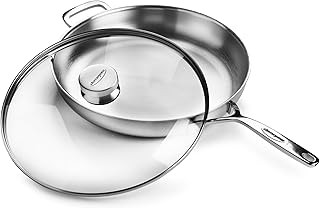
Demeyere Industry 11-Inch Skillet
5-ply TriplInduc base optimized specifically for induction cooktops
Buy on Amazon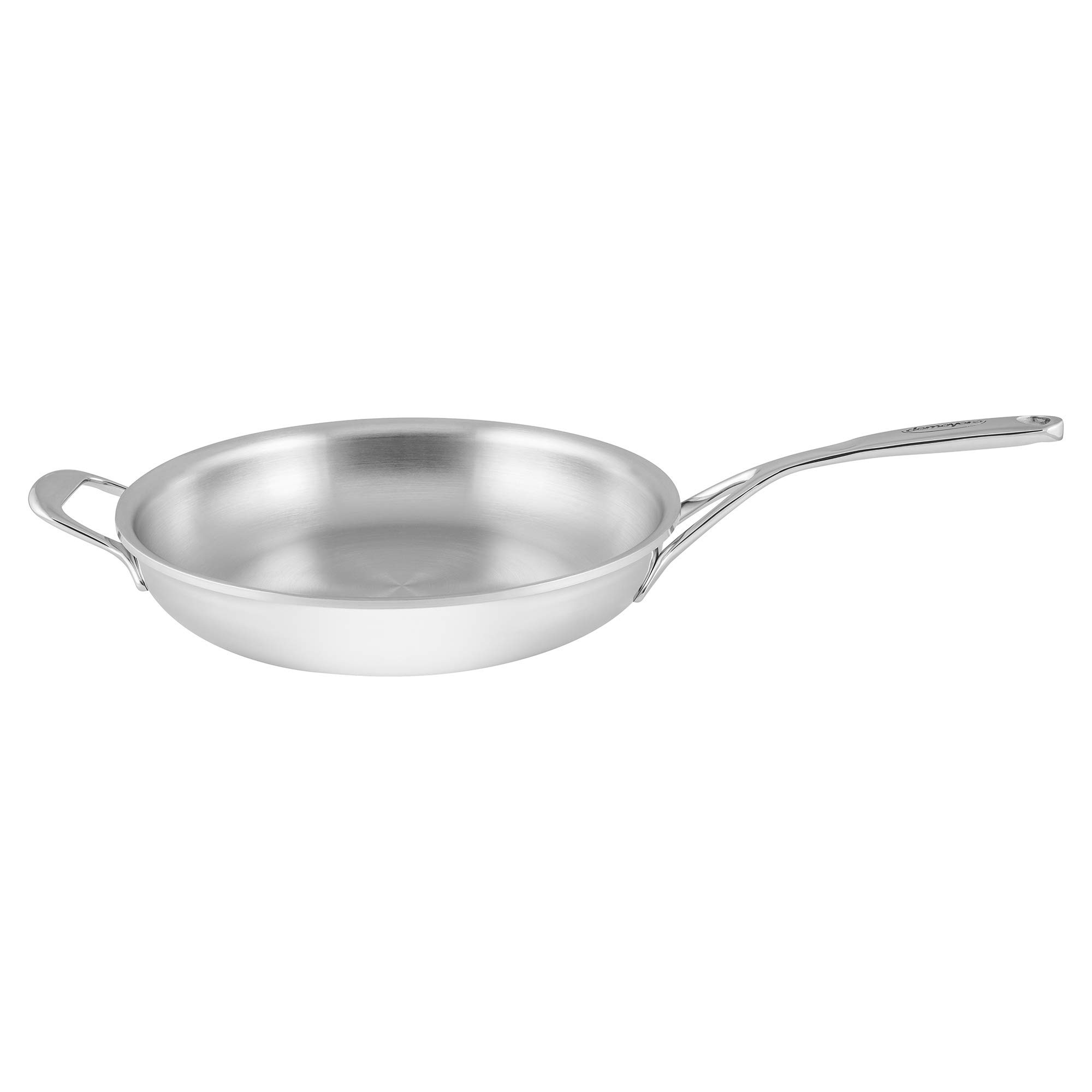
Demeyere Atlantis/Proline 11-Inch Fry Pan
Silvinox surface treatment prevents fingerprints and maintains satin finish
Buy on Amazon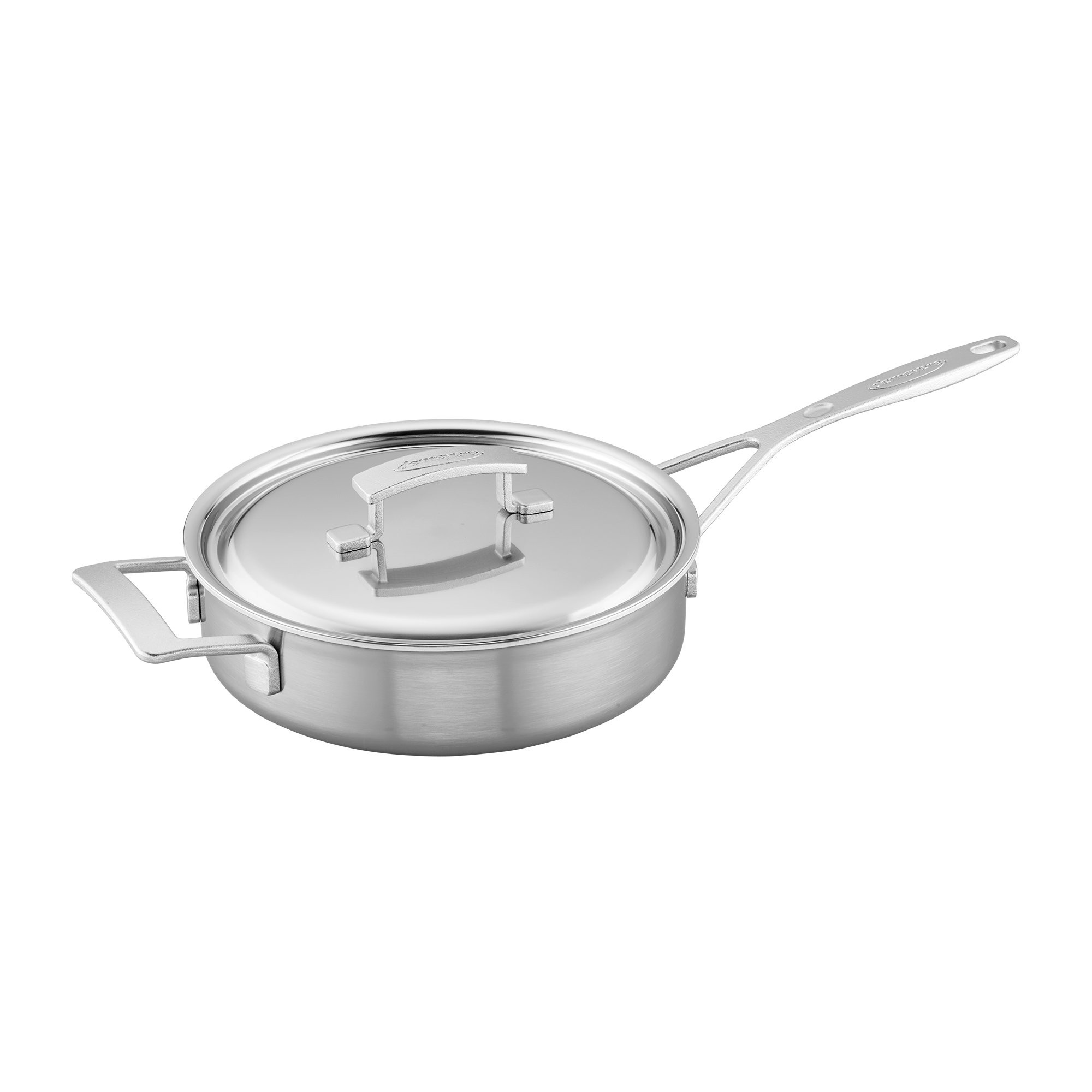
Demeyere Industry 5-Quart Saute Pan
Tall straight walls handle large batches without spilling during stirring
Buy on Amazon| Product | Price Range | Top Strength | Key Weakness | Buy |
|---|---|---|---|---|
| Demeyere Industry 11-Inch Skillet best overall | $$$ | 5-ply TriplInduc base optimized specifically for induction cooktops | One of the most expensive stainless skillets available | Buy on Amazon |
| Demeyere Atlantis/Proline 11-Inch Fry Pan also consider | $$$ | Silvinox surface treatment prevents fingerprints and maintains satin finish | Most expensive pan in the Demeyere range , professional-grade pricing | Buy on Amazon |
| Demeyere Industry 5-Quart Saute Pan also consider | $$$ | Tall straight walls handle large batches without spilling during stirring | Heavy even before adding food | Buy on Amazon |
| Demeyere Industry 5-Piece Cookware Set also consider | $$$ | Complete core set , two saucepans, saute pan, and stock pot | One of the most expensive cookware sets available | Buy on Amazon |
| All-Clad D3 Stainless 12-Inch Fry Pan also consider | $$$ | Tri-ply construction bonds stainless and aluminum for perfectly even heating | Stainless surface requires technique to prevent sticking , not beginner-friendly | Buy on Amazon |
Demeyere is Belgian. All-Clad is American. Both carry lifetime warranties, both sit at the premium end of stainless cookware, and both will outlast most of what’s in your kitchen right now. The question isn’t whether Demeyere makes good pans. It does. The question is whether the specific engineering choices Demeyere makes are the right ones for how you actually cook, and whether the pricing premium over an already-expensive All-Clad purchase is justified for your particular setup.
If you’re building out a serious stainless kitchen and you’ve landed on Demeyere as a serious candidate, this is a direct assessment of the lineup, piece by piece, with a clear recommendation at the end. For broader context on how Demeyere fits into the wider stainless and clad landscape, the Stainless & Clad hub is a good starting point before committing to any one brand.
What to Look For in Demeyere Stainless Steel
Construction Philosophy
Demeyere takes a different approach than most American clad cookware manufacturers. Where All-Clad runs its aluminum core up through the full body of the pan, Demeyere concentrates its engineering in the base. The TriplInduc base used in the Industry line and the InductoSeal base used in the Atlantis/Proline line are both designed specifically to maximize induction efficiency. That’s a real distinction, not marketing language.
For gas or electric cooktops, the full-clad approach of the All-Clad D3 Stainless 12-Inch Fry Pan distributes heat up the sidewalls, which matters for certain cooking tasks. For induction users, Demeyere’s base-focused construction delivers faster response and better energy transfer at the source. If you cook on induction, this is the single most relevant technical difference between the two brands.
Weight
Demeyere pans are heavy. The Atlantis/Proline line is the heaviest consumer stainless cookware I’ve handled. The Industry line is somewhat lighter but still heavier than comparable All-Clad pieces. If you have any wrist or grip issues, or if you regularly toss vegetables in a skillet one-handed, factor this in before purchasing. A pan you don’t reach for is a pan that didn’t justify its price.
The Silvinox Surface
Demeyere’s Atlantis/Proline line uses a proprietary electrochemical surface treatment called Silvinox that removes iron from the steel surface and leaves a uniform satin finish that resists fingerprints and discoloration over time. It’s a genuinely different-looking pan after years of use. Whether that matters to you is a personal call, but it does affect long-term appearance maintenance.
Warranty and Origin
Both Demeyere and All-Clad offer lifetime warranties. Demeyere is manufactured in Belgium. All-Clad is manufactured in Canonsburg, Pennsylvania. Neither of these facts will improve your sear, but both reflect manufacturing standards that justify the price points.
Top Picks
Demeyere Industry 11-Inch Skillet
This is the right starting point for most people considering Demeyere stainless. The Industry line sits below the Atlantis/Proline in the Demeyere hierarchy, which means it’s slightly less expensive (though still firmly in premium territory) and somewhat lighter. The TriplInduc base delivers the induction performance Demeyere is known for without the full weight penalty of the 7-ply Atlantis construction.
The riveted handle design is better than most stainless handles at staying cool during stovetop use, which is a practical detail that matters more than it sounds if you’re doing extended braises or reductions. Belgian-made, lifetime warranty, induction-optimized. For someone switching from an All-Clad D3 setup and moving to an induction cooktop, this is the most direct upgrade with a clear rationale.
The weight is still noticeable compared to All-Clad equivalents. At the price point, which is at the top of the premium category, there’s no getting around that this is an investment purchase. Check current price on Amazon.
Demeyere Atlantis/Proline 11-Inch Fry Pan
The Atlantis/Proline is what Demeyere builds when it isn’t making any concessions. Seven-ply construction, InductoSeal base rated for 10,000 heating cycles, Silvinox surface treatment. This is the most expensive pan in the Demeyere consumer lineup, and it prices itself accordingly.
One-handed tossing is not practical with this pan. I want to be clear about that upfront. The weight is significant, and anyone who regularly works with lighter pans will notice it immediately (I timed myself reaching for a lighter pan three times in a week before adjusting). For searing proteins, building pan sauces, and any cooking where you’re moving the pan occasionally rather than constantly, the weight is manageable and the thermal stability is excellent.
The Silvinox surface does deliver on its promise. After extended use, this pan looks less abused than comparable stainless. Whether the appearance benefit justifies the jump in price over the Industry line is a judgment call that depends entirely on your budget. For buyers who want the best available stainless skillet regardless of cost, this is it. Check current price on Amazon.
Demeyere Industry 5-Quart Saute Pan
Saute pans are where Demeyere’s tall straight-wall construction pays off most clearly. The 5-quart capacity handles large batches without spilling during stirring, which sounds obvious but is genuinely the problem that inadequate saute pan depth causes repeatedly. If you’ve ever reduced a tomato sauce and watched it migrate over the edge of a too-shallow pan, you understand the design priority.
The TriplInduc base on this piece is the same induction-optimized construction as the skillet. Compared to the All-Clad 4 Quart Saucepan, the Demeyere saute delivers better induction response at the cost of noticeably more weight and a price that runs nearly double the comparable All-Clad piece. For gas or electric cooktops, the All-Clad’s full-clad construction gives it competitive standing. For induction, the Demeyere is the better tool.
Lifetime warranty, Belgian-made. Heavy before you add food. Check current price on Amazon.
Demeyere Industry 5-Piece Cookware Set
The 5-piece set covers the core of a functional kitchen. Two saucepans, a saute pan, and a stock pot, all with the TriplInduc base and the Industry-line construction. The set represents one of the most expensive cookware purchases available at this configuration level.
The relevant caveat: there is no skillet in this set. If you’re building a complete Demeyere kitchen from scratch, add the Industry 11-inch skillet or the Atlantis/Proline fry pan to the total cost before comparing against a fully-configured All-Clad set. The math on buying an equivalent All-Clad configuration piece by piece versus this set is worth running, and on the saucepan front, the All-Clad 2 Qt Saucepan is a relevant reference point for what the American tri-ply benchmark costs at that size.
For buyers going all-in on Demeyere for an induction kitchen, the set purchase makes sense as a foundation. Check current price on Amazon.
All-Clad D3 Stainless 12-Inch Fry Pan
Including the All-Clad D3 here because it’s the most common comparison point, and the comparison is worth having directly rather than abstractly. The D3’s tri-ply construction bonds stainless and aluminum through the full body of the pan. Oven-safe to 600°F. Compatible with all cooktops including induction. Made in Canonsburg, Pennsylvania. Lifetime warranty. This is what eight years of daily use looked like in this kitchen before switching, and it performed without complaint.
Against the Demeyere Industry skillet on induction, the D3 is measurably less efficient at heat transfer. Against the Demeyere on gas, the full-clad construction is competitive, and the D3 is lighter and somewhat more maneuverable. At a premium price that’s still somewhat lower than the Demeyere Industry equivalent, the D3 remains the right answer for gas and electric cooktops where Demeyere’s base engineering isn’t delivering its primary advantage.
Check current price on Amazon.
How to Choose
For Induction Cooktops
Demeyere is the more purposeful choice. The TriplInduc and InductoSeal base constructions exist specifically to solve induction performance, and they deliver on that. The Industry skillet is the entry point with a clear rationale. The Atlantis/Proline is the upgrade path if budget isn’t the binding constraint.
For Gas or Electric Cooktops
The case for Demeyere over All-Clad D3 on gas is harder to make at the price differential. The D3’s full-clad construction heats sidewalls as well as the base, which is an advantage for certain applications. If you’re cooking on gas and considering Demeyere purely on brand reputation, run the numbers against a fully-configured All-Clad D5 or D3 setup first.
Set vs. Individual Pieces
Buy the set only if the included pieces match what you actually need. The Demeyere 5-piece set is well-configured for someone who needs both saucepans, a saute pan, and a stock pot. If you already own a solid stockpot (the All-Clad 8 Quart Stock Pot is a reference point for comparison), buying the set to acquire pieces you already own is poor math regardless of how the per-piece price looks on paper.
For buyers who want to round out a high-performance stainless kitchen beyond the core Demeyere pieces, the Stainless & Clad hub covers a wider range of options across price points and construction styles, including alternatives from Made In and Tramontina that enter this category at lower price bands.
My Actual Recommendation
For an induction kitchen with no budget ceiling: the Atlantis/Proline fry pan paired with the Industry 5-piece set, adding the skillet separately. For an induction kitchen where value within the premium tier matters: the Industry skillet and the Industry saute pan, supplemented by All-Clad D3 saucepans where the performance gap is smaller. For gas or electric: the All-Clad D3 12-inch remains the benchmark I’d recommend unless specific Demeyere features are a priority.
Frequently Asked Questions
Is Demeyere stainless steel actually better than All-Clad?
For induction cooktops, Demeyere’s base-focused construction outperforms All-Clad’s full-clad approach in terms of energy efficiency and heat response. For gas or electric cooktops, the difference is smaller and may not justify the additional cost. “Better” depends on your cooktop and your priorities.
Why is Demeyere so expensive compared to other stainless cookware?
Belgian manufacturing, multi-ply construction engineered specifically for induction performance, Silvinox surface treatment on the Atlantis/Proline line, and a lifetime warranty all contribute to the price. Demeyere also doesn’t produce a budget entry point. Every piece in the lineup is built to professional-grade standards, and the pricing reflects that without apology.
Can Demeyere pans go in the dishwasher?
Demeyere states that its pans are dishwasher-safe, and the Silvinox treatment on the Atlantis/Proline line is specifically designed to maintain finish integrity over time. Hand washing extends the life and appearance of any stainless cookware, though, including Demeyere. The choice is yours, but the manufacturer doesn’t prohibit it.
Does Demeyere stainless steel require special care to prevent sticking?
The same technique applies as with any stainless cookware. Preheat the pan, add fat once the pan is hot, and let proteins release naturally rather than forcing them. Stainless sticks when technique is inconsistent, not because the pan is defective. If sticking is a persistent concern, a well-seasoned carbon steel or a quality nonstick pan for specific tasks is worth adding to the kitchen alongside stainless.
How does the Demeyere Industry line compare to the Atlantis/Proline line?
Industry uses a 5-ply TriplInduc base and is lighter and less expensive than Atlantis/Proline. Atlantis/Proline uses a 7-ply InductoSeal base with the Silvinox surface treatment and is the heavier, more expensive, more thermally stable option. For most home cooks, the Industry line delivers the core Demeyere performance advantages. The Atlantis/Proline is for buyers who want the maximum available specification in a consumer stainless pan.
Frequently Asked Questions
Should I buy Demeyere or All-Clad stainless steel cookware?
If you cook on induction, Demeyere's base technology gives it a meaningful performance edge over All-Clad. If you cook on gas or electric, both brands perform excellently and the choice comes down to budget and handle preference. All-Clad is more widely available and less expensive; Demeyere is the better pick for induction-first kitchens.
What stainless steel grade does Demeyere use?
Demeyere uses 18/10 stainless steel (18% chromium, 10% nickel) for the cooking surface interior. The Atlantis line also uses the Silvinox surface treatment, which further depletes iron from the outer steel surface, improving corrosion resistance and maintaining the pan's finish over time.
Does Demeyere stainless steel scratch easily?
Like all stainless steel cookware, Demeyere pans will develop fine surface scratches (called patina) with regular use. The Silvinox treatment on Atlantis pieces makes the surface more resistant to visible discoloration and fingerprints than standard stainless, but scratching from normal cooking is expected and does not affect performance.
How is Demeyere's handle design different from All-Clad?
Demeyere Atlantis handles are welded directly to the pan with no rivets, eliminating the small gaps around rivet heads where food and grease can accumulate. Industry handles are riveted like most stainless cookware. All-Clad uses riveted handles throughout its lineup. The rivet-free Atlantis handle is a meaningful convenience advantage for cooks who dislike cleaning around rivets.
Is Demeyere stainless steel oven safe?
Yes. Demeyere Industry and Atlantis cookware is oven-safe up to 500°F. All-Clad D3 is rated to 600°F, giving All-Clad a slight edge for very high-heat oven tasks. Both are suitable for the vast majority of oven-finishing techniques used in home cooking.
Where to Buy
Demeyere Industry 11-Inch SkilletSee Demeyere Industry 11-Inch Skillet on Amazon