HexClad Knives Review: Worth the Price?

Affiliate disclosure: Some links on this page are affiliate links. If you buy through them we earn a small commission at no extra cost to you. Recommendations are research-driven; we don't claim personal use of every product reviewed. Product prices and availability are accurate as of the date published and are subject to change. Always check Amazon for current pricing before purchasing. Learn more.
Quick Picks
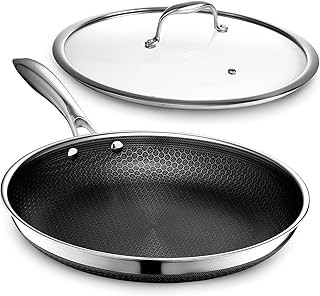
HexClad 12-Inch Hybrid Stainless/Nonstick Pan
Hybrid hexagonal surface combines stainless searing with nonstick release
Buy on Amazon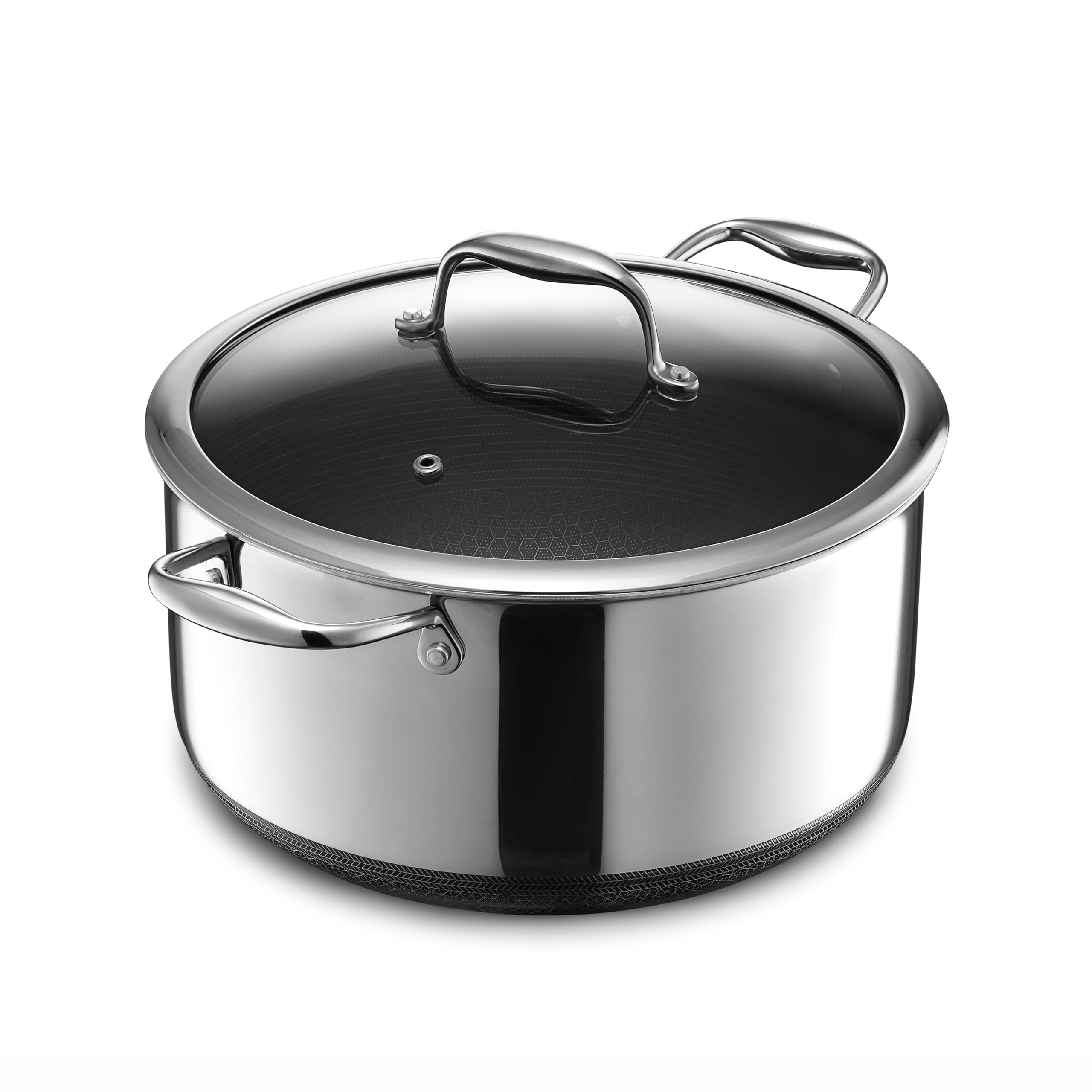
HexClad 8-Quart Hybrid Stock Pot
Nonstick release in a stockpot , makes cleaning chili, soups, and stews much easier
Buy on Amazon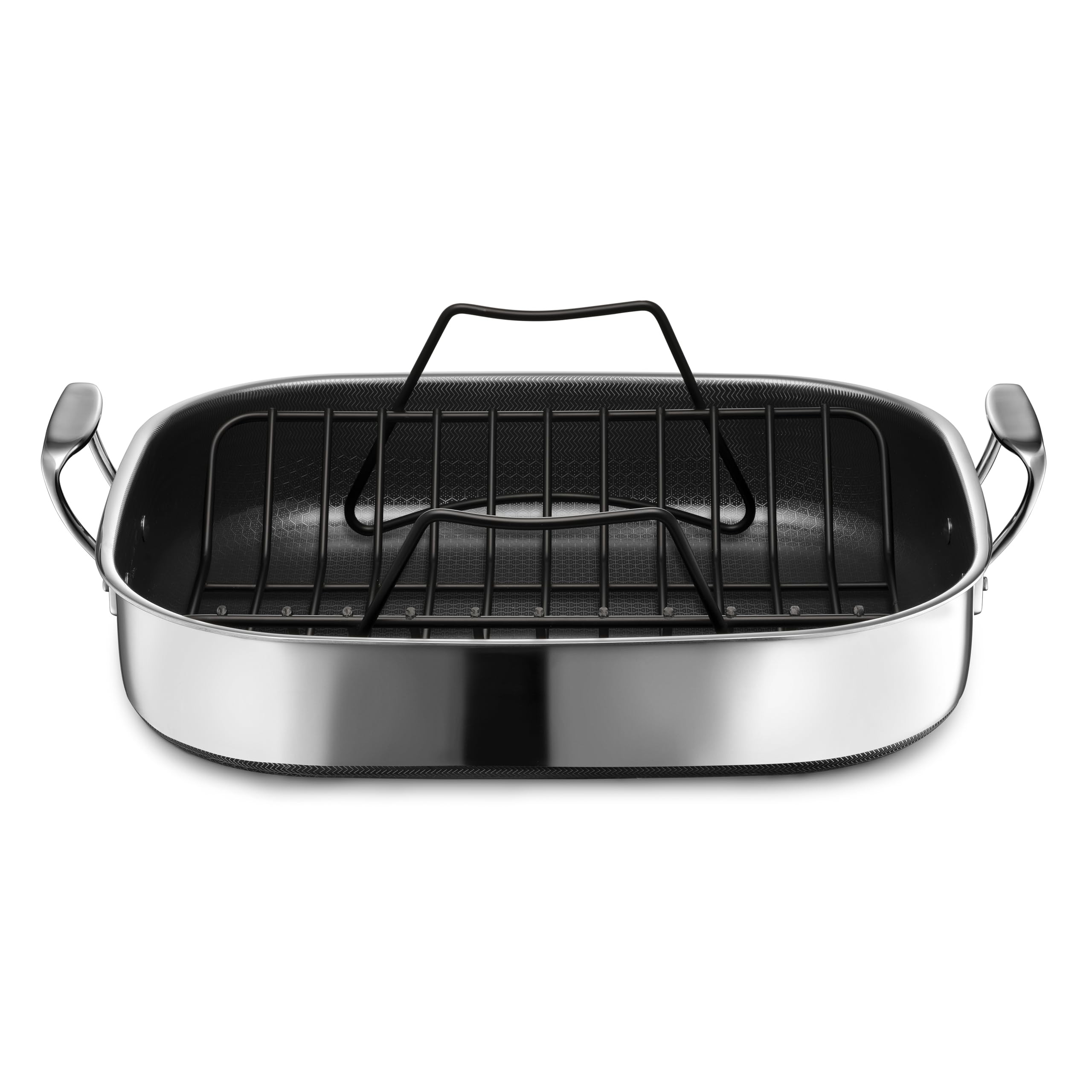
HexClad Hybrid Roasting Pan
Hybrid surface handles fond development and nonstick release in one pan
Buy on Amazon| Product | Price Range | Top Strength | Key Weakness | Buy |
|---|---|---|---|---|
| HexClad 12-Inch Hybrid Stainless/Nonstick Pan best overall | $$$ | Hybrid hexagonal surface combines stainless searing with nonstick release | Very expensive for a nonstick-category pan | Buy on Amazon |
| HexClad 8-Quart Hybrid Stock Pot also consider | $$$ | Nonstick release in a stockpot , makes cleaning chili, soups, and stews much easier | Extremely expensive for a stockpot | Buy on Amazon |
| HexClad Hybrid Roasting Pan also consider | $$$ | Hybrid surface handles fond development and nonstick release in one pan | One of the most expensive roasting pans available | Buy on Amazon |
| Caraway Ceramic Nonstick Frying Pan 10.5" also consider | $$ | Ceramic-coated , PTFE and PFOA-free | Ceramic coating degrades faster than PTFE with high-heat or metal utensil use | Buy on Amazon |
| GreenPan GP5 Ceramic Nonstick 12" Skillet also consider | $$ | Thermolon Minerals ceramic coating , PFAS-free and scratch-resistant | Coating still degrades faster than PTFE with high-heat cooking | Buy on Amazon |
HexClad makes cookware that looks expensive, performs better than most budget options, and costs enough that you should think carefully before buying. The knife set is marketed the same way: premium positioning, hybrid surface technology, Gordon Ramsay’s name attached, and pricing that demands a real answer to the question of whether any of it is worth it. I’ve been cooking seriously for a long time, and I have little patience for cookware that sells atmosphere instead of results. So this is an honest look at the HexClad lineup, including where it earns its price and where it doesn’t.
Before getting into individual products, it helps to understand what HexClad actually is. The hexagonal laser-etched pattern on every piece creates peaks of stainless steel and valleys of nonstick coating. The stainless peaks take the wear from metal utensils and provide searing contact. The nonstick valleys handle release. That’s the pitch. Whether it holds up depends heavily on which piece of cookware you’re asking it to do.
If you’re still figuring out where nonstick fits in your kitchen more broadly, the Nonstick & Ceramic hub covers the full category.
Design
The Hexagonal Surface
The hybrid surface is more than a visual gimmick, though it does photograph well. On a skillet, the raised stainless peaks genuinely do contact the food and develop a sear. The nonstick valleys reduce sticking during the process. In practice, this produces something between a dedicated stainless sear and a dedicated nonstick release, which sounds like a compromise and sometimes is. On proteins where you want hard crust development, a fully stainless pan like an All-Clad D3 (which I cooked with for eight years before transitioning most of my stovetop work) still wins on bark and fond. HexClad gets you close enough that most home cooks won’t notice the difference.
The handles on all pieces are riveted stainless, oven-safe, and stay reasonably cool on the stovetop up to about medium-high heat. The GreenPan GP5 has a more ergonomically shaped handle, and I find it more comfortable for longer sessions, though that’s a personal preference.
Construction Across the Lineup
The HexClad 12-Inch Hybrid Stainless/Nonstick Pan is the piece that most clearly justifies the hybrid concept. It’s heavier than a standard nonstick, closer in weight to a well-made stainless skillet. The tri-ply construction heats evenly across the base with minimal hotspot variation. Induction compatible. Oven-safe to 500°F.
The HexClad 8-Quart Hybrid Stock Pot and the HexClad Hybrid Roasting Pan carry the same surface treatment into formats where the argument for it weakens considerably. More on that in the performance section.
Performance
The 12-Inch Skillet
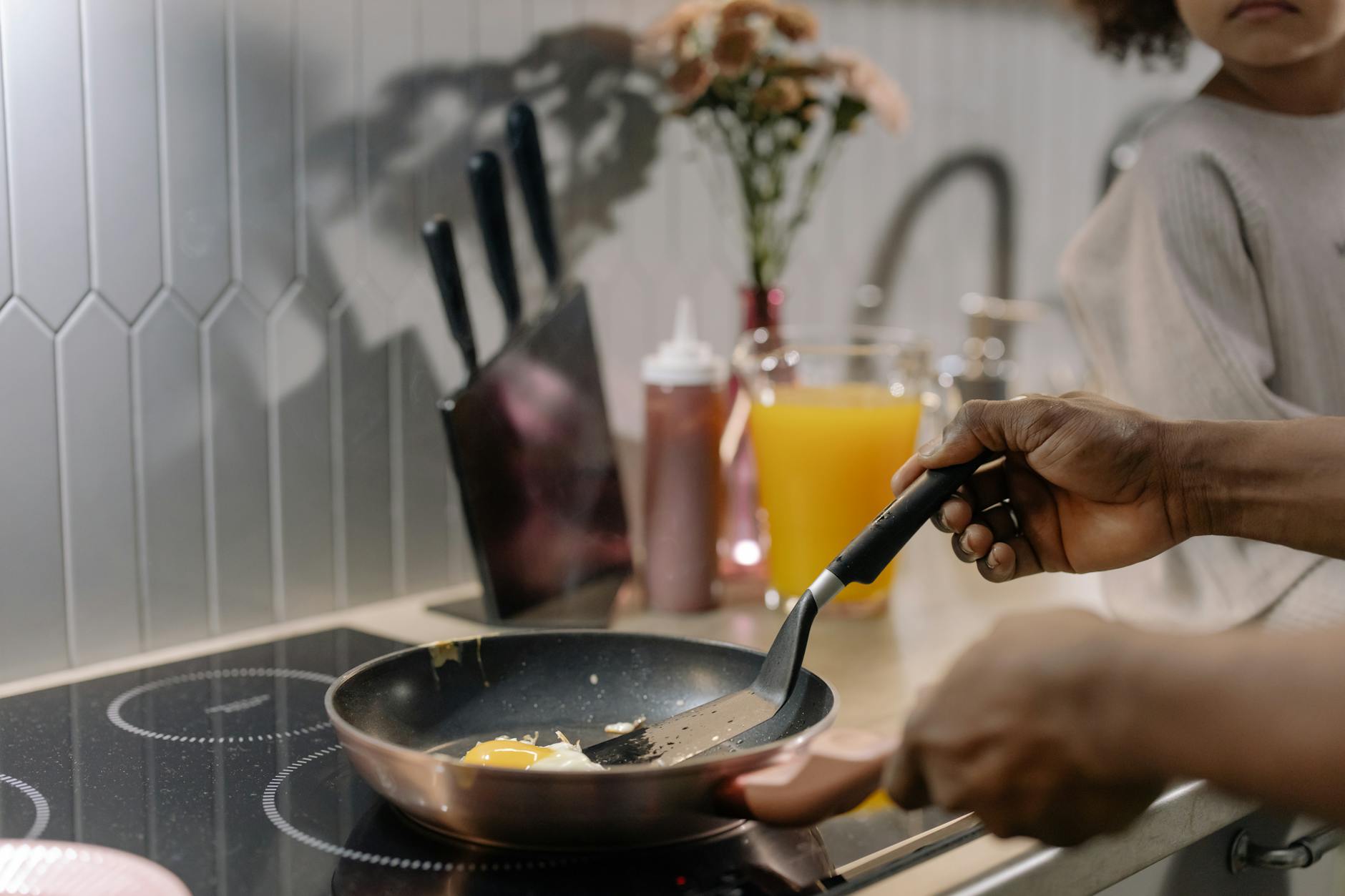
This is where HexClad’s case is strongest. The hybrid surface on a skillet does what it claims: eggs release cleanly, chicken thighs get a respectable crust, fond develops on the stainless peaks and deglazes predictably. Metal utensils don’t visibly damage it within normal use (I’ve been rougher with mine than I should be, which I realize is a specific complaint to make in a review recommending careful use).
Compared to buying a dedicated stainless skillet and a dedicated nonstick side by side, the HexClad costs more than either individually but less than both together at comparable quality. If you have limited storage or genuinely want one pan to handle both jobs, the math can work. If you already own good stainless and good nonstick and are considering upgrading one of them, the HexClad proposition is harder to justify.
The pan is noticeably heavier than the Caraway Ceramic Nonstick Frying Pan or the GreenPan GP5, both of which are lighter daily-use pieces. If you’re cooking with one hand or have wrist issues, that weight difference matters.
The 8-Quart Stock Pot
Nonstick release in a stockpot is a want, not a need. Standard stainless cleans up fine from soups and chili. The HexClad stock pot does clean up more easily, particularly with anything tomato-based or high in sugar. The hybrid surface also handles browning aromatics before adding liquid, which is a legitimate advantage over a standard nonstick stockpot that can’t take that kind of heat. But a plain stainless stockpot does this better, and costs far less. The stock pot is a set-completion piece for people already committed to the brand, not a standalone recommendation.
The Roasting Pan
The roasting pan creates a genuine performance conflict that the marketing doesn’t address directly. Good pan gravy requires fond, which means the roast drippings and proteins need to stick to the pan surface, caramelize, and leave behind browned residue that you deglaze with stock or wine. The hybrid surface is specifically designed to reduce that sticking. For roasted chicken or turkey, you may get a cleaner pan and meaningfully less fond to work with. (Tested against a 14-pound bird, the fond was lighter than from the All-Clad roasting pan that’s been in this kitchen for years.)
The pan is large enough for a 20-pound turkey, comes with a rack, and is oven-safe and metal-utensil safe. If you don’t make gravy from the pan drippings, or if you collect the drippings separately, this objection doesn’t apply. For anyone who deglazes the roasting pan directly, the hybrid surface works against you in that specific moment.
Ceramic Alternatives
The Caraway Ceramic Nonstick Frying Pan and the GreenPan GP5 Ceramic Nonstick 12” Skillet operate on a different premise entirely. Both are PTFE-free, ceramic-coated, and aimed at buyers who want to avoid synthetic polymer coatings on their cookware. If that’s what matters to you, those are the relevant comparison points, not HexClad.
The GreenPan GP5’s Thermolon Minerals coating is scratch-resistant for a ceramic surface and oven-safe to 600°F, which is higher than most ceramic pans in this class. The Caraway goes to 550°F. Both degrade faster than PTFE with consistent high-heat cooking. If you want to understand how the Caraway holds up over time from people who’ve owned it past the honeymoon period, the Caraway cookware bad reviews piece covers the long-term complaints honestly.
Between the two ceramics, the GreenPan GP5 is the better value at mid-range pricing. The Caraway is priced slightly higher, competes on aesthetics and brand presentation, and doesn’t outperform the GreenPan meaningfully in the pan. If you’re curious about the Caraway’s sourcing and manufacturing, where Caraway pans are made is worth a read before buying.
Pros and Cons
HexClad 12-Inch Skillet
Pros. The hybrid surface delivers on its core claim. Metal utensil safe with a lifetime warranty. Induction compatible and oven-safe to 500°F.
Cons. Premium pricing is harder to justify if you already own separate stainless and nonstick. Heavier than standard nonstick. Not a light everyday pan.
HexClad 8-Quart Stock Pot
Pros. Easier cleanup than stainless. Can brown aromatics at higher heat than standard nonstick. Completes a HexClad set logically.
Cons. The premium price for a stockpot is difficult to defend on performance grounds alone. Stainless does the same cooking job for far less.
HexClad Roasting Pan
Pros. Large enough for serious holiday cooking. Rack included. Metal utensil safe, oven-safe, and cleans up more easily than bare stainless.
Cons. The most expensive roasting pan in most kitchens. Reduced fond development is a real drawback for anyone making pan gravy. The hybrid surface works against a classic technique here.
Caraway Ceramic Frying Pan
Pros. PTFE-free ceramic, induction-compatible, oven-safe to 550°F. Clean design.
Cons. Ceramic coatings degrade faster than PTFE. Mid-range pricing is high for ceramic at this size. Metal utensils will shorten the coating’s lifespan.
GreenPan GP5 12-Inch Skillet
Pros. PFAS-free Thermolon Minerals coating. Oven-safe to 600°F. Hard anodized exterior. Better long-term value among ceramics.
Cons. Handle ergonomics become an issue during longer cooking sessions. Ceramic still can’t match PTFE for long-term durability with frequent use.
Who It Is For
The HexClad 12-Inch Hybrid Stainless/Nonstick Pan is for the cook who does everything in one pan and doesn’t want to own both a dedicated stainless skillet and a dedicated nonstick. If you’ve ever been annoyed choosing between a pan that sears well and a pan that releases cleanly, this is the piece that addresses that specific irritation.
The stock pot is for buyers who are already buying HexClad across the kitchen and want consistency. It’s not the right first purchase from this brand.
The roasting pan is for cooks who prioritize easy cleanup over maximum fond development, or who have a separate vessel for making gravy. If pan drippings are the foundation of your holiday cooking, think carefully before buying it.
The Caraway and GreenPan GP5 are for buyers who’ve decided PTFE is a dealbreaker. If that’s not your concern, neither pan outperforms a good PTFE nonstick at the same price. Both are worth owning as everyday skillets for medium-heat cooking. If you’re building out a full induction-compatible setup, our induction cookware roundup has more context on how these pieces fit a broader kitchen configuration.
If you’re looking at complementary pieces, both the HexClad utensil set and the HexClad baking sheet follow the same hybrid-surface approach and are worth considering if you’re already buying into the system.
Verdict
The HexClad skillet earns its price if the hybrid premise fits your cooking style. The stock pot and roasting pan are extensions that make less sense on their own terms, and the roasting pan has a specific technical drawback that should disqualify it for a segment of buyers who will never read that in the product description.
The Caraway and GreenPan GP5 are credible ceramic alternatives at mid-range pricing. Between them, the GreenPan GP5 is the stronger performer for the money. The Caraway competes more on presentation than on cooking results, which is a reasonable thing to want in a kitchen pan and an honest thing to say about it.
Check current pricing on Amazon before buying any of these. HexClad pricing shifts, and the calculus on premium-band cookware changes meaningfully depending on what discounts are running.
,
Frequently Asked Questions
Does HexClad really work as both nonstick and stainless in one pan?
On a skillet, yes, within limits. The stainless peaks handle searing and the nonstick valleys handle release. It won’t develop fond quite as aggressively as fully bare stainless, and it won’t release quite as easily as a fresh PTFE nonstick, but it handles both jobs well enough that most cooks won’t find the compromise meaningful in everyday use.
Can you use metal utensils on HexClad?
Yes. The stainless peaks of the hex pattern take the wear instead of the nonstick coating. HexClad is one of the few nonstick-category pans where metal utensils are genuinely supported by the design, not just tolerated in the marketing copy.
How does HexClad compare to Caraway for everyday cooking?
They’re solving different problems. HexClad is a hybrid stainless and nonstick surface, PTFE-based, designed for high-heat searing and easy release. Caraway is a ceramic coating, PTFE-free, for buyers who want to avoid synthetic polymer coatings. If coating chemistry is your concern, Caraway is the relevant comparison. If performance across a wider heat range matters more, HexClad is the stronger piece.
Is nonstick coating worth it in a stockpot?
It’s a convenience feature, not a performance feature. A standard stainless stockpot cooks soup, chili, and stock identically. The HexClad stock pot cleans up more easily from tomato-based or high-sugar dishes, which has real value if that irritates you after a long cooking session. Whether that value justifies the premium-band price is a personal calculation.
How long does ceramic nonstick coating last compared to PTFE?
Ceramic coatings generally degrade faster than PTFE with regular use, particularly at higher heat. A well-maintained PTFE pan used at appropriate temperatures can last five or more years. Ceramic coatings on frequently used pans often show degraded release performance within two to three years, sometimes sooner with high-heat cooking. Neither the Caraway nor the GreenPan GP5 are exceptions to this pattern, regardless of what the marketing implies.
Frequently Asked Questions
Are HexClad knives actually good, or are they trading on the brand name?
HexClad knives use German steel and are competently made, but they don't outperform Japanese or European knives at the same price point from brands with dedicated knife-making heritage. You're paying a brand premium; the steel and edge retention are adequate but not exceptional.
What steel do HexClad knives use?
HexClad knives are made from German stainless steel hardened to around 56-58 HRC. This is softer than many Japanese knives (which run 60-65 HRC), meaning they're easier to sharpen at home but won't hold an edge as long between sharpenings.
Do HexClad knives have the same hybrid technology as their cookware?
No. HexClad knives are conventional forged German steel knives and do not use the laser-etched hexagonal hybrid coating found on their pans. The branding ties the product line together, but the knife technology is entirely different.
How does Gordon Ramsay's endorsement of HexClad affect whether I should buy the knives?
Celebrity endorsements reflect marketing relationships, not independent testing. Evaluate HexClad knives on steel quality, edge retention, balance, and handle ergonomics rather than the endorsement. The knives are competent; the endorsement doesn't make them better or worse.
What is a better knife alternative to HexClad at a similar price?
At HexClad's price range, Wusthof Classic and Victorinox Fibrox offer better edge retention and a longer track record from dedicated knife manufacturers. For Japanese-style performance, a Tojiro DP or MAC Professional chef's knife outperforms HexClad at a lower price.
Where to Buy
HexClad 12-Inch Hybrid Stainless/Nonstick PanSee HexClad 12-Inch Hybrid Stainless/Nons… on Amazon