HexClad Stock Pot Review: Worth the Price?

Affiliate disclosure: Some links on this page are affiliate links. If you buy through them we earn a small commission at no extra cost to you. Recommendations are research-driven; we don't claim personal use of every product reviewed. Product prices and availability are accurate as of the date published and are subject to change. Always check Amazon for current pricing before purchasing. Learn more.
Quick Picks
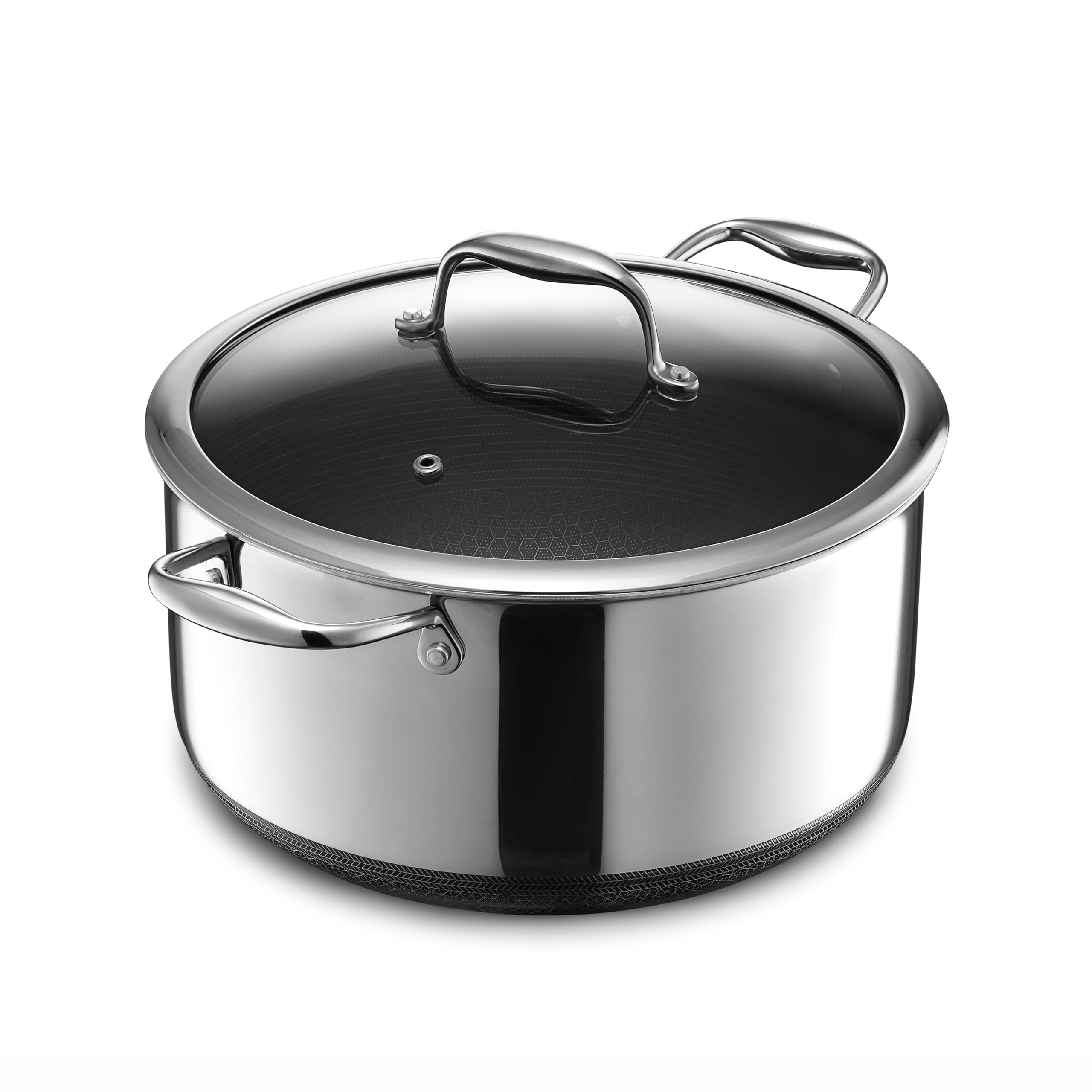
HexClad 8-Quart Hybrid Stock Pot
Nonstick release in a stockpot , makes cleaning chili, soups, and stews much easier
Buy on Amazon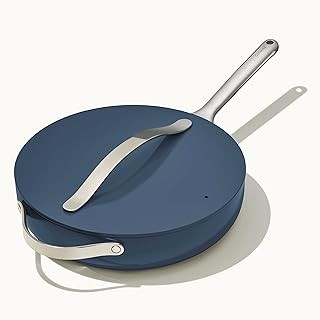
Caraway 4.5-Quart Saute Pan
Ceramic-coated , free of PTFE, PFOA, and other synthetic coatings
Buy on Amazon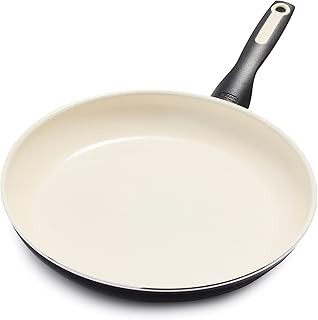
GreenPan GP5 Ceramic Nonstick 12" Skillet
Thermolon Minerals ceramic coating , PFAS-free and scratch-resistant
Buy on Amazon| Product | Price Range | Top Strength | Key Weakness | Buy |
|---|---|---|---|---|
| HexClad 8-Quart Hybrid Stock Pot best overall | $$$ | Nonstick release in a stockpot , makes cleaning chili, soups, and stews much easier | Extremely expensive for a stockpot | Buy on Amazon |
| Caraway 4.5-Quart Saute Pan also consider | $$ | Ceramic-coated , free of PTFE, PFOA, and other synthetic coatings | Ceramic coating degrades faster than PTFE if overheated or scratched with metal utensils | Buy on Amazon |
| GreenPan GP5 Ceramic Nonstick 12" Skillet also consider | $$ | Thermolon Minerals ceramic coating , PFAS-free and scratch-resistant | Coating still degrades faster than PTFE with high-heat cooking | Buy on Amazon |
| Viking Culinary Hard Anodized Nonstick 10-Inch Fry Pan also consider | $$ | Hard anodized exterior is more durable than standard aluminum | PTFE coating will eventually degrade with use | Buy on Amazon |
The HexClad stock pot gets searched enough that it deserves a straight answer: it’s a well-made piece of cookware at a price that will make most people wince, and whether you need it depends almost entirely on how you cook and what else is already in your cabinet. I want to address that honestly here, along with three other nonstick and ceramic options that belong in the same conversation. If you’re new to this category and want a broader orientation before reading further, the Nonstick & Ceramic hub covers the full range of surface types, price points, and what actually holds up over time.
What to Look For in a Nonstick or Ceramic Stockpot and Skillet
Surface Type Matters More Than Marketing
There are two coating types in this roundup. PTFE (what most people call Teflon, though that’s a brand name) is more durable, handles higher heat without degrading, and will outlast ceramic if you cook frequently at medium-high. Ceramic coatings are PFAS-free and appeal to buyers who want to avoid synthetic polymer coatings entirely, but they have a shorter functional lifespan. Most ceramic nonstick surfaces start losing their release quality within two to three years of regular use, sometimes faster if overheated.
Neither coating should be preheated empty or blasted on high heat. That’s true of PTFE and ceramic alike, and it’s where most coating failures start.
Capacity and Shape for the Actual Task
A stockpot is a different tool than a skillet or saute pan, and the nonstick question applies differently to each. Skillets and saute pans run at higher temperatures, which is exactly where nonstick coatings are most stressed. A stockpot, by contrast, holds soup at a low simmer for two hours. Nonstick convenience in a stockpot is real, but it’s a nice-to-have rather than something that changes the cooking outcome.
Induction Compatibility
If you cook on induction, check the base before you buy. Not every nonstick pan ships with a magnetic stainless base. The Viking and Caraway options here both work on induction. The GreenPan GP5 does as well. If you’re building out a set for induction, see also the non stick cookware for induction coverage on this site, which goes deeper on what to look for in base construction.
Weight and Handle Comfort
Hard anodized aluminum is the standard construction in this price range. It’s lighter than cast iron or stainless clad, which matters if you’re moving a full stockpot from burner to counter. Handle attachment (riveted vs. welded) and the handle material itself affect both safety and comfort during longer cooking sessions.
Top Picks
HexClad 8-Quart Hybrid Stock Pot: Best for Completing a HexClad Set
The HexClad 8-Quart Hybrid Stock Pot is a well-engineered product with a real use case and a price that sits at the top of the premium category. Checking current price on Amazon is worth doing before you commit, because it is one of the pricier options in this entire class of cookware.
What HexClad does differently is the laser-etched hexagonal surface that raises stainless steel peaks above a PTFE nonstick valley. In a skillet, this creates a hybrid surface that can sear over high heat while still releasing food cleanly. In a stockpot, that browning capability is the actual selling point: sauteing aromatics, browning meat before adding liquid, building a fond for a braised chili. If you do all of that in a single pot rather than a separate skillet, the surface earns its cost.
The cleaning advantage is also real. Anyone who has scrubbed a standard stainless stockpot after a long-simmered tomato sauce knows exactly what I’m describing. The HexClad surface releases residue with significantly less effort.
Where I want to be direct: the nonstick property of a stockpot does not affect the outcome of the food. Soup simmered in a basic stainless pot from a restaurant supply store tastes identical to soup simmered in this one. You’re paying for cleaning convenience, set cohesion, and the browning capability in one vessel. If you’re already using HexClad pans (and if you’re considering the matching HexClad utensil set to go with it), this stockpot makes sense as the logical next piece. If HexClad isn’t already in your rotation, a standard stainless stockpot from All-Clad or even Cuisinart will perform identically and cost a fraction of the price.
Metal utensil safe, oven-safe, works on all cooktops including induction. The construction is solid. The question is never quality with HexClad. It’s always value for the specific use case.
Caraway 4.5-Quart Saute Pan: Best Ceramic for the PTFE-Averse
The Caraway 4.5-Quart Saute Pan is mid-range pricing and comes with the canvas lid holder and pan rack that Caraway consistently packages with their cookware. That storage solution is genuinely useful in a real kitchen. The ceramic coating is PTFE and PFOA-free, which is the primary reason most buyers choose Caraway over a traditional nonstick.
Durability is the honest conversation with any ceramic nonstick. If you’ve read the Caraway cookware bad reviews coverage on this site, you’ll recognize a pattern: the complaints cluster around coating degradation at the two-to-three-year mark, usually after high-heat use or contact with metal utensils. That’s not a Caraway defect specifically. That’s ceramic coating behavior across brands. Caraway’s Thermolon coating is well-applied and the pans come out of the box with excellent release quality. The question is what happens in year three of daily cooking at medium-high heat.
The saute pan form factor is the right choice for ceramic. Saute pans operate at moderate temperatures, and Caraway recommends low to medium heat anyway. Keep it there and the coating holds up better. The magnetic stainless base means it works on induction without issue.
For buyers curious about where this cookware actually comes from, the where are Caraway pans made piece on this site has a straightforward answer.
My advice would be: Caraway suits someone who cooks at sensible temperatures, hand-washes their pans, and wants to avoid synthetic coatings. If you tend to blast things on high heat, ceramic will frustrate you within two years regardless of brand.
GreenPan GP5 Ceramic Nonstick 12” Skillet: Better Value in the Ceramic Category
The GreenPan GP5 Ceramic Nonstick 12” Skillet is mid-range pricing, generally landing below Caraway for a comparable piece. GreenPan’s Thermolon Minerals coating is PFAS-free, scratch-resistant relative to standard ceramic, and rated oven-safe to 600 degrees Fahrenheit. That 600-degree oven rating is meaningfully higher than most ceramic nonstick pans, which typically cap at 350 to 450 degrees.
The hard anodized exterior distributes heat more evenly than standard aluminum and is more resistant to warping. A 12-inch skillet with good heat distribution is a different daily-use experience than one that runs hot in the center. (Some skillets cook a perfect ring of eggs around a raw center — it’s a particular kind of frustrating.)
The handle complaint in longer cooking sessions is legitimate. On a 45-minute braise where the pan stays on the burner throughout, the handle transfers heat noticeably. It’s not a safety issue with an oven mitt, but worth knowing if you cook frequently at the stove for extended periods.
Comparing GreenPan to Caraway directly: the coating chemistry is similar (both Thermolon-based), GreenPan typically comes in at lower pricing, and the oven-safe rating is higher. Caraway wins on storage accessories and brand presentation. GreenPan wins on value per performance metric.
Viking Culinary Hard Anodized Nonstick 10-Inch Fry Pan: Best PTFE Option for Induction
The Viking Culinary Hard Anodized Nonstick 10-Inch Fry Pan is mid-range pricing and is the PTFE option in this roundup. PTFE outperforms ceramic in durability at equivalent price points. If you heat this pan correctly and use silicone or wooden utensils, it will outlast either ceramic option by a meaningful margin.
Viking’s brand recognition in nonstick is lower than All-Clad or Calphalon, which affects consumer confidence more than it reflects actual product quality. The hard anodized construction is solid, induction compatibility is confirmed, and the 400-degree oven rating is adequate for most skillet applications.
The comparison to GreenPan is a coating philosophy question more than a performance question. GreenPan gives you ceramic and PFAS-free chemistry at similar pricing. Viking gives you PTFE, which is more durable and performs better at high heat. Both are reasonable positions depending on what matters to you.
How to Choose
If you’re buying specifically for a HexClad collection and want a single pot that can brown, simmer, and clean up without effort, the 8-quart hybrid pot is the product for that job. Accept the premium pricing as the cost of that specific functionality.
If you want ceramic and cook at moderate temperatures, the Caraway saute pan is a well-made piece with the most useful accessories in this group. The GreenPan is the better value if you don’t need the storage extras and want a larger skillet format.
If coating longevity matters more than PFAS-free chemistry, the Viking PTFE pan will outlast both ceramic options under regular use. That’s not a lifestyle statement, it’s a material property.
For anyone building out an induction kitchen specifically, the Nonstick & Ceramic hub has comparative coverage across a wider range of pieces than this article covers.
Frequently Asked Questions
Is nonstick coating worth it in a stockpot?
Useful, but not necessary. The nonstick surface makes cleanup easier and allows you to brown aromatics or meat before adding liquid without switching pots. The food itself cooks identically in a standard stainless stockpot. If you already own quality stainless, there’s no cooking reason to upgrade to a nonstick stockpot. If you’re building a new set from scratch and cleanup time matters to you, the convenience is real.
How long does ceramic nonstick last compared to PTFE?
Ceramic coatings typically degrade in two to three years of regular use, sometimes faster with high-heat cooking or metal utensil contact. PTFE coatings, used correctly at medium heat and with non-metal utensils, commonly last five or more years. The durability gap is real and should factor into the price-per-year calculation when comparing options at similar price points.
Can I use the HexClad stock pot on induction?
Yes. HexClad uses a stainless steel construction that works on all cooktop types including induction. The same applies to the Caraway saute pan, the GreenPan GP5 skillet, and the Viking fry pan covered here. Induction compatibility is worth confirming on any nonstick purchase because not all aluminum-based pans ship with a magnetic base.
What ruins ceramic nonstick coating fastest?
Three things: preheating an empty pan, sustained high-heat cooking, and metal utensils. Ceramic coatings break down at the surface level when exposed to thermal shock or abrasion. Sticking to low and medium heat, using silicone or wooden utensils, and hand-washing rather than running through the dishwasher will extend the coating life considerably.
Is the HexClad hybrid surface actually nonstick, or is it more like stainless?
Both, in a specific way. The laser-etched surface raises stainless steel peaks above PTFE valleys. The stainless peaks allow for searing and browning at higher heat than standard nonstick can handle. The PTFE valleys provide release and easy cleanup. In practice it behaves more like a nonstick surface for most cooking tasks, with better sear capability than traditional nonstick. It does require a small amount of oil, more so than a standard nonstick pan, which some buyers don’t expect.
Frequently Asked Questions
Why would you want a nonstick coating inside a stock pot?
A nonstick-interior stock pot makes cleaning significantly easier after cooking sticky, starchy, or high-sugar dishes like chili, tomato sauces, oatmeal, and bean soups. The HexClad's hybrid surface also lets you brown aromatics directly in the pot before adding liquid, reducing the number of pans you dirty.
Is the HexClad stock pot worth the price over a standard stainless stock pot?
For most cooks, no. A high-quality stainless stock pot from All-Clad or Tramontina costs far less and handles everything a stock pot needs to do — boiling, simmering, stock making. The nonstick benefit is only meaningful if you regularly cook sticky dishes and hate scrubbing.
What size is the HexClad stock pot?
HexClad offers their stock pot in an 8-quart size, which is the standard home kitchen size suitable for soups, stews, pasta for 6-8 people, and most stock-making tasks. It is not large enough for batch canning or very large stocks.
Can you sear meat in a HexClad stock pot?
Yes. The hybrid stainless peaks on the HexClad surface can handle searing at medium-high heat, which lets you brown meat or aromatics at the start of a braise or stew without switching pans. This is one of the few genuine advantages over a standard nonstick-coated pot.
How do you clean the HexClad stock pot after cooking sticky dishes?
The hybrid surface releases most residue with warm soapy water and a soft sponge. For stubborn starch or protein residue, fill the pot with warm water and let it soak for 10 minutes before washing. Avoid steel wool or abrasive scrubbers that can damage the nonstick valleys.
Where to Buy
HexClad 8-Quart Hybrid Stock PotSee HexClad 8-Quart Hybrid Stock Pot on Amazon