Professional Chef Knife Bag Buyer's Guide

Affiliate disclosure: Some links on this page are affiliate links. If you buy through them we earn a small commission at no extra cost to you. Recommendations are research-driven; we don't claim personal use of every product reviewed. Product prices and availability are accurate as of the date published and are subject to change. Always check Amazon for current pricing before purchasing. Learn more.
Quick Picks
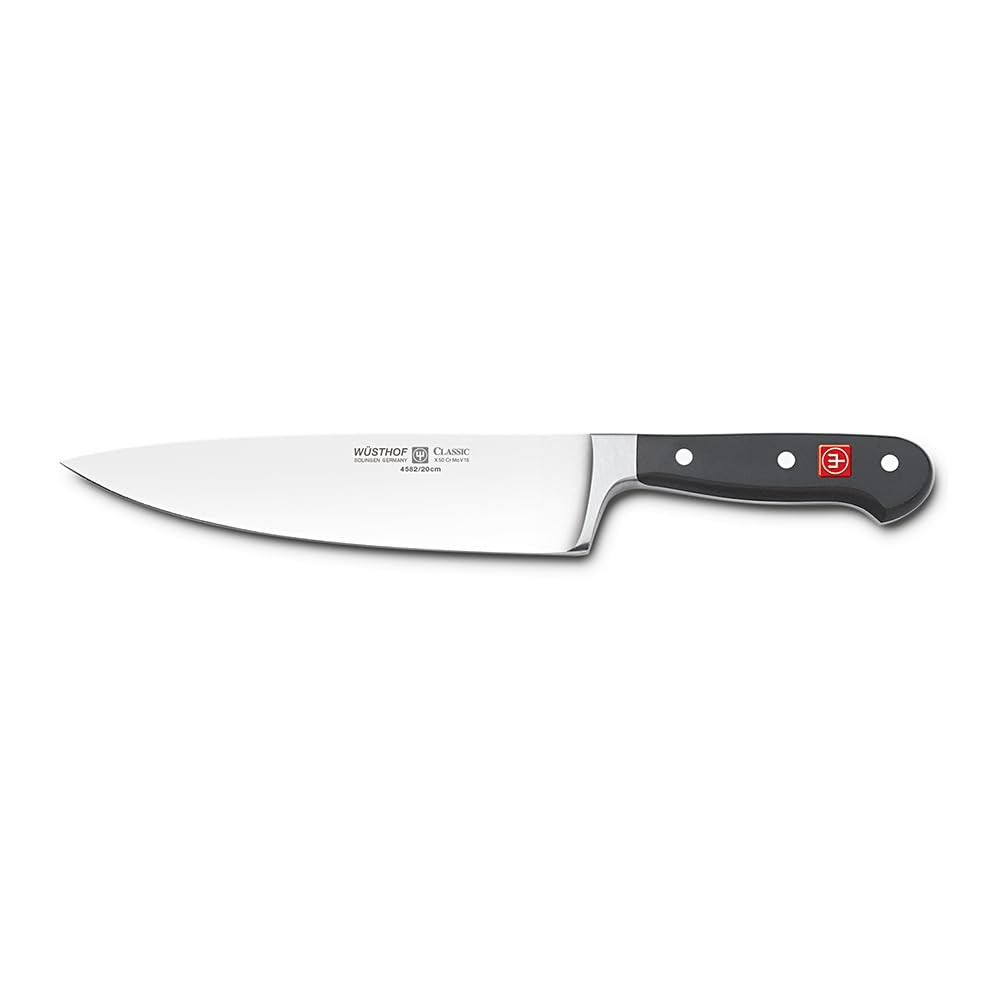
Wüsthof Classic 8-Inch Chef's Knife
Full tang, forged German steel , built to last decades with proper care
Buy on Amazon
Shun Classic 8-Inch Chef's Knife
VG-MAX steel with 68-layer Damascus cladding , razor-sharp out of the box
Buy on Amazon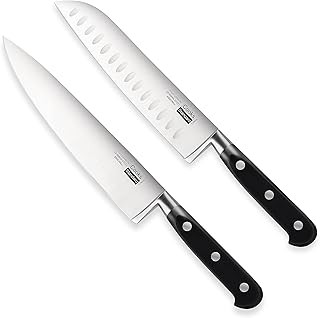
MAC Professional 8-Inch Chef's Knife
Thin Japanese blade profile with a Western-style handle , best of both
Buy on Amazon| Product | Price Range | Top Strength | Key Weakness | Buy |
|---|---|---|---|---|
| Wüsthof Classic 8-Inch Chef's Knife best overall | $$$ | Full tang, forged German steel , built to last decades with proper care | Heavy at 8.5 oz , some cooks prefer the lighter feel of Japanese knives | Buy on Amazon |
| Shun Classic 8-Inch Chef's Knife also consider | $$$ | VG-MAX steel with 68-layer Damascus cladding , razor-sharp out of the box | Hard steel (61 HRC) is more brittle , chip risk on bones or frozen food | Buy on Amazon |
| MAC Professional 8-Inch Chef's Knife also consider | $$ | Thin Japanese blade profile with a Western-style handle , best of both | Less name recognition than Shun or Wüsthof , harder to buy as a gift | Buy on Amazon |
| Victorinox Fibrox Pro 8-Inch Chef's Knife also consider | $ | Best-performing knife under $50 , used in professional kitchens worldwide | Stamped steel loses its edge faster than forged alternatives | Buy on Amazon |
| Boldric Canvas 20-Pocket Knife Roll also consider | $$ | 20 pockets accommodate a full professional knife kit | Large when fully loaded , not ideal for home storage | Buy on Amazon |
A professional chef knife bag does one job: it keeps your knives organized, protected, and ready to use. If you’ve spent serious money on your knife collection, the bag that carries it deserves the same scrutiny you gave the blades. This guide covers the storage question directly, but it also addresses something most knife bag articles skip: the knives themselves. The right bag is worthless if you don’t know what belongs in it, and the wrong knife will frustrate you regardless of how neatly it travels.
For reference on the full range of knife styles, blade steels, and sharpening tools, the Knives & Sharpeners hub is a useful starting point before you start making purchases.
What to Look For in a Professional Chef Knife Bag and Knife Kit
The Bag
Pocket count matters more than bag size. A roll with 20 pockets gives you room for a full working set: two chef’s knives, a boning knife, a serrated bread knife, a paring knife, honing rod, and a few specialty blades, with room to expand. The Boldric Canvas 20-Pocket Knife Roll hits that count at mid-range pricing, which is appropriate given canvas construction. Canvas holds up to regular use and wipes clean, though it isn’t waterproof. A shoulder strap matters if you’re carrying the roll loaded: a full set of forged knives gets heavy, and a bag that only comes with a wrist loop becomes uncomfortable after three blocks.
The trade-off with a 20-pocket roll is bulk. Fully loaded, this is not a compact object. For home storage, a magnetic strip or a knife block takes up less space. A roll like the Boldric makes most sense for culinary students, cooks who travel to teach, or anyone with a serious collection that doesn’t fit standard block configurations. If you want a more detailed breakdown of professional carrying options, the knife bags for chefs article covers materials, formats, and what professional kitchens actually use.
The Blades
Blade steel determines your maintenance routine more than any other factor. German steel (Wüsthof, Henckels) typically runs 56 to 58 HRC, takes a wider edge angle (15 to 20 degrees per side), and tolerates a honing rod. Japanese steel (Shun, MAC, Global) generally runs 60 HRC and above, takes a finer angle (10 to 15 degrees per side), and rewards a whetstone. Neither is objectively superior. They require different care, and mixing up the maintenance approach is one of the more reliable ways to ruin an expensive knife.
Weight is a real variable, not marketing copy. If you prep vegetables for an hour at a stretch, there’s a measurable difference between an 8.5-ounce forged German knife and a 5.8-ounce Japanese-profile blade. (I’ve cooked with both over extended sessions and the difference is noticeable by the forty-minute mark, which I realize sounds fussy until it happens to you.)
Full tang construction, where the steel runs the full length of the handle, matters for durability in a working knife. Stamped blades can perform well, but they don’t hold an edge as long under hard use.
Top Picks
Wüsthof Classic 8-Inch Chef’s Knife
The Wüsthof Classic 8-Inch Chef’s Knife is the German benchmark. Full tang, forged X50CrMoV15 steel, PEtec edge that holds sharpness longer than most knives at this profile. The bolster weight distributes well and the handle suits most grip styles. At premium pricing, this is a buy-once knife if you maintain it properly.
The weight is genuine: 8.5 ounces is at the heavier end of 8-inch chef’s knives. If you’ve used lighter Japanese knives and found yourself preferring them, the Wüsthof’s heft will feel deliberate rather than comfortable. For cooks who use a rocking motion and do a lot of heavy prep, the German geometry is an asset. For precise vegetable work and pull cuts, it’s less well suited than a thinner blade.
Honing with a smooth or fine-grit rod every few sessions keeps the edge aligned. The steel is forgiving enough that occasional casual sharpening on a pull-through won’t destroy it, though a whetstone will do better work long-term.
Check current price on Amazon.
Shun Classic 8-Inch Chef’s Knife
The Shun Classic 8-Inch Chef’s Knife runs 68 layers of Damascus-clad VG-MAX steel at 61 HRC. Out of the box, it is noticeably sharper than the Wüsthof. The blade is thinner, lighter, and takes a 16-degree edge angle that performs beautifully on vegetables, proteins, and anything requiring clean slices rather than force.
The brittleness is real. Do not use this knife to break down a chicken carcass, split a butternut squash, or attempt anything frozen. At 61 HRC, the blade will chip on impact stress, and chipped VG-MAX requires a whetstone to fix rather than a simple honing rod. If your kitchen involves a lot of board contact with bones, the Shun belongs alongside a heavier German knife rather than replacing it.
The D-shaped Pakkawood handle is moisture-resistant and secure in the hand. It’s worth mentioning that the D-shape is specifically designed for right-handed grip, which is comfortable if that’s your situation and slightly awkward if it isn’t. Shun does make left-handed versions, though availability varies.
For context on how Japanese blade geometry affects specific tasks, the comparison between the Yoshihiro Kurouchi Black-Forged Blue Steel Stainless Clad Santoku and Western profiles gets into the practical differences at the cutting board level.
Check current price on Amazon.
MAC Professional 8-Inch Chef’s Knife
The MAC Professional 8-Inch Chef’s Knife is mid-range priced and consistently recommended by working chefs over more expensive alternatives. The blade geometry is Japanese, the handle is Western, and the result is a knife that handles like a precision tool without requiring the same maintenance discipline as harder Japanese steels.
At 5.8 ounces, it’s the lightest of the three premium-tier picks and the easiest to use for extended prep. The steel stays sharper longer than German knives and sharpens more easily than 61+ HRC Japanese blades. If you maintain one whetstone and want a knife that rewards occasional care rather than demanding constant attention, this is the practical choice.
The honest limitation is that MAC has less name recognition than Wüsthof or Shun, which matters if you’re buying as a gift. It doesn’t matter if you’re buying for yourself. The Global G2 Chef Knife occupies a similar hybrid position and is worth comparing if the MAC’s handle profile doesn’t appeal.
Check current price on Amazon.
Victorinox Fibrox Pro 8-Inch Chef’s Knife
The Victorinox Fibrox Pro 8-Inch Chef’s Knife is the budget-category knife that professional kitchens actually use. Stamped rather than forged, so the edge won’t outlast a forged blade under sustained use. The handle is functional rather than attractive. None of that changes the fact that this is a sharp, well-balanced knife that costs a fraction of the Wüsthof.
If someone argues that you need to spend premium prices to get a competent chef’s knife, the Victorinox Fibrox Pro is the counterargument. It sharpens easily, feels light in the hand, and holds up to regular use. For a second knife, a starter knife, or a kitchen where knives disappear (cooking classes, shared spaces), budget pricing with solid performance is a reasonable position.
The one thing I’d add: the Fibrox is dishwasher safe, but washing any knife in a dishwasher eventually damages the edge and loosens handles. Hand wash it anyway.
Check current price on Amazon.
How to Choose
Start With How You Cook, Not How Much You Want to Spend
If you use a rocking cut and do heavy prep work, German geometry serves you well. If you prefer the tip-down, pull-cut style more common with Japanese technique, a thinner blade will feel better in use. The Wüsthof and Shun are both premium products that suit different cooking styles. Buying the wrong one at premium prices is a worse outcome than buying the right one at mid-range.
Build a Complementary Kit
A 20-pocket knife roll exists because one knife doesn’t do everything. A practical working set includes an 8-inch chef’s knife, a paring knife, a serrated bread knife, and a honing rod. A boning knife and a longer slicing knife round out the kit for anyone who butchers proteins regularly. The Shun and Wüsthof pair logically: the German knife handles heavy tasks, the Japanese handles precision. The MAC can function as a single all-purpose knife for cooks who want simplicity.
Match the Bag to Your Collection Size
A 20-pocket roll is professional capacity. If your current knife collection fits a 6-slot block with room to spare, you don’t need a 20-pocket roll yet. Buy the knives first and let the collection determine the bag, rather than buying storage capacity you’ll spend years filling. For more on how knife collections actually grow and what storage solutions work at different stages, the Knives & Sharpeners hub has context on blade styles and tools that inform what you’ll eventually need.
Consider Sharpening Before You Commit
The Shun’s 61 HRC steel requires a whetstone. That’s not a deterrent, but it is a commitment. If you don’t own a whetstone and aren’t planning to learn the technique, a German-profile knife or the MAC will be better maintained and therefore sharper in actual use six months from now.
Frequently Asked Questions
What is the difference between a knife roll and a knife bag?
A knife roll is a flexible fabric or leather sheet that wraps around the knives and ties or snaps closed. A knife bag is a structured case with a handle, often with additional pockets for tools and accessories. Rolls are lighter and more compact. Bags offer more protection and organization. For professional transport, rolls are more common because they collapse when empty.
Are chef’s knife bags allowed on airplanes?
Knives must be checked, not carried on, per TSA rules. A knife roll packed in checked luggage is permitted. If you’re traveling with expensive knives, use blade guards inside the roll to prevent movement and wrap the roll in clothing for additional protection. Do not assume the roll itself provides adequate protection against impact in checked baggage.
Do I need a separate knife bag if I only cook at home?
Probably not. A knife roll or bag is most useful when you transport your knives regularly. For home use, a magnetic wall strip, an in-drawer knife block, or a countertop knife block with the appropriate slot configuration keeps knives accessible and protected without requiring a bag. A 20-pocket roll stored in a cabinet is harder to access than a magnetic strip.
How do I clean a canvas knife roll?
Spot clean with a damp cloth and mild soap. Canvas is not waterproof, so avoid soaking it. If a knife drips on the canvas, dry it immediately to prevent moisture from sitting against the fabric or reaching the blade pockets. Do not machine wash a canvas roll that has leather reinforcement or metal hardware.
Is the MAC Professional really better than the Shun or Wüsthof at a lower price?
For most home cooks, yes. The MAC holds an edge longer than German steel and sharpens more forgivingly than hard Japanese steel. It handles precision work and general prep without the maintenance demands of a 61 HRC blade. The Shun is a better knife for specific tasks (precise vegetable work, thin slicing) in the hands of someone who maintains it correctly. The Wüsthof is the better knife for heavy-duty work and cooks who prefer German geometry. The MAC sits between them and suits a broader range of everyday use at mid-range pricing.
Frequently Asked Questions
What should I look for in a professional chef knife bag?
Look for enough individual slots or pockets to separate each blade without contact, a durable exterior material like canvas or ballistic nylon, blade-protective lining on the interior, and a secure closure. A bag with 20 pockets accommodates a full professional kit; home cooks usually need 8–12 slots.
Is the Wüsthof Classic a good knife to keep in a knife bag?
Yes. The Wüsthof Classic 8-inch chef's knife is full-tang forged German steel that holds up to frequent transport and regular professional use. It's one of the most reliable knives for daily kitchen work and is a sensible anchor piece for any knife kit.
Should I choose German or Japanese knives for a professional knife bag?
German knives like Wüsthof are heavier and more durable, better suited for cooks who need a workhorse that tolerates imperfect sharpening and varied cutting tasks. Japanese knives like Shun are harder steel, hold a sharper edge longer, but are more brittle and chip more easily. Many professional cooks carry both.
How do I prevent knives from dulling inside a knife bag?
Store each knife in its own individual slot with the blade edge facing inward and protected by the slot lining. Avoid stuffing blades into a single pocket where they contact each other. Some bags include plastic blade guards as an additional layer of edge protection during transport.
Is a knife roll or a knife bag better for transporting knives?
A knife roll is more compact and travels lighter, making it better for cooks who move frequently. A knife bag offers more organized storage with individual pockets, better protection for each blade, and often includes room for accessories like sharpening steels and peelers. For home cooks storing knives at home, a bag with dedicated slots offers the best protection.
Where to Buy
Wüsthof Classic 8-Inch Chef's KnifeSee Wüsthof Classic 8-Inch Chef's Knife on Amazon