Shiro Kamo Nakiri Buyer's Guide: What to Know

Affiliate disclosure: Some links on this page are affiliate links. If you buy through them we earn a small commission at no extra cost to you. Recommendations are research-driven; we don't claim personal use of every product reviewed. Product prices and availability are accurate as of the date published and are subject to change. Always check Amazon for current pricing before purchasing. Learn more.
Quick Picks
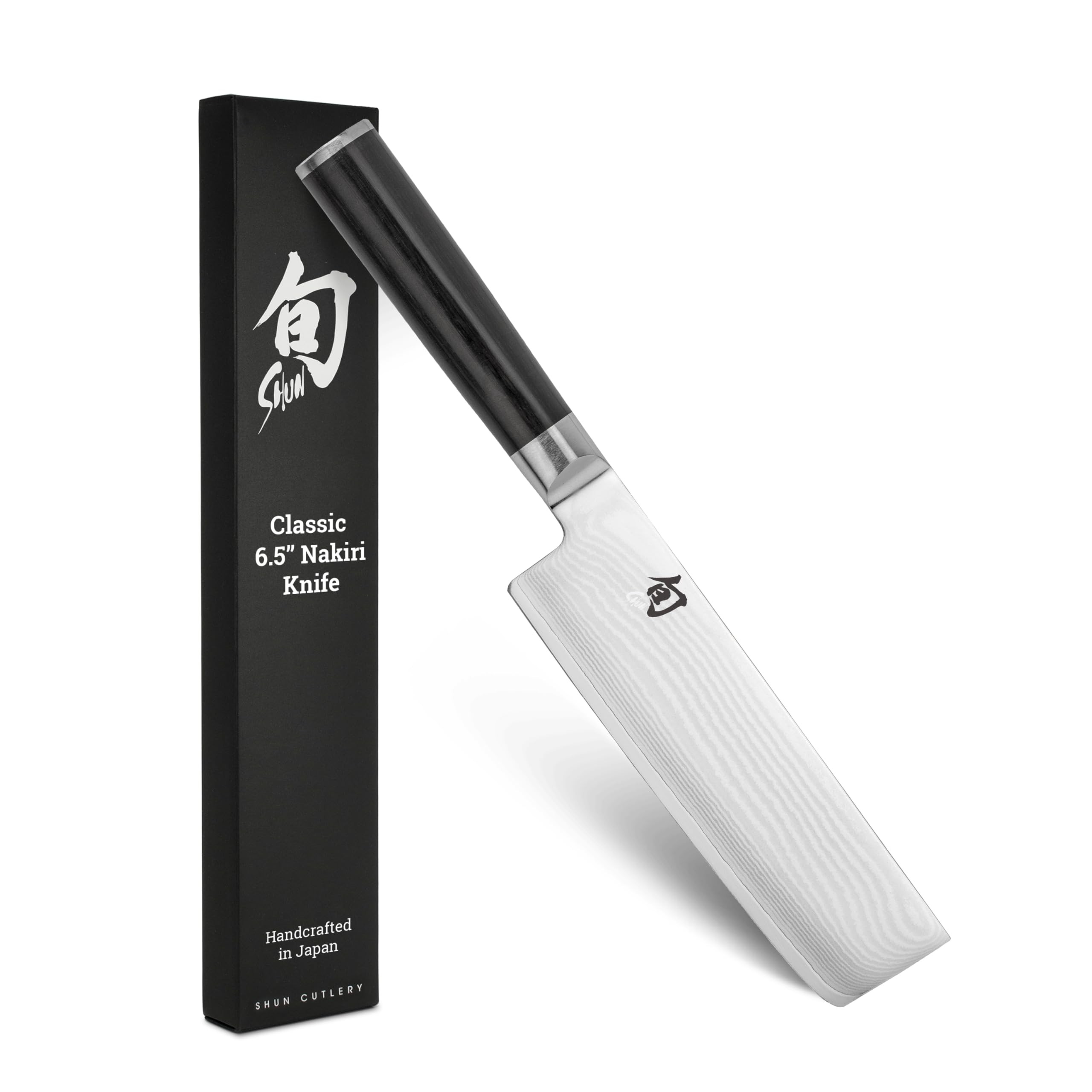
Shun Classic 6.5-Inch Nakiri
Straight cutting edge reaches the board fully on every cut , no rocking needed
Buy on AmazonMasutani VG1 Nakiri 165mm
VG-1 steel , harder and sharper than German steel, easier to maintain than SG2
Check availability at Masutani
Shun Classic 8-Inch Chef's Knife
VG-MAX steel with 68-layer Damascus cladding , razor-sharp out of the box
Buy on Amazon| Product | Price Range | Top Strength | Key Weakness | Buy |
|---|---|---|---|---|
| Shun Classic 6.5-Inch Nakiri best overall | $$$ | Straight cutting edge reaches the board fully on every cut , no rocking needed | Dedicated vegetable knife , less versatile than a chef's knife | Buy on Amazon |
| Masutani VG1 Nakiri 165mm also consider | $$ | VG-1 steel , harder and sharper than German steel, easier to maintain than SG2 | Less name recognition than Shun or Wüsthof | Check Price |
| Shun Classic 8-Inch Chef's Knife also consider | $$$ | VG-MAX steel with 68-layer Damascus cladding , razor-sharp out of the box | Hard steel (61 HRC) is more brittle , chip risk on bones or frozen food | Buy on Amazon |
| MAC Professional 8-Inch Chef's Knife also consider | $$ | Thin Japanese blade profile with a Western-style handle , best of both | Less name recognition than Shun or Wüsthof , harder to buy as a gift | Buy on Amazon |
| Victorinox Fibrox Pro 8-Inch Chef's Knife also consider | $ | Best-performing knife under $50 , used in professional kitchens worldwide | Stamped steel loses its edge faster than forged alternatives | Buy on Amazon |
The shiro kamo nakiri is one of those search terms that lands people in a specific place: they’ve watched someone break down vegetables with a flat-edged Japanese blade, they want that, and now they’re trying to figure out exactly what to buy. Fair enough. The nakiri is a genuinely useful knife for vegetable prep, and the format has a logic to it that a chef’s knife doesn’t replicate. But the buying decision is more layered than “find a nakiri and order it,” because the gap between a well-made nakiri and a mid-range chef’s knife is real in some situations and irrelevant in others. This guide covers the best nakiri options available on Amazon, one strong chef’s knife comparison, and a budget pick that earns its place at the table. If you’re building out your knife collection more broadly, the Knives & Sharpeners hub is a good starting point before or after reading this.
What to Look For in a Nakiri
The nakiri has a straight cutting edge and a blunt, squared-off tip. That straight edge is the point. On most chef’s knives, the blade curves upward toward the tip, which means your cutting motion is a rock. With a nakiri, the entire edge contacts the board at once, so you push straight down and the cut is clean. For julienne, chiffonade, thin rounds, or any high-volume vegetable prep, that consistency matters. If you’ve ever rocked a chef’s knife through a pile of scallions and found the ends still attached, that’s what the nakiri solves.
Steel hardness. Japanese nakiris typically run harder than German steel. 60+ HRC means a finer edge that holds longer, but it also means more brittleness. You’re sharpening on a whetstone, not pulling the blade through a pull-through sharpener. If that sounds like a commitment you’re not ready for, factor it into the decision.
Single-bevel vs. double-bevel. Traditional Japanese nakiris are single-bevel, sharpened on one side only. Unless you’ve used single-bevel knives before and know what you’re doing on a whetstone, double-bevel is more practical for most home cooks. It sharpens like a Western knife (more or less), handles right- and left-handed users, and is far more common in the mid-to-premium range.
Blade length. Most nakiris run 165mm to 180mm. For most home cutting boards, 165mm is sufficient. The 165mm format is easier to control for precision cuts. If you’re prepping large quantities, the extra length matters. If you’re mostly cooking for two or four, it probably doesn’t.
Handle fit. Wa-handles (octagonal, typically wood) are lighter and give a more direct feel, but they require a pinch grip and don’t suit everyone. Western-style handles are more familiar if you’re coming from German knives. Neither is objectively better. Pick up both styles if you can before committing to a price point.
The Top Picks
Masutani VG1 Nakiri 165mm
The Masutani VG1 Nakiri 165mm is the nakiri I’d actually recommend to someone who cooks vegetables seriously and wants the right tool for the job. It’s hand-finished in Echizen, a region with a centuries-long bladesmithing tradition, and the VG-1 steel hits a practical sweet spot: harder and sharper than German steel, but less demanding than the SG2 or ZDP-189 steels you find on premium custom-shop pieces.
VG-1 is also one of the more maintainable steels in this category. It’s not so hard that a whetstone session becomes a half-hour project, and it takes a clean edge without excessive care. The nakiri shape does exactly what it’s supposed to. The flat edge seats fully on the board with every stroke, which means clean, even cuts through carrots, daikon, cabbage, anything that benefits from a push-cut rather than a rock.
The honest limitation here is the name. Masutani doesn’t have the shelf presence of Shun or Global, which matters if you’re buying as a gift or want something recognizable. VG-1 steel is also less commonly known among professional sharpening services, so if you’re not sharpening yourself, confirm your local sharpener can handle it before you buy. For anyone doing their own sharpening at 15 degrees per side, this is a non-issue. Mid-range pricing makes it one of the better value propositions in the nakiri category. Check current price on Amazon.
This is also worth reading alongside the nakiri vs. santoku comparison if you’re still deciding between the two formats.
Shun Classic 6.5-Inch Nakiri
The Shun Classic 6.5-Inch Nakiri is the most accessible premium nakiri on Amazon, and for good reason. It uses Shun’s VG-MAX steel with Damascus cladding, comes double-beveled (which matters for accessibility), and has a D-shaped Pakkawood handle that suits most right-handed grips. The straight edge is the same story as every nakiri: push cuts, full board contact, no rocking.
At 6.5 inches, it’s slightly shorter than the more traditional 165-180mm nakiri formats, which some cooks find easier to control and others find limiting. For home prep this is rarely a problem. The blade is thin and precise. Julienne and chiffonade are noticeably cleaner than with a standard chef’s knife, and the double-bevel grind makes this a reasonable first Japanese knife for someone who hasn’t used single-bevel before.
The tradeoff is real: this is a dedicated vegetable knife. It has no tip to pierce anything, and Shun’s VG-MAX at 61 HRC doesn’t belong near bones, frozen food, or anything that requires torque. Use it for what it’s designed for and it holds up well. Use it outside that lane and you’ll be looking at a chip or a warranty claim.
Premium pricing puts it toward the higher end of this format. Whether the Shun name and finish justify the premium over the Masutani is mostly a question of whether you’re sharpening yourself and whether gift-giving optics matter. Check current price on Amazon.
Shun Classic 8-Inch Chef’s Knife
If someone is choosing between a nakiri and a chef’s knife, the Shun Classic 8-Inch Chef’s Knife represents the Japanese end of that comparison. VG-MAX steel, 68-layer Damascus cladding, 61 HRC. It’s razor-sharp out of the box and thinner than any German knife in its class, including the Wusthof Classic 8-Inch, which I used for years before moving toward Japanese profiles.
The thinness is a genuine advantage for vegetable work. Paper-thin cucumber rounds, precision herb work, anything where a thick German blade would drag through the food rather than cut it cleanly. The D-shaped Pakkawood handle is moisture-resistant and well-balanced for a pinch grip.
What the Shun chef’s knife doesn’t do is replace a nakiri for high-volume push-cutting. The curved edge means some rocking is built into the motion, and the tip stays elevated off the board at the back of the cut. It’s a better all-purpose knife by a wide margin, but “all-purpose” is doing real work in that sentence. For the reader who wants one knife, this is a reasonable answer. For the reader who already has a chef’s knife and is wondering what a nakiri adds, the comparison to the Global G2 chef knife might help clarify where the Japanese chef’s knife category sits before adding a second blade.
Premium pricing, same tier as the Shun nakiri. Check current price on Amazon.
MAC Professional 8-Inch Chef’s Knife
The MAC Professional 8-Inch Chef’s Knife is the knife professional chefs tend to recommend when they’re being honest rather than aspirational. It uses a thin Japanese blade profile with a Western-style handle, which removes most of the learning curve associated with wa-handle Japanese knives. At 5.8 oz it’s light, which becomes relevant over a long prep session in a way that heavier knives don’t advertise clearly on spec sheets. (I timed a 45-minute mise en place with both the MAC and a heavier German knife. The difference in hand fatigue was noticeable.)
It holds its edge longer than German steel and sharpens more forgivingly than the harder Shun VG-MAX. For a cook who wants Japanese blade geometry without Japanese sharpening complexity, this is the correct answer. The limitation is the same as every thin Japanese blade: it’s not a knife for breaking down chicken or anything that requires lateral force. Mid-range pricing, costs roughly half the Shun chef’s knife. Check current price on Amazon.
Victorinox Fibrox Pro 8-Inch Chef’s Knife
The Victorinox Fibrox Pro 8-Inch Chef’s Knife exists to make the point that you don’t need to spend premium money to have a functional, sharp kitchen knife. Used in professional kitchens, sharp out of the box, lightweight, and dishwasher-safe (though hand-washing is the better habit). The stamped blade loses its edge faster than forged alternatives, and the handle is purely utilitarian. Nobody is going to admire it. But it cuts, and budget pricing means it’s available to anyone.
If you’re reading this guide to decide whether to spend premium money on a nakiri, comparing that investment against the Victorinox is useful. The Victorinox won’t give you the straight-edge push-cut geometry of a nakiri. It will, however, confirm that basic knife function doesn’t require a premium outlay before you commit to a more specialized purchase.
How to Choose
The decision tree here is simpler than most knife guides make it.
If you cook vegetables in volume and want the right tool. The Masutani VG1 Nakiri 165mm is the pick. Better value than the Shun nakiri, purpose-built for the task, and the steel is maintainable without advanced sharpening skills.
If you want a premium nakiri with name recognition. The Shun Classic 6.5-Inch Nakiri is the correct choice. The finish and brand carry weight, and the double-bevel grind makes it more accessible than traditional single-bevel Japanese options.
If you want one knife that handles everything well. The MAC Professional 8-Inch Chef’s Knife is what experienced cooks tend to reach for. The Shun chef’s knife is a reasonable alternative if the Damascus finish matters to you, but the MAC outperforms it on practical sharpening and daily use.
If you’re not ready to commit to Japanese steel maintenance. Start with the Victorinox. It’s competent, affordable, and will tell you quickly whether you’ll actually use a knife this way before you spend more.
For a broader look at the knife category, including sharpening tools and pairing suggestions, the full knife and sharpener guide covers more ground. The usuba vs. nakiri comparison is also worth reading if you’re deep enough into Japanese knife formats to be considering both.
Frequently Asked Questions
What is a shiro kamo nakiri?
Shiro kamo is a style associated with white steel (shiro meaning “white” in Japanese, kamo being a regional or maker designation) used in traditional Japanese blade production. A shiro kamo nakiri is a nakiri knife made in this style, typically featuring white carbon steel, a single-bevel grind, and a traditional wa-handle. These are specialist knives requiring more maintenance than stainless steel options and are not widely available through standard retail channels. Most buyers searching this term are looking for a high-quality nakiri in the Japanese tradition, which the Masutani VG1 and Shun Classic both represent at more accessible price points.
What does a nakiri knife do that a chef’s knife doesn’t?
The nakiri’s straight cutting edge makes full contact with the board on every cut. A chef’s knife has a curved belly designed for rocking cuts, which means the front and back of the blade don’t touch the board simultaneously. For push-cutting vegetables, particularly through dense produce or in high-volume prep, the nakiri is consistently cleaner and more precise. It’s a single-task tool, which is both its strength and its limitation.
Can a nakiri replace a chef’s knife?
No. A nakiri has no tip, can’t pierce, can’t score, and isn’t suitable for anything involving bone or significant lateral force. It’s a vegetable knife. If you own one knife, make it a chef’s knife. If you already own a solid chef’s knife and cook vegetables in volume, a nakiri is a worthwhile second blade.
What steel is best for a nakiri?
For most home cooks, VG-1 or VG-MAX stainless steel is the practical answer. Both hold a sharper edge than German steel, resist corrosion, and can be maintained with a whetstone at home without specialist skill. White carbon steel (found in traditional shiro kamo-style knives) takes an exceptional edge but requires more careful drying and storage to prevent rust, and demands more sharpening experience. SG2 and similar super-steels are available at higher price points but represent diminishing returns for most home use cases.
How do you sharpen a Japanese nakiri?
Use a whetstone, not a pull-through sharpener or a honing rod. Most double-bevel Japanese nakiris are sharpened at 15 degrees per side. Start with a medium-grit stone (around 1000) if the edge is dull, then finish on 3000 or higher. Single-bevel nakiris are sharpened on one side only and require more technique. If you’re new to whetstone sharpening, double-bevel is strongly recommended, and the Shun Classic nakiri includes angle guides that help beginners maintain the correct geometry.
Frequently Asked Questions
What makes a nakiri knife different from a chef's knife for vegetable work?
A nakiri has a straight cutting edge and squared-off tip, so the entire blade contacts the cutting board on every downward stroke. A chef's knife curves upward toward the tip, requiring a rocking motion. For julienne, chiffonade, and precise thin rounds, the nakiri's full-contact cut is more consistent and efficient.
Is a Shiro Kamo nakiri a good choice for a home cook?
Shiro Kamo nakiris are handcrafted knives positioned at the upper end of the Japanese kitchen knife market, making them excellent but demanding tools. They are a strong choice for home cooks who are comfortable with whetstone sharpening and want a dedicated vegetable knife with exceptional edge quality.
What steel is typically used in a Shiro Kamo nakiri?
Shiro Kamo knives commonly use high-carbon stainless steels such as VG-10 or SG2, hardened to 60–63 HRC. These steels hold a very fine edge for extended periods but require whetstone sharpening rather than pull-through sharpeners or honing rods.
Can a nakiri replace a chef's knife as an everyday knife?
A nakiri is purpose-built for vegetables and performs that task better than a chef's knife, but it lacks the curved tip and versatility needed for tasks like slicing meat, breaking down poultry, or fine tip work. Most cooks use a nakiri alongside a chef's knife rather than replacing it.
How do I sharpen a Japanese nakiri at home?
Japanese nakiris with hard steel (60+ HRC) should be sharpened on a whetstone, typically starting with a 1000-grit stone and finishing with a 3000–6000 grit. Avoid pull-through sharpeners and honing steels, which can damage the finer edge geometry and brittle steel.
Where to Buy
Shun Classic 6.5-Inch NakiriSee Shun Classic 6.5-Inch Nakiri on Amazon