Stainless Steel and Copper Cookware Guide

Affiliate disclosure: Some links on this page are affiliate links. If you buy through them we earn a small commission at no extra cost to you. Recommendations are research-driven; we don't claim personal use of every product reviewed. Product prices and availability are accurate as of the date published and are subject to change. Always check Amazon for current pricing before purchasing. Learn more.
Quick Picks
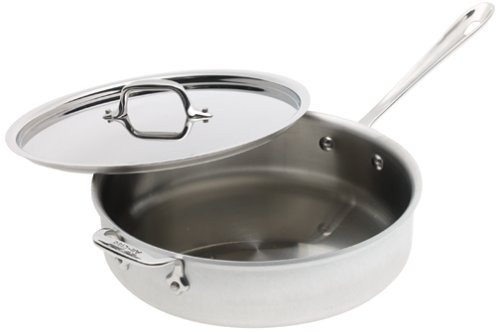
All-Clad D3 Stainless 12-Inch Fry Pan
Tri-ply construction bonds stainless and aluminum for perfectly even heating
Buy on Amazon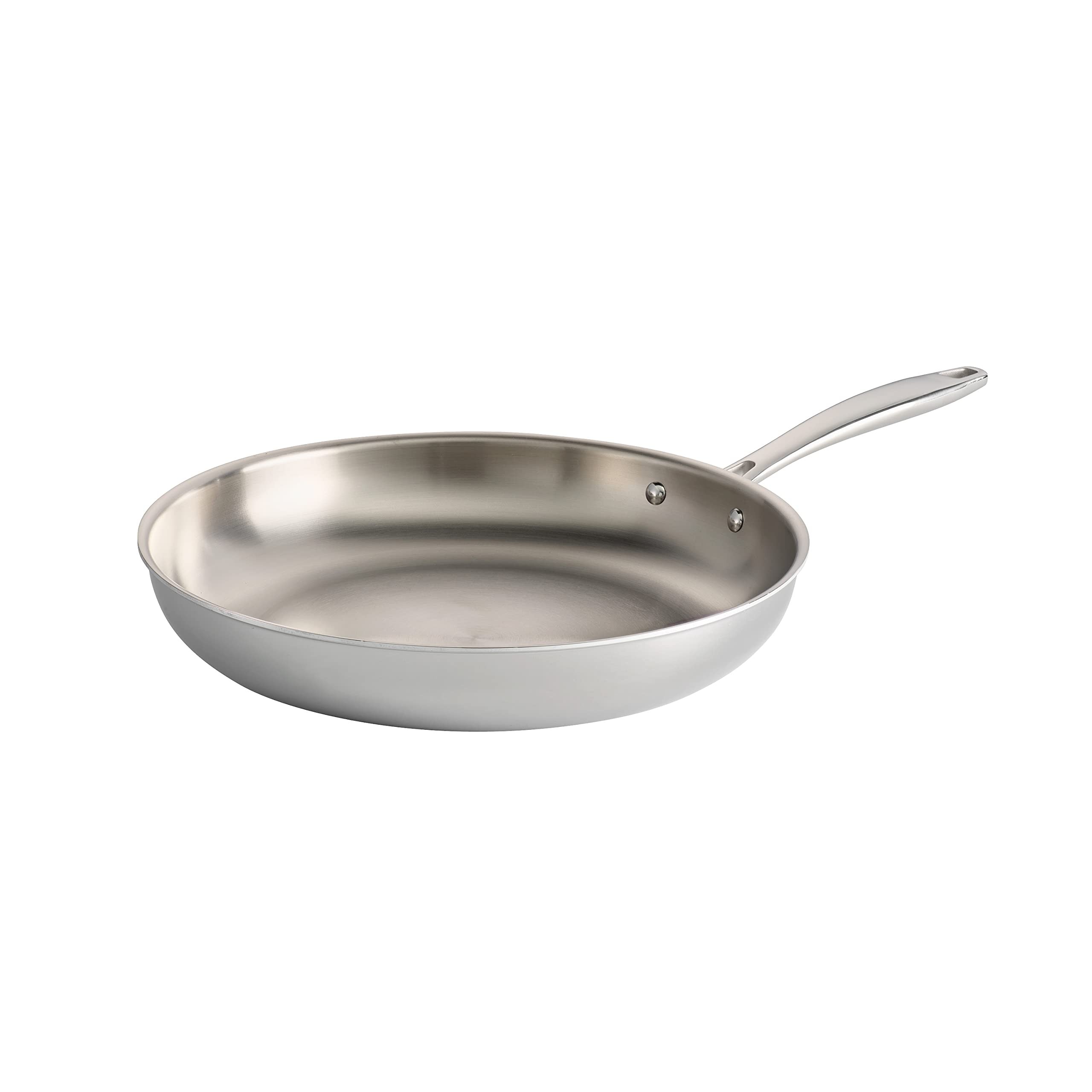
Tramontina 12-Inch Tri-Ply Clad Stainless Fry Pan
Genuine tri-ply construction , same bonding method as All-Clad at a fraction of the price
Buy on Amazon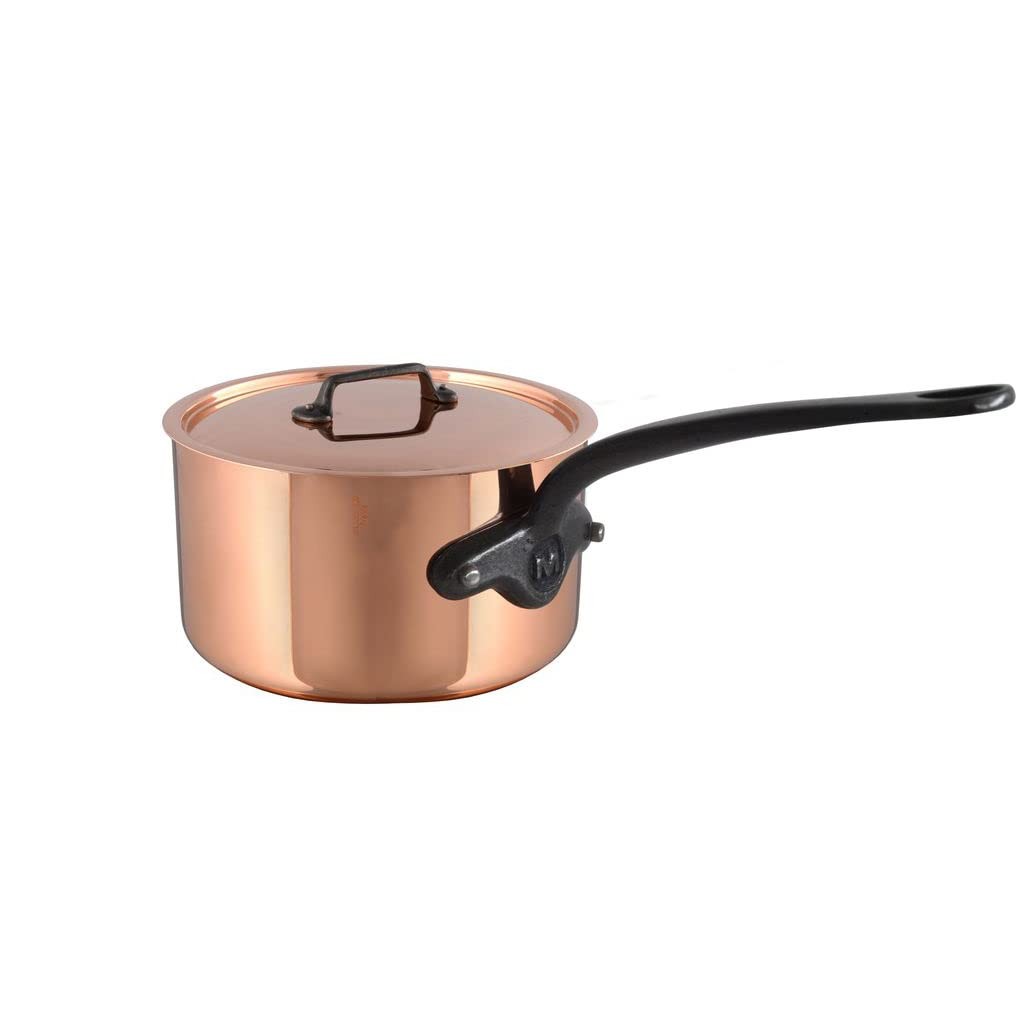
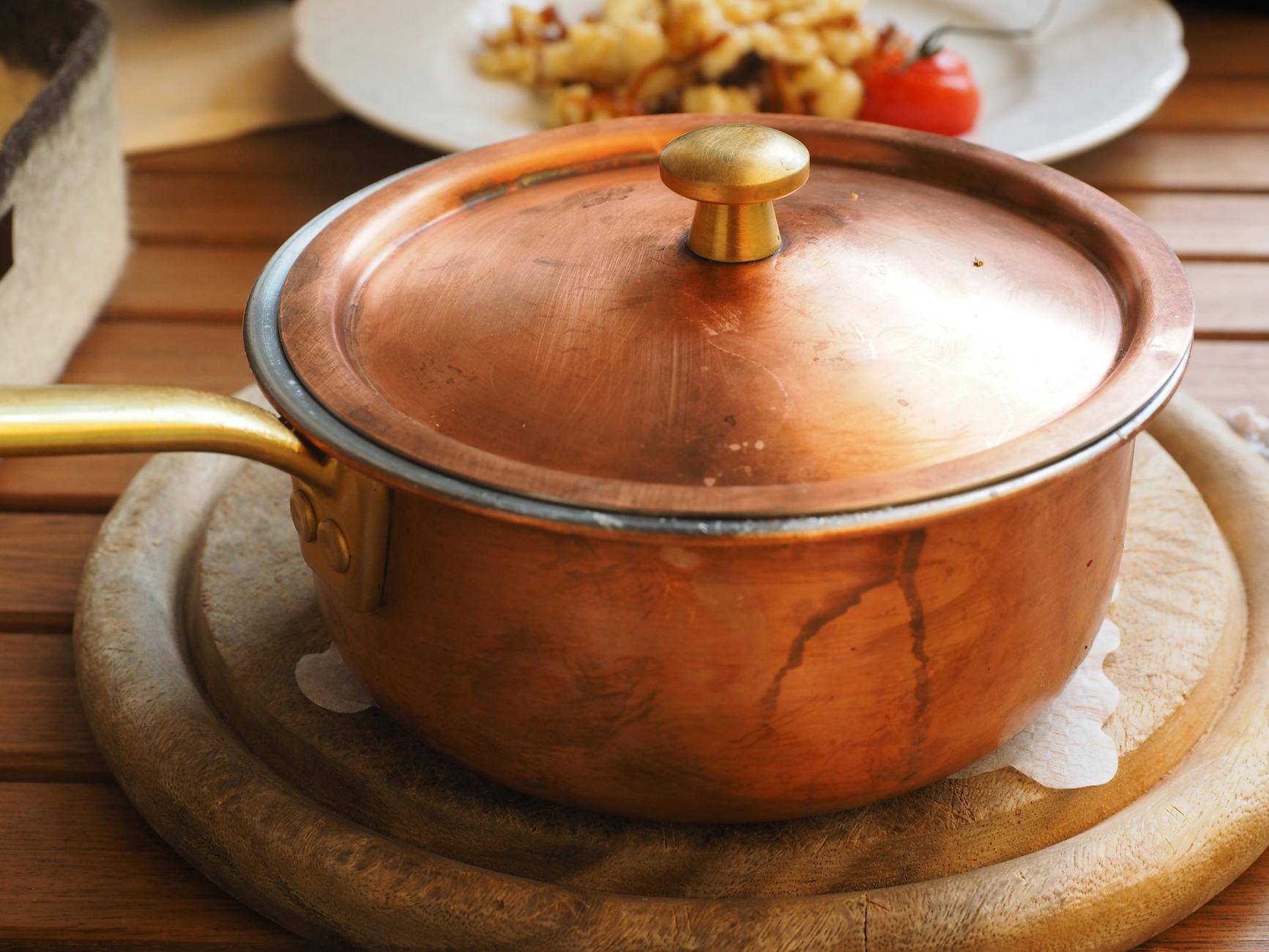
Mauviel M'Heritage Copper Saucepan 1.9-Quart
Copper reacts to heat changes within seconds , unmatched for sauce work
Buy on Amazon| Product | Price Range | Top Strength | Key Weakness | Buy |
|---|---|---|---|---|
| All-Clad D3 Stainless 12-Inch Fry Pan best overall | $$$ | Tri-ply construction bonds stainless and aluminum for perfectly even heating | Stainless surface requires technique to prevent sticking , not beginner-friendly | Buy on Amazon |
| Tramontina 12-Inch Tri-Ply Clad Stainless Fry Pan also consider | $$ | Genuine tri-ply construction , same bonding method as All-Clad at a fraction of the price | Slightly thinner gauge than All-Clad , marginally less heat retention | Buy on Amazon |
| Mauviel M'Heritage Copper Saucepan 1.9-Quart also consider | $$$ | Copper reacts to heat changes within seconds , unmatched for sauce work | Requires polishing to maintain the copper finish | Buy on Amazon |
| Demeyere Industry 11-Inch Skillet also consider | $$$ | 5-ply TriplInduc base optimized specifically for induction cooktops | One of the most expensive stainless skillets available | Buy on Amazon |
| Calphalon Premier Stainless Steel Cookware Set 8-Piece also consider | $$ | Multi-layer stainless construction heats evenly without hot spots | Multi-layer construction not as refined as true tri-ply clad | Buy on Amazon |
Stainless steel and copper cookware occupy very different positions in a working kitchen, but they share one quality that nonstick pans never will: longevity. A well-made stainless skillet, used correctly, will outlast the stove it sits on. A copper saucepan, properly maintained, may outlast you. The question isn’t whether these materials are worth owning. The question is which ones are worth buying at what price, and which claims on the packaging you should ignore.
This guide covers five specific pieces across both categories. I’ve cooked with stainless pans for most of my adult life and have strong opinions about where the value actually sits in this market. If you want a broader look at the category before going deep on individual pieces, the Stainless & Clad section covers the full landscape, including clad construction basics and material comparisons.
What to Look For
Construction Method, Not Marketing Language
“Multi-layer” and “multi-ply” appear on packaging across a wide price range and mean almost nothing without specifics. What matters is whether the layers are fully bonded from base to rim (true clad construction) or whether the extra material is limited to a disk on the bottom. Disk-bottom pans heat unevenly up the sides. Full clad pans don’t.
Tri-ply is the standard: stainless exterior, aluminum core, stainless interior. It works. Five-ply adds layers but the practical difference in home cooking is marginal for most applications, with one exception I’ll address under the Demeyere entry.
Gauge and Weight
Thicker aluminum cores retain heat better and recover temperature faster after cold food hits the pan. This matters most for searing. A thin-gauge pan loses heat the moment a chicken breast lands in it. The practical result is steaming instead of searing, which is not what you were trying to do.
Heavier isn’t always better, particularly if you’re moving pans on and off burners frequently. But if you’ve ever had a pan warp slightly on one side after a year of regular use, inadequate gauge is usually why.
Handle Design
Ergonomics get ignored in most cookware reviews. They shouldn’t. A handle that conducts heat to your palm after five minutes on the stove is a design failure regardless of how good the cooking surface performs. Riveted handles are more durable than welded. Long handles on skillets improve leverage when working with heavier pans.
Copper vs. Stainless: Actual Differences
Copper conducts heat approximately five times more efficiently than stainless steel and roughly twice as efficiently as aluminum. For most cooking tasks, aluminum-cored stainless performs perfectly well. For sauce work requiring rapid, precise temperature changes (hollandaise, caramel, tempered chocolate), copper is functionally superior in ways that aren’t marginal. The material responds in seconds, not minutes, to adjustments at the burner.
The trade-off is maintenance. Copper tarnishes. It requires periodic polishing. And it carries one of the pricier price tags in the kitchen.
Top Picks
All-Clad D3 Stainless 12-Inch Fry Pan
The American tri-ply benchmark, and it earns that status. The D3 runs a full tri-ply construction from base to rim, made in the USA, oven-safe to 600°F, compatible with every cooktop including induction. The lifetime warranty is meaningful because All-Clad actually honors it.
The sticking point, literally and figuratively, is technique. New stainless cooks are often surprised when eggs weld to the surface. They shouldn’t be. Stainless at proper temperature, with adequate fat, performs well. Cold stainless with insufficient fat sticks badly. The pan isn’t the problem. (I spent about six months learning this properly, which I mention only because most reviews skip it entirely.)
At premium pricing, this is one of the pricier options in the skillet category. Whether it’s worth the premium over the Tramontina below comes down to how much you value domestic manufacturing, handle refinement, and marginally better gauge. If you’re already invested in the All-Clad ecosystem, the All-Clad 2 Qt Saucepan and All-Clad 4 Quart Saucepan are logical additions that share the same construction quality.
Best for: Cooks who want a single definitive stainless skillet and won’t blink at premium pricing.
Tramontina 12-Inch Tri-Ply Clad Stainless Fry Pan
The honest comparison to the All-Clad D3 is this: same construction method, Brazilian manufacturing instead of American, mid-range pricing instead of premium. The cooking performance difference is smaller than the price difference, and professional cooks have known this for years.
The Tramontina is slightly thinner gauge, which means marginally less heat retention during high-demand cooking. If you’re searing a thick ribeye with restaurant-level ambitions, you’ll notice. For regular weeknight cooking, sauteing vegetables, building pan sauces, the gap is not significant.
The handle is functional rather than refined. It does the job without the polished ergonomics of the All-Clad. For home cooks upgrading from thin nonstick pans who aren’t ready to spend at the premium tier, this is the most defensible recommendation in the stainless skillet category.
Best for: Value-conscious buyers who want genuine tri-ply construction without the premium price.
Mauviel M’Heritage Copper Saucepan 1.9-Quart
There’s a reason this pan appears in professional pastry kitchens and not in every home cook’s cabinet: it’s expensive, it requires maintenance, and its advantages are specific rather than general. For the tasks where copper matters, nothing else performs comparably.
Hollandaise, caramel work, chocolate tempering. These are applications where heat control precision in the final minute of cooking determines whether the result is correct or ruined. The Mauviel responds to burner adjustments almost instantly. A stainless-clad aluminum pan takes longer to react, and in caramel work, longer means burned.
The stainless lining makes it non-reactive and relatively easy to clean. The copper exterior will tarnish if left unpolished, which either bothers you or it doesn’t. Mauviel makes a range of copper pieces worth considering if you find yourself using this saucepan regularly. The Mauviel Roasting Pan is built to the same standard for larger-format cooking.
At premium pricing, this is difficult to justify for occasional use. If you make hollandaise twice a year, the Tramontina saucepan handles it adequately. If you cook sauces seriously and with frequency, the Mauviel is not an extravagance. It’s a tool.
Best for: Serious sauce cooks who work with sugar, emulsified sauces, or chocolate with regularity.
Demeyere Industry 11-Inch Skillet
Demeyere’s engineering philosophy differs from All-Clad’s in one significant way: the base construction is specifically optimized for induction. The TriplInduc base uses a thicker, denser layering at the bottom where induction coils interact with the pan. On gas, the difference between Demeyere and All-Clad is debatable. On induction, the Demeyere performs better.
If you cook on an induction cooktop, this is the more logical choice over the D3. The handle stays cooler longer than most stainless skillets I’ve used, which matters during extended cooking. Belgian manufacturing, lifetime warranty, and construction quality that is genuinely difficult to fault.
The two objections are weight and price. This is one of the most expensive stainless skillets available. It is also heavier than the All-Clad equivalent, which is a real consideration if you’re maneuvering it one-handed regularly.
Best for: Induction cooktop users willing to pay for the best available option in that configuration.
Calphalon Premier Stainless Steel Cookware Set 8-Piece
The case for buying a set rather than individual pieces is coherent when you’re replacing everything at once and don’t want to research each pan separately. The Calphalon Premier is the right recommendation at this price point for that specific situation.
The multi-layer construction heats evenly for everyday cooking. It’s not true tri-ply clad in the same sense as the All-Clad or Tramontina, and the heat retention under load is softer than either. The tempered glass lids are convenient but less durable than stainless alternatives. Dishwasher safe and oven-safe to 450°F, which covers most home cooking scenarios adequately.
This set sits at mid-range pricing and delivers mid-range results. For someone moving out of thin nonstick pans for the first time and wanting a complete stainless setup without committing to premium pricing, it provides a reasonable starting point. If you later find yourself wanting to add a dedicated stock pot, the All-Clad 8 Quart Stock Pot is worth considering as an upgrade piece.
Best for: First-time stainless buyers replacing a full set who want functional performance at mid-range pricing.
How to Choose
If you cook on induction: The Demeyere Industry is the straightforward answer. The All-Clad D3 works on induction but wasn’t built around it the way Demeyere’s base construction was.
If you want the best single stainless skillet at any price: All-Clad D3, with the understanding that technique matters and the pan will not compensate for skipping the preheating step.
If value per dollar is the priority: The Tramontina 12-inch. Same construction method as the market benchmark at roughly half the price. The performance gap does not justify the price gap for most home cooking.
If you cook sauces seriously: The Mauviel copper saucepan is the professional standard for a reason. This is a specific recommendation for a specific use case, not a general endorsement of copper cookware for every application.
If you’re replacing everything at once and want to spend at mid-range: The Calphalon Premier set solves the problem cleanly. Buy the set, cook with it, and upgrade individual pieces later as you identify which ones you actually reach for.
For deeper context on how clad construction differs across price points and what the manufacturing differences between Belgium, Brazil, and domestic production actually mean in practice, the full stainless cookware guide covers the technical background in detail.
Frequently Asked Questions
Is stainless steel or copper better for everyday cooking?
Stainless clad is the more practical choice for everyday use. Copper’s thermal responsiveness is an advantage in specific sauce applications, not general cooking. A tri-ply stainless pan handles searing, sauteing, braising, and everyday pan work without the maintenance requirements copper demands. Copper earns its place for precise sauce work, not for cooking pasta or scrambling eggs.
Why does food stick to my stainless pan?
Temperature. Cold stainless bonds with protein in a way that hot stainless doesn’t. The standard fix is to preheat the pan until a drop of water beads and rolls across the surface (the Leidenfrost effect), then add fat and allow it to heat before adding food. If you’re adding cold protein to a pan that hasn’t fully preheated, sticking is the predictable result, not a pan defect.
Is the All-Clad D3 worth the premium over the Tramontina?
For most home cooks: probably not on cooking performance alone. The All-Clad offers slightly better gauge, domestic manufacturing, and more refined handle ergonomics. Those differences are real but modest. If the premium pricing is not a concern and you want a pan you will never need to replace, the All-Clad is a legitimate choice. If value matters, the Tramontina is the honest answer. Check current prices on Amazon before deciding, since the gap between them shifts.
Can I use copper cookware on induction?
Standard copper cookware is not induction compatible because copper is not magnetic. Some manufacturers produce copper pans with a magnetic steel base layer specifically for induction use, but the classic Mauviel M’Heritage line requires a gas or electric radiant cooktop. Check the product specifications before purchasing if induction compatibility matters.
How do I maintain the copper finish on the Mauviel saucepan?
Copper tarnishes with exposure to air and moisture. Commercial copper polishes (Barkeeper’s Friend works, as does Wright’s Copper Cream) restore the finish with moderate effort. Some cooks use a paste of salt and white vinegar for the same purpose. The interior stainless lining requires no special treatment beyond normal cleaning. How much the exterior tarnish bothers you is personal. It doesn’t affect cooking performance.
Frequently Asked Questions
What is the difference between tri-ply and disk-bottom stainless cookware?
Tri-ply cookware bonds three layers — stainless exterior, aluminum core, and stainless interior — across the full body of the pan, including the sidewalls. Disk-bottom cookware only adds the extra conductive layer at the base, leaving the sides as a single layer of steel that heats unevenly. For sauces and sauteing, full clad tri-ply performs noticeably better.
Is copper cookware worth the price compared to stainless steel?
Copper cookware offers unmatched thermal responsiveness — it reacts to heat changes within seconds — making it especially valuable for precise sauce work and candy making. However, it is significantly more expensive, requires exterior polishing to maintain its finish, and is not induction-compatible without a bonded steel base. For general cooking, a quality tri-ply stainless pan delivers excellent results at a lower cost.
Does stainless steel cookware work on induction cooktops?
Yes, provided the pan has a magnetic stainless steel exterior. Most quality tri-ply stainless pans are induction compatible. Pure copper cookware is not induction compatible unless it has a bonded magnetic base layer. Always check the manufacturer's specifications before purchasing for use on induction.
How do I prevent food from sticking to stainless steel cookware?
Preheat the pan over medium heat before adding oil, then wait until the oil shimmers before adding food. The Leidenfrost effect — when the pan is hot enough that moisture beads and skips on the surface — indicates the correct temperature. Cold protein on an insufficiently preheated stainless pan will stick. Technique, not the pan, is almost always the variable.
What is the practical benefit of 5-ply over tri-ply stainless cookware?
Five-ply adds additional layers, typically a second aluminum layer or a magnetic steel layer for induction performance. The practical difference in home cooking is marginal for most tasks. The exception is induction cooking at high heat, where the additional magnetic steel base in pans like the Demeyere Industry can improve efficiency and temperature evenness.
Where to Buy
All-Clad D3 Stainless 12-Inch Fry PanSee All-Clad D3 Stainless 12-Inch Fry Pan on Amazon