Stainless Steel Cookware with Copper: A Buyer's Guide

Affiliate disclosure: Some links on this page are affiliate links. If you buy through them we earn a small commission at no extra cost to you. Recommendations are research-driven; we don't claim personal use of every product reviewed. Product prices and availability are accurate as of the date published and are subject to change. Always check Amazon for current pricing before purchasing. Learn more.

Quick Picks
All-Clad D3 Stainless 12-Inch Fry Pan
Tri-ply construction bonds stainless and aluminum for perfectly even heating
Buy on Amazon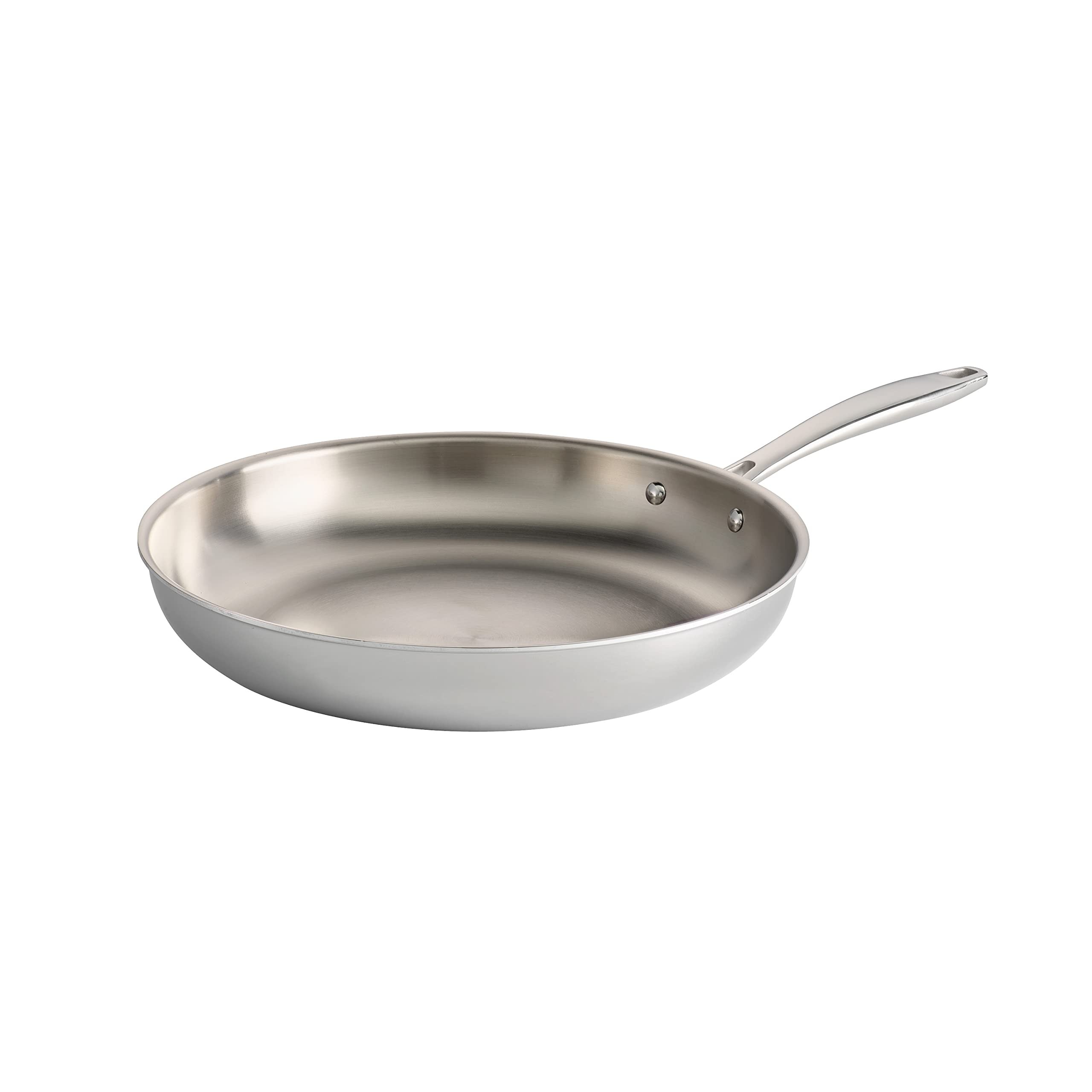
Tramontina 12-Inch Tri-Ply Clad Stainless Fry Pan
Genuine tri-ply construction , same bonding method as All-Clad at a fraction of the price
Buy on Amazon
Mauviel M'Heritage Copper Skillet 9.5"
Copper body provides the fastest, most responsive heat adjustment of any material
Buy on Amazon| Product | Price Range | Top Strength | Key Weakness | Buy |
|---|---|---|---|---|
| All-Clad D3 Stainless 12-Inch Fry Pan best overall | $$$ | Tri-ply construction bonds stainless and aluminum for perfectly even heating | Stainless surface requires technique to prevent sticking , not beginner-friendly | Buy on Amazon |
| Tramontina 12-Inch Tri-Ply Clad Stainless Fry Pan also consider | $$ | Genuine tri-ply construction , same bonding method as All-Clad at a fraction of the price | Slightly thinner gauge than All-Clad , marginally less heat retention | Buy on Amazon |
| Mauviel M'Heritage Copper Skillet 9.5" also consider | $$$ | Copper body provides the fastest, most responsive heat adjustment of any material | Most expensive cookware material , significant investment per piece | Buy on Amazon |
| All-Clad D3 Stainless 2-Quart Saucepan also consider | $$$ | Perfect size for sauces, reheating, and small batches of grains | Premium price for a 2-quart pan , same function achievable for less | Buy on Amazon |
Stainless steel cookware with a copper core or copper exterior sits at an interesting intersection: the thermal responsiveness of copper, the durability of stainless, and a price range that runs from reasonable to genuinely alarming. If you’ve been reading through our Stainless & Clad section, you already know that “stainless steel” covers a wide range of construction methods. Adding copper to the equation narrows the field considerably and raises specific questions worth answering before you spend anything.
This guide covers four pieces across two price bands and two distinct approaches to the stainless-copper combination. One is pure copper with a stainless interior. Three are tri-ply clad with aluminum cores. The comparison matters because the marketing often obscures it.
What to Look For
Construction Method
The phrase “stainless steel cookware copper” gets applied to two fundamentally different products. The first is true copper cookware with a stainless interior lining, which is what Mauviel makes. The second is clad stainless with an aluminum core, which conducts heat well but has no copper in the construction at all. Most of what gets sold under vague “copper-infused” or “copper core” marketing falls into neither category and is worth ignoring entirely.
For clad stainless, what matters is the bonding method and gauge. Tri-ply construction bonds three layers under pressure across the full base and sidewalls. A pan with a bonded disc only on the base is cheaper to manufacture and will heat unevenly up the sides, which becomes obvious the moment you’re reducing a sauce and find the ring of scorching above the disc. Full tri-ply eliminates that problem.
Gauge thickness affects heat retention more than initial heating speed. A thicker pan takes longer to come to temperature but holds it more steadily when you add cold protein. If you’ve ever seared a chicken thigh and watched the pan temperature drop so sharply that the meat steamed instead of browned, a thicker gauge pan would have helped.
Interior Surface
Stainless steel interiors are non-reactive, durable, and capable of developing a proper fond for pan sauces. They also require some technique. The standard guidance about preheating the pan before adding oil and waiting for the Leidenfrost effect before adding protein is accurate. If you’ve been fighting sticking with stainless, temperature management is almost certainly the issue, not the pan.
Copper exteriors with stainless interiors combine the best thermal properties of both materials. The copper responds instantly to heat changes. The stainless handles acidic foods without reactivity. The trade-off is maintenance on the exterior and price per piece.
Compatibility and Oven Safety
Induction compatibility requires a magnetic base, which stainless provides. Pure copper is not induction-compatible without a bonded steel base layer, which affects what you buy if you cook on induction. Oven safety varies by handle construction. Riveted stainless handles generally handle high oven temperatures. Cast iron handles on French copper pans can go higher but get extremely hot.
Top Picks
All-Clad D3 Stainless 12-Inch Fry Pan
The All-Clad D3 Stainless 12-Inch Fry Pan is the American benchmark for tri-ply clad stainless. I cooked on D3 pieces for eight years before the review process for this site gave me reasons to compare them directly against alternatives. The construction is solid: three layers bonded fully up the sidewalls, made in Clairton, Pennsylvania, with a lifetime warranty that All-Clad actually honors.
The 12-inch skillet specifically is the workhorse size. It handles four chicken thighs without crowding, sears a steak with room to operate, and moves from stovetop to a 600°F oven without complaint. The flared sidewalls work well for reducing liquids. The handle sits at an angle that keeps your wrist in a comfortable position during longer cooking sessions (which I realize sounds like a minor point until you’ve been stirring a risotto for twenty minutes).
At premium pricing, the honest comparison is to Made In’s 12-inch skillet and the Tramontina below. Made In’s construction quality has improved substantially since their early years. The D3 still has a marginal edge in gauge consistency and handle fit, but the gap has narrowed. What the D3 has that neither alternative offers is American manufacturing and a warranty program with an actual track record.
The sticking complaint is real but misattributed. The pan is not the problem. Preheat it properly, add oil when the water droplet test works, and the surface performs well. If you’re coming from nonstick, there’s an adjustment period.
Tramontina 12-Inch Tri-Ply Clad Stainless Fry Pan
The Tramontina 12-Inch Tri-Ply Clad Stainless Fry Pan is the pan I recommend when someone asks me whether they have to spend premium prices to get genuine tri-ply construction. The answer is no, and this is the evidence. Tramontina uses the same full-clad bonding method as All-Clad. The aluminum core runs fully up the sidewalls. It’s induction compatible, oven-safe to 500°F, and made in Brazil by a manufacturer that supplies commercial kitchens.
The differences relative to the D3 are real but limited. The gauge is marginally thinner, which shows up in heat retention rather than heat distribution. If you’re cooking at high volume or searing large cuts repeatedly, the D3 will recover temperature slightly faster between additions. For most home cooking, that difference won’t affect the outcome.
The handle is functional but less refined. It’s slightly heavier relative to the pan size and the angle doesn’t feel as considered as the All-Clad geometry. Not a disqualifying issue, but noticeable if you’ve used both.
At mid-range pricing, roughly half the cost of the D3, the Tramontina is the correct choice for most home cooks who don’t have a strong reason to pay the premium. The construction is honest, the performance is close, and the value position is clear.
Check current price on Amazon
Mauviel M’Heritage Copper Skillet 9.5”
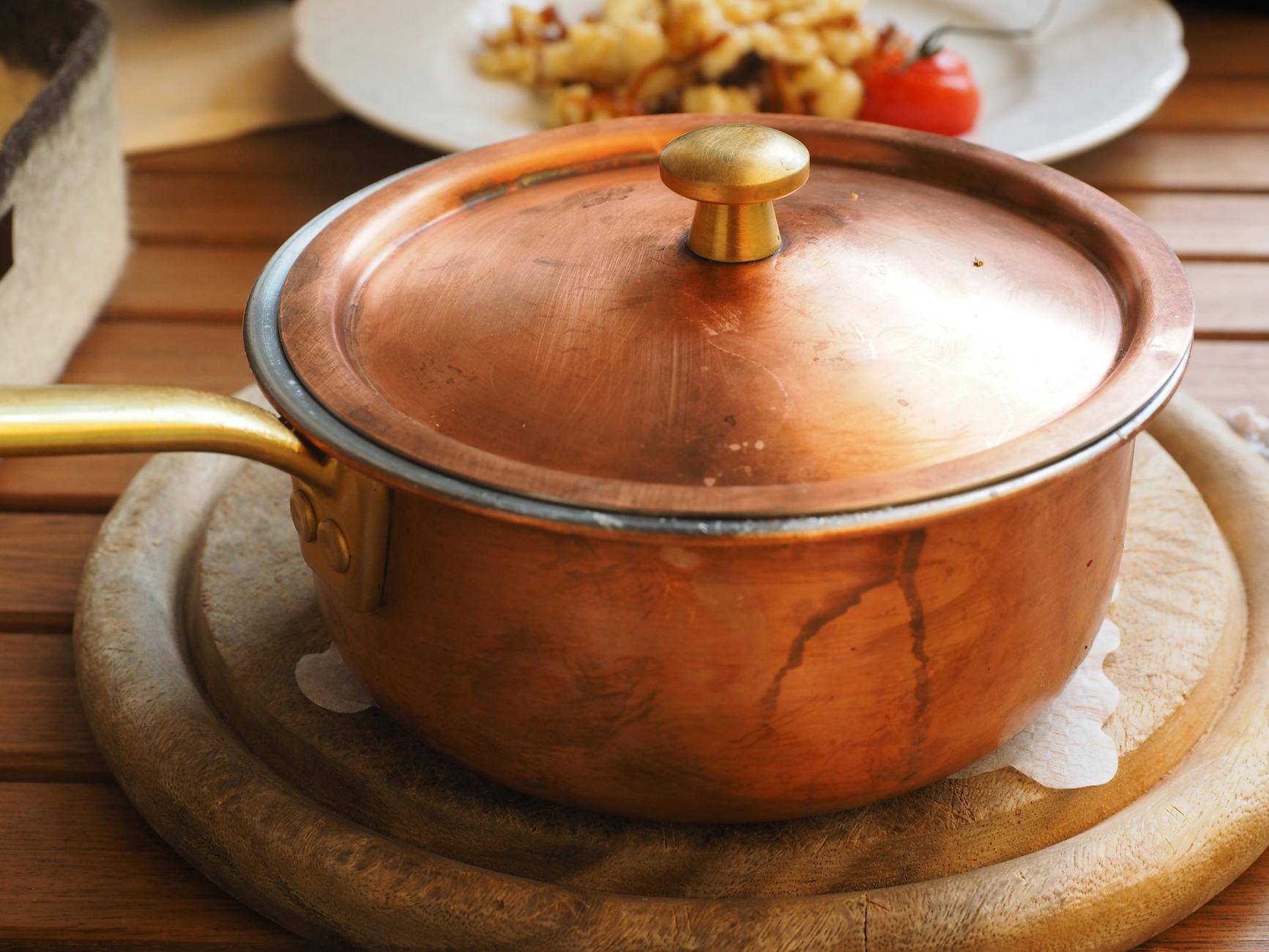
The Mauviel M’Heritage Copper Skillet 9.5” is a different category of purchase from the tri-ply pans above, and I want to be direct about that before anything else. This is not a better version of the All-Clad. It’s a different tool with different strengths, made for a different kind of cook.
Copper is the most thermally responsive cooking material available. When you lower the flame under a beurre blanc or move a pan off the burner to slow a caramel, copper responds in seconds. Stainless and aluminum respond in minutes, comparatively. If you cook preparations where temperature precision within a short window is the difference between success and failure, copper justifies itself. If you mostly cook weeknight dinners at high heat, it doesn’t.
The M’Heritage line uses a 2.5mm copper body with a stainless interior. Handcrafted in Villedieu-les-Poêles, Normandy. The stainless lining handles acidic ingredients without the reactivity concerns of the old tin-lined copper. Cleaning is straightforward inside. The exterior requires polishing if you want it to look the way it arrived. Bar Keepers Friend works. Neglecting it produces a patina that some people find acceptable and others don’t. That’s a personal decision, not a maintenance failure.
The 9.5-inch size is the right starting point for copper. For larger-format copper cooking, the Mauviel Roasting Pan is worth considering if you want to extend into that category.
The price is significant. Per-piece cost is at the top of the premium band, well above the D3. Buy one piece you’ll use constantly and cook with it for twenty years. That math works. Buying a full set of Mauviel to outfit a kitchen is a very different financial conversation.
Not compatible with standard induction cooktops unless you add a converter disc, which affects the thermal responsiveness that makes copper worth buying in the first place.
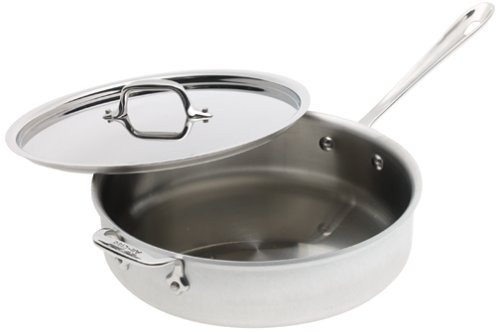
All-Clad D3 Stainless 2-Quart Saucepan
The All-Clad D3 Stainless 2-Quart Saucepan is the piece I’d suggest as an entry point for someone building a D3 collection rather than buying a full set at once. Two quarts handles sauces, gravies, small batches of rice or polenta, and reheating without the pan being unwieldy for small volumes. The flared rim pours cleanly. The lid fits without wobble.
The full D3 review on this site goes into more detail on that specific piece, but the summary is straightforward. For a more detailed breakdown, the All-Clad 2 Qt Saucepan review covers the construction and performance specifics thoroughly. If you’re deciding between the 2-quart and stepping up in size, the All-Clad 4 Quart Saucepan covers the case for going larger.
The premium pricing on a 2-quart pan does require some justification. The same function is achievable at lower cost. The D3’s argument here is the even heat distribution that prevents scorching on dairy-based sauces, which is the exact use case where cheaper disc-bottom pans fail most visibly. If you’ve burned béchamel on a thin saucepan, that’s the problem this pan solves.
The D5 upgrade question comes up frequently. D5 adds a fifth layer (two stainless, two aluminum, one stainless core) for slightly more heat retention and a different handle profile. For a saucepan specifically, the D3 performs the same function at lower cost. The D5 makes more sense in larger skillets and sauté pans where the mass matters more.
How to Choose
If your question is “which tri-ply stainless skillet should I buy,” the answer comes down to whether the premium pricing on the All-Clad is worth it to you. The Tramontina builds essentially the same pan for mid-range money. The D3 adds American manufacturing, a stronger warranty program, and marginal construction refinement. Both are honest products with full sidewall cladding. Neither will disappoint a capable cook.
If your question involves copper, the calculus is different. The Mauviel is not competing with the D3 on price-to-performance for everyday cooking. It’s the right tool for specific technique-intensive preparations, or for a cook who wants to own something built to last a generation. My advice would be to buy one copper piece for the work that benefits most from it, and build the rest of your batterie from quality tri-ply.
For a broader overview of how these construction methods compare across a wider range of pieces, the stainless and clad cookware section of this site covers the category in more depth.
The sticking issue that keeps coming up in stainless reviews is technique, not a product flaw. Preheat the pan. Add oil to a hot pan. Wait for oil to shimmer before adding protein. Most sticking problems go away at that point.
If you’re filling out a saucepan collection beyond what’s covered here, the All-Clad 8 Quart Stock Pot is worth a look for the larger end of the range.
Frequently Asked Questions
Is stainless steel cookware with copper actually better than standard tri-ply?
It depends on what “copper” means in a given product. True copper-body cookware with a stainless interior, like the Mauviel M’Heritage line, genuinely outperforms standard tri-ply for heat responsiveness. Products marketed as “copper-infused” or “copper-toned” with no actual copper in the construction are cosmetic, not functional. Tri-ply aluminum core pans like the All-Clad D3 and Tramontina perform very well for most cooking without any copper involvement.
Does copper cookware work on induction?
Standard copper does not. Induction requires a ferromagnetic base, and copper is not magnetic. The Mauviel M’Heritage copper skillets are not induction compatible without a separate converter disc, which partially defeats the thermal responsiveness advantage of copper. If you cook on induction, tri-ply clad stainless with a magnetic base layer is the practical option.
How do I keep stainless steel cookware from sticking?
Preheat the pan over medium heat for two to three minutes before adding fat. Add oil and wait until it shimmers or a drop of water forms a bead and rolls around freely before adding food. Protein that’s too cold or added to an insufficiently hot pan will stick every time, regardless of pan quality. (I timed this once with a D3 skillet and an infrared thermometer. The pan needs to reach approximately 375°F at the surface before the stainless releases cleanly.)
Is the All-Clad D3 worth the premium over the Tramontina tri-ply?
For most home cooks, the Tramontina performs close enough to the D3 that the price difference is hard to justify on performance alone. The D3 is a better long-term ownership proposition if you value American manufacturing and All-Clad’s warranty program. If those factors don’t affect your decision, the Tramontina is a genuinely good pan at a more accessible price.
How much maintenance does copper cookware actually require?
The interior of stainless-lined copper cookware requires no special maintenance beyond normal washing. The copper exterior will develop a patina over time if you don’t polish it. Bar Keepers Friend paste removes tarnish and restores the bright finish with moderate effort. Whether you maintain the exterior appearance is personal preference. The cooking performance is not affected either way.
Frequently Asked Questions
What does 'copper core' actually mean in stainless steel cookware marketing?
True copper-core cookware bonds a copper layer within the clad construction for enhanced thermal conductivity. However, many products marketed as 'copper infused' or 'copper core' contain no actual copper or only a decorative copper-colored coating. Look for specific construction details from the manufacturer rather than accepting marketing language at face value.
Is true copper cookware with a stainless interior worth the investment?
For serious sauce work, candy making, and tasks requiring rapid, precise heat adjustments, yes. Copper responds to heat changes faster than any other cooking material. The trade-offs are significant cost per piece, exterior polishing requirements, and incompatibility with induction cooktops without a bonded steel base.
Can stainless steel with an aluminum core match copper's heat performance?
Aluminum conducts heat well and distributes it evenly across a tri-ply clad pan, making it highly effective for most cooking tasks. However, copper responds faster to heat changes, which matters most in precision applications. For everyday sauteing and searing, a quality tri-ply stainless pan with an aluminum core performs excellently.
What causes the ring of scorching on the inside walls of stainless pans during reduction?
This typically indicates a disk-bottom pan rather than full-clad construction. The extra conductive layer only covers the base, leaving the sidewalls as a single layer of steel that overheats and scorches. Full tri-ply clad pans distribute heat evenly up the sidewalls, eliminating this problem.
Is stainless steel cookware with copper safe for acidic foods like tomatoes?
Yes. The stainless steel interior lining on both clad stainless pans and true copper cookware is non-reactive. Acidic ingredients can be cooked and stored safely in stainless-lined pans. Bare copper without a stainless lining would be reactive with acidic foods, but no quality copper cookware is sold unlined today.
Where to Buy
All-Clad D3 Stainless 12-Inch Fry PanSee All-Clad D3 Stainless 12-Inch Fry Pan on Amazon