Super Benriner Mandoline Slicer Buyer's Guide

Affiliate disclosure: Some links on this page are affiliate links. If you buy through them we earn a small commission at no extra cost to you. Recommendations are research-driven; we don't claim personal use of every product reviewed. Product prices and availability are accurate as of the date published and are subject to change. Always check Amazon for current pricing before purchasing. Learn more.
Quick Picks
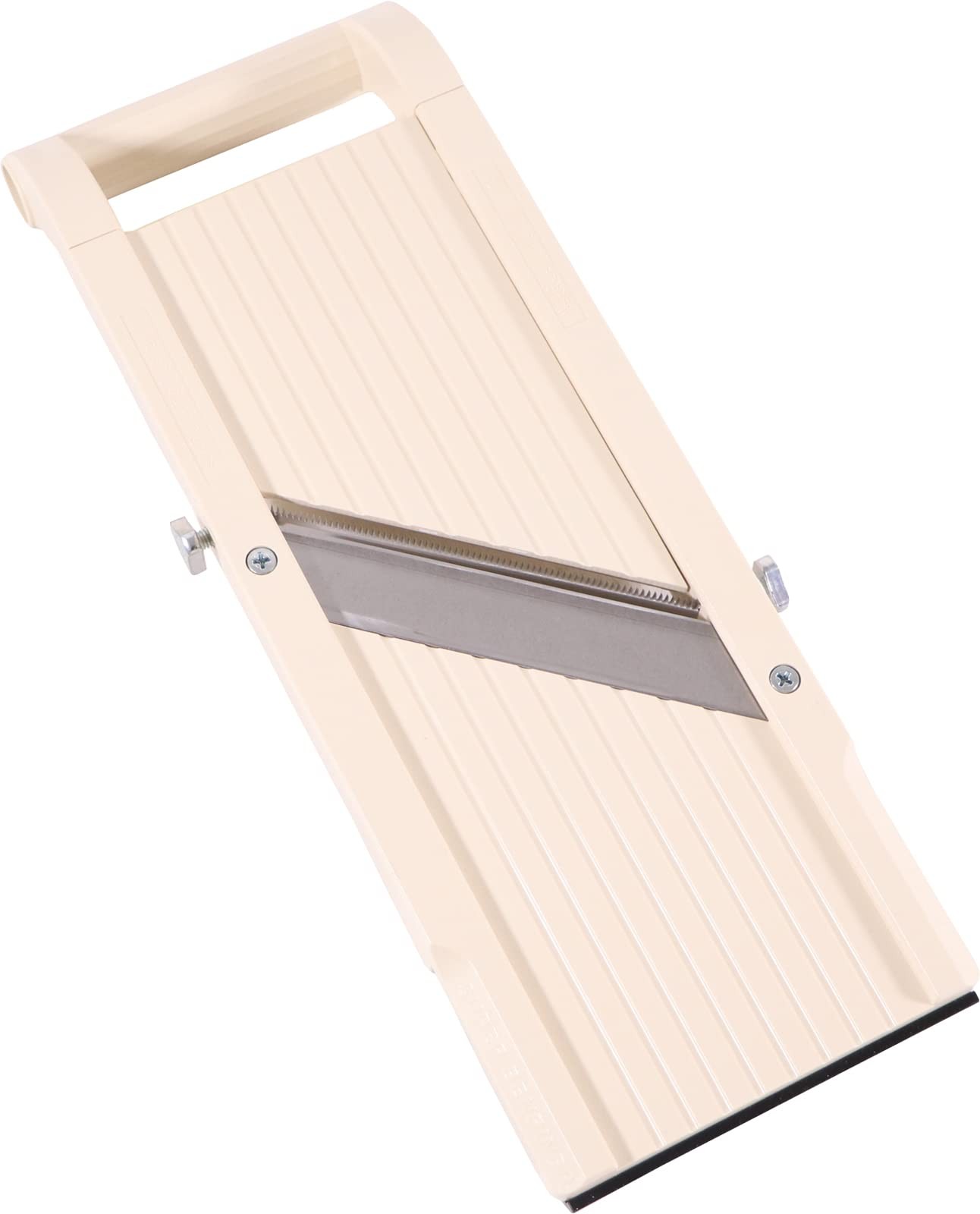
Benriner Super Benriner Mandoline Slicer
Japanese stainless steel blade , razor-sharp and adjustable from paper-thin to 5mm
Buy on Amazon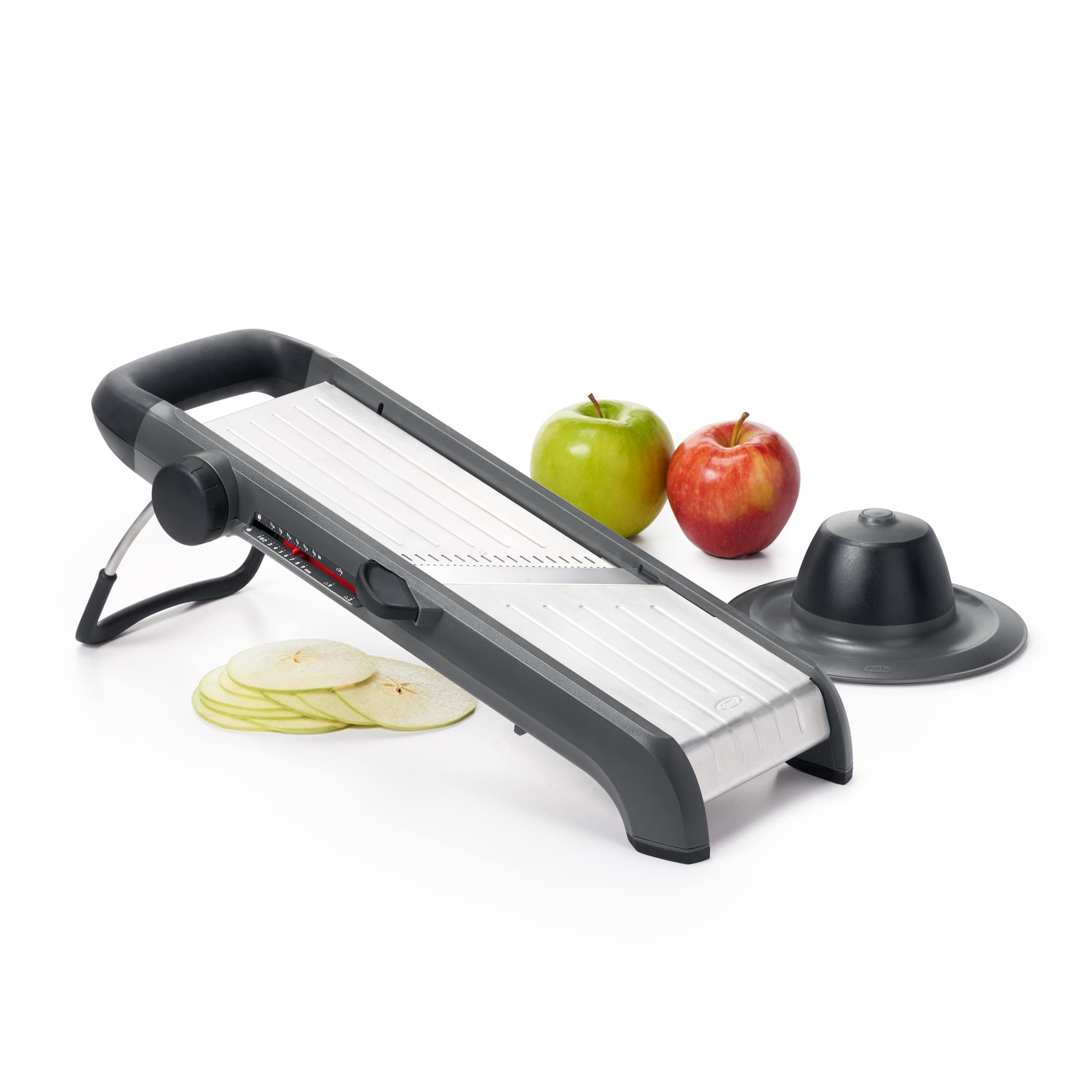
OXO Good Grips Chef's Mandoline Slicer 2.0
Integrated safety hand guard holds food securely during slicing
Buy on AmazonCuisinart 14-Cup Food Processor (CFP-14SVWGY)
14-cup capacity handles family-sized batches of dough, slicing, and shredding
Buy on Amazon| Product | Price Range | Top Strength | Key Weakness | Buy |
|---|---|---|---|---|
| Benriner Super Benriner Mandoline Slicer best overall | $$ | Japanese stainless steel blade , razor-sharp and adjustable from paper-thin to 5mm | Extremely sharp , requires a cut-resistant glove; not forgiving of careless use | Buy on Amazon |
| OXO Good Grips Chef's Mandoline Slicer 2.0 also consider | $$ | Integrated safety hand guard holds food securely during slicing | Safety guard adds bulk , less precise than the Benriner for very thin cuts | Buy on Amazon |
| Cuisinart 14-Cup Food Processor (CFP-14SVWGY) also consider | $$ | 14-cup capacity handles family-sized batches of dough, slicing, and shredding | Plastic bowl can stain with heavy use | Buy on Amazon |
| Breville Sous Chef 16-Cup Food Processor also consider | $$$ | 16-cup bowl with a 2.5-cup mini bowl for small tasks | Expensive , over $350 at full retail | Buy on Amazon |
The mandoline slicer is one of those tools that separates the people who talk about precision from the people who actually practice it. If you’ve ever tried to slice fennel paper-thin with a chef’s knife and ended up with a pile of wedges that look more like a rough chop, you know exactly what I mean. A good mandoline fixes that problem in about thirty seconds. A bad one, or a good one used carelessly, will introduce you to your local urgent care. So this guide is going to be direct about both the capability and the risk, because you deserve both pieces of information before you buy.
For context on how this fits into your broader kitchen equipment picture, the Small Appliances category covers the full range of prep tools worth considering alongside your mandoline purchase.
What to Look For
Blade Quality and Adjustability
The blade is the entire product. Everything else is handle and housing. Japanese stainless steel is the benchmark, and for good reason: it holds an edge longer than most European stainless alternatives and can be ground thinner for more precise cuts. The practical range you want is roughly 0.5mm to at least 8mm. Below that threshold, you’re getting into specialty territory. Above it, you’re better served by a knife.
Adjustability matters, but so does how adjustable. A dial that clicks through preset thicknesses is easier to use mid-recipe than a screw mechanism you have to eyeball. If you’ve ever tried to reset a screw-style mandoline with wet hands while your stock is reducing on the stove, you understand why that distinction is worth paying for.
Safety Provisions
This is where I will not hedge. A mandoline blade moving at speed against a fingertip does serious damage before you register pain. Every professional cook I know has a scar. The question is not whether the risk exists, it’s how the tool manages it.
Consumer models include a hand guard that keeps your fingers behind a plastic frame. It adds some bulk and limits how thin your last few slices can be, but it puts a physical barrier between your hand and the blade. Professional-grade models frequently omit this in favor of a cut-resistant glove, which requires you to purchase and use that glove every single time. Not occasionally. Every time.
If you are the kind of person who will consistently wear the glove, the professional tool gives you better results. If you are the kind of person who will tell yourself the glove is right there and you’re just doing one quick slice, buy the model with the built-in guard.
Stability and Storage
A mandoline that rocks on the counter introduces error into every single cut. Folding legs that lock into position or non-slip feet on a flat base matter more than they sound. And if your kitchen has limited storage, the difference between a mandoline that slides into a drawer and one that needs its own cabinet shelf is a practical consideration, not a vanity one.
Top Picks
Best for Precision: Super Benriner Mandoline Slicer
The Super Benriner Mandoline Slicer is what professional kitchens use. That’s not marketing language; it’s a description of where this tool actually lives. The Japanese stainless steel blade is razor-sharp out of the box and adjustable from paper-thin to 5mm using a simple dial mechanism. The body is compact enough to store in a large kitchen drawer. It weighs almost nothing.
The tradeoff is direct: most configurations do not include a safety guard. You are managing the risk yourself, with a cut-resistant glove that is not optional equipment. I want to be clear about that. The Benriner will cut you if you are careless with it, and it will do so efficiently. A good cut-resistant glove costs a fraction of the mandoline itself and should be purchased at the same time. Check mandoline slicer blades if you’re thinking about replacement blades or auxiliary blade sets down the line.
At mid-range pricing, the Super Benriner is exceptional value for what it delivers. A comparable level of blade sharpness and adjustability in a European-made mandoline would cost significantly more. If you’re an experienced home cook who is honest with yourself about kitchen discipline, this is the one to buy.
Best for Safety: OXO Good Grips Chef’s Mandoline Slicer 2.0
The OXO Good Grips Chef’s Mandoline Slicer 2.0 solves the safety problem with an integrated hand guard that holds food securely through the full slice, including those last few passes where most mandoline injuries happen. The dial adjusts thickness from 0.5mm to 9mm, which is a wider range than the Benriner, and the non-slip feet and folding legs keep it stable on any countertop surface.
Where it concedes ground to the Benriner is on very thin cuts. The hand guard introduces a small amount of play that limits how paper-thin your slices can get. For a cucumber salad or a potato gratin, that difference is irrelevant. For the kind of precision work a professional kitchen demands, you’d notice it. Also, more components means more cleanup, which is worth factoring in if you’re using this frequently.
Also mid-range pricing, slightly higher than the Benriner in most configurations. For anyone who wants a capable mandoline without managing the injury risk through personal discipline alone, this is the right choice.
Best Workhorse Food Processor: Cuisinart 14-Cup Food Processor (CFP-14SVWGY)
The Cuisinart 14-Cup Food Processor earns its place in this guide as the food processor recommendation for cooks who want mandoline-level slicing versatility without the manual technique requirement. The 14-cup bowl handles family-sized batches, the included blades cover slicing, shredding, chopping, and dough, and at mid-range pricing it’s consistently one of the more reliable options at its price point.
The slicing disc does competent work on most vegetables, but the thickness isn’t infinitely variable. You get preset settings rather than a continuous dial, which means precision-dependent tasks like French potato gratin at exactly 2mm are better served by an actual mandoline. The plastic bowl can stain with regular use, particularly with beets or turmeric, and the motor isn’t designed for extended heavy processing like nut butters. Compared to the Breville Sous Chef 16-Cup Food Processor, it’s a more modest machine at a meaningfully lower price. For most home cooks who aren’t doing daily heavy processing, that’s the right tradeoff.
Best Premium Food Processor: Breville Sous Chef 16-Cup
The Breville Sous Chef 16-Cup Food Processor is in a different category from the Cuisinart, and the pricing reflects it. It costs roughly twice the Cuisinart unit at standard retail. What that buys you is a 1200W motor that handles nut butters and extended heavy processing without complaint, a 16-cup bowl plus a 2.5-cup mini bowl for small tasks, and a variable slicing disc that adjusts continuously from 0.3mm to 8mm.
That last feature is the real differentiator for serious cooks. If you want gratin-thin potato slices from a food processor rather than a mandoline, the Breville’s disc actually gets you there. The Cuisinart does not. There are more parts to clean, which is a minor complaint (I realize that’s a specific complaint to make about a machine this capable), but a real one if you’re breaking it down after every use.
At premium pricing, this is the buy for cooks who process daily and want the slicing precision of a mandoline without the manual technique. If you’re also considering where puréeing and emulsifying tasks fit into your prep workflow, our guide to the Robot Coupe immersion blender covers the professional-grade end of that spectrum.
How to Choose
Start with the safety question, not the features list. If you’re new to mandoline slicing or know you won’t use a cut-resistant glove consistently, the OXO with its integrated guard is the correct choice regardless of what the precision comparison says. The Benriner is a better tool in the hands of someone who will respect it. In the hands of someone who won’t, it’s a liability.
If you’re choosing between a mandoline and a food processor for slicing tasks, think about what else you’re doing in the kitchen. A mandoline produces better results for tasks that require very thin, uniform manual slices. A food processor is faster for volume and does everything else a mandoline cannot. A well-equipped kitchen has both, but if you’re choosing one, the mandoline is the right call if precision slicing is your primary need. The food processor is the right call if slicing is one task among many.
On budget: both the Benriner and the OXO are mid-range. The Cuisinart food processor is also mid-range. The Breville is premium and priced accordingly. None of these are bargain purchases, but none are frivolous ones either. Check current pricing on Amazon before buying, since these prices move.
If you’re building out your small appliance collection more broadly, the Small Appliances hub is a good place to survey what else might be worth adding alongside these. The large immersion blender guide is worth reading if you’re also sourcing a stick blender for soups and sauces.
Frequently Asked Questions
Is the Super Benriner safe for home cooks?
It’s safe for home cooks who will consistently use a cut-resistant glove and pay attention to what they’re doing. The blade is extremely sharp and moves fast, and most configurations don’t include an integrated hand guard. If you’re experienced in the kitchen and honest with yourself about how carefully you work, yes. If you’re new to mandolines or tend to rush through prep, the OXO Good Grips is the safer starting point.
Do I need to buy a cut-resistant glove separately?
For the Super Benriner, yes, and treat it as a required purchase rather than an optional accessory. Buy it at the same time. For the OXO Good Grips, the integrated hand guard handles most of the protection, though some cooks use a glove alongside it as an extra precaution.
Can a food processor replace a mandoline for slicing?
For most everyday slicing tasks, a food processor with a slicing disc is a reasonable substitute. The Breville Sous Chef’s variable disc gets close to mandoline-level precision at the thin end. But for very thin, hand-controlled slices where you need to feel the resistance and make adjustments mid-pass, a mandoline gives you control that a food processor can’t match.
What’s the difference between the Cuisinart and Breville food processors for slicing?
The Cuisinart has preset thickness settings on its slicing disc. The Breville Sous Chef has a continuously variable disc that adjusts from 0.3mm to 8mm, giving you far more precision. For dedicated slicing tasks, the Breville’s disc is meaningfully better. The Cuisinart’s disc is adequate for most purposes but won’t get you to paper-thin.
How do I clean a mandoline safely?
Wipe the blade with a damp cloth rather than running your hand along it. Most mandolines should not go in the dishwasher, as it dulls the blade faster. The Super Benriner disassembles easily for hand washing. The OXO’s components are more numerous but most are top-rack dishwasher safe. Check the manufacturer’s instructions for your specific model, and handle the blade with the same care during cleaning that you’d apply during use.
Frequently Asked Questions
Is the Super Benriner mandoline slicer safe for home cooks?
It's safe with proper precautions — specifically a cut-resistant glove, which is non-negotiable with the Super Benriner. The Japanese stainless steel blade is razor-sharp and does not forgive careless use. With a glove and deliberate technique, it's an excellent tool. Without one, it's genuinely dangerous.
How thin can the Super Benriner slice?
The Super Benriner adjusts from paper-thin (approaching 0.5mm) to approximately 5mm thick. The adjustment mechanism is a screw dial that sets blade height precisely. For applications like carpaccio-style vegetable cuts or daikon for Japanese preparations, it achieves results that a knife cannot.
How does the Super Benriner compare to the OXO Good Grips mandoline?
The Super Benriner prioritizes blade precision and thinness of cut; the OXO prioritizes safety with an integrated hand guard and intuitive dial controls. The Benriner produces finer slices and is preferred by experienced cooks who want precision. The OXO is the better choice for cooks who are new to mandolines or want more built-in protection.
Can a food processor replace a mandoline slicer for thin-slicing tasks?
For certain tasks, yes. A food processor with an adjustable slicing disc (like the Breville Sous Chef) handles high-volume slicing efficiently. What it cannot do is achieve the very thin, uniform slices the Super Benriner produces for individual cuts — particularly for delicate preparations like paper-thin fennel or radish that require fine control.
How do I clean and maintain the Super Benriner?
Hand-wash the Super Benriner carefully — the blade is exposed during cleaning and extremely sharp. Use a brush rather than a sponge to avoid contact with the blade edge. Dry thoroughly after washing. The blade can be honed with a whetstone if it dulls over time, which is one advantage of the Japanese stainless steel construction.
Where to Buy
Benriner Super Benriner Mandoline SlicerSee Super Benriner Mandoline Slicer on Amazon