Vitamix Commercial Blenders for Home Cooks

Affiliate disclosure: Some links on this page are affiliate links. If you buy through them we earn a small commission at no extra cost to you. This never influences which products we recommend — we only suggest things we'd buy ourselves. Product prices and availability are accurate as of the date published and are subject to change. Always check Amazon for current pricing before purchasing. Learn more.
Quick Picks
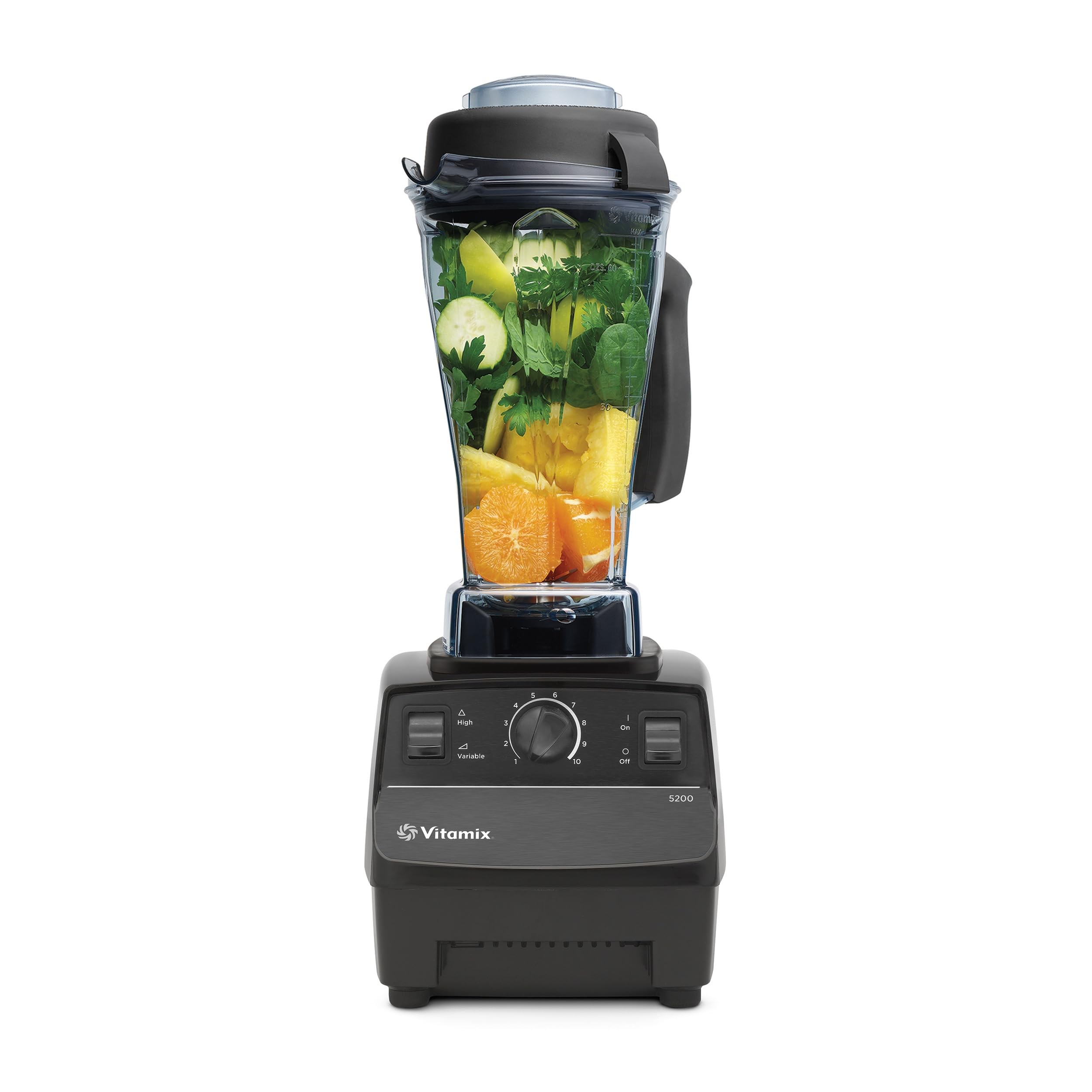
Vitamix 5200 Blender
2HP motor pulverizes nuts, ice, and fibrous vegetables completely
Buy on Amazon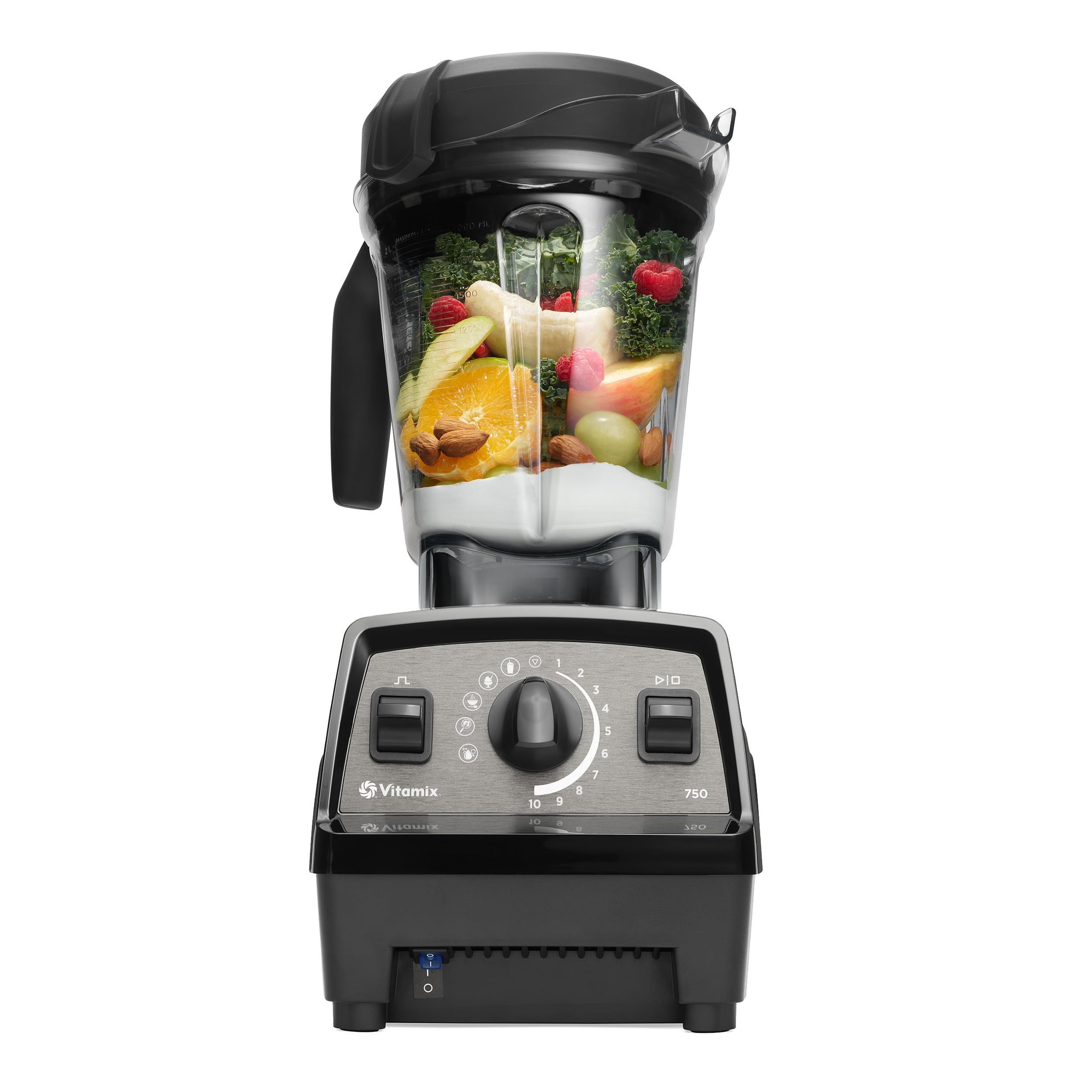
Vitamix Pro 750 Heritage Blender
Five pre-programmed settings for smoothies, hot soups, dips, frozen desserts, and self-cleaning
Buy on Amazon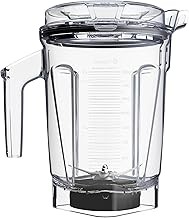
Vitamix A3500 Ascent Series Blender
Built-in wireless connectivity detects container size and adjusts settings
Buy on Amazon| Product | Price Range | Top Strength | Key Weakness | Buy |
|---|---|---|---|---|
| Vitamix 5200 Blender best overall | $$$ | 2HP motor pulverizes nuts, ice, and fibrous vegetables completely | Very expensive , over $400 at full retail | Buy on Amazon |
| Vitamix Pro 750 Heritage Blender also consider | $$$ | Five pre-programmed settings for smoothies, hot soups, dips, frozen desserts, and self-cleaning | Expensive , premium over the 5200 for pre-programmed settings most cooks set manually | Buy on Amazon |
| Vitamix A3500 Ascent Series Blender also consider | $$$ | Built-in wireless connectivity detects container size and adjusts settings | Most expensive Vitamix model , tech upgrades add cost without proportionate performance gain | Buy on Amazon |
| Breville Super Q Blender also consider | $$$ | 1800W motor , more powerful than Vitamix 5200 on paper | Breville's blender reliability track record is shorter than Vitamix's | Buy on Amazon |
The category is called “commercial blenders,” but almost nobody buying one of these machines actually runs a commercial kitchen. What they have is a genuine cooking problem. Frozen açaí bowls that come out grainy. Nut butters that stall a $60 countertop blender after 30 seconds. Hot soups that need to be smooth enough to serve to someone who actually cares. These are home cooks who’ve hit the ceiling on what a mid-range blender can do, and they want out.
Vitamix has owned this segment for decades, and for good reason. But “Vitamix commercial blenders” covers a wider range of models, price points, and design decisions than the brand’s reputation alone would suggest. There’s also at least one serious competitor worth considering before you spend this kind of money. This guide covers the four machines I’d put in front of a serious home cook in this category, along with enough context to tell them apart.
If you’re still in the research phase on kitchen appliances broadly, the Small Appliances hub is a reasonable place to orient yourself before going this deep on a single category.
What to Look For in a High-Performance Blender
Motor power and its actual meaning. All four machines in this guide run between 1800W and 2.2HP. In practice, continuous horsepower under load matters more than peak ratings on a spec sheet. A motor that claims 1800W peak but throttles down under friction isn’t doing what you need it to do when you’re processing a full container of cashews. Vitamix publishes continuous horsepower figures, which is part of why direct comparisons with competitors require some care.
Container height and your cabinet clearance. If you’ve ever bought an appliance, shoved it under the cabinet, and found you can’t put the lid on without pulling it out every single time, you know exactly why this matters. Standard 64-oz Vitamix containers run tall. Some models now offer low-profile containers that solve this. Measure before you commit.
Controls. Variable speed dials give you immediate, tactile feedback. Pre-programmed settings are convenient for repetitive tasks but remove that control. Touchscreens are responsive until they aren’t, and they’re harder to operate with wet hands. None of these is universally correct, but think about what your actual cooking looks like.
Noise. High-performance blenders are loud. In an open kitchen or an apartment, this is a real quality-of-life issue, not a minor footnote. One machine in this guide addresses it specifically.
Longevity and warranty. Vitamix machines regularly last 10 to 15 years with normal home use. Their 7-year warranty is the floor. A competitor offering a 5-year motor warranty is credible but doesn’t have the same track record. If you’re spending premium money, the total cost of ownership over a decade matters more than the sticker price.
Top Picks
Vitamix 5200 Blender
The Vitamix 5200 Blender is the benchmark. It’s been in production long enough that its reliability is documented by actual time rather than by marketing claims, and the 2HP motor handles anything a home cook is likely to process. Nuts, ice, fibrous greens, hot liquids for soup, frozen fruit for sorbet. The variable speed dial and pulse function give you enough control to stop well short of over-processing, which matters when you’re making something like hummus and don’t want it to turn into paste.
The 60-second self-cleaning process (warm water and a drop of soap, run on high) is one of those features you don’t appreciate until you’ve spent ten minutes scrubbing blender blades by hand. (I timed this, repeatedly, out of mild suspicion. It works.)
The honest downside is that the standard tall container doesn’t fit under most kitchen cabinets without pulling the machine forward. If your counters run under upper cabinets, test your clearance before buying. The other downside is price. The 5200 sits in the premium band, and it’s premium pricing without apology. The case for spending it is straightforward: amortized over ten years of regular use, it’s a reasonable piece of kitchen equipment. But the upfront number is real.
Vitamix Pro 750 Heritage Blender
The Vitamix Pro 750 Heritage Blender adds two things over the 5200: a 2.2HP motor and five pre-programmed settings covering smoothies, hot soups, dips, frozen desserts, and self-cleaning. It also comes with the low-profile container, which solves the cabinet clearance issue the 5200 leaves unresolved.
The question worth asking directly is whether the pre-programmed settings justify the price premium over the 5200. For most home cooks, probably not. The settings are convenient, but anyone who’s spent a few months with a variable speed dial learns to run these blends manually without thinking about it. The cabinet clearance issue, though, is a legitimate functional difference. If you’ve measured your kitchen and the tall container won’t work, the Pro 750 solves that without forcing you to step up to the A3500.
For a deeper look at this specific machine, the full Vitamix Pro 750 Heritage Blender review covers it in more detail.
Vitamix A3500 Ascent Series Blender
The Vitamix A3500 Ascent Series Blender is the most expensive machine in this guide. The additional cost buys you wireless container detection (the machine reads which container is attached and adjusts settings accordingly), a touchscreen interface, and a programmable timer. It also fits under standard cabinets.
On performance, the A3500 is a Vitamix. The blending results are not meaningfully different from the 5200 or the Pro 750. What you’re paying for is the tech layer.
My honest assessment: the wireless container detection is genuinely useful if you own multiple Vitamix containers and switch between them regularly. The programmable timer is a convenience feature. The touchscreen is responsive, but a variable dial is faster to adjust mid-blend with a wet hand, and the A3500 doesn’t offer one. If you run a smart home setup and want appliances that fit that ecosystem, the A3500 makes more sense. If you mostly want to blend things efficiently and reliably, the 5200 at roughly half the price does that.
Breville Super Q Blender
The Breville Super Q Blender is the machine to consider if noise is a genuine constraint. Its noise enclosure reduces operational volume meaningfully compared to any of the Vitamix models, and in a smaller home or an open-plan kitchen, that’s worth something.
On paper, its 1800W motor outpowers the Vitamix 5200. In practice, the two machines produce comparable results on the tasks home cooks actually run, including fibrous vegetables, frozen blends, and nut processing. The Super Q’s 5-year motor warranty is strong for the category, though it doesn’t match Vitamix’s 7-year full-machine coverage or the company’s documented longevity record.
The trade-off is counter footprint. The noise enclosure takes up more horizontal space than a standard blender body, which is a real consideration on a busy counter. Breville makes excellent kitchen equipment (their espresso machines have a devoted following, as I noted in the refurbished Breville espresso machine piece), but their blender reliability track record is shorter than Vitamix’s by a significant margin. If you’re buying on a ten-year horizon, that gap matters. If noise is the deciding factor, the Super Q is the only machine in this class that addresses it seriously.
How to Choose
Start with the cabinet clearance question. If you have limited clearance under upper cabinets, the 5200’s tall container is a real operational problem, not a minor inconvenience. The Pro 750 and A3500 both solve it with low-profile containers. The Super Q’s container dimensions are also worth checking against your specific setup.
If noise matters, the Super Q is the only machine here built to address it, and no Vitamix model comes close on this dimension.
If you want the most straightforward, reliable, control-forward machine at the lowest price in this category, the 5200 is still the answer. Premium pricing, but lower than the Pro 750 and well below the A3500, and the blending performance is essentially equivalent to both. Vitamix machines at this price point can run for a decade or more without service, which changes how the math works.
If you’re deciding between the Pro 750 and the 5200, ask yourself whether you actually need the low-profile container. That’s the real differentiator. The pre-programmed settings are convenience, not capability.
The A3500 is worth its premium for a specific buyer: someone who genuinely uses multiple container sizes, wants programmable automation, and is willing to pay for a touchscreen interface. For everyone else, the 5200 does the work at a lower entry cost.
One note on immersion blenders: several readers have asked whether a high-quality immersion blender can substitute for a countertop machine like these. For in-pot soups and smaller tasks, something like the Robot Coupe immersion blender is excellent and takes up no counter space at all. It cannot replace a full countertop unit for frozen blends, nut processing, or high-volume work. They’re different tools, and if you’re doing both, you may want both.
For more context on small kitchen appliances in this price tier, the Small Appliances hub covers the category.
Frequently Asked Questions
Are Vitamix commercial blenders actually worth the price for home use?
For cooks who blend regularly and have hit the performance ceiling on less expensive machines, yes. The combination of motor durability, consistent results, and long service life makes the per-year cost reasonable when spread over ten or more years of ownership. For occasional use, a mid-range blender is probably sufficient.
What’s the difference between the Vitamix 5200 and the Pro 750?
The Pro 750 has a slightly more powerful motor (2.2HP vs. 2HP), five pre-programmed settings, and a low-profile container that fits under standard kitchen cabinets. The 5200 uses a taller container and has only manual variable speed controls. For most home cooks, the meaningful difference is container height, not motor power or programming.
Do Vitamix blenders fit under standard kitchen cabinets?
The 5200 with its standard 64-oz container typically does not fit under cabinets with standard 18-inch clearance when the container is attached. The Pro 750 and A3500 come with low-profile containers designed to fit. If cabinet clearance is a concern, measure your specific kitchen before choosing.
How does the Breville Super Q compare to a Vitamix for long-term reliability?
Vitamix has decades of documented home-use longevity. The Super Q is a newer product with fewer years of field data. The Super Q’s 5-year motor warranty is strong, but Vitamix’s 7-year full-machine warranty and established track record give it an edge for buyers prioritizing long-term ownership over noise reduction.
Can I use a Vitamix for hot liquids like soup?
Yes. All Vitamix models in this guide can process hot liquids safely. The friction from the motor also generates enough heat to warm a cold soup blend during processing. The standard safety guidance applies: fill no more than half full with hot liquids, start on low speed, and vent the container appropriately to prevent pressure buildup.
Frequently Asked Questions
Which Vitamix blender is best for a home cook who wants commercial performance?
The Vitamix 5200 is the benchmark for home cooks wanting commercial-level results. It delivers the same motor durability and blending completeness as higher-priced models without paying for pre-programmed settings or smart connectivity features that most home cooks don't use regularly.
What is the difference between Vitamix commercial and home blenders?
Vitamix's home lineup — including the 5200, Pro 750, and A3500 — uses motors rated for continuous duty, which is the same standard as commercial equipment. The main differences in true commercial Vitamix models are heavier construction for restaurant-volume use, programmable timers built for speed-of-service, and higher price points. For home cooking, the residential lineup performs comparably.
Are Vitamix commercial blenders worth the price?
If you blend daily, make nut butters, frequently process frozen ingredients, or cook a high volume of soups and smoothies, yes. The motor longevity alone — these machines routinely last 10 to 15 years with normal maintenance — makes the cost defensible over time. If you blend occasionally, a mid-range blender may serve you well enough.
How do Vitamix commercial blenders compare to Ninja?
Vitamix motors are rated for continuous duty and carry longer warranties (7 to 10 years), while Ninja blenders in the premium tier offer quieter operation and lower price points but shorter track records for durability. For high-volume, high-demand blending, Vitamix is the more proven machine. For lighter use, high-end Ninja models are a credible alternative.
Can I use a commercial Vitamix blender for hot liquids?
Yes — Vitamix containers are made from BPA-free Tritan plastic rated for hot liquids. The high-speed blending friction can also heat cold liquid to steaming through friction alone in about six minutes, which is the basis for the hot soup program on the Pro 750 and A3500 models. Always vent the lid slightly and hold it firmly when blending hot liquids.
Where to Buy
Vitamix 5200 BlenderSee Vitamix 5200 Blender on Amazon