Vitamix vs Ninja: High-Performance Blender Comparison

Affiliate disclosure: Some links on this page are affiliate links. If you buy through them we earn a small commission at no extra cost to you. Recommendations are research-driven; we don't claim personal use of every product reviewed. Product prices and availability are accurate as of the date published and are subject to change. Always check Amazon for current pricing before purchasing. Learn more.
 Vitamix Vitamix 5200 Blender
 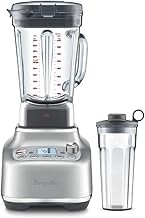 Breville Breville Super Q Blender
 If you’ve spent any time looking into high-performance blenders, you’ve already encountered the core tension in this category: Vitamix has been the default serious answer for decades, and every few years a competitor arrives with better specs on paper and a lower noise level. The Breville Super Q Blender is the most credible challenger right now. Both machines sit at premium pricing. Both will make a smooth smoothie. The question is what happens at the edges, and whether the differences matter for how you actually cook.
This comparison covers the Vitamix 5200 Blender and the Breville Super Q directly. If you’re still working out which appliance category makes sense for your kitchen, the broader Small Appliances section has context on where a full-size blender fits versus other options.
At-a-Glance
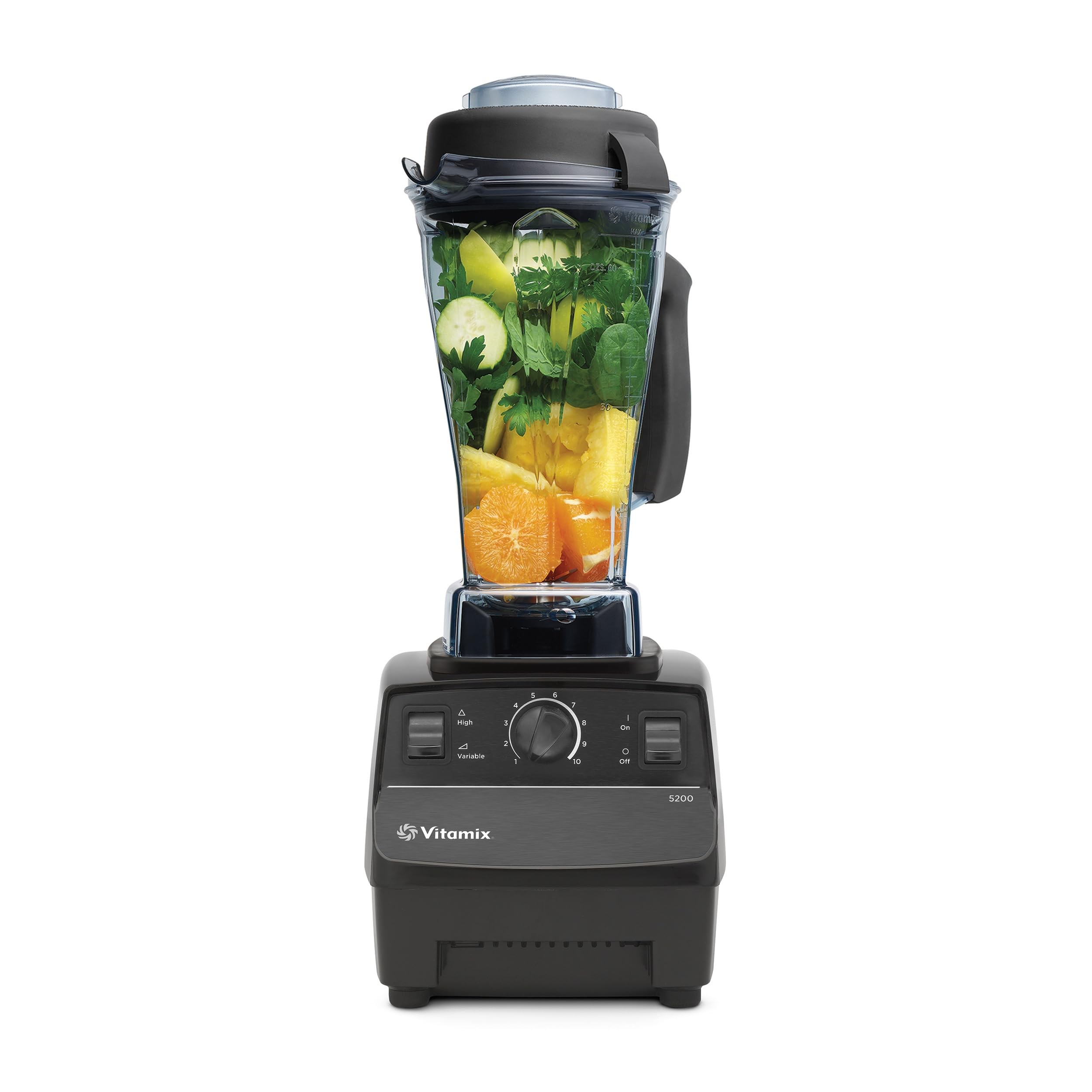
The Vitamix 5200 has been in continuous production since 2007. It runs a 2HP motor, uses a 64-ounce container, has a variable speed dial from 1 to 10, and cleans itself in about 60 seconds. No presets, no noise enclosure, no touchscreen. It is tall enough that it won’t fit under most standard upper cabinets, which is an annoying but real constraint.
The Breville Super Q runs 1800 watts (roughly 2.4HP on paper), includes a noise enclosure lid that drops decibels meaningfully, offers 12 speed settings plus five presets, and carries a 5-year motor warranty. It’s also bulkier on the counter because of that enclosure, and Breville’s long-term blender reliability data is thinner than Vitamix’s simply because they haven’t been making high-performance blenders as long.
Both machines are premium pricing. The Breville Super Q costs more than the Vitamix 5200 at most retail points. Check current pricing on Amazon before you decide, because the gap shifts.
Why Choose the Vitamix 5200
The 5200 has one claim that no spec sheet can replicate: track record. Vitamix machines from the early 2000s are still in daily use in home kitchens. That isn’t marketing copy; it’s a measurable pattern in repair forums and secondhand markets where these machines hold value unusually well. When someone asks me whether a premium blender is worth the money, I point to lifespan before I point to performance. A machine you replace in five years isn’t the same investment as one you replace in fifteen, even if the sticker prices are similar.
On performance, the 2HP motor pulverizes completely. Cashews blend to a liquid with no gritty residue. Fibrous kale disappears. Ice becomes snow, not shards. The variable speed dial gives you genuine control over texture in a way that preset buttons don’t. If you’re making a chunky salsa versus a silky tomato bisque, you’re not hunting for the right preset, you’re just turning a dial. That’s a practical difference.
The self-cleaning cycle deserves mention because it’s one of those features that sounds minor until you’ve owned a blender you hate cleaning. Fill it halfway with warm water, add a drop of dish soap, run it for 30 to 60 seconds. Done. (I timed this on three separate occasions when I first got the machine, because I didn’t believe it. It holds up.)
The 5200 also has no noise enclosure, which means it’s loud. Meaningfully loud. If you have a sleeping infant, a home office adjacent to the kitchen, or a small apartment with thin walls, that’s a real issue. If you have a kitchen with some separation from the rest of the house and you blend during reasonable hours, it probably isn’t.
The container height is worth measuring before you buy. At approximately 20.5 inches tall with the container on, it won’t fit under a standard 18-inch cabinet clearance. If you leave appliances on the counter, you’ll need to find a spot that accommodates it. My solution was to keep it on the counter near the island where there’s no upper cabinet. That’s workable if you have the space, less so if you don’t.
The 7-year warranty covers the motor, blade, and container. That coverage period, combined with the parts availability and Vitamix’s customer service reputation, is part of why the long-term cost calculus works out differently than it looks at purchase.
Why Choose the Breville Super Q
The noise enclosure is the Super Q’s clearest advantage, and it’s a real one. Breville’s engineering here isn’t cosmetic. The enclosure drops the operating noise to a level that lets you hold a conversation at normal volume in the same room. If you blend early in the morning or share walls with neighbors, that matters practically and immediately.
The 1800-watt motor outperforms the Vitamix 5200 in raw wattage on paper. In practice, the performance difference is measurable in controlled tests but difficult to detect in everyday blending. Both machines will process the same ingredients to the same result in most tasks. Where the Super Q’s motor advantage shows up most clearly is in speed. It reaches a finished smooth blend fractionally faster. Whether that matters to you depends on how often you’re watching the clock.
The 5-year motor warranty is among the strongest in this category. That’s meaningful coverage, though it still trails the Vitamix 7-year warranty. The gap is worth noting for anyone evaluating long-term ownership.
The preset programs are genuinely useful for tasks like frozen desserts and nut butters where the blending sequence matters. If you’re newer to high-performance blending, having a machine that manages the speed ramp for you reduces the chance of over-processing. If you’ve been doing this for years and trust your own judgment with a variable dial, the presets add convenience without changing outcomes.
The Super Q is heavier than the 5200, and the noise enclosure means a larger counter footprint. If your kitchen has limited counter space, that bulkier profile is a real tradeoff. Moving it in and out of a cabinet repeatedly is less practical because of the weight and the enclosure piece.
Breville makes excellent kitchen equipment. Their stand mixers and toaster ovens have strong reputations. Their high-performance blender line is newer, and the long-term failure rate data simply doesn’t exist yet at the same scale it does for Vitamix. That’s not a condemnation; it’s a factual constraint. The Super Q may prove equally durable over 10 or 15 years. There’s just less evidence to cite right now.
If you’re comparing blending tools more broadly and considering whether a full-size blender or a stick blender makes more sense for your kitchen, the immersion blender commercial category covers heavy-duty stick blenders that serve different but sometimes overlapping purposes. Similarly, if you’ve looked at the Robot Coupe immersion blender, you already know what serious stick blending looks like and can assess where a countertop machine adds or duplicates capability.
Verdict
The Vitamix 5200 Blender is the better choice for most serious home cooks, and the reasoning isn’t complicated. The performance difference between these two machines in everyday use is small. The difference in verified long-term reliability is not small. Vitamix has 15-plus years of data supporting the 5200’s durability at the consumer level. Breville does not have that record yet in this category, through no particular fault of theirs.
The Breville Super Q Blender is the right choice in one specific situation: noise is a genuine, non-negotiable constraint. If blending early morning in an apartment, or next to a sleeping child, or in a shared living situation where sound travels, the Super Q’s noise enclosure solves a real problem that the Vitamix 5200 does not. That’s a legitimate reason to pay more for it, and you’re getting a well-built machine.
But if noise isn’t a constraint, the Vitamix 5200 is the answer. It’s expensive at premium pricing, though less expensive than the Super Q at most retail points. The 7-year warranty and documented longevity mean the per-year cost over a decade of use is lower than the sticker price suggests. The variable speed dial gives you more tactile control than any preset arrangement. The self-cleaning cycle is as good as advertised. And the motor will handle everything you put in it without complaint, including the fibrous, frozen, or nut-heavy tasks that reveal the gap between a serious blender and a fast-looking one.
My advice would be to measure your cabinet clearance before ordering either machine. Both are tall, and discovering a clearance problem after delivery is an avoidable annoyance.
For more context on where a full-size blender fits alongside other countertop and handheld tools, the Small Appliances section covers the broader category. If you’re also working through prep tools beyond blending, the large immersion blender comparison is worth reading before you finalize any kitchen equipment decisions.
Frequently Asked Questions
Is the Vitamix 5200 worth the premium price?
For regular use in a serious home kitchen, yes. The machine is expensive, but the documented lifespan of 10 to 15 years or more means the per-year ownership cost is lower than it appears at purchase. The 7-year warranty, parts availability, and Vitamix’s customer service support that calculation. If you’d use it a few times a month at most, the math is less convincing.
How much quieter is the Breville Super Q than the Vitamix 5200?
Meaningfully quieter. The Super Q’s noise enclosure reduces operating volume enough that normal conversation is possible in the same room while it’s running. The Vitamix 5200 without an enclosure is loud enough that you’d need to raise your voice to be heard over it. The difference is practical, not incremental.
Can the Vitamix 5200 fit under standard kitchen cabinets?
No. With the container in place, the Vitamix 5200 stands approximately 20.5 inches tall. Standard upper cabinet clearance above a counter is typically 18 inches. Measure your available space before ordering. If you have a section of counter without upper cabinets, that’s where it lives.
Which blender has the better warranty?
The Vitamix 5200 carries a 7-year warranty covering motor, blade, and container. The Breville Super Q carries a 5-year motor warranty. Both are strong by category standards. The Vitamix warranty is longer, and Vitamix’s reputation for honoring warranty claims is well-established over decades of consumer data.
Should I consider an immersion blender instead of either of these?
For some tasks, yes. An immersion blender handles soups in the pot, small-batch sauces, and quick emulsifications without requiring you to transfer hot liquids. It doesn’t replace a high-performance countertop blender for frozen drinks, nut butters, or whole-ingredient processing. Most serious kitchens use both for different purposes rather than choosing between them.
Frequently Asked Questions
Is Vitamix better than Ninja for home blending?
For high-demand tasks like nut butter, continuous large batches, and blending very dense ingredients, Vitamix is the more proven machine with a longer durability track record. For occasional smoothies and lighter blending tasks, top-tier Ninja models deliver solid results at a lower price point. The decision comes down to blending frequency and what you're processing.
Why is Vitamix so much more expensive than Ninja?
Vitamix motors are rated for continuous duty with 7- to 10-year warranties and a proven track record of lasting 15-plus years in real kitchens. Ninja's premium tier is competitive on specs but has a shorter track record for long-term motor durability. You are also paying for Vitamix's customer service and warranty fulfillment reputation, which is consistently strong.
Does the Breville Super Q outperform the Vitamix 5200?
On raw wattage the Breville Super Q rates higher, but Vitamix's continuous-duty motor rating means real-world sustained performance is comparable. The Breville is meaningfully quieter thanks to its noise enclosure and is a serious alternative — the tradeoff is that Vitamix's 15-plus-year reliability track record is longer than Breville's in this category.
Which is louder, Vitamix or Ninja?
Both high-performance blenders run loud — in the 88 to 90 decibel range at full speed — without a noise enclosure. The Breville Super Q (the Vitamix competitor covered in this article) includes an enclosure that drops operational noise significantly. If noise is a concern in your kitchen, that feature alone may be the deciding factor.
Can a Ninja blender replace a Vitamix for nut butter?
Premium Ninja models can process nut butter, but they typically require longer run times and may need cooling breaks to avoid motor strain on thicker loads. Vitamix motors handle nut butter in 2 to 3 minutes without thermal shutdown. If nut butter is a regular use case, Vitamix is the stronger choice.
Where to Buy
Vitamix 5200 BlenderSee Vitamix 5200 Blender on Amazon