Commercial Immersion Blender Buyer's Guide

Affiliate disclosure: Some links on this page are affiliate links. If you buy through them we earn a small commission at no extra cost to you. Recommendations are research-driven; we don't claim personal use of every product reviewed. Product prices and availability are accurate as of the date published and are subject to change. Always check Amazon for current pricing before purchasing. Learn more.

Quick Picks
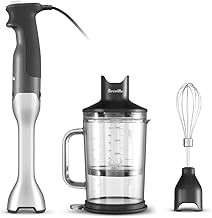
Breville Control Grip Immersion Blender
Bell-shaped guard prevents splashing , practical for soups and sauces
Buy on Amazon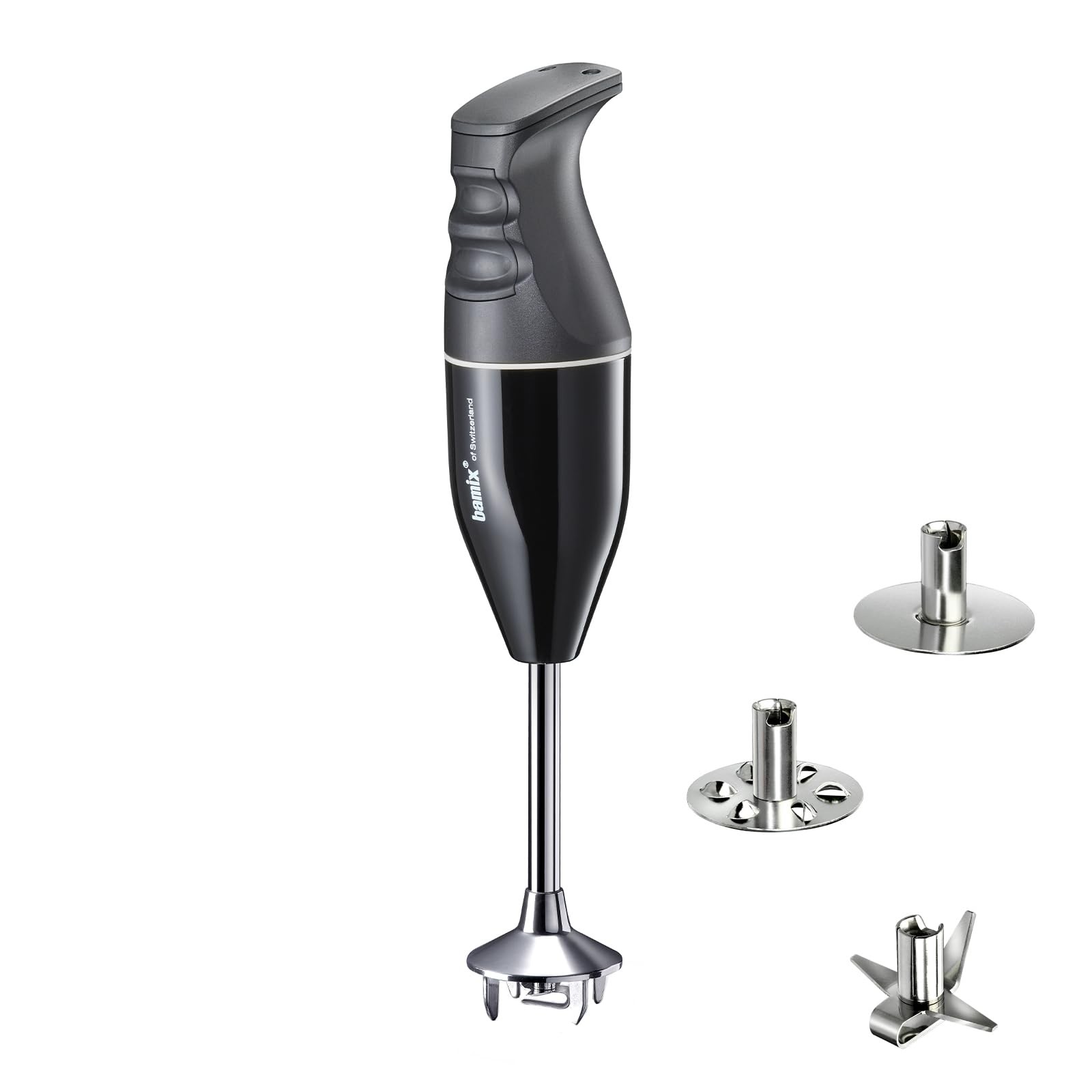
Bamix SwissLine Immersion Blender
Swiss-made motor runs at 12,000 RPM , significantly faster than most immersion blenders
Buy on Amazon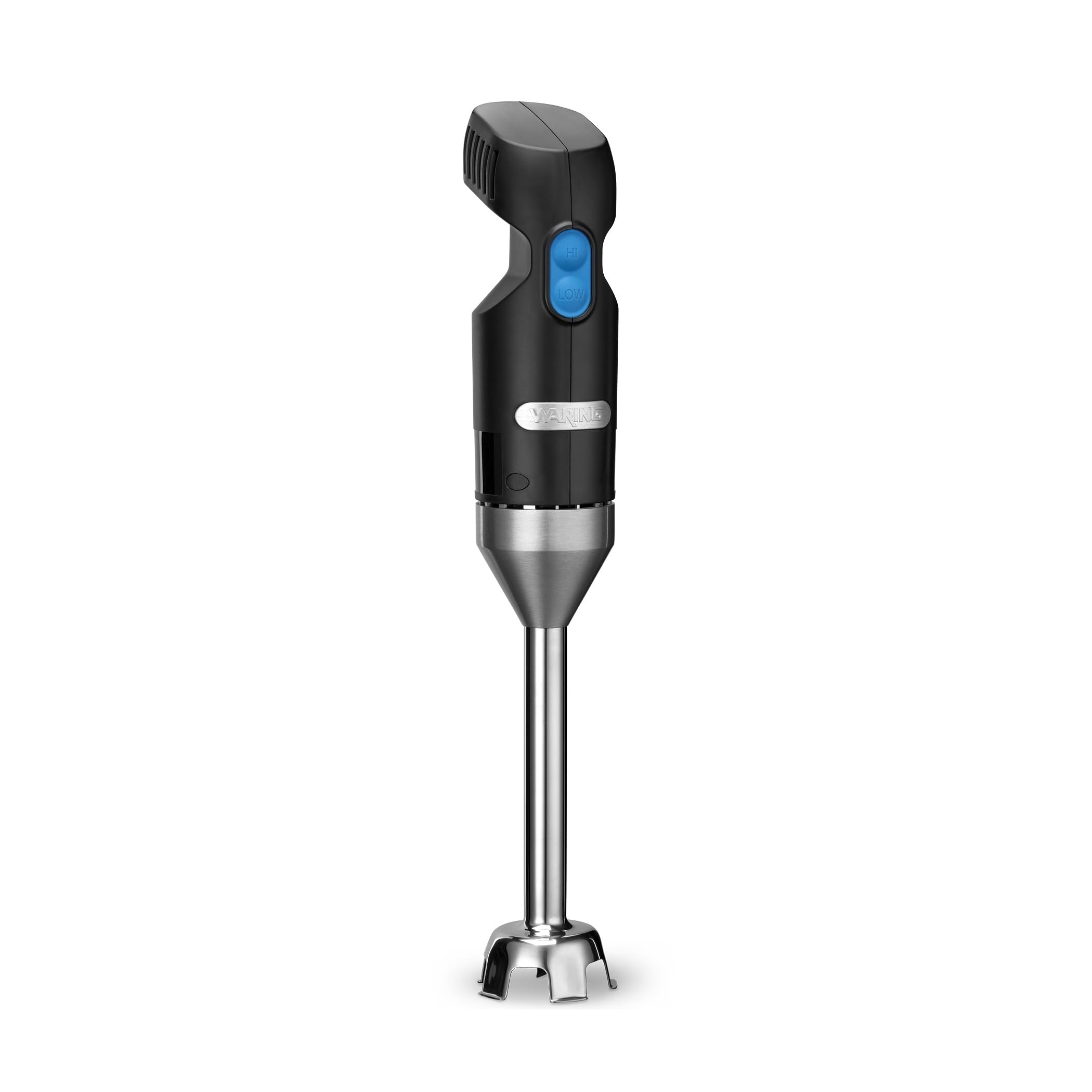
Waring Commercial WSB33X Immersion Blender
Commercial-grade motor designed for continuous use in restaurant environments
Buy on Amazon| Product | Price Range | Top Strength | Key Weakness | Buy |
|---|---|---|---|---|
| Breville Control Grip Immersion Blender best overall | $$ | Bell-shaped guard prevents splashing , practical for soups and sauces | More expensive than basic immersion blenders | Buy on Amazon |
| Bamix SwissLine Immersion Blender also consider | $$$ | Swiss-made motor runs at 12,000 RPM , significantly faster than most immersion blenders | Very expensive for an immersion blender | Buy on Amazon |
| Waring Commercial WSB33X Immersion Blender also consider | $$$ | Commercial-grade motor designed for continuous use in restaurant environments | Heavy and large , designed for commercial use, not home kitchen ergonomics | Buy on Amazon |
If you’ve ever watched a professional cook run an immersion blender through a pot of hot bisque for four uninterrupted minutes, you’ve seen what these tools are actually capable of. Most home models tap out around the one-minute mark, the motor whining in protest. That gap between what home cooks need and what budget immersion blenders deliver is exactly where the phrase “commercial-grade immersion blender” starts to mean something.
This guide covers three blenders built for cooks who use their equipment hard: the Breville Control Grip Immersion Blender in the mid-range, and the Bamix SwissLine Immersion Blender and Waring Commercial WSB33X Immersion Blender at the premium tier. If you’re browsing through our Small Appliances section looking for equipment that won’t require replacing in two years, you’re in the right place.
What to Look For in a Commercial-Grade Immersion Blender
Motor Power and Duty Cycle
The duty cycle is the specification most home cooks never think to ask about until they’ve burned through a motor. It tells you what percentage of running time a motor can sustain continuously. A blender rated for 30-second duty cycles is not suited to blending a large batch of roasted tomato soup, full stop.
Commercial immersion blenders run longer duty cycles by design. The Waring WSB33X is built explicitly for restaurant continuous use. The Bamix SwissLine runs a 12,000 RPM motor that runs cooler than its competitors relative to output. Wattage ratings give you some signal, but duty cycle and build quality tell you more.
Shaft Material and Length
Stainless steel shafts are non-negotiable for hot liquids. Plastic-shafted blenders can warp, discolor, or leach odors over time, especially if you’re blending directly in a pot on residual heat. If you regularly make stocks, soups, or caramel sauces, a stainless shaft isn’t a nice-to-have.
Shaft length also matters more than it sounds. If you’ve ever tried to blend a large stockpot with a standard 8-inch shaft and sent hot liquid onto the stovetop, that’s a shaft-length problem. For larger volume work, check out large immersion blender options that address this directly.
Ergonomics Under Real Conditions
A blender that weighs 2.8 lbs feels fine for 30 seconds. It feels different after three minutes of working through a dense butternut squash puree. Commercial models tend to run heavier because of their motor housings, and that’s a real tradeoff worth naming. The Bamix SwissLine at 1.6 lbs is genuinely unusual in the premium tier for that reason.
Splash Control
The bell-shaped guard on the Breville Control Grip exists because someone got scalded. Wider guards reduce the vacuum effect that pulls hot liquid up toward the motor housing and flings it sideways. If you’ve ever finished blending a soup and found your forearm splattered, that’s what the guard design is solving.
Top Picks
Breville Control Grip Immersion Blender: Best Mid-Range Option
The Breville Control Grip Immersion Blender sits in mid-range pricing, and for most serious home cooks who aren’t running a catering operation out of their kitchen, it’s the honest recommendation.
The bell-shaped guard is the feature that earns its keep. Position it correctly in a pot of hot soup and the splashing problem essentially disappears. I’ve used this blender through batches of roasted red pepper sauce, lentil soup, and hollandaise without incident. The 15-speed range with turbo boost gives you real control over texture, which matters if you’re going for a partially-chunky gazpacho versus a completely smooth velouté.
The detachable shaft goes in the dishwasher. (I mention this not because it’s impressive, but because there are blenders where it isn’t true, and cleaning a blender shaft by hand in a narrow sink is a specific kind of annoyance.)
The honest downsides. It runs heavier than the Bamix SwissLine, and in longer sessions, that registers. If you’re blending multiple large batches back to back, your hand will notice. It’s also priced higher than the basic KitchenAid model, though the ergonomics and speed range justify that gap in practice.
Compared to the KitchenAid 5-Speed Hand Blender, the Breville’s splash guard design is meaningfully better and the speed range is wider. The KitchenAid is a fine blender. The Breville is more useful. Check current price on Amazon.
Bamix SwissLine Immersion Blender: Professional Recommendation
The Bamix SwissLine Immersion Blender is what I’d recommend to the cook who has already burned out one mid-range blender and wants to stop replacing equipment. It’s premium pricing, and it’s earned.
The Swiss-made motor runs at 12,000 RPM. Most consumer immersion blenders top out around 9,000 RPM, and that difference is audible and tactile when you’re working with something dense. More importantly, the motor is engineered to run continuously without the heat buildup that kills cheaper units over time. Bamix has been making this motor configuration for decades, and the longevity record reflects that.
At 1.6 lbs, it’s the most comfortable premium blender I’ve used for extended sessions. The ergonomics are counterintuitive for a commercial-grade tool because most commercial tools prioritize power over comfort and leave the user to adapt. The Bamix gets both right, which is rare.
It handles hot liquids, cold emulsifications, and cream with equal competence. I’ve run it through aioli, cream of celeriac soup, and a frozen banana smoothie in the same morning session without washing in between (don’t @ me). The motor didn’t complain.
The limitations are real. The base model doesn’t include a whisk or food processor attachment, so you’re getting a dedicated immersion blender without the accessory kit that some competitors bundle. And it’s expensive. If you’re already interested in the broader category of professional immersion blenders, the Robot Coupe immersion blender is worth comparing, particularly on attachment ecosystems. The Bamix wins on ergonomics and motor longevity. Check current price on Amazon.
Waring Commercial WSB33X Immersion Blender: Restaurant Equipment for Home Use
The Waring Commercial WSB33X is restaurant equipment. That’s not a marketing description, it’s a form-factor warning. This blender is NSF certified, designed for continuous use in professional kitchen environments, and built to blend without splash risk in commercial pots. It’s also heavy, large, and optimized for power over comfort.
If you’re running a home kitchen where you regularly produce large-volume stocks, soups, or sauces, and you want the blender to simply never be the limiting factor in your workflow, this is the answer. The stainless steel shaft, the motor housing, the grip design, all of it is built to a different specification than anything in the consumer segment.
The tradeoff is practical. This blender is not comfortable for a five-minute continuous session the way the Bamix is. It’s built for commercial ergonomics, which assumes the operator is standing at a professional height counter, often with a second hand stabilizing a commercial pot. In a home kitchen, those assumptions don’t always hold. If ergonomics and home-scale comfort are the priority, the Bamix is the better tool. If raw commercial power and proven restaurant durability are the priority, the Waring answers that call.
It’s premium pricing and then some, roughly twice the cost of the Breville and competitive with the Bamix. Overkill for most home cooks. Not overkill if you know why you’re buying it. Check current price on Amazon.
How to Choose
The deciding factor isn’t really about power specs. It’s about how you use your kitchen.
If you cook seriously but you’re not producing restaurant volumes, the Breville Control Grip is the right call. It handles real-world home cooking tasks well, the splash guard is one of the better designs in the mid-range category, and the price is defensible without being extravagant.
If you’ve burned out a blender before or you’re making high-volume batches regularly, the Bamix SwissLine is the investment that makes the replacement cycle stop. The motor longevity, the ergonomics, and the RPM output put it in a different class. It costs more. It also lasts longer.
If you specifically want commercial-certified equipment and you’re comfortable with the form-factor tradeoffs, the Waring WSB33X is legitimate restaurant hardware. Don’t buy it because the spec sheet sounds impressive. Buy it because you’ve thought through what you’re actually going to do with a 2.8-lb commercial blender in a home kitchen.
One practical note on maintenance: the equipment you’ll use around these blenders matters too. If you’re pairing a high-powered immersion blender with prep tools, the accuracy of your cutting work affects your blend times. A reliable Super Benriner mandoline slicer for consistent vegetable prep makes a real difference when you’re working at volume.
Our full Small Appliances hub has additional coverage on related tools if you’re outfitting a kitchen more broadly rather than solving one specific problem.
Frequently Asked Questions
Can I use a commercial immersion blender for hot liquids?
Yes, and this is one of the primary reasons to buy commercial or commercial-grade over a basic consumer model. All three blenders covered here handle hot liquids without the splash risk and motor strain that affect cheaper units. The Breville’s bell guard is specifically designed to reduce splashing in hot pots. The Bamix and Waring both handle continuous hot-liquid blending without heat damage to the motor.
Is the Bamix SwissLine worth the premium price over the Breville?
For most home cooks, the Breville does the job. If you’re cooking at high volume regularly, making large batches of soups or sauces multiple times a week, or you’ve already worn out a mid-range blender, the Bamix’s motor longevity and ergonomics justify the price difference over the long run. It’s a tool you buy once.
What does NSF certified mean for the Waring WSB33X?
NSF certification means the equipment meets the sanitation and safety standards required for commercial food service use. For a home cook, it signals that the build quality has been verified to a professional standard, not that you need it for regulatory reasons. It’s a quality signal, not a requirement.
How do immersion blenders compare to countertop blenders for soups?
Immersion blenders let you blend directly in the pot, which means no transferring hot liquid in batches to a standing blender. For soups specifically, that’s a significant practical advantage. A commercial-grade immersion blender at the Bamix or Waring level will outperform most countertop blenders on hot liquid processing and produce comparable results on texture if you run it long enough.
Are commercial immersion blenders dishwasher safe?
It depends on the model. The Breville Control Grip has a dishwasher-safe detachable shaft, which is a genuine practical convenience. The Bamix SwissLine and Waring WSB33X should be checked against current manufacturer guidelines, as dishwasher safety on commercial equipment varies by component. The motor housing on any immersion blender is never dishwasher safe.
Frequently Asked Questions
What makes an immersion blender 'commercial grade'?
Commercial-grade immersion blenders are built for continuous-use duty cycles, higher motor RPMs or wattages, and stainless steel shaft construction that withstands constant hot liquid contact. Consumer models typically have 30-60 second duty cycles; commercial models are rated for several minutes of continuous blending.
Can a commercial immersion blender be used at home?
Yes, but with tradeoffs. Commercial models like the Waring WSB33X are heavier and larger than home units, which becomes noticeable over extended blending sessions. The Bamix SwissLine is an exception — it delivers commercial-level motor performance in a compact housing at 1.6 lbs, making it a practical choice for serious home cooks.
What shaft length do I need for large stock pots?
Standard immersion blender shafts are around 8 inches, which works for Dutch ovens and saucepans but may not reach the bottom of a tall stock pot. For large-volume cooking, look for blenders with 12-inch or longer shafts specifically marketed for commercial or large-batch use.
Is the Bamix SwissLine worth the price for a home cook?
The Bamix SwissLine is worth the price if you regularly blend soups, emulsify sauces, or whip cream and want a blender that will last 10+ years without motor failure. Its 12,000 RPM Swiss motor runs cooler and more efficiently than most competitors, justifying the premium for high-frequency use.
Does a stainless steel shaft matter for immersion blenders?
Yes, especially for hot liquid use. Plastic shafts can warp, discolor, and develop odors over time when used in soups, stocks, and sauces at high temperatures. Stainless steel shafts are non-negotiable for anyone blending hot liquids regularly.
Where to Buy
Breville Control Grip Immersion BlenderSee Breville Control Grip Immersion Blender on Amazon