Caraway vs GreenPan: Honest Ceramic Nonstick Comparison

Affiliate disclosure: Some links on this page are affiliate links. If you buy through them we earn a small commission at no extra cost to you. Recommendations are research-driven; we don't claim personal use of every product reviewed. Product prices and availability are accurate as of the date published and are subject to change. Always check Amazon for current pricing before purchasing. Learn more.

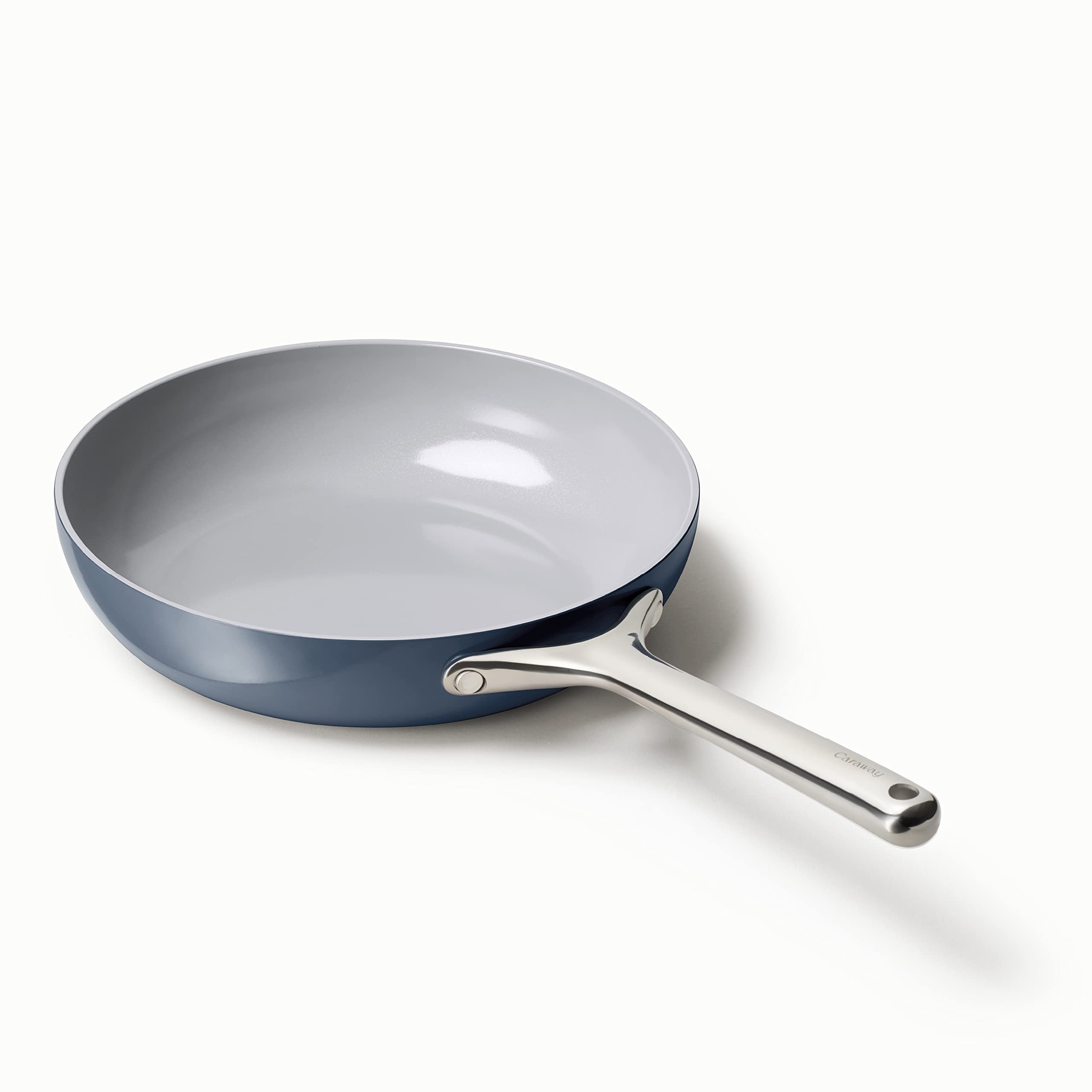 Caraway Caraway Ceramic Nonstick Frying Pan 10.5" Buy on Amazon
 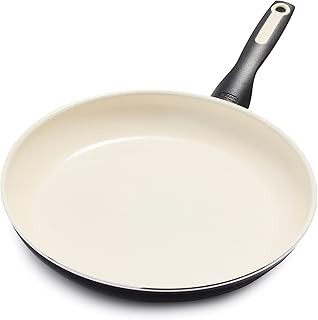 GreenPan GreenPan GP5 Ceramic Nonstick 12" Skillet Buy on Amazon
 Ceramic nonstick has been having a moment for a few years now, and the Caraway versus GreenPan question comes up constantly in the Nonstick & Ceramic space. Both brands market themselves on the same promise: the slick release of traditional nonstick without PTFE or PFAS chemistry. The pitch is clean, but the pans are not identical, and the differences matter more than the marketing suggests.
I’ve cooked with both. Here’s my honest assessment of where each one earns its price and where it doesn’t.
At a Glance
The Caraway Ceramic Nonstick Frying Pan 10.5” and the GreenPan GP5 Ceramic Nonstick 12” Skillet are both mid-range ceramic nonstick options aimed at buyers who want an alternative to traditional Teflon-style coatings. They share the same core technology trade-off: better chemistry profile than PTFE, but a coating that requires more careful handling to stay functional long-term.
Where they diverge is in size, construction, and what kind of cook each one is actually designed for. The Caraway is 10.5 inches with a polished aesthetic that suits the brand’s whole-kitchen visual identity. The GreenPan GP5 is 12 inches with a hard anodized exterior that prioritizes durability and heat distribution over presentation. Both are oven-safe at temperatures higher than most ceramic competitors. The Caraway tops out at 550°F. The GreenPan GP5 edges it at 600°F.
One immediate practical note: these are different sizes. If you’re replacing a specific pan or cooking for a specific household size, that gap matters before anything else does.
Why Choose the Caraway Ceramic Nonstick Frying Pan
The Caraway Ceramic Nonstick Frying Pan 10.5” is Caraway’s entry-level piece for buyers who want the brand without committing to the full set. If you’ve looked at Caraway’s cookware before, you know the aesthetic is part of the product. The pans photograph well, come in coordinated colors, and are designed to be stored visibly. Whether that matters to you is your business, but the design is deliberate, not incidental.
Construction and Coating
Caraway uses a ceramic-based coating that is PTFE and PFOA-free. The base is magnetic stainless steel, which means it works on induction cooktops without an adapter plate. For anyone building out a kitchen with an induction range, that’s a non-trivial feature. (If induction compatibility is a primary concern for you, the broader breakdown at Non Stick Cookware For Induction covers the full category in more depth.)
The 550°F oven-safe rating is genuinely higher than most ceramic competitors in this price band. For a pan this size, you can sear something on the stovetop and finish it in a hot oven without swapping cookware. That workflow matters for thicker proteins, frittatas, or anything where you want more than one heat source.
Where It Works Well
Eggs. Delicate fish. Anything where you want release without fat. On medium heat with minimal oil, the Caraway performs as advertised in the early months of ownership. The 10.5-inch size is practical for one or two portions, and the weight is manageable without feeling flimsy.
The Honest Caveats
Ceramic coatings degrade faster than PTFE under high heat or with metal utensils. That’s not a Caraway-specific problem. It’s a category-wide limitation. But Caraway’s price point means buyers reasonably expect durability to match the cost. It often doesn’t hold up as well as they hope over 18 to 24 months of regular use.
If you want to read through the more detailed complaint pattern, the Caraway cookware bad reviews page documents where owners run into trouble. The coating wear issue is the dominant thread.
The 10.5-inch size is also a real constraint for anyone cooking for more than two people. You can make it work, but you’ll feel it.
Why Choose the GreenPan GP5 Ceramic Nonstick 12” Skillet
The GreenPan GP5 Ceramic Nonstick 12” Skillet is a more utilitarian product. GreenPan doesn’t sell a lifestyle the way Caraway does, and the GP5 reflects that. The exterior is hard anodized aluminum, which is less visually refined but meaningfully better for heat distribution and long-term exterior durability. If you store your pans in a cabinet rather than hanging them on a rack, this distinction will affect how the pan holds up over time.
Construction and Coating
GreenPan’s Thermolon Minerals coating is their proprietary ceramic formulation. It’s PFAS-free and marketed as more scratch-resistant than standard ceramic nonstick, which is a reasonable claim in the context of ceramic coatings, though it still doesn’t approach PTFE durability. The hard anodized body distributes heat more evenly than a plain aluminum pan, and the 600°F oven-safe rating is the highest in this comparison.
The 12-inch size is the other major advantage here. A full skillet at 12 inches handles a proper sear for four portions of chicken thighs, a larger frittata, or a stir-fry without crowding the pan. Crowding is how you steam instead of sear, and a 10.5-inch pan gets there fast with any real volume of food.
Where It Works Well
Day-to-day cooking for families or anyone who regularly cooks for more than two people. The even heat distribution from the hard anodized construction means fewer hot spots than you’d get from a thinner pan, and the release performance on eggs and delicate proteins is comparable to Caraway’s out of the box.
The price point is lower than Caraway for a larger pan. (Check current price on Amazon, but the GP5 consistently comes in below the Caraway at mid-range pricing.) For the same category of coating, you’re getting more pan for less money.
The Honest Caveats
The handle on the GP5 is adequate for most cooking sessions, but it becomes uncomfortable during anything that requires extended holding or maneuvering. If you regularly do prolonged stovetop cooking where the pan stays in your hand, that’s worth factoring in. (I noticed this on a long risotto session, which I realize is not a typical nonstick pan use case, but the discomfort was real.)
Like the Caraway, the ceramic coating will degrade with high heat abuse or metal utensils. The Thermolon Minerals formulation may resist scratching slightly better than Caraway’s coating, but both require silicone or wooden utensils and moderate heat discipline to last.
Verdict
The GreenPan GP5 is the better buy for most people. More surface area, lower price, equivalent or better heat tolerance, and construction that prioritizes function over aesthetics. If you are cooking for more than two people with any regularity, the 12-inch size alone makes the decision.
The Caraway makes sense in two specific situations. First, if induction compatibility is non-negotiable and you’ve confirmed the GreenPan GP5 doesn’t meet your cooktop requirements. Second, if you’re buying into the Caraway set and want a matching piece. The Caraway Stainless Steel Fry Pan review covers how their non-ceramic line compares if that’s a direction you’re considering.
One broader point worth making: both pans share the same fundamental limitation. Ceramic nonstick is not permanent nonstick. If you’ve had a PTFE pan for eight years and it still releases cleanly, you should not expect the same lifespan from either of these. My All-Clad HA1 nonstick has outlasted every ceramic pan by a significant margin. Ceramic’s advantage is the chemistry profile, not the durability. Go in with that expectation and you’ll be less disappointed when the coating eventually loses its edge.
For anyone still comparing options across the ceramic and nonstick cookware category before deciding, spending time on the broader category breakdown will save you from buying the wrong pan twice.
And a note on utensils: if you’re investing in a ceramic pan and still using metal spatulas, the coating degradation you’ll see is self-inflicted. The Hexclad Utensil Set is one option worth looking at if you need to replace your utensil kit alongside a new pan.
Frequently Asked Questions
Is the Caraway pan actually better than GreenPan?
For most cooks, no. The GreenPan GP5 offers a larger cooking surface, comparable or superior oven-safe temperature, and a lower price point. Caraway is a better fit if induction compatibility is specifically required or if you’re already invested in the Caraway ecosystem and want a matching piece.
How long do ceramic nonstick coatings last compared to PTFE?
Shorter. A well-maintained PTFE pan can last five to ten years. Ceramic coatings, including Thermolon and Caraway’s formulation, typically begin showing performance decline within one to three years under regular use. High heat and metal utensils accelerate that timeline significantly.
Are both pans safe to use on induction cooktops?
The Caraway 10.5” has a magnetic stainless steel base and is confirmed induction-compatible. Before purchasing the GreenPan GP5 for an induction setup, verify the specific model’s base construction. Check the product listing on Amazon for current induction compatibility details. Where induction compatibility across multiple brands is the core question, the Non Stick Cookware For Induction guide covers it systematically.
Can I use metal utensils with either pan?
No. Both manufacturers advise against metal utensils, and the ceramic coatings on both pans will scratch and degrade faster with metal contact. Silicone or wooden utensils are the correct choice for either pan.
Where are Caraway pans manufactured?
Caraway pans are manufactured in China, which is standard for the price point and not unusual for the category. If manufacturing origin is a factor in your decision, the full breakdown is covered at Where Are Caraway Pans Made.
Frequently Asked Questions
Is Caraway or GreenPan more durable?
GreenPan's GP5 has a more robust construction overall, with a hard anodized exterior that holds up better than Caraway's body. Both use ceramic coatings with similar longevity limitations, but GreenPan's Thermolon Minerals coating is marketed as more scratch-resistant than Caraway's ceramic surface.
What size difference is there between Caraway and GreenPan?
The Caraway ceramic frying pan is 10.5 inches while the GreenPan GP5 skillet is 12 inches. That size gap affects how much food you can cook at once and whether the pan fits on your burner comfortably — it is worth factoring in before choosing based on brand alone.
Are both Caraway and GreenPan PTFE-free?
Yes. Both use ceramic-based coatings that contain no PTFE, PFOA, or PFAS chemicals. This is the core marketing promise of both brands and is accurate.
Which pan can handle higher oven temperatures — Caraway or GreenPan GP5?
The GreenPan GP5 is oven-safe to 600°F, edging the Caraway at 550°F. Both are among the higher oven-safe ratings in the ceramic nonstick category.
Which is better for everyday cooking — Caraway or GreenPan?
For most home cooks cooking eggs, vegetables, and fish at low to medium heat, both perform similarly. Caraway tends to suit buyers who prioritize aesthetics and a coordinated kitchen look. GreenPan suits buyers who want a harder-wearing exterior and a larger cooking surface at a comparable price.
Where to Buy
Caraway Ceramic Nonstick Frying Pan 10.5"See Caraway Ceramic Nonstick Frying Pan 1… on Amazon